
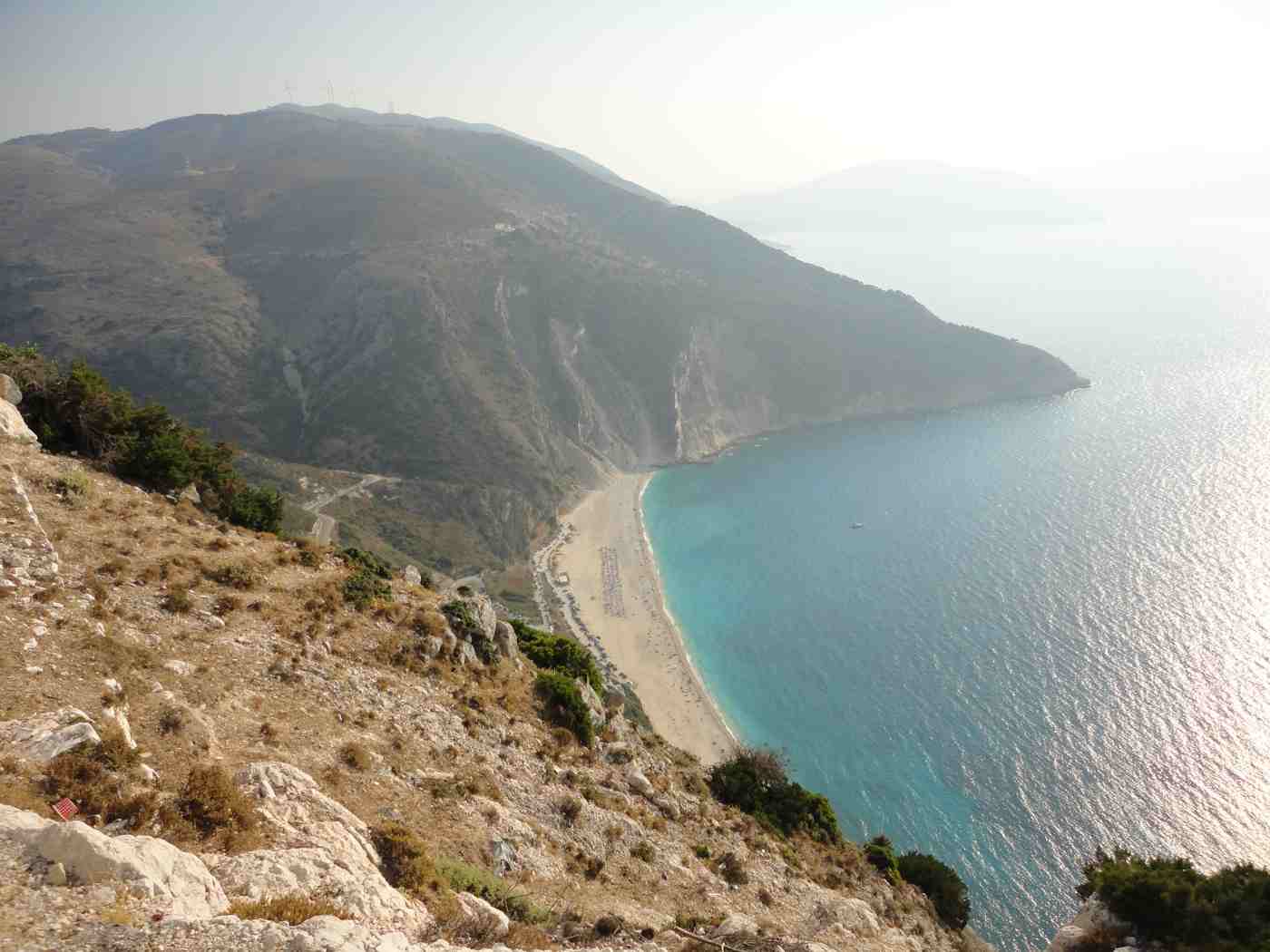
Antisamos beach occupies a wide bay on the east coast of Kefalonia, about 4 km from the port of Sami over a green ridge. White pebbles line the shore, the water deepens within metres of the waterline, and hills covered in trees close the bay on three sides. The open side looks east across the strait toward Ithaca. Parts of the beach carry sunbeds, umbrellas and canteens, while other stretches stay bare pebble for anyone who brings a towel. Argostoli, the island capital, lies about 25 km away on the far side. Plan the whole trip with Greece Tours.
The bay served as a filming location for the Captain Corelli’s Mandolin adaptation, and the set built on the shore has long since gone. What remains is the landscape that drew the crews: clear water over white stone, a steep green wall behind, and Ithaca on the horizon. A winding road climbs from Sami and drops to a car park behind the pebbles. Natural shade is close to absent, so an umbrella and water matter through the middle of the day. This guide covers the water, the setting, the facilities and the drive.
Where is Antisamos beach in Kefalonia?
Antisamos beach lies on the east coast of Kefalonia, about 4 km over the headland from Sami and about 25 km from Argostoli, filling a wide bay backed by steep green hills that run down to the water.
Antisamos sits on the east coast of Kefalonia, about 4 km from the port town of Sami across a low headland. The beach fills a wide bay, with white pebbles running the length of the shoreline. Hills covered in green scrub and trees rise directly behind the beach. Argostoli, the island capital, lies about 25 km away on the opposite side of the island. The bay faces east across the strait, so morning light reaches the water first and the shore warms early in the day.
The name Antisamos points to its position opposite Sami, the island’s second port and its ferry harbour for Ithaca and the mainland. The road between the two crosses a ridge, so the bay stays out of sight until the final descent. Boats anchor off the mouth of the bay through the day, and the enclosed shape keeps the water calm in ordinary summer conditions. Nothing else stands on this stretch of coast apart from the beach itself. Signposts on the Sami waterfront mark the turning toward the beach.
The shore curves in a long arc, with the pebble band widest near the centre and narrower at each end where rock takes over. Fine white stones give the beach its pale colour, and they turn the shallow water bright turquoise under strong light. A strip of low vegetation separates the pebbles from the road behind. The slope above the road rises quickly, so the green wall of the hills stands close over the whole bay rather than at a distance. Walkers cross the pebbles end to end in about fifteen minutes.
Antisamos ranks with Myrtos and Petani among the beaches that draw day traffic across the island. Its position near a ferry port makes it the easiest large beach to reach from the eastern side of Kefalonia. Drivers arriving from Poros in the south reach the bay in about 40 minutes on the coast road. The car park behind the shore fills through the middle of the day in high summer, and cars then line the access road. Early arrivals take the spaces closest to the water.
What is the sea like at Antisamos beach?
White pebbles cover the shore at Antisamos and continue under the water, which stays clear and deepens quickly a short distance out. Swimmers reach chest depth within two or three steps of the waterline.
White pebbles form the whole beach at Antisamos, from the back of the shore to the waterline and on into the sea. The stones are rounded and range from pea size to palm size, so walking barefoot is uncomfortable without water shoes. Pebble beaches keep the water free of suspended sand, which is the main reason visibility here stays high even after windy hours. The shore holds its shape through the season rather than shifting the way sand does. Sunbeds sit level on the packed stones without sinking.
The sea bed drops away within two or three metres of the waterline, so the water reaches chest height almost at once. Depth continues to increase steadily on the way out, and the colour shifts from pale turquoise over pale stones to deep blue. Strong swimmers cross to the rocky edges of the bay in ten minutes. Parents entering with children hold them close from the first step, because the shelf that other beaches offer does not exist here. Entry is easiest at the centre of the arc, where the stones are smallest.
Water temperature climbs through the summer months and the enclosed bay warms faster than open coast. The east-facing position shelters the beach from the north-westerly wind that blows down the Ionian in the afternoon, so the surface often stays flat while the west coast builds swell. Wind from the east pushes small waves straight into the bay, and the pebbles then rattle in the backwash. Clarity recovers within an hour of the wind dropping, since no sand clouds the water. Swimmers see the bottom clearly at four metres depth.
Pebble shores of this kind repeat around the island, and the best known Kefalonia beaches share the same white stone and clear water. Myrtos, about 35 km northwest of Antisamos by road, sits under cliffs and shelves in the same abrupt way. Petani on the Paliki peninsula does the same on the western side. Antisamos differs in its setting, because green hills replace the bare rock walls that frame most of the island’s famous bays. The contrast is clear on any drive between the two coasts.
What do the green hills and the Ithaca view add to Antisamos?
Green hills wrap the bay at Antisamos and drop steeply to the pebbles, while the open side of the bay looks east across the strait toward Ithaca, the island lying a short distance off the Kefalonian coast.
Hills rise straight from the back of the beach and climb to the ridge that separates the bay from Sami. Cypress, pine and low maquis cover the slopes, which stay green through the dry months because the limestone holds winter rain. The wall of vegetation reaches the shoreline at the northern end, where trees lean over the water. Few beaches in the Ionian put this much greenery directly behind the pebbles, since most sit under bare rock or scrubby cliffs. The green edge frames the bay in every photograph taken from the water.
Ithaca lies across the strait east of the bay, and its outline fills the horizon from the waterline. The channel between the two islands narrows to about 5 km at its tightest point, so the ridges opposite read clearly rather than fading into haze. Ferries from Sami to Piso Aetos cross this water through the day and pass the mouth of the bay. Swimmers floating on their backs look straight at the neighbouring island rather than at open sea. Light on the Ithaca ridges changes through the day, sharpest in the first hours.
The descent road gives the widest view of the bay, with the pebble arc, the turquoise shallows and Ithaca lined up in one frame. Drivers stop at the pull-in near the top of the ridge, about 1 km above the shore. The angle from there shows how far the hills wrap the water, closing the bay on the north and south sides. Photographers work this spot in the morning, when the sun sits behind the camera and lights the whole bay. Traffic on the ridge road is light outside the middle hours.
Hillsides around the bay carry no building beyond the beach facilities themselves, so the green slopes read as one unbroken cover. Goats graze the upper scrub and cross the road above the beach in the early evening. The ridge behind rises toward the range that runs north from Sami, part of the mountainous spine that gives the island its shape. Mount Ainos, the highest peak in the Ionian Islands, stands about 20 km southwest of the bay. The peak reaches about 1,628 metres and carries a fir forest found nowhere else.
Why is Antisamos beach linked to Captain Corelli’s Mandolin?
Film crews used Antisamos as a shooting location for the Captain Corelli’s Mandolin adaptation, building a set village on the shore of the bay. The structures came down after filming, and the beach kept its name in the story.
Antisamos served as a filming location for the screen adaptation of Captain Corelli’s Mandolin, the novel set on Kefalonia during the Italian and German occupation of the island. The production built a village set on the shore of the bay, using the green hills and the pebble arc as the backdrop. Crews removed the structures once shooting finished, and the beach carries no trace of them now. The association still brings visitors who recognise the bay from the film. Local guides point out the exact stretch used for the main scenes.
The story places its events in Argostoli and the villages of the interior, while the camera work used beaches, harbours and hillsides across the island. Sami harbour stood in for the wartime town, since its low post-earthquake buildings were dressed for the period. Antisamos supplied the coastal scenes, about 4 km from that harbour over the ridge. Film crews chose the bay for its enclosed shape, which kept modern development out of every camera angle. Visitors combine the two locations in a single morning without a long drive.
Film tourism reached the island after the release and lifted visitor numbers on the east coast in particular. Antisamos gained the largest share, because the bay appears in wide shots that viewers remember. Signposts near Sami name the beach without naming the film, so arrivals recognise the setting only once they reach the shore. The bay works on its own terms as well, and the story matters less to swimmers than the water in front of them. Reading the novel before a visit adds context to the landscape around the bay.
The film connection sits alongside the other draws of this coast, and most visitors pair the beach with the Melissani cave, about 6 km away on the road north of Sami. The cave holds an underground lake with an open roof, crossed by rowing boat. Drogarati, a stalactite cavern about 4 km southwest of Sami, completes the loop. Both caves stay cool at midday, which suits the hours when the beach has no shade. A morning at Antisamos and an afternoon underground fills one day on the east coast.
What facilities does Antisamos beach have?
Sunbeds, umbrellas and canteens occupy parts of Antisamos, set back from the waterline along the organised stretches of the bay. Open pebble runs between them, and natural shade is close to absent on the beach itself.
Organised sections of Antisamos carry rows of sunbeds and umbrellas set in pairs behind the waterline. Canteens stand at the back of the beach and serve drinks, coffee and light food through the day. Open pebble runs between the organised blocks, so anyone carrying a towel and an umbrella finds space without paying. Sunbed rows fill first in the middle of the day, and late arrivals take the free stretches toward the ends of the bay. Prices for a pair of beds with an umbrella vary by section and season.
Natural shade is close to absent on the pebbles, since the trees behind the beach sit above the road rather than over the shore. Hills to the west block the sun late in the afternoon, which cools the bay earlier than west-coast beaches. Anyone staying through the middle hours needs an umbrella, a hat and water. The canteens provide the only roofed shelter on the beach, and the tables under them fill quickly at midday. Shade from the headland reaches the northern end first, near the end of the afternoon.
Showers, changing cabins and toilets serve the organised parts of the bay, placed near the canteens at the back of the shore. Water sports operate from the beach in high summer, with pedalos, kayaks and boat hire on the calm water. Sun loungers extend along most of the arc, though the ends stay clear. Rubbish bins stand along the back line, and the beach is cleaned in the early morning before arrivals reach the bay. Nothing on the beach sells supplies for a full day, so a cool box helps.
No village stands at Antisamos, so the beach has no hotels, shops or houses behind it. Accommodation sits in Sami, about 4 km away, where rooms, tavernas and the ferry quay line the waterfront. Karavomylos, about 2 km north of Sami, adds another cluster of rooms beside the sea. Visitors staying in Argostoli drive about 25 km each way, which makes the beach a day trip rather than a walk from the door. Dinner after the beach happens on the Sami waterfront, a ten-minute drive back over the ridge.
Who does swimming and snorkelling at Antisamos beach suit?
Confident swimmers gain most from Antisamos, since the pebble floor drops away fast and clear water suits snorkelling along the rocky edges of the bay. Families with small children need water shoes and close supervision.
Swimming at Antisamos starts deep, and the drop begins within two or three metres of the waterline. Confident swimmers gain the most, since the water reaches shoulder height almost immediately and stays clear far out. The enclosed bay limits current, so the main hazard is depth rather than movement of water. Entry is easiest where the stones are smallest near the centre of the arc, and water shoes make the walk in far steadier. Lifeguard cover operates on the organised sections during the peak weeks of summer.
Snorkelling works best along the rocky edges at each end of the bay, where the pebble floor gives way to broken rock. Visibility runs beyond ten metres in calm conditions. Small fish gather over the rocks, and sea urchins sit in the cracks, which is another reason for water shoes. The swim from the centre of the beach to the northern rocks takes about ten minutes. Deeper water in the middle of the bay holds little to see beyond open blue and pale stone. A mask packs easily into a small beach bag.
Families with young children need care here, because the beach offers no shallow shelf for paddling. Older children swim comfortably once they are confident out of their depth. Couples and groups who plan a full day on the pebbles find the organised sections practical, with sunbeds, canteens and toilets in one place. Anyone looking for empty sand and quiet water finds the smaller coves north of Sami a better fit, since Antisamos draws steady traffic in season. Early mornings and the hours after five leave the bay far quieter.
A day at the bay fits into the wider list of things to do in Kefalonia, alongside the caves, Assos, Fiskardo and the Robola vineyards of the Omala valley. Boat trips from Sami pass Antisamos on the way to Ithaca and stop for swimming in the bay. Divers use operators based in Sami harbour to reach sites along this coast. Kayak routes follow the shoreline from the bay toward the headland north of the beach. Each of these starts within about 5 km of the beach car park.
How do you get to Antisamos beach from Sami and Argostoli?
A winding road climbs the ridge east of Sami and drops into the bay, covering about 4 km to a car park behind the shore. Drivers from Argostoli cover about 25 km across the island.
The road to Antisamos leaves the Sami waterfront at the northern end and climbs the ridge in a series of bends. The full drive covers about 4 km and takes about ten minutes, with the last stretch dropping steeply to the shore. Surfacing is good, though the road narrows in places and two buses pass with care. Drivers coming from Argostoli follow the main road east for about 21 km to Sami, then take the same climb. Total driving time from the capital runs to about 40 minutes.
Parking sits behind the shore in an unsurfaced area between the road and the pebbles. Spaces fill between eleven and four in high summer, and cars then park along the verge of the access road. Arriving before ten or after five secures a place close to the beach. The walk from the far end of the verge to the water takes about five minutes on level ground. Hire cars and scooters handle the climb without difficulty, and the bends are wide enough for a small van.
Ferries arriving at Sami from the mainland and from Ithaca land about 4 km from the beach, which suits foot passengers with a hire car booked in the port. Taxis run from the Sami waterfront and cover the distance in about ten minutes. Boat trips from the same harbour reach the bay by sea and anchor off the pebbles. Walking the road from Sami takes about an hour, with a steep climb and no shade on the ridge. Cyclists make the same trip, though the gradient over the ridge is demanding.
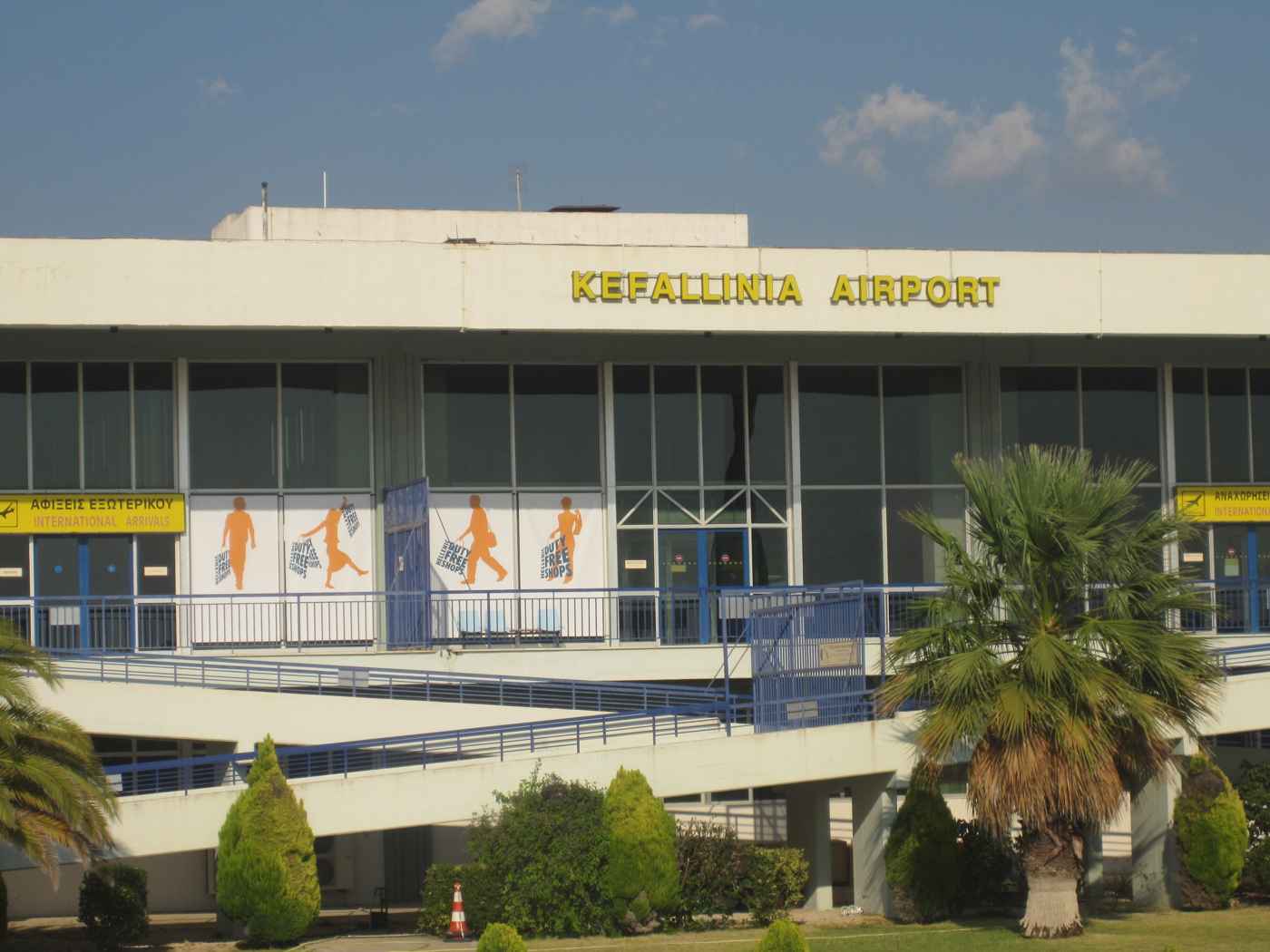
Kefalonia Airport lies about 9 km south of Argostoli, roughly 30 km from the beach by road across the island. Visitors landing there collect a hire car and reach the east coast in about 45 minutes. Public buses connect Argostoli and Sami on a limited schedule, and no service runs over the ridge to the bay itself. A hire car or a taxi from Sami remains the practical way to reach Antisamos. Organised excursions from resorts in the south include the beach with the caves near Sami.
Frequently Asked Questions
Is Antisamos beach sandy or pebbly?
Antisamos is a pebble beach, covered in rounded white stones that run from the back of the shore into the water. No sand exists at the waterline or on the sea bed close in, which is the reason the water stays clear rather than clouding when swimmers stir the bottom. The stones range from pea size to palm size, so bare feet find the walk to the water uncomfortable. Water shoes solve the problem and also protect against sea urchins on the rocks at each end of the bay. Sunbeds sit level on the packed pebbles, and towels need a mat underneath for comfort.
The pebble surface also keeps the beach clean, since nothing blows into the air on windy afternoons.
How far is Antisamos beach from Sami?
Antisamos lies about 4 km from Sami by road, a drive of about ten minutes over the ridge that separates the two. The road leaves the northern end of the Sami waterfront, climbs in bends to the top of the ridge and then drops steeply into the bay. Walking the same route takes about an hour, with a demanding climb and no shade on the upper section. Taxis run from the Sami waterfront and cover the distance quickly. Boat trips from the harbour reach the bay by sea in about fifteen minutes and anchor off the pebbles for swimming.
Ferry passengers arriving at Sami from Ithaca or the mainland reach the beach faster than visitors driving from Argostoli, about 25 km away.
Is Antisamos beach good for children?
Antisamos suits older children who swim confidently, rather than toddlers who need shallow water. The sea bed drops away within two or three metres of the waterline, so no paddling shelf exists at any point along the bay. Parents entering with small children hold them from the first step. The pebbles also make the walk to the water awkward for small feet, and water shoes are effectively necessary. Organised sections help families in other ways, with sunbeds, umbrellas, toilets and canteens close together behind the shore. Families wanting shallow, sandy water find Makris Gialos and Platis Gialos near Argostoli, or Xi beach on the Paliki peninsula, a better match for a full day with young children.
Does Antisamos beach have sunbeds and food?
Sunbeds, umbrellas and canteens operate on the organised parts of Antisamos through the summer season. Canteens sit at the back of the shore and serve cold drinks, coffee, snacks and light meals, with tables under cover. Showers, changing cabins and toilets stand nearby. Water sports run from the beach in the busiest weeks, with pedalos, kayaks and boat hire on the calm water of the bay. Stretches between the organised blocks stay free, so anyone bringing an umbrella and a cool box needs no payment at all. No village, shop or supermarket stands behind the beach, so supplies come from Sami, about 4 km away over the ridge. Rates differ by section, so check before taking a bed.
Was Captain Corelli’s Mandolin filmed at Antisamos?
Antisamos served as a filming location for the screen adaptation of Captain Corelli’s Mandolin, with a village set built on the shore of the bay. The production removed the structures after shooting, so nothing of the set survives on the beach today. Sami harbour, about 4 km away, was dressed as the wartime town for other scenes, and locations across Kefalonia carried the rest of the story. The novel and the film are set on the island during the Italian and German occupation. Visitors who recognise the bay from the wide shots find the green hills. The pebble arc and the view toward Ithaca unchanged, since no building has gone up on the slopes behind the beach.
When is the best time to visit Antisamos beach?
Early morning and late afternoon give the best hours at Antisamos, since the car park fills between eleven and four and the beach carries no natural shade. Morning light comes over Ithaca and lands straight on the bay, which makes the first hours the strongest for photographs and the calmest for swimming. Hills to the west cut the sun in the late afternoon and cool the pebbles earlier than on west-coast beaches. June and September bring warm water with lighter traffic than midsummer, when day trips from the resorts and the ferry port converge on the bay. Winds from the northwest leave the water flat here, while the west coast builds swell.
Sunset arrives behind the ridge rather than over the sea.