
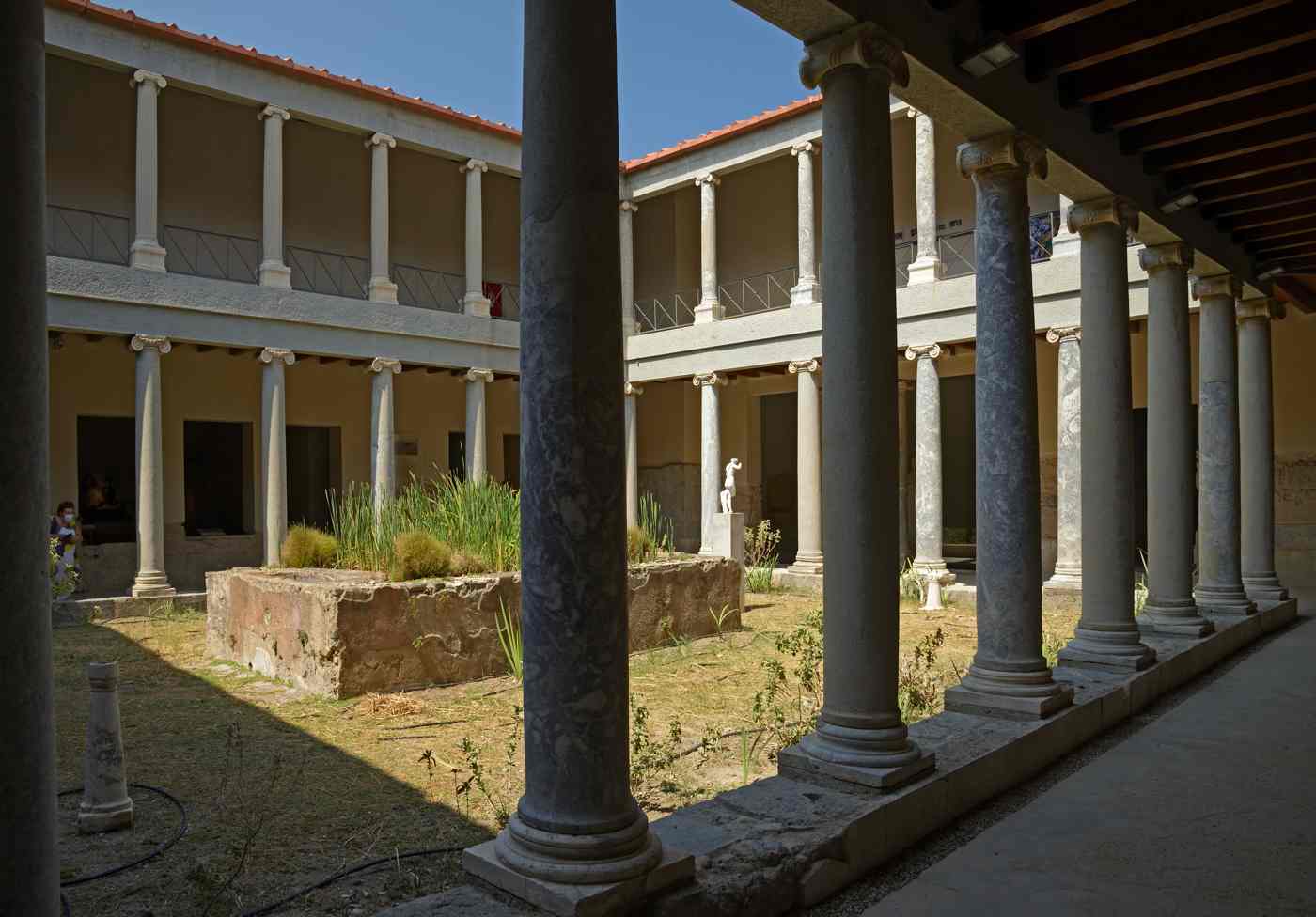
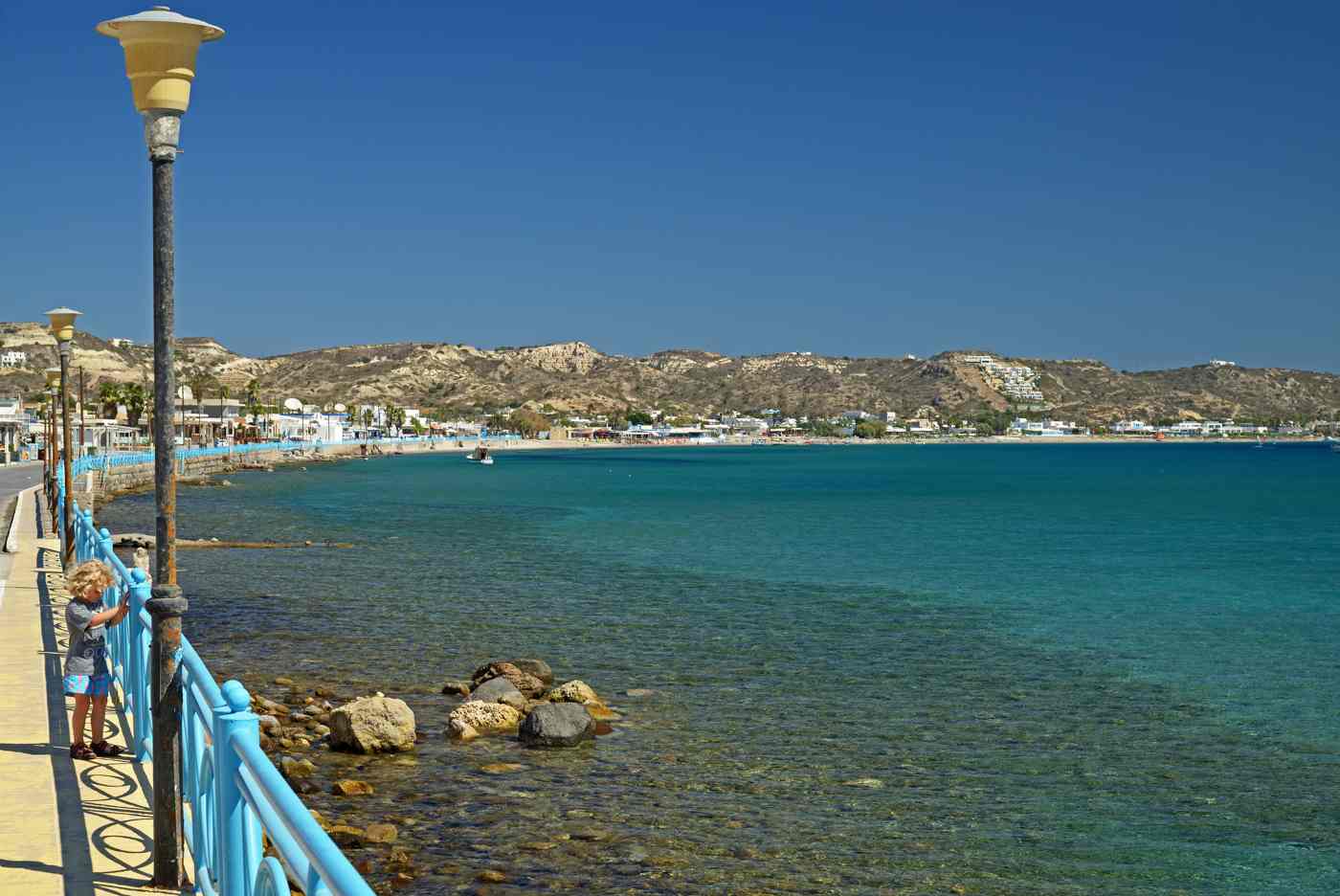
Kamari spreads along the southern shore of Kefalos bay in southwest Kos, about 43 kilometres from Kos Town at the far end of the island. The village functions as the beach-and-holiday base for the entire Kefalos peninsula, a low-rise strip of hotels, apartments, tavernas and beach bars facing a long sandy beach. The little white chapel-topped islet of Kastri and the sixth-century Agios Stefanos basilica ruins stand just offshore to the north, framing the view across the calm bay. Kamari sits below the hilltop village of Kefalos, which perches on the ridge above, and the two settlements share the same postal code and local identity. Plan the whole trip with Greece Tours.
The bay faces south, sheltered from the prevailing meltemi wind that sweeps the northern coast, so the water remains calm even on breezy summer days. Families, couples and independent travellers choose Kamari for its combination of sandy beach, gentle water, and proximity to the cluster of beaches that line the Kefalos peninsula.
The seafront runs parallel to the beach for about two kilometres, lined with tavernas, caf\u00e9s, minimarkets and tour agencies. Accommodation ranges from small family-run studios to mid-sized apartment blocks, all within minutes’ walk of the sand. The village has no ancient ruins or museums of its own. Its appeal lies in the beach, the view of Kastri. Its position as a gateway to the southwestern beaches. Buses connect Kamari to Kos Town times daily, and the journey takes around 50 minutes along the island’s main southwest road. Kos International Airport sits about 20 kilometres to the northeast near Antimachia, a drive of around 25 minutes.
Day boats depart from the small harbour for swimming trips around the bay and excursions to nearby islets. Kamari attracts visitors who prefer a quieter, beach-focused stay away from the busier resorts of the north coast, yet still want easy access to tavernas, shops and regular transport.
Where exactly is Kamari on Kos and how far is it from the main town?
Kamari occupies the southern shore of Kefalos bay in the southwest corner of Kos, about 43 kilometres from Kos Town along the island’s main southwest road.
The drive from Kos Town to Kamari takes around 50 minutes, following the coast road southwest past Zipari, Antimachia and the airport turnoff. The road climbs gently through the central plain before descending into the Kefalos peninsula, where it forks at the entrance to the bay. One branch leads uphill to Kefalos village, the other drops down to Kamari and the seafront. Public buses operated by KTEL Kos run the route four to six times daily in summer, stopping at the main bus shelter on the seafront road. The journey costs around three euros one way, and timetables are posted at the shelter and online.
Taxis from Kos Town charge around 50 euros for the trip, though fares vary by time of day and season.
Kamari sits at the eastern end of the Kefalos bay arc, which curves westward for about seven kilometres to the headland at Agios Theologos. The village itself extends for roughly two kilometres along the shore, with the main hotel and taverna strip concentrated in the central kilometre. The beach begins at the small harbour on the eastern edge and runs west past the main seafront, widening as it approaches the Agios Stefanos area. Behind the seafront road the ground rises gently toward the base of the Kefalos ridge, where scattered houses and villas occupy the lower slopes. The ridge blocks the view inland but frames the bay and creates the sheltered microclimate that keeps the water calm.
The airport near Antimachia lies about 20 kilometres northeast of Kamari, a drive of around 25 minutes. Most visitors arrange a pre-booked transfer or taxi, as no direct bus links the airport to Kamari. The main island road passes the airport turnoff, so drivers heading to Kamari from the port or town follow the same route. Car hire desks operate at the airport and in Kos Town, and visitors rent a vehicle for the duration of their stay to explore the southwestern beaches and villages. Fuel stations are located in Antimachia and at the edge of Kos Town, with none in Kamari itself.
The nearest neighbouring resort is Kardamena, about 15 kilometres northeast along the coast, a purpose-built package-holiday town with a ferry link to Nisyros. Mastichari on the north coast sits roughly 25 kilometres away, and the mountain village of Zia on the slopes of Mount Dikeos is around 35 kilometres distant. Kamari remains the most southwesterly resort on Kos with a full range of tourist facilities, making it the natural base for exploring the Kefalos peninsula and its beaches. Day trips to Kos Town, the Asklepion and other island attractions are straightforward by bus or hire car. Most visitors spend the majority of their time within the bay and its immediate surroundings.
What is the beach like at Kamari and what facilities does it offer?
The beach at Kamari runs for about two kilometres along the bay, a wide strip of golden sand that slopes gently into calm, shallow water.
The sand is fine and clean, raked daily in the high season by the taverna owners who maintain the sunbed concessions. The seabed stays sandy and shallow for 20 to 30 metres offshore, making the beach safe for children and non-confident swimmers. Water depth increases gradually, and the bay’s south-facing orientation means waves rarely exceed gentle ripples even when the meltemi blows across the northern coast. Water temperature in summer reaches 24 to 26 degrees Celsius, warm enough for extended swimming from June through September. The beach width varies from around 15 metres at the eastern harbour end to 40 metres near the Agios Stefanos area, where the sand merges with the archaeological zone.
Sunbed and umbrella sets cost around eight to ten euros per day, usually including a consumption voucher for the sponsoring taverna or beach bar. Around ten beach-bar operations spread along the seafront, each maintaining its own section of loungers and offering drinks, snacks and light meals throughout the day. Showers and changing cabins are provided at intervals, and lifeguard coverage operates on the busiest central stretch during July and August. Watersports concessions offer pedalos, kayaks and stand-up paddleboards for hire, along with banana-boat and tube rides towed by small motorboats. Jet skis are not permitted in the bay to preserve the calm atmosphere and protect swimmers.
The eastern end of the beach near the small harbour remains the quietest section, with fewer sunbeds and more space to lay a towel on the open sand. Tamarisk trees provide patches of natural shade behind the beach in places, and a low dune ridge backs the sand along the less developed stretches. The western end toward Agios Stefanos becomes rockier, with patches of pebble and seagrass near the shore, though the main swimming area stays sandy. Snorkelling around the rocks and the offshore islet of Kastri reveals small fish. Sea urchins and occasional octopus. The clear water offers visibility of five to ten metres on calm days.
Beach access is free and unrestricted along the entire length, with public entry points every hundred metres or so between the tavernas. Parking is available on the seafront road and on side streets behind the beach, though spaces fill quickly in July and August. The beach faces south-southwest, so it receives sun from early morning until late afternoon, with the Kefalos ridge casting shade over the eastern end by around five in the evening. Evening breezes are light, and the sand retains warmth well into the night, making the beach a pleasant spot for after-dinner walks. The combination of gentle water, clean sand and sheltered position makes Kamari beach one of the most family-friendly on the island.
What is the view of Kastri islet and Agios Stefanos from Kamari?
The small islet of Kastri sits about 300 metres offshore to the northwest of Kamari, crowned by a white chapel and connected to the mainland by a narrow rocky causeway.
Kastri rises about 15 metres above the water, a rocky outcrop roughly 80 metres long and 40 metres wide. The Chapel of Agios Nikolaos perches on the summit, a simple whitewashed building with a blue dome that serves as the landmark for the entire bay. The chapel is accessible via a steep stone path from the causeway, and visitors climb up for the panoramic view across Kefalos bay and the southwestern beaches. The causeway itself is a natural rock and shingle bar that emerges at low tide. Allowing walkers to cross dry-footed, though at high water it sits centimetres below the surface.
Swimmers and waders cross at any tide, as the water over the bar never exceeds knee depth.
The Agios Stefanos basilica ruins occupy the headland immediately beside the causeway, about one kilometre west of the main Kamari seafront. The basilica was built in the fifth or sixth century and functioned as a Christian pilgrimage site until it was abandoned following Arab raids in the seventh century. Two rows of standing columns mark the nave, and sections of the original mosaic floor survive under protective shelters. The site is unfenced and free to explore, with information panels in Greek and English explaining the layout and history. Visitors walk among the columns and along the old apse, with the sea lapping the rocks just metres away and Kastri rising offshore.
The view of Kastri and the basilica from Kamari beach is one of the most photographed scenes on Kos. Especially at sunset when the white chapel glows pink and gold against the darkening sky. The islet frames the western end of the bay, and its position creates a natural focal point for swimmers and photographers. Many tavernas and beach bars in Kamari orient their seating to face the view, and the image appears on countless postcards and tourism brochures. The basilica columns stand out clearly from the beach. The shallow water between the shore and the islet takes on shades of turquoise and cobalt depending on the light and seabed.
Boat trips from Kamari harbour often include a swimming stop off Kastri, where the water is clear and the rocky seabed attracts fish and marine life. Snorkellers explore the rocks around the islet base, and the sheltered position makes it a calm spot even on breezy days. The causeway and basilica area form part of the Agios Stefanos archaeological zone, and the site is managed by the Greek Ministry of Culture. Walking or cycling from Kamari to the basilica takes around 15 minutes along the seafront road, and the route is flat and well-paved. The combination of ancient ruins, island chapel and turquoise water creates a landscape that defines the visual identity of the Kefalos bay.
What kind of accommodation and facilities does Kamari offer for visitors?
Kamari offers a range of small to mid-sized hotels, apartment blocks and studios, most within a two-minute walk of the beach.
Accommodation in Kamari tends toward family-run studios and apartments rather than large resort complexes. Properties range from ten to 40 rooms, with most offering self-catering facilities, air conditioning, balconies and small pools. Architecture follows the low-rise Cycladic style, with whitewashed walls, blue shutters and terracotta roofs, though the buildings are modern and purpose-built for tourism rather than traditional village structures. Rates vary by season and room type. Budget around 40 to 80 euros per night for a double studio in high summer, with significant discounts in May, June and September. Booking ahead is essential for July and August, when the village fills with returning guests and package-holiday groups.
The seafront road forms the main commercial strip, lined with tavernas, beach bars and caf\u00e9s that open from breakfast through late evening. Menus focus on Greek staples such as moussaka, souvlaki, fresh fish and salads, with most establishments offering a mix of local and international dishes to suit family tastes. Prices are moderate, with a three-course meal including wine costing around 15 to 20 euros per person. Several tavernas specialise in seafood, serving grilled octopus, calamari and sea bream caught locally or brought from Kos Town market. Vegetarian options are widely available, and most kitchens accommodate dietary requests with advance notice.
Three minimarkets stock groceries, toiletries, beach supplies and basic household items, opening early and closing late to serve self-catering guests. A bakery near the bus stop sells fresh bread, pastries and pies each morning, and a couple of fruit and vegetable stalls operate from vans parked on the seafront. Car hire agencies have desks in the village and offer delivery to hotels, with daily rates starting around 30 euros for a small hatchback. Scooter and bicycle hire is also available, and cycling is popular for short trips to Kefalos village or the nearby beaches. An ATM is located near the bus stop, and most tavernas and shops accept card payments.
Medical facilities are limited to a small pharmacy and a first-aid station staffed during the summer season. The nearest health centre is in Antimachia, about 20 kilometres away, and serious cases are transferred to Kos Town hospital. Mobile phone coverage is reliable, and most accommodation offers free Wi-Fi. The village has no nightlife beyond the tavernas and beach bars, which stay open until around midnight playing background music. Visitors seeking clubs or late-night entertainment travel to Kardamena or Kos Town. Kamari suits guests looking for a quiet, beach-focused stay with easy access to tavernas and essential services, rather than those wanting a full-service resort or lively nightlife scene.
Which beaches around Kefalos bay can be reached from Kamari?
The beaches of Kefalos bay spread west and south from Kamari, including Agios Stefanos beside the basilica, Paradise Beach with its volcanic bubbles, Camel Beach, Magic Beach and the more remote coves toward the headland.
Agios Stefanos beach lies about one kilometre west of central Kamari, a sandy cove beside the basilica ruins and the Kastri causeway. The beach is around 150 metres long, backed by tamarisk trees and low dunes, with a single taverna providing sunbeds and refreshments. The water is shallow and calm, and the view of the islet and columns makes it a popular spot for photography and swimming. Walking from Kamari takes around 15 minutes along the seafront road, or visitors drive and park on the verge near the basilica. The beach is quieter than central Kamari, attracting families and couples who prefer a more secluded setting.
Paradise Beach, also known as Bubble Beach, sits roughly three kilometres southwest of Kamari along a dirt track that branches from the main Kefalos road. The beach takes its name from the volcanic gas bubbles that rise through the sand and shallow water, a geothermal phenomenon linked to the island’s volcanic geology. The bubbles are harmless and create a gentle fizzing sensation underfoot, and the water temperature is slightly warmer than the surrounding bay. The beach is around 200 metres long, a mix of sand and fine pebble, with one beach bar offering sunbeds, drinks and simple meals. Access by car or scooter is straightforward, though the final 500 metres of track can be rough and dusty.
Camel Beach lies a further kilometre west, named for the twin humps of rock that rise from the headland above. The beach is sandy and undeveloped, with no facilities beyond a seasonal drinks van that parks near the access track. The water is clear and calm, and the seabed is sandy with scattered rocks. Snorkelling around the rocks reveals small fish and sea urchins, and the beach attracts naturists and independent travellers seeking solitude. Magic Beach sits just beyond Camel, a smaller cove with coarse sand and pebble, also undeveloped and accessed by a short walk from the parking area. Both beaches require a car or scooter, as they lie around five kilometres from Kamari along unpaved tracks.
The southwestern tip of the Kefalos peninsula holds a series of remote coves and rocky inlets, accessible only by boat or on foot along coastal paths. Day-boat excursions from Kamari harbour visit these spots for swimming and snorkelling, often combined with a stop at Kastri and a barbecue lunch on board. The boats depart mid-morning and return by late afternoon, charging around 25 to 35 euros per person including food and drinks. The Kos beaches of the Kefalos bay offer variety in landscape and atmosphere, from the organised sands of Kamari and Agios Stefanos to the wild, undeveloped coves of the western headland.
Visitors staying in Kamari use the village as a base to explore the full arc of the bay, returning each evening to the tavernas and familiar comforts of the seafront.
How does the south-facing position of Kamari affect the sea conditions?
Kamari faces south across the open Aegean, sheltered from the prevailing meltemi wind that blows from the north and northwest during summer.
The meltemi is a seasonal wind that blows across the Aegean from late June through August, peaking in July. It originates from high-pressure systems over the Balkans and funnels south through the island chains, often reaching force five to seven on the Beaufort scale. On the north coast of Kos, beaches such as Tigaki, Marmari and Mastichari experience strong onshore winds. Waves and blown sand during meltemi days, making swimming less pleasant and watersports difficult. Kamari, by contrast, sits in the lee of the island’s central ridge and the Kefalos massif, so the wind passes overhead and the bay stays calm. The only noticeable effect is a light offshore breeze that ruffles the surface without creating waves.
The south-facing orientation also means the bay receives direct sun from early morning until late afternoon, with no shade from headlands or cliffs. Water temperatures in the bay rise quickly in spring and remain warm through October, often a degree or two higher than the northern beaches. The sheltered position attracts families with young children, as the calm water and gentle slope make swimming safe and supervision easy. Paddleboards, kayaks and pedalos operate without difficulty, and snorkelling is comfortable without the surge and chop that can occur on windward coasts.
The bay does experience occasional southerly winds, known locally as the sirocco, which blow from Africa and bring warm, humid air and sometimes haze or dust. These winds are less frequent and less strong than the meltemi, and they tend to occur in spring and autumn rather than high summer. When a sirocco blows, the bay can develop a low swell and the water becomes slightly murky with suspended sediment, but conditions remain swimmable. Thunderstorms are rare in summer but can develop in late August or September, bringing brief squalls and choppy water that settle within an hour or two.
The combination of shelter, warmth and calm water makes Kamari one of the most reliable swimming beaches on Kos throughout the season. Visitors who have experienced rough seas or strong winds on other Greek islands appreciate the predictable conditions, and the bay’s reputation for calm water draws repeat guests year after year. The south-facing position also means the beach enjoys long hours of sunshine. With the sun setting over the western headland and casting golden light across the bay in the late afternoon. Evening swims are popular, as the water retains its warmth and the wind drops to a whisper after sunset.
What transport options connect Kamari to Kos Town and the airport?
Public buses operated by KTEL Kos run between Kamari and Kos Town four to six times daily in summer, taking around 50 minutes and stopping at the main seafront shelter.
The bus service follows the main southwest road via Zipari, Antimachia and the central plain, with stops at villages and junctions along the route. Timetables vary by season, with more frequent departures in July and August and reduced service in spring and autumn. The first bus from Kamari departs around seven in the morning. The last return from Kos Town leaves around seven in the evening, though times change each season and be confirmed locally or online. Tickets are purchased on board from the driver, costing around three euros one way. The bus is air-conditioned and comfortable, with space for luggage and beach bags.
Taxis operate from a rank near the bus stop and can be booked by phone or through hotel reception. The fare from Kamari to Kos Town is around 50 euros, and to the airport around 30 euros, though prices vary by time of day and luggage. Shared taxis are not common, so each ride is a private hire. Taxi drivers speak basic English and accept card payments, though cash is preferred. For airport transfers, most visitors arrange a pre-booked service through their accommodation or a transfer company, which guarantees a fixed price and a driver waiting on arrival.
Car hire is the most flexible option for exploring Kos from a Kamari base. Agencies in the village deliver vehicles to hotels, and rates start around 30 euros per day for a small hatchback, dropping to around 20 euros per day for weekly rentals. International and local companies operate on the island, and booking in advance online often secures better rates than walk-in hire. Scooters and quad bikes are also available, costing around 15 to 25 euros per day, though a valid motorcycle licence is required for scooters above 50cc. Fuel costs are moderate, and a full tank is sufficient for days of local driving and trips to Kos Town.
Cycling is feasible for fit riders, as the distance from Kamari to Kos Town is around 43 kilometres. The route includes long stretches of open road with no dedicated cycle lane and limited shade. Most cyclists stick to shorter rides within the Kefalos peninsula, visiting the hilltop village, the beaches and the Antimachia windmill. Bicycle hire costs around eight to twelve euros per day, and electric bikes are available for around 20 euros. Boat excursions from Kamari harbour offer an alternative way to reach other parts of the island. With day trips to Nisyros, Pserimos and the northern beaches departing weekly in high season.
The combination of bus, taxi, hire car and boat gives visitors staying in Kamari good connectivity to the rest of Kos, though having a vehicle significantly increases convenience and freedom to explore at your own pace when considering where to stay in Kos.
What kind of tavernas and dining options are available in Kamari?
Kamari has around a dozen tavernas and beach bars spread along the seafront, serving Greek and international dishes with an emphasis on fresh fish, grilled meats and traditional mezze.
Menus follow a familiar pattern across the village, with starters such as tzatziki, taramosalata, Greek salad and fried calamari. Followed by mains including moussaka, pastitsio, lamb kleftiko, pork souvlaki and chicken gyros. Fresh fish is displayed on ice and priced by weight, typically around 50 to 60 euros per kilogram for sea bream. Sea bass or red mullet, grilled whole and served with lemon and olive oil. Octopus, either grilled or stewed in wine, appears on most menus, along with prawns, mussels and occasionally lobster. Vegetarian options include stuffed tomatoes and peppers, gigantes beans, briam and salads, and vegan dishes are prepared on request.
Breakfast menus offer Greek yoghurt with honey and walnuts, omelettes, fresh bread, pastries and filter coffee, with full English breakfasts available at establishments catering to British guests. Lunch service runs from midday to mid-afternoon, with lighter options such as club sandwiches, burgers, pasta and pizza alongside the full taverna menu. Dinner is the main meal, served from around six in the evening, and most tavernas stay open until eleven or midnight. Live music is occasional rather than nightly, with a guitarist or bouzouki player performing at one or two venues each week during high season.
Prices are moderate and consistent across the village, with starters costing around four to seven euros, mains eight to fifteen euros, and a carafe of house wine around six euros. Bottled wine from Greek vineyards costs ten to twenty euros, and local beers such as Mythos and Alpha are around three euros for a half-litre. Desserts include baklava, galaktoboureko, loukoumades and ice cream, typically priced at four to five euros. Service is friendly and unhurried, with staff accustomed to families with children and guests lingering over meals. Tipping is appreciated but not obligatory, with ten percent considered generous.
A handful of beach bars operate along the sand, offering drinks, cocktails, smoothies and light snacks throughout the day. These venues provide sunbeds and umbrellas for patrons, and the consumption voucher system means a drink purchase often covers the cost of a lounger. Cocktails cost around six to eight euros, soft drinks around three euros, and fresh fruit juices around four euros. The beach bars play background music and create a relaxed, informal atmosphere, popular with younger guests and those seeking a casual lunch or afternoon refreshment. Evening dining in Kamari centres on the tavernas, where the combination of sea view, fresh food and warm hospitality defines the village’s low-key, family-friendly character.
Who is Kamari best suited for and what kind of holiday does it offer?
Kamari suits families, couples and independent travellers seeking a quiet, beach-focused holiday with easy access to tavernas, calm water and the southwestern beaches of Kos.
Families with young children appreciate the shallow, calm water, the sandy beach and the short distances between accommodation, tavernas and the sea. The village is small enough to navigate on foot, and the absence of through traffic makes the seafront safe for children. Playgrounds are limited, but the beach itself provides entertainment, and the rock pools around Kastri and Agios Stefanos offer exploration opportunities. The lack of organised kids’ clubs or animation teams means parents are responsible for their children’s entertainment. The informal. Friendly atmosphere and the presence of other families create a sociable environment.
Couples, particularly those in their thirties and older, choose Kamari for its quiet setting and scenic beauty. The view of Kastri islet and the Agios Stefanos ruins provides a romantic backdrop, and the sunsets over the western headland are a nightly highlight. The village offers enough tavernas for variety without the crowds or noise of larger resorts. The proximity to the undeveloped beaches of the Kefalos peninsula appeals to those who enjoy exploring. The absence of nightlife is a drawback for younger couples seeking entertainment, but an advantage for those wanting a peaceful, restorative break.
Independent travellers and repeat visitors to Greece value Kamari for its authentic, low-key character and its position as a base for exploring the southwest. The village retains a local feel despite its tourism focus, with Greek families visiting the beach on weekends and fishermen working from the small harbour. The surrounding landscape of hills, headlands and remote coves offers walking and photography opportunities. The combination of ancient sites, volcanic beaches and traditional villages within a short drive provides variety. Kamari lacks the polish and amenities of purpose-built resorts, but that simplicity is part of its appeal for guests who prefer character over convenience.
The village is less suitable for visitors seeking a lively social scene, organised activities or a wide range of facilities. Nightlife is non-existent beyond the tavernas, and entertainment options are limited to beach walks, boat trips and visits to nearby sites. The distance from Kos Town means spontaneous evening trips to the capital are impractical without a car, and the bus timetable restricts flexibility. Kamari offers a traditional Greek island beach holiday in a sheltered, scenic setting, best appreciated by those who value calm water. Good food. The freedom to explore at their own pace rather than those expecting a full-service resort experience.
What day trips and excursions can be arranged from Kamari?
Day trips from Kamari include boat excursions around Kefalos bay and to nearby islands, visits to Kos Town and the Asklepion, tours of the mountain villages and northern beaches, and ferry trips to Nisyros volcano.
Boat trips depart from Kamari harbour times a week in summer, offering swimming and snorkelling excursions around the Kefalos peninsula. Visits to Kastri and the remote western coves. Full-day trips to the islet of Pserimos or the volcanic island of Nisyros. A typical bay cruise lasts four to five hours, includes two or three swimming stops, and provides a barbecue lunch on board with wine and soft drinks. Prices range from 25 to 35 euros per adult, with discounts for children. Nisyros trips involve a ferry crossing from Kardamena, a bus ride to the volcano crater, and time to explore Mandraki village, returning by late afternoon.
These excursions cost around 40 to 50 euros and run twice weekly.
Kos Town lies 43 kilometres away, accessible by bus, taxi or hire car. A day trip allows time to explore the Knights’ Castle, the ancient agora, the Casa Romana. The Plane Tree of Hippocrates and the harbour area, with lunch at a taverna in the old town. The Asklepion, the island’s premier ancient site, sits four kilometres southwest of the capital on a terraced hillside, offering views across the straits to Turkey. Entry costs around eight euros, and the site is open daily except Mondays. Combining Kos Town and the Asklepion fills a full day, and the bus timetable allows for a morning departure and evening return.
The mountain village of Zia on the northern slopes of Mount Dikeos is a popular half-day excursion, famous for its sunset views, craft shops and tavernas. The drive from Kamari takes around 45 minutes via Antimachia and Zipari, climbing through pine forest to the village at 350 metres elevation. Visitors browse the shops, walk the nature trails and dine at a taverna terrace overlooking the coast. The northern beaches of Tigaki, Marmari and Mastichari are around 30 to 40 kilometres from Kamari. Offering a contrast to the south coast with their long, flat sands and views across to Kalymnos.
A circular tour of the island, taking in the north coast, Zia, Kos Town and the return via the central plain, covers around 120 kilometres and fills a full day.
Kefalos village, perched on the ridge two kilometres above Kamari. Is an easy walk or short drive and offers a traditional Cycladic atmosphere with narrow streets, whitewashed houses and panoramic views over the bay. The village has tavernas, a small folklore museum and the ruins of a Byzantine castle on the hilltop. The Antimachia windmill and the Venetian castle near the airport are minor sights on the route to Kos Town, worth a brief stop for photographs. Excursions to Turkey, specifically the resort of Bodrum, are advertised in Kamari and depart from Kos Town harbour, requiring a passport and costing around 50 euros for a day trip.
The variety of excursions available from Kamari ensures that visitors can balance beach days with cultural, historical and scenic exploration across the island and beyond.
Frequently Asked Questions
How long does the bus journey from Kamari to Kos Town take and how often do buses run?
The bus journey from Kamari to Kos Town takes around 50 minutes, following the main southwest road through Antimachia, Zipari and the central plain. KTEL Kos operates the service, with four to six departures daily in summer, typically starting around seven in the morning and finishing around seven in the evening. Timetables vary by season, with more frequent buses in July and August and reduced service in May, June and September. The fare is around three euros one way, paid on board to the driver. The bus stops at the main shelter on the Kamari seafront, and the route includes stops at villages and junctions along the way.
Air conditioning is standard, and there is space for luggage and beach bags. Return times be checked locally or online, as the schedule changes each season and buses do not run late into the evening. The service provides a reliable, affordable link to the capital for shopping, sightseeing and onward connections, though visitors planning evening trips to Kos Town usually arrange a taxi or hire car for greater flexibility.
Is Kamari suitable for visitors who do not hire a car?
Kamari is suitable for visitors without a car who are content to spend most of their time on the beach and in the immediate village area. The seafront, tavernas, minimarkets and accommodation are all within easy walking distance, and the beach itself offers enough variety and comfort for a week-long stay. The bus service to Kos Town runs times daily, allowing for day trips to the capital, the Asklepion and other attractions accessible from the town. Agios Stefanos beach and the basilica ruins are a 15-minute walk along the seafront. Kefalos village is reachable on foot in around 30 minutes via the uphill road, though the climb is steep.
Exploring the wider Kefalos peninsula, including Paradise Beach, Camel Beach and the remote western coves, requires a car or scooter, as these sites lie along unpaved tracks with no public transport. Boat excursions offer an alternative for reaching some of the beaches and nearby islands, but they run on fixed schedules and limit spontaneity. Taxis are available for one-off trips, but costs add up quickly for journeys. Visitors without a car enjoy a relaxed, beach-focused holiday in Kamari, but miss the freedom to explore the island’s villages, northern beaches and mountain scenery at their own pace.
What is the best time of year to visit Kamari for warm weather and fewer crowds?
The best time to visit Kamari for warm weather and fewer crowds is late May through mid-June and the first three weeks of September. During these periods the sea temperature is warm enough for comfortable swimming, typically 22 to 25 degrees Celsius, and daytime air temperatures range from 25 to 30 degrees. The village is quieter than in July and August, with more availability in accommodation, less competition for sunbeds, and a more relaxed atmosphere in the tavernas. The meltemi wind is less intense in May and September, though the south-facing bay remains calm regardless. Late September can bring occasional rain showers and cooler evenings, but daytime conditions are generally sunny and pleasant.
July and August are the hottest and busiest months, with temperatures often exceeding 32 degrees and the village at full capacity with package-holiday guests and families. The heat is intense, and the beach and tavernas are crowded, though the atmosphere is lively and all facilities operate at full capacity. April and October are quieter still, with cooler water and air temperatures and tavernas and hotels closed for the season. For the balance of warmth, calm sea and manageable crowds, early June and early September are the optimal windows for a Kamari beach holiday.
Are there any shops or supermarkets in Kamari for self-catering guests?
Kamari has three minimarkets that stock groceries, fresh produce, dairy products, bread, toiletries, beach supplies and basic household items. These shops open early, around seven or eight in the morning, and close late, around ten or eleven at night, seven days a week during the summer season. Stock levels are sufficient for self-catering needs, including pasta, rice, tinned goods, cooking oil, eggs, milk, cheese, yoghurt, fruit, vegetables and frozen items. Prices are higher than supermarkets in Kos Town, as is typical for resort villages, but the convenience and extended hours offset the premium. A bakery near the bus stop sells fresh bread, pastries, pies and biscuits each morning.
A couple of fruit and vegetable vans park on the seafront times a week. Offering locally grown produce at lower prices than the minimarkets. Wine, beer and spirits are available in the minimarkets and at dedicated drinks shops, with a reasonable selection of Greek and imported brands. For larger shopping trips or specialty items, visitors drive to the Lidl or Carrefour supermarkets in Kos Town. Around 50 minutes away, or the smaller supermarket in Antimachia, around 20 minutes. Self-catering in Kamari is straightforward for basic meals and snacks, though the limited choice and higher prices mean guests eat out at tavernas for at least one meal a day.
What is the water temperature like in Kamari and when is the sea warmest?
The sea temperature in Kamari rises from around 18 degrees Celsius in May to 24 to 26 degrees in July and August, the warmest months for swimming. The south-facing position and sheltered bay mean the water warms quickly in spring and retains heat well into autumn, often staying above 22 degrees through September. By October the temperature drops to around 20 degrees, still swimmable for visitors but noticeably cooler than summer. The shallow, sandy seabed and calm conditions allow the sun to heat the water efficiently, and the lack of strong currents or upwelling keeps temperatures stable throughout the day. The bay’s geothermal activity, particularly near Paradise Beach where volcanic bubbles rise through the sand.
Creates localised warm spots where the water is a degree or two higher than the surrounding sea. June and September offer a comfortable compromise, with water warm enough for extended swimming without the intense heat of July and August. The combination of warm water, gentle slope and calm conditions makes Kamari one of the most pleasant swimming beaches on Kos for families and less confident swimmers. The reliable warmth from June through September ensures a long season for beach-based holidays.
Can you walk from Kamari to Kefalos village and how long does it take?
You can walk from Kamari to Kefalos village, a distance of around two kilometres along the uphill road that climbs from the bay to the ridge. The walk takes around 30 minutes at a steady pace, though the gradient is steep in places and the route offers little shade, making it hot and tiring in the midday sun. The road is paved and has a narrow verge, with light traffic consisting mainly of hire cars, scooters and the occasional bus. The climb gains around 150 metres in elevation, and the final approach to the village enters a series of switchbacks that ease the gradient. Kefalos village sits on the ridge with panoramic views over the bay.
Kamari and the offshore islet of Kastri. The cooler air and breeze at the top provide relief after the climb. The village has tavernas, a small folklore museum, narrow streets lined with whitewashed houses, and the ruins of a Byzantine castle on the hilltop. Walking down from Kefalos to Kamari is easier and quicker, taking around 20 minutes, and the descent offers wide views across the bay and the southwestern beaches. Most visitors drive or take a taxi for the uphill journey and walk back down, or cycle both ways on a hire bike.
The walk is feasible for fit, active visitors, but the heat and gradient make it less appealing for families with young children or those unused to hill walking.
Is Kamari a good base for exploring the rest of Kos island?
Kamari serves as a good base for exploring the rest of Kos if you have a hire car or scooter and are comfortable with distances of 40 to 50 kilometres for day trips. The village sits at the far southwest of the island. Journeys to Kos Town, the Asklepion. The northern beaches and the mountain villages involve drives of 30 to 60 minutes each way. The main island road is well-maintained and straightforward to navigate, and the central location of the airport near Antimachia means most routes pass through familiar territory. Fuel stations are available in Antimachia and Kos Town, and parking is free and plentiful at most attractions.
The advantage of a Kamari base is the calm, sheltered beach, the proximity to the southwestern coves and the Kefalos peninsula. The quieter. More relaxed atmosphere compared to the busier northern resorts. The disadvantage is the distance from the capital and the northern attractions, which means more time on the road and less spontaneity for evening trips or multiple daily excursions. Visitors who prioritise beach time and prefer a quiet village setting find Kamari an excellent base, while those who want to explore the island extensively each day prefer accommodation closer to Kos Town or the central area. The bus service provides a link to the capital for those without a car.
The limited timetable restricts flexibility and makes a hire vehicle the practical choice for active exploration.