
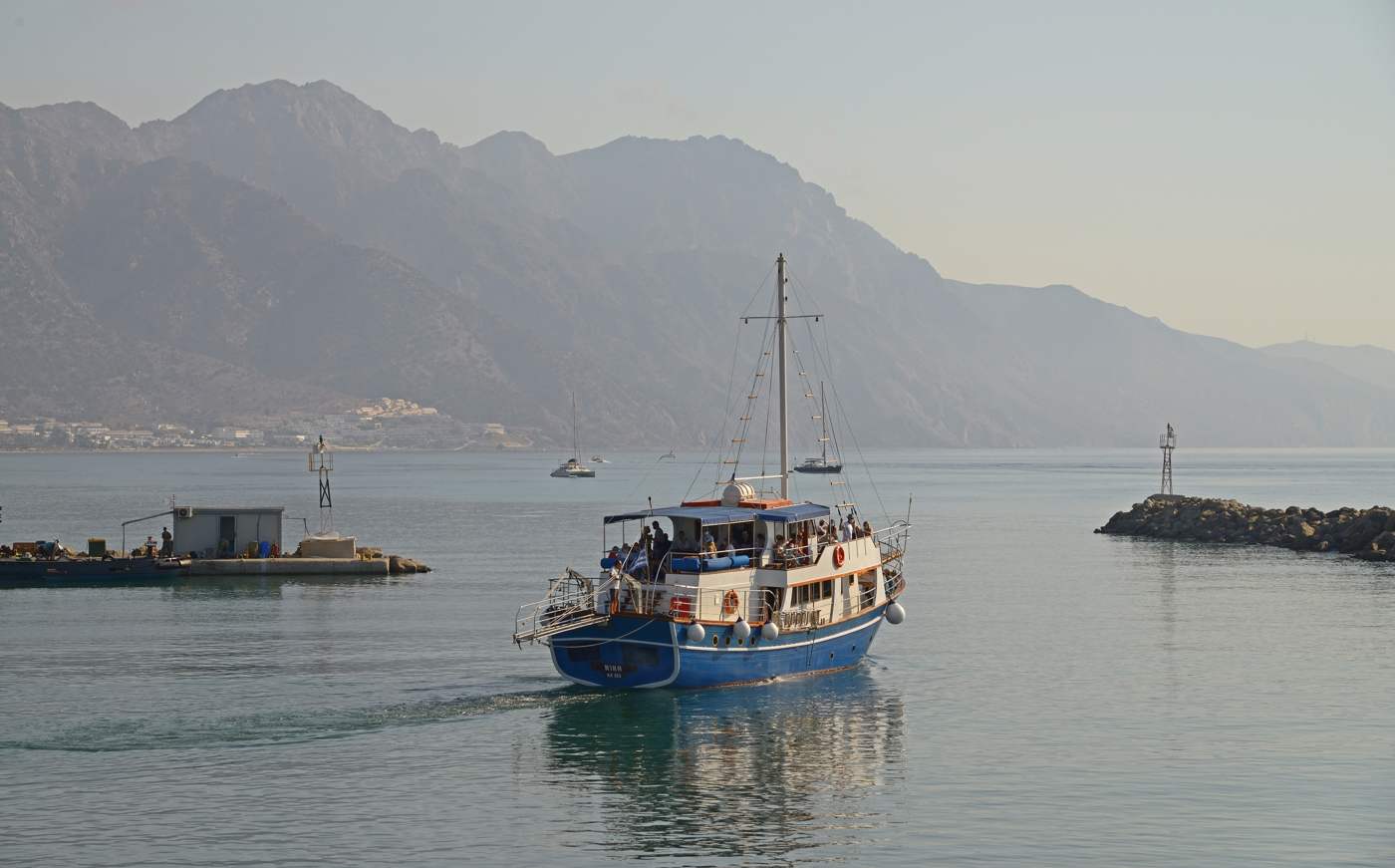
Bodrum sits on the Turkish coast directly across the strait from Kos, visible on clear days from the island’s northern beaches. Passenger boats depart Kos Town harbour for Bodrum throughout the tourist season, covering the distance in around twenty to forty-five minutes depending on vessel and sea conditions. The journey crosses an international border between Greece and Turkey, requiring a valid passport and customs formalities at both ends. Bodrum occupies the site of ancient Halicarnassus, birthplace of the historian Herodotus and home to the Mausoleum, one of the Seven Wonders of the ancient world. Plan the whole trip with Greece Tours.
The Castle of St Peter, a Knights Hospitaller fortress built in the early fifteenth century, dominates the harbour and houses the Museum of Underwater Archaeology. The town spreads around twin bays with a whitewashed old quarter, a sprawling bazaar and a modern marina.
Day-trippers typically spend six to eight hours ashore, enough time to visit the castle, walk through the Mausoleum ruins, browse the bazaar and sample Turkish cuisine. Organised tours handle passport collection and border paperwork, while independent travellers purchase tickets directly at the harbour and manage their own documentation. The excursion offers a sharp cultural contrast to the Greek islands, with mosques, Turkish coffee houses and carpet shops replacing tavernas and souvenir stalls. Bodrum’s peninsula extends west and south with resort towns and beaches, but day visitors concentrate on the central harbour district and its historical landmarks.
The crossing represents one of the shortest international sea routes in the Mediterranean, bridging two countries and two continents in less than an hour.
What passport and border requirements apply for a Bodrum day trip from Kos?
All passengers crossing from Kos to Bodrum must carry a valid passport with at least six months remaining validity.
The ferry companies coordinate passport collection and border formalities, either gathering documents at their harbour offices before boarding or collecting them on the boat itself. Passengers surrender their passports to the crew or tour representative, who presents the batch to Greek exit control and Turkish immigration officers. The process adds around thirty minutes to the overall journey time, with documents returned individually once stamping is complete. Travellers keep their boarding passes and passport receipts throughout the day, presenting them when reclaiming documents for the return crossing. The system streamlines border control for high-volume tourist routes, avoiding long queues at immigration desks.
Turkish entry regulations vary by nationality, with citizens of the European Union, United Kingdom, United States. Canada and Australia among those eligible for visa-free entry for tourism stays up to ninety days within a given period. Other passport holders require electronic visas obtained online before departure or visas on arrival, depending on bilateral agreements in force at the time of travel. The Kos ferry operators and travel agencies provide general guidance, but passengers remain responsible for verifying their own entry eligibility through official Turkish government channels. Regulations change periodically, so checking current rules weeks before the planned trip prevents last-minute complications.
Greek exit formalities are minimal for European Union and Schengen-area citizens, requiring only passport verification and an exit stamp. Non-European travellers ensure their Greek entry stamps and any Schengen visa conditions allow for re-entry after the Turkish excursion, particularly if continuing travel within Greece or the wider Schengen zone. Border guards occasionally ask about accommodation addresses or return flight details, standard questions for international crossings. The entire passport control sequence on both sides typically completes within forty-five minutes, though peak summer mornings with boats departing simultaneously can extend waiting times. Passengers arriving at the harbour at least one hour before scheduled departure allow sufficient margin for document processing and boarding.
Children travelling with adults require their own passports, as family entries in parental documents are no longer accepted for international crossings. Photocopies of passports do not suffice, and national identity cards valid for intra-European travel cannot be used for entry into Turkey. Travellers carry their original passport throughout the day in Bodrum, as Turkish police occasionally conduct spot checks in tourist areas and the castle museum requires identification for ticket validation. Lost or stolen passports during the excursion necessitate reporting to local police and contacting the nearest consulate, a process that can delay return travel by days. Keeping passports secure in a zipped pocket or neck pouch reduces risk during the busy harbour and bazaar visits.
Which boats operate the Kos to Bodrum crossing and how long does the journey take?
Passenger ferries and hydrofoils connect Kos Town harbour to Bodrum daily during the main season, with departures between morning and early afternoon.
The ferry terminal in Kos Town occupies the eastern end of the harbour, adjacent to the Castle of Nerantzia and the main waterfront promenade. Ticket offices line the quayside, representing different operators and boat types, with agents actively promoting departures to passing tourists. Boats range from large car ferries capable of carrying vehicles to sleek passenger-only catamarans and hydrofoils designed for speed and comfort. The larger vessels offer open-air decks, indoor seating and small cafeterias serving drinks and snacks, while hydrofoils provide aircraft-style seating in enclosed cabins. Weather conditions influence the choice of vessel, with hydrofoils sometimes cancelled in rough seas while conventional ferries maintain service in moderate swells.
Departure times cluster in the morning, with the earliest boats leaving around eight or nine o’clock to maximise time in Bodrum. A second wave of departures follows around midday for travellers preferring a shorter visit or a later start. Return crossings typically leave Bodrum between four and six in the afternoon, timed to deliver passengers back to Kos Town before dinner. The schedule expands in July and August when demand peaks, with operators adding extra sailings or larger boats. Outside the main season from May to October. The service reduces to a handful of weekly departures or suspends entirely during the winter months when tourist numbers drop and weather becomes less predictable.
Booking options include advance online reservations, tickets purchased from harbour agents the day before travel, or same-day sales subject to availability. Organised excursions bundled with guided tours in Bodrum often cost more than independent ferry tickets but include passport handling, a tour escort and sometimes lunch or museum entries. Independent travellers compare prices among the competing ticket offices, where rates vary slightly depending on boat type and operator. The fare typically covers the return crossing, with separate charges for any vehicle transport if travelling by car ferry. Passengers receive a boarding pass and a passport receipt, both essential for reclaiming documents and boarding the return boat.
The crossing itself offers views of the Kos coastline receding to the south and the Turkish mainland growing larger ahead. The strait between the two countries narrows to around four kilometres at its closest point, explaining the brief journey time. Dolphins occasionally appear alongside the boats, particularly in the early morning when the sea is calm. The approach to Bodrum reveals the white town climbing the hillsides around the harbour, with the castle’s stone towers prominent at the waterfront. Boats dock at the central Bodrum marina or a dedicated ferry terminal steps from the town centre. Placing passengers immediately within walking distance of the main attractions and the bazaar district.
What remains of ancient Halicarnassus and the Mausoleum in Bodrum today?
Ancient Halicarnassus lies beneath and around modern Bodrum, with the Mausoleum site occupying a fenced archaeological zone in the town centre.
The Mausoleum site sits on Turgutreis Caddesi, a main street running inland from the harbour about ten minutes’ walk from the ferry terminal. A perimeter fence encloses the excavated remains, with an entrance booth selling tickets and a small display area showing reconstruction drawings and historical photographs. The tomb originally rose in three distinct sections: a high rectangular base containing the burial chamber. A colonnade of thirty-six Ionic columns supporting the middle tier. A stepped pyramid roof crowned by a marble chariot sculpture of Mausolus and his wife Artemisia. Earthquakes between the twelfth and fifteenth centuries progressively damaged the structure. Knights Hospitaller builders quarried the fallen stones to construct the Castle of St Peter.
Incorporating relief panels and architectural fragments into the fortress walls.
Visitors descend steps into the excavation to view the foundations and the underground burial chamber, a vaulted stone room where Mausolus was interred. Information panels in Turkish and English explain the building phases and the archaeological campaigns that uncovered the remains during the nineteenth and twentieth centuries. British Museum expeditions removed many of the surviving sculptures, including the chariot group and frieze panels depicting battles between Greeks and Amazons, now displayed in London. The site retains column bases, sections of the foundation platform and scattered architectural elements too heavy or fragmentary to transport. The scale of the foundations conveys the monument’s original grandeur, even though little rises above ground level.
Ancient Halicarnassus extended across the slopes surrounding the harbour, with city walls, a theatre and residential districts spreading up the hillsides. The theatre, carved into the northern slope overlooking the modern town, survives in partially restored condition with seating tiers and stage area visible. The structure accommodated around thirteen thousand spectators and hosted dramatic performances and civic gatherings. Sections of the Hellenistic city walls run along the ridges above Bodrum, built from massive stone blocks fitted without mortar. The Myndos Gate, one of the original city entrances on the western edge of town, stands partially reconstructed with twin towers flanking the passageway. These scattered remains require more time and uphill walking to visit.
Day-trippers usually concentrate on the Mausoleum and the castle, both centrally located and accessible within a compact walking circuit. Combining things to do in Kos with a Bodrum excursion creates a richer historical itinerary spanning both Greek and Turkish heritage.
Herodotus, the fifth-century BCE historian known as the father of history, was born in Halicarnassus and mentions his native city in his writings. A modern statue of Herodotus stands in a small park near the harbour, commemorating his legacy. The Carian civilisation that built Halicarnassus predated Greek colonisation, and the city became a prominent member of the Dorian Hexapolis, a confederation of six Greek cities. Mausolus ruled as a satrap under the Persian Empire, blending Greek and Persian cultural elements in his court and his monumental tomb. The term mausoleum entered languages as a generic word for grand tombs, derived directly from his name.
Walking through Bodrum, visitors trace layers of history from Carian and Greek periods through Roman. Byzantine and Ottoman eras to the modern Turkish republic, each leaving architectural and cultural imprints on the urban fabric.
What can visitors see inside the Castle of St Peter in Bodrum?
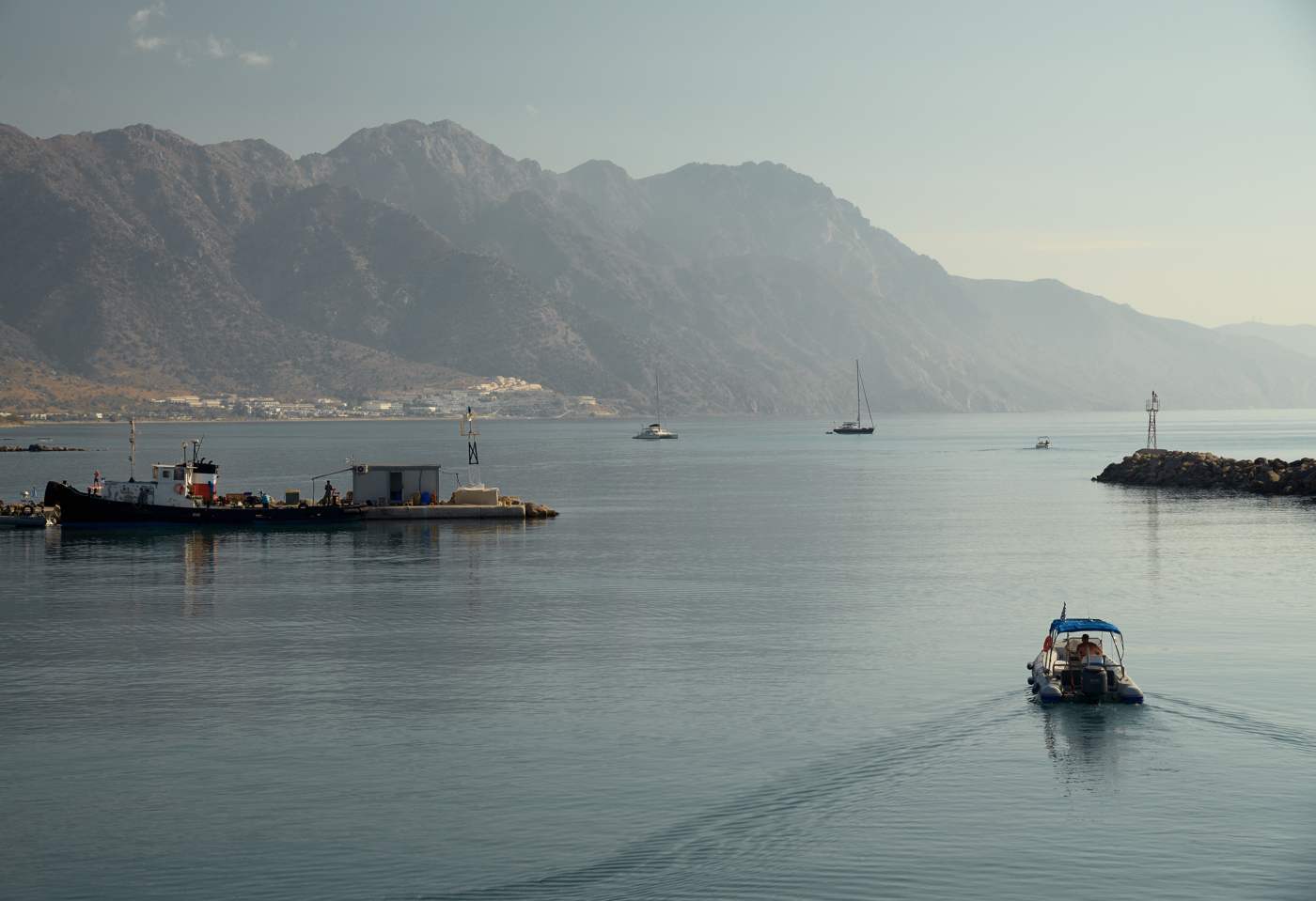
The Castle of St Peter, built by the Knights Hospitaller starting in the early fifteenth century, occupies a promontory at Bodrum harbour and houses the Museum of Underwater Archaeology.
The Knights Hospitaller, also known as the Knights of St John. Controlled Rhodes and several Dodecanese islands during the fourteenth and fifteenth centuries and built the castle to secure the Anatolian coast opposite their holdings. Construction began around the year fourteen hundred and two, using stone quarried from the ruins of the Mausoleum and other ancient Halicarnassus structures. Green marble columns, relief sculptures and inscribed blocks from the Mausoleum are visible embedded in the castle walls, recycled as building material. The fortress served as a military stronghold until Ottoman forces captured it in the early sixteenth century, after which it functioned as a garrison and later fell into disrepair before restoration as a museum in the mid-twentieth century.
The castle entrance leads through a gatehouse into the lower courtyard, where ticket booths and orientation panels greet visitors. Pathways wind upward through successive defensive walls and towers, each level offering different museum galleries and viewpoints. The English Tower, French Tower, German Tower, Italian Tower and Snake Tower represent the national chapters of the Knights Hospitaller that contributed funds and manpower to the construction. Each tower now houses thematic exhibitions related to underwater archaeology and maritime history. The English Tower displays the Uluburun shipwreck collection, Bronze Age cargo from a vessel that sank off the Turkish coast around three thousand three hundred years ago.
Including copper ingots, tin, glass beads, ivory and luxury goods from across the eastern Mediterranean.
The Glass Wreck Hall exhibits an extraordinary collection of Islamic glass recovered from an eleventh-century shipwreck. Including intact vessels, bowls and decorative objects in cobalt blue, emerald green and amber hues. The Carian Princess Hall presents the remains and grave goods from a noblewoman’s tomb discovered near Bodrum, including gold jewellery, a crown and ceremonial objects. Amphora galleries showcase hundreds of ceramic transport jars used for wine, oil and grain across antiquity, arranged by period and origin. The museum’s underwater archaeology focus reflects Bodrum’s role as a centre for marine research and excavation. With pioneering work conducted by Turkish and international teams along the Aegean and Mediterranean coasts.
Visitors interested in the Knights’ history and the castle’s connection to how to get to Kos and the Dodecanese find interpretive panels explaining the order’s regional network and defensive strategy.
The castle ramparts and towers provide sweeping views across Bodrum’s twin bays, the marina filled with yachts and gulets, and the surrounding hills dotted with white houses. The highest tower reaches about forty-seven metres above sea level, offering sight lines across the strait toward Kos on clear days. Shaded courtyards with bougainvillaea, palms and citrus trees offer rest spots between gallery visits. A small chapel within the castle retains Gothic architectural details, a rare example of medieval Christian architecture in Turkey. The museum requires around two to three hours for a thorough visit, though day-trippers often allocate ninety minutes to see the highlights before moving on to the bazaar and town centre.
The combination of military architecture, recycled ancient stones and world-class archaeological collections makes the castle the single most important stop on a Bodrum day trip.
What does the Bodrum bazaar offer and where is it located?
The Bodrum bazaar spreads through the streets inland from the harbour, centred on the pedestrianised lanes behind the waterfront. Stalls and shops sell Turkish carpets, kilims, leather goods, spices, ceramics, jewellery, textiles and souvenirs.
The main bazaar district begins about five minutes’ walk from the ferry terminal, accessed via narrow streets climbing gently uphill from the harbour esplanade. Dr Alim Bey Caddesi and the surrounding alleys form the commercial heart, lined with shops displaying goods on racks extending into the pedestrian zones. Carpet sellers hang kilims and rugs on walls and drape them over railings, creating colourful corridors of woven patterns. Leather shops offer jackets, bags, belts and shoes, often with tailors on site for custom adjustments. Spice vendors arrange pyramids of sumac, cumin, saffron, dried peppers and Turkish tea in open sacks, filling the air with pungent aromas.
Ceramic stores stock hand-painted plates, bowls, tiles and decorative evil-eye amulets in traditional Iznik and Kutahya styles.
Bargaining is customary and expected in the bazaar, with initial asking prices often set well above the seller’s target. Shoppers who engage in polite negotiation, compare prices across stalls and demonstrate willingness to walk away typically secure discounts of twenty to forty percent. Vendors offer tea or apple tea to prospective buyers, a gesture of hospitality that also encourages lingering and conversation. The tea ritual is part of the shopping experience, not an obligation to purchase, though accepting it opens the door to extended negotiation. Credit cards are widely accepted in established shops, while smaller stalls prefer cash in Turkish lira or euros.
ATMs are plentiful near the harbour and bazaar entrances for those needing to withdraw local currency.
Beyond the main tourist bazaar, side streets reveal everyday markets where Bodrum residents shop for produce, fish, bread and household goods. The Friday market, a large weekly gathering, attracts vendors from surrounding villages selling fruit, vegetables, olives, cheeses and regional specialties. Day-trippers visiting on a Friday can explore this more authentic market scene, though it requires venturing further from the harbour area. The contrast between the tourist-focused bazaar and the local market illustrates Bodrum’s dual identity as both a resort town and a working Turkish city. Shoppers seeking high-quality carpets or leather goods benefit from researching typical prices and quality markers beforehand, as the bazaar includes both reputable dealers and vendors selling mass-produced imports.
Travellers planning where to stay in Kos for an extended period sometimes make multiple Bodrum trips to complete larger purchases or commission custom-made items.
The bazaar also contains cafes, pastry shops and small restaurants where shoppers pause for refreshment. Turkish coffee, served thick and strong in small cups, and baklava, layered pastry with nuts and syrup, are ubiquitous offerings. Freshly squeezed pomegranate juice, sold from carts with mechanical presses, provides a cooling break during warm afternoons. The pedestrian streets create a relaxed browsing environment free from vehicle traffic, though motorbikes occasionally weave through the crowds. Pickpocketing can occur in crowded market areas, so visitors keep valuables secure and remain aware of their surroundings. The bazaar experience, with its sensory overload of colours, scents, sounds and sales pitches, contrasts sharply with the quieter.
More orderly shopping streets of Greek island towns, offering a vivid immersion in Turkish commercial culture within a short walk from the boat dock.
What Turkish food and drink day-trippers try in Bodrum?
Bodrum’s restaurants and cafes serve classic Turkish dishes including kebabs, mezes, pide flatbreads, fresh seafood and regional specialties. Breakfast spreads feature olives, cheeses, tomatoes, cucumbers, honey and bread.
Waterfront restaurants line the harbour promenade, offering tables with views of the castle and moored boats. Menus typically display photographs and English translations, and waiters speak enough English to guide foreign diners through the options. A typical meze lunch begins with a selection of small dishes brought to the table: hummus made from chickpeas, tahini and lemon. Baba ghanoush. A smoky aubergine puree. Haydari, thick yoghurt with herbs and garlic. And dolma, vine leaves stuffed with rice, pine nuts and currants. Fresh bread accompanies the mezes for scooping and dipping. Main courses include grilled sea bass, sea bream or calamari, often priced by weight and cooked over charcoal.
Meat eaters choose from lamb or chicken shish kebabs, adana kebab made with spiced minced meat, or kofte, seasoned meatballs served with rice or bulgur pilaf.
Pide, often called Turkish pizza, is a boat-shaped flatbread topped with cheese, minced meat, egg or vegetables and baked in a wood-fired oven. The crispy edges and soft centre make it a satisfying quick lunch. Lahmacun, a thinner flatbread spread with minced lamb, tomatoes and peppers, is rolled up with fresh parsley and lemon juice and eaten by hand. Street vendors and small eateries away from the harbour often serve these dishes at lower prices than the waterfront establishments, and the quality can be equally high. A lunch of pide or lahmacun with a salad and a drink costs a fraction of a full meze and fish meal, leaving budget for castle admission and bazaar purchases.
Turkish tea, served in small tulip-shaped glasses, is the national drink and offered throughout the day in cafes, shops and homes. The strong black tea is brewed in a double teapot system and often sweetened with sugar cubes. Turkish coffee, prepared by boiling finely ground coffee with water and sugar in a small pot called a cezve. Produces a thick, intense brew served with the grounds settled at the bottom of the cup. Ayran, a salted yoghurt drink, accompanies grilled meats and pide, providing a cooling contrast to spicy or rich flavours. Fresh fruit juices, particularly orange and pomegranate, are widely available, pressed to order at juice bars and market stalls.
Alcohol is legal and available in Turkey, with local Efes beer and Turkish wines on restaurant menus, though prices are higher than in Greece due to taxation.
Desserts showcase Turkey’s sweet traditions, with baklava leading the list. Layers of filo pastry filled with pistachios or walnuts and soaked in honey syrup create a rich, sticky treat sold by weight in pastry shops. Kunefe, shredded pastry with melted cheese and syrup, is served warm and offers a textural contrast between crispy top and gooey centre. Turkish delight, or lokum, comes in flavours including rosewater, lemon, pistachio and pomegranate, dusted with powdered sugar. Ice cream vendors sell dondurma, a stretchy, chewy ice cream made with salep flour and mastic, often served with theatrical scooping and juggling. Day-trippers sampling these dishes gain insight into Turkish culinary culture, a highlight of the excursion alongside the historical and shopping experiences.
The food alone justifies the crossing for visitors, adding a gastronomic dimension to the day’s exploration.
How much time do visitors need in Bodrum on a day trip from Kos?
A typical Bodrum day trip allows six to eight hours ashore between morning arrival and late afternoon departure.
The morning boat from Kos Town usually docks in Bodrum between nine and ten o’clock, depending on departure time and crossing duration. Passport formalities and disembarkation add another fifteen to thirty minutes before passengers are free to explore. Walking from the ferry terminal to the castle takes about five minutes along the harbour front. Making it a logical first stop while energy is high and the day is cool. The castle and museum warrant at least ninety minutes for a selective visit or up to three hours for a comprehensive tour of all galleries and towers.
Visitors exiting the castle by midday find themselves well-positioned to walk inland to the Mausoleum site, a ten-minute stroll through the town centre.
The Mausoleum ruins require around thirty to forty-five minutes to view, including time to read the information panels and photograph the foundations. From there, the bazaar is immediately adjacent, and shoppers can dive into the market lanes for an hour or two of browsing before hunger dictates a lunch break. Restaurants around the harbour and in the bazaar district serve food continuously from late morning through afternoon, so timing is flexible. A relaxed lunch with mezes and a main course occupies sixty to ninety minutes, leaving the early afternoon for additional shopping. A stroll along the waterfront or a visit to the ancient theatre if time and energy permit.
Return boats typically depart between four and six in the afternoon, requiring passengers to be back at the terminal at least thirty minutes early for passport processing and boarding.
Organised tours often follow a set itinerary with guided visits to the castle and Mausoleum, a designated lunch venue and allocated free time for shopping. These tours streamline the logistics but reduce flexibility, as the group moves together on a fixed schedule. Independent travellers enjoy the freedom to linger at sites of interest, skip others entirely and choose their own restaurants and shops. The trade-off is the manage time carefully to avoid missing the return boat, as the next departure be hours later or the following day. Setting a phone alarm or wearing a watch helps track the afternoon hours, which pass quickly in the bazaar’s immersive environment.
Visitors who pace themselves and prioritise the top two or three attractions leave Bodrum satisfied without feeling rushed, while those attempting to see everything risk superficial visits and exhaustion.
Weather influences the day’s rhythm, with summer heat peaking in early afternoon and encouraging a longer, shaded lunch break or a retreat to air-conditioned museum galleries. Spring and autumn offer milder temperatures that make walking and outdoor exploration more comfortable throughout the day. The castle’s elevated position and open ramparts provide breezy relief even on warm days, while the bazaar’s narrow lanes and awnings create pockets of shade. Travellers who arrive on an early boat and depart on a late one maximise their time ashore, gaining an extra hour or two compared to mid-morning arrivals. This extended window allows for a more relaxed pace or the addition of a secondary site like the ancient theatre or Myndos Gate.
Ultimately, six to eight hours proves sufficient for a satisfying introduction to Bodrum’s main attractions. Leaving visitors with a taste of Turkish culture and a desire to return for a longer stay.
What practical tips help day-trippers make the most of a Bodrum excursion from Kos?
Carrying a valid passport with sufficient validity is mandatory, and keeping it secure throughout the day prevents loss and complications. Bringing Turkish lira or euros for purchases, meals and admission fees ensures smooth transactions, as vendors prefer cash.
Currency exchange is available at the Bodrum ferry terminal and at banks and exchange offices throughout the town, though rates vary. ATMs dispense Turkish lira and often accept international cards with reasonable fees. Exchanging a moderate amount of lira before leaving Kos or immediately upon arrival in Bodrum provides cash for initial purchases and tips. Many restaurants and larger shops accept euros, but the exchange rate applied is typically less favourable than official rates, so paying in lira saves money. Credit cards work in most tourist-oriented establishments, though smaller bazaar stalls and street food vendors operate on a cash-only basis. Keeping a mix of small and large denomination notes facilitates transactions and makes receiving correct change easier.
Modest dress is respectful in Turkey, a predominantly Muslim country, though Bodrum as a resort town sees a wide range of tourist attire. Covering shoulders and knees is advisable when visiting mosques or venturing into residential neighbourhoods, and women wish to carry a light scarf for entering religious sites. The castle and archaeological sites have no specific dress code, but comfortable, practical clothing suits the walking and climbing involved. Sunglasses and a wide-brimmed hat provide relief from intense summer sun, and high-factor sunscreen prevents burns during hours spent outdoors. A small daypack or crossbody bag keeps hands free for photography and shopping while securing passport, money and phone against pickpockets in crowded areas.
Mobile phone roaming charges can be high when crossing from Greece to Turkey, as the two countries are not part of the same mobile network agreements. Turning off data roaming and relying on Wi-Fi available in cafes and restaurants avoids unexpected bills. Downloading offline maps of Bodrum before departure helps with navigation without internet access. The town centre is compact and walkable, with the harbour, castle, Mausoleum and bazaar all within a fifteen-minute radius, so getting lost is difficult. Street signs appear in Turkish and often in English in tourist areas, and locals in the hospitality and retail sectors generally speak enough English to provide directions or assistance.
Learning a few basic Turkish phrases like merhaba for hello. Tesekkur ederim for thank you and ne kadar for how much enhances interactions and is appreciated by vendors and service staff.
Photography is permitted at most sites, though the castle museum prohibits flash photography in certain galleries to protect delicate artefacts. Asking permission before photographing people, particularly in the bazaar or residential areas, is courteous and usually granted with a smile. The castle ramparts, harbour views and bazaar colours provide excellent photo opportunities. Travellers remain aware of their belongings in crowded spaces, keeping bags zipped and valuables out of sight. Bodrum is generally safe for tourists, but opportunistic theft can occur in busy markets and transport hubs. Staying hydrated is essential, especially during summer, and bottled water is inexpensive and widely available.
Restaurants and cafes serve tap water, which is generally safe, though visitors prefer bottled water for peace of mind. Pacing the day with rest breaks in cafes or shaded courtyards prevents fatigue and allows time to absorb the experience rather than rushing from site to site.


Can visitors extend their stay in Bodrum beyond a day trip from Kos?
Travellers wishing to spend more time in Bodrum can book accommodation in the town and stay overnight or for days, using the same ferry route for arrival and departure.
The Bodrum peninsula extends west and south from the town, encompassing around fifteen coastal settlements and beaches. Bitez, Ortakent, Akyarlar, Turgutreis and Gumusluk are among the resort villages offering quieter alternatives to the central harbour area, each with its own character and beach. Gumusluk, a fishing village on the western tip, is known for its seafood restaurants and the submerged ruins of ancient Myndos visible in the shallow bay. Turgutreis hosts a large weekly market and a marina, while Bitez attracts windsurfers with consistent breezes and a long sandy beach. Dolmus minibuses connect these villages to Bodrum town centre, running frequently throughout the day and providing an inexpensive way to explore the peninsula.
Staying overnight in Bodrum allows time to visit the ancient theatre at a leisurely pace. Explore the Myndos Gate and city walls. Discover the quieter neighbourhoods away from the tourist core. Evening brings a different atmosphere, with the harbour promenade illuminated and restaurants filling with diners. Bodrum’s nightlife includes bars, clubs and live music venues, particularly concentrated in the Bar Street district, which comes alive after midnight during the summer season. The town also serves as a base for boat trips to nearby coves and islands, with gulet cruises offering day or multi-day sailing itineraries along the Turkish coast. These longer excursions reveal secluded bays, crystal-clear waters and traditional villages inaccessible by road.
Visitors extending their stay must ensure their passport and visa conditions allow for the intended duration in Turkey. European Union citizens and many other nationalities can remain for up to ninety days within a given period without a visa, but checking specific rules for one’s nationality is essential. Accommodation providers require passport details for registration with local authorities, a standard procedure for foreign guests. Booking hotels or guesthouses in advance during peak summer months ensures availability and often secures better rates than walk-in reservations. Budget travellers find hostels and pensions in the town centre, while those seeking luxury choose from five-star resorts with private beaches, spas and all-inclusive packages on the peninsula’s quieter stretches.
Returning to Kos from Bodrum after an extended stay follows the same ferry process as the day trip, with boats departing daily during the season. Passengers book return tickets in advance or purchase them from Bodrum’s ferry terminal offices, located near the harbour. The flexibility to choose departure dates allows travellers to tailor their Turkish visit to their interests and schedule. Some visitors combine a Bodrum stay with onward travel to other Turkish destinations, using the town’s bus station for connections to Izmir, Ephesus, Pamukkale and beyond. Bodrum’s airport, located on the peninsula, offers domestic and international flights, providing an alternative exit route.
For those based in Kos, the option to extend a day trip into a longer Turkish adventure adds significant depth to the overall holiday. Transforming a brief excursion into a meaningful cross-cultural exploration.
What other day trips from Kos complement a Bodrum excursion?
Kos serves as a hub for boat trips to neighbouring islands including Nisyros, Kalymnos and Pserimos, each offering distinct landscapes and attractions.
Nisyros lies about sixteen kilometres south of Kos, a volcanic island dominated by the Stefanos crater, one of the most accessible active volcanic calderas in Europe. Day boats depart Kardamena on the south coast of Kos, reaching Nisyros in around forty-five minutes. The island’s main port, Mandraki, features whitewashed houses, a medieval castle and the Panagia Spiliani monastery built into a cliff. Buses transport visitors from the port up to the volcanic plateau, where a short walk descends into the crater itself. Fumaroles hiss and steam, and the ground radiates heat, creating a lunar landscape of yellow sulphur deposits and cracked earth.
The experience contrasts sharply with Kos’s beaches and ancient ruins, adding geological drama to the island-hopping itinerary. Nisyros retains a quiet, traditional character with limited tourist development, and the tavernas in Mandraki serve home-cooked Greek dishes.
Kalymnos, famous for sponge diving and more recently for sport climbing, sits north of Kos across a narrow strait. Ferries run from Mastichari on Kos’s north coast, completing the crossing in around thirty minutes. The island’s capital, Pothia, climbs steeply from the harbour. With neoclassical mansions painted in pastel shades and a maritime museum documenting the sponge-diving industry that once employed much of the male population. Climbers from around the world visit Kalymnos for its limestone cliffs, which offer thousands of bolted routes above turquoise bays. Day-trippers explore Pothia’s waterfront, visit the climbing areas for photos even without climbing, and relax at beaches like Myrties or Massouri.
The island’s rugged interior and dramatic coastline provide a different aesthetic from Kos’s flatter northern plains and long sandy beaches.
Pserimos, a tiny island between Kos and Kalymnos, attracts day-trippers seeking a simple beach escape. The island has a permanent population of fewer than fifty residents, with a single settlement of whitewashed houses behind a sandy bay. Excursion boats from Kos Town and Mastichari visit Pserimos, often as part of a three-island tour that includes Kalymnos. The beach offers shallow, calm water ideal for swimming and snorkelling, and a handful of tavernas serve grilled fish and Greek salads under shaded terraces. The island’s small size means visitors can walk its length in under an hour, exploring rocky coves and a hilltop chapel.
Pserimos provides a tranquil counterpoint to the busier attractions of Bodrum and Kos Town, appealing to those who value simplicity and natural beauty over historical sites and shopping.
Combining these Greek island excursions with the Bodrum trip creates a week-long programme of diverse day trips, each highlighting different aspects of the region’s geography, history and culture. The volcanic drama of Nisyros, the climbing and maritime heritage of Kalymnos. The beach simplicity of Pserimos and the Turkish bazaar and ancient wonders of Bodrum together offer a comprehensive sampler of the eastern Aegean. Travellers based in Kos Town enjoy easy access to all these destinations, with ferries and excursion boats departing from the main harbour or nearby ports. The variety prevents monotony and appeals to groups with mixed interests, ensuring that history enthusiasts, beach lovers.
Adventure seekers and culture explorers all find satisfying experiences within a short boat ride of their accommodation.
Frequently Asked Questions
Do I need a visa to visit Bodrum from Kos?
Citizens of the European Union, United Kingdom, United States, Canada. Australia and many other countries do not require a visa for short tourist visits to Turkey, typically up to ninety days within a given period. A valid passport with at least six months remaining validity is mandatory for all nationalities crossing from Greece to Turkey. Some passport holders must obtain an electronic visa online before travel or a visa on arrival, depending on their nationality and current Turkish regulations. The ferry operators and travel agencies in Kos provide general guidance, but passengers remain responsible for verifying their own entry requirements through official Turkish government sources or their embassy.
Regulations change periodically, so checking the rules weeks before the planned trip prevents last-minute complications. Children require their own passports, as family entries in parental documents are not accepted for international crossings. Travellers ensure their Greek entry stamps and any Schengen visa conditions allow for re-entry after the Turkish excursion, particularly if continuing travel within Greece or the wider Schengen zone.
How much does a day trip to Bodrum from Kos cost?
Ferry tickets for the round-trip crossing from Kos Town to Bodrum vary by operator, boat type and season, with prices generally ranging from around thirty to sixty euros per person. Organised tours that include guided visits, lunch and transport within Bodrum cost more, typically between sixty and ninety euros depending on inclusions. Independent travellers pay separately for castle admission, which is moderate, and the Mausoleum site, which charges a small entrance fee. Lunch in a harbour restaurant with mezes and a main course costs approximately fifteen to thirty euros per person, while street food and simpler eateries offer meals for under ten euros.
Bazaar purchases depend entirely on individual shopping choices, from small souvenirs costing euros to carpets and leather goods priced in the hundreds. Bringing Turkish lira or euros for cash transactions ensures smooth payments, as vendors prefer cash over cards. ATM withdrawals in Bodrum incur standard international fees, and currency exchange rates at the terminal or in town vary, so comparing options saves money. Overall, budgeting around fifty to one hundred euros per person covers the ferry, admission fees, lunch and modest shopping for a comfortable day trip.
What is the best time of year for a Bodrum day trip from Kos?
The ferry service between Kos and Bodrum operates most frequently from May through October, with daily departures during the peak summer months of July and August. Spring and early autumn, particularly May, June, September and early October, offer the best balance of reliable boat schedules, pleasant weather and manageable crowds. Summer temperatures in Bodrum regularly exceed thirty-five degrees Celsius, making midday exploration of the castle ramparts and bazaar lanes hot and tiring, though harbour breezes and shaded courtyards provide relief. Spring brings wildflowers to the surrounding hills and comfortable temperatures in the low to mid-twenties, ideal for walking and sightseeing.
Autumn retains warm sea temperatures and sunny days while tourist numbers decline, resulting in shorter queues at the castle and more relaxed bargaining in the bazaar. Winter sees reduced or suspended ferry service, cooler and wetter weather, and many tourist-oriented businesses closed or operating on limited schedules. Day-trippers planning a Bodrum excursion book their Kos accommodation for the shoulder or peak season to ensure ferry availability and favourable weather conditions for the crossing and exploration.
Can I take my rental car from Kos to Bodrum on the ferry?
Some ferries operating between Kos and Bodrum are car ferries capable of transporting vehicles. Taking a rental car from Greece to Turkey involves significant complications and is generally not permitted by rental companies. Greek car rental agreements typically prohibit taking the vehicle outside Greece, and insurance coverage does not extend to Turkey. Even if a ferry accepts vehicles, customs procedures for temporarily importing a car into Turkey require specific documentation. Including vehicle registration, insurance valid in Turkey and sometimes a carnet de passage. The time and cost involved in arranging these formalities far exceed the value for a day trip, and the risk of invalidating rental insurance makes the option impractical.
Travellers wishing to explore the Bodrum peninsula by car rent a vehicle in Turkey after arriving as a foot passenger. With rental agencies available in Bodrum town and at the airport. Alternatively, dolmus minibuses and taxis provide inexpensive transport to beaches and villages around the peninsula. For the day trip itself, the compact town centre is entirely walkable. All major attractions lie within a fifteen-minute radius of the ferry terminal, eliminating any need for a vehicle.
Is Bodrum safe for tourists visiting from Kos?
Bodrum is a major tourist destination and generally safe for visitors, with low rates of violent crime and a visible police presence in the harbour and bazaar areas. Petty theft, including pickpocketing and bag snatching, can occur in crowded markets and transport hubs, so travellers keep valuables secure and remain aware of their surroundings. Carrying only necessary cash and cards, using a money belt or neck pouch for passports, and keeping bags zipped and in front reduce risk. Scams targeting tourists occasionally surface, such as overcharging in taxis without meters or inflated prices in shops without marked tags. Agreeing on taxi fares beforehand and comparing prices across multiple bazaar stalls protect against exploitation.
Restaurants and cafes in tourist areas are generally honest, but checking bills for errors or unexpected charges is prudent. Turkey’s political and security situation is stable in the major resort areas, though travellers monitor travel advisories from their home governments before departure. Women travelling alone or in pairs report problems in Bodrum, a cosmopolitan resort accustomed to international visitors, though modest dress and standard urban caution apply. Overall, the day trip from Kos to Bodrum presents no unusual safety concerns beyond those common to any busy tourist destination.
What language is spoken in Bodrum and will I need Turkish?
Turkish is the official language of Turkey and the primary language spoken by Bodrum residents, but English is widely understood and spoken in the tourism sector. Hotel staff, restaurant waiters, ferry operators, museum guides and bazaar vendors typically speak enough English to conduct transactions and provide basic information. Menus in tourist areas often include English translations, and signs at major attractions like the Castle of St Peter and the Mausoleum appear in both Turkish and English. Learning a few basic Turkish phrases such as merhaba for hello, tesekkur ederim for thank you. Lutfen for please and ne kadar for how much enhances interactions and is appreciated by locals, often resulting in friendlier service and better bargaining outcomes.
Numbers are useful for negotiating prices and understanding costs, and a translation app on a smartphone can bridge gaps when more complex communication is needed. Outside the main tourist zones, English proficiency drops, but gestures, patience and a smile usually suffice for simple exchanges. Turkish uses the Latin alphabet with a few additional characters, making street signs and written words somewhat recognisable even without language knowledge. Overall, English-speaking tourists navigate Bodrum comfortably without Turkish fluency, though a phrasebook or app adds convenience and cultural engagement.
What I do if I miss the return ferry to Kos?
Missing the return ferry from Bodrum to Kos requires immediate action to arrange alternative transport or overnight accommodation. The first step is to contact the ferry company or the ticket office at the Bodrum terminal to inquire about later departures the same day or the next available boat. During peak season, additional sailings operate in the evening, though these are not guaranteed. If no same-day option exists, travellers book a hotel or guesthouse in Bodrum for the night and secure a ticket for the following day’s ferry. Accommodation near the harbour is plentiful, and booking apps or walk-in inquiries at hotels usually yield availability except during major Turkish holidays.
Passengers must inform their Kos accommodation of the delay and any pre-booked tours or onward travel arrangements. The financial cost includes the additional ferry ticket, overnight lodging and meals, as well as potential cancellation fees for missed bookings. Travel insurance policies sometimes cover missed connections due to unforeseen circumstances, so checking policy terms and keeping receipts is advisable. To avoid this situation, setting phone alarms for the return departure time. Confirming the boat schedule in the morning and arriving at the terminal at least thirty minutes early provide a safety margin. Organised tours with group departures reduce the risk, as tour leaders track time and ensure participants board together.