
Kos is one of the flattest islands in Greece, and that level ground makes it a natural place to explore by bicycle. Kos Town and the north coast carry dedicated bike lanes, and short distances link the ancient sites, the resorts and the long beaches. Riders find city bikes, e-bikes and mountain bikes for hire across the island. Plan the whole trip with Greece Tours.
This guide explains why Kos suits cyclists, maps the bike lanes through Kos Town and the north coast, and covers hiring the right bike. It then follows the seafront route east to Lambi and Psalidi, and the flat coastal run west to Tigaki, Marmari and the Alyki salt lagoon.
Why is Kos the most cycle-friendly island in Greece?
Kos sits low and flat along a narrow 40-kilometre spine, so its coast and towns carry gentle gradients that suit riders of every level. Dedicated bike lanes, short distances and a long dry season complete the case for cycling.
The island of Kos stretches about 40 kilometres from end to end and rarely rises far from the sea along its northern shore. Mount Dikeos climbs to about 846 metres in the centre, yet the coastal belt where the towns and beaches sit stays broad and level. A rider can leave Kos Town and follow the shore for about ten kilometres without a serious climb. That flat coastal geography, more than anything, explains why cycling here feels easy. The gradients that tire riders on hillier islands are largely absent along the built-up north coast. The road and the cycle path run close to the waterline.
Warm, dry summers and mild spring and autumn weather extend the riding season well beyond the peak months. The compact distances keep rides short and manageable.
Flat terrain changes what a cycling day looks like. A family can ride from Kos Town to the beaches at Tigaki without pushing up a single hill. Older visitors and children keep pace on the level path, and an e-bike flattens even the mild rises near the salt lagoon. The short island also means a rider is never far from a taverna, a beach or a shaded square for a break. Kos measures about 290 square kilometres, yet its main sights cluster within a manageable ring of the capital. The distances between the capital, the beaches and the ancient sites rarely exceed a dozen kilometres. Cycling therefore replaces short car and bus trips for visitors.
They reach the agora, the Roman remains and the seafront under their own power rather than waiting for transport.
Warm, dry weather supports riding across the long season. The peak summer months bring strong heat, so riders start early or ride in the late afternoon and carry water. Spring and autumn offer milder air and quieter roads, and these shoulder seasons rank among the best times to cycle Kos. The meltemi wind sweeps the north coast on breezy days, pushing against westbound riders yet speeding the return east. Sun cover is thin along the exposed seafront, so a hat and sunscreen matter as much as the bike. The dry ground and clear roads keep tyres rolling fast and free of mud. The reliable weather, combined with the flat ground, lets visitors plan cycling into a normal day.
It becomes part of the holiday rather than a hard sporting effort reserved for trained riders.
Cycling also fits the character of Kos better than nearly any other Greek island. Local residents ride to work, to the market and to the beach. Drivers therefore expect bikes on the road, and the lanes are part of daily life. Rental outlets stand in Kos Town and every north-coast resort, making a bike easy to collect on arrival. The flat grid of the capital means a first-time visitor can find their bearings within an hour in the saddle. Cycling links the ancient sites, the seafront and the beaches into one continuous route, so a rider builds a full day from the harbour outward.
That blend of easy ground, ready bikes and short distances puts Kos ahead of steeper, more scattered islands for touring on two wheels.
Where do the dedicated bike lanes run in Kos Town and along the north coast?
Kos Town carries a network of marked bike lanes through its flat grid and along the harbour and seafront.
Kos Town lays out its streets on a flat, near-grid plan, which makes it one of the easiest Greek capitals to cross by bicycle. Painted bike lanes run along the main avenues, past the ancient agora and the western excavation area. The path also curves around the harbour, where the Castle of Nerantzia and the Plane Tree of Hippocrates stand. The lanes connect the port, the marina, the museum square and the seafront promenade into one linked circuit. A rider can loop the whole centre without joining heavy traffic. Signposts and road markings point the way between the main sites. The palm-lined avenue behind the town beach carries a wide path used by cyclists, walkers and joggers together.
The level surface keeps the pace relaxed for riders of any age.
The coastal cycle path leaves Kos Town north of the centre and runs west toward Lambi and the town beaches. The route hugs the shore for kilometres, separated from the main road in long stretches. Riders gain a clear view of the strait and the Turkish coast opposite. The developed north coast past Lambi keeps a rideable shoulder or path toward Tigaki and Marmari. The ground stays flat and open, and the sea sits within reach for a swim break. Benches and small beaches line the route, offering shaded stops. Caf\u00e9s near the water give riders a place to rest before turning back. This coastal corridor forms the backbone of cycling on Kos.
It carries the busiest, most scenic riding on the island and links the capital to the north-coast beach resorts.
The marked lanes thin out away from the seafront, and riders share quieter roads with light traffic. The route out to the Asklepion, about 4 kilometres southwest of the capital, follows a gentle rise on ordinary roads rather than a dedicated path. Lanes toward the airport and the inland villages give way to open country roads that carry farm and local traffic. Drivers on Kos meet cyclists daily and generally leave room, yet riders still hold to the right and stay alert at junctions. A basic map or phone app helps riders link the lanes with these quieter roads. The core network of protected lanes stays concentrated in Kos Town and along the north-coast shore.
That is where the density of riders is highest and the ground is flattest across the island.
The lane network shapes how riders plan a day on Kos. Riders base their cycling on the protected coastal path and the town lanes, then branch onto quiet roads for a specific sight. A typical outing runs the seafront, loops the old town and returns along the beach avenue, all on marked routes. Longer rides join the coastal path to the roads toward Tigaki, the salt lagoon or the Asklepion. The flat, linked layout means a rider rarely backtracks or faces a dead end. The connected system rewards a slow, exploratory pace of riding. Kos Town works as the natural hub, with the lanes fanning out to the harbour, the beaches and the ancient sites.
Every ride starts and finishes within the same compact core of the capital.
What kinds of bikes can visitors hire on Kos?
Rental outlets across Kos Town, Tigaki, Marmari and the resorts hire out city bikes, e-bikes, mountain bikes and children’s bikes. City and electric models suit the flat coast, while mountain bikes handle the climbs toward Zia and the inland tracks.
City bikes make the most common hire on Kos, matching the flat towns and coastal paths. These upright, geared or single-speed machines carry a basket and suit short rides between the town, the beach and the tavernas. A rider collects one in Kos Town or a resort and returns it at the day’s end or the week’s. The low frame and relaxed position fit casual riders and holidaymakers in ordinary clothes. City bikes cover the seafront path, the old-town lanes and the run to Lambi with ease, since the ground barely rises. Baskets and rear racks let riders carry towels, water and shopping without a bag on the back.
A family staying near the beach hires a pair of city bikes for the daily trip to the sand and the shops.
E-bikes have become a common hire on Kos, and they widen the range of a casual rider. The electric motor smooths the mild rises inland and cuts the effort of a headwind on the north coast. A family can ride farther without strain. An e-bike opens the climb toward Zia or Pyli to riders who avoid it on a plain bike. The battery lasts for a full day of coastal riding. Cycling ranks high among the things to do in Kos, and the electric option brings it within reach of older visitors and mixed-ability groups. Mountain bikes form the third main type, built for the dirt tracks and the Mt Dikeos foothills.
They handle the rougher trails of the interior and the Kefalos peninsula, where the surface turns to gravel and stone.
Hire outlets cluster in Kos Town and every north-coast resort, so collecting a bike takes little effort. Shops stand near the harbour, along the town seafront and in Tigaki, Marmari, Kardamena and Kefalos, close to where visitors stay. A rider hires by the day, by three days or by the week, and rates fall for longer hire, though this guide names no prices. Helmets, locks, child seats and panniers come as add-ons at the outlets. The staff match the bike to the rider’s plan, steering beach-bound families to city bikes and trail riders to mountain models. A quick test ride checks the fit before setting off.
Booking ahead helps in the peak summer weeks, when demand for e-bikes runs high. A bike is usually available on the day outside the busiest period.
Practical steps make hiring smooth on Kos. A rider checks the brakes, the tyres and the saddle height before leaving the shop, and confirms the lock and any deposit terms. Photographing the bike at pickup records any existing scratches before the ride. Riders lock the bike in town and at the beach, since a bike left loose can wander off. The flat terrain means a city bike suits nearly every visitor. The upgrade to an e-bike matters mainly for hillier plans or a headwind day. Water, sun cover and a phone map round out the kit for a warm-weather ride. Hiring on Kos stays cheap and simple compared with car rental.
It hands a visitor door-to-door freedom along the coast without fuel, parking or a driving licence to arrange.
What does the seafront cycle route from Kos Town to Lambi and Psalidi cover?
The seafront route runs east and north from Kos Town along the town beaches, reaching Lambi in one direction and Psalidi in the other.
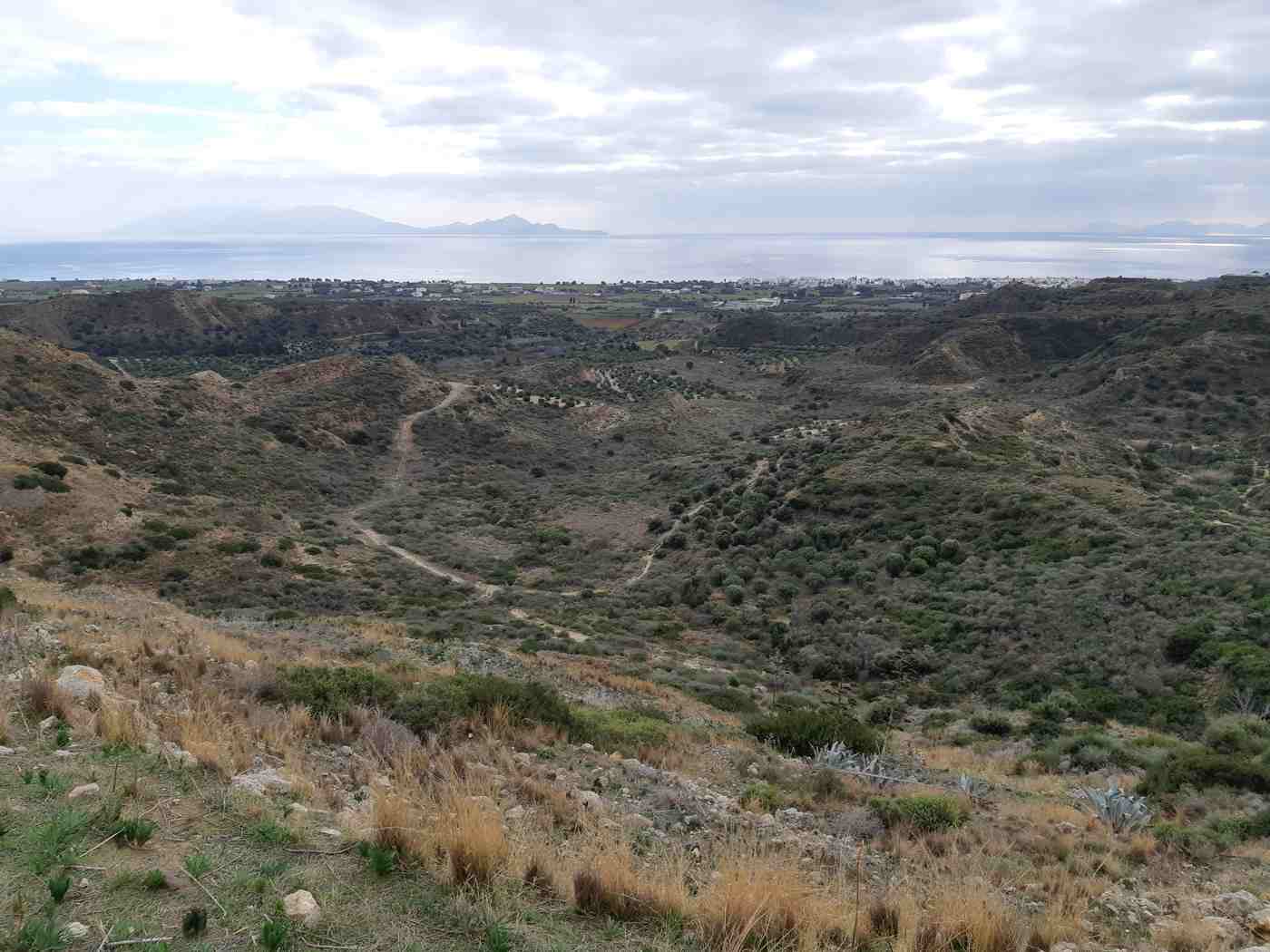
The Lambi seafront stretches north from Kos Town along a continuous beach and promenade. A wide, flat path carries cyclists past the marina, the fishing shelters and rows of tavernas facing the water. The route runs beside pale sand and shallow sea, so a rider stops for a swim within minutes of the town centre. Lambi holds a dense line of caf\u00e9s, hotels and bars behind the beach, and the level ground draws family riders and evening cyclists alike. The path meets the northern edge of the built-up town, where the beach broadens and the crowds thin. Bike racks stand at intervals along the promenade.
Riding to Lambi and back makes a short, easy outing on a city bike. It suits a first ride or a sunset spin from the harbour.
Psalidi lies southeast of Kos Town along the coast toward Cape Psalidi and the Therma hot-spring beach. The route leaves the harbour, passes the Castle of Nerantzia and follows the shore road out of the centre onto a quieter coastal stretch. Psalidi holds a run of larger beachfront hotels, a pebble-and-sand beach and open sea views across the strait to Turkey. A hotel row and beach bars line the coast the whole way. The ground stays flat as far as the cape, where the coast turns wilder and the road climbs gently toward Agios Fokas. Strong afternoon breeze can meet a rider heading out, then push the return back to town.
Cyclists often ride to Psalidi for the calmer, resort-lined coast. The route also allows a rider to continue toward the warm-water cove at Therma, further east.
The two directions combine into a single seafront loop around Kos Town. A rider heads north to Lambi, returns through the centre and continues southeast to Psalidi, tracing the whole town coastline on flat ground. The circuit passes the harbour, the castle, the marina and the town beaches, linking the main sights with the sand in one ride. Distances stay short, so the loop fits an easy morning or a cooler evening. The paved surface and gentle grade let a rider soft-pedal and watch the sea rather than fight the road. Water fountains and shaded benches sit along the way for a pause. This town loop serves as the classic introduction to cycling on Kos.
It shows why the flat capital and its seafront rank as the heart of the island’s bike scene.
The seafront route also works as a springboard for longer rides. A rider warms up on the flat town coast, then joins the coastal path west toward Tigaki and Marmari for a bigger day. The same start also leads inland to the Asklepion or the villages on gentle roads. The route suits every level, from a child on a first bike to a rider training on an e-bike over a longer loop. Caf\u00e9s, beaches and shaded squares line the whole coast, so a rider breaks the ride as often as the heat demands. The seafront route, anchored on the harbour and the town beaches, ties the sights and the sand together.
It feeds into the wider island network as one flexible base for a cycling holiday on Kos.
Where does the flat coastal route west from Kos Town to Tigaki, Marmari and the Alyki salt lagoon lead?
The western coastal route follows flat ground from Kos Town to the beach resorts of Tigaki and Marmari, skirting the Alyki salt lagoon behind the sand.
The route west leaves Kos Town on the flat coastal path and heads toward Tigaki, about 12 kilometres away. The way runs through the edge of town, past gardens and open ground, then along the shore where the north coast opens out. Tigaki spreads along a long, shallow, sandy beach backed by a relaxed resort of tavernas, sunbeds and rooms. The pale sand shelves gently into calm, warm water, so families with children settle in easily. The flat surface lets a child pedal the distance without help. A cycle and walking path continues along the sand toward Marmari, keeping the whole run flat and simple.
Riding from the capital to Tigaki makes a rewarding half-day, with a swim, a beach lunch and a level return along the same coastal corridor.
Marmari sits about 14 kilometres west of Kos Town, just beyond Tigaki along the same flat coast. A long, wide beach of fine pale sand and shallow water backs a resort of tavernas, sunbeds and water-sports stations. The open north coast funnels the meltemi across the strait, so Marmari ranks among the top windsurf and kitesurf beaches on Kos. Calm mornings suit families, while breezy afternoons fill the water with sails. Schools on the sand hire out boards and give lessons. The flat coast road and path let a rider link Tigaki and Marmari in one easy run, stopping at either beach. Cycling between the two resorts turns a beach day into a moving one.
The sand, the dunes and the salt lagoon all lie within a short, level ride of each other.
The Alyki salt lagoon lies behind the beaches of Tigaki and Marmari, a flat wetland that draws cyclists off the sand. A level path and quiet track circle the lagoon, giving a gentle loop of about four kilometres on hard, even ground. Flamingos, herons and migratory birds feed in the shallow salt water, most visible in spring and autumn. The lagoon once produced sea salt, and low banks and channels still divide the pans. Reeds and tamarisk edge the water. The setting sits within easy reach of the beach, so a rider swaps the shore for the birdlife in minutes. Cycling the Alyki loop adds a quiet, natural leg to a beach ride.
The dead-flat ground makes it one of the simplest circuits on the north coast of Kos.
The western coastal route rewards riders of every kind. Families ride the flat path to Tigaki for a shallow-water beach day. Active riders push on to Marmari for the wind and the water sports. Birdwatchers circle the Alyki lagoon, and stronger cyclists continue west toward Mastichari and the quieter far coast. The whole run stays level, paved or hard-packed, and lined with beaches, tavernas and shade for regular stops. Distances of about 12 to 14 kilometres each way keep the ride within a half-day. The bike keeps a rider close to the sea the whole way. This western corridor, together with the seafront and the town lanes, completes the core of easy cycling on Kos.
It turns the flat north coast into one long, linked ride between the capital and the beaches.
How do you cycle from Kos Town out to the Asklepion and the Roman remains?
The Asklepion sits about 4 km southwest of Kos Town, an easy ride on quiet roads and cycle-friendly lanes. Riders pass the Casa Romana and the odeon before climbing gently to the terraced sanctuary.
The ride begins in the flat grid of Kos Town, where the ancient agora and the Plane Tree of Hippocrates mark the harbour. Cyclists follow signed streets southwest, leaving the seafront and its Italian-era buildings behind within minutes. The Casa Romana, a restored Roman villa with mosaic floors, stands beside the odeon on the way out. Traffic thins as the road passes the archaeological zone and edges toward the foothills. The gradient stays gentle for about 4 km, so city bikes handle it without strain. A steady climb of around 100 metres brings riders to the sanctuary gates.
The whole trip covers roughly 8 km each way, making it a half-day outing with time to explore the terraces and the pine-shaded slopes above the plain.
The sanctuary rewards the climb with three stone terraces linked by broad staircases. The lower level held treatment rooms and baths, the middle a temple and altar, the upper a grand temple of Asclepius. From the top platform the view stretches across the plain to Kos Town, the harbour and the Turkish coast near Bodrum. This is the ground where Hippocrates trained physicians, and the Asklepion remains the island’s signature ancient monument. Cyclists lock up at the entrance and walk the terraces on foot, since the ruins sit on stepped ground. Pine trees shade the slopes, offering a cool pause after the ride. Interpretive signs explain the healing rituals once practised on each level.
A visit of around ninety minutes covers the site before the mostly downhill return to town.
The Roman remains reward a slower ride through Kos Town before or after the sanctuary. The Casa Romana recreates a wealthy household with atria, courtyards and preserved mosaics of animals and sea creatures. Across the road the western archaeological zone holds a Roman odeon, a covered theatre once seating around 750 spectators. Nearby lie the decumanus, a colonnaded street, and the House of Europa with its famous mosaic. Cyclists thread the quiet lanes between these sites at walking pace, dismounting where paths cross the ruins. The flat ground makes the circuit simple on any bike, adding around 3 km to the day.
Combining the town Roman quarter with the hillside sanctuary links two eras of ancient medicine and daily life in one ride. Shaded benches near the agora offer a rest between stops.
Morning suits this ride, before the midday sun heats the exposed approach road. Cyclists carry water, since the route between town and the sanctuary offers little shade. A city bike or e-bike handles the gentle grade, and the surfaces stay paved throughout. The return runs mostly downhill, coasting back toward the harbour in around twenty minutes. Riders combine the sanctuary with the town Roman sites for a compact history circuit under 15 km. Signposts mark the turn for the Asklepion off the main southwest road, so navigation stays simple. Parking racks sit at the entrance, and the ruins open through the main visiting hours.
This ride packs the island’s deepest ancient heritage into a half day, well within the range of casual cyclists on flat terrain.
Which climbs toward Zia and Mt Dikeos suit stronger riders on Kos?
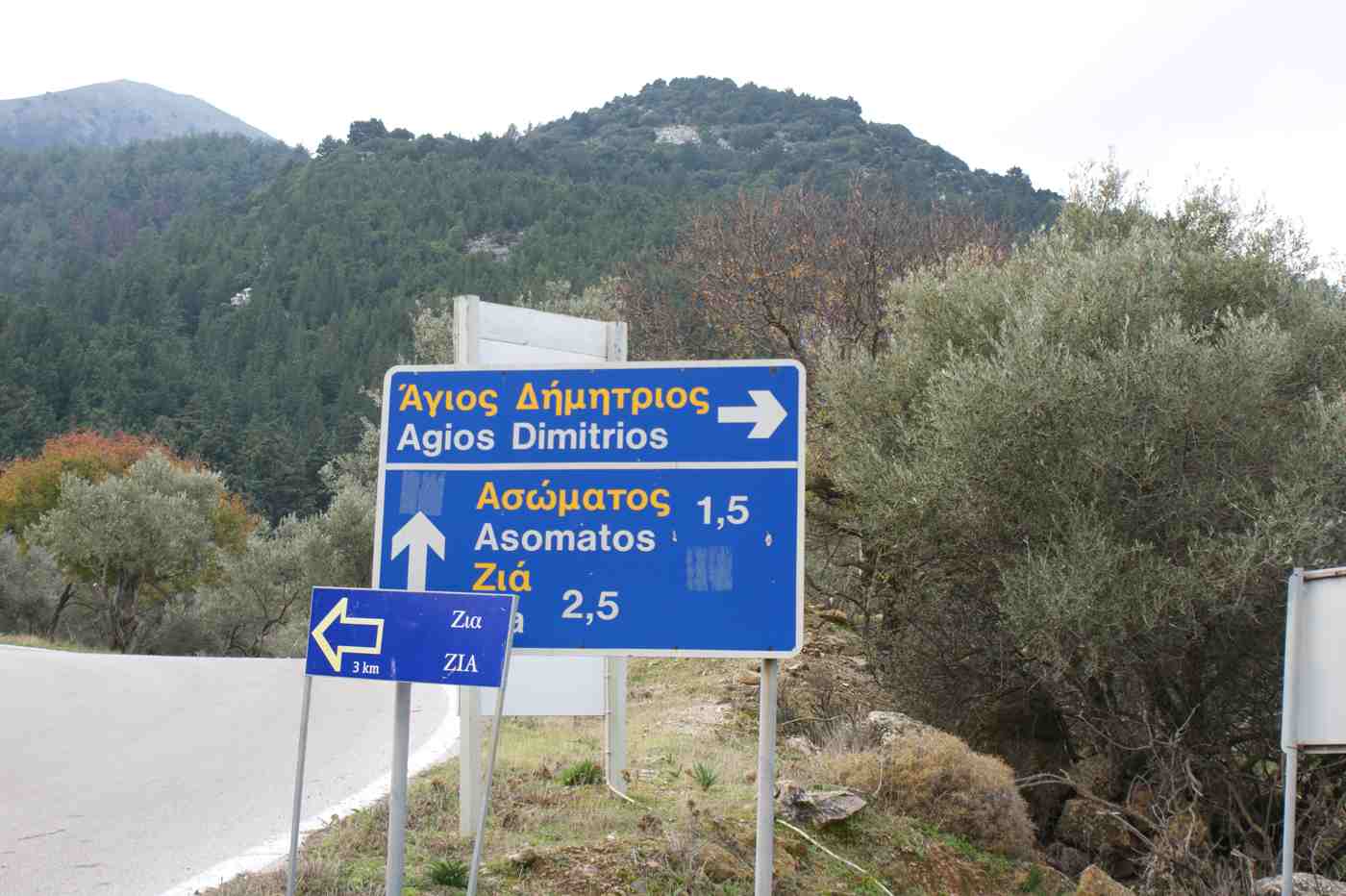
Zia sits about 300 metres up the northern slope of Mt Dikeos, reached by a steady climb from the coast. The mountain crowns at around 846 metres, giving trained cyclists a demanding ascent through pine forest and villages.
The climb to Zia starts from the north coast near Zipari, turning inland toward the mountain. The road gains height steadily over about 8 km, winding past Asfendiou and the smaller hamlets of the Dikeos slope. Gradients sit in the moderate range, testing the legs without the severe pitches of alpine passes. Pine forest shades most of the ascent, cooling the air as the road climbs above the plain. Zia perches at around 300 metres, its lanes lined with tavernas facing west over the Aegean. Stronger riders reach the village in under an hour from the coast, earning a long lunch stop.
The descent back to Zipari rewards the effort, letting cyclists coast most of the way down to sea level. Sunset draws crowds to Zia, so a daytime ride avoids the evening traffic.
Mt Dikeos rises to around 846 metres, the highest point on Kos and a target for the fittest riders. The paved road ends above Zia, where a rough track and footpath continue toward the summit ridge. Cyclists on mountain bikes push higher along the forest track before the final walk to the chapel-topped peak. From the ridge the panorama spans the whole island, the salt lagoon at Tigaki, and the neighbouring Dodecanese. The full ascent from sea level gains over 800 metres, a serious effort demanding gears, water and an early start. Road bikes stop at the tarmac’s end, while gravel and mountain bikes handle the upper track.
Reaching the top ranks among the hardest rides on Kos, a reward for prepared and experienced cyclists.
Beyond Zia, quieter roads climb toward Pyli and the ruins of the old abandoned village below its medieval castle. The route rolls through olive groves and past the springs of Pyli, gaining height in shorter bursts than the Dikeos ascent. Stronger riders extend the day toward Antimachia, where a Venetian castle guards the island’s central plateau. The interior roads carry little traffic, linking farming villages across the spine of Kos. Grades here stay rolling rather than steep, suiting riders who want distance over a single hard climb. A loop from the north coast through Pyli, Antimachia and back covers around 45 km of varied terrain.
These inland roads reveal a working island of vineyards and orchards far from the beach resorts along the coast. Village taps let riders refill along the inland loop.
Preparation matters on the Dikeos climbs, where the effort and exposure rise with the altitude. Cyclists fit lower gears for the sustained gradients toward Zia and the upper mountain tracks. Two litres of water per rider suits the warm dry months, when the exposed upper slopes offer little shade. An early start beats the heat, putting the hardest climbing behind before the sun peaks near midday. E-bikes open the Zia climb to riders who lack the fitness for the full ascent unassisted. Descending demands care, since the winding road drops fast and gravel gathers on the bends. A helmet, working brakes and a repair kit belong on every mountain ride here.
Stronger riders treat Kos as a training island, stacking the Dikeos and Pyli climbs across a single long day.
Is Kos good for family cycling along the flat coast?
The flat north coast of Kos suits family cycling, with dedicated lanes running from Kos Town along the seafront. Short distances, gentle surfaces and frequent beaches let children ride safely between shaded stops and swimming breaks.
The seafront cycle path in Kos Town gives families a car-free start along the harbour and beaches. The lane runs east to Psalidi and Agios Fokas, and west toward Lambi, on flat paved ground. Children ride beside parents without mixing into traffic, since the path separates bikes from the road. Benches, playgrounds and shaded cafes line the route, giving regular stops for young riders. The distance from the harbour to Lambi covers around 3 km, an easy stretch for small legs. Rental shops in town supply children’s bikes, tag-alongs and seats for the youngest passengers.
The gentle grade and short hops make the town seafront the natural place for a first family ride, close to shops, toilets and swimming spots the whole way. A stop at the harbour castle adds history to the ride.
West of Kos Town the coast road and cycle lane run flat toward Tigaki, around 12 km away. The route crosses gentle farmland, staying close to sea level the whole distance for easy family pedalling. Tigaki beach stretches for kilometres of shallow, sandy shore, ideal for children paddling and building sandcastles. Behind the beach the Alyki salt lagoon draws flamingos in the cooler season, a quiet detour on two wheels. Families split the ride, resting at Tigaki before turning back, or load bikes onto the local bus. The flat approach suits e-bikes and city bikes, and the lagoon loop adds a nature stop to the outing.
Sandy tracks around the salt pans give older children a gentle taste of off-road riding beyond the paved lane.
Family safety on Kos rests on the separated lanes, flat ground and short distances of the north coast. Helmets fit every child, and rental shops size bikes to riders as young as four or five. Parents plan rides of around 5 to 10 km, matching the stamina of the youngest in the group. Morning outings avoid the midday heat, with beach stops built in to cool down and refuel. Water bottles, sun hats and high-factor sunscreen guard against the strong summer sun on the open coast. The flat terrain means children rarely face a climb, so tired legs never strand a family far from town.
Bike buses and the flat bus network let families shorten a ride, loading bicycles for the return leg when energy fades.
A family cycling day on Kos blends short riding with long stops on the sand. Families set out from Kos Town after breakfast, riding the flat lane to a chosen beach. Marmari and Tigaki on the north coast offer shallow water and space for children to swim. A picnic or a taverna lunch breaks the day, resting riders through the hottest hours. The return in the late afternoon runs cooler, with the sea breeze easing the flat pedal home. Rental shops fit panniers or baskets for towels, snacks and swimming gear on the outward leg. Distances stay under 25 km round trip, well within reach of school-age children on city bikes.
This mix of easy riding, safe lanes and frequent beaches makes Kos a practical island for a family cycling holiday.
When is the best season to cycle on Kos, and how do you handle the heat?
Spring and autumn bring the best cycling weather to Kos, with mild temperatures and long dry days. Summer riders start early and rest at midday, since coastal heat climbs above 30 degrees on the exposed lanes.
Spring and autumn suit cycling on Kos, when daytime temperatures sit around 20 to 25 degrees. April, May, September and October bring dry roads, lighter traffic and comfortable riding through the middle of the day. The countryside greens in spring, with wildflowers along the inland roads toward Pyli and Zia. Autumn holds warm sea temperatures for swimming, pairing long rides with an evening dip on the north coast. These shoulder months let cyclists tackle the Dikeos climbs without the punishing summer heat on the exposed slopes. Rental shops stay open through both seasons, though choice narrows at the edges of the visitor calendar.
Cyclists who prefer distance and climbing over beach heat find spring and autumn the strongest riding windows across the island’s varied terrain.
Summer on Kos pushes coastal temperatures above 30 degrees, demanding a careful riding plan. Cyclists set out soon after dawn, covering the harder distance before the sun climbs high near midday. The hottest hours from noon to four suit a beach, a shaded taverna or a siesta rather than the road. Two litres of water per rider guards against dehydration on the open lanes with little shade. Light coloured clothing, a helmet vent and sunglasses cut the glare off the white coastal roads. The meltemi wind cools the north coast in high summer, though it stiffens the pedal into a headwind.
Late afternoon reopens the roads as the heat eases, with the seafront lanes catching the evening breeze off the water. Cyclists also plan routes past village taps to refill often.
Road safety on Kos improves with the network of separated cycle lanes around Kos Town and the north coast. Cyclists on these lanes ride clear of cars, though junctions and driveways still demand attention. Beyond the lanes, coastal and inland roads carry moderate traffic, heavier near the resorts in high summer. Riders keep right, signal turns and use lights at dusk on the roads between villages. Helmets guard against falls on gravel-strewn descents from Zia and the Dikeos tracks. The flat town grid mixes bikes, scooters and pedestrians, so a bell and slow speeds help on busy seafront stretches.
Reflective clothing and working brakes matter most on the faster mountain descents, where speed builds quickly on the winding road back to the coast. A phone and small kit cover the rare mishap inland.
Season shapes the kind of cycling Kos offers, from summer beach hops to spring and autumn touring. July and August favour short flat rides between beaches, timed around the cooler morning and evening hours. Spring and autumn open the whole island, letting riders climb Dikeos and loop the inland villages in comfort. Winter stays mild for a Greek island, with quiet roads suited to training rides between the rains. Rental availability peaks in the warm months, then thins as the visitor season winds down. Cyclists match ambition to the calendar, saving the hardest climbs for the mild shoulder weeks.
This spread of conditions lets Kos serve casual summer riders and serious cyclists across most of the riding calendar, each finding a suitable window on the island.
How do you combine cycling on Kos with beach stops along the way?
Cycling on Kos links directly to the beaches, with flat lanes running from Kos Town to Lambi, Tigaki and Marmari. Riders carry towels and swimming gear, pausing for a swim before pedalling back along the coast.
The north coast strings together a chain of beaches within easy cycling range of Kos Town. Lambi sits at the town’s edge, around 2 km along the seafront lane past the marina. Tigaki lies about 12 km west on flat ground, with Marmari a short ride further along the shore. Each beach offers shallow, sandy water, sunbeds and tavernas set back behind the sand. Cyclists ride the coast road between them, dipping in the sea wherever the mood or the heat suggests. The flat terrain lets riders cover three or four beaches in one outing without a single climb.
Bike racks or shaded fences near the tavernas hold the bikes during a swim and lunch stop on the sand. A round trip from town along this chain covers around 25 km on level ground.
Stronger riders reach the southwest beaches of Kefalos bay, a longer haul of around 40 km from Kos Town. The route runs inland past Antimachia before dropping to Kamari and the sweep of Kefalos beach. Bubble beach, Camel beach and Magic beach line this southern coast, backed by cliffs and clear water. Agios Stefanos holds the ruins of an early Christian basilica above the sand, with the Kastri islet offshore. The distance and rolling ground suit fit cyclists or e-bike riders rather than families on city bikes. A swim at Kefalos rewards the long ride before the return leg or a bus back to town.
These southern beaches trade the easy flat lanes of the north for quieter sand and a tougher day in the saddle.
East of Kos Town the coast lane runs flat toward Psalidi, Agios Fokas and the hot springs at Therma. Therma beach holds a natural thermal pool where hot spring water meets the sea between the rocks. The ride covers around 12 km from the harbour, mostly flat with a short final stretch on rougher road. Cyclists soak in the warm pool after the pedal out, a natural reward on the pebbly eastern shore. Psalidi and Agios Fokas offer calmer swimming and windsurf-friendly water closer to town along the way. The eastern route stays quieter than the north coast beaches, with open sea views across to the Turkish mainland.
This flat run pairs a soak in the hot springs with an easy coastal ride from Kos Town and back.
A beach-and-bike day on Kos needs simple planning around water, timing and gear. Cyclists pack towels, swimwear and sunscreen in a basket or panniers before leaving town. Morning departure beats the midday heat, putting the riding behind before the long afternoon on the sand. Rental shops fit locks so bikes stay secure at the beach through a swim and a meal. Water and a snack cover the gaps between tavernas on the quieter southern and eastern routes. The flat north lanes suit any bike, while the southwest beaches call for fitter legs or an e-bike. Buses along the north coast carry bikes, letting families or tired riders shorten the return from a distant beach.
This blend of cycling and swimming defines a Kos day, the flat island rewarding riders with sea at every turn.
Frequently Asked Questions
Is Kos really flat for cycling?
Kos is genuinely flat across its north coast and around Kos Town, though the interior rises steeply. The northern plain from Kos Town west to Tigaki, Marmari and Mastichari stays close to sea level, ideal for easy cycling. Dedicated bike lanes follow the seafront and the coast road on this flat ground, so casual riders and families pedal without climbing. The flat terrain, short distances and separated lanes explain why Kos ranks among the easiest Greek islands for cycling. Inland tells a different story, since Mt Dikeos rises to around 846 metres behind the coast. Roads toward Zia, Pyli and the mountain villages climb hundreds of metres, demanding fitness or an e-bike.
Cyclists who stay on the north coast and the town grid rarely face a gradient worth naming. Those chasing hills find them quickly on the Dikeos slope. The island therefore offers both flat family riding and serious climbing, depending on which direction a rider turns from the coast.
Can I hire an e-bike on Kos?
E-bikes are widely available for hire on Kos, from rental outlets in Kos Town, Tigaki, Marmari and the main resorts. Shops stock city e-bikes, mountain e-bikes and step-through models suited to riders of different fitness levels. An electric motor flattens the climbs toward Zia and the inland villages, opening the mountain to riders who lack the legs for the full ascent unassisted. On the flat north coast an e-bike simply extends range, letting a rider reach Tigaki, Marmari and back without fatigue. Rentals run by the day or the week, and shops fit helmets, locks and a charger for longer hires.
A single charge covers most day rides, though the steep Dikeos climbs drain the battery faster than flat coastal loops. Riders check the battery range against the planned route before setting out. E-bikes let families ride together at one pace and let casual visitors tackle the island’s hills, making them a popular choice across Kos for varied terrain.
Is cycling on Kos suitable with kids?
Cycling with children works well on Kos thanks to the flat north coast and the separated seafront lanes. The car-free path through Kos Town lets young riders pedal beside parents without mixing into traffic. Rental shops supply children’s bikes, tag-alongs, trailers and child seats, sizing equipment to riders as young as four or five. Families plan short rides of around 5 to 10 km, matching the stamina of the youngest in the group. Beaches such as Tigaki and Marmari sit at the end of flat lanes, giving children a swim as the reward. Morning outings avoid the midday heat, with shaded cafes, playgrounds and benches spaced along the seafront route.
Helmets, sun hats, water and sunscreen belong on every family ride under the strong summer sun. The flat terrain means tired legs never face a climb, and the coastal bus carries bikes when energy fades. These conditions make Kos a practical island for a cycling holiday with children.
Are the cycle lanes on Kos safe?
The cycle lanes on Kos are safe for everyday riding, since they separate bikes from motor traffic along the seafront and coast road. The network centres on Kos Town and runs west toward Tigaki and the salt lagoon on flat, paved ground. Physical separation keeps riders clear of cars, though junctions, driveways and crossing points still call for attention. The flat town grid mixes bikes, scooters and pedestrians, so a bell and moderate speed help on busy seafront stretches. Beyond the lane network, coastal and inland roads carry moderate traffic that rises near the resorts in high summer. Riders keep right, signal turns and use lights at dusk on the roads between villages.
Helmets guard against falls, and the greatest care belongs on the fast gravel descents from Zia rather than on the flat lanes. The lanes themselves rank among the best cycling infrastructure on any Greek island, which underpins the island’s reputation for cycling.
What are the best months to cycle on Kos, and how hot does it get?
Spring and autumn deliver the best cycling months on Kos, with mild temperatures around 20 to 25 degrees and dry roads. April, May, September and October suit riding through the whole day, including the inland climbs toward Zia and Pyli. Summer brings coastal heat above 30 degrees, so July and August riders shift to the cooler morning and evening hours. The hottest span from noon to four suits a beach or a shaded taverna rather than the exposed road. Cyclists carry around two litres of water in summer, since the coastal lanes offer little shade. The meltemi wind cools the north coast in high summer, though it stiffens the pedal into a headwind.
Winter stays mild for a Greek island, with quiet roads good for training between the rains. Rental shops open widest in the warm season, then thin toward its edges. Riders match the hardest climbing to the mild shoulder weeks and keep summer rides short and flat.
Should I choose a road bike or a city bike for Kos?
City bikes suit most cycling on Kos, since the north coast lanes and town grid stay flat and paved. Rental shops stock city bikes, hybrids, mountain bikes, e-bikes and children’s models for the range of terrain. Casual riders and families choose city bikes or hybrids for the seafront lanes and the flat run to Tigaki and Marmari. Road bikes appeal to riders chasing distance and speed on the paved coastal and inland roads, including the climb toward Zia. Mountain bikes handle the rough tracks above the tarmac on Mt Dikeos and the gravel around the salt pans. E-bikes bridge the gap, flattening the hills for riders without the fitness for an unassisted ascent.
The choice follows the plan: flat beach hops call for a city bike, while the Dikeos climbs reward gears or a motor. Riders match the bike to the route, and rental shops advise on the right model for the intended ride and terrain.
How do you reach the beaches on Kos by bike?
Reaching the beaches by bike is straightforward on Kos, where flat lanes link Kos Town to the northern coast. Lambi sits around 2 km along the seafront, with Tigaki about 12 km west and Marmari a little further on flat ground. Cyclists ride the coast road and cycle path between them, pausing for a swim wherever the heat suggests. Therma hot-spring beach lies around 12 km east of town, a mostly flat run to a natural thermal pool. The southwest beaches of Kefalos bay sit around 40 km away, a longer haul for fitter riders or e-bikes. Riders carry towels, swimwear and water in a basket or panniers, and rental locks secure bikes at the sand.
The north coast bus carries bikes, letting families or tired riders shorten the return from a distant beach. Morning departures beat the midday heat, and the flat terrain puts most northern beaches within an easy pedal of Kos Town.