
A day trip to Nisyros from Kos offers a unique opportunity to explore a living volcanic island. The island’s main attraction, the Stefanos crater, allows visitors to walk across its floor, surrounded by hissing fumaroles and bubbling mud. Plan the whole trip with Greece Tours.
Excursion boats depart from Kos Town, Kardamena, and Kefalos, making the journey to Nisyros in about 40-60 minutes. The trip includes time in Mandraki, where visitors can explore the Panagia Spiliani monastery and enjoy local cuisine in the town’s tavernas.
Why choose a Nisyros day trip from Kos?
A Nisyros day trip from Kos delivers a rare volcanic experience within one day. Travellers cross the Aegean in about 40 to 60 minutes, walk inside the Stefanos crater, and explore the town of Mandraki.
Nisyros sits about 20 kilometres south of Kos across a narrow Aegean channel. Excursion boats leave three Kos ports each morning, so the island stays within reach of a single day. Boats from Kardamena on the south coast reach Mandraki port fastest, in roughly 40 minutes. Departures from Kos Town and Kefalos take closer to an hour. The crossing passes open water and the low profile of Nisyros, a rounded volcanic cone rising from the sea. Morning schedules pair with afternoon returns, giving five to six hours ashore. Buses and taxis across Kos link the northern hotels to each harbour before the sailing. This structure turns a remote caldera into an accessible outing.
Travellers reach the volcano, the crater floor, and the town without an overnight stay on the smaller island.
A coach meets the boat at Mandraki harbour and climbs to the caldera in about 20 minutes. The road winds past terraced fields and the villages that ring the volcanic bowl. Inside the caldera lies the Lakki plain, a flat basin roughly 4 kilometres wide floored with pale volcanic ash. The Stefanos crater opens at the plain’s edge, an oval hollow about 300 metres across and 25 metres deep. The coach parks at the crater edge, so the walk to the floor starts within a minute. Visitors descend a short path and stand among the vents. Hissing fumaroles push out steam, and the ground radiates heat through the soles of your shoes.
The strong smell of sulphur fills the crater air. This descent forms the core of every Nisyros excursion from Kos.
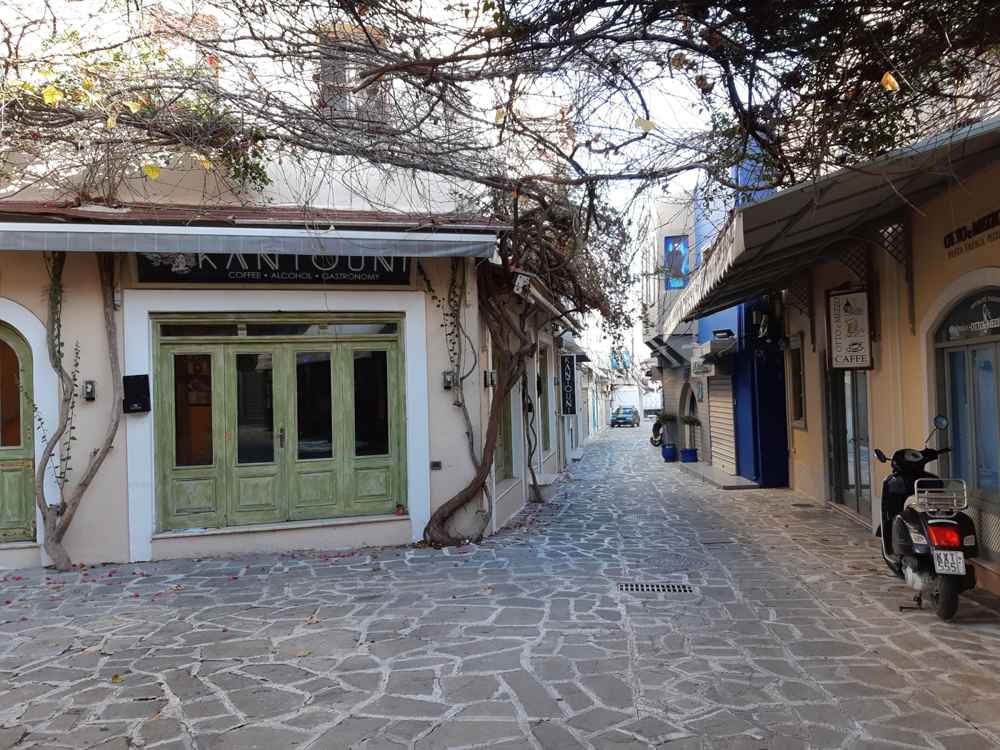
Mandraki, the capital of Nisyros, spreads along the northwest coast below a volcanic cliff. Whitewashed houses line narrow lanes that climb toward the Panagia Spiliani monastery. The monastery occupies a cave-set church inside the old castle walls, about 100 metres above the harbour. Its terrace looks north across the sea toward Kos and the Turkish coast near Bodrum. Tavernas along the waterfront serve local dishes and pour soumada, a cold almond drink made from bitter almonds and sugar. The central square, the Ilikiomeni, shades diners under old trees. Ferries and small yachts share the harbour below the monastery cliff. Coach transfers return groups to Mandraki after the crater, leaving time to walk the lanes.
This blend of geology and village life defines the trip’s second half.
The excursion rewards travellers who want more than the beaches of Kos. Kos measures about 290 square kilometres and centres on ancient medicine, cycling routes, and long northern sands. Nisyros offers a sharp contrast: an active volcanic landscape packed into a compact island of roughly 41 square kilometres. Geology students, photographers, and families cross for the caldera and the walk across a working crater. The day mixes the science of geothermal vents with the culture of a Dodecanese village. Return sailings reach Kos in the late afternoon, in time for dinner in Kos Town. The contrast between medical Kos and volcanic Nisyros gives the two islands distinct identities.
One boarding pass covers a volcano, a monastery, and a harbour meal. Few day trips from Kos pack this range into a single itinerary.
How do you get to Nisyros from Kos?
Excursion boats reach Nisyros from three Kos ports: Kos Town, Kardamena, and Kefalos. The crossing to Mandraki takes about 40 to 60 minutes, with morning departures and afternoon returns across the Aegean channel.
Three Kos ports send excursion boats to Nisyros through the season. Kos Town lies on the northeast coast, Kardamena on the south, and Kefalos on the southwest. The route to Mandraki, the port of Nisyros, runs 20 to 30 kilometres depending on the departure point. Crossings take about 40 to 60 minutes on the day boats that work this channel. Kardamena, the closest harbour, reaches Nisyros in the shortest time. Visitors first arriving on Kos plan their how to get to Kos connections through the airport near Antimachia or the ferry port in Kos Town. From either arrival point, a short transfer links to the excursion harbour.
Bus routes across Kos feed each of the three ports through the day. The chain of connections keeps Nisyros open to day visitors.
Kos Town anchors the northeast coast as the island’s capital and main ferry port. Its harbour sits beside the Knights’ Castle of Nerantzia and the Plane Tree of Hippocrates. Boats to Nisyros load along the quay near the marina, a short walk from the old town. Kos Town gives travellers hotels, tavernas, and bus links within walking distance of the departure point. Morning boardings usually begin around eight, and the crossing to Mandraki takes close to an hour from here. The town’s flat grid and cycle lanes make the pre-boat walk easy. Signboards along the marina point travellers to the correct Nisyros berth. Returning boats dock at the same quay in the late afternoon.
This central base suits visitors staying in or near the capital.
Kardamena stretches along the south coast about 30 kilometres from Kos Town. The resort fills a wide bay and packs the shortest crossing to Nisyros into its harbour. Beyond the boats, Kardamena covers a long sandy beach and a busy strip of bars and tavernas. The resort ranks among the things to do in Kos, from water sports to evening dining. Its position opposite Nisyros gives the clearest views of the volcanic cone across the water. Groups staying in the south often choose Kardamena to shorten the sea time. A seafront promenade links the Kardamena hotels to the harbour in a short walk. Departures leave in the morning and return by mid to late afternoon.
The harbour’s compact size keeps boarding and disembarking quick for day-trippers.
Kefalos occupies the southwestern tip of Kos above a broad bay. The village crowns a hill, while its port sits below near Kamari beach and the Kastri islet. Boats from Kefalos give the quietest departure of the three, away from the larger resorts. The crossing to Nisyros runs close to an hour across open water. Kefalos bay holds Agios Stefanos with its early Christian basilica ruins and views to the islet church. Visitors staying in the southwest reach Nisyros without driving to Kos Town. The southwest road from Kefalos to Kos Town runs about 40 kilometres. Each of the three ports opens the same volcanic island through a different stretch of coast.
The choice comes down to where you sleep on Kos and how long you want at sea.
What is the Stefanos crater like?
The Stefanos crater is the largest hydrothermal crater on Nisyros. Visitors walk across its flat floor about 25 metres below the rim, surrounded by hissing fumaroles, bubbling grey mud, and yellow sulphur crystals.
Stefanos ranks as the largest of the craters inside the Nisyros caldera. The oval hollow measures about 300 metres across and drops roughly 25 metres to a flat floor. A marked path leads down one side, so visitors reach the base on foot in minutes. The floor spreads out as a pale, cracked surface of dried mud and mineral crust. Vents cluster near the centre, where the ground stays hottest. Ropes and signs keep groups clear of the most active openings. The crater formed through steam explosions rather than lava flows, which left this wide, shallow bowl. Walking its floor puts visitors directly on the geothermal system that powers Nisyros.
The short descent leaves an impression that stays with visitors long after the boat leaves the island.
Fumaroles line the crater floor and hiss as steam and gas escape from below. The vents reach temperatures near 100 degrees Celsius at the surface. Pools of grey mud bubble beside them, driven by the same rising heat. Yellow sulphur crystals ring the openings, staining the ground in bright bands. The steam carries hydrogen sulphide, which fills the air with the smell of rotten eggs. Mineral deposits paint the rocks in ochre, white, and pale green. These features shift over the seasons as vents open and close across the floor. The vents glow faintly at their edges where the sulphur meets the cooler air.
The crater reads as a live laboratory of volcanic chemistry, with each vent marking a channel to the heat source kilometres below.
Heat rises through the crater floor and reaches the soles of standing visitors. The ground near the vents grows too hot to touch with a bare hand. Warm, sulphur-laden air hangs across the basin, thickest on still days. Sturdy closed shoes protect feet from the hot crust and sharp mineral edges. The surface stays firm on the marked routes but softens near the wettest mud pools. Guides point out the safe lines and hold groups back from thin ground. The sensory mix of heat, sound, and smell marks the crater apart from any beach on Kos. Visitors spend about 30 to 45 minutes on the floor before the coach returns them to Mandraki.
The floor time ends when the coach signals the return to the harbour.
Stefanos shares the caldera floor with smaller craters such as Polyvotis nearby. The Polyvotis crater burns with brighter sulphur and steeper walls than Stefanos. Ancient myth tied these vents to the giant Polyvotis, whom Poseidon pinned under a slab of rock torn from Kos. The caldera itself spans about 4 kilometres and formed when the volcano’s summit collapsed. Villages such as Nikia and Emporios ring the rim high above the crater floor. From the rim road, the full bowl and its coloured craters spread out below. The Lakki plain between the craters holds pumice and ash from past eruptions. The rim road circles the caldera and links the two villages above the floor.
This cluster of craters gives Nisyros its standing as one of Greece’s active volcanic centres.
Is it safe to visit the Nisyros volcano?
Visiting the Nisyros volcano stays safe on the marked routes. The volcano is dormant, guides direct each group, and closed shoes plus the fenced paths keep visitors clear of the hottest vents on the floor.
Nisyros counts as a dormant volcano that still vents heat and gas. The last steam eruptions struck the caldera in the nineteenth century, and none has followed since. Scientists monitor the volcano through a network of instruments across the island. Ground sensors track tiny tremors, gas output, and any swelling of the surface. The Institute of Geodynamics reviews this data and flags changes early. Day visitors face no lava and no open flame on the crater floor. The main hazards stay local: hot ground, thin crust near vents, and sulphur fumes. Marked paths and guide instruction keep groups on stable ground. A public information board at the crater edge shows the volcano’s current status.
This monitoring turns a live volcanic system into a controlled visit for day-trippers from Kos.
Closed, sturdy shoes form the first safety measure on the crater floor. The crust near vents grows hot and, in places, thin over pockets of steam. Ropes and signs mark the openings that run too hot for close approach. Visitors keep to the trodden lines and hold a short distance from the loudest fumaroles. Sulphur fumes gather in still air, so guides steer groups toward open ground when the smell grows strong. Travellers with breathing conditions plan short stays near the busiest vents. Children stay within arm’s reach on the uneven floor. Signage in Greek and English marks the limit of safe approach at each vent.
These steps reduce the risk to a walk on warm, marked terrain, kept firm underfoot. Guides adjust the route when the fumes rise across the basin.
Licensed guides lead most excursion groups across the caldera floor. Guides carry current knowledge of which vents run hottest and which paths stay clear. They brief groups at the crater edge before the descent begins. Their commentary covers the geology, the safe lines, and the return schedule. Guided groups move together, which keeps stragglers off unstable ground. The guides also read the day’s conditions, since wind and heat shift the fume levels. Their instruction turns the crater from a hazard into a managed walk. Independent visitors miss this layer of local judgement. Guided groups keep to a set route that avoids the softest ground near the mud pools.
A guide adds both safety and context that raw signage cannot match on a first descent. Local judgement fills the gaps between the posted signs.
Island authorities close crater access whenever monitoring flags a change. Any rise in tremor or gas output triggers a review of visitor routes. The caldera stays open through the main season because the volcano holds steady. Guides and boat operators receive updates and adjust itineraries to match. Visitors follow posted limits at the crater and respect the fenced zones. Removing rocks or crystals damages the vents and carries a fine. Staying on the paths protects both the visitor and the fragile mineral crust. Rangers check the fences and the warning signs before each day’s boats arrive. This shared discipline keeps the Stefanos crater open to thousands of day-trippers each season, with a safe record across recent decades.
Boat operators relay any change from the island wardens.
What you wear and bring for the trip?
Light clothing and sturdy closed shoes suit a Nisyros day trip. Sunscreen, a hat, and at least one litre of water handle the heat, since the open crater floor offers no shade at all.
Sturdy closed shoes rank first on the packing list for Nisyros. The crater floor mixes hot crust, loose ash, and sharp mineral edges. Trainers or hiking shoes grip the descent path and shield feet from the heat. Open sandals leave skin exposed to the hot ground and sulphur crystals. The rest of the day covers boat decks and the stone lanes of Mandraki. Comfortable soles carry visitors through both the crater and the town without strain. Socks add a layer against the warm crust near the vents. Ankle support helps on the loose ash where the path drops to the crater floor. The right shoes turn the descent into a steady walk rather than a careful shuffle.
Laces stay tied tight against the loose ash on the path.
Light, breathable clothing handles the heat inside the caldera. The Lakki plain traps warmth, and midday temperatures climb well above the coast. Cotton or technical fabrics keep visitors cooler than heavy layers. A hat shades the head across the open crater floor, which carries no trees. Sunglasses cut the glare off the pale ash and white mineral crust. Sunscreen at factor 30 or higher guards against the strong Aegean sun. The crater’s exposure means shade stays absent from the descent to the return climb. A light scarf shields the neck, and thin long sleeves guard the arms without trapping heat. Dressing light keeps the crater walk comfortable through the hottest part of the day.
A damp cloth around the neck cools the skin on the exposed plain.
Water tops the list of essentials for the caldera walk. At least one litre per person covers the heat and the climb back to the coach. The crater floor offers no fountains, so visitors carry their own supply. Tavernas in Mandraki refill bottles before and after the boat. A small backpack holds water, sunscreen, and a light jacket for the return sail. Snacks such as fruit or nuts steady energy between the crater and lunch. A refillable bottle with a wide mouth takes ice from the tavernas before the walk. Electrolyte tablets steady the body through the heat and the climb. Carrying water prevents the fatigue that dehydration brings on a summer visit to the exposed floor.
Guides pause the group for short water breaks between the vents.
A camera captures the coloured vents, the caldera rim, and Mandraki’s lanes. Phone cameras handle the wide crater views, though the steam can fog a lens. A spare battery covers a full day away from power. Cash suits the small tavernas and shops, since card readers stay limited on the island. A light jacket handles the sea breeze on the morning and afternoon crossings. Swimwear serves those whose boats stop at Pali or a bay before returning. A refillable bottle cuts plastic waste across the day. A dry bag keeps the camera and phone clear of sea spray on the open deck. Packing light but complete keeps the focus on the volcano rather than missing kit.
A small first-aid pouch covers scrapes from the rough mineral crust.
What can you do in Mandraki?
Mandraki rewards visitors with the Panagia Spiliani monastery, whitewashed lanes, and waterfront tavernas. The town serves soumada almond drink, holds the old castle walls, and centres on the shaded Ilikiomeni square under old trees.
The Panagia Spiliani monastery crowns the cliff above Mandraki harbour. The church sits inside a cave within the old Knights’ castle walls, about 100 metres above the sea. A stepped lane climbs from the waterfront to the monastery gate in roughly ten minutes. The cave chapel holds an icon of the Virgin that draws pilgrims each August. The terrace outside looks north across the water toward Kos and Bodrum. Frescoes and silver offerings line the small interior. The castle ruins around the church date from the Knights of Saint John. Benches on the terrace let visitors rest before the climb back to the harbour.
Visitors combine the climb with views over the white town and the harbour below, which anchor the cultural half of the trip.
Mandraki’s lanes wind between whitewashed houses with painted wooden balconies. The narrow streets stay closed to cars, so walking is the only way through. The Ilikiomeni square opens at the heart of the old town under old trees. Cafes and tavernas ring the square and spill tables into the shade. Bougainvillea drapes the walls along the route to the monastery. The waterfront runs level and links the boat quay to the town’s shops. Small museums cover the island’s volcanic history and folk traditions. Cats doze in the doorways along the quiet upper lanes. The whole town measures a compact grid that visitors cross in twenty minutes, filling the hours between the crater walk and the afternoon boat.
Small chapels dot the lanes between the white houses.
Waterfront tavernas in Mandraki serve Dodecanese dishes and fresh fish. Menus feature chickpea fritters, goat, and pittia made from ground chickpeas. The island’s signature drink, soumada, pours cold and sweet over ice. Soumada comes from bitter almonds, sugar, and water, and carries no alcohol. Producers sell bottles of the syrup for visitors to mix at home. Local honey, thyme, and capers fill the small food shops nearby. Lunch usually falls between the crater visit and the return sailing. Bakeries sell almond sweets that share the flavour base of the local soumada. Tables along the quay look out over the fishing boats and the channel to Kos, turning the trip into a full sensory experience.
Fishermen land the day’s fresh catch at the quay before the boats arrive.
Craft shops in Mandraki sell ceramics, woven textiles, and volcanic-stone souvenirs. Bottles of soumada and jars of thyme honey travel well as gifts. The port of Pali sits about 4 kilometres east, where thermal springs feed a small spa. Certain itineraries add a stop at Pali before the return leg to Kos. Beyond the town, the caldera rim villages of Nikia and Emporios reward a longer stay. Nikia’s round plateia and white houses look straight down into the crater bowl. A local bus links Mandraki to Nikia and Emporios for visitors with extra time. Day-trippers focus on Mandraki, since the boat schedule limits time ashore.
The town packs monastery, square, tavernas, and shops into a walkable core between crater and sea. Signposts guide walkers from the quay to each rim village.
How long does the Nisyros day trip take?
A Nisyros day trip from Kos runs about 8 to 10 hours door to door. The schedule covers a 40 to 60 minute crossing, the Stefanos crater visit, and five to six hours on the island.
The full excursion fills 8 to 10 hours from the Kos harbour and back. Morning boarding usually begins between eight and nine at the departure port. The crossing to Mandraki takes about 40 to 60 minutes across the channel. A coach then climbs to the caldera within twenty minutes of docking. The crater walk, town time, and lunch fill the middle of the day. Return sailings leave Nisyros in the mid to late afternoon. Boats reach Kos again before the evening, in time for dinner ashore. Guides confirm the exact departure and return times at the harbour before boarding. The plan holds the same shape from every Kos port, so visitors gain depth without an overnight on Nisyros.
The afternoon return time anchors the whole schedule from the start.
The sea legs account for about two hours of the total day. The outbound crossing runs 40 to 60 minutes depending on the Kos port. The return covers the same channel in a similar time each afternoon. Boats work the calmest hours, with morning and late-afternoon departures. Deck seating gives views of Nisyros growing on the horizon. The channel between Kos and Nisyros stays sheltered through the main season. Rough days shift schedules, and operators adjust departures to the weather. Passengers keep water and sun cover close for the open decks. Calm mornings keep the sea time short and steady, which helps visitors judge how much time remains ashore.
Deckhands point out Nisyros as it grows on the horizon. The sea breeze cools the open decks through the crossing.
Five to six hours open up on Nisyros itself. The Stefanos crater visit takes 30 to 45 minutes on the floor, plus the coach transfers. Mandraki fills two to three hours with the monastery, lanes, and lunch. The schedule leaves room to climb to the Panagia Spiliani and still eat by the quay. Certain tours add a stop at Nikia on the caldera rim for wider views. The pace stays relaxed, since the boat sets only the departure deadline. Visitors balance crater time against town time to suit their interest. The order of crater and town varies by operator, though the total shore time stays the same.
Planning the ground time keeps both the volcano and the village within reach. Guides confirm the running order before the coach leaves the harbour.
The single fixed point each day is the afternoon return sailing. Missing it strands a visitor on Nisyros overnight, since day boats run once. Guides announce the boarding time clearly at the start of the excursion. Groups gather at the Mandraki quay about fifteen minutes before departure. The return time frames how long each visitor lingers over lunch or the monastery. Independent travellers on the regular ferry track a different timetable to Kardamena or Kos Town. Booking a guided boat removes the timing risk, since the coach and boat run to one plan. A clear watch and the guide’s signal keep every group on the single afternoon boat.
The day closes as Kos rises again on the horizon in an 8 to 10 hour loop.
Who is the Nisyros day trip suited for?
The Nisyros day trip suits geology fans, walkers, and families with older children. The excursion joins a crater walk, a clifftop monastery, and village tavernas, which spans science, history, and food across one outing.
Geology enthusiasts gain the most from a day on Nisyros. The Stefanos crater lets visitors stand on an active hydrothermal floor. Fumaroles, mud pools, and sulphur crystals show volcanic chemistry at close range. Guides explain the caldera’s collapse and the magma system below. Students of earth science rarely reach a working crater this accessible. The island reads as an open textbook of steam-driven volcanism. Each vent marks a channel toward the heat kilometres below. University field trips visit Nisyros for the same open access to a live crater. The vents offer a rare classroom on active volcanism, which sets the trip apart from a standard beach day on Kos. Museums in Mandraki add context on the island’s eruptions.
Field notes and photographs record the changing vents.
Walkers and outdoor visitors match the trip’s demands well. The crater descent, the monastery climb, and the town lanes total a moderate day on foot. The Lakki plain rewards those who cover ground across the caldera floor. Rim villages such as Nikia add optional walking with views into the bowl. The terrain stays uneven, so steady legs and good shoes help throughout. Cyclists who tour flat Kos find a different kind of exertion here. The mix of climbs and level lanes suits active travellers over pure beach-goers. Trekking poles help on the loose ground of the caldera floor.
The rim path to Nikia adds a longer walk with views that draw walkers beyond the sands of Tigaki and Marmari. The moderate distances suit walkers of average fitness.
Cultural travellers find depth in Mandraki and its monastery. The Panagia Spiliani sits inside a cave within Knights-era castle walls. The town’s museums cover volcanic history and island folklore. Whitewashed lanes and the shaded square carry centuries of Dodecanese life. Soumada, local honey, and taverna dishes ground the visit in island food. History readers link the volcano to the myth of the giant Polyvotis. The blend of faith, food, and legend enriches the geology of the crater. Photographers frame the white town against the dark volcanic rock. The August festival at the monastery draws pilgrims from across the Dodecanese, which balances the raw science of the volcanic floor. The monastery icon and the folk museum reward slower visitors.
Craft shops sell island ceramics along the lanes.
Families with older children handle the trip with planning. The crater floor stays uneven, so young children need close supervision throughout. The boat crossing suits most ages across calm summer seas. Teenagers engage with the vents, the mud pools, and the sulphur colours. The monastery climb and town lanes fit a family’s slower pace. Groups and couples find the itinerary flexible between crater and cafe. Solo travellers join guided boats and gain local commentary along the way. Couples pair the crater with a quiet lunch by the harbour. The mix of adventure and rest fits a wide range of travel styles across one shared day out from Kos. Grandparents follow the town route while others descend the crater.
The flexible pace keeps every group member engaged.


What are the highlights of the Nisyros day trip?
The highlights join the Stefanos crater walk, the Panagia Spiliani monastery, and Mandraki’s tavernas. The trip crosses the Aegean from Kos, descends into a live crater, and closes over soumada by the harbour.
The Stefanos crater stands as the leading highlight of the day. Walking its floor about 25 metres below the rim puts visitors among live vents. Fumaroles hiss, mud bubbles, and sulphur crystals ring the openings. The heat through the ground and the sulphur smell mark the descent apart. Guides explain the steam explosions that carved the wide, shallow bowl. Few craters in Greece let visitors walk the floor this freely. The 30 to 45 minutes below the rim anchor the whole excursion. The bright sulphur against the grey floor gives the crater its signature colour. Each descent reveals a slightly different pattern of vents, which fixes the crater in memory long after the boat leaves.
The steam plumes rise higher on cool, still mornings above the crater floor.
The Panagia Spiliani monastery forms the second major highlight. The cave church sits inside the old castle walls above Mandraki. A ten-minute climb from the quay reaches the gate and its terrace. Views from the terrace sweep north to Kos and the Turkish coast. The icon of the Virgin draws pilgrims to the island each August. Frescoes and silver offerings fill the small cave interior. The Knights-era ruins around the church add layers of history. Bells from the monastery mark the hours over the white town below. The August feast fills the cave church with pilgrims, and the steep lane and painted balconies frame the walk up.
The terrace opens a wide view over the harbour and the sea. Visitors light candles inside the cool cave chapel.
Mandraki town itself ranks among the trip’s highlights. The whitewashed lanes and painted balconies open onto the shaded Ilikiomeni square. Waterfront tavernas serve Dodecanese dishes beside the fishing boats. The town stays car-free, so walking sets the pace throughout. Craft shops sell ceramics, textiles, and volcanic-stone souvenirs. Small museums cover the island’s eruptions and folk customs. The compact grid links quay, square, and monastery within a short walk. Evening light turns the whitewashed walls warm before the boats depart. The white houses and the blue sea photograph well from the harbour, so visitors close the town circuit before the afternoon boat. Tables spill onto the square under old trees at midday.
The lanes stay cool in the shade of the tall houses. Souvenir stalls line the route back to the quay.
Local food and soumada round out the day’s highlights. Soumada pours cold from bitter almonds, sugar, and water, with no alcohol. Tavernas serve pittia, chickpea fritters unique to the island. Goat, capers, and thyme honey fill the local table. Lunch by the quay looks across the channel toward Kos. Producers bottle soumada syrup and honey for visitors to carry home. The flavours ground the volcanic landscape in the island’s daily life. Sharing a meze plate over the water marks the last hour ashore. The taste of soumada lingers as the boat turns back to Kardamena, closing the loop between crater, monastery, and harbour. Bottled soumada and thyme honey travel home as gifts.
The waterfront tavernas serve the last plates before boarding. The flavours tie the meal to the island’s volcanic soil.
What makes the Nisyros volcano unique?
The Nisyros volcano stands apart for its walkable caldera and live hydrothermal vents. Visitors descend into the Stefanos crater, one of few in Greece where the public walks the floor among active fumaroles.
Nisyros offers a caldera that visitors enter on foot. The Stefanos crater opens a flat floor 25 metres below the rim. Marked paths lead groups down among the vents in minutes. Most volcanoes keep the public to overlooks far from the action. Nisyros brings visitors onto the geothermal surface itself. This access defines the island’s draw for day-trippers from Kos. The walk turns a distant landform into a direct encounter. No barrier separates the visitor from the working vents beyond the marked line. Standing on the crater floor, visitors feel the heat rise through the ground, a closeness that sets Nisyros apart from Santorini’s cliff-top caldera views.
Few sites in Greece grant this nearness to a live vent field. The open floor defines the island’s draw for day visitors.
Active geothermal features set Nisyros above dormant cones. Fumaroles vent steam near 100 degrees Celsius across the crater floor. Mud pools bubble under the same rising heat. Yellow sulphur crystals grow at the vent mouths in bright rings. The ground stays hot underfoot along the marked routes. These live features shift as vents open and close through the seasons. The chemistry writes itself on the rocks in ochre and white. The mineral colours deepen where steam meets the cooler morning air. Santorini’s caldera holds sea and cliffs, but no walkable vent field like this, and Milos and Methana lack Stefanos’s open floor. Each season reshapes the pattern of active vents across the basin.
The ochre and white bands mark the mineral chemistry at work. This live surface sets Nisyros above dormant cones.
Myth and history layer onto the geology of Nisyros. Ancient legend holds that Poseidon tore a slab from Kos and pinned the giant Polyvotis beneath it. The trapped giant’s breath became the island’s steam and rumble. The Polyvotis crater carries his name to this day. This story links the volcano to the wider Gigantomachy of Greek myth. The caldera villages of Nikia and Emporios watch the crater from the rim. Their white houses and round squares date back centuries. The legend gives the steam and rumble a name that predates written record. The blend of myth, village, and vent gives Nisyros a depth beyond raw rock, folding legend and landscape together.
The name Polyvotis ties each vent to an old tale, while the rim villages guard the crater from above.
Accessibility from Kos completes the volcano’s appeal. Day boats reach Mandraki in 40 to 60 minutes from three Kos ports. A short coach climb then delivers visitors to the caldera floor. This chain turns a remote crater into an easy day out. Scientists monitor the volcano, so the walk stays controlled and open. The compact island of about 41 square kilometres packs crater, town, and rim into one visit. Visitors cover a live volcano and return to Kos by evening. This blend of reach and raw activity keeps Nisyros on the list of Aegean day trips. The mix of access, activity, and safety opens a working caldera travellers ever walk.
The reach from a major resort island keeps the working crater within a single day out.
Frequently Asked Questions
How do I book a Nisyros day trip from Kos?
Booking a Nisyros day trip from Kos runs through local excursion desks, hotels, and online travel platforms. Operators sail from Kos Town, Kardamena, and Kefalos, so travellers pick the port nearest their base. Packages bundle the boat crossing, the coach to the Stefanos crater, and a guide across the caldera floor. Booking a day ahead secures a seat, since summer boats fill fast on calm mornings. The desk confirms the boarding point, the departure time, and the return schedule. Prices vary by port and by whether lunch joins the package, so travellers compare before paying. Hotels in Kos Town and the resorts often hold booking sheets at reception.
Confirmation lists the quay, the boarding window, and the guide’s meeting sign. Group sizes stay limited on the smaller boats, so early booking secures a place in peak weeks. The single afternoon return means the timetable stays fixed, so a confirmed slot matters. This process turns a remote volcano into a planned, straightforward outing from Kos.
What I expect from the Stefanos crater walk?
The Stefanos crater walk starts with a short coach ride from Mandraki into the caldera. Visitors descend a marked path about 25 metres to the flat floor of the largest crater. Fumaroles hiss around the basin as steam and gas escape from below. Grey mud pools bubble beside the vents, driven by heat from the magma chamber deep underground. Yellow sulphur crystals ring the openings and stain the ground in bright bands. The floor radiates heat, so closed sturdy shoes protect feet from the hot crust. Sulphur fumes fill the air with the smell of rotten eggs, strongest on still days. Guides brief the group at the rim, then hold visitors clear of the hottest vents.
The walk on the floor lasts about 30 to 45 minutes. The coach waits at the crater car park for the return climb to Mandraki, and guides count the group before departure. The descent gives visitors a direct stand on a live geothermal surface, unmatched by any Kos beach.
Are there any age restrictions for the Nisyros day trip?
Nisyros day trips carry no strict age limit, so families of mixed ages join the excursion. The crater floor stays uneven, with hot crust and loose ground near the vents. Young children need close supervision on the descent and across the caldera basin. Parents hold small children by the hand near the fenced fumaroles. Teenagers handle the walk with ease and engage with the mud pools and sulphur colours. Older travellers and those with limited mobility face a steeper challenge on the crater path. The boat crossing suits most ages across calm summer seas. Visitors assess each participant’s fitness before booking, since the floor demands steady footing.
Strollers do not roll on the crater’s rough surface, so a carrier works better for infants. Handrails are absent on the open floor, so steady footing matters most for the youngest and oldest visitors. Groups plan the day around the least mobile member, which keeps the trip open and safe across a broad age range from Kos.
What is the best time of year to visit Nisyros?
Spring and early autumn deliver the best conditions for a Nisyros day trip. The months from April to early June and from September to October bring mild air and calmer seas across the channel from Kos. These months keep the caldera floor bearable, since the crater traps heat under the midday sun. Summer runs hot, and July and August push crater temperatures far above the coast. Visitors in high summer start early, carry extra water, and cover up against the sun. Winter crossings thin out, since fewer boats sail and weather disrupts the schedule. The volcano stays active year-round, so the vents and mud pools work in every season.
Autumn brings warm seas and lighter crowds on the boats. Mild temperatures let visitors climb the monastery and cross the floor without strain. Sea temperatures peak in late summer, which suits a swim stop on boats that call at Pali. For the balance of weather, calm seas, and open boats, spring and autumn stand out for the trip from Kos.
Can I visit Nisyros independently without a tour?
Independent visits to Nisyros work through the regular passenger ferries from Kos. Ferries and day boats sail from Kardamena, Kos Town, and Kefalos to Mandraki port. Independent travellers set their own pace across the town, the monastery, and the caldera. Reaching the Stefanos crater without a tour means renting a scooter, taking the local bus, or joining a taxi to the caldera. The self-guided route misses the commentary that guides give on the geology and the vents. Booking a guided excursion bundles the boat, the coach, and the crater walk into one plan. Guided groups gain safety briefings and a fixed return that removes timing risk.
Independent visitors track the ferry timetable closely, since the last boat leaves in the afternoon. Missing that sailing strands a traveller on the island overnight. A hire scooter or the local bus links Mandraki to the caldera for those without the guided coach. The guided route suits first-time visitors who value structure and local knowledge on Nisyros.
What facilities are available on Nisyros?
Nisyros carries the facilities of a small island, centred on Mandraki and the port of Pali. Mandraki holds tavernas, cafes, craft shops, and small guesthouses along its lanes. Public restrooms sit near the harbour and close to the Stefanos crater car park. Tour packages often include lunch, though visitors dine freely in the town’s tavernas. The caldera floor offers no shops or water, so travellers carry supplies down the crater path. Pali, about 4 kilometres east, adds a marina, tavernas, and thermal springs. Cash works best across the island, since card readers stay limited in the smaller shops. The rim villages of Nikia and Emporios hold cafes with views into the crater.
Larger services stay on Kos, so day-trippers plan around the island’s compact scale. Small guesthouses in Mandraki and Pali suit visitors who extend the stay beyond a day. Water, sunscreen, a hat, and cash cover the essentials for a comfortable visit to Nisyros.
How does the Nisyros volcano compare to other Greek volcanoes?
The Nisyros volcano stands out among Greek volcanic sites for its walkable crater floor. Visitors descend into the Stefanos crater, a feature Santorini’s sea-filled caldera does not offer. Santorini draws crowds to cliff-top views, while Nisyros brings the public onto live fumaroles. Milos carries volcanic rock, coloured cliffs, and hot springs, yet lacks an open crater walk. Methana on the mainland holds lava domes, though its vents run quieter than Stefanos. Nisyros combines active mud pools, sulphur crystals, and steam vents in one accessible bowl. The caldera spans about 4 kilometres and holds a cluster of craters, with Polyvotis beside Stefanos. Ancient myth ties the island to the giant Polyvotis, pinned by Poseidon under Nisyros rock.
This blend of live geothermal action and legend marks the island apart. Access from a major resort island sets Nisyros apart, since the short boat ride from Kos keeps the working volcano within a single day. For a walk inside a working Aegean crater, Nisyros leads the Greek volcanic islands.