
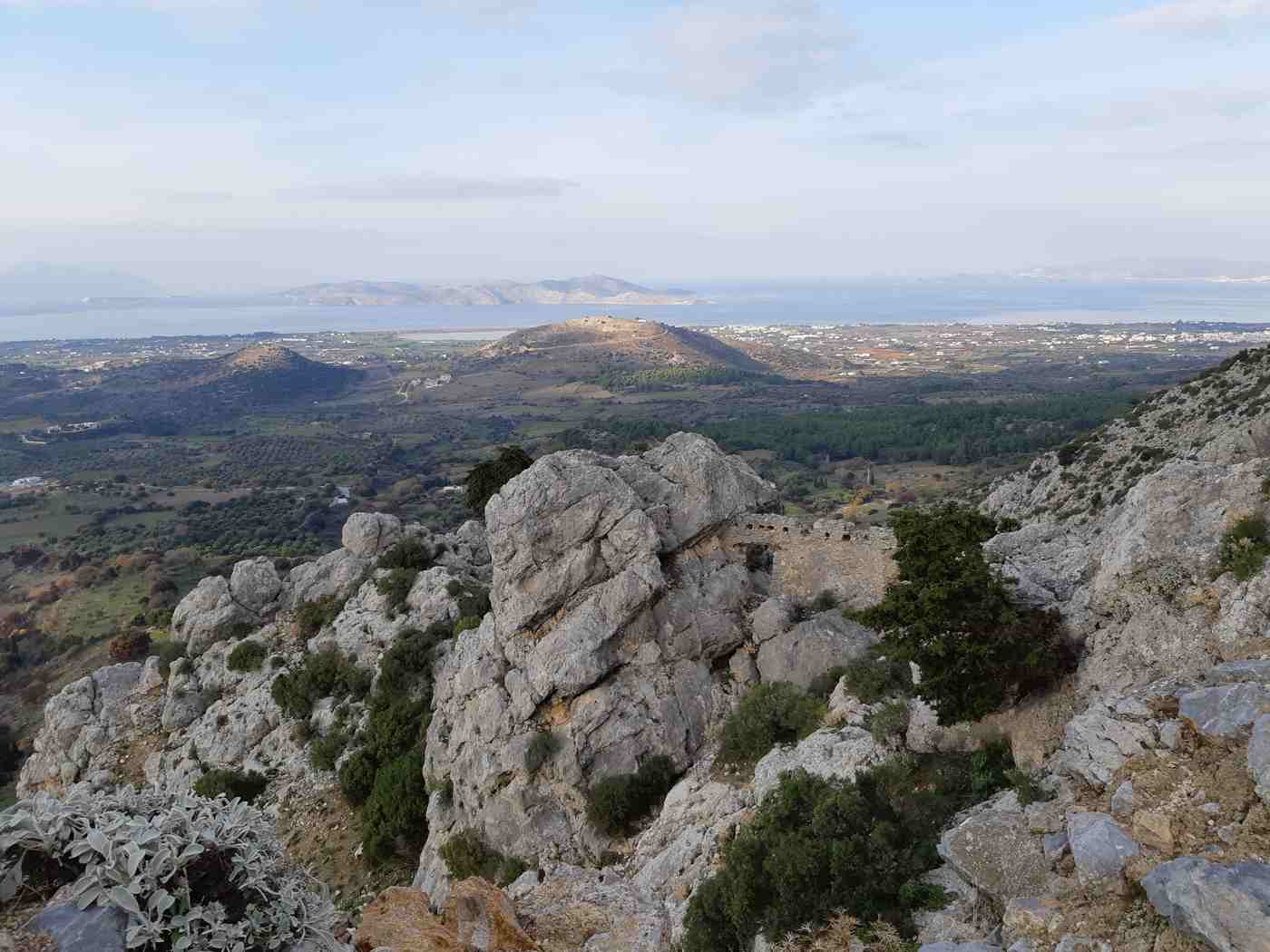
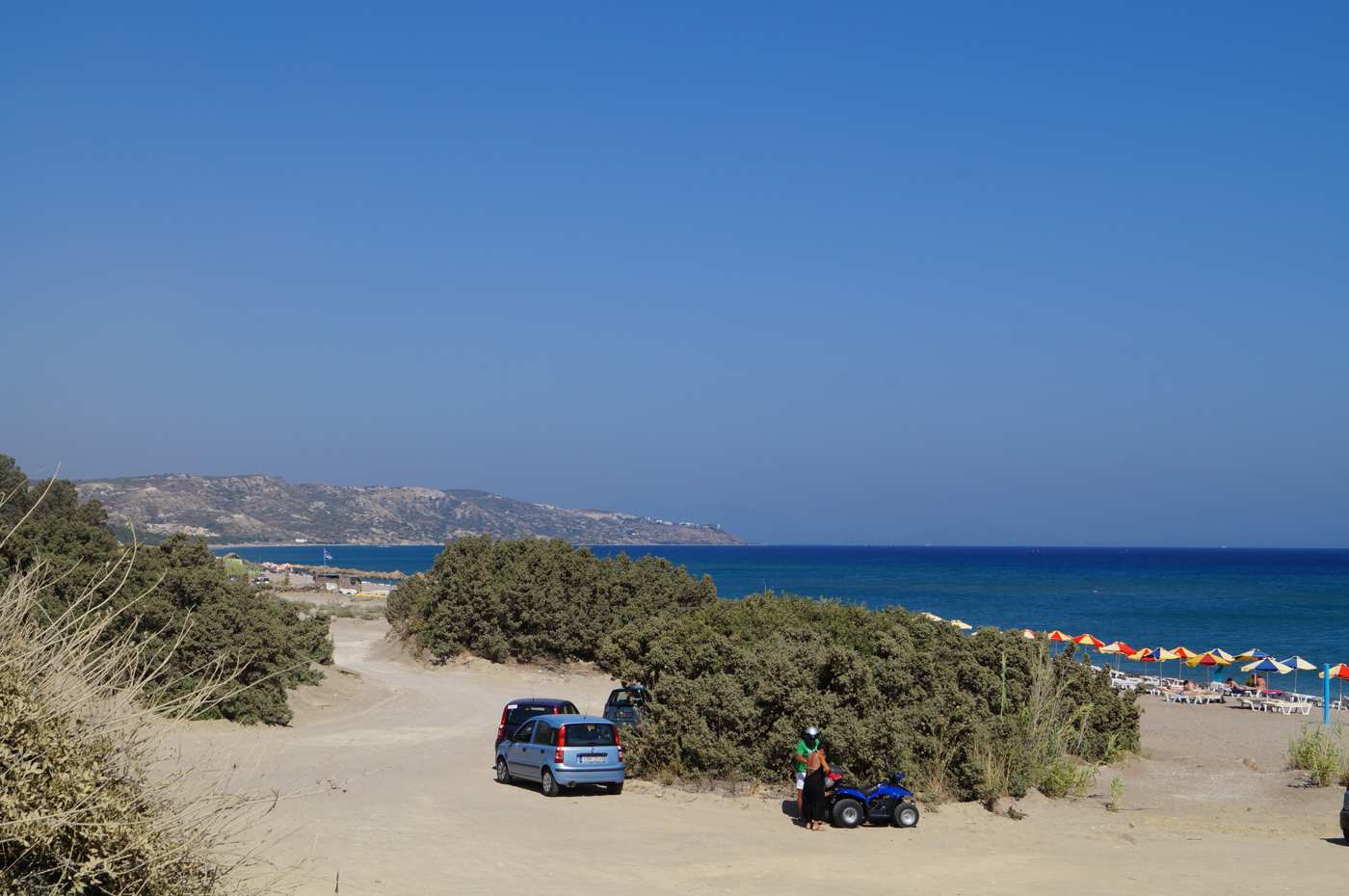
Tigaki beach unfurls along the north coast of Kos for kilometres, a ribbon of pale sand shelving into calm, shallow water that warms early in the season. Twelve kilometres west of Kos Town, this wide strand draws families and windsurfers in equal measure. Its gentle gradient safe for children and its exposed position catching the afternoon meltemi that fills sails and kites. Behind the sunbeds and tavernas lies the Alyki salt-pan lagoon, a protected wetland where flamingos wade through the shallows and herons hunt among the reeds. Plan the whole trip with Greece Tours.
The beach runs almost unbroken toward Marmari, backed by a flat coastal plain perfect for cycling, while offshore the little island of Pserimos floats on the horizon, reached by day boats that depart most mornings in summer.
The combination of safe swimming, birdwatching wetlands and a relaxed resort strip makes Tigaki one of the most popular stretches of sand on the island. Water-sports stations cluster at intervals along the beach, offering windsurfing lessons when the wind picks up and paddleboards for calmer mornings. The Alyki lagoon path circles the wetland on firm ground, passing observation points where migratory species rest during spring and autumn passages. Accommodation ranges from small family-run studios to larger hotel complexes, all within a short walk of the sand. The beach faces north across the strait toward the Turkish mainland. On clear days the mountains of Bodrum rise above the water, a reminder of how close the continents lie.
What makes Tigaki beach on Kos ideal for families with young children?
Tigaki beach shelves into the sea so gently that adults wade thirty metres before the water reaches waist height.
The beach stretches for more than three kilometres along the north coast. Offering ample space even during peak weeks in July and August when Greek and European families fill the sunbeds. The sand compacts near the waterline, firm enough for beach games and castle-building, while the upper beach stays loose and deep. Lifeguards patrol the central sections during high season, and the absence of rocks or sudden drop-offs means parents relax while children splash in the shallows. The water stays clear and calm on most mornings before the meltemi wind arrives in the afternoon. The north-facing orientation means the beach receives sun from early morning until late afternoon, maximising daylight hours for play.
Sunbed and umbrella concessions line the busiest stretches, spaced at intervals that leave free sand between them for those who prefer to lay their own towels. Tavernas and beach bars stand just behind the sand, offering simple lunches of souvlaki, salads and cold drinks without the leave the beach. Showers and changing facilities cluster near the main access points, and the flat terrain behind the beach means pushchairs and beach trolleys roll easily from the road to the waterline. The shallow entry also suits elderly visitors and anyone with limited mobility, as the firm sand and gentle slope require no sudden steps or deep plunges.
Water-sports operators offer pedalos and inflatable rings for hire, and the calm morning conditions allow young children to try stand-up paddleboarding in the shallows under supervision. The beach faces away from the prevailing summer winds until midday, so the first half of the day delivers glassy water and minimal waves. Kos beaches on the north coast share this gentle profile, but Tigaki combines the longest unbroken stretch of sand with the easiest access from the main island road, making it the default choice for families staying anywhere between Kos Town and Marmari.
The resort strip behind Tigaki beach remains low-rise and spread out, avoiding the density of larger resorts elsewhere on the island. Minimarkets, bakeries and pharmacies cluster along the main road. All within a short walk of the beach. The flat coastal path allows families to cycle or stroll to neighbouring beaches without needing a car. The combination of safe swimming, nearby amenities and a relaxed atmosphere has made Tigaki a fixture on family itineraries for decades. The beach continues to draw repeat visitors who return year after year to the same stretch of sand and the same welcoming tavernas.
How does the Alyki salt lagoon behind Tigaki beach support birdlife?
The Alyki lagoon forms a shallow brackish wetland separated from the sea by a narrow strip of dunes and beach.
The lagoon covers several square kilometres behind Tigaki and Marmari beaches, fed by seawater seeping through the sand and by seasonal freshwater streams draining the inland plain. Water levels fluctuate with the seasons, exposing mudflats rich in invertebrates during summer and filling deeper pools in winter when rainfall increases. Flamingos arrive in flocks of ten to fifty birds, filtering brine shrimp and algae from the shallow water, their pink plumage vivid against the white salt crusts and green reeds. Grey herons and little egrets stalk the margins, hunting small fish and crabs, while avocets and stilts probe the mud with long bills, their black-and-white patterns striking in the low light of early morning.
A flat gravel path circles the lagoon perimeter, accessible by foot or bicycle, passing observation points where benches allow quiet watching without disturbing the birds. The path runs for about six kilometres, linking Tigaki and Marmari and offering views across the wetland toward the inland mountains and the sea. Spring migration brings warblers, pipits and wagtails to the reed beds, and autumn sees flocks of terns and gulls resting on the exposed sandbars. The lagoon lies within a protected area under European wetland conservation directives, and hunting is prohibited, allowing birds to feed undisturbed. Binoculars reveal detail at distance, and the flat terrain means even casual walkers spot species during a single circuit.
The salt pans operated until the mid-twentieth century, when industrial production made small-scale harvesting uneconomical. Low stone walls and sluice gates still divide the lagoon into rectangular basins. In high summer the water evaporates to leave thick salt deposits that glitter white under the sun. The abandoned infrastructure now serves as perches for cormorants and roosts for gulls, and the shallow pools created by the old channels concentrate food sources, drawing waders and waterfowl. The lagoon’s proximity to the beach means birdwatchers combine a morning walk around the wetland with an afternoon on the sand. The flat cycle path makes the circuit accessible to all fitness levels.
Local environmental groups monitor the lagoon’s water quality and bird populations, and information boards at the main access points identify common species and explain the wetland’s ecology. The Alyki lagoon represents one of the few remaining coastal wetlands in the Dodecanese. Most others having been drained for agriculture or development. Its survival depends on maintaining the delicate balance between tourism, conservation and water management. The flamingos have become an unofficial symbol of Tigaki. Visitors often pause on the beach to watch the flocks feeding in the lagoon shallows. Their reflections doubling in the still water at dawn and dusk.
Why does Tigaki beach attract windsurfers during summer afternoons?
The north coast of Kos catches the meltemi wind, a steady northerly that blows most afternoons from June through September.
The meltemi builds through the morning, arriving around midday and strengthening into the afternoon before dropping at sunset. The wind blows from the northwest, angling across Tigaki beach and pushing waves toward the shore in regular sets that remain manageable for most skill levels. The shallow water extends far offshore, so falls result in soft landings and easy board recovery, and the sandy bottom eliminates the risk of injury from rocks or reefs. Water-sports stations set up near the central beach sections, offering equipment rental and instruction. The flat water of early morning allows beginners to practice basic techniques before the wind arrives.
Windsurfers launch from the beach and sail northeast toward Kos Town or southwest toward Marmari, covering kilometres in a single run before tacking back. The wind’s consistency means sessions last for hours, and experienced sailors rig larger sails in lighter conditions or smaller high-wind setups when the meltemi peaks. Kitesurfers also use Tigaki, launching from the less crowded western end of the beach where the open space allows safe kite handling. The combination of warm water, steady wind and soft sand makes Tigaki one of the top windsurfing spots in the Dodecanese. International visitors often base themselves here for week-long sessions. Sailing every afternoon when conditions align.
The wind affects the beach atmosphere, transforming the calm morning scene into a livelier afternoon environment as sails fill the water and kites arc overhead. Swimmers retreat to the sheltered eastern end or move inland to the lagoon path, while spectators gather at the beach bars to watch the action. The meltemi also cools the air temperature, making afternoons more comfortable than the still heat of midday, and the breeze keeps mosquitoes and other insects away. Things to do in Kos include windsurfing lessons at Tigaki, and schools operate from the beach, offering beginner courses and advanced coaching in wave riding and freestyle tricks.
The wind’s reliability has made Tigaki a fixture on European windsurfing itineraries, and the beach hosts informal gatherings of sailors who return each summer to the same spot. Equipment technology has evolved over the decades, but the meltemi blows as it always has, and the shallow water and sandy bottom remain unchanged. The combination of natural conditions and accessible facilities ensures Tigaki continues to draw wind-sports enthusiasts alongside the families and sunbathers who prefer the calmer morning hours. Each group finding its own rhythm within the long stretch of sand and sea.
What does a day trip to Pserimos island from Tigaki beach involve?
Day boats depart Tigaki beach most mornings in summer, crossing the strait to Pserimos in about thirty minutes.
Pserimos lies about eight kilometres north of Tigaki, visible from the beach as a low green hump on the horizon. The island measures roughly five square kilometres and supports a permanent population of fewer than fifty residents, most living in the small harbour settlement on the south coast. Boats anchor in the shallow bay. Passengers wade the last metres to the beach, a crescent of pale sand backed by tamarisk trees and a row of family-run tavernas. The water stays shallow and warm, ideal for swimming and snorkelling, and the bay’s sheltered position keeps the sea calm even when the meltemi blows across the open strait.
The island has no cars, no paved roads beyond the harbour area, and no large hotels, preserving a quiet atmosphere that contrasts with the busier beaches of Kos. Visitors spend the morning swimming, exploring the small village or walking the dirt paths that climb the low hills behind the settlement. The tavernas serve grilled fish, octopus and Greek salads, and most day-trippers eat lunch under the shade of the tamarisks before the boats sound their horns for the return journey. The round-trip fare runs about fifteen to twenty euros per person. Tickets are sold on the beach at Tigaki or aboard the boats. Which range from small wooden caiques to larger modern excursion vessels.
Some boats combine Pserimos with stops at other nearby islands, visiting Kalymnos or Platy for a multi-island itinerary, but the direct Tigaki-Pserimos route remains the simplest and quickest option. The crossing offers views back toward the north coast of Kos, with the mountains of Dikeos rising inland and the white buildings of Tigaki and Marmari strung along the shore. Dolphins occasionally swim alongside the boats, and the clear water reveals the sandy bottom even in the deeper channel. The return journey departs around early afternoon, landing back at Tigaki in time for a late swim or a cycle along the lagoon path.
Pserimos receives visitors from Kos Town and Mastichari as well, so the beach fills during peak hours, but the island never feels crowded compared to the main resorts. The simplicity of the experience appeals to those seeking a break from the more developed beaches, and the lack of commercial infrastructure means the island retains a timeless quality. Day trips to Pserimos have operated for decades, and the same families often run the tavernas and the boats, maintaining a continuity that regulars appreciate. The excursion adds variety to a Tigaki beach holiday without requiring an overnight stay, and the short crossing makes it accessible even to those prone to seasickness.
How do visitors cycle from Tigaki beach to neighbouring areas on Kos?
A flat coastal path runs from Tigaki beach eastward toward Kos Town and westward to Marmari, following the shoreline and the edge of the Alyki lagoon.
The path surface alternates between packed gravel and paved sections, wide enough for cyclists and pedestrians to pass comfortably. Heading east, the route skirts the lagoon’s southern edge, passing observation points and reed beds before reaching the outskirts of Kos Town, where it joins the town’s extensive cycle network. The ride takes about forty-five minutes at a leisurely pace, with no hills or difficult terrain, and the path stays shaded in places by tamarisk and eucalyptus trees. Westward, the path continues past Marmari beach and on toward Mastichari, eventually linking into a longer coastal route that circles much of the island’s northern perimeter.
Kos has invested in cycling infrastructure over recent decades, and the flat topography makes the island one of the most bike-friendly destinations in the Aegean. Rental shops offer basic single-speed bikes, multi-gear touring bikes and electric-assist models, with daily rates running about five to ten euros depending on the type. Most hotels and studios provide secure storage for bicycles, and the low traffic volume on the coastal roads means families cycle safely with children. The path along the lagoon sees little motor traffic, and the sea breeze cools riders even on hot afternoons, making cycling more comfortable than walking the same distance.
The route passes points of interest, including the salt-pan observation platforms, small chapels set back from the path. Access points to quieter stretches of beach between Tigaki and Marmari. Cyclists often stop to watch the flamingos or to swim at a deserted cove, and the flat terrain allows riders to cover significant distances without fatigue. Kos Town offers more extensive facilities, shops and restaurants, and the cycle ride from Tigaki provides an alternative to the bus or taxi for those who enjoy active travel. The return journey retraces the same path, and the prevailing wind usually blows from behind on the westward leg, easing the ride back to Tigaki.
Electric bikes have become popular in recent years, allowing less fit riders to tackle longer distances or to explore the inland villages without struggling on the few gentle climbs. The coastal path remains the easiest and most scenic route. Adventurous cyclists use Tigaki as a base for rides to Zia, Pyli or Antimachia, combining beach relaxation with inland exploration. The bicycle has become a symbol of Kos tourism. The island’s commitment to maintaining and extending the cycle network ensures that future visitors will continue to enjoy car-free travel along the coast and through the countryside.
What facilities and services line Tigaki beach on Kos?
Tigaki beach supports a relaxed resort strip of tavernas, cafes, sunbed concessions, water-sports stations and small hotels spread along the main road parallel to the sand.
Sunbed and umbrella sets rent by the day, with prices around five to eight euros per pair, and the concessions provide changing cabins and showers for customer use. Tavernas serve breakfast, lunch and dinner, with menus featuring Greek classics such as moussaka, grilled fish, Greek salad and souvlaki, alongside international options like pizza and pasta. Beach bars offer cocktails, smoothies and coffee, and several open early to catch the breakfast trade before the beach fills. The main road runs about fifty metres behind the sand, lined with minimarkets, bakeries, car and bicycle rental agencies, and tourist shops selling beachwear and souvenirs.
Water-sports operators cluster near the central beach sections, offering windsurfing and kitesurfing lessons, paddleboard and kayak rental, and banana-boat rides for children. Instructors speak English, German and Greek, and beginner courses run over two or three days, teaching basic techniques in the shallow water before progressing to deeper areas. The stations also rent snorkelling gear, though the sandy bottom and lack of reefs limit underwater interest compared to rockier coasts elsewhere on the island. Jet-ski rental operates from locations, and parasailing launches from the beach during calm mornings, towing riders high above the water for panoramic views of the coast and lagoon.
Accommodation ranges from small studios and apartments to mid-sized hotels, most offering pools, breakfast and easy beach access. The resort strip extends for about two kilometres, with the densest development near the main beach entrance and quieter sections toward the western end. Public bus services connect Tigaki to Kos Town and other north-coast villages, with buses running hourly during summer and less frequently in the shoulder seasons.
Taxis wait at the main junction, and the flat roads make cycling or walking between the beach, the lagoon and the inland villages straightforward. Where to stay in Kos includes Tigaki as a popular choice for families and windsurfers, and the resort’s relaxed pace attracts visitors seeking a quieter alternative to the busier resorts around Kardamena or Kos Town.
Medical services include a small clinic in the village, and pharmacies stock basic supplies and suncare products. ATMs stand along the main road, and most businesses accept card payments, though cash remains useful for smaller purchases and beach vendors. The resort operates on a seasonal schedule, with most facilities open from April through October and reduced services outside those months. The combination of beach access, dining options and activity providers makes Tigaki self-sufficient for a week-long stay, though the proximity to Kos Town and other attractions allows easy day trips for those who want to explore beyond the immediate area.
How does Tigaki beach compare to other beaches on the north coast of Kos?
Tigaki, Marmari and Mastichari form a continuous stretch of north-facing sand, sharing shallow water, fine pale sand and exposure to the meltemi wind.
The three beaches lie within ten kilometres of one another, linked by the coastal path and the main island road, and visitors explore all three during a single stay. Tigaki attracts the largest numbers, its central position and developed resort strip drawing families and windsurfers, while Marmari appeals to those seeking a more tranquil environment with fewer sunbeds and tavernas. Mastichari retains a working harbour alongside its beach, with fishing boats and ferries sharing the waterfront, and the village atmosphere feels more authentic and less resort-focused. The sand quality and water depth remain consistent across all three, and the choice between them depends on preferences for facilities, atmosphere and proximity to other attractions.
Tigaki’s position twelve kilometres west of Kos Town makes it accessible for day trips from the capital. The frequent bus service allows visitors staying in Kos Town to reach the beach without a car. Marmari lies about three kilometres further west. The quieter road and lower development density create a more relaxed feel, though the trade-off comes in fewer dining options and limited evening entertainment. Mastichari sits another five kilometres west, and the ferry terminal adds activity and interest, with boats departing for Kalymnos and Pserimos visible from the beach. The harbour tavernas serve fresh fish landed by the local fleet, and the village square hosts evening gatherings that feel more local than touristy.
The Alyki lagoon backs both Tigaki and Marmari. The birdwatching opportunities remain equally good from either beach, though Tigaki’s observation platforms and information boards make the wetland more accessible to casual visitors. The meltemi affects all three beaches equally, and windsurfers move between them depending on crowd levels and specific wind angles. The shallow water and gentle slope make all three suitable for families, and the absence of rocks or strong currents means parents relax regardless of which beach they choose. The north coast’s consistent conditions contrast with the more varied beaches on the south and west coasts, where rockier shores, deeper water and different wind patterns create distinct experiences.
Visitors often combine north-coast beaches with inland excursions to Zia, Pyli or the Asklepion, and the flat terrain makes cycling between beaches a popular activity. The coastal path allows walkers to stroll from Tigaki to Marmari in under an hour, passing the lagoon and enjoying views across the strait toward Turkey. The three beaches together form the heart of Kos’s family-friendly beach tourism. The choice between them comes down to minor differences in atmosphere and facilities rather than significant variations in natural conditions. Tigaki’s combination of length, accessibility and lagoon proximity gives it a slight edge for first-time visitors. Repeat guests often explore the quieter charms of Marmari or the working-village character of Mastichari.
What is the best time of year to visit Tigaki beach on Kos?
Tigaki beach operates from April through October, with peak crowds in July and August. May, June and September offer warm weather, calm seas and fewer visitors, ideal for families and windsurfers.
April and early May see the resort opening for the season, with tavernas and hotels welcoming the first guests and the beach still quiet. Water temperatures hover around eighteen to twenty degrees Celsius, cool for extended swimming but comfortable for active visitors. The lagoon fills with migratory birds during spring passage, and birdwatchers find May particularly rewarding as warblers, waders and waterfowl stop to feed and rest. The weather stays mild, with daytime temperatures reaching the low to mid-twenties, and occasional spring showers keep the landscape green and wildflowers blooming along the lagoon paths.
June brings warmer water and longer days, with the meltemi beginning to establish its afternoon pattern. Families arrive in greater numbers as European schools break for summer, and the beach fills steadily through the month. July and August represent the peak season, with sunbeds fully occupied, tavernas busy and the resort operating at maximum capacity. Water temperatures reach twenty-four to twenty-six degrees, and the sea stays calm in the mornings before the wind builds. The heat peaks in late July and early August, with daytime temperatures often exceeding thirty-five degrees, making the afternoon breeze a welcome relief. Prices rise during these months, and advance booking becomes essential for accommodation and sunbed reservations.
September offers the best balance of warm weather, quiet beaches and reliable wind, as families return home and schools reopen across Europe. The water remains warm from the summer heat, often warmer than the air on breezy afternoons, and the reduced crowds make the beach more relaxed. The meltemi continues to blow most days, though with slightly less intensity than in July and August, and windsurfers enjoy long sessions without the peak-season congestion. October sees the season winding down, with businesses closing by mid-month and the beach returning to local use. Water temperatures drop gradually, and the weather becomes more variable, with occasional autumn storms bringing rain and cooler air.
Winter closes the resort almost entirely, with only a handful of year-round residents remaining and most facilities shuttered until the following spring. The beach stays accessible, and the lagoon continues to attract birdwatchers, but the lack of services and the cooler weather limit appeal. The seasonal rhythm has defined Tigaki for decades, and the pattern of opening, peak and closure follows the broader tourism calendar across the Greek islands. Visitors seeking the classic beach holiday choose July and August despite the crowds, while those prioritising value. Space and birdwatching favour the shoulder months of May, June and September, when Tigaki reveals a quieter, more contemplative character.
How do visitors reach Tigaki beach from Kos Town and the airport?
Tigaki lies twelve kilometres west of Kos Town along the north-coast road, a twenty-minute drive or thirty-minute bus ride.
Kos International Airport sits near Antimachia in the centre of the island, about twenty-five kilometres southwest of Tigaki. Taxis meet arriving flights and charge around thirty to forty euros for the transfer, taking about thirty minutes via the main island road. Pre-booked transfers arranged through hotels or online platforms offer fixed prices and guaranteed service, and shared shuttles reduce costs for solo travellers or couples. Rental cars are available at the airport and in Kos Town. The drive to Tigaki follows well-maintained roads with clear signage. Passing through Zipari and Antimachia before joining the north-coast highway.
Public buses operated by KTEL connect Tigaki to Kos Town, Marmari, Mastichari and other north-coast destinations, with timetables posted at bus stops and available online. The fare from Kos Town to Tigaki runs about two to three euros, and tickets are purchased from kiosks or directly from the driver. Buses depart from the main terminal near the harbour in Kos Town, and the route follows the coastal road, stopping at points along the way. Service frequency increases during summer, with buses running every hour or more often during peak weeks, and reduces to a few daily departures in the shoulder seasons.
The bus stop in Tigaki stands on the main road near the central beach access, and the walk from the stop to the sand takes less than five minutes.
Cycling from Kos Town to Tigaki takes about forty-five minutes along the coastal path, a flat and scenic route that passes the lagoon and offers views across the strait. Rental bicycles are widely available in Kos Town, and visitors cycle to Tigaki for a day at the beach before returning in the late afternoon. The path stays separate from motor traffic for most of the distance, and the lack of hills makes the ride accessible to casual cyclists. Electric bikes reduce effort further, and some rental shops offer delivery to hotels in Tigaki, allowing visitors to collect bikes at their accommodation rather than in town.
Taxis provide door-to-door service and wait at designated ranks in Kos Town, the airport and major hotels. The fare from Kos Town to Tigaki runs about fifteen to twenty euros, and the journey takes around twenty minutes depending on traffic. Ride-hailing apps operate on the island, though traditional taxis remain more common. Driving to Tigaki from Kos Town or the airport requires no special navigation skills, as the route follows the main north-coast road with clear signs pointing to Tigaki, Marmari and Mastichari. Parking near the beach is informal. With spaces along the roadside and small lots near the main tavernas. The flat terrain makes walking from any parking spot to the sand straightforward.
What accommodation options exist near Tigaki beach on Kos?
Tigaki offers a range of accommodation from small family-run studios and apartments to mid-sized hotels with pools and breakfast, most within a short walk of the beach.
Studios and apartments dominate the accommodation landscape, typically offering self-catering facilities, private balconies and weekly rates that appeal to families and longer stays. Units range from simple one-room studios sleeping two to larger two-bedroom apartments accommodating four or more, and most include kitchenettes with basic cooking equipment, refrigerators and dining areas. Owners often live on-site or nearby, providing a personal touch and local advice, and properties have operated for decades under the same family management. Pools are common, and gardens planted with bougainvillea, oleander and citrus trees provide shade and colour. Prices vary with the season, with peak weeks in July and August commanding the highest rates and shoulder months offering better value.
Hotels in Tigaki tend toward the three-star and four-star categories, offering buffet breakfasts, pool bars, organised activities and evening entertainment. Room configurations include standard doubles, family rooms and suites, and most hotels provide air conditioning, satellite television and Wi-Fi. Some properties cater specifically to families, with kids’ clubs, playgrounds and shallow children’s pools, while others target couples and windsurfers with quieter atmospheres and equipment storage. All-inclusive packages are available at a few larger hotels, though half-board and bed-and-breakfast arrangements remain more common. The beachfront position varies, with hotels standing directly behind the sand and others set back along the main road, requiring a short walk to reach the water.
The western end of Tigaki stays quieter, with fewer hotels and more scattered villas and studios, appealing to visitors seeking a more tranquil environment. The central area offers the densest concentration of facilities, with tavernas. Shops and beach access all within easy reach. The eastern end transitions toward the lagoon path and the open countryside leading to Kos Town. Booking in advance becomes essential for July and August, when the resort fills to capacity, while May, June and September allow more flexibility and last-minute reservations. Online platforms list most properties, and direct contact with owners often yields better rates and personalised service.
Long-term visitors and repeat guests often rent the same studio or apartment year after year, building relationships with owners and enjoying the continuity of familiar surroundings. The seasonal closure means properties undergo maintenance and upgrades during winter, and returning guests often find small improvements each spring. The accommodation style suits independent travellers who value proximity to the beach, self-catering flexibility and a relaxed resort atmosphere over luxury amenities or extensive facilities. Tigaki’s appeal lies in its simplicity and its focus on the beach and the natural environment. The accommodation reflects that ethos. Providing comfortable bases for days spent on the sand, in the water or exploring the lagoon and the wider island.
Frequently Asked Questions
Is Tigaki beach suitable for toddlers and non-swimmers?
Tigaki beach ranks among the safest on Kos for toddlers and non-swimmers. The sand shelves into the sea so gradually that adults wade thirty metres or more before the water reaches chest depth. The absence of rocks. Sudden drop-offs or strong currents creates a secure environment for young children. The fine pale sand stays soft underfoot, and the water warms quickly under the summer sun, reaching comfortable temperatures by late May. Lifeguards patrol the central sections during peak season, and the calm morning conditions before the meltemi wind arrives allow even nervous swimmers to relax. Parents appreciate the long, wide beach that provides ample space for play away from the waterline.
The nearby tavernas and facilities mean help and refreshment are always close at hand.
Can you see flamingos at the Alyki lagoon year-round?
Flamingos visit the Alyki lagoon most reliably from late spring through early autumn, with the largest flocks arriving during migration periods in April, May, September and October. Summer months see smaller resident groups feeding in the shallow pools, and winter brings occasional sightings when weather patterns push birds south from colder regions. The lagoon’s brackish water supports the brine shrimp and algae that flamingos filter-feed, and the protected status ensures undisturbed feeding. Observation is never guaranteed, as the birds move between wetlands across the eastern Aegean depending on food availability and water levels. Patient visitors who walk the lagoon path early in the morning or late in the afternoon stand the best chance of sightings.
Grey herons, egrets and waders appear more consistently throughout the year, and the reed beds host warblers and other small birds during the breeding season.
Do you need a car to stay in Tigaki?
A car is not essential for a Tigaki beach holiday, though it adds flexibility for exploring the wider island. The resort provides everything needed for a beach-focused stay within walking or cycling distance, including the beach itself, tavernas, shops and the lagoon path. Public buses connect Tigaki to Kos Town, Marmari and Mastichari, running hourly during summer and allowing car-free day trips to the capital, the Asklepion and other north-coast villages. Bicycles offer an excellent alternative, with rental shops along the main road and flat coastal paths linking Tigaki to neighbouring beaches and Kos Town.
Taxis are available for longer journeys or trips to inland villages like Zia or Pyli, and pre-booked excursions cover popular sites such as the Asklepion, Kefalos and Nisyros. Visitors who plan to explore the south coast. Mountain villages or beaches across the island will find a car convenient. Those content to relax on Tigaki beach and explore the immediate area manage perfectly well without one.
What is the water temperature at Tigaki beach across the season?
Water temperatures at Tigaki beach follow the typical Aegean pattern, starting cool in April and May at around eighteen to twenty degrees Celsius. Warming through June to reach twenty-two to twenty-four degrees. Peaking in August and September at twenty-five to twenty-seven degrees. The shallow depth and sandy bottom allow the water to heat quickly under the summer sun. The north-facing position means the sea stays slightly cooler than sheltered south-coast bays. A welcome relief during the hottest weeks. October sees temperatures dropping gradually to around twenty-two degrees, still comfortable for swimming on warm days, and by November the water cools below twenty degrees as autumn storms arrive.
The warmest and most comfortable swimming occurs from mid-June through early October. With August and September offering the perfect combination of warm water, reliable weather and fewer crowds than the peak July weeks.
Are there any historical or cultural sites near Tigaki beach?
Tigaki itself is a modern resort with no significant historical sites, but its proximity to Kos Town places the island’s major ancient landmarks within easy reach. Kos Town, twelve kilometres east, hosts the Asklepion, the terraced healing sanctuary of Asclepius and the island’s premier ancient site. The Roman agora, the Casa Romana, the ancient odeon and the Knights’ Castle of Nerantzia at the harbour. The Plane Tree of Hippocrates stands in the town centre, where tradition holds that the father of medicine taught his students. Inland, the mountain village of Pyli preserves the ruins of a Byzantine castle and old stone houses, and Antimachia, near the airport, features a Venetian fortress with panoramic views.
Day trips to Nisyros allow exploration of the volcanic caldera and the medieval monastery of Panagia Spiliani. The combination of beach relaxation at Tigaki and cultural excursions to nearby sites creates a balanced holiday that satisfies both sun-seekers and history enthusiasts.
How crowded does Tigaki beach get during peak season?
Tigaki beach fills steadily during July and August, with sunbeds fully occupied by mid-morning and the central sections busy throughout the day. The beach’s length, however, means that even during peak weeks. Walking a few hundred metres east or west reveals quieter stretches where free sand remains available for those who prefer to lay their own towels. The early morning hours before ten and the late afternoon after five offer the most space. The western end toward Marmari stays less crowded than the central area near the main tavernas and water-sports stations. Weekends see an influx of Greek visitors from Kos Town and Rhodes, adding to the international tourists.
The beach never feels as packed as smaller coves or the town beaches. The shallow water spreads swimmers over a wide area, reducing the sense of congestion. The meltemi wind in the afternoon drives bathers inland or back to their hotels. Freeing up space for windsurfers and those who enjoy the breeze.
What visitors bring for a day at Tigaki beach?
A day at Tigaki beach requires sun protection, swimwear, towels and water, as the exposed north-coast position offers little natural shade and the summer sun remains intense from mid-morning through late afternoon. Sunscreen with high SPF, hats and sunglasses are essential, and reef-safe formulas protect the marine environment. Sunbeds and umbrellas are available for rent, but visitors who prefer free sand bring their own beach umbrella or shade tent. Water shoes are unnecessary, as the sandy bottom stays soft and rock-free, but a light cover-up protects against sunburn when walking to and from the beach. Cash covers sunbed rental, taverna meals and beach vendors, though most businesses accept cards.
Snorkelling gear adds interest for children, and inflatable toys suit the shallow water. Binoculars enhance lagoon birdwatching, and a camera captures flamingo sightings and sunset views. A small backpack carries essentials, and a reusable water bottle reduces plastic waste. The flat terrain and short distances mean heavy packing is unnecessary, and the nearby tavernas and minimarkets provide anything forgotten.