
Kardamena spreads along the south coast of Kos about 30 kilometres southwest of the capital. Built around a working harbour and a broad sandy beach that stretches for kilometres in both directions. The island’s liveliest resort after Kos Town combines family-friendly shallows, water sports, a seafront promenade lined with tavernas and bars. A nightlife scene that draws visitors from across the island. The harbour serves as the main departure point for daily excursion boats to Nisyros. The volcanic island visible on the southern horizon. Local ca\u00efques shuttle to hidden coves and back to Kos Town. Plan the whole trip with Greece Tours.
The modern resort occupies the site of an ancient settlement known for a sanctuary of Apollo, though few visible remains survive beyond scattered pottery fragments. Today Kardamena functions as a self-contained destination with its own rhythm, positioned close to Kos International Airport near Antimachia yet far enough from the capital to offer a distinct south-coast atmosphere. The long, shallow beach and warm Aegean waters attract families, while the concentration of bars and clubs along the main strip creates a lively evening scene that extends late into summer nights.
What makes Kardamena the busiest resort on the south coast of Kos?
Kardamena combines a kilometres-long sandy beach with shallow, warm waters, a working harbour, a dense concentration of tavernas, bars and clubs along the seafront promenade, and proximity to Kos International Airport.
The resort stretches along a natural bay where a former fishing village has grown into the second-largest settlement on the island after the capital. The harbour sits at the centre of the seafront, flanked by a promenade that runs east and west for more than two kilometres. Lined with restaurants, caf\u00e9s, souvenir shops and bars. Behind the waterfront, a grid of streets holds additional tavernas, supermarkets, car-rental agencies and accommodation ranging from family-run studios to larger hotel complexes. The density of services and the flat, walkable layout make Kardamena a self-sufficient base where visitors find everything within a short stroll of the beach.
The beach itself defines the resort’s appeal, offering fine golden sand and a gradual, gentle slope into the sea that keeps the water knee-deep for tens of metres offshore. Families with young children favour the eastern stretches, where the shallows remain calm even when afternoon winds pick up. The western sections attract water-sports operators who set up jet-ski rentals, parasailing platforms and banana-boat launches from May through October. Sunbeds and umbrellas line the busiest central zone near the harbour, while the far ends of the beach thin out into quieter stretches backed by low dunes and seasonal beach bars.
Kardamena’s nightlife reputation rests on a cluster of bars and clubs concentrated along the main seafront road and the parallel inland streets. Music spills from open-fronted venues from late evening until the early hours, drawing a younger crowd alongside families who retreat to quieter accommodation after dinner. The scene peaks in July and August, when the resort fills with package-holiday visitors and independent travellers who base themselves here to explore Kos beaches by day and return for the evening energy. Outside high summer the atmosphere softens, and the resort takes on a more relaxed, family-oriented character.
Proximity to the airport gives Kardamena a practical advantage over northern resorts. The drive from Kos International Airport near Antimachia takes around 15 minutes, covering about 8 kilometres of flat, well-maintained road. Buses connect the resort to Kos Town roughly every hour during the day, following the inland route through Antimachia and Zipari, a journey of around 40 minutes. Taxis wait at the harbour and along the main road. Many visitors rent cars or scooters to explore the southwestern villages of Kefalos and Kamari. Both within a 20-minute drive along the coast road.
How does the harbour in Kardamena serve as the gateway to Nisyros?
Daily excursion boats depart Kardamena harbour each morning for Nisyros, crossing the strait in around 45 minutes to reach Mandraki, the island’s port.
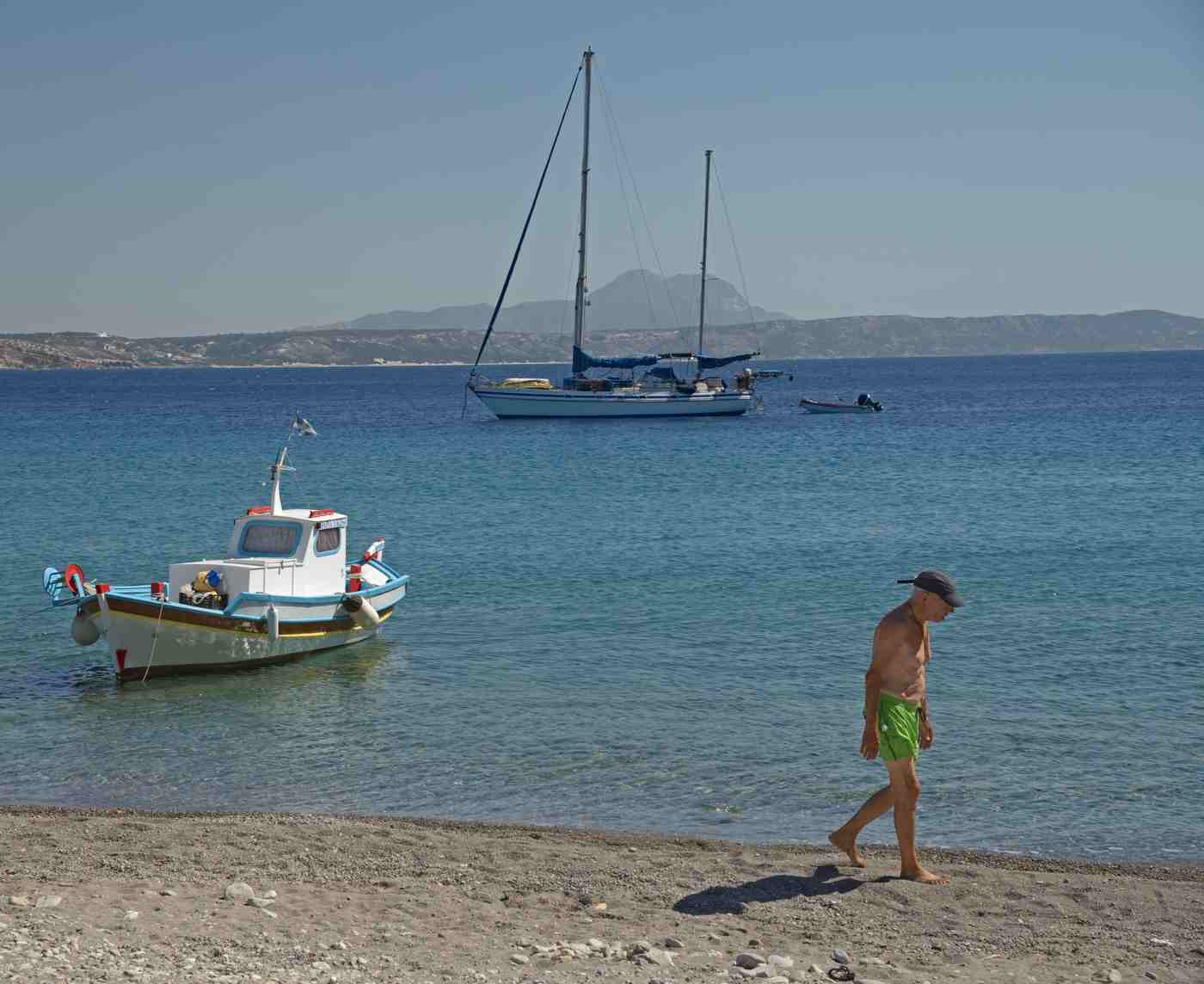
The harbour occupies the central point of the Kardamena seafront, protected by a short breakwater that shelters a mix of fishing ca\u00efques. Private yachts and the larger excursion vessels that run the Nisyros route. Ticket kiosks line the quayside, opening early each morning to sell same-day passages and advertise departure times, which vary slightly by season but typically fall between 9am and 10am. The crossing takes around 45 minutes, covering the 16-kilometre strait that separates Kos from Nisyros. On clear days the volcanic cone of Nisyros dominates the southern skyline, its dark slopes rising abruptly from the sea.
Nisyros itself offers a landscape unlike any other Dodecanese island, with a still-active volcano whose caldera holds the Stefanos crater. A steaming, sulphurous depression where visitors walk along marked paths to peer into fumaroles and mineral-stained vents. The excursion boats dock at Mandraki, the main port, where coaches wait to shuttle passengers up the winding mountain road to the crater plateau at Lakki. The round trip allows around four hours ashore, enough time to descend into the crater. Visit the hilltop Panagia Spiliani monastery and explore Mandraki’s narrow lanes and harbour tavernas before the return crossing.
The Nisyros day trip ranks among the most popular excursions from Kardamena, drawing visitors who want a break from beach routines and a taste of volcanic geology. The boats return to Kardamena harbour in the mid-to-late afternoon, depositing passengers back at the quayside in time for an evening swim or an early dinner. Some operators combine the Nisyros crossing with a stop at the tiny islet of Gyali, known for its pumice quarries and white cliffs, adding an extra hour to the itinerary. Booking in advance during July and August secures a seat, though walk-up tickets remain available on quieter days in spring and autumn.
Beyond Nisyros, the harbour also serves as a departure point for shorter boat trips along the Kos coastline. Local ca\u00efques advertise half-day tours to secluded coves west of Kardamena, stopping at beaches accessible only by sea and offering snorkelling over rocky seabeds. Other boats run a coastal route back to Kos Town, calling at Therma beach with its natural hot springs and the town beaches before docking at the main harbour. These shorter trips operate less regularly than the Nisyros service but provide an alternative way to experience things to do in Kos from a Kardamena base.
What does the beach at Kardamena offer for families and water-sports enthusiasts?
The beach extends for kilometres either side of the harbour, offering fine sand, shallow water that stays warm and calm, and a full range of water sports including jet-skiing, parasailing, windsurfing and banana-boat rides.
The central beach zone directly in front of the harbour and promenade sees the heaviest use, with rows of sunbeds and umbrellas managed by beachfront tavernas and independent operators. The sand here is fine and golden, cleaned daily during the high season. The water remains shallow for 30 to 40 metres offshore. Creating a safe paddling zone for toddlers and non-swimmers. Lifeguards patrol the busiest sections in July and August, and the flat seabed free of rocks or sudden drop-offs reassures parents. The beach shelves so gradually that even at chest depth the bottom remains visible through the clear Aegean water.
Water-sports activity concentrates along the western stretch of beach, where operators set up floating platforms, jet-ski docks and parasailing launch points from late morning through early evening. Jet-ski rentals run by the half-hour, with guided tours available to nearby coves and around the headland toward Kefalos. Parasailing flights lift riders high above the bay, offering aerial views of the resort, the inland hills and the Nisyros silhouette to the south. Banana boats and inflatable tubes towed behind speedboats cater to groups and families, while stand-up paddleboards and kayaks offer calmer alternatives for exploring the shoreline at a slower pace.
The eastern beach stretches away from the harbour toward the salt marshes and low headlands that mark the boundary with the next bay. This section sees fewer crowds and less commercial development, with stretches of open sand where visitors lay their own towels and wade into the same shallow, warm water. A few seasonal beach bars operate simple setups with sunbeds, cold drinks and grilled snacks, but the atmosphere remains quieter and more relaxed than the central zone. Windsurfers favour the eastern end when the afternoon meltemi picks up, using the steady breeze and the space away from swimmers to practise jumps and speed runs.
The beach remains swimmable from May through October, with water temperatures climbing from around 20 degrees Celsius in spring to 26 degrees or higher in midsummer. The south-facing orientation means the beach catches sun from early morning until late afternoon, and the lack of significant tidal variation keeps the waterline stable throughout the day. Showers and changing facilities cluster near the main tavernas, and the promenade provides easy access along the entire length of the developed beach. For visitors seeking variety, the long coastline means a 10-minute walk in either direction reveals a different character, from busy and social to quiet and undeveloped.
How does Kardamena cater to nightlife and evening entertainment on Kos?
Kardamena concentrates bars, clubs and late-night venues along the seafront and parallel inland streets, creating the island’s most active nightlife scene outside Kos Town.
The main nightlife strip runs parallel to the beach, one block inland from the promenade. Where a succession of bars and clubs occupy ground-floor premises with open fronts, outdoor terraces and sound systems that compete for attention. The scene builds gradually each evening, with cocktail bars and sports pubs filling first as diners finish meals at the seafront tavernas. By midnight the clubs take over, playing a mix of chart hits, dance music and Greek pop that spills onto the street and draws crowds moving from venue to venue. The density of options within a compact area means bar-hopping requires only a short walk, and the flat, pedestrian-friendly layout keeps the scene accessible and visible.
Greek nights at traditional tavernas offer an alternative to the club scene, with live bouzouki music, plate-smashing and group dancing that welcomes tourists alongside local families. These events typically start around 9pm and run until midnight, featuring set menus of meze and grilled meats accompanied by wine and ouzo. The atmosphere leans festive rather than refined, with staff encouraging participation in circle dances and providing instruction for visitors unfamiliar with the steps. Several tavernas along the harbour front and the eastern promenade host these evenings weekly during the high season, advertising with chalkboard signs and costumed greeters.
The clientele in Kardamena skews younger than in the mountain villages or the quieter northern beaches. With a significant proportion of package-holiday visitors in their twenties and thirties who choose the resort specifically for its nightlife reputation. Families with teenagers find the mix of options allows parents to enjoy a harbour-front dinner while older children explore the bars under the general safety of a busy, well-lit resort. The peak months of July and August see the scene at its most intense, with venues operating at full capacity and the streets crowded until 3am or later. In June and September the pace slows, and clubs reduce their hours or close midweek.
Beyond the bars and clubs, evening entertainment includes outdoor cinema screenings, karaoke nights and quiz events hosted by larger hotels and beach bars. The promenade itself becomes a social space after dark, with families strolling, ice-cream vendors working the crowds and street performers setting up near the harbour. The combination of beachfront location, warm summer nights and a critical mass of visitors creates an atmosphere that feels lively without the edge of a purely party-focused destination. For those seeking quieter evenings, accommodation away from the main strip or in the eastern part of the resort offers distance from the noise while keeping the beach and daytime amenities within easy reach.
What access options connect Kardamena to Kos Town and the airport?
Kardamena lies about 30 kilometres southwest of Kos Town and roughly 8 kilometres from Kos International Airport near Antimachia.
The public bus service operated by KTEL Kos links Kardamena to the capital via a route that passes through Antimachia. Zipari and the inland plains, taking around 40 minutes for the full journey. Buses depart from a stop near the harbour roughly every hour during the day, with reduced frequency in the early morning and late evening. The fare remains modest, and the air-conditioned coaches provide a comfortable ride, though the inland routing means the journey offers views of farmland and villages rather than coastal scenery. Timetables vary by season, with more frequent departures in July and August to accommodate the higher visitor numbers.
Kos International Airport sits just 8 kilometres north of Kardamena, a 15-minute drive along a well-signed road that cuts through the flat agricultural land around Antimachia. Taxis meet arriving flights and wait at the harbour in Kardamena, offering fixed-price transfers that cost around the same as a short taxi ride in a major European city. Many hotels and apartment complexes arrange their own shuttle services, particularly for package-holiday guests, and private transfer companies advertise online for advance booking. The short distance makes Kardamena one of the most accessible resorts on the island for visitors prioritising a quick airport transfer when considering where to stay in Kos.
Car and scooter rental agencies line the main streets of Kardamena, offering vehicles by the day or week with straightforward terms and basic insurance included. Renting a car opens up the entire island, allowing day trips to the Asklepion near Kos Town. The mountain village of Zia on the slopes of Mount Dikeos. The remote beaches around Kefalos and Agios Stefanos at the southwestern tip. The roads on Kos remain in good condition, and traffic outside Kos Town stays light even in summer. Scooters suit solo travellers or couples comfortable with two-wheeled transport, while families and groups prefer small cars for the added storage and weather protection.
The drive from Kardamena to Kos Town follows the main island road north through Antimachia, passing the airport turnoff and continuing through Zipari and Asfendiou before descending to the capital. The journey takes around 30 minutes without stops. The route offers glimpses of the interior landscape. With vineyards, olive groves and the forested slopes of Mount Dikeos rising to the east. For visitors based in Kardamena who want to explore the capital’s ancient sites, the Knights’ Castle and the harbour promenade. A morning drive allows hours in town before returning to the resort for an afternoon swim and the evening scene.
What historical background does Kardamena carry from ancient times on Kos?
The modern resort occupies the site of an ancient settlement known for a sanctuary dedicated to Apollo. Archaeological surveys have uncovered pottery fragments and scattered remains, though no major monuments survive above ground.
Ancient sources mention a settlement in this part of Kos associated with the worship of Apollo. One of sanctuaries that dotted the island alongside the famous Asklepion dedicated to Asclepius near the capital. The exact location and extent of the sanctuary remain uncertain, as modern development has covered much of the ancient site and systematic excavation has been limited. Pottery sherds, column fragments and foundation stones have surfaced during construction work, confirming continuous habitation from at least the classical period through the Roman era. The finds suggest a modest coastal town rather than a major urban centre, serving local farmers, fishermen and travellers moving along the southern shore.
The name Kardamena itself derives from a Greek word meaning a place of watercress or similar wetland plants. Hinting at the marshes and freshwater sources that once characterised the coastal plain. The ancient town likely exploited the natural harbour for fishing and small-scale trade, connecting to the larger ports at Kos Town and Kefalos. During the Hellenistic period, when the island prospered under the influence of the Ptolemaic dynasty and later Roman rule. The settlement participated in the island-wide economy based on wine, olive oil and grain production. No inscriptions or literary references single out the town for particular events or famous residents, leaving its history as a typical example of rural Kos life.
The transition from ancient settlement to modern resort erased most visible traces of the past. Unlike Kos Town, where the ancient agora, Roman villas and early Christian basilicas remain integrated into the urban fabric, Kardamena presents a landscape dominated by 20th-century construction. A few scattered stones built into garden walls or repurposed as doorsteps hint at earlier structures, but no organised archaeological park or museum interprets the ancient site. Visitors interested in the island’s deeper history focus instead on Kos Town’s monuments, the Asklepion and the mountain villages where traditional architecture and older churches survive in better condition.
The lack of prominent ruins does not diminish Kardamena’s role in the island’s long continuum of settlement and use. The same factors that drew ancient inhabitants\u2014a sheltered beach, access to fresh water, fertile hinterland and a position along coastal routes\u2014continue to shape the modern resort. The sanctuary of Apollo, if fully excavated, add a cultural dimension to a destination currently defined by leisure and recreation. For now, the ancient past remains a footnote in guidebooks, acknowledged but not central to the visitor experience, which prioritises the beach, the harbour and the lively present-day atmosphere.
How do water sports and beach activities define the daytime experience in Kardamena?
Daytime in Kardamena revolves around the beach and the sea, with water sports including jet-skiing, parasailing, windsurfing and banana-boat rides operating from mid-morning through late afternoon.
Water-sports operators set up along the western beach each morning, launching jet-skis from floating docks and rigging parasailing harnesses on the sand. Jet-ski rentals allow solo or tandem rides, with options for guided tours that loop around the headland toward Kefalos or follow the coast east toward the salt marshes. The tours typically last 30 minutes and include a safety briefing and life-jacket provision. Parasailing flights lift riders in pairs or solo, towed by speedboat to heights of 50 to 80 metres. Offering panoramic views of the resort, the inland hills and the volcanic cone of Nisyros on the southern horizon. The flights last around 10 minutes, and operators run continuous rotations during busy periods.
Windsurfing and kitesurfing attract intermediate and advanced riders who take advantage of the afternoon meltemi, the northwesterly wind that blows across the Aegean from June through September. The eastern beach provides the best conditions, with steady wind, flat water close to shore and deeper water farther out for jumps and speed runs. Rental centres offer boards, sails and kites by the hour or day, and instructors provide lessons for beginners in the calmer morning hours before the wind strengthens. Stand-up paddleboarding and kayaking suit those seeking a slower pace, allowing exploration of the shoreline, the harbour entrance and the rocky outcrops that punctuate the beach at intervals.
Banana boats and inflatable tubes towed behind speedboats cater to groups and families, offering a mix of speed, splashes and laughter that appeals to children and teenagers. The rides last around 15 minutes, circling the bay and bouncing over the boat’s wake, with the inevitable tumbles into the warm sea adding to the fun. Snorkelling remains a quieter option, best pursued at the rocky points beyond the main beach where the seabed transitions from sand to rock and small fish gather around submerged boulders. Masks, snorkels and fins are available for rent at beachfront kiosks, and the clear water and gentle currents make the activity accessible to all ages.
Beach volleyball nets, paddleball courts and informal football games occupy the sand between the sunbed rows and the waterline, particularly in the less crowded eastern and western stretches. The flat, firm sand and the absence of sharp shells or stones create a safe surface for active play, and the shallow water nearby allows quick cooling dips between games. The combination of organised water sports, casual beach activities and simple sunbathing ensures that the daytime hours in Kardamena cater to a wide range of interests and energy levels. From adrenaline seekers to those content with a book and a sunbed.
What dining and taverna options characterise the Kardamena seafront?
The seafront promenade and harbour area host dozens of tavernas, restaurants and caf\u00e9s serving Greek classics, fresh seafood, international dishes and fast food.
Tavernas line the promenade in an almost unbroken sequence, each with outdoor seating under awnings or pergolas draped with vines and fairy lights. The menus follow a familiar pattern, opening with meze selections such as tzatziki, taramosalata. Fava and grilled octopus, followed by mains of moussaka, pastitsio, lamb kleftiko and fresh fish sold by weight. The fish arrives whole and grilled over charcoal, typically sea bream, sea bass or red mullet caught by local boats and displayed on ice at the entrance. Diners choose their fish, which is weighed, priced and cooked to order, served with lemon, olive oil and a simple salad of tomatoes, cucumbers and olives.
The harbour-front tavernas attract the evening crowd, with tables positioned to catch the breeze and the view of fishing boats bobbing at their moorings. Waiters call out to passersby, offering menus and promising the best moussaka or the freshest calamari, and the competitive atmosphere keeps prices moderate and portions generous. Greek salad, horiatiki, appears on every table, a mix of tomatoes, cucumbers, green peppers, onions, olives and a thick slab of feta drizzled with olive oil. Souvlaki and gyros provide quicker, cheaper options, served in pita wraps or on plates with chips and tzatziki. Popular with families and younger visitors looking for a casual meal between beach and bar.
International restaurants cater to visitors seeking variety or familiar flavours, with Italian pizzerias, British-style pubs serving fish and chips, and Chinese takeaways clustered along the inland streets. The quality varies, and the Greek tavernas generally offer better value and more authentic atmosphere. But the diversity reflects the resort’s package-holiday clientele and the demand for options beyond traditional Greek cuisine. Breakfast caf\u00e9s open early, serving filter coffee, instant Nescaf\u00e9, fresh orange juice, omelettes, toast and pastries to fuel the day’s beach activities. Ice-cream parlours and cr\u00eaperies do brisk business in the evenings, drawing families and couples strolling the promenade after dinner.
Dining in Kardamena rarely requires reservations outside the peak weeks of August. The casual. Walk-in culture means visitors can compare menus, check out the ambience and choose a table on impulse. Prices remain lower than in Kos Town or the more exclusive northern resorts, and the portions tend toward generous, with shared meze platters easily feeding two or three people. The seafront location, the sound of the sea and the warm summer nights create a pleasant dining environment, even if the food rarely rises to gourmet standards. For visitors exploring the island, Kardamena’s tavernas provide reliable, affordable meals that anchor the rhythm of resort life.
What accommodation landscape does Kardamena present for visitors to Kos?
Kardamena offers a wide range of accommodation, from budget studios and family-run apartments to mid-range hotels and larger all-inclusive complexes.
The accommodation stock reflects the resort’s evolution from fishing village to package-holiday destination, with buildings ranging from traditional whitewashed studios to modern multi-storey hotels. Family-run apartments and studios occupy the side streets one or two blocks back from the seafront, offering simple rooms with kitchenettes, air conditioning and balconies overlooking gardens or the street. These properties appeal to independent travellers and couples seeking budget-friendly options with flexibility for self-catering. Rates vary by season, with the highest prices in July and August and significant discounts available in May, June and September.
Mid-range hotels cluster along the beachfront and the eastern edge of the resort, offering pools, breakfast buffets, bars and direct beach access. The architecture tends toward functional rather than distinctive, with whitewashed walls, blue shutters and tiled terraces that echo the Cycladic aesthetic without the historical authenticity. Rooms come with en-suite bathrooms, satellite television, safes and either sea or pool views. Many hotels cater specifically to British, German or Scandinavian tour operators with half-board or all-inclusive packages. The all-inclusive model dominates the larger properties, where guests receive meals, drinks and entertainment within a single upfront price, reducing the venture into the resort for dining.
The eastern and western fringes of Kardamena hold quieter accommodation options, set back from the main nightlife strip and offering a more relaxed atmosphere. These areas suit families with young children or older visitors who want proximity to the beach without the late-night noise. The trade-off involves a 10- to 15-minute walk to the harbour and the main concentration of tavernas, though the beach remains accessible along its entire length. Some properties in these zones include self-contained villas or bungalow-style complexes with private pools, gardens and parking, appealing to groups or families seeking more space and privacy.
Booking in advance secures better rates and a wider choice, particularly for visits during school holidays or the peak summer weeks. Online platforms and tour operators dominate the market, though properties accept walk-in guests during quieter periods. The overall standard remains comfortable without luxury, and the emphasis falls on location, beach access and value rather than design or boutique character. For visitors comparing resorts across the island, Kardamena’s accommodation landscape offers quantity, variety and competitive pricing, with the understanding that the setting prioritises activity and socialising over tranquillity and seclusion.
How does Kardamena fit into a broader exploration of Kos and the Dodecanese?
Kardamena serves as a convenient south-coast base for exploring the southwestern beaches, the inland villages and the nearby islands of Nisyros and Pserimos.
The resort’s position roughly midway along the southern coast places it within easy reach of the island’s southwestern attractions. The drive to Kefalos and the beaches of Agios Stefanos, Paradise and Camel takes around 20 minutes, following the coast road past the Antimachia windmill and the castle ruins. These beaches offer a quieter, more scenic alternative to Kardamena’s busy waterfront. With the added interest of the Byzantine basilica ruins on the shore at Agios Stefanos and the small Kastri islet just offshore. The mountain village of Zia lies about 30 minutes north, reached via the inland road through Antimachia and Asfendiou. Offering sunset views, traditional tavernas and a cooler climate on the slopes of Mount Dikeos.
Day trips to Nisyros rank among the most popular excursions, with the daily boats providing a straightforward way to experience a volcanic landscape and a slower-paced island community. The crossing from Kardamena harbour takes around 45 minutes, and the organised tours include transport to the crater, time to explore Mandraki and a return crossing in the late afternoon. Pserimos, a tiny island between Kos and Kalymnos, also receives boat visits from Kardamena, though less frequently than Nisyros. The islet offers a single sandy beach, a handful of tavernas and a population of fewer than 50 permanent residents. Appealing to visitors seeking a quiet swim and a simple lunch away from the resort crowds.
The proximity to Kos International Airport makes Kardamena a practical first or last stop on a multi-island itinerary. Visitors flying into Kos can reach the resort within 20 minutes, settle in for days of beach time and Nisyros exploration. Then move on to Kos Town or the northern villages by bus or rental car. Alternatively, those ending a Dodecanese tour on Kos can base themselves in Kardamena for easy access to the airport while still enjoying a final stretch of Aegean swimming and taverna dinners.
The harbour also connects to Kos Town by boat, offering a scenic alternative to the inland bus route for those who want to experience how to get to Kos from a different perspective.
Kardamena’s role in a broader island exploration depends on visitor priorities. Families and groups seeking a single base with beach access, nightlife and excursion options find the resort meets their needs without requiring frequent moves. Independent travellers and those focused on ancient sites, mountain villages or remote beaches use Kardamena as one stop among several. Balancing its lively atmosphere with quieter days elsewhere on the island. The resort’s strengths\u2014accessibility, infrastructure, activity\u2014complement the island’s diversity, ensuring that a stay in Kardamena contributes to a well-rounded experience of Kos and its neighbouring islands.
Frequently Asked Questions
How long does the boat trip from Kardamena to Nisyros take?
The excursion boats from Kardamena harbour to Nisyros take around 45 minutes to cross the strait, covering the 16 kilometres of open water that separate Kos from the volcanic island. Departures typically occur between 9am and 10am, with return crossings in the mid-to-late afternoon. Allowing around four hours ashore to visit the Stefanos crater, the Panagia Spiliani monastery and the port village of Mandraki. The boats are motorised passenger vessels with covered seating areas, open decks and onboard facilities. Sea conditions in the strait remain generally calm during the summer months, though the crossing can be choppy if the meltemi wind picks up in the afternoon.
Tickets are sold at kiosks along the harbour quayside on the morning of departure or can be booked in advance through hotels and tour operators. The round-trip fare includes the boat crossing but not the coach transfer to the crater or entrance fees, which are paid separately on Nisyros.
Is Kardamena suitable for families with young children?
Kardamena suits families with young children thanks to the long, shallow beach where the water remains knee-deep for tens of metres offshore, creating a safe paddling and swimming zone. The fine sand, gentle slope and absence of rocks or sudden drop-offs reassure parents, and lifeguards patrol the busiest sections during July and August. The compact, flat layout of the resort means everything\u2014beach, tavernas, shops, playgrounds\u2014sits within a short walk, and the promenade offers a safe, traffic-free space for strolling with pushchairs. Many hotels and apartment complexes provide family rooms. Children’s pools and play areas. The tavernas welcome children with high chairs and simple menu options such as chips, pasta and grilled chicken.
The main caveat involves the nightlife, which concentrates along the central streets and can be noisy until the early hours in peak summer. Families who choose accommodation on the quieter eastern or western edges of the resort avoid the late-night noise while retaining easy access to the beach and daytime amenities.
What is the best time of year to visit Kardamena?
The best time to visit Kardamena depends on priorities. July and August deliver guaranteed sunshine, the warmest sea temperatures around 26 degrees Celsius and the fullest range of activities. Water sports and nightlife. The resort reaches peak crowds and prices during these months. June and September offer a strong balance, with warm weather, sea temperatures still comfortable for swimming. Fewer visitors and lower accommodation rates, though bars and water-sports operators reduce hours or close midweek. May and October appeal to visitors seeking quieter beaches and mild temperatures, ideal for walking. Cycling and sightseeing. The sea feels cooler and the evening scene quieter, with venues operating reduced schedules or closing entirely.
The shoulder months also bring a higher chance of unsettled weather, though sunny spells remain common. Winter sees the resort largely shut down, with most hotels, tavernas and shops closed from November through March, as Kardamena functions almost exclusively as a summer destination.
Can you reach other beaches from Kardamena easily?
Kardamena provides a convenient base for reaching other beaches along the south and southwest coast of Kos by car, scooter or organised boat trips. The beaches around Kefalos, including Paradise, Camel, Magic and Agios Stefanos, lie around 15 to 20 minutes west by road. Offering more scenic settings, clearer water and fewer crowds than the resort beach. The drive follows the coast road past Antimachia, with well-signed turnoffs to each beach. Therma beach, known for its natural hot springs that bubble into the sea, sits about 30 minutes northeast. Reached via the inland road to Kos Town and then a turnoff toward the coast.
Local boat trips from Kardamena harbour visit secluded coves accessible only by sea, stopping for swimming and snorkelling before returning in the afternoon. The northern beaches of Tigaki, Marmari and Mastichari require a longer drive of around 40 minutes via Kos Town or the inland route through Zipari and Antimachia. The journey opens up a different coastal landscape with views of the salt-pan lagoons and the island of Pserimos offshore.
What water-sports options are available in Kardamena?
Kardamena offers a full range of water sports operating from the western beach, including jet-ski rentals, parasailing, banana-boat rides, windsurfing, kitesurfing, stand-up paddleboarding and kayaking. Jet-ski rentals run by the half-hour, with options for solo or tandem rides and guided tours along the coast. Parasailing flights lift riders to heights of 50 to 80 metres, towed by speedboat for around 10 minutes of aerial views. Banana boats and inflatable tubes provide group fun, bouncing over the wake behind speedboats for 15-minute rides. Windsurfing and kitesurfing suit intermediate and advanced riders, with rental centres offering boards. Sails and kites by the hour or day. Instructors available for lessons in the calmer morning hours before the afternoon meltemi strengthens.
Stand-up paddleboards and kayaks allow quieter exploration of the shoreline and harbour, with rentals available at beachfront kiosks. Snorkelling gear can be rented for exploring the rocky points beyond the main beach, where the seabed transitions to rock and small fish gather. All operators provide safety briefings, life jackets and basic insurance.
How far is Kardamena from Kos Town?
Kardamena sits about 30 kilometres southwest of Kos Town. A journey of around 30 to 40 minutes by car or bus along the inland road that passes through Antimachia and Zipari. Public buses operated by KTEL Kos run roughly every hour during the day. Departing from a stop near the harbour in Kardamena and arriving at the main bus station in Kos Town. The fare remains modest, and the air-conditioned coaches provide a comfortable ride, though the route follows the interior rather than the coast, offering views of farmland, vineyards and villages rather than sea. Taxis wait at the harbour and along the main road in Kardamena.
Offering fixed-price transfers to Kos Town that cost around the same as a short taxi ride in a major European city. Rental cars and scooters allow independent travel, and the drive takes around 30 minutes without stops, following well-maintained roads with clear signage. Some visitors also take the coastal boat trip from Kardamena harbour to Kos Town. A scenic alternative that calls at Therma beach and the town beaches before docking at the main harbour.
Are there ancient sites to visit near Kardamena?
Kardamena itself occupies the site of an ancient settlement known for a sanctuary of Apollo, though no major monuments survive above ground and modern development has covered most of the ancient remains. Pottery fragments and scattered stones hint at the past, but the resort offers no organised archaeological park or museum. Visitors interested in ancient sites focus instead on the Asklepion, the island’s premier ancient monument. Located about 4 kilometres southwest of Kos Town and roughly 35 minutes by car from Kardamena. The Asklepion is a terraced healing sanctuary dedicated to Asclepius, with temples, colonnades, baths and a theatre set on a hillside with views over the sea.
Kos Town itself holds the ancient agora, the Casa Romana villa, an odeon and the Knights’ Castle of Nerantzia at the harbour, all within walking distance of the port. The Venetian castle at Antimachia, about 10 minutes from Kardamena, offers medieval rather than ancient history, with walls, gates and a chapel overlooking the inland plains. Day trips to Nisyros add the Panagia Spiliani monastery and the volcanic crater, though these are natural and religious rather than classical archaeological sites.