
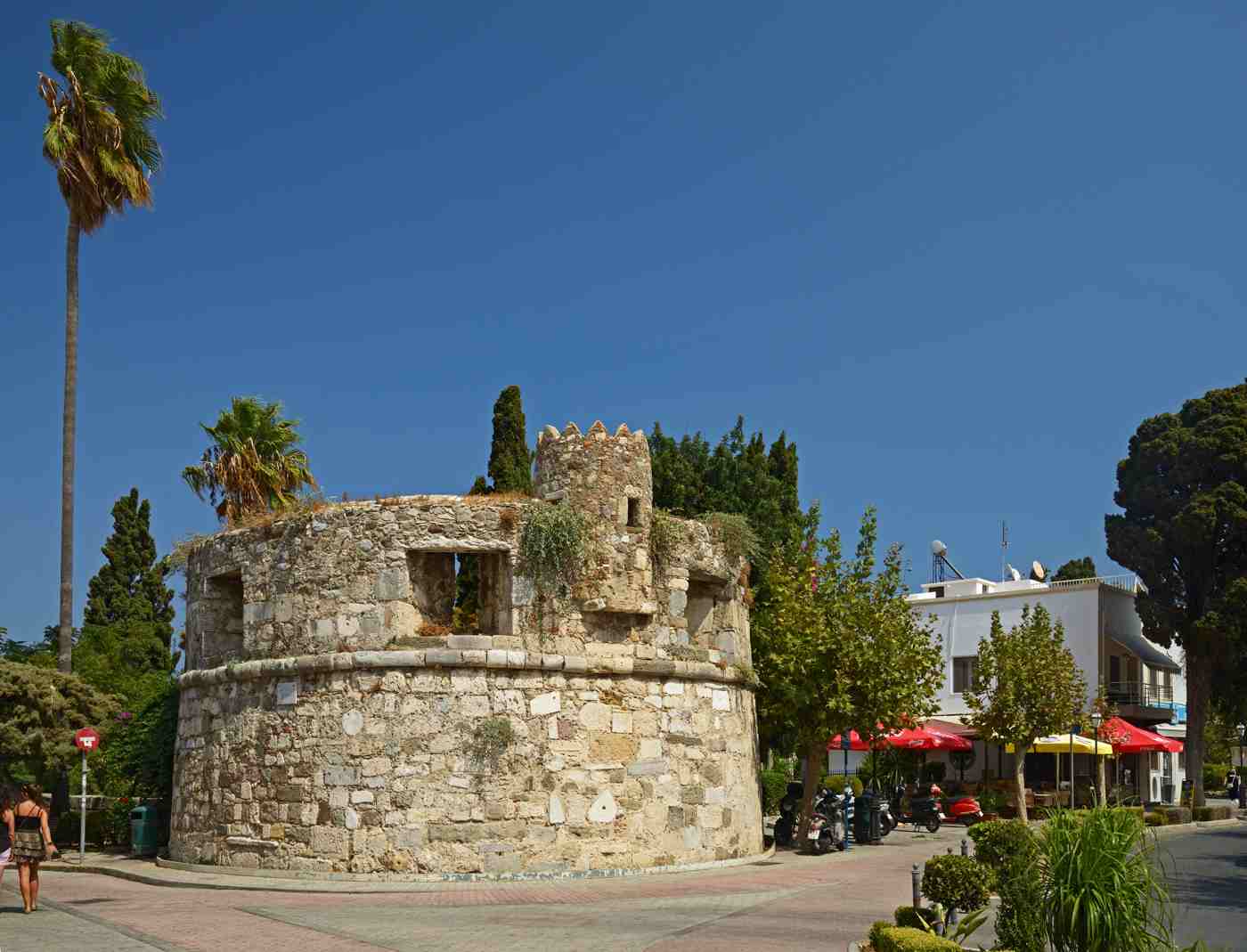
Kefalos anchors the southwest corner of Kos, about 40 kilometres from the island capital, where a traditional hilltop village overlooks a sweeping bay lined with sand. The old settlement climbs a ridge crowned by a windmill and whitewashed churches, its narrow lanes threading between stone houses that face the Aegean and the distant Turkish mountains. Below, the coastal strip at Kamari unfolds a succession of named beaches\u2014Paradise with its volcanic bubbles, Camel, Magic, Sunny\u2014each separated by low headlands and backed by tamarisk and dunes. At the bay’s eastern edge the twin columns of an early-Christian basilica frame the view to Kastri. A tiny islet topped by a blue-domed chapel that floats a few hundred metres offshore. Plan the whole trip with Greece Tours.
The geography divides neatly: village life continues on the ridge, where bakeries, tavernas and a small square serve year-round residents, while the beach zone hums with summer visitors drawn by clear water, steady wind and the novelty of geothermal springs bubbling through the seabed. The western peninsula beyond the bay holds quiet coves and the scattered stones of ancient Astypalaia, which one tradition names as the birthplace of Hippocrates. Kefalos sits far enough from Kos Town to feel distinct, yet a single paved road links the two, making day trips straightforward in both directions.
The combination of working village, long beach and dramatic setting gives the southwest a character unlike the flatter northern coast or the busier resorts closer to the capital.
What defines the layout and character of Kefalos village on Kos?
Kefalos village occupies a narrow ridge about 100 metres above sea level, its whitewashed houses climbing lanes that follow the contour of the hill. A restored windmill marks the highest point, visible from the coast road and the beaches below.
The ridge runs roughly north to south, forcing the village into a linear shape that stretches along the crest rather than sprawling outward. Houses face east toward the bay or west toward open farmland and the distant bulk of Mount Dikeos. Traditional two-storey buildings with wooden balconies stand alongside newer concrete structures, but strict height limits preserve sight lines and the low profile that defines Dodecanese hill settlements. The windmill, no longer operational, serves as a landmark and a favourite spot for photographs at sunset when the light turns the stonework gold.
A small central square holds a handful of kafeneions where older men gather in the mornings, and a minimarket supplies basics for the few hundred permanent residents. The village retains a working rhythm distinct from the seasonal pulse of the beach zone below. Bakeries open early, producing bread and cheese pies for locals rather than croissants for tourists. Narrow streets remain quiet through midday, then fill with scooter traffic in the late afternoon as workers return from the coast or the fields.
Churches dot the village, the largest being the parish church of the Assumption with its frescoed interior and separate bell tower. Smaller chapels, some dating to the Byzantine period, nestle into corners of the settlement, their doors often left unlocked for private prayer. The architecture follows the Aegean vernacular: flat roofs, external staircases, lime-washed walls that reflect heat. Gardens tucked behind walls grow tomatoes, basil and climbing vines that spill over gates.
Access to the village climbs a steep switchback road from the main coastal highway, discouraging casual visitors and preserving a sense of separation. The elevation provides constant breezes that moderate summer heat, and the ridge position offers panoramic views across the bay to Kastri islet and south toward the open sea. Kos island’s southwest corner remains less developed than the northern shore, and Kefalos village exemplifies the older settlement pattern that predates mass tourism. Evening light draws photographers to the windmill and the western edge of the ridge, where the sun sets behind the mountains of the interior.
How does the Kamari beach strip below Kefalos village function and what facilities exist?
Kamari stretches along the bay’s northern shore as a ribbon of hotels, apartments and tavernas facing a continuous sandy beach about three kilometres long.
The strip lacks a defined centre, instead spreading accommodation and services along the entire length of the bay. Small hotels, studios and apartment blocks sit on both sides of the road, some with direct beach access, others a short walk inland. Tavernas and beach bars operate from May through October, their terraces shaded by reed canopies and tamarisk trees. A minimarkets and car-rental offices occupy ground-floor spaces in the larger buildings, but no commercial high street exists. The layout reflects organic growth rather than planned resort development.
Beach access remains open along the entire shoreline, with wooden walkways crossing the dunes at regular intervals. The sand is coarse and golden, the seabed shallow and sandy for 20 metres or more, making the water safe for children and appealing to families. Sunbed concessions operate at the busier sections, charging daily rates, but long stretches remain free of furniture. Showers and changing cabins appear near the larger hotels. The absence of a promenade or seafront road gives the strip a low-key, unpolished feel compared to more developed resorts elsewhere on the island.
Watersports operators offer windsurfing, kitesurfing and stand-up paddleboarding, taking advantage of the afternoon meltemi wind that funnels into the bay from the northwest. Jet-ski rental and banana-boat rides cater to a different market, their noise concentrated at the central sections. Boat-trip kiosks sell tickets for excursions around the bay and to Kastri islet, with small craft departing from a concrete jetty near the middle of the strip. The western end of the beach, closer to the headland, attracts windsurfers who launch from the sand and race back and forth across the bay.
Tavernas serve grilled fish, moussaka and Greek salads at tables set directly on the sand or on raised terraces with sea views. Quality varies, but several family-run establishments maintain loyal followings among repeat visitors. Evening entertainment remains low-key: bars play music, but no large clubs or late-night venues operate. The strip caters to visitors seeking beach time and relaxation rather than nightlife. Kos beaches across the island range from organised to wild, and Kamari falls in the middle, offering both serviced sections and empty sand within a short walk.
What makes Paradise Beach at Kefalos distinctive among Kos beaches?
Paradise Beach, also called Bubble Beach, sits at the western end of Kamari bay where volcanic gases rise through the seabed and emerge as streams of bubbles in the shallow water.
The bubbles result from geothermal activity beneath the bay, part of the same volcanic system that feeds hot springs elsewhere on Kos. The gas is primarily carbon dioxide, odourless and harmless in the open water, though swimmers are advised not to linger directly over the vents. The bubbling zones shift slightly with tides and seabed movement, but local knowledge pinpoints the active areas. The water temperature near the vents rises degrees above ambient, noticeable when wading through the shallows. The effect is strongest in calm conditions; wind and waves disperse the bubbles and make them harder to spot.
Access to Paradise Beach requires a short drive or walk west from the main Kamari strip, following a rough track that deteriorates near the shore. No large hotels or organised facilities exist here; a single seasonal beach bar operates from a wooden shack, offering drinks and snacks. The lack of development preserves a wilder atmosphere, and the beach attracts visitors willing to trade convenience for novelty. Sunbeds and umbrellas are available for rent, but numbers are limited. The seabed is sandy with occasional rocks, and the water remains shallow for 15 metres, making it easy to explore the bubble zones on foot.
The name Paradise Beach appears on maps and signposts, but locals and repeat visitors use Bubble Beach more often, a direct reference to the geothermal feature. The beach faces west, catching the afternoon sun and the full force of the meltemi wind, which can make swimming uncomfortable on blustery days. Windsurfers sometimes launch from here, using the open water beyond the bay. The cliffs behind the beach are low and crumbly, composed of volcanic tuff and sedimentary layers, with sparse vegetation clinging to the slopes.
Photographers favour the spot for its unusual subject matter, capturing swimmers surrounded by rising bubbles or the contrast between the turquoise shallows and the darker offshore water. The beach remains busy through July and August, quieter in shoulder months. Things to do in Kos include exploring geothermal sites, and Paradise Beach offers the most accessible example of the island’s volcanic heritage. Visitors often combine a morning at the bubbles with lunch at a Kamari taverna and an afternoon exploring the village above.
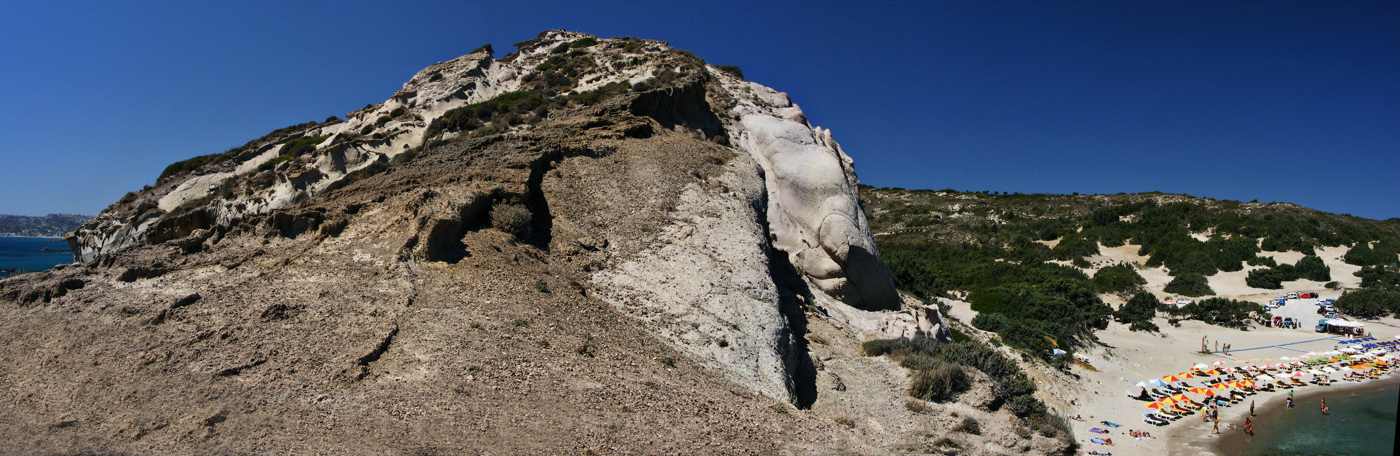
What are the other named beaches in Kefalos bay and how do they differ?
Camel Beach, Magic Beach and Sunny Beach occupy successive stretches of the Kamari shoreline, each named by local businesses and marked by subtle shifts in sand texture, depth and facilities.
Camel Beach takes its name from a long-closed camel-riding operation that once offered beach rides. The beach is wide and gently sloping, with fine sand that packs firm near the waterline. A cluster of sunbeds and umbrellas occupies the central section, and a beach bar serves drinks and light meals from a thatched-roof structure. The water remains shallow for 25 metres, ideal for wading and safe for young children. A few tamarisk trees provide natural shade at the back of the beach, and a wooden walkway crosses the dunes from the road. The beach attracts families and couples seeking a quieter alternative to the busier sections further east.
Magic Beach sits roughly halfway along the Kamari strip, fronted by a popular beach bar of the same name that hosts occasional evening events with music and barbecues. The sand here is slightly coarser, and the seabed drops off a bit faster, making it more suitable for swimming than wading. Sunbed density is higher, and the beach bar’s loudspeakers play a soundtrack of lounge music through the afternoon. Watersports operators base themselves here, offering windsurfing lessons and equipment rental. The beach faces northwest, catching the afternoon wind and providing good conditions for beginners learning to windsurf or kitesurf.
Sunny Beach extends along the eastern section of the bay, closer to the Agios Stefanos basilica ruins. The name is generic, used by tavernas and hotels in the area, and the beach lacks a single defining feature. The sand is fine and pale, the water clear and shallow, and the setting quieter than the central strip. Fewer sunbeds and less commercial activity give this section a more relaxed feel. A small seasonal chapel dedicated to a local saint sits just back from the beach, and a dirt track provides access for vehicles. The beach curves gently, offering views across to Kastri islet and the basilica columns.
The distinctions between these beaches are subtle; visitors walking the shoreline pass from one to the next without obvious boundaries. Local marketing and signage create the separate identities, but the physical environment remains consistent: shallow, sandy, warm and sheltered from the north. Where to stay in Kos depends on priorities, and the Kefalos bay area suits visitors who prefer a quieter base with easy beach access and distance from the busier northern resorts. Each named beach has its loyal advocates, but the differences are more about atmosphere and facilities than natural features.
What is the significance of Agios Stefanos and Kastri islet at Kefalos?
Agios Stefanos occupies a low promontory at the eastern end of Kefalos bay, where the standing columns and mosaic floors of an early-Christian basilica face the small island of Kastri about 200 metres offshore.
The basilica ruins cover a rectangular footprint about 30 metres long, with two tall columns still upright and supporting fragments of their capitals. The columns frame the view to Kastri, creating one of the most photographed compositions on Kos. Mosaic floors survive in patches, protected by low walls and informational plaques, though weather and foot traffic have worn sections. The site is unfenced and free to enter, with a small parking area and a seasonal drinks kiosk nearby. Excavations in the mid-twentieth century uncovered the basilica plan, baptistery and adjacent structures, but much remains buried or eroded by the sea.
Kastri islet is a rocky outcrop about 100 metres across, its slopes too steep for habitation but flat enough at the summit for the small chapel. The chapel is a simple single-room structure with a blue dome and whitewashed walls, maintained by local volunteers who repaint it annually. A Greek flag flies from a pole beside the building. The islet is accessible by small boat. Several operators in Kamari offer short trips that circle Kastri and allow passengers to disembark for 20 minutes to climb to the chapel and take photographs. The crossing takes five minutes in calm conditions.
The combination of ancient ruins and the picturesque islet draws visitors throughout the day, with peak crowds in late afternoon when the light softens and the columns glow gold. The basilica site offers no shade, and summer heat can be intense. A narrow beach of coarse sand and pebbles lies immediately below the ruins, with sunbeds and a seasonal taverna serving simple meals. The water is clear and shallow, popular with snorkellers exploring the rocky seabed around the promontory. Small fish gather near the shore, and the underwater visibility often exceeds 15 metres.
Local tradition links Agios Stefanos to early Christian pilgrimage routes, though no written records confirm the basilica’s original dedication or the community it served. The site’s exposure to wind and waves has accelerated erosion, and conservation efforts focus on stabilising the remaining structures. Kos Town holds the island’s main archaeological museum and major ancient sites, but Agios Stefanos offers a quieter, more intimate encounter with the past. The islet and ruins together create a sense of place that resonates beyond their modest scale, anchoring the eastern end of the bay with history and beauty.
How do wind and watersports shape the Kefalos bay experience?
The meltemi wind funnels into Kefalos bay from the northwest during summer afternoons, accelerating across the open water and creating consistent conditions for windsurfing and kitesurfing.
Windsurfing schools operate from the central Kamari strip, offering beginner courses and equipment rental for intermediate and advanced riders. The shallow water and sandy bottom make the bay forgiving for learners, who can stand up and restart after falls without risk of injury. Instructors teach basic techniques in the morning calm, then move students into the afternoon wind for their first planing runs. Advanced windsurfers launch from the beach and sail west toward Paradise Beach or east toward Kastri, using the bay as a natural racetrack. The wind direction is side-shore to cross-shore, allowing safe return to the beach even if equipment fails.
Kitesurfing has grown in popularity over the past two decades, and operators now offer lessons and rental. The bay’s width provides enough space for kiters to manoeuvre without crowding windsurfers, though designated zones separate the two activities during peak season. Kitesurfers favour the western end where the wind is strongest and the beach less crowded. Launching and landing require open sand, and the absence of beachfront buildings or obstacles makes Kefalos bay one of the safer kite spots on the island. Beginners start with trainer kites on the beach, progressing to water starts over sessions.
The wind also affects swimming and general beach comfort. Mornings are typically calm, with glassy water and temperatures reaching 24 degrees Celsius in summer. By early afternoon the meltemi arrives, chopping the surface and raising small whitecaps offshore. Swimmers retreat to the shallows or move to the eastern, more sheltered sections of the bay. Beach umbrellas require secure anchoring to prevent them tumbling across the sand. The wind brings relief from the heat but can sandblast exposed skin and make reading or sunbathing uncomfortable. Tavernas orient their terraces to face south or east, using reed screens to block the worst gusts.
The consistent wind makes Kefalos bay a destination for dedicated watersports enthusiasts who return year after year, booking accommodation close to their preferred launch spots. The season runs from May through September, with July and August offering the most reliable conditions. Equipment rental costs vary, but daily windsurf board and sail packages run around 40 to 50 euros, kitesurf gear slightly more. The combination of warm water, steady wind and scenic surroundings creates an environment where progression happens quickly. The bay has developed a reputation within the European windsurfing community as a reliable summer venue.
What boat trips and excursions operate from Kefalos bay?
Small boats depart from a concrete jetty in central Kamari, offering half-day and full-day trips around the Kefalos peninsula, to Kastri islet, and occasionally to nearby islands.
The standard bay tour lasts about three hours, departing mid-morning and returning before the afternoon wind strengthens. Boats carry 10 to 20 passengers on open decks with awnings for shade. The route heads east from the jetty, passing the Agios Stefanos basilica and approaching Kastri islet from the south. Passengers disembark onto a small concrete landing, climb the steep path to the chapel, and spend 15 minutes exploring before reboarding. The boat then circles the islet, allowing close views of the rocky cliffs and the chapel from the water. Skippers provide commentary in Greek and English, pointing out geological features and local history.
Longer trips venture west beyond Paradise Beach to the rugged coastline where the peninsula narrows and cliffs drop directly into the sea. Sea caves indent the shoreline, some large enough for the boat to enter, their interiors lit by reflected sunlight that turns the water electric blue. Snorkelling stops allow passengers to swim in secluded bays where the seabed is rocky and fish populations thrive. The boats carry snorkel sets for those without their own gear. Lunch is typically a beach barbecue at a remote cove, with grilled fish, salad and wine included in the ticket price. These full-day trips last six to seven hours and cost around 40 to 50 euros per person.
Some operators offer sunset cruises that depart in late afternoon, sail west along the coast. Then anchor off Paradise Beach or a nearby cove to watch the sun drop behind the mountains. Passengers swim in the warm evening water, then return to Kamari after dark. These trips include drinks and light snacks. Private charters are available for groups, with flexible itineraries that can include fishing, extended snorkelling or visits to specific beaches. Prices for private boats start at around 200 euros for a half-day, accommodating up to eight passengers.
Boat trips to other islands are less frequent from Kefalos than from Kos Town, but occasional excursions run to Nisyros to visit the volcanic crater, departing early and returning late. These trips require a full day and involve a longer crossing, around 90 minutes each way. The boats used for local bay tours are smaller wooden craft or rigid inflatables, while longer trips use larger cabin cruisers with toilets and covered seating. Booking is possible through hotels, beach kiosks or directly at the jetty, where operators display boards with schedules and prices. Weather cancellations occur when the meltemi is too strong, particularly for the longer trips around the peninsula.
What lies on the quiet western peninsula beyond Kefalos village?
The peninsula stretching west from Kefalos village narrows to a rocky spine dotted with small coves, goat tracks and the scattered remains of ancient Astypalaia.
Ancient Astypalaia was a settlement that thrived during the Hellenistic and Roman periods, its name borrowed from the neighbouring island. Archaeological surveys have identified house foundations, cisterns and terracing on the hillsides, but no major excavation has taken place and most structures remain buried. Pottery shards and column fragments lie scattered across the slopes, visible to anyone walking the area. The site occupies a defensive position with views over the sea, typical of ancient settlements that needed to watch for pirates and invaders. No signage or fencing marks the site, and visitors must rely on local knowledge or guidebooks to locate the ruins.
The peninsula’s coastline alternates between low cliffs and small pebble beaches tucked into inlets. A rough track follows the ridge, passable by four-wheel-drive vehicles or on foot, leading to a lighthouse at the western tip. The track passes through scrubland of thorny burnet, wild thyme and low juniper, with occasional carob trees providing shade. Goats graze freely, their bells audible across the hillsides. The terrain is rocky and uneven, requiring sturdy footwear. Spring brings wildflowers\u2014poppies, chamomile, sea daffodils\u2014that carpet the slopes in colour before the summer heat burns the vegetation brown.
Birdwatchers visit the peninsula during migration seasons when raptors, warblers and shorebirds use the area as a stopover. The cliffs provide nesting sites for Eleonora’s falcons, a species that breeds late in summer to coincide with the autumn migration of small birds, their primary prey. The quiet and lack of human disturbance make the peninsula valuable for wildlife, and local conservation groups monitor the falcon population annually. The surrounding sea is deep and clear, attracting dolphins that sometimes approach the shore. Fishermen work the waters off the western tip, setting lines for grouper and bream.
The tradition linking the peninsula to Hippocrates stems from ancient references to Astypalaia as his birthplace, though most scholars place his birth in Kos Town near the Asklepion. The confusion arises from the settlement’s name and the overlapping historical records. No shrine or monument marks the site, and the claim remains a footnote in local lore rather than established fact. The peninsula’s appeal lies in its emptiness and the sense of stepping outside the tourist circuit. Visitors who make the effort to explore the dirt roads and footpaths find a landscape little changed over centuries. Where the rhythm of wind, sea and grazing animals defines the day.


How do visitors reach Kefalos from Kos Town and other parts of the island?
A single paved road connects Kos Town to Kefalos, running about 40 kilometres southwest through the island’s interior. The journey by car or bus takes around 50 minutes, passing through Zipari, Antimachia and Kardamena before climbing to the Kefalos ridge.
The main road leaves Kos Town heading south, initially flat through agricultural land and the airport zone near Antimachia. The landscape is open and dry, with fields of wheat, barley and grazing land separated by stone walls. The road passes the airport perimeter, where planes on final approach pass low overhead, then continues through Antimachia village with its Venetian castle visible on a hill to the north. Beyond Antimachia the road forks, the southern branch descending to Kardamena on the south coast, the western branch continuing toward Kefalos. The route climbs gently, winding through hills covered in scrub and offering occasional glimpses of the sea.
Public buses depart from the main station in Kos Town, with the Kefalos route marked clearly on the timetable boards. The service runs four to six times daily in high season, reduced to two or three in winter. The journey costs around four euros one way, and tickets are purchased from the driver. The bus stops at Antimachia, Kardamena junction and points along the Kamari strip before terminating at Kefalos village. The schedule is designed to allow day trips, with a morning departure and an afternoon return, though the timing can be tight for visitors wanting to explore both village and beaches. Buses are air-conditioned and generally punctual, though delays occur during peak tourist weeks.
Car rental is the most flexible option, with agencies in Kos Town and at the airport offering daily rates from around 30 euros for a small hatchback. The road to Kefalos is well maintained, with clear signage at junctions. Fuel stations are available in Antimachia and Kardamena, but none exist in Kefalos itself, so drivers fill up before the final stretch. Scooter rental is popular among younger visitors and those comfortable with two wheels. The journey takes about an hour and offers the advantage of easy parking in the village and along the beach strip. Helmets are mandatory, and the road includes curves and inclines that require attention.
Taxis from Kos Town to Kefalos cost around 50 to 60 euros one way, negotiable for return trips or full-day hire. The fare is metered, but drivers often agree on a flat rate for longer distances. Shared taxis or minibuses are not common on this route. Some hotels in Kefalos offer airport transfers, either included in the booking or for an additional fee. The drive from the airport to Kefalos takes about 20 minutes, significantly shorter than from Kos Town. Cycling the distance is possible but demanding, with the total elevation gain exceeding 300 metres and the final climb to the village steep. A few dedicated cyclists make the trip, but most visitors choose motorised transport.
What accommodation and practical considerations apply to staying in Kefalos?
Accommodation in Kefalos ranges from small family-run studios and apartments along the Kamari strip to a handful of larger hotels near the beach. The village itself offers very limited lodging, mostly traditional guesthouses.
Studios and apartments dominate the Kamari accommodation stock, typically two or three-storey buildings set back from the beach road. Rooms are simple, with kitchenettes, air conditioning and balconies facing the sea or the hills. Many are family-run, with owners living on-site and offering personal service. Breakfast is not always included, but bakeries and caf\u00e9s along the strip provide morning coffee and pastries. Larger hotels, usually three-star properties, offer pools, organised breakfast buffets and reception desks with tour-booking services. All-inclusive resorts are absent; the area retains a self-catering, independent-traveller character.
The village itself has only a handful of guesthouses, small operations with rooms above tavernas or in converted houses. These suit visitors who prioritise village atmosphere over beach proximity, though the walk or drive down to Kamari is necessary for swimming. The village has a minimarket, a bakery, a post office and a medical clinic, but no pharmacy or bank. The nearest ATM is in Kardamena, 12 kilometres east. Mobile phone coverage is good, and most accommodation offers Wi-Fi. Laundry services are available at locations along the Kamari strip, charging by the kilogram.
Dining options include a dozen tavernas in Kamari and another half-dozen in the village, serving Greek staples\u2014grilled fish, souvlaki, moussaka, Greek salad\u2014at moderate prices. Menus are similar across establishments, with quality depending on the kitchen and the freshness of ingredients. A tavernas specialise in local dishes, including goat stew and chickpea soup. Vegetarian options are limited to salads, stuffed vegetables and fried cheese. Supermarkets in Kamari stock basics, but the selection is smaller than in Kos Town. Fresh produce, bread and dairy products are available daily, but imported goods and speciality items are scarce.
Practical considerations include the distance from Kos Town and the limited evening entertainment. Visitors without a car or scooter depend on the bus schedule, which restricts flexibility. The area is quiet after dark, with no clubs or late-night bars; most visitors dine, then retire to their accommodation. Families with young children appreciate the safe beaches and relaxed pace, while couples seeking nightlife or shopping find the area too remote. The Kefalos area works best for visitors who plan to spend days on the beach, explore the peninsula and surrounding coast, and enjoy a slower rhythm. Booking in advance is advisable for July and August, when the limited accommodation fills quickly.
Shoulder-season visitors benefit from lower prices and quieter beaches, though tavernas and services close outside the main season.
Frequently Asked Questions
How far is Kefalos from Kos Town and how long does the journey take?
Kefalos sits about 40 kilometres southwest of Kos Town, and the drive takes around 50 minutes by car or scooter on the main paved road. Public buses cover the route in roughly the same time, with four to six daily departures in summer and fewer in winter. The road runs through the island’s interior, passing Antimachia and the airport before climbing to the Kefalos ridge. Taxis are available but cost around 50 to 60 euros one way, making them practical only for groups or visitors with heavy luggage. Car rental offers the most flexibility, with daily rates starting at around 30 euros.
The journey is straightforward, with clear signage and a well-maintained road surface, though the final approach to the village involves a steep climb with switchbacks. Cycling the distance is possible but demanding, with significant elevation gain and exposure to sun and wind.
Can you swim at Paradise Beach year-round, and are the bubbles always visible?
Swimming at Paradise Beach is comfortable from May through October, when water temperatures range from 20 to 26 degrees Celsius. The bubbles are a year-round phenomenon, but their visibility depends on sea conditions. Calm water allows the gas streams to rise vertically and break the surface in clear columns, while wind and waves disperse the bubbles and make them harder to spot. The bubbling zones are most obvious in the shallows about 10 metres offshore, where the seabed is sandy and the water depth is around one to two metres. The gas is primarily carbon dioxide from geothermal vents.
Harmless in the open water but noticeable as a slight warmth and a fizzing sensation when you wade through the active areas. The beach itself is narrow and backed by low cliffs, with limited shade and a single seasonal beach bar. Access requires a short drive or walk west from the main Kamari strip along a rough track. The beach attracts visitors throughout the summer, but numbers remain manageable because of the limited facilities and the distance from the main accommodation zone.
What is there to see at Agios Stefanos besides the basilica ruins?
Agios Stefanos offers the early-Christian basilica ruins with their standing columns and mosaic floors, the view across to Kastri islet, and a small beach for swimming and snorkelling. The basilica dates to the fifth or sixth century and occupies a promontory at the eastern end of Kefalos bay. The site is unfenced and free to enter, with informational plaques explaining the layout and history. Beyond the ruins, a narrow beach of coarse sand and pebbles runs along the shore, popular with snorkellers exploring the rocky seabed and clear water. A seasonal taverna operates near the parking area, serving simple meals and drinks. Kastri islet, about 200 metres offshore, is accessible by small boat.
Several operators offer short trips that allow passengers to disembark and climb to the whitewashed chapel at the summit. The combination of ancient ruins, scenic islet and swimming opportunities makes Agios Stefanos a popular stop for visitors exploring the Kefalos area. The site is exposed to sun and wind, with no shade, so early morning or late afternoon visits are more comfortable in summer.
Is Kefalos village worth visiting if you are staying on the beach at Kamari?
Kefalos village offers a different atmosphere from the beach strip, with traditional architecture, narrow lanes, a working community and panoramic views from the ridge. The village sits about 100 metres above sea level, a short but steep drive or walk from Kamari. The restored windmill at the highest point is a landmark, and the small central square has kafeneions where locals gather. Churches with frescoed interiors, stone houses with wooden balconies, and quiet alleys provide a glimpse of island life beyond the tourist zone. The village has a bakery, minimarket and tavernas serving traditional dishes, including goat stew and chickpea soup.
Sunset views from the western edge of the ridge are exceptional, with the sun dropping behind the mountains and the light turning the whitewashed buildings gold. The village retains a slower pace and a sense of authenticity that contrasts with the seasonal rhythm of the beach. Visitors who make the short trip up the hill find a worthwhile complement to beach days, and the elevation provides cooling breezes even in the height of summer.
What water sports are available at Kefalos bay and which beaches are best for beginners?
Kefalos bay is a centre for windsurfing and kitesurfing, with consistent afternoon meltemi wind from May through September. Windsurfing schools operate from the central Kamari strip, offering beginner courses and equipment rental for all levels. The shallow water and sandy bottom make the bay forgiving for learners, who can stand up after falls without risk. Instructors teach basic techniques in the morning calm, then move students into the afternoon wind for planing practice. Magic Beach and the central sections of Kamari are best for beginners, with dedicated teaching zones and easy beach access. Advanced windsurfers and kitesurfers favour the western end near Paradise Beach, where the wind is strongest and the bay less crowded.
Kitesurfing lessons are available, with operators providing trainer kites for beach practice before progressing to water starts. Stand-up paddleboarding, jet-ski rental and banana-boat rides are also offered at points along the strip. The wind typically builds from late morning and peaks between 1400 and 1800 hours, then drops after sunset. Equipment rental costs around 40 to 50 euros per day for windsurf gear, slightly more for kitesurf equipment.
Are there any ancient sites near Kefalos besides Agios Stefanos?
The western peninsula beyond Kefalos village holds the scattered remains of ancient Astypalaia, a Hellenistic and Roman settlement that occupied the hillsides overlooking the sea. Archaeological surveys have identified house foundations, cisterns and terracing, but no major excavation has taken place and most structures remain buried. Pottery shards and column fragments lie scattered across the slopes, visible to anyone walking the area. The site is undeveloped, with no signage or fencing, and access is by dirt roads and footpaths. One tradition identifies this location as the birthplace of Hippocrates, though the claim is disputed and evidence is sparse. The peninsula is quiet and undeveloped, attracting hikers and visitors seeking solitude.
The terrain is rocky and covered in scrubland, with views over the sea and the surrounding coastline. The ancient site is not a major tourist attraction, but it offers an atmospheric setting for those interested in archaeology and willing to explore off the beaten track. The Agios Stefanos basilica remains the most accessible and visually impressive ancient site in the Kefalos area.
What is the best time of year to visit Kefalos for beaches and wind sports?
The best time to visit Kefalos for beaches and wind sports is from late May through September, when water temperatures are warm. The weather is reliably sunny. The meltemi wind provides consistent conditions for windsurfing and kitesurfing. July and August are the busiest months, with peak crowds on the beaches and the strongest wind, though afternoon gusts can make swimming uncomfortable for those not engaged in water sports. June and September offer a balance of warm water, fewer visitors and moderate wind, making them ideal for families and visitors who want to combine beach time with exploration. The water temperature reaches 24 to 26 degrees Celsius in summer, comfortable for extended swimming and snorkelling.
Spring, from April through early May, brings wildflowers and mild weather, but the sea is cooler and the wind less reliable. October sees the season winding down, with tavernas and services closing and the wind becoming variable. Winter is quiet, with limited accommodation and dining options, though the village retains its community life and the beaches remain accessible for solitary walks.