
Samos offers a quieter, greener alternative to the famous Cyclades for a destination wedding in Greece. The large eastern-Aegean island, birthplace of Pythagoras and home of sweet Muscat wine, sets vows against vineyards, ancient marble, harbour marinas and pine-backed coves rather than crowded whitewashed cliffs. Couples marry in the UNESCO harbour town of Pythagorio, in the capital Vathy, at seafront tavernas and small chapels around the coast, or among the terraced vineyards of Mt Ampelos. Both religious Greek Orthodox and civil ceremonies are legal on the island, and the warm, dry summer season keeps outdoor celebrations reliable from late spring to early autumn. Plan the whole trip with Greece Tours.
Weddings on Samos suit couples who want scenery, history and local wine without the cost and crowds of Santorini or Mykonos. The island’s size spreads venues from the southeast harbours near the airport to the north-coast beaches and the mountain wine villages. A celebration can pair ancient ruins. A vineyard and a seafront dinner in one day. Foreign couples usually work through a local wedding planner who handles the registrar or parish, the paperwork prepared in advance, and the venue, transport and catering. This guide covers why Samos fits a wedding, marrying in Pythagorio and Vathy, seafront and chapel venues, vineyard ceremonies on Mt Ampelos, and the difference between religious and civil weddings.
Why does Samos suit a wedding?
Samos suits weddings with a green, mountainous landscape, terraced vineyards, UNESCO ancient sites and sweet Muscat wine, staying quieter and less crowded than the famous Cyclades while offering harbour towns, seafront venues and a warm, dry summer season.
The island of Samos stands apart from the bare Cyclades as a green, mountainous wedding backdrop in the eastern Aegean, off the Turkish coast. Pine forests, terraced vineyards and two peaks, Mt Kerkis at about 1,434 metres and Mt Ampelos, frame ceremonies with real scenery rather than whitewashed cubes. Couples who find Santorini and Mykonos crowded and costly choose Samos for calmer harbours, lower prices and space to breathe. The landscape stays lush from spring into autumn, so photographs carry olive groves, vine rows and deep blue sea. The Mycale strait narrows to about 1.2 km from Turkey, and the island spans about 476 square kilometres, spreading venues from harbour marinas to mountain villages.
This setting gives a Samos wedding a distinct character, blending forest, mountain and coast on one island.
Samos draws couples who want an intimate wedding without the crush of Santorini or Mykonos. The two main towns, Pythagorio in the southeast and Vathy in the northeast, keep working harbours. Tavernas and marinas rather than packed party strips. Guests move easily and suppliers charge less than on the celebrity islands. Fewer weddings compete for the same dates, venues and photographers, which eases planning and booking. The island’s airport near Pythagorio takes domestic flights from Athens plus seasonal European charters. Ferries reach the ports from Piraeus and the Aegean islands, so guests still arrive without great trouble.
This balance of access and calm lets a Samos celebration feel private and unhurried, with the whole party often filling a single seafront taverna or a hillside villa.
Ancient heritage and wine give Samos wedding backdrops islands match. The UNESCO Pythagoreion, birthplace town of the mathematician Pythagoras. The Heraion sanctuary of Hera put marble columns. A Roman-era castle and an ancient harbour within reach of a ceremony or a photo session. Inland, the terraced Muscat vineyards climb the slopes of Mt Ampelos to the wine villages of Manolates and Vourliotes, framing vows among the vines. The island’s sweet Muscat, a PDO wine poured at receptions across the island, ties the celebration to local produce rather than imported bottles. Couples can weave a monument, a vineyard and a seafront taverna into one wedding day. The setting itself tells a story of Pythagoras.
Hera and the sweet wine that made the island famous.
Weather makes Samos a dependable wedding island from late spring to early autumn. The warm, dry Mediterranean season brings reliable sunshine, calm evenings and warm sea, so outdoor ceremonies rarely face rain. June and September pair warm weather with thinner crowds and open venues, while July and August run hottest and busiest. The meltemi wind cools the north coast around Kokkari and leaves the south sheltered. Long daylight gives golden light for sunset vows and photographs on the marina or among the vines. Mild, green winters keep the island alive but bring reduced flights, ferries and open venues, so most weddings sit in the warm months.
This steady summer climate lets couples plan an outdoor Samos wedding with real confidence about the sky and the sea.
How do couples marry in Pythagorio and Vathy?
Couples marry in Pythagorio at the marina, the town hall and nearby chapels, and in Vathy, the capital, at the harbour, civil offices and churches. Both towns provide registrars, venues and easy access for guests and suppliers.
Pythagorio is the most popular wedding base on Samos, a UNESCO harbour town on the southeast coast built over the ancient capital and named for Pythagoras. A marina lined with tavernas curves below the town. The Castle of Lykourgos Logothetis. The ancient harbour mole and small chapels sit within a short walk, giving ceremonies and photographs a ready backdrop of stone and sea. The airport lies about 3 km west, so fly-in guests reach the town in minutes, and boutique hotels and rooms cluster around the marina. Sunset dinners on the waterfront turn easily into a reception.
This mix of history, harbour and quick access makes Pythagorio the town most foreign couples pick for a Samos wedding, whether the ceremony is civil or religious.
Vathy, officially Samos Town, is the island capital wrapped around a deep bay on the northeast coast, and it hosts the civil side of weddings. The town hall and municipal offices handle registry paperwork and civil ceremonies, while the metropolis church and the tiled lanes of upper Ano Vathy offer religious and photographic settings. A working harbour, cafes, the town square and a waterfront promenade give guests plenty to do. The Archaeological Museum with its 5-metre Kouros adds a cultural stop between wedding events. Ferries dock here from Piraeus and the Aegean, easing guest arrivals. Beaches such as Gagkou and the east-coast coves of Kerveli and Psili Ammos lie a short drive away.
A Vathy-based wedding pairs administration. Church and sea within one compact northeast base.
Choosing between Pythagorio and Vathy usually turns on style and logistics rather than distance, since the two towns lie about 14 km apart on good road. Pythagorio suits couples who want the marina, the UNESCO sites and the airport on the doorstep, while Vathy fits those centring on the capital’s registry offices, museum and ferry links. Both towns hold the caterers, florists, musicians, hairdressers and photographers a wedding needs, and taxis and rental cars connect them and the airport in about twenty minutes. Guests can stay in one town and travel to the other for the ceremony or party without a long drive.
Couples often split the day, marrying near one harbour and dining on the other, using the short hop between Pythagorio and Vathy to shape the celebration.
Foreign couples marrying in Pythagorio or Vathy usually work through a local wedding planner who liaises with the town hall and, for a church wedding, the parish. The planner books the registrar, arranges the venue. Guides the documents each partner must prepare in advance and have translated and certified, so the legal side is settled before arrival. Requirements differ for civil and religious ceremonies and for each couple’s nationality and faith, which is why early contact with a planner or the municipality matters. Papers are typically lodged with the local authority a set period ahead, then the ceremony proceeds on the chosen date.
Handling this groundwork through people who know the Samos offices keeps a destination wedding smooth, letting the couple focus on the celebration rather than the bureaucracy.
What seafront and chapel venues sit around the Samos coast?
Seafront tavernas, beach terraces and small whitewashed chapels ring the Samos coast, from the Pythagorio and Ireo shore in the south to Kokkari and the pebble coves of the north, giving ceremonies sea views and photogenic settings across the island.
The south coast offers the island’s easiest seafront wedding settings, flat, sunny and close to the airport. Ireo, the seaside village beside the Heraion sanctuary about 8 km west of Pythagorio. Lines a long pebble-and-sand beach with tavernas and rooms where a reception can sit metres from the water, the single standing column of Hera’s temple nearby for photographs. The Pythagorio marina adds waterfront restaurants under the castle for a harbour-side dinner. This low, level coastal plain suits older guests and large tables, with warm, calm evenings through the summer. Couples who want vows with the sea as a backdrop and ancient ruins within a short walk often centre the day on this Ireo and Pythagorio stretch.
Where beach, taverna and monument sit close together.
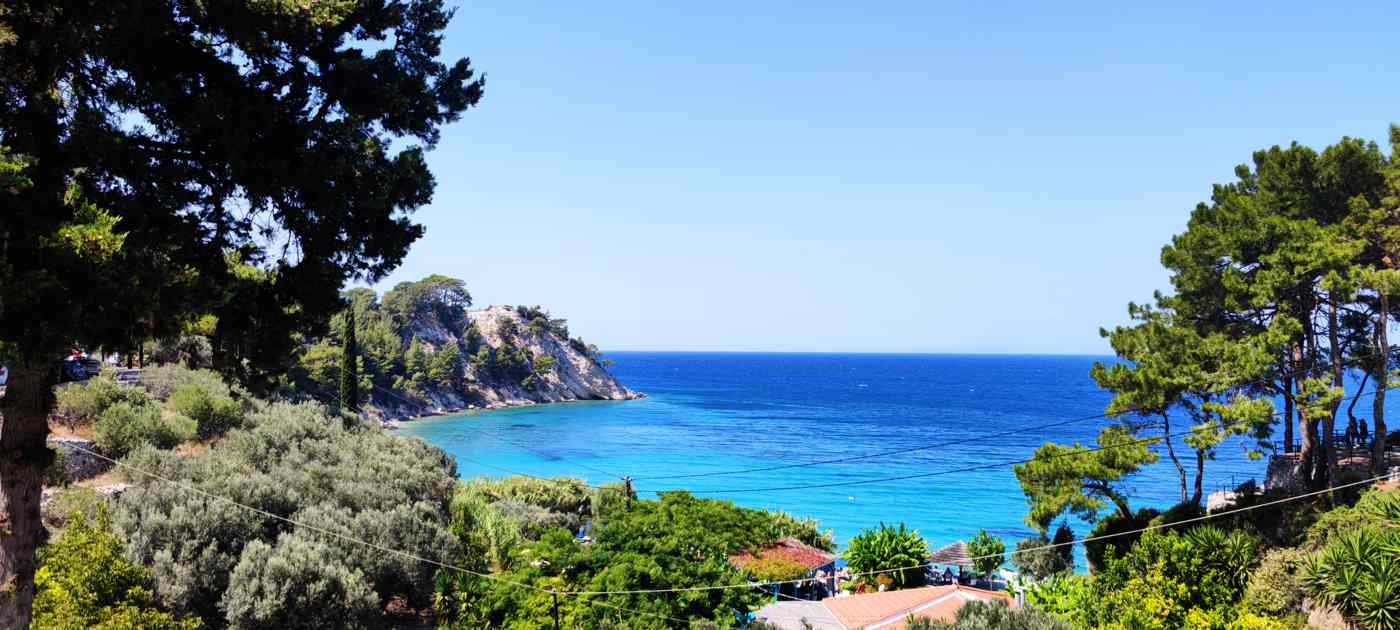
The north coast around Kokkari gives a different seafront mood, pine-backed pebble coves and a whitewashed fishing harbour. Kokkari keeps tavernas along its curving bay and a headland chapel above the water, while the nearby coves of Tsamadou, Lemonakia and Tsabou frame beach ceremonies under pines that reach the shore. The pale pebbles, clear deep water and green slopes behind make striking photographs, and beach tavernas host receptions at the sea’s edge. The meltemi wind can bring afternoon waves and breeze to this exposed coast, so couples often time north-coast vows for calmer mornings or sheltered evenings. Kokkari lies about 10 km west of Vathy, close to the airport road.
This stretch pairs a harbour village and its coves with easy access for a seaside wedding day.
Small whitewashed chapels scatter across Samos, on headlands, in the mountains and beside beaches, giving religious weddings and blessings intimate stone settings. Hilltop and coastal chapels around Pythagorio, the church at Ireo. The headland chapel at Kokkari and the monastery churches of the Ampelos villages each seat a small party under painted icons. These chapels hold only a modest gathering, which fits the private mood couples come to Samos for, and a blue-domed church against sea or vineyard makes a classic photograph. A church ceremony follows Greek Orthodox rules and needs arrangement with the local parish, so a planner or the diocese confirms which chapels host weddings and on what terms.
These modest chapels let a couple marry in a genuine island church rather than a hired hall, beside the coast or vines.
Receptions on the Samos coast run at seafront tavernas, beach terraces, private villas and hotel gardens, with the sea and often a sunset in view. A waterfront taverna serves fresh fish, local dishes and the island’s sweet Muscat to the whole party at long tables, while a rented villa gives a private garden or pool terrace for a smaller gathering. Beach venues let guests dine barefoot near the water, and hotel grounds around Pythagorio and Ireo host larger sit-down dinners. Local caterers, florists and musicians dress these spaces, and evenings stay warm and calm through the summer season.
Couples match the reception scale to their guest list, keeping a Samos wedding by the sea rooted in island food and wine.
How do wine-estate ceremonies work among the Mt Ampelos vineyards?
Wine-estate ceremonies take place among the terraced Muscat vineyards on the slopes of Mt Ampelos, near the villages of Manolates and Vourliotes, where couples marry against rows of vines and pair the reception with the island’s PDO Samos wine.
Samos wine gives the island a wedding setting few Greek islands can offer, terraced Muscat vineyards climbing the slopes of Mt Ampelos to high altitude. The grape is Muscat Blanc à Petits Grains, grown on stone terraces that step up the green mountainside above the north coast. Ceremonies among these vines place couples in working wine country, with rows of Muscat, pine forest and sea views as a backdrop rather than a hired garden. The vineyards surround the villages of Manolates and Vourliotes, where small producers and tavernas pour the local sweet and dry Muscat. This terraced landscape, tied to a wine documented since antiquity.
Lets a Samos wedding root itself in the island’s most famous product and its dramatic mountain scenery high above the Aegean at once.
Manolates and Vourliotes, two traditional villages on the north slopes of Mt Ampelos, anchor the island’s wine-country weddings. Both sit amid the terraced Muscat vineyards, with car-free lanes, shaded squares ringed by tavernas, and valley views down to the sea. A ceremony or blessing can take place in or above a village, followed by a reception under plane trees where producers pour the local sweet and dry Muscat. Vourliotes centres on a square of tavernas and stands among the island’s oldest vineyards, while Manolates adds craft workshops and cool, flowered alleys. Marked footpaths and the monastery of Panagia Vronda lie close for photographs.
Reached by a winding road above Kokkari, these Ampelos villages give couples a mountain wedding scented with pine and vine, far from the beach resorts below.
Wine gives the reception on an Ampelos estate its theme, from the welcome pour to the toast. The island cooperative has long controlled and marketed Samos Muscat. A wine museum near Vathy at Malagari tells its story, so couples can build tastings and cellar visits into the wedding week. The PDO Samos range spans the fortified Vin Doux, the sun-dried Nectar, and the sweeter Anthemis and Grand Cru styles, alongside a dry Muscat for the meal. Village tavernas and small wineries pour these wines with local dishes, pairing sweet Muscat with dessert and cheese and the dry style with fish and meze.
A guided tasting for guests before or after the ceremony turns the vineyard setting into an experience, letting a Samos wedding double as an introduction to the island’s signature wine.
Planning a vineyard wedding on Mt Ampelos means weighing the mountain setting against access, since the villages sit up a winding road above Kokkari, about a forty-minute drive from Pythagorio. Guests travel by car, taxi or hired minibus, and the narrow village lanes suit smaller parties rather than very large ones. Couples usually stay on the coast and drive up for the ceremony and dinner, or book village rooms for a night among the vines. Cooler mountain air brings relief from the summer heat, and evenings under the plane trees stay comfortable. A local planner arranges the estate or taverna, transport, catering and the church or registrar, matching the guest count to the space.
Handled this way, a Samos wedding in the Ampelos vineyards trades beach convenience for scenery, wine and a quieter mountain calm.
What sets religious Greek Orthodox and civil ceremonies apart on Samos?
Greek Orthodox weddings take place in a church under religious rules and need parish arrangement and baptism records, while civil ceremonies happen at a town hall or licensed venue before a registrar.
A Greek Orthodox wedding on Samos is a religious sacrament held in a church, from the whitewashed chapels of the coast to the village churches of Ampelos. The priest leads the crowning service, with rings, candles and the ceremonial walk. The couple usually be baptised Orthodox Christians. With baptism certificates and church papers arranged through the parish in advance. Mixed-faith couples where one partner belongs to another Christian church can sometimes marry in the Orthodox rite by dispensation, confirmed with the diocese. The rite suits couples wanting the full traditional service in a genuine island church, often a tiny chapel above the sea.
Early contact with the parish or a planner settles which church and what papers a Samos Orthodox wedding needs.
A civil wedding on Samos is a legal ceremony conducted by the mayor or a registrar. Usually at the town hall of Pythagorio or Vathy, or at a licensed outdoor venue such as a hotel, villa or beach. It carries no religious element, so couples of any or no faith and mixed-nationality partners can marry this way, which makes it the common choice for foreign weddings. Each partner prepares documents, birth certificates, proof of single status and any divorce or death records. Translated and certified in advance and lodged with the local authority ahead of the date. The service is short, followed by the reception.
This flexibility over venue and faith, plus lighter requirements than the Church sets, is why most destination couples on Samos choose a civil ceremony by the sea or the vines.
The practical gap between the two ceremonies shapes how couples plan a Samos wedding. A civil service fixes on paperwork and a registrar and can happen at a beach, villa or town hall. Giving free rein over the setting. A religious wedding ties the couple to an Orthodox church and its calendar, since the Church does not marry during fasting periods. Documents for both are prepared at home and translated, but the church route adds baptism and parish steps. Couples who want the vineyard or seafront look without the legal process abroad sometimes marry civilly at home, then hold a symbolic blessing on Samos with a celebrant.
A planner maps these paths, so a couple picks the ceremony that matches their faith, their guest list and the Samos venue they have set their heart on.
Couples often fold the wedding into a longer island stay, turning the days around the ceremony into a honeymoon on Samos. After a civil or Orthodox service, they swim at pine-backed coves like Tsamadou, walk to the Potami waterfalls, tour the UNESCO Pythagoreion and the Heraion. Take a day boat across the strait to Kusadasi and Ephesus in Turkey. The warm, dry stretch from late spring to early autumn covers both the wedding and the trip, with June and September easing crowds. Guests can extend their own stay around the beaches and wine villages. Planning the ceremony and the honeymoon together lets a Samos wedding become a full holiday for the couple and their party.
Using the same green island for the vows and the days that follow.
How do couples handle planning and paperwork for a Samos wedding through a local planner?
A local wedding planner on Samos coordinates the licence, translations and town-hall or church appointments. Planners gather each couple’s documents in advance, so the paperwork clears before arrival and the ceremony day runs to schedule.
A local wedding planner acts as the single point of contact, linking couples to the municipality of Samos, the church office and independent suppliers. The planner books the ceremony slot and arranges an interpreter for the civil signing. A registrar in Pythagorio or Vathy, or an Orthodox priest at a chapel, then serves as officiant. Couples send scanned documents by email months ahead, and the planner checks each against Greek requirements before translation. Ground logistics follow: airport transfers near Pythagorio, hair and make-up, flowers, photography and the reception venue. One coordinator managing the timeline in Greek removes the language barrier that trips up self-organised weddings.
Distances on this 476-square-kilometre island make a planner who drives the routes doubly useful for couples arriving from abroad without local contacts.
Paperwork for a Samos wedding centres on proving each partner is free to marry. The planner explains the checklist so couples need no Greek legal knowledge. Standard items include passports, birth certificates and a sworn declaration of no impediment. Each document is issued at home and then officially translated into Greek. Papers crossing borders also carry an apostille stamp for international recognition. The planner submits the file, requests the marriage licence, and tracks the waiting period the authorities set. Names, dates and spellings are checked so the licence and marriage certificate match every passport. Couples handle the originals at home, and the planner handles the Greek-side lodging and translation.
This division keeps the paperwork moving smoothly while the couple focuses on travel, guests and celebration.
Planning a Samos wedding runs on a timeline the coordinator sets months before the date. Early steps fix the ceremony type, the venue and the guest count, since these drive the licence route and the reception size. The document-gathering phase follows, with the sworn declarations often dated close to the wedding to stay valid. A pre-wedding meeting on the island reviews the venue, the running order and the walk-throughs with the officiant and photographer. Suppliers for flowers, music, catering and transport are confirmed in the final weeks. A rehearsal or venue visit the day before settles nerves and timings. Couples who start early face fewer surprises.
Samos is a smaller market than Santorini, and the best chapels, planners and photographers book out across the warm months.
Two witnesses sign the Samos marriage register, and the planner arranges them if the couple travels without guests. An official interpreter attends the civil signing when neither partner speaks Greek, so the vows and register are understood. After the ceremony, the town hall issues the Greek marriage certificate, which the planner collects and hands over translated for use back home. Couples then register the marriage with their own authorities where required. The planner also coordinates venues across the island, from a Pythagorio hall to a coastal terrace. The ceremony time aligns with sunset and the reception. Clear communication in Greek with the municipality of Samos and the suppliers keeps every fixed appointment on track.
This administrative backbone lets couples arrive, marry and celebrate without managing local offices themselves.
What are receptions like at Samos tavernas, villas and vineyard settings?
Samos receptions unfold at harbour tavernas, private villas and vineyard estates on the Mt Ampelos slopes. Menus centre on Aegean seafood, mountain dishes and mezedes, paired with the island’s sweet and dry Muscat wine poured through the evening.
Taverna receptions suit relaxed Samos weddings, especially on the Pythagorio marina and the Vathy waterfront. Long tables sit metres from moored boats, and courses arrive family-style as sharing platters rather than plated servings. Grilled fish, octopus, revithokeftedes from Samos tradition, stuffed vine leaves and local cheese fill the table. The kitchen scales a normal taverna menu up to a wedding party, keeping prices lower than a formal venue. Guests move between tables, the mood stays informal, and children roam the harbour edge safely. Kokkari, the north-coast fishing village, offers the same seafront-taverna style with its daily catch.
This format works for parties from a dozen to about eighty, and couples who want Greek island character over gloss choose it. The setting needs little decoration because the harbour and the sea supply the backdrop.
Villa receptions give couples a private celebration on Samos. Rented villas around Pythagorio, the north coast and the hills hold ceremonies by the pool and dinners on the terrace. The party stays inside one property. Caterers bring the kitchen to the villa, serving a set menu of Aegean and mountain dishes with Samos Muscat and dry local wines. The couple controls the guest list, the timings and the music without a venue’s closing hour. Larger villas sleep the immediate family, so the wedding party wakes and breakfasts together the next morning. Sea or vineyard views frame the terrace, and lighting turns the garden into a night space.
This route suits groups of twenty to fifty who want privacy and a home base. Costs shift toward catering and rental rather than a restaurant’s per-head charge.
Vineyard receptions place the dinner among the terraced Muscat vines on the slopes of Mt Ampelos, near Vourliotes and Manolates. Long tables sit under plane trees or on a stone terrace, with the vines and the valley falling away below. The wine is the star: sweet PDO Samos Muscat, the fortified Vin Doux, and dry Muscat poured beside the meal. Food follows the mountain kitchen, with slow-cooked goat, wild greens, cheese and honey from the villages. A tasting before dinner walks guests through the styles the island cooperative has made for generations. Cooler mountain air suits a summer evening, and the light over the vineyards softens toward sunset.
This setting rewards couples who make Samos wine central to the day. The drive up from the coast is winding, so transport for guests is arranged.
Reception catering on Samos leans on fresh local produce rather than imported banquet food. Menus mix Aegean seafood with the mountain village kitchen. The table holds fish and octopus from the ports, katsikaki, giouvetsi, chickpea fritters, thyme honey and white island cheese. Mezedes open the meal, and the sweet Muscat closes it as a dessert wine. A DJ or a live rebetiko and Greek folk band carries the dancing. Bar service pours the local wines, ouzo and Greek spirits, keeping the drinks list regional. Couples set the scale, from a seated dinner to a standing party with food stations. Vegetarian guests eat well from the Greek table of greens, pulses, salads and cheese.
This produce-first approach ties the reception to Samos itself, so the food and wine belong to the island and the destination.
When is the best time to hold a wedding on Samos?
Samos weddings run from late spring to early autumn, when the weather stays dry and warm. May, June, September and early October bring reliable sun, warm sea and long light, while July and August peak for heat and crowds.
Late spring and early autumn form the sweet spot for a Samos wedding. May and June bring green hills, wildflowers, mild heat and a sea warming for guests who swim. September and early October hold summer’s warmth with softer light and thinner crowds after the peak. These months ease the paperwork appointments and supplier bookings that jam in high summer. Outdoor ceremonies stay comfortable, and evening receptions run without the midday furnace of August. Couples researching the best time to visit Samos find the same shoulder months topping the list for weddings and travel alike. The sea stays swimmable into October on the sheltered south coast.
Choosing May, June, September or October balances warm weather against comfort, cost and availability. Most island weddings land inside this window rather than at the height of summer.
July and August deliver the hottest, driest and busiest wedding weather on Samos. Rain is rare, evenings stay warm for late outdoor dinners, and the sea peaks for swimming guests. The meltemi wind funnels along the north coast around Kokkari, cooling the air but threatening an exposed ceremony with gusts. South-coast and sheltered venues near Pythagorio and Ireo dodge the worst of it. Heat at midday pushes ceremonies to the late afternoon and receptions into the night. Flights, ferries and hotels run at full summer frequency, easing guest travel to the island. Prices and demand peak, so venues, planners and rooms book far ahead for these two months.
Couples who want guaranteed sun and a full-swing island accept the trade-offs. Heat, crowds and wind risk come with a high-summer Samos wedding date.
Winter and early spring rarely host outdoor weddings on Samos. The season turns mild, green and rainy from November through March, and venues, tavernas and hotels close for the winter. Flights and ferries drop to a reduced schedule, complicating guest travel to the eastern Aegean. Couples set on those months lean toward indoor or small civil ceremonies rather than terrace dinners. The Muscat grape harvest falls in late summer to early autumn, filling the vineyard villages with activity and pressing. A September wedding rides that harvest energy in the wine country of Mt Ampelos. April and early May warm slowly, with green landscapes but a cooler sea.
The practical wedding calendar concentrates in the dry half of the year. Off-season dates trade lower prices for closed venues and thinner transport across the island.
Date choice on Samos balances weather against how easily guests reach the island. Peak-summer weekends fill first, so couples fix the date and reserve venues far ahead. Shoulder-season dates open more choice of chapels, planners and photographers at calmer prices. Guest travel shapes the decision, since Samos sits in the eastern Aegean off the Turkish coast. Summer brings the widest flight and ferry schedule, easing arrivals from Athens and Europe. A shoulder-month wedding still works, though guests plan connections through Athens with fewer direct options. Warm-season Saturdays anchor most weddings, with a Friday or Sunday freeing venues and cutting costs.
Setting the date early lets the planner lock the licence appointment, the officiant and the whole supplier chain before the calendar tightens. This matters most on a smaller island market than the Cyclades.


How do wedding guests make a trip of it on Samos?
Wedding guests turn a Samos trip into a short holiday, pairing the ceremony with beaches, wine villages and ancient sites. Groups base in Pythagorio, Vathy or Kokkari, rent cars, and spend days around the wedding exploring the island.
Guest accommodation clusters near the ceremony to keep the group together. Pythagorio suits weddings around the UNESCO harbour and the airport, with rooms and small hotels by the marina. Vathy gives a working-town base with ferries and the archaeological museum. Kokkari places guests by the north-coast beaches of Tsamadou and Lemonakia. The planner often blocks a set of rooms so families and friends stay close and share transport. Samos Airport near Pythagorio takes domestic flights from Athens and seasonal European charters, and ferries reach Vathy and Karlovasi. A hire car per couple or group covers the spread-out island, since buses run infrequently to the villages and remote beaches.
Grouping guests in one base cuts driving between the ceremony, the reception and the hotels. It turns the days around the wedding into shared island time.
Guests fill the days around the wedding with the island’s headline sights. Pythagorio holds the Eupalinos Tunnel aqueduct and the ancient harbour, and the Heraion sanctuary of Hera sits west near Ireo. The Vathy museum guards the giant Kouros, a marble youth about 5 metres tall. Beach days run along the north coast at Tsamadou, Lemonakia and Tsabou, or the southwest strands of Votsalakia and Balos under Mt Kerkis. The Muscat wine villages of Vourliotes and Manolates draw tastings and lunches in the cool hills. A boat day along the coast or a walk to the Potami waterfalls fills an afternoon.
This spread of ancient sites, beaches, mountains and wine turns a wedding weekend into a full Samos holiday. Guests find reasons to stay three or four days rather than fly in and out.
Active guests reach beyond the wedding base into the wider island and across the strait. A day boat crosses the narrow Mycale strait from Vathy or Pythagorio to Kusadasi in Turkey, where tours run to ancient Ephesus. Hikers climb Mount Kerkis, the island’s high peak at about 1,434 metres, or walk the forest paths between Manolates and Vourliotes. Snorkellers and swimmers reach the wild Seitani coves, a monk-seal refuge, on foot from Potami past Karlovasi. Windsurfers head to Kokkari, where the meltemi feeds a long-running board scene. Families keep to the shallow sandy beaches of Psili Ammos and Votsalakia. These excursions give a wedding party a menu of half-day and full-day trips.
Athletic guests, history lovers and beach loungers each shape their own Samos days around the shared celebration.
Group events beyond the ceremony bind the wedding trip together. A welcome dinner at a Pythagorio marina taverna gathers guests on arrival over mezedes and Muscat. A rehearsal or venue visit the day before settles the running order. A post-wedding beach day or boat trip sends everyone off relaxed before flights home. Couples often add a group wine tasting in the Ampelos villages or a coast cruise for the whole party. These shared moments spread the celebration across three or four days rather than a single afternoon. Guests travelling far to the eastern Aegean value that longer arc, which repays a long flight. The planner schedules these extras alongside the ceremony.
A destination wedding on Samos becomes a small reunion holiday for families and friends who rarely gather in one place.
How do couples combine a Samos wedding with a honeymoon on the island?
Couples stay on after the Samos wedding for a honeymoon, moving from the busy celebration to quiet beaches, wine villages and boutique stays. The same island serves both, so newlyweds swap guests and logistics for private time without another flight.
The honeymoon begins when the guests fly home and the couple stays behind on Samos. Newlyweds shift from a Pythagorio hotel to a quiet north-coast village or a Kerkis-side retreat for privacy. Couples plan a Samos honeymoon around wine tasting among the Mt Ampelos vineyards, sunset dinners on the marina, and swims at pine-backed coves like Tsamadou. The couple trades the wedding schedule for slow mornings, boat days and long lunches in the hills. Staying on the same island removes the pack-and-fly break that splits a wedding from a separate honeymoon trip. The planner can arrange the move between hotels and romantic extras before stepping back. This continuity turns one journey into two chapters.
The celebration flows straight into the couple’s first days as newlyweds on the green island of Pythagoras.
Newlyweds pick a honeymoon base that shifts the pace after the wedding. The north-coast villages above Kokkari, like Manolates and Vourliotes, offer cool nights, vineyard views and quiet lanes. Pythagorio keeps couples by the marina, the ancient sights and the boats for day trips. The southwest under Mount Kerkis, around Votsalakia and Balos, trades nightlife for empty beaches and mountain walks. A boat day along the coast reaches coves that the road misses, with swims off the deck. The remote Seitani beaches west of Karlovasi reward a walk in for near-solitude. Dinners pair fresh fish with sweet Samos Muscat as the light fades over the water.
Moving base once or twice lets a honeymoon sample the green mountains, the vineyards and the sea, all within one 476-square-kilometre island.
The honeymoon inherits the wedding’s season, so late spring and early autumn frame most Samos trips. June and September pair warm sea, open tavernas and thinner crowds for couples wanting quiet. The Muscat vineyards of Mt Ampelos anchor a wine-led honeymoon, with tastings at the cooperative and small producers among the terraces. Couples drive the hill villages, lunch under plane trees, and carry bottles of PDO Samos wine home. Beach mornings at Tsamadou or Kerveli fill the days between tastings and dinners. The green landscape, cool mountains and warm south coast give range without long travel. Pairing the wine country with the beaches and the UNESCO sites builds a slow, varied honeymoon.
This same-island honeymoon suits couples who prize privacy, food and wine over resort scale, wanting their first married days in one place.
A same-island honeymoon on Samos runs on a simple, unhurried rhythm. A first stretch stays in Pythagorio for the ancient harbour, the marina dinners and easy beaches. A second move heads to the north coast or the hills for vineyards, walks and cooler nights. A boat day crosses to Kusadasi and Ephesus in Turkey, adding a second country to the trip. Car hire ties it together on the spread-out island, reaching remote coves and mountain villages between towns. Late checkouts, terrace breakfasts and unplanned beach afternoons replace the wedding’s fixed timeline. The couple ends where the guests once gathered, now with the island to themselves.
This structure gives newlyweds a honeymoon that feels distinct from the wedding, yet costs no extra flights. Samos holds beaches, wine, mountains and history in one place.
Frequently Asked Questions
Is it easy for foreign couples to get married on Samos?
Foreign couples marry on Samos through a straightforward process handled with a local wedding planner. The planner manages the Greek-side steps, so the paperwork rarely becomes a barrier. Both civil and Greek Orthodox ceremonies are open to visitors, and civil weddings suit most international couples. Each partner gathers a passport, a birth certificate and a sworn declaration of no impediment in the home country. These documents are officially translated into Greek and also carry an apostille stamp for recognition. The planner submits the file to the registrar in Pythagorio or Vathy and books the ceremony slot. Two witnesses sign the register, and an interpreter attends when neither partner speaks Greek.
The town hall issues a Greek marriage certificate, translated for use back home. Couples then register the marriage with their own authorities where required. Starting the document-gathering months ahead keeps everything on schedule, and the coordinator’s local knowledge removes the language and bureaucracy that otherwise complicate a foreign wedding abroad.
What are the best wedding venues on Samos by style?
Samos wedding venues split by the style a couple wants. History-minded couples choose Pythagorio, the UNESCO harbour town, marrying near the ancient sights and the marina. A relaxed seaside wedding fits the tavernas and coastal terraces of Pythagorio, Vathy and the north coast at Kokkari. Wine lovers pick the terraced vineyards and villages of Mt Ampelos, around Vourliotes and Manolates, for a ceremony among the vines. Couples wanting privacy rent a villa with a pool and terrace and host the whole day on one property. A traditional religious wedding uses a small Greek Orthodox chapel, of which the island holds a scattering by the sea and in the hills.
Beach-first couples base in the southwest under Mount Kerkis at Votsalakia. Vathy, the harbour capital, suits couples who want a working town with ferries and its museum nearby. The planner matches the venue to the guest count, the season and the ceremony type across the large island.
How guests can a Samos wedding hold?
Samos weddings range from intimate elopements to parties of about a hundred guests. Small ceremonies of two to twenty suit a chapel, a civil signing or a taverna dinner, and couples often elope with only witnesses. Mid-sized weddings of thirty to sixty fit a taverna reception, a villa or a vineyard terrace comfortably. Larger parties approaching a hundred work at a coastal venue or estate with room to seat and dance. The island is smaller in wedding scale than Santorini, so vast events are less common here. Guest numbers shape the venue, the catering format and the block of rooms the planner reserves.
A bigger group needs earlier booking, since Samos has fewer large-capacity venues than the major Cyclades. Couples set the count early, because it drives the licence route, the reception style and the transport plan. Most destination weddings on Samos stay on the intimate-to-medium side, which fits the quiet, green character of the island and its relaxed pace.
Which months are best for a wedding on Samos?
The best wedding months on Samos fall from late spring to early autumn, when the weather stays dry and warm. May and June bring green hills, wildflowers and a warming sea, with mild heat for outdoor ceremonies. September and early October hold summer’s warmth under softer light and thinner crowds after the peak. July and August run hottest and busiest, with reliable sun but strong demand and the meltemi wind on the north coast. Shoulder-season dates ease supplier bookings and licence appointments that jam in high summer. The Muscat grape harvest arrives in late summer to early autumn, adding energy to a September vineyard wedding.
Winter turns mild, green and rainy, and venues and hotels close, so outdoor weddings pause. Guest travel is easiest in summer, when flights and ferries run at full frequency to the eastern Aegean. Most Samos weddings therefore land on warm-season weekends, balancing weather, comfort, cost and how easily guests reach the island.
Can couples combine a Samos wedding with a honeymoon?
Couples combine a Samos wedding with a honeymoon by staying on the island after the guests fly home. The same destination serves both, so newlyweds move from the celebration to private time without another flight. A common pattern shifts the couple from a Pythagorio wedding hotel to a quiet village or a Kerkis-side retreat. Honeymoon days centre on wine tasting among the Mt Ampelos vineyards, sunset dinners on the marina, and swims at pine-backed coves. A boat trip along the coast or a crossing to Kusadasi and Ephesus in Turkey adds variety. Late spring and early autumn frame both the wedding and the honeymoon with warm sea and thin crowds.
Car hire ties the spread-out island together, reaching remote beaches and mountain villages between towns. Staying put removes the pack-and-fly break that separates a wedding from a distant honeymoon trip. This continuity turns one journey into two chapters, giving newlyweds beaches, wine, mountains and ancient history in a single place.
What reception options do couples have on Samos?
Samos receptions run at tavernas, private villas and vineyard estates, each with its own character. A taverna reception on the Pythagorio marina or the Vathy waterfront serves sharing platters of fish, octopus and mezedes beside the boats. A villa reception hosts the whole day on one property, with caterers bringing the kitchen and the party controlling the timings. A vineyard reception sets dinner among the terraced Muscat vines of Mt Ampelos, near Vourliotes and Manolates. Menus lean on fresh local produce: Aegean seafood, mountain katsikaki and giouvetsi, chickpea fritters, thyme honey and white island cheese. The sweet Samos Muscat closes the meal as a dessert wine, while dry Muscat and ouzo pour through the evening.
A DJ or a live rebetiko and Greek folk band carries the dancing. Couples set the scale, from a seated dinner to a standing party with food stations. The venue, the guest count and the budget match the day they picture.
How do wedding guests get around Samos?
Guests get around Samos mainly by hire car, since the island spreads across about 476 square kilometres. A rented car or scooter reaches the beaches, mountain villages and ancient sites that sit far apart. The public KTEL bus links Vathy, Pythagorio, Kokkari, Karlovasi and the airport, but runs infrequently to remote beaches. Taxis wait at the airport, the ports and the town squares for door-to-door trips. Wedding groups often book a block of cars or a shared minibus for the ceremony and the reception. Samos Airport near Pythagorio handles the arrivals, and ferries reach Vathy and Karlovasi from Piraeus and the Aegean islands.
The towns themselves are walkable, so guests based in one place explore on foot between hotels and tavernas. Roads climb and wind through the mountains, and tracks to remote coves are rough or footpath-only. Basing guests near the venue cuts driving, and the planner arranges transport so nobody navigates the large island alone.