
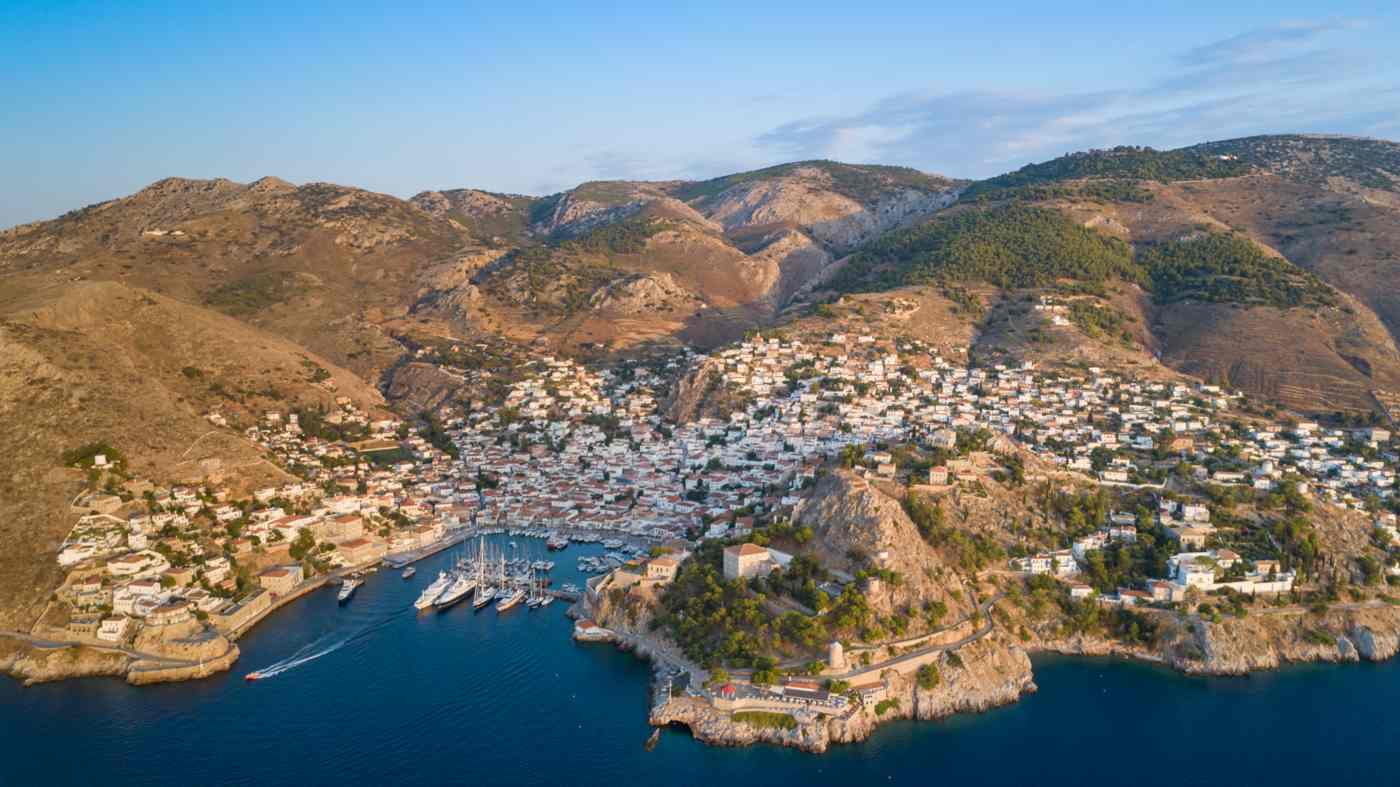
Deciding where to stay in Hydra matters more than on most Greek islands, because Hydra is completely car-free. Where to stay in Hydra. And how steps you must climb to reach your hotel, shapes your whole visit. Most accommodation is in and around Hydra Town, the beautiful harbour capital, in converted stone mansions and homely guesthouses that reflect the island’s elegant, intimate character. Beyond the town, quieter options cluster in the fishing hamlets of Kamini and Vlychos and near the sandy beach at Mandraki. This guide explains where to stay in Hydra, the character of each area, the types of hotels, and the practical tips that make choosing the right base easy. Plan the whole trip with Greece Tours.
Taxis or buses on Hydra, everything is reached on foot or by water taxi, and luggage is carried by donkey. This makes your choice of area a genuine practical decision as well as a matter of taste: staying central puts you in the heart of the action but often up many stone steps, while the outlying hamlets offer peace and sea views at the cost of a walk or a boat ride into town. From lively, cultured Hydra Town to the quiet coves beyond, there is a place to suit couples. Families and every budget. Where to stay in Hydra comes down to your priorities.
This guide covers each area in turn, the accommodation on offer, and how to pick the perfect place to stay.
Where you stay in Hydra?
Most visitors stay in or near Hydra Town, the car-free harbour capital, in converted mansions and guesthouses. Quieter alternatives are the fishing hamlets of Kamini and Vlychos to the west and the sandy beach area of Mandraki to the east.
The great majority of places to stay in Hydra are in and around Hydra Town, the island’s only real town and the hub of its life. Here you are close to the harbour, the museums, the tavernas and the swim spots, and the beauty of the town is on your doorstep. Because the island is car-free and compact, staying in or near the town is the most convenient answer to where to stay in Hydra for most visitors, especially first-timers who want to be at the centre of things and to explore easily on foot.
For a quieter, more restful base, the options lie a short walk or water-taxi ride from the town. The fishing hamlets of Kamini and Vlychos to the west offer peace, sea views and excellent tavernas, while the area around Mandraki, to the east, has the island’s only sandy beach and a resort. These outlying areas trade the buzz of the town for tranquillity and a more local feel. Deciding where to stay in Hydra really comes down to balancing convenience and liveliness against peace and space, and each area has its own distinct appeal.
It also helps to think about how you will spend your time. If your days will centre on the town, the museums, the harbour cafes and the nightlife, staying central saves walking. If they will centre on swimming, walking the coast and quiet evenings, an outlying base by the sea makes more sense. Because everything is reached on foot or by water taxi, matching your accommodation to your planned rhythm, rather than just the view, is the secret to choosing well where to stay in Hydra.
What is it like staying in Hydra Town?
Staying in Hydra Town puts you in the heart of the car-free capital, close to the harbour, museums, tavernas and swim spots. It is lively, beautiful and convenient, ideal for first-time visitors, though hillside hotels involve climbing many stone steps.
Hydra Town is the most popular and convenient place to stay, and for good reason. Basing yourself here means the harbour, the cafes and tavernas, the museums. The galleries and the swim spots of Spilia and Hydronetta are all within minutes’ walk. You are surrounded by the elegant stone mansions and marble lanes that make the town so beautiful. The lively, sophisticated atmosphere, the evening buzz and the ease of exploring on foot make it the natural choice for first-time visitors and for anyone who wants to be at the centre of island life.
The one thing to weigh is the steps. Hydra Town climbs steeply from the harbour, and many of its loveliest guesthouses and mansions are set high on the hillside, reached only by flights of marble steps. This is part of the charm and rewards you with notable views. It is worth considering if you have heavy luggage or limited mobility, since there are no cars or taxis to carry you up. Luggage is taken up by donkey or porter, but you will still be climbing on foot. For most visitors, though, the incomparable location of a stay in Hydra Town far outweighs the steps.
Accommodation in the town ranges from grand, restored captains’ mansions turned into boutique hotels to simpler family-run guesthouses tucked in the lanes. Whatever the level, staying within the town means you can return to your room to rest between outings. Come back for a swim. Enjoy the harbour by night after the day trippers have left. For the fullest experience of Hydra’s beauty and atmosphere. The greatest convenience on a car-free island, Hydra Town is the classic and best-loved answer to where to stay in Hydra.
Should you stay in Kamini?
Kamini is a small, traditional fishing hamlet about a fifteen-minute walk west of Hydra Town, with a tiny harbour, a pebble beach and excellent seaside tavernas. It suits visitors wanting peace and local charm within easy reach of the town.
Kamini is one of the loveliest quieter places to stay in Hydra, a small, traditional fishing hamlet about a fifteen-minute walk along the coastal path west of the town. Clustered around a tiny harbour where fishing boats bob, it has a little pebble beach, a handful of celebrated seaside tavernas and a genuinely local, unhurried atmosphere. Staying here gives you the peace of a village while keeping the attractions of Hydra Town within an easy. Scenic stroll or a short water-taxi ride, the best of both worlds for visitors.
The appeal of Kamini is its authentic, restful character. Away from the bustle of the main harbour, it feels like a real working village. Evenings by the water at its tavernas. Watching the sunset and the fishing boats, are magical. Accommodation tends to be guesthouses and smaller properties rather than large hotels, in keeping with the intimate feel. For couples and travellers who want tranquillity. Good food and a taste of local life. Still want to walk into town when they wish, Kamini is an excellent and popular choice.
Practically, staying in Kamini means a gentle walk of about fifteen minutes into Hydra Town along the flat coastal path. Or a quick hop by water taxi. You are never far from the shops, ferries and sights. Many visitors happily walk in and out each day, enjoying the sea views on the way. For those who want village peace without feeling cut off, Kamini strikes an ideal balance and is one of the most rewarding bases on the island.
Should you stay in Vlychos?
Vlychos is a quiet area about a thirty-five to forty-minute walk west of Hydra Town, with a pebble beach, famous waterside tavernas and a handful of guesthouses.
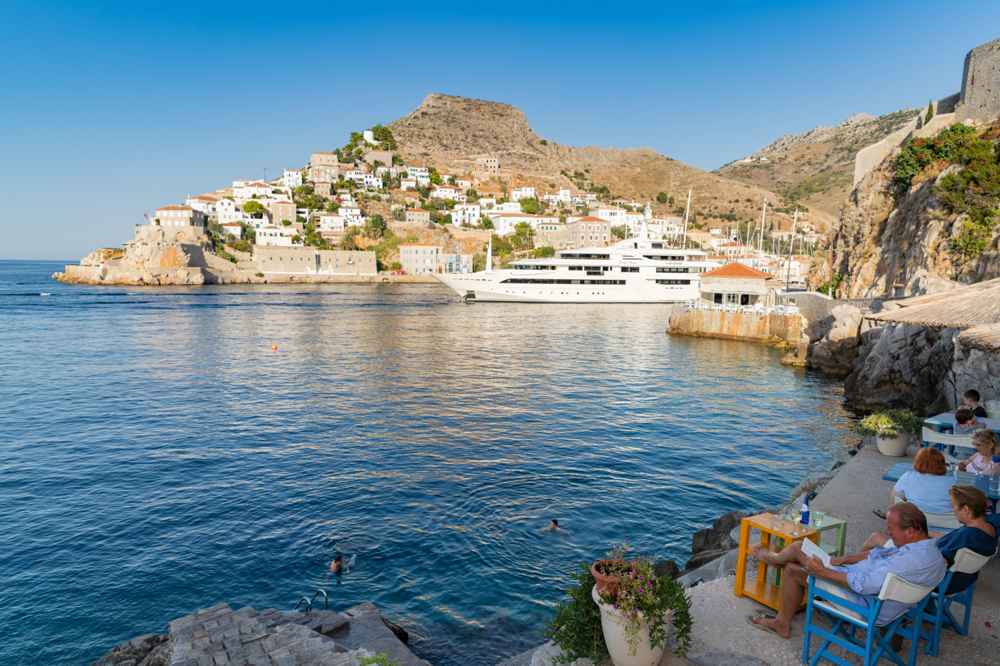
Further west along the coast from Kamini lies Vlychos, one of the quietest and most beautiful places to stay in Hydra. About a thirty-five to forty-minute walk from the main harbour, or a short water-taxi ride, it has a lovely pebble beach. An old stone bridge and some of the most celebrated tavernas on the island right by the water. Staying here means real peace and a proper beach on your doorstep, in a setting that feels away from it all while remaining part of the same magical, car-free island.
Vlychos suits visitors who prioritise tranquillity and a beach over being in the thick of the town. Accommodation is limited to a handful of guesthouses and small properties, so it feels exclusive and quiet, and the sense of escape is complete. The trade-off is the distance: the walk into Hydra Town takes the better part of an hour. You will rely more on water taxis or plan your days around the beach and the local tavernas. For a restful, beach-focused stay in a striking spot, and for those happy to be a little removed from the town, Vlychos is a notable choice among the Hydra beaches.
It rewards a certain kind of visitor: one happy to slow right down, swim, read and eat well. To treat the occasional trip into town as an outing rather than a daily routine. Water taxis make the journey easy when you want it. The reward for the distance is some of the deepest peace and finest sunsets on Hydra, right by the water. For a truly restful, romantic stay, Vlychos is hard to beat.
Should you stay near Mandraki beach?
Mandraki, east of Hydra Town, has the island’s only sandy beach and a beach resort. Staying here suits families and beach lovers wanting soft sand and facilities, reached from the town by a coastal walk or a short water-taxi ride.
For those who want a sandy beach on the doorstep, the area around Mandraki, to the east of Hydra Town, is the place to stay. Mandraki has the island’s only fully sandy beach and its most organised, resort-style setting, with facilities, loungers and water sports that are rare elsewhere on the largely rocky Hydra coast. It is reached from the town by a coastal walk or a short water-taxi ride, so it feels a little removed while remaining easy to reach.
Staying near Mandraki particularly suits families with children and anyone who wants soft sand and a relaxed beach base rather than the culture and bustle of the town. The resort setting offers comfort and amenities, and the calm, shallow water is good for young swimmers. As with the other outlying areas, you trade immediate access to the town’s lanes and nightlife for a quieter, more beach-focused stay, relying on the coastal path or water taxis to come and go. For a beach holiday feel on car-free Hydra, Mandraki is the natural choice.
Staying at Mandraki means using the coastal path or water taxis to reach Hydra Town and its harbour life. It feels a little apart from the cultural heart of the island. For families focused on beach days and easy swimming, that separation is often a positive, giving a calmer, more contained base. Combined with the island’s car-free safety, Mandraki offers a relaxed seaside stay well suited to travelling with children.
What kind of accommodation does Hydra have?
Hydra’s accommodation is mostly boutique hotels and guesthouses set in converted 18th- and 19th-century stone mansions, along with smaller family-run rooms. There are no large resorts or chain hotels, and prices tend to be higher than on many Greek islands.
The character of accommodation on Hydra reflects the island itself: intimate, elegant and steeped in history. Many of the finest hotels are converted captains’ mansions from the 18th and 19th centuries, beautifully restored to combine period charm. Stone architecture and antique furnishings with modern comforts, often with courtyards, terraces and views over the harbour. Alongside these boutique stays are numerous family-run guesthouses and rooms, simpler but full of character and warmth, tucked into the lanes of the town and the hamlets.
What you will not find on Hydra are large resorts, high-rise hotels or international chains, all of which are impossible on this small, car-free, protected island. This keeps the experience personal and distinctive. It also means that rooms are limited and prices tend to be higher than on many other Greek islands, especially in peak season. Booking well ahead is important, particularly for the most sought-after mansions. The reward is a stay with genuine soul and elegance, in keeping with Hydra’s reputation as one of the most sophisticated and beautiful islands in the Saronic Gulf.
This distinctive stock of accommodation is itself a reason many people fall in love with Hydra. Waking in a centuries-old captain’s mansion, taking breakfast in a stone courtyard shaded by bougainvillea. Or watching the harbour from the terrace of a converted merchant’s house is part of the island’s romance. Because the buildings are protected and the island car-free, this heritage is preserved rather than swept away. Choosing where to stay in Hydra is also a chance to sleep inside its living history.
Which area of Hydra is best for you?
Hydra Town is best for first-timers, couples wanting culture and nightlife, and convenience; Kamini and Vlychos suit those seeking peace and local charm; Mandraki suits families wanting a sandy beach.
Choosing the best area comes down to your priorities. For first-time visitors weighing where to stay in Hydra. For couples wanting to be at the heart of the action, close to the museums, tavernas. Galleries and nightlife, Hydra Town is the clear choice, offering the most convenience and the fullest experience of the island’s beauty and buzz. It is also the easiest base for exploring on foot and for enjoying the harbour by day and night.
For those seeking peace, romance and a more local feel. The quieter hamlets are ideal: Kamini for a short walk from town with village charm and great tavernas. Vlychos for real seclusion and a beach, accepting the longer journey in. Families and beach lovers are best served by Mandraki and its sandy, organised beach. Many visitors also simply choose based on a particular hotel they fall in love with, since the mansions and guesthouses are a large part of Hydra’s appeal. Whatever your priorities, matching the area to them is the key to deciding where to stay in Hydra.
A good default is to spend your first visit in or near Hydra Town and branch out to the quieter hamlets on a return trip once you know the island. First-timers rarely regret being central, where the beauty, the museums and the evening life are all on the doorstep, while returning visitors often seek the deeper peace of Kamini, Vlychos or Mandraki. Either way, the small size of the island means nowhere is truly far, and every base shares the same magical, traffic-free setting.
What practical tips help when choosing where to stay in Hydra?
Check how steps your hotel involves and how far it is from the harbour, arrange luggage transfer by donkey or porter, and book well ahead in peak season.
The car-free nature of Hydra makes a few practical points important when deciding where to stay. First, consider the steps and the walk: hotels are set high on the hillside up long flights of marble steps. Which is part of the charm but a real consideration with heavy bags or limited mobility, since no cars or taxis can carry you. It is worth checking a property’s location and how far and how high it is from the harbour before booking, and choosing accordingly.
Second, plan for luggage. On arrival, donkeys and porters at the harbour carry bags up to the hotels for a fee. Many properties can arrange this, so pack as lightly as you can and be ready to hand over your luggage at the port. Comfortable shoes are essential for the marble steps and lanes. Finally, book well in advance, especially for the popular mansions and in the busy summer months, as rooms on Hydra are limited and in high demand. With these simple preparations, staying on car-free Hydra is a pleasure rather than a puzzle.
When you visit and book accommodation in Hydra?
The best time to stay in Hydra is late spring and early autumn for warm weather and fewer crowds, or summer for the liveliest atmosphere.
The timing of a stay affects both the atmosphere and the availability of accommodation. Late spring and early autumn, roughly May to June and September to early October, offer warm weather. Pleasant swimming and a lively but not overwhelming atmosphere. Are widely considered the best times to visit. High summer brings the hottest weather and the most visitors, with the town at its most glamorous and busy, while winter is quiet and peaceful, with places closed but the town as beautiful as ever.
Whenever you come, booking ahead is strongly advised, because Hydra has a limited number of rooms and is a very popular destination close to Athens. The most sought-after converted mansions and the best-value guesthouses fill up early, especially for weekends. Holidays and the summer peak. Reserving well in advance secures both your choice of area and the best properties. Planning your stay around the right season and booking early are the final steps to getting the most from a visit and to deciding where to stay in Hydra. To making the decision of where to stay in Hydra a happy one.
It is also worth remembering that Hydra works beautifully in the shoulder months precisely because it is so close to Athens: even when the wider Greek islands quieten down. Hydra keeps a steady flow of weekend visitors and day trippers. Enough tavernas, cafes and hotels stay open to keep the town lively. This makes spring and autumn an especially attractive time to stay, combining pleasant weather and lower prices with an island that still feels alive rather than shuttered.
Frequently Asked Questions
What is the best area to stay in Hydra?
The best area to stay in Hydra for most visitors is Hydra Town, the car-free harbour capital, which puts you within walking distance of the museums. Tavernas, galleries, swim spots and nightlife. Surrounds you with the island’s beautiful stone mansions. It is especially good for first-timers and for couples wanting culture and atmosphere. For a quieter stay, the fishing hamlets of Kamini, a short walk west. Vlychos, further along with a pebble beach. Offer peace and local charm, while Mandraki to the east has the island’s only sandy beach and suits families. Your ideal area depends on whether you prioritise liveliness and convenience or tranquillity and beach access, but Hydra Town is the classic, most convenient choice.
Is accommodation in Hydra expensive?
Accommodation on Hydra tends to be more expensive than on many other Greek islands, for reasons. The island is small, car-free and protected. There are no large resorts or chain hotels. And rooms are limited. Much of the accommodation consists of boutique hotels in beautifully restored 18th- and 19th-century captains’ mansions, along with characterful guesthouses, which command higher prices. Hydra’s fashionable reputation and its closeness to Athens add to demand. That said, there is a range of options, from luxurious mansion hotels to simpler family-run rooms, so it is possible to find more affordable stays, especially outside the summer peak.
Booking well in advance helps secure the best value, as the most sought-after and best-priced rooms sell out early.
Do you book Hydra hotels in advance?
Yes, it is strongly recommended to book Hydra hotels well in advance, particularly in the busy summer months, at weekends and over holidays. Because the island is small, car-free and protected, the number of rooms is limited, and there are no large resorts to absorb demand. The most sought-after converted mansions and the best-value guesthouses fill up early, so reserving ahead secures both your preferred area and property. Even in the quieter shoulder seasons, booking in advance is sensible for the best choice. Hydra’s popularity as a fashionable destination close to Athens means demand is high, so early booking is one of the most important steps in planning where to stay.
How do you get your luggage to your Hydra hotel?
Luggage is carried to hotels by donkey or by porters, not by taxi or car. On arrival at the harbour, you will find donkey handlers and porters who transport bags up the stepped lanes to the accommodation for a fee. Many hotels can arrange this for you. Because of the marble steps and hillside setting of properties, it is wise to pack as lightly as possible and to be prepared to hand over your luggage at the port. Wearing comfortable shoes is essential. This traditional, donkey-powered luggage service is part of the charm of arriving on Hydra, but it does mean travelling light and choosing accommodation whose location and steps suit you.
Is Hydra good for families with children to stay?
Hydra can be a good place for families to stay, though things are worth planning for. The car-free streets mean no traffic to worry about, which parents love. The town’s marble steps and hillside hotels can be tiring with small children and buggies, so choosing accommodation that is lower down or nearer the harbour helps. For a beach-focused family stay, the area around Mandraki, with the island’s only sandy beach and organised facilities, is the most practical base. Kamini and Vlychos also offer calmer, family-friendly settings with pebble beaches and tavernas. With sensible choices about location and steps, families can enjoy Hydra’s safety, beauty and relaxed pace very happily.
Is it better to stay in Hydra or visit on a day trip?
Both work, but staying overnight in Hydra reveals a different, more magical island than a day trip does. Day trips from Athens are easy and popular, giving hours to see the town. Swim and have lunch. The town is at its busiest when the day boats are in. Staying at least one night lets you experience Hydra once the day trippers have left, when the lanes are quiet. The sunsets over the harbour are unhurried and the tavernas belong to the islanders and overnight guests again. You also gain time to reach the quieter beaches and hamlets and to settle into the car-free pace.
Staying one or two nights is well worth it, though a day trip remains a lovely introduction. Even a single night on the island transforms the experience. Letting you feel the quiet that settles over the harbour and the lanes once the last afternoon ferry has pulled away from the harbour quay.