
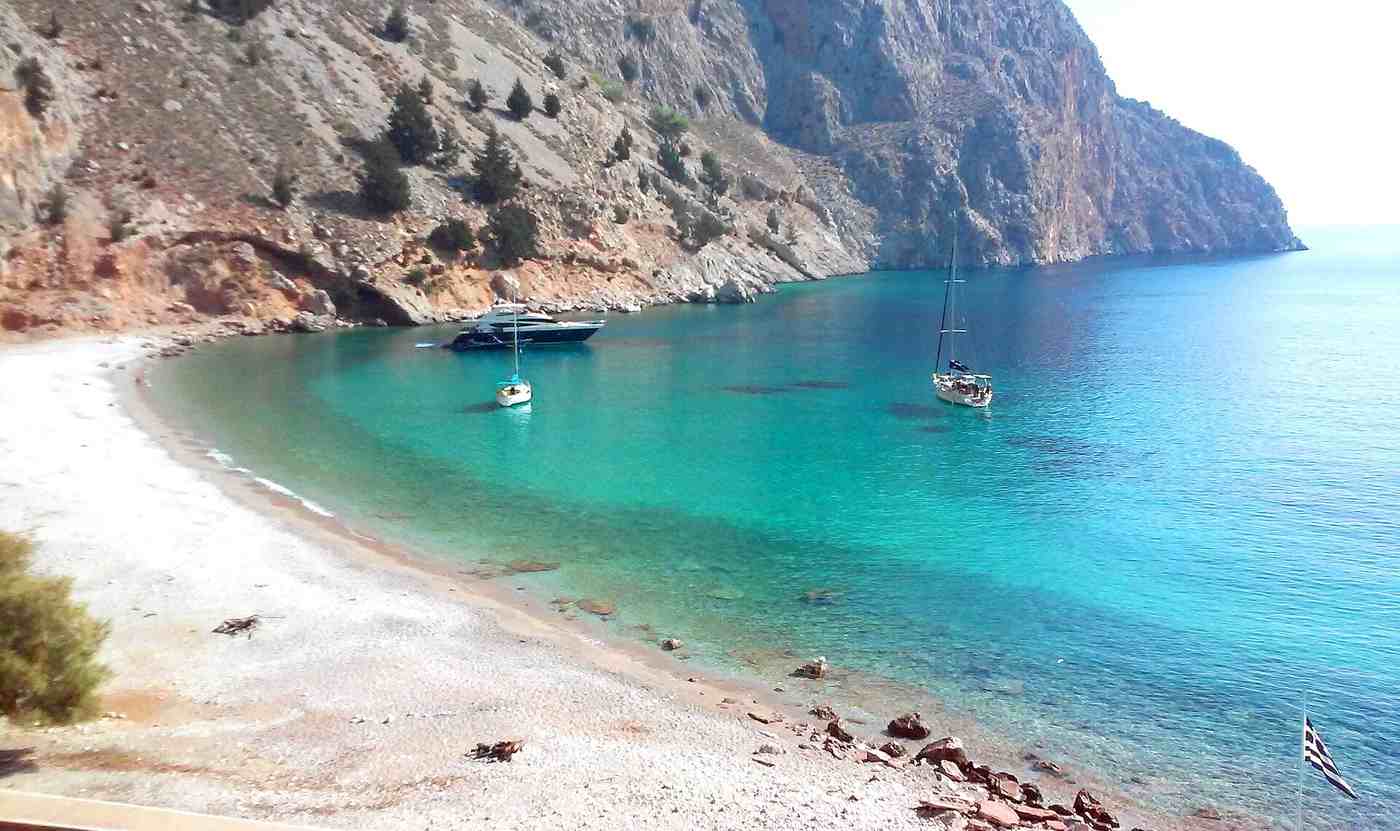
Symi offers clear, deep water that suits both snorkelling off the rocks and scuba diving from a boat. The small Dodecanese island sits in a bright, salty sea where visibility runs long and the water turns deep close to the shore. Dive centres based in the harbour of Gialos run boat trips out to reefs, drop-off walls, sea caves and rocky islets around the coast. Snorkellers swim straight off the rocky ends of beaches, where the seabed falls away within a short distance of dry land. The same deep beds that draw divers today once fed the island’s sponge trade. This guide covers the water, the snorkelling spots, the dive sites, the marine life, the best coasts, the season, the courses and the safety of diving here.
The clear sea sits at the centre of any active visit to Symi, the island whose deep, sheltered bays give calm water for hours in the sea. Warm, settled conditions run from late spring through to autumn, when the sea heats up and the summer meltemi wind blows lighter than on exposed islands to the west. Beginners start with a try-dive in shallow water, and certified divers join guided boat dives to the reefs and walls offshore. Snorkellers need only a mask, fins and a rocky entry to reach fish over the seabed. Marine life around the coast runs to octopus, bream, moray and the odd larger fish that patrols the drop-offs. The pages below set out where to swim, dive and read the island’s sponge past.
Why does the water around Symi suit diving and snorkelling?
Symi holds clear, deep water with strong visibility that suits snorkelling and scuba diving alike. The sea turns deep close to the rocky shore, so swimmers and divers reach open water and marine life within a short distance of land.
Clear water is the first reason the sea around Symi suits diving. The island lies in a bright, open stretch of the Aegean, far from big rivers and muddy estuaries that cloud the water elsewhere. Little sediment reaches the coast, so light travels far down through the sea. Divers and snorkellers read the rock, the sand and the fish at distance on a calm day. The clarity holds through the warm months, when the settled weather keeps the surface flat. Good light also lifts the colour of the reef and the marine life below. This clean, transparent water gives the island the long underwater views that draw snorkellers to the surface and divers to the deeper beds offshore.
Depth close to shore marks the second strength of the water at Symi. The island rises steeply from the sea, and the rock carries that steep line on below the surface. The seabed drops away fast a short swim from the beach, so deep water lies within reach of a snorkeller. Divers find walls and slopes that fall to real depth near the coast, without a long boat ride. The deep, clear water suits scuba work and holds the larger fish that keep to open depth. Snorkellers float above the drop and watch the seabed fall into blue below them. This quick change from shallow to deep packs varied diving into a small stretch of coast around the island.
Shelter gives the water around Symi its calm, workable surface. The island’s bays and inlets face away from the main summer wind, so the sea inside them stays flat for hours. Calm water lets a snorkeller drift and a diver descend without a fight against chop or swell. The clear conditions rest on this stillness, since wind and waves stir sand and break the surface. Boats reach the offshore reefs and islets easily when the sea lies quiet. The sheltered east and south coasts hold the steadiest water through the diving season. This combination of shelter and depth turns the coast into a reliable place to enter the sea and stay down in comfort. Divers time a descent for a calm hour and rise before the wind builds.
Salt and warmth round out the qualities that make the sea here easy to dive. The Aegean carries high salinity, so a swimmer floats well and a diver trims with modest weight. The water warms through the summer to a temperature that suits long snorkelling sessions and boat dives in a light wetsuit. Warm, buoyant, clear water lowers the effort of every dive and lengthens the time in the sea. The steady conditions also keep the marine life active over the reef and the sand. Divers and snorkellers gain a long, comfortable window in the water on a settled day. These traits together explain why the island reads as a strong base for both snorkelling and scuba diving.
Where can you snorkel off the beaches of Symi?
Symi’s best snorkelling lies off the rocky ends of beaches such as Nos, Agios Nikolaos and Agios Georgios Dysalona. The water turns deep close to shore at these rocky edges, so fish and seabed sit within a short swim of land.
Snorkelling at Nos beach starts a short walk north of the harbour at Gialos. The beach ends in rock and a swimming ladder, where the water deepens fast a stroke from the edge. Snorkellers follow the rocky shoreline and watch fish work the boulders below the surface. The clear water and the quick drop bring marine life within easy view of a floating swimmer. Sunbeds, a bar and the flat harbour walk make the spot the simplest snorkelling entry on the island. Swimmers keep to the rocky ends, where the seabed and the fish gather, rather than open sand. This mix of easy access and deep, clear water makes the beach a steady choice for a first snorkel.
Agios Nikolaos gives the island a sheltered, sandy bay with rock at each end for snorkelling. The beach sits on the calm east coast, reached by road or by the small boats that run from the harbour. Snorkellers enter over sand, then swim to the rocky edges where the seabed falls and the fish collect. Trees behind the sand give shade, and the bay’s shelter keeps the surface flat through the day. The clear water and the rocky margins hold octopus, bream and the small fish of the shallows. Families use the calm centre while snorkellers work the sides. This balance of safe, sandy swimming and rocky snorkelling ground makes the bay a favourite for a longer day in the sea.
Agios Georgios Dysalona hides a dramatic pebble beach beneath a tall cliff on the east coast. Boats from the harbour drop swimmers here, since no road reaches the bay. The water runs deep and clear right off the pebbles, so a snorkeller reaches real depth from the shore. The cliff shades the beach in the afternoon and shelters the bay from the wind. Snorkellers follow the rocky sides under the cliff, where fish patrol the deep, dark water. The remote setting keeps the bay quiet and the sea clean for underwater views. This deep, sheltered cove ranks among the finest snorkelling stops on the island for a swimmer arriving by boat. Day boats set a pickup time, so swimmers plan a snorkel around the schedule.
Rocky entries reward snorkellers across the rest of the island’s coast. The steep shore means most beaches end in boulders where the seabed drops within a short swim. Pedi, Marathounta and the small coves of the south all offer rock, deep water and fish to a snorkeller. Boats and roads reach the main bays, while a walk or a boat opens the quieter ones. Snorkellers carry a mask, fins and a swimming shirt against the sun and read the rock below. The clear water rewards a slow drift along any rocky edge on a calm day. This pattern of deep, rocky shoreline turns the whole island into a network of snorkelling spots rather than a single beach.
What scuba dive sites do boats reach from Symi?
Boats from Symi reach reefs, drop-off walls, sea caves and rocky islets scattered around the coast. Dive centres run guided trips to these sites, where the deep, clear water and varied rock draw divers to depth offshore.
Reefs form the core of the boat diving around Symi. Rocky ridges rise from the seabed offshore and gather fish, sponge and colour on their flanks. Dive boats moor over a reef and drop divers to follow its rock down into clear water. The reefs sit at a range of depths, so the centre matches the site to the divers on board. Bream, wrasse and octopus work the cracks and ledges of the rock. The clear water lets divers track the shape of the reef and the life across it. This structured rock, rising from open seabed, gives guided groups a reliable, fish-rich dive within a short boat ride of the harbour at Gialos. A reef dive suits newer certified divers, since the rock holds moderate depth.
Drop-off walls give the island’s diving its sense of real depth. The steep coast continues below the surface as sheer rock faces that fall away into blue. Divers hang along a wall and watch the rock drop past the limit of the light. Sponges, small growth and fish cover the vertical face at every level. The wall dives suit certified divers who read depth and manage their air with care. Clear water opens a long view down and out from the face. This vertical rock, plunging into deep water, delivers the drop-off diving that marks the coast and sets it apart from flat, sandy dive grounds elsewhere. Wall dives log deeper profiles, so divers watch a gauge and a computer.
Sea caves cut into the rocky coast and add an overhead dimension to the diving. Waves and time have carved openings and short caverns into the limestone of the shore. Dive guides lead groups into the mouths of the caves, where light angles through the entrance. The rock holds fish that shelter from the open sea inside the shade. Cave dives call for a guide, a light and steady buoyancy near the rock. The clear water keeps the entrance bright and the exit in view. This roofed rock brings a different feel to a dive, trading the open blue of the wall for the shaped stone and shadow of the island’s caves. Guides count divers in and out of a cave to keep the group together.
Rocky islets ring the coast of Symi and hold a long list of its dive sites. Bare stone outcrops rise from the sea offshore, with reef and wall below the waterline. Boats run out to the islets, where the isolation keeps the water clean and the fish plentiful. Divers circle an islet underwater and read its rock from the shallows to the depth. Currents around the outcrops bring nutrients and draw the larger fish of the open sea. The clear water and the varied rock make each islet a self-contained dive. This scatter of stone around the island gives the dive centres a long list of offshore sites to rotate through the season. A boat ride of minutes reaches the nearer islets from the harbour at Gialos.
How does diving on Symi connect to the sponge trade?
Symi’s dive sites lie in the same deep seabeds that made the island a sponge-diving centre. The clear, deep water that draws divers today once drew the sponge fleet, whose crews worked the rock for natural sponges.
The story of Symi sponge diving runs through the same water that divers enter today. The island built its wealth on gathering natural sponges from the deep seabeds of the region. Crews first held their breath, weighted with a stone, then later wore a sealed diving suit fed with air from the boat. The trade worked the rock and the deep beds for the soft sponge that dried into a cleaning tool. Divers today swim over the same rocky ground that the sponge fleet once harvested. The deep, clear water that opened those beds still opens the reefs and walls to a diver. This direct link ties the modern sport to the old industry of the island.
Sponges still grow on the rock that divers pass on the reefs and walls. The animals cling to shaded stone and deep ledges, filtering the clear water for food. Divers spot the dark, soft shapes on the rock as a living trace of the trade. The sponge beds sit in the deep, sheltered water that the fleet once searched. Modern divers look but leave the sponge in place, unlike the harvesting crews of the past. The same qualities of the water, its depth and clarity, suit both the sponge and the sport. This continuity, from harvested bed to protected reef, lets a diver read the island’s history in the rock below the surface. Divers photograph the sponge on the rock rather than cut it free.
The sponge past shapes how a visitor reads the harbour and the diving together. Cleaned sponges still hang outside the shops along the waterfront at Gialos. Dive boats set out from the same harbour that once launched the sponge fleet each summer. Divers who learn the trade see the reefs and beds in a longer frame of island history. The deep water offshore reads as both a dive site and a former workplace of the island. Guides point out the sponge on the rock and tell the story of the fleet. This shared setting deepens a dive, turning a swim over the reef into a look back at the island’s industry. The harbour ties the sponge shops, the waterfront and the dive boats in one place.
Depth defines both the sponge beds and the best diving around the island. The finest sponges grew in deep, dark water beyond the reach of a held breath. That same depth now gives divers the walls, the drop-offs and the larger fish of the open sea. The steep, rocky coast carries this depth close to shore across the island. Sponge crews chased the deep beds with a stone and later a diving suit, at real risk. Divers today reach the same depth safely with a tank, a gauge and a guide. This progress, from breath-hold sponge diver to certified sport diver, plays out over the identical deep seabeds of the coast. A tank and a gauge now cover the depth that once crippled the sponge crews.
What marine life do divers and snorkellers see around Symi?
Divers and snorkellers around Symi see octopus, bream and moray over the rock, with the odd larger fish along the drop-offs. The clear, deep water and the reefs, walls and sponge beds hold the marine life close to shore.
Octopus rank among the marine life a snorkeller meets first around Symi. The animals hide in holes and under ledges in the rock, betrayed by a pile of shells at the den. Snorkellers spot them on the rocky ends of the beaches, where the seabed falls close to shore. Octopus change colour and shape to match the stone, so a slow, careful look pays off. The clear water lets a floating swimmer watch one move across the reef by day. Divers find them deeper on the walls and reefs offshore. This shy, clever animal of the rock features on almost every snorkel and dive along the island’s rocky, sheltered coast. One octopus per rocky bay rewards a snorkeller who scans the ledges slowly.
Bream and other fish of the rock fill the mid-water over the reefs. Silver bream drift in loose groups above the seabed, feeding over sand and stone. Wrasse pick at the rock in bright colours, and small fish shelter in the cracks. Snorkellers watch the schools from the surface, while divers move among them on the reef. The fish keep to the rocky, food-rich ground where the seabed offers cover and prey. Clear water brings their colour and movement into sharp view. This steady population of reef fish, active through the warm months, gives both snorkellers and divers a constant show of life over the rock along the coast. Bream and wrasse feed hardest in the bright water of the morning and evening.
Moray eels lurk in the rock that lines the reefs and walls of the coast. The eels wedge into cracks and holes, showing only a head and open mouth to a passing diver. Divers read them on the deeper rock, where the moray waits for prey by night and rests by day. The animal stays in its hole, so a diver keeps a respectful distance from the rock. Clear water reveals the eel against the shaded stone of the reef. Bream, octopus and small fish share the same rocky ground. This mix of reef dwellers, from the shy moray to the drifting bream, packs varied life into a single dive over the island’s rock. A diver photographs the moray from a metre back and leaves the eel undisturbed.
Larger fish patrol the drop-offs and the open water off the rocky islets. The occasional bigger fish hunts along the walls where the rock falls into deep, clear blue. Divers on the offshore sites watch the open water beyond the reef for these passing visitors. Currents around the islets draw the larger fish in to feed over the deep rock. Snorkellers rarely reach this depth, so the bigger fish belong mainly to the scuba dives. The clear water opens a long view out from the wall into the blue. This chance of a larger fish, set against the reliable reef life, rewards a diver who works the deeper, offshore sites of the island. Amberjack and grouper rank among the bigger fish a diver reads off the wall.
Which coasts of Symi give the best diving conditions?
The calm, sheltered east and south coasts of Symi give the best diving and snorkelling conditions. These coasts face away from the main summer wind, so the water stays flat, clear and workable through the day.
The east coast of Symi holds the steadiest water for diving and snorkelling. The main summer wind blows from the north and west, so the eastern bays sit in shelter behind the island. Calm water gathers in inlets such as Pedi, Agios Nikolaos and the cove under the cliff at Dysalona. Boats reach these bays easily, and the flat surface keeps the water clear. Snorkellers and divers work the rocky edges without a fight against chop or swell. The shelter holds through most of the diving season on this side of the island. This lee shore, calm and clear for long stretches, gives the coast its name as the reliable side for a day in the sea.
The south coast adds sheltered bays and quiet dive grounds to the island. Deep inlets cut into the southern shore, where high ground blocks the wind and holds the water flat. The bay at the monastery of Panormitis gives a broad, sheltered anchorage in the south. Boats run down the coast to dive the reefs, walls and islets off this quieter shore. The distance from the harbour keeps the water clean and the sites lightly used. Snorkellers and divers find deep, calm water against the rocky southern coves. This southern shelter widens the choice of conditions, so a dive centre finds flat water on the coast on all but the wildest day. The southern bays sit a longer boat ride from the harbour than the eastern ones.
Wind sets the daily choice of coast more than any other factor. The summer meltemi blows from the north through the warm months, hardest in high summer. Dive centres read the wind each morning and pick the lee shore for the day. A north wind sends boats to the sheltered east and south, where the island blocks the swell. Calm mornings open the whole coast, including the exposed north and west. The clear water depends on this shelter, since wind stirs sand and breaks the surface. This daily match of site to wind keeps groups in flat, clear water and explains why the east and south carry the bulk of the diving. A calm dawn often precedes the meltemi, so early dives beat the afternoon wind.
Depth and rock complete the case for the sheltered coasts. The steep east and south shores drop fast into deep, clear water a short swim from land. Reefs, walls and rocky islets line these coasts within a short boat ride of the harbour. Snorkellers reach deep water off the rocky beach ends, and divers find real depth close in. The shelter keeps that deep water calm and clear for hours at a time. The variety of rock packs reef, wall, cave and islet into the sheltered stretches. This union of shelter, depth and varied rock marks the east and south as the core diving coasts of the island. Reef, wall and islet sit minutes apart on the sheltered east and south.
When is the diving and snorkelling season on Symi?
The diving and snorkelling season on Symi runs from late spring to autumn, when the sea is warm and the meltemi wind blows lighter. Dive centres operate through the summer, and the water stays comfortable into the autumn months.
Late spring opens the diving season on Symi as the sea starts to warm. The water climbs from its winter low through the spring, and the surface settles as the weather calms. Dive centres in the harbour begin their boat trips and try-dives as the season builds. Snorkellers return to the rocky beach ends once the sea grows comfortable. The clear water and the lengthening days draw the first divers of the year to the reefs. Early-season water suits a light wetsuit against the cooler temperature. This opening stretch offers calm, clear conditions before the summer crowds and the stronger wind arrive on the island’s exposed coasts and the busy bays. Water in late spring runs cooler, so divers wear a thicker wetsuit early on.
High summer brings the warmest water and the busiest diving of the year. The sea reaches its peak temperature through the height of the season, easy for long snorkelling and boat dives. Dive centres run daily trips to the reefs, walls and islets in the settled weather. The meltemi wind blows hardest now, so boats favour the sheltered east and south coasts. Snorkellers fill the rocky ends of the beaches in the warm, clear water. The long days give a wide window for diving between morning and evening. This peak stretch offers the warmest sea of the year, balanced against the wind that steers the boats to the lee shore of the island. Peak-season boats book out fast, so divers reserve a place a day ahead.
Autumn gives the island a long, calm tail to the diving season. The sea holds the summer’s heat well into the autumn, staying warm after the air cools. The meltemi drops away as the season turns, so the wind blows lighter across the coast. Calmer water opens more of the coast to boats and snorkellers than the windy summer. Dive centres keep running trips while the warm, settled weather lasts. The thinning crowds leave the reefs and beaches quiet for divers. This autumn window pairs warm water with calm air and light wind, and ranks among the finest stretches of the year for diving around the island. Warm autumn water lets snorkellers stay in the sea as long as in high summer.
The meltemi shapes the season as much as the temperature of the sea. The northerly wind runs through the summer, strongest at the height of the season and lighter at each end. Dive centres plan around the wind, since it steers the choice of coast each day. Late spring and autumn carry a lighter meltemi, so the water lies calmer across more of the island. High summer trades the warmest sea for the strongest wind and the busiest boats. Snorkellers and divers gain the steadiest all-round conditions in the shoulder months. This pattern of warmth and wind sets late spring and autumn as the calmest windows and high summer as the warmest of the diving season.
How do beginners and certified divers dive on Symi?
Beginners on Symi start with a try-dive or a course in shallow water, guided by an instructor. Certified divers join guided boat dives to the reefs, walls and islets, matched to their level and logged experience.
Beginners start diving on Symi with a supervised try-dive in shallow, sheltered water. An instructor from a dive centre in the harbour fits the gear and teaches the basic skills first. The try-dive stays shallow, close to shore and under direct guidance throughout. Newcomers breathe underwater, learn to clear a mask and float over the seabed in calm water. The clear, warm water of the sheltered bays suits this first descent. A try-dive asks for no prior training and gives a taste of the sport. This gentle, guided introduction lets a visitor test diving on the island before committing to a full course or a deeper boat dive offshore. A try-dive runs under an hour, with the diver never leaving the instructor side.
Courses take a beginner from the first try-dive to a recognised certification. Dive centres on the island teach entry-level courses that mix pool-style skills, theory and open-water dives. Learners build buoyancy, air management and safety drills over a set number of dives. Instructors keep the group small and the early dives shallow and sheltered. The certification, once earned, lets a diver hire gear and join guided dives worldwide. The calm, clear water of the island’s bays gives a steady setting to learn. This structured path turns a curious beginner into a certified diver, ready for the reefs and walls that ring the coast of the island. An entry-level course spreads the open-water dives across two or three days.
Certified divers join guided boat dives to the sites offshore. Dive centres run daily boats to the reefs, walls, caves and rocky islets around the coast. A guide leads each group, matches the site to the divers’ level and logs the plan. Divers show their certification and recent experience before a deeper dive. The boat carries the group to the sheltered coast when the meltemi blows. Clear, deep water opens the reef, the wall and the drop-off to the certified diver. This guided boat diving forms the core of the sport on the island, giving trained divers a rotating list of sites through the diving season. A guide caps the depth of each dive to the group lowest certification.
The two paths meet on the same coast and the same clear water. A beginner’s try-dive and a certified diver’s wall dive both start from a boat off the coast. Dive centres run the courses, the try-dives and the guided trips from one base. Families split between snorkelling, a first try-dive and a deeper boat dive on the same day. The sheltered bays serve the learners while the offshore sites serve the certified. Clear water and calm shelter support every level of the sport. This range, from a first breath underwater to a guided drop-off dive, lets the island host divers across the whole span of training and experience. One dive centre thus serves a whole family across snorkelling, try-dives and boat dives.
What safety and practical tips help divers on Symi?
Divers on Symi book through a licensed centre, dive within their training and follow the guide’s plan. Snorkellers pick sheltered, rocky bays, watch the wind and swim with a buddy in the clear, deep water.
A licensed dive centre anchors the safety of any dive on Symi. The centre supplies serviced gear, trained guides and a boat rated for the offshore sites. Divers book ahead, show their certification and give an honest account of recent dives. Guides plan each dive to the group’s level, brief the site and set the depth and time. The clear water aids the guide, yet the plan and the buddy still govern the dive. Divers stay within their training and signal any problem early. This professional structure, from serviced kit to a briefed plan, keeps guided diving on the island’s reefs and walls inside safe limits through the season. Divers check their own gauge, weight and release before every stride off the boat.
Wind and sea state guide the daily choice of where to dive or snorkel. The meltemi rises through the summer, so a diver checks the forecast before setting out. Calm, sheltered bays on the east and south hold the safest water on a windy day. Boats move to the lee shore when the north wind blows hard across the island. Snorkellers avoid exposed, choppy coasts and pick the flat, rocky bays instead. The clear water depends on this shelter, since wind stirs sand and swell. This habit of reading the wind and choosing the lee coast keeps divers and snorkellers in calm, clean water throughout the diving season. A red flag or a closed centre signals a day too rough for the boats.
Snorkellers follow a set of plain rules to stay safe off the rocks. Swimmers enter at the rocky ends of the beaches, where the seabed drops and the fish gather. A mask, fins and a buddy make the base kit for a safe snorkel. Snorkellers watch for boat traffic near the harbour and the busy bays. The deep water close to shore rewards care, since the drop comes fast off the rock. A swimming shirt guards the back against the strong summer sun. This simple discipline, of a sheltered entry, a buddy and an eye on the boats, keeps snorkelling on the island’s rocky coast safe and easy. A bright float towed behind marks a snorkeller to the boats near the harbour.
Practical planning rounds out a diving or snorkelling trip to the island. Divers carry their certification card and logbook to book a guided boat dive. Snorkellers pack their own mask and fins, or hire kit from a centre in the harbour. Water, sun cover and a light wetsuit suit the warm months on the boat and the beach. Boats and roads reach the main bays, while a boat trip opens the remote coves. The season from late spring to autumn gives the warmest, calmest window for the water. This groundwork, from gear to timing, lets a visitor make the most of the clear, deep sea around the island. A hat, water and a towel round out the day bag for the boat.
Frequently Asked Questions
Is Symi good for snorkelling?
Symi is good for snorkelling because the water turns clear and deep close to the rocky shore. Swimmers enter off the rocky ends of beaches such as Nos, Agios Nikolaos and Agios Georgios Dysalona, where the seabed drops within a short swim. Octopus, bream and small reef fish gather over the rock, in easy view of a floating snorkeller. The sheltered east coast holds the calmest, clearest water through the warm months. A mask, fins and a buddy make the only kit a snorkeller needs on the island.
Must you be certified to dive on Symi?
Certification is not required to try diving on Symi. Beginners start with a supervised try-dive in shallow, sheltered water, where an instructor fits the gear and teaches the basic skills. The try-dive asks for no prior training and stays shallow and close to shore. Divers who want to reach the reefs and walls offshore take an entry-level course and earn a recognised certification. Certified divers then join guided boat dives matched to their level. Dive centres in the harbour run the try-dives, the courses and the guided trips from one base on the island.
What fish and marine life live around Symi?
Octopus, bream and moray make up the marine life a diver or snorkeller meets most around Symi. Octopus hide in holes in the rock at the beach ends, while bream drift over the reefs in loose groups. Moray eels wedge into cracks on the deeper rock, showing only a head to a passing diver. The occasional larger fish patrols the drop-offs and the open water off the rocky islets. The clear, deep water and the reefs, walls and sponge beds hold this life close to the coast through the warm season.
When is the best time to dive on Symi?
Late spring to autumn is the best time to dive on Symi, when the sea is warm and the meltemi wind blows lighter. High summer brings the warmest water but the strongest wind, so boats favour the sheltered east and south coasts. Late spring and autumn carry a lighter meltemi and calmer water across more of the island. Dive centres run boat trips and try-dives through the whole season. The sea holds its heat into the autumn, giving a long, calm tail to the diving year on the island.
How does Symi’s diving link to sponge diving?
Symi’s dive sites lie in the same deep seabeds that once made the island a sponge-diving centre. The island built its wealth on gathering natural sponges from the deep, clear water off its rocky coast. Divers today swim over the same reefs and walls that the sponge fleet once worked with a breath-hold and later a diving suit. Sponges still grow on the shaded rock, a living trace of the trade. The depth and clarity that opened the sponge beds now open the reefs and drop-offs to a diver.
Where do dive boats go from Symi?
Dive boats from Symi run to reefs, drop-off walls, sea caves and rocky islets around the coast. The boats set out from the harbour at Gialos and head for the sheltered east and south when the meltemi blows. Reefs gather fish over rock at a range of depths, while walls fall sheer into deep blue. Sea caves add an overhead dimension, and rocky islets offshore hold clean water and larger fish. A guide leads each group, matches the site to the divers and plans the depth and time in the water.
Is diving on Symi safe for beginners?
Diving on Symi is safe for beginners who book through a licensed dive centre and stay within a guide’s plan. Instructors keep the first try-dive shallow, sheltered and under direct supervision, close to shore in calm water. Beginners learn to breathe underwater, clear a mask and float over the seabed before going deeper. The centre supplies serviced gear and a boat rated for the sites. Divers pick calm, sheltered bays on the east and south when the wind rises. This structure keeps a beginner’s first dives inside safe, comfortable limits on the island.