
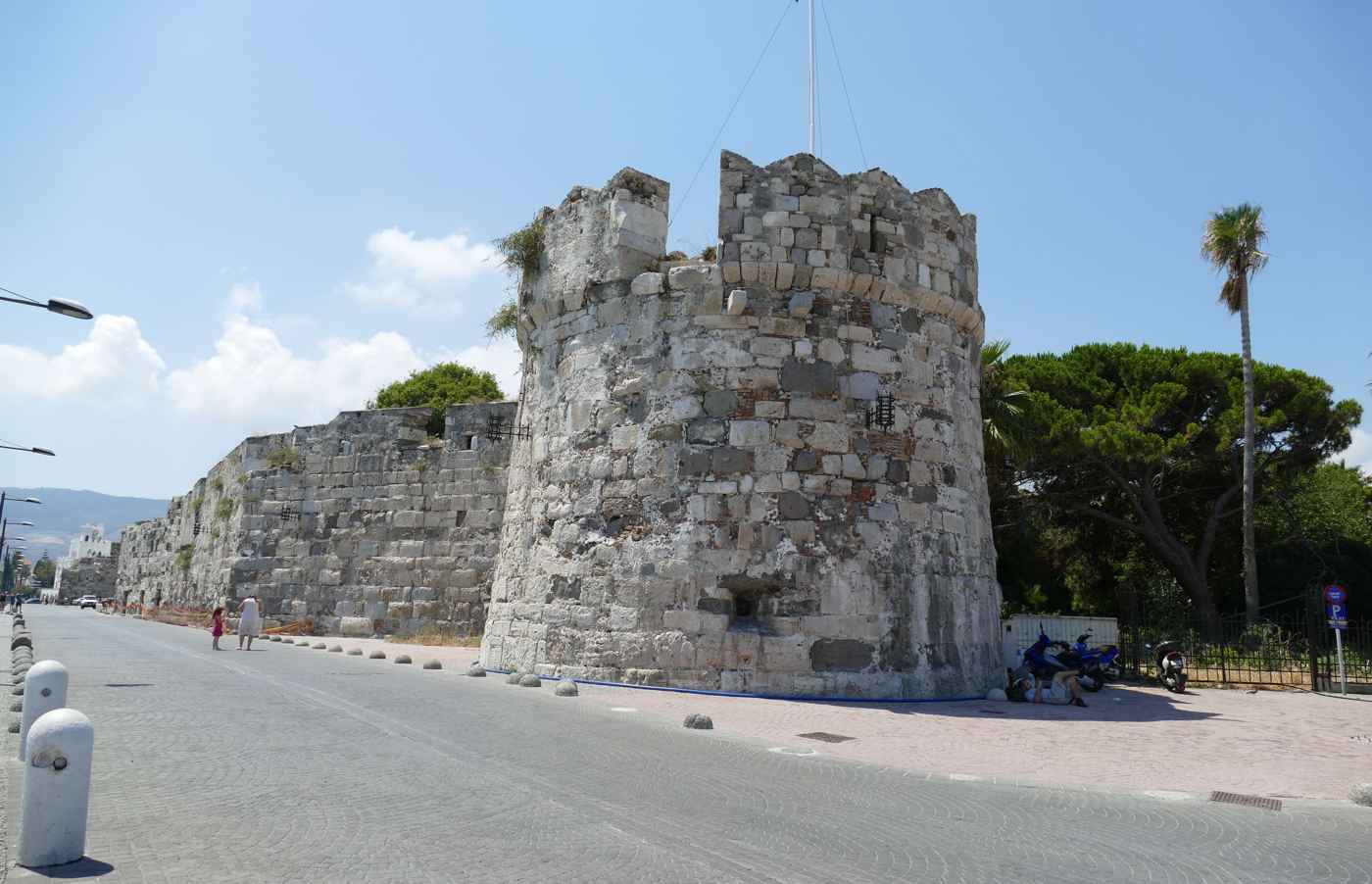
Symi lies south of Kos in the Dodecanese chain, a smaller island celebrated for one of the Aegean’s most photographed harbours and a major pilgrimage monastery. High-season boats link Kos Town to Symi, making a long but rewarding day trip feasible for travellers who want to add a second island to their itinerary. The crossing takes around two to three and a half hours depending on the vessel and route, so departures leave early and return late. Symi built its wealth on sponge diving and shipbuilding during the Ottoman and early modern periods. That prosperity left a legacy of tall neoclassical mansions that cascade down the slopes around Gialos harbour in tiers of ochre, terracotta, blue and white. Plan the whole trip with Greece Tours.
The island divides into two main settlements connected by hundreds of stone steps: the port at Gialos and the hilltop quarter of Chorio, crowned by a castle and windmills. At the southern tip of Symi, the Monastery of the Archangel Michael Panormitis draws pilgrims and day-trippers to a sheltered bay ringed by forested hills. A Symi day trip from Kos combines a scenic sea crossing with architecture, history and a taste of a quieter Dodecanese rhythm. The itinerary demands an early start and leaves little room for beach time, but the visual reward of Gialos harbour alone justifies the journey for visitors based on Kos.
How long is the boat crossing from Kos to Symi?
The boat crossing from Kos Town to Symi takes around two to three and a half hours, depending on the vessel type and whether the route includes intermediate stops.
Operators run seasonal services between Kos and Symi from late spring through early autumn, with the highest frequency in July and August. Departure times cluster around seven or eight in the morning to allow a full day on Symi, and return sailings leave Gialos harbour in the late afternoon or early evening. The outbound leg crosses open water south past smaller islets, and passengers often spot dolphins or seabirds along the way. Deck seating offers views of the Dodecanese coastline and the Turkish mainland to the east, while enclosed cabins provide air conditioning and refreshments on longer crossings.
Faster catamarans complete the journey in closer to two hours, while traditional excursion boats with stops at intermediate islands or bays extend the voyage to three and a half hours. The route passes between Kos and the Turkish peninsula of Bodrum before turning southwest toward Symi. Sea conditions in the Dodecanese are generally calm in summer, though afternoon meltemi winds can pick up and add chop to the return crossing. Travellers prone to seasickness benefit from morning sailings when the sea is typically glassier and from choosing a seat near the centre of the vessel where motion is less pronounced.
Tickets are available from agencies along the harbour front in Kos Town, and advance booking is advisable in peak weeks when boats fill quickly. Prices vary by operator and vessel type, so comparing options at kiosks helps secure the best value. Some services include a stop at Panormitis Monastery as part of the itinerary, while others dock only at Gialos and leave monastery visits to independent exploration. Confirming the exact schedule and any included stops before purchase prevents confusion on the day, and checking how to get to Kos ensures smooth connections for travellers arriving by air or ferry.
The crossing itself forms part of the experience, offering a perspective on the scattered geography of the Dodecanese that land-based sightseeing cannot match. Passengers watch Kos recede astern, its flat northern plains and the ridge of Mount Dikeos shrinking to a low silhouette, before Symi’s mountainous profile emerges ahead. The final approach into Gialos harbour reveals the stacked neoclassical facades in stages, building anticipation as the boat rounds the breakwater and ties up at the quayside. Arrival times typically fall between nine thirty and eleven, leaving five to six hours ashore before the return departure. Enough to explore the harbour, climb to Chorio and visit Panormitis if the boat stops there.
What makes the harbour at Gialos on Symi so distinctive?
Gialos harbour is an amphitheatre of neoclassical mansions rising in tiers from the waterfront, painted in ochre, terracotta, blue and white with shuttered windows and tiled roofs.
The mansions climb the hillsides in tight rows, their facades aligned to follow the natural contours of the bay. Builders used local stone for the ground floors and imported timber for upper storeys, combining Aegean vernacular with neoclassical proportions and detailing. Pediments, pilasters and ornamental balconies adorn buildings. The colour palette ranges from warm ochres and burnt siennas to pale blues and creams. All set against the deep blue of the harbour water. The overall effect is theatrical, as though the town were designed as a single composition rather than growing organically over centuries.
Symi’s golden age spanned the late Ottoman period and the early twentieth century, when the island’s sponge divers harvested the seabed across the eastern Mediterranean and its shipyards built wooden vessels for traders and navies. Wealth flowed back to Gialos, funding the construction of grand houses for ship captains and sponge merchants. The population peaked at over twenty thousand, far above today’s resident count, and the harbour buzzed with commerce. Decline set in after the Second World War as synthetic sponges and modern shipping methods eroded traditional industries, and families emigrated, leaving houses shuttered and the economy dormant.
Restoration efforts gathered pace in recent decades as tourism discovered Symi, and today mansions function as boutiques, caf\u00e9s, galleries and guesthouses. The harbour front promenade, known as the Kali Strata lower section, lines the quayside with tavernas serving fresh fish and meze under awnings. Fishing boats and yachts moor alongside excursion vessels, and the scene remains lively from mid-morning through late afternoon. Visitors stroll the waterfront, photograph the facades from the opposite quay and browse shops selling natural sponges, spices and local honey.
The architecture draws comparisons to Italian coastal towns, a legacy of Symi’s position at the crossroads of Greek, Ottoman and Venetian influences, and exploring the Rhodes day trip reveals similar neoclassical heritage in the Dodecanese.
Gialos functions as the island’s commercial and transport hub, with the ferry quay, taxi rank, bus stop and most services concentrated along the harbour. The settlement spreads around the inner bay in a horseshoe, with the main promenade on the southern arm and quieter residential lanes climbing the northern slopes. A small beach lies at the head of the bay, popular with local children and visiting yachts. The best vantage points for photographing the harbour are from the opposite quay at midday when the sun illuminates the facades. Or from the steps of the Kali Strata in late afternoon when shadows add depth and the light warms to gold.
What is the Kali Strata and where does it lead on Symi?
The Kali Strata is a monumental stone staircase of around five hundred steps that climbs from Gialos harbour to Chorio, the upper town of Symi.
Chorio crowns the ridge above Gialos at an elevation that provided defensive advantages in earlier centuries when pirate raids threatened coastal settlements. The Kali Strata served as the main pedestrian route between the port and the hilltop quarter. Its broad treads and regular landings made the climb manageable even for laden pack animals. Today the staircase remains the most atmospheric way to reach Chorio, though a paved road also loops up from the harbour for vehicles and buses. The steps are uneven in places, worn smooth by generations of footsteps, and handrails line the steeper sections.
The climb takes around twenty to thirty minutes at a steady pace, with opportunities to pause and catch breath while admiring the architecture. Houses press close on either side, their upper balconies almost meeting overhead in places, and bougainvillea spills over walls in cascades of magenta and white. Small shrines and chapels punctuate the route, their interiors dim and cool, and cats doze on shaded landings. The views open incrementally, framing Gialos harbour through gaps between buildings, until the final flights emerge onto the ridge with a panorama that sweeps across the bay to the hills beyond.
Chorio itself is quieter than the harbour, a maze of narrow lanes and whitewashed houses clustered around the ruins of a medieval castle. The castle occupies the highest point, its walls built by the Knights of St John on the foundations of an ancient acropolis. A small museum near the castle displays icons, folk costumes and artefacts from Symi’s maritime past, and a handful of tavernas serve lunch to visitors who make the ascent. Windmills stand on the ridge, their conical stone towers a landmark visible from the harbour below.
The upper town retains a more residential character, with fewer shops and a slower pace than Gialos, and wandering its lanes offers a glimpse of island life beyond the tourist bustle, much like exploring the Nisyros day trip reveals quieter Dodecanese rhythms.
Descending the Kali Strata is easier on the knees than the climb but requires care on the worn treads, especially in the heat of midday when stone becomes slippery underfoot. Many day-trippers tackle the steps in the first hour after arrival when energy is high and the sun is still low. Then return to the harbour for lunch and a swim before the boat departs. The staircase is one of Symi’s defining features, as integral to the island’s identity as the neoclassical harbour. Walking it connects visitors physically to the layered history of a community that built vertically to balance commerce at the waterfront with security on the heights.
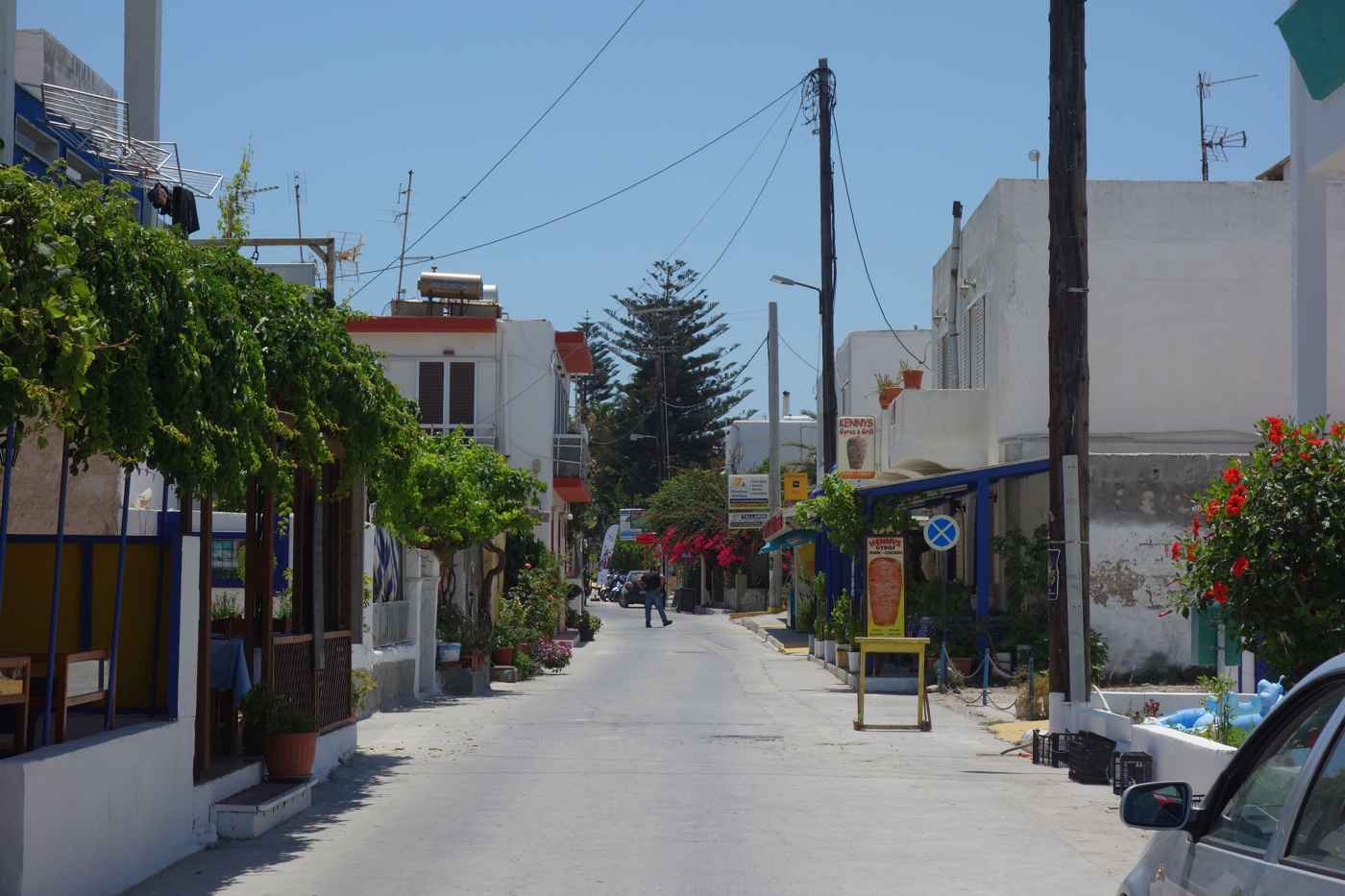
What is the Monastery of Panormitis on Symi?
The Monastery of the Archangel Michael Panormitis is a large pilgrimage complex at the southern tip of Symi, set beside a sheltered bay surrounded by pine-covered hills.
Panormitis occupies a remote location accessible by boat or a winding mountain road from Gialos, around twenty kilometres to the north. The monastery faces a deep natural harbour that once sheltered trading vessels and now hosts excursion boats and private yachts. A long quay extends from the monastery gates, and the complex itself is built around a central courtyard paved with black-and-white pebble mosaics. The katholikon, or main church, stands at the heart of the courtyard, its interior adorned with frescoes. Silver lamps and an ornate iconostasis that frames the icon of the Archangel Michael, believed to work miracles for seafarers and fishermen.
The monastery’s origins trace back centuries, though the present buildings largely date from the eighteenth and nineteenth centuries when donations from ship captains and diaspora communities funded expansion. The baroque bell tower rises beside the church, its tiers and dome a landmark visible from the bay. Pilgrims arrive year-round, many fulfilling vows made during storms at sea. The monastery celebrates its feast day on the eighth of November with processions and liturgies that draw crowds from across the Dodecanese. The complex includes a small museum displaying ecclesiastical vestments, icons and maritime ex-votos, as well as a bakery that produces traditional sweets and a shop selling religious items and local products.
Day-trip boats from Kos often include a stop at Panormitis, allowing around an hour ashore to visit the church, stroll the courtyard and explore the museum. The setting is serene, with the forested hills rising steeply behind the monastery and the bay stretching out in front, its water a deep turquoise. A short path leads from the quay to a pebble beach where passengers can swim if time permits, though most prioritise the monastery itself. The complex operates as a working monastery, and visitors are expected to dress modestly, covering shoulders and knees before entering the church.
Photography is permitted in the courtyard but restricted inside the katholikon, and checking things to do in Kos helps plan a balanced itinerary that includes both island-hopping and local sights.
Reaching Panormitis independently from Gialos involves hiring a taxi or scooter for the mountain drive. A journey of around forty minutes each way on a narrow road with hairpin bends and limited guardrails. The route climbs over the island’s central ridge, offering views across the straits to the Turkish coast, before descending through pine forest to the monastery bay. Buses run infrequently, so most independent travellers either join an organised excursion or negotiate a return fare with a taxi driver. The monastery welcomes visitors throughout the day, and arriving outside the peak hours when excursion boats dock allows a quieter experience of the courtyard and church.
How did sponge diving shape Symi’s history and economy?
Sponge diving brought Symi prosperity from the eighteenth century through the early twentieth century, with divers harvesting natural sponges from seabeds across the eastern Mediterranean.
Symi’s divers worked the waters around the Dodecanese, the Libyan coast, Tunisia and the Levant. Descending to depths of thirty metres or more with only a weighted stone and a rope connecting them to the surface. The work was dangerous, with risks of drowning, decompression sickness and shark attacks, but the rewards were substantial. Natural sponges commanded high prices in European and American markets, prized for bathing and industrial uses, and successful captains accumulated fortunes that they invested in grand houses and ships. The island’s fleet numbered in the hundreds, and entire families depended on the annual sponge-diving season that ran from spring through autumn.
Shipbuilding complemented the sponge trade, with Symi’s yards constructing wooden ka\u00efkis and schooners renowned for their seaworthiness and speed. Craftsmen used techniques passed down through generations, shaping hulls from pine and oak and rigging them with canvas sails. The yards employed carpenters, sailmakers, rope-makers and blacksmiths, creating a diversified economy that insulated the island from the fluctuations of agriculture. By the late nineteenth century Symi’s population exceeded twenty thousand, and Gialos harbour teemed with vessels loading supplies and unloading sponges for export. The wealth supported schools, churches and a vibrant cultural life that drew comparisons to much larger islands.
Decline began in the early twentieth century as synthetic sponges undercut natural products and new regulations restricted access to traditional fishing grounds. The Italian occupation of the Dodecanese after the Italo-Turkish War disrupted trade networks, and the Second World War brought further hardship. Many families emigrated to Athens, Australia and the United States, and the population plummeted. Houses fell into disrepair, and the harbour quieted as the fleet shrank. The sponge trade never recovered its former scale, though a handful of divers still work the local waters and shops in Gialos sell natural sponges to tourists as souvenirs of the island’s maritime heritage.
Sponge diving survives as a cultural memory and a marketing hook for tourism, with museums and waterfront displays explaining the techniques and history. The legacy is visible in the architecture of Gialos, where the mansions stand as monuments to a vanished prosperity. In the island’s identity as a place shaped by the sea. Visitors browse sponges in harbour-front shops, their textures and sizes a reminder of the skill required to harvest them, and tavernas serve dishes that reflect the island’s maritime traditions. Understanding this history adds depth to a Symi day trip from Kos. Connecting the visual beauty of the harbour to the human stories of risk, ambition and adaptation that built and sustained the community.
What is the best way to plan a Symi day trip from Kos?
Planning a Symi day trip from Kos requires booking boat tickets in advance, preparing for a long day with early departure and late return, and prioritising the harbour, Kali Strata and Panormitis within the limited time ashore.
Tickets are sold by agencies along the harbour front in Kos Town, with kiosks clustered near the Castle of Nerantzia and the taxi rank. Comparing prices and schedules across operators helps identify the best option, as boats include Panormitis in the itinerary while others dock only at Gialos. Advance booking is advisable in July and August when boats fill quickly, and purchasing tickets the day before departure allows flexibility if weather or personal plans change. Agencies provide departure and return times, and travellers confirm the boarding location, as boats leave from different quays along the harbour.
The day begins early, with most departures scheduled between seven and eight in the morning. Arriving at the quay fifteen minutes before sailing ensures time to board and secure preferred seating, either on deck for views or inside for shade and air conditioning. The crossing takes around two to three and a half hours, so bringing snacks, water and seasickness remedies is prudent. Onboard facilities vary by vessel, with larger boats offering cafeterias and toilets while smaller craft provide basic amenities. The return leg typically departs Symi between four and six in the evening. Arriving back in Kos Town after sunset. Planning dinner and evening activities around the late return avoids scheduling conflicts.
Time ashore is limited, so prioritising sights prevents a rushed experience. Most day-trippers allocate the first hour to exploring Gialos harbour and climbing the Kali Strata to Chorio. The second hour to lunch and a brief swim. The third to Panormitis if the boat stops there. Those on boats that dock only at Gialos can hire a taxi to Panormitis, though the round trip consumes around two hours and reduces time in the harbour. Comfortable walking shoes are essential for the Kali Strata steps, and a hat, sunscreen and water bottle protect against the midday sun. Modest clothing is required for entering Panormitis, so packing a light scarf or wrap allows flexibility.
Independent travellers who prefer flexibility over convenience can reach Symi on regular ferry services that connect Kos, Symi and Rhodes, though these typically run less frequently than dedicated excursion boats and require overnight stays to allow meaningful exploration. Organised excursions simplify logistics by bundling transport, guiding and sometimes lunch into a single package, and these suit travellers who value structure and local commentary. Either approach delivers the core experience of Gialos and Panormitis, and the choice depends on budget, schedule and personal preference. Checking weather forecasts before departure helps avoid rough seas, and confirming return times with the boat crew before disembarking prevents the stress of missed sailings.
What are the advantages of an organised excursion to Symi from Kos?
Organised excursions to Symi from Kos bundle boat transport, guiding and often lunch into a single package, simplifying logistics and providing commentary on the island’s history and sights.
Excursion packages are sold through travel agencies, hotel concierges and online platforms, with prices typically including round-trip boat tickets, a guided walking tour and sometimes a meal or refreshments. The all-inclusive nature appeals to travellers who prefer not to research schedules, negotiate taxi fares or navigate unfamiliar ports independently. Guides meet passengers at the quay in Gialos. Lead the group up the Kali Strata to Chorio and provide historical context about the neoclassical architecture, the castle and the island’s maritime past. The commentary adds depth to the visual experience, connecting the mansions and steps to the stories of sponge divers and ship captains who built them.
Organised tours follow a fixed itinerary, usually allocating time for the harbour walk, the climb to Chorio and a stop at Panormitis if the boat includes it. Lunch is either provided at a designated taverna or left as free time for passengers to choose their own venue. Guides recommend swimming spots or shops for those with extra time. The structured schedule ensures the group returns to the boat before departure, eliminating the anxiety of independent travellers who must track time themselves. Guides also handle logistics such as confirming boarding times, directing passengers to toilets and facilities, and answering questions about local customs or geography.
The social aspect of group excursions appeals to solo travellers or couples who enjoy meeting others, and the shared experience often sparks conversations and friendships. Guides tailor their commentary to the group’s interests, offering more detail on architecture for history enthusiasts or focusing on photography tips for those with cameras. The presence of a guide also provides reassurance in case of unexpected issues such as boat delays. Medical needs or language barriers, as the guide liaises with local contacts and crew. For travellers unfamiliar with Greek islands or uncomfortable navigating independently, the excursion format reduces stress and maximises the likelihood of a smooth, enjoyable day.
The trade-off is reduced flexibility, as excursion schedules leave little room for spontaneous exploration or extended time at a favourite spot. Groups move at a collective pace, which frustrates faster walkers or those who want to linger over a view or a coffee. Lunch stops at designated tavernas sometimes inflate prices compared to independent choices, and the fixed itinerary prevents detours to quieter corners of Gialos or Chorio. Independent travellers who value autonomy and are comfortable with logistics prefer to book boat tickets separately and explore at their own rhythm, while those who prioritise convenience and context favour the excursion model.
Both approaches deliver the core sights of a Symi day trip from Kos, and the decision hinges on personal travel style and priorities.
Can you visit Symi independently from Kos without an organised tour?
Visiting Symi independently from Kos is straightforward, requiring only a boat ticket purchased from harbour-front agencies in Kos Town and self-guided exploration of Gialos, Chorio and Panormitis.
Boat tickets are available from kiosks along the Kos Town waterfront, with staff providing departure times, return schedules and boarding locations. Prices vary by operator and vessel type, so comparing options helps secure the best value. Tickets are typically open-dated within the season, allowing travellers to choose their preferred day, though advance purchase is wise in peak weeks when boats fill. Upon arrival at Gialos harbour, independent travellers disembark and explore at will, with no obligation to follow a guide or adhere to a group itinerary. The harbour layout is intuitive, with the main promenade, Kali Strata steps and taxi rank all visible from the quay.
Navigating Gialos and Chorio requires no special skills, as the Kali Strata is well-marked and the upper town is compact enough to explore in an hour. Printed maps are available at kiosks and caf\u00e9s, and smartphone mapping apps function well in the harbour area where mobile signal is strong. Tavernas and shops line the waterfront, and staff speak enough English to assist with directions or recommendations. Independent travellers choose their own lunch spot, avoiding the fixed tavernas used by excursion groups and often finding better value or quieter settings. Swimming spots are easy to locate, with the small beach at the head of Gialos bay and several rocky coves within walking distance of the harbour.
Reaching Panormitis independently involves hiring a taxi from the rank at Gialos harbour, negotiating a return fare that includes waiting time while visiting the monastery. The journey takes around forty minutes each way, and drivers typically charge a fixed rate for the round trip. Alternatively, infrequent buses run from Gialos to Panormitis, though schedules align poorly with day-trip boat arrivals and departures, making taxis the more practical option. Travellers who skip Panormitis gain extra time to explore Chorio, swim or relax over a long lunch, and the monastery visit is not essential to appreciating Symi’s harbour and architecture.
The main challenge of independent travel is time management, as missing the return boat leaves no alternative transport back to Kos the same day. Confirming the departure time with the boat crew before disembarking and setting a phone alarm for an hour before sailing provides a safety margin. Independent travellers also forgo the historical commentary that guides provide, though reading background material before the trip or using audio guides and apps fills that gap. The freedom to linger over a coffee. Photograph the harbour at leisure or explore side streets without group constraints appeals to experienced travellers who value autonomy. The cost savings compared to organised excursions can be significant.
Either approach works well, and the choice depends on confidence, budget and whether the traveller prioritises flexibility or convenience.
What other day trips from Kos complement a visit to Symi?
Day trips from Kos to Nisyros, Rhodes and the Turkish coast at Bodrum complement a Symi excursion by showcasing different facets of the Dodecanese and eastern Aegean.
Nisyros lies directly south of Kos, a short boat ride to an island dominated by a dormant volcano with a walkable crater floor that steams with fumaroles and sulphur deposits. The crossing takes around an hour, and excursion boats dock at Mandraki, the main port, before busing passengers up to the crater at Stefanos. The volcanic landscape contrasts sharply with Symi’s neoclassical harbour, offering geology and raw natural features instead of architecture and history. Villages such as Nikia cling to the caldera rim, their whitewashed houses and cobbled squares preserving a slower pace of life.
A Nisyros day trip fits easily into a Kos itinerary, and the shorter crossing leaves more time ashore than the longer voyage to Symi.
Rhodes, the largest Dodecanese island, lies southeast of Kos and is reachable by high-season ferries and excursion boats, though the crossing takes around three to four hours depending on the route. The medieval Old Town, a UNESCO World Heritage site, features the Palace of the Grand Master. The Street of the Knights and Byzantine churches enclosed within massive walls built by the Knights of St John. Rhodes Town also offers beaches, a modern harbour and the ancient acropolis of Lindos further down the coast. The scale and historical depth of Rhodes exceed Symi’s, making it a full-day commitment that rewards travellers interested in Crusader architecture and ancient ruins.
Combining Symi and Rhodes in a single trip provides contrasts in size, atmosphere and historical periods.
Bodrum on the Turkish coast lies northeast of Kos, a short ferry ride across the strait to a resort town with a Crusader castle, Ottoman-era bazaars and a lively waterfront. Day boats run frequently in summer, and the crossing takes around thirty minutes, making Bodrum the easiest international excursion from Kos. The town blends Turkish and Greek influences, with whitewashed houses, minarets and a harbour lined with gulets and yachts. Markets sell spices, textiles and leather goods, and restaurants serve kebabs, meze and Turkish coffee. A Bodrum day trip introduces a different culture and cuisine, complementing the Greek island focus of Symi and Nisyros.
Passport control is required, so travellers carry valid travel documents and allow time for border formalities.
Each destination offers distinct experiences, and travellers with a week or more on Kos can combine multiple day trips to build a richer understanding of the region. Symi delivers neoclassical beauty and pilgrimage heritage, Nisyros provides volcanic drama and village life, Rhodes showcases medieval grandeur and ancient sites, and Bodrum adds a cross-cultural dimension. The variety prevents monotony and appeals to travellers who enjoy comparing landscapes, architectures and atmospheres across short distances. Balancing day trips with time to explore Kos itself ensures the itinerary does not become exhausting. Rest days allow for cycling. Beach time and visits to the Asklepion or Kos Town’s ancient agora.
Together, these excursions illustrate the Dodecanese as a mosaic of islands, each with its own character and story.


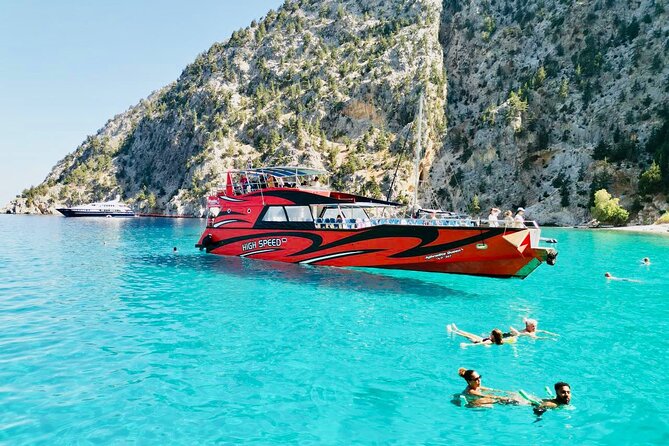

What practical tips ensure a smooth Symi day trip from Kos?
A smooth Symi day trip from Kos depends on advance ticket booking, early arrival at the quay, comfortable walking shoes for the Kali Strata, sun protection, modest clothing for Panormitis, and careful time management to avoid missing the return boat.
Booking boat tickets the day before departure allows time to compare operators, confirm schedules and secure preferred seating without the stress of same-day availability. Agencies along the Kos Town harbour front display departure times and prices, and staff answer questions about itinerary details such as whether Panormitis is included. Purchasing tickets in person rather than online often provides better prices and immediate confirmation, though online platforms suit travellers who prefer to arrange logistics before arriving on Kos. Keeping the ticket and boarding pass accessible in a waterproof pouch protects against loss or water damage during the crossing.
Arriving at the quay fifteen to twenty minutes before the scheduled departure ensures time to board, stow bags and choose seating. Deck seats offer views and fresh air but expose passengers to sun and wind, so bringing a hat, sunglasses and sunscreen is essential. Inside cabins provide shade and air conditioning, ideal for the return leg when energy is lower and the afternoon sun is intense. Seasickness-prone travellers benefit from taking preventive medication an hour before departure and choosing a seat near the centre of the vessel where motion is minimal. The crossing is generally calm in summer, but afternoon meltemi winds can add chop, so packing a light jacket guards against spray and cooler temperatures on deck.
Comfortable walking shoes with good grip are critical for the Kali Strata steps, which are uneven and worn smooth in places. Sandals or flip-flops are unsuitable, as they increase the risk of slipping or twisting an ankle. A small daypack holds water bottles, snacks, a camera, sunscreen and a scarf or wrap for entering Panormitis, and keeping the load light prevents fatigue during the climb to Chorio. Modest clothing is required for the monastery, meaning covered shoulders and knees, and carrying a lightweight wrap allows quick compliance with dress codes. Swimwear and a towel are useful if time permits a dip at Gialos beach or Panormitis bay, though the tight schedule often leaves little opportunity for swimming.
Time management is the single most important factor in avoiding missed boats. Confirming the return departure time with the crew before disembarking. Setting a phone alarm for one hour before sailing. Allowing a buffer for walking back to the quay from Chorio or a taverna prevents the panic of a last-minute dash. Charging the phone fully before departure ensures it functions for photos, maps and alarms throughout the day, and carrying a portable battery pack provides backup. Bringing cash in small denominations covers taverna bills, taxi fares and souvenir purchases, as card acceptance is less universal in Symi than in Kos Town.
Following these practical steps transforms a stressful long day into a smooth, enjoyable excursion that highlights the best of Symi’s harbour, steps and monastery.
Frequently Asked Questions
How much time do you get on Symi during a day trip from Kos?
Day-trip boats from Kos typically allow around five to six hours on Symi, depending on the crossing time and the operator’s schedule. Departures from Kos Town leave between seven and eight in the morning. The crossing takes around two to three and a half hours, so arrival at Gialos harbour falls between nine thirty and eleven. Return sailings depart Symi between four and six in the evening, arriving back in Kos Town after sunset. The time ashore is sufficient to explore Gialos harbour, climb the Kali Strata to Chorio. Have lunch and visit Panormitis if the boat stops there. It leaves little margin for extended beach time or leisurely wandering.
Travellers who want to explore Symi in greater depth or experience the island after the day-trippers leave consider overnight stays, though this requires separate ferry tickets and accommodation booking.
Is the Kali Strata climb difficult for all fitness levels?
The Kali Strata climb from Gialos to Chorio involves around five hundred stone steps and takes around twenty to thirty minutes at a steady pace. Making it moderately challenging for travellers with average fitness. The steps are broad and regular in most sections. With landings that provide rest points and shade. The cumulative elevation gain and the heat of midday sun increase the effort required. Travellers with limited mobility, knee problems or cardiovascular conditions find the climb strenuous, and there is no lift or alternative route that avoids the steps entirely. A paved road loops up from the harbour to Chorio.
Taxis or buses use this route, so those unable to manage the stairs can reach the upper town by vehicle. Descending the Kali Strata is easier than climbing but requires care on worn treads, and taking the steps slowly with frequent pauses makes the experience manageable for most visitors. Comfortable walking shoes with good grip are essential, and carrying water and starting the climb early in the day before temperatures peak reduces discomfort.
Can you swim during a Symi day trip from Kos?
Swimming is possible during a Symi day trip from Kos, though the tight schedule limits opportunities and most travellers prioritise sightseeing over beach time. A small pebble beach lies at the head of Gialos harbour, a short walk from the quay, and the water is clear and calm, suitable for a quick dip. Rocky coves and swimming spots dot the coastline around Gialos, accessible by short walks or water taxis, though reaching them consumes time that be spent exploring the harbour or Chorio. Boats that stop at Panormitis often allow around an hour ashore. A pebble beach beside the monastery bay provides a swimming option for passengers who finish their monastery visit quickly.
Bringing swimwear and a towel in a daypack allows flexibility, but the limited time ashore means swimming is a bonus rather than a central activity. Travellers who prioritise beaches over architecture find the Symi day trip less satisfying than excursions to islands with more accessible and varied swimming spots.
What is the best time of year for a Symi day trip from Kos?
The best time for a Symi day trip from Kos is late spring through early autumn, from May through October, when boat services run most frequently and weather conditions are warm and stable. July and August offer the highest frequency of departures and the longest daylight hours, but these months also bring peak crowds, higher temperatures and fuller boats. June and September provide a balance of good weather, fewer tourists and comfortable temperatures for walking the Kali Strata, making them ideal for travellers who prefer a quieter experience. May and October mark the shoulder season, with reduced boat schedules and cooler weather, but also lower prices and a more local atmosphere on Symi.
Winter services are sparse or non-existent, as demand drops and sea conditions become less predictable. Checking boat schedules before booking accommodation on Kos ensures the desired day-trip dates align with available sailings. Booking tickets in advance during peak weeks prevents disappointment if boats fill quickly.
Are there restaurants and caf\u00e9s in Gialos harbour on Symi?
Gialos harbour is lined with tavernas, caf\u00e9s and restaurants along the waterfront promenade, offering fresh seafood, Greek meze, salads and international dishes. The concentration of dining options along the quay provides convenience for day-trippers, with menus displayed outside and staff inviting passers-by to sit. Prices are higher than in less touristy parts of the Dodecanese, reflecting the captive audience of excursion passengers and the premium location overlooking the harbour. Seafood dominates the menus, with grilled octopus, calamari, sea bream and prawns featured alongside moussaka, souvlaki and Greek salads. Many tavernas serve lunch from midday through late afternoon, aligning with the arrival and departure times of day-trip boats.
Caf\u00e9s offer coffee, pastries and ice cream, and some have shaded terraces that provide relief from the midday sun. Independent travellers who explore side streets away from the main promenade sometimes find quieter. Less expensive dining spots, though the trade-off is a longer walk from the quay and less predictable opening hours.
Do you need a passport for a Symi day trip from Kos?
A passport is not required for a Symi day trip from Kos, as both islands are part of Greece and the European Union, and travel between them is domestic. European Union citizens can travel with a national identity card, while non-EU visitors use the same documentation that granted entry to Greece. Boat operators do not conduct passport checks for inter-island travel within Greek waters, though carrying identification is advisable in case of medical emergencies or unexpected issues. The situation differs for day trips to Bodrum in Turkey, which require a valid passport and often a visa depending on nationality. Border control procedures add time to the crossing.
Travellers planning multiple day trips from Kos confirm documentation requirements for each destination, as regulations vary between Greek islands, Turkish ports and other international routes. Keeping a photocopy or digital scan of the passport stored separately from the original provides a backup in case of loss or theft during travel.
What souvenirs are popular to buy on Symi?
Natural sponges are the most iconic souvenir from Symi, sold in shops along the Gialos harbour front in sizes and grades, from small bath sponges to large decorative specimens. The sponges connect to the island’s maritime heritage and sponge-diving history, and vendors explain the differences between honeycomb, silk and grass sponges. Prices vary by size and quality, and bargaining is sometimes possible, especially when purchasing items. Local honey, herbs and spices are also popular, packaged in jars and sold at shops and the Panormitis monastery. Handmade textiles, ceramics and jewellery appear in boutiques around the harbour, often featuring traditional Greek motifs and colours.
Postcards, prints and paintings of the neoclassical harbour and Kali Strata appeal to visitors who want visual mementos, and local artists display work in small galleries. Religious items such as icons, prayer ropes and candles are available at Panormitis and in shops near the harbour, catering to pilgrims and those interested in Orthodox traditions. Bringing cash in small denominations facilitates purchases, as some smaller shops do not accept cards.