
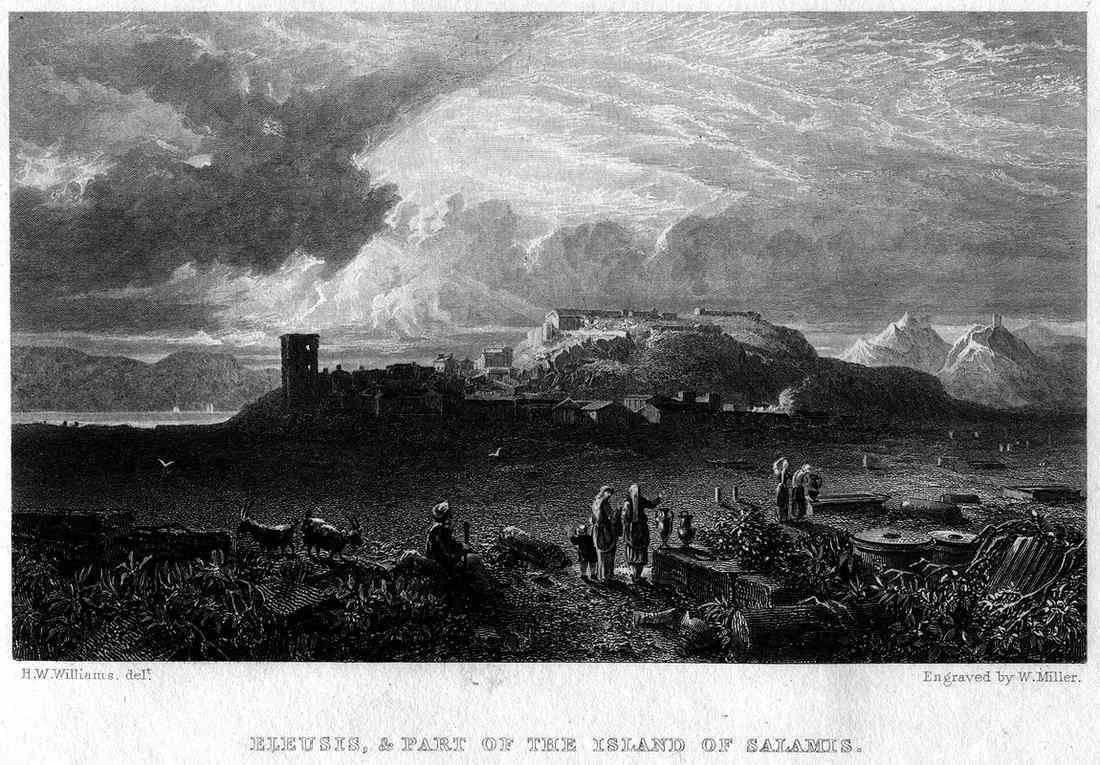
A Salamis (Salamina) day trip from Athens reaches the closest island to the city, just a 15-minute ferry from Perama, site of the famous 480 BC naval battle, with quiet beaches, a great monastery and seafood tavernas. Pair this easy, authentic escape with tours and tickets from My Greece Tours.
This closest-island escape is a curious option in the Athens travel guide. The sections below cover whether it is worth it, the famous Battle of Salamis, the ferry crossing, the beaches, the monastery and sights, the food, and how to get there.
Is Salamis worth a day trip from Athens?
Yes, Salamis is worth a visit for its unique closeness, history and authenticity, reached by a 15-minute ferry from Perama near Piraeus. The largest of the Saronic islands and the nearest to Athens, Salamina is famous as the site of the decisive 480 BC naval battle against the Persians. While not a glossy resort, it offers quiet pine-fringed beaches, a great monastery, an archaeological museum and seafood tavernas, making a cheap, easy and offbeat escape.
For travellers seeking the easiest and most unusual island day trip from Athens, Salamis, known in Greek as Salamina, holds a special appeal as the closest island to the city, reached by a ferry crossing of just fifteen minutes. The largest of the Saronic islands, lying in the gulf right beside the mainland and the port of Piraeus, Salamis is above all famous in history for the great naval Battle of Salamis, fought in 480 BC, one of the most decisive naval engagements of the ancient world, where the Greek fleet defeated the mighty Persian navy. It is important to set expectations: Salamina is not a glossy, polished tourist resort like Hydra or the Cyclades, but rather a real, working, largely residential island, populated by Athenians, with a low-key, authentic character.
What it offers the day-tripper is a fascinating dose of history, quiet pine-fringed beaches good for a swim, an important monastery, a small archaeological museum, and unpretentious seafood tavernas, all at very low cost and with almost no effort. For the curious and the history-minded, it is a rewarding offbeat escape. Its great claim to fame is the ancient battle. That history transforms the visit.
What was the Battle of Salamis?
The Battle of Salamis, fought in 480 BC in the tight channel dividing the island from the mainland, was a decisive naval victory in which the outnumbered Greek fleet, led by the Athenian Themistocles, crushed the much larger Persian navy of King Xerxes. By luring the Persians into the tight straits, the Greeks neutralised their numbers and won a triumph that helped save Greek civilisation. The very waters you cross by ferry are the historic battle site.
The reason Salamis echoes through history, and what gives a visit its deeper meaning, is the epic naval battle fought in its waters in 480 BC, a clash often regarded as one of the most important in Western history. During the second Persian invasion of Greece, after the heroic stand at Thermopylae and the burning of Athens, the vast fleet of the Persian king Xerxes confronted the smaller allied Greek navy in the narrow strait between the island of Salamis and the mainland. The Athenian general and statesman Themistocles, the architect of the Greek strategy, cunningly lured the enormous Persian fleet into the cramped, confined waters of the strait, where its superior numbers became a fatal disadvantage, leaving the heavy Persian ships crowded and unable to manoeuvre, while the more agile Greek triremes attacked and devastated them.
The resulting Greek victory was decisive, shattering Persian naval power, forcing Xerxes to retreat, and helping to preserve the independence and civilisation of the Greek city-states. Remarkably, the very stretch of water you sail across on the short ferry crossing is this historic battlefield, and standing on the island you can survey the narrow straits where the engagement unfolded. This history lends the trip extraordinary resonance. The crossing itself is part of the experience.
What is the ferry crossing to Salamis like?
The ferry to Salamis is remarkably quick, cheap and frequent. The main route runs from the port of Perama, near Piraeus, to Paloukia on Salamis, taking just 15 minutes, with boats departing very frequently, around every 15 to 30 minutes, day and night. A single ticket costs only about €1.20. The short crossing over the historic battle straits is an easy and scenic start to the day, with no need to book ahead.
One of the great attractions of a Salamis day trip is the ease and charm of the ferry crossing, which is among the shortest, cheapest and most frequent in all of Greece. The principal route connects the mainland port of Perama, located in the greater Piraeus area, with the main port of Paloukia on the eastern side of Salamis, and the journey takes a mere fifteen minutes across the narrow strait. Ferries run with great frequency throughout the day and indeed around the clock, departing roughly every fifteen to thirty minutes, so there is no need to book in advance or plan around a rigid timetable; you simply turn up and hop on the next boat.
The fare is delightfully cheap, with a single passenger ticket costing only around one euro twenty, making this perhaps the most affordable island crossing in the country. Sailing across the strait, you are crossing the very waters of the ancient battle, with views of the surrounding hills and coastline, a quietly evocative way to begin the day. The simplicity of the crossing is a big part of the island’s appeal as a spontaneous, low-effort escape. It could hardly be easier. Once on the island, beaches and sights await.
What are the beaches on Salamis?
Salamis has a number of low-key, pleasant beaches good for a swim on a day trip, rather than glamorous resort sands. Selinia, near the port, is among the most popular, with calm water and nearby cafés and tavernas, while Kaki Vigla, a little further out, offers clearer water and fewer crowds in a quieter setting. Pine-fringed coves dot the south and west of the island, making it easy to combine a swim with the history and tavernas.
Although Salamis is not known for spectacular beaches, the island has a good scattering of pleasant, low-key swimming spots that are perfectly enjoyable for a day trip, especially in the warmer months. The beaches here are modest and unpretentious rather than glamorous, frequented mainly by Athenians who have summer homes on the island, which gives them an authentic, local feel. One of the most popular and convenient is Selinia, lying not far from the port, a developed beach with calm, shallow water and a row of cafés, tavernas and places to eat nearby, making it easy to reach and pleasant for a relaxed afternoon.
For clearer water and a quieter, more peaceful swim, Kaki Vigla, a little further around the coast, is a fine choice, with a more tranquil setting and a few tavernas at hand. Beyond these, the pine-covered hills of the southern and western parts of the island shelter further quiet coves and beaches for those willing to explore by car or local bus. Combining a refreshing swim with the island’s history and a seafood lunch makes for a well-rounded day. The beaches add leisure to the trip. The island also holds a notable monastery and museum.
What sights are there on Salamis?
The main sights of Salamis are the Faneromeni Monastery, the island’s most important religious monument, a triple-domed basilica from the 18th century with notable frescoes, set amid greenery in the north; and the Archaeological Museum of Salamis in the main town, whose galleries trace the island’s history and feature the Battle of Salamis. Tradition also places the cave of the tragedian Euripides on the island, deepening its literary and historic interest.
Beyond its beaches, Salamis offers a handful of worthwhile sights that reward exploration and deepen the visit, chief among them a great monastery and a museum. The most important is the Faneromeni Monastery, the island’s principal religious monument and most visited attraction, a handsome basilica crowned with three domes and a central dome, dating largely from the eighteenth century and set amid green and peaceful surroundings in the northern part of the island. Inside, it is celebrated for its rich and extensive wall paintings, including a striking depiction of the Last Judgement, making it a place of both spiritual and artistic interest. The main town of Salamina is also home to the island’s Archaeological Museum, set in a restored historic school building, whose well-arranged galleries trace the island’s long story from prehistoric and Mycenaean times through the classical period, with a highlight being the room devoted to the famous naval battle, bringing the events of 480 BC vividly to life.
The island also carries literary fame as the home of the great tragedian Euripides, with tradition pointing to a cave where he is said to have composed his plays, and it was the homeland of the Homeric hero Ajax. These sights enrich an offbeat day. Good food rounds out the visit.
What is the food like, and how do you get there?
Salamis has unpretentious seafood tavernas, especially near the beaches and ports, serving fresh fish and Greek classics at fair prices in an authentic local setting. To get there, take the metro or bus toward Piraeus and on to the port of Perama, then the frequent 15-minute ferry to Paloukia, costing about €1.20. On the island, local buses, taxis or a rental car reach the beaches and sights. It is an easy, cheap and spontaneous day trip.
Rounding off a day on Salamis, the island’s food offers honest, good-value dining in a genuinely local setting, far from tourist menus. The tavernas, clustered especially around the beaches such as Selinia and the harbours, specialise in fresh seafood, as you would expect on an island, serving the daily catch of fish, grilled octopus, calamari and prawns alongside the full range of Greek taverna classics and mezedes, all at fair, un-touristy prices and accompanied by ouzo or local wine with a sea view. Getting to Salamis is simple and cheap: from central Athens, take the metro or a bus toward Piraeus and continue to the mainland port of Perama, from where the frequent ferry makes the fifteen-minute crossing to Paloukia on the island for around one euro twenty, running every fifteen to thirty minutes with no need to book.
Once on Salamis, the island’s local bus network, taxis, or a rental car or scooter let you reach the beaches, the monastery and the town, though distances are modest. With its closeness, low cost and lack of fuss, Salamis makes an easy, spontaneous and rewarding escape for the curious traveller. It is the simplest island trip of all. The wider routes appear in the day trips from Athens guide. The questions below cover the points visitors ask most.
Frequently Asked Questions
How do you get to Salamis from Athens?
To reach Salamis from Athens, travel to the mainland port of Perama, near Piraeus, by metro and bus or by taxi, then take the frequent ferry across to Paloukia on the island. The crossing takes just 15 minutes, boats run every 15 to 30 minutes day and night, and a single ticket costs only about €1.20, with no need to book in advance.
Why is Salamis famous?
Salamis is famous as the place where the Battle of Salamis was fought in 480 BC, a decisive naval victory in which the outnumbered Greek fleet, led by Themistocles, defeated the much larger Persian navy of King Xerxes in the narrow strait between the island and the mainland. The island was also the homeland of the tragedian Euripides and the Homeric hero Ajax.
Is Salamis worth visiting?
Salamis is worth visiting for its unique closeness to Athens, its famous battle history, and its authentic, uncommercialised character. It is not a glossy resort but a real working island, offering quiet pine-fringed beaches, the great Faneromeni Monastery, an archaeological museum and good-value seafood tavernas, all reached by a cheap 15-minute ferry, making an easy and offbeat day trip.