
A Rhodes wine tasting runs one to three hours at a winery on the Attavyros slopes or in Rhodes town, pouring four to eight wines from Athiri, Mandilaria and Muscat with a cellar walk and a meze plate. Plan the rest of the trip with Greece Tours.
This page covers the visit: where the wineries are, what it costs, the grapes, the Attavyros terroir, the cooperative and the family estates, the cellar tour, the food, the sweet Muscat, the season, the transfers, the sommelier sessions, the history, the harvest, the labels and how to book.
What is a rhodes wine tasting?
A guided session of one to three hours at a winery on the Attavyros slopes or in Rhodes town, pouring four to eight wines from Athiri, Mandilaria and Muscat, with a cellar walk, a meze plate and the vineyard in view.
Rhodes has been an exporting wine island since the fourth century BC, and stamped Rhodian amphora handles have been excavated from Alexandria to the Black Sea coast. A rhodes wine tasting estate states this at booking and prints it on the voucher.
The modern industry is small and concentrated. Fewer than a dozen wineries work the island, most of them within twenty minutes of the village of Embonas on the north-west slope of Mount Attavyros. A rhodes wine tasting fills first on that count in spring and autumn.
A tasting runs to a set shape: the vineyard or the terrace first, then the tanks and barrels, then the glasses in order from sparkling through white and rosé to red and the sweet Muscat. The rhodes wine tasting season runs for it from April to November.
Almost every producer pairs the pour with food, because the local law and local custom both expect it, and a dry tasting with no bread is rare on this island.
Where are the wineries on Rhodes?
Embonas and the Attavyros villages in the west, Maritsa and Damatria inland from the airport, Kalathos and Vlycha near Lindos in the south-east, and a small number of tasting rooms in Rhodes old town.
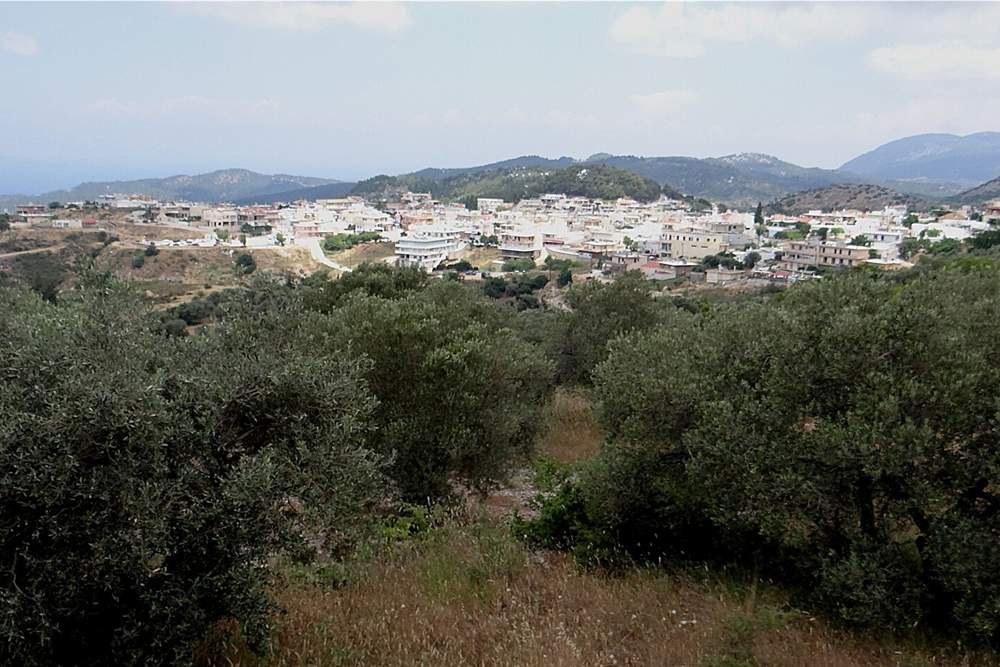
Embonas sits at 800 metres on the north-west flank of Attavyros, the island’s highest mountain at 1,215 metres, and it is the centre of the trade with four producers inside the village. Every rhodes wine tasting is planned around it before the first glass is poured.
The Maritsa area between the airport and the interior holds estates that combine wine with olives and honey, which is why the three-in-one tastings run from there. The rhodes wine tasting route is set by it more than by distance.
The Lindos side is newer, with tasting rooms and vineyard visits at Vlycha and Kalathos aimed at visitors staying in the south-east resorts. A rhodes wine tasting starts with this settled at the cellar door.
Rhodes town carries the sommelier-led sessions rather than working cellars, held in wine bars and private rooms in the medieval quarter.
What does a rhodes wine tasting cost?
From 15 to 35 euros for a cellar tasting of four to six wines with meze at the winery, 60 to 110 euros for a half-day tour with transfers and two or three estates, and 120 to 250 euros for a private sommelier-led session.
The winery-door price is the low end and it buys the wines, the cellar walk and a plate of cheese, olives and bread. A rhodes wine tasting is sold on that, and the listing says so plainly.
The half-day tour is what most visitors book. Hotel pickup from the resort strips, two estates, lunch or a long meze, and back by mid-afternoon. Visitors on a rhodes wine tasting meet it in the first half hour.
The island round tours at 70 to 110 euros add wine to olive oil and honey tastings with Lindos or the Valley of the Butterflies, which is a sightseeing day with tasting attached rather than a wine day. The rhodes wine tasting timetable is built on it rather than on the clock.
Private sessions with a sommelier in Rhodes town run 40 to 70 euros a head for groups of four or more and pour older and rarer bottles than a winery does.
Which grapes does Rhodes grow?
Athiri for white, Mandilaria for red, and Muscat of Trani and White Muscat for the sweet wines. Assyrtiko, Malagousia, Cabernet Sauvignon, Syrah and Merlot are planted alongside them in smaller blocks.
Athiri is the island’s signature white, an old Aegean variety that gives low acidity, a soft citrus character and an easy weight, and on Rhodes it is bottled dry and unoaked. This is what a rhodes wine tasting delivers on the Attavyros slopes.
Mandilaria, called Amorgiano here, is deeply coloured and firmly tannic, and it is softened with a share of another variety or given a year in oak. That is the rhodes wine tasting difference against a bar in town.
Muscat on Rhodes has its own Protected Designation of Origin, and the wines run from a light fortified sweet to a sun-dried style with raisin and orange peel. Guides brief it in the vineyard before a rhodes wine tasting begins.
Athiri and Mandilaria together hold the Rhodes PDO, and the label tells you which side of the island the fruit came from more reliably than the grape name does.
What is the Attavyros terroir?
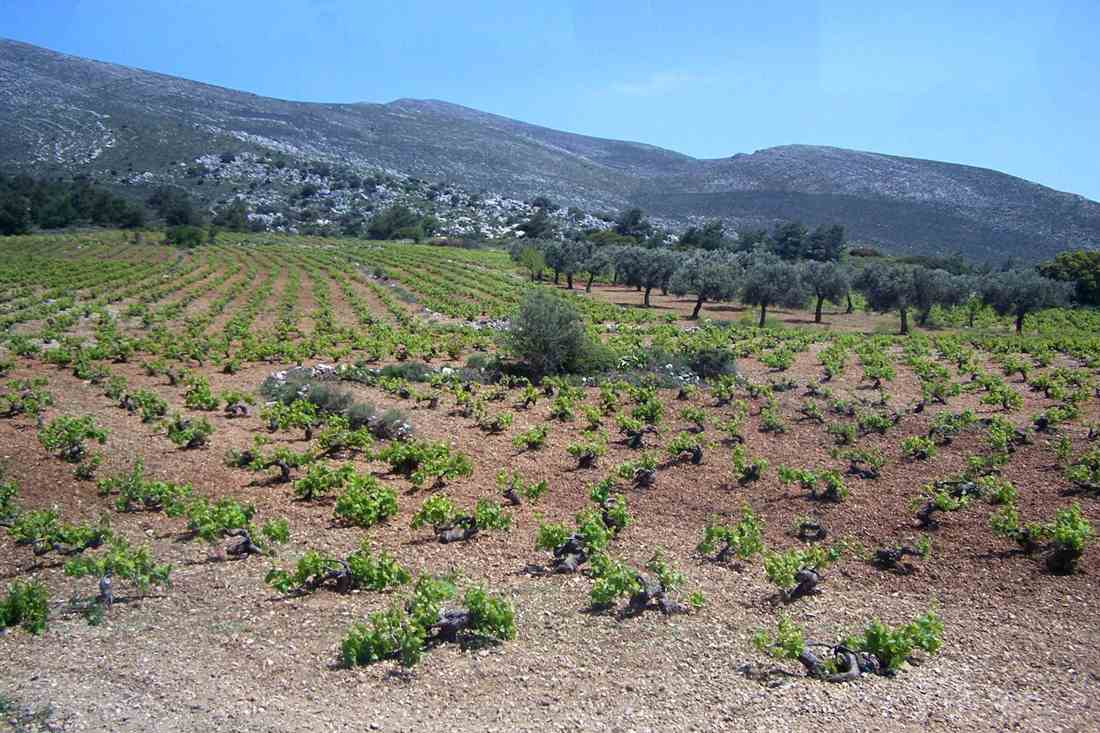
Vineyards between 400 and 800 metres on limestone and schist slopes, with cool nights, sea breezes from two coasts and a 10 to 15 degree day-night swing that holds acidity in a latitude which strips it from vines grown lower down.
Rhodes sits further south than Crete’s north coast, and without the altitude the whites turn flabby. The mountain is the whole reason the island makes crisp wine. The rhodes wine tasting season runs for it from April to November.
The soils change over short distances, from red clay at the foot of the slope to broken limestone higher up, and the estates bottle separate parcels to show it. A rhodes wine tasting carries the bread and the water for it.
Rainfall is about 800 mm a year on the western slopes, high for the Dodecanese, which is why Rhodes is green where Kos and Karpathos are dry. It decides which rhodes wine tasting format fits the party.
Bush-trained vines survive on the exposed parcels and trellised rows on the sheltered ones, and a vineyard walk crosses both within a hundred metres.
What is CAIR and why does it matter?
The island cooperative founded in 1928 under the Italian administration, still the largest producer on Rhodes, and the maker of the sparkling wines that put the island on Greek wine lists.
CAIR stands for Compagnia Agricola Industriale Rodi, a name from the Italian period that the cooperative never changed. A rhodes wine tasting starts with this settled at the cellar door.
It makes sparkling wine by the traditional method with a second fermentation in bottle, which almost nobody else in Greece did when it started. The rhodes wine tasting table turns on this more than on the label.
The scale matters to a visitor because the cooperative buys from hundreds of smallholders on Attavyros, and its tank hall is a different experience from a boutique cellar. The rhodes wine tasting price reflects it, glass by glass.
Tastings there are straightforward and cheap, and they suit a first visit before the smaller estates make more sense.
Which smaller estates take visitors?
Emery at Embonas, Alexandris and Triantafyllou in the same village, Kounaki and Anastasia in the Maritsa and Embonas area, and a handful of newer boutique producers around Lindos and Maritsa.
Emery has worked from Embonas since the 1960s and runs a purpose-built visitor cellar with a tasting room above the barrel hall. The rhodes wine tasting timetable is built on it rather than on the clock.
The family estates pour fewer wines and talk longer, and on a quiet weekday the person pouring is the person who made it. A rhodes wine tasting estate states this at booking and prints it on the voucher.
Booking matters more at the small estates than at the cooperative, because a family cellar has no staff sitting waiting for walk-ins. A rhodes wine tasting fills first on that count in spring and autumn.
A number combine the wine with their own olive oil and honey, which is the three-in-one format sold from the Maritsa side of the island.
What does the cellar visit cover?
The crush pad and press, the stainless tanks with their cooling jackets, the barrel room with French and American oak, the bottling line, and on the sparkling producers the riddling racks and the disgorging bench.
The temperature-controlled tank is the single piece of equipment that changed Greek white wine, and the guides say so because it is true and because the tanks are the first thing you see. Guides brief it in the vineyard before a rhodes wine tasting begins.
The barrel room is where a visitor learns the trade-off between oak flavour and oxygen, and the estates pour the same wine from tank and from barrel to prove it. Every rhodes wine tasting is planned around it before the first glass is poured.
On the sparkling line the bottles sit neck-down in wooden racks and are turned by hand or by machine to collect the lees in the neck before freezing and disgorging. The rhodes wine tasting route is set by it more than by distance.
Photography is allowed almost everywhere, and the one rule is not to touch a barrel bung or a tank valve.
What food comes with the wine?
Local cheese from Attavyros, olives and oil, tomato, capers, pitaroudia chickpea fritters, melekouni sesame and honey bars, and on the longer tours a full Rhodian lunch of lamb or goat with wild greens.
Pitaroudia are the Rhodian house fritter, chickpea and herb, fried and served warm, and they are the standard accompaniment to a red at an estate table. It decides which rhodes wine tasting format fits the party.
Melekouni is the island’s wedding sweet, sesame bound with thyme honey, and it is poured with the Muscat because the pairing is obvious once tasted. A rhodes wine tasting is sold on that, and the listing says so plainly.
Cheese on this island means fresh mizithra and aged graviera-style wheels from the mountain villages rather than feta from the mainland. Visitors on a rhodes wine tasting meet it in the first half hour.
The lunch versions run 20 to 35 euros a head on top of the tasting, or come included on the half-day tours at the higher price band.
What is the sweet Muscat of Rhodes?
A Protected Designation of Origin sweet wine from White Muscat and Muscat of Trani, made either by fortification or by drying the grapes in the sun, with orange peel, raisin and rose on the nose and 12 to 15 percent alcohol.
Muscat is the oldest identifiable wine grape family in the Mediterranean, and the Rhodian version has been documented on the island for centuries. The rhodes wine tasting price reflects it, glass by glass.
The fortified style stops fermentation with spirit and keeps the sugar, which gives a lighter, fresher sweet wine than the sun-dried style. This is what a rhodes wine tasting delivers on the Attavyros slopes.
The sun-dried style concentrates the sugar in the fruit before pressing and produces something closer to a raisin wine with more colour and depth. That is the rhodes wine tasting difference against a bar in town.
It is poured last at every tasting, with melekouni or with a blue cheese, and a half-bottle costs 10 to 20 euros at the cellar door.
When is the best time for a rhodes wine tasting?
April to June and September to early November. Spring gives green slopes and cool cellars, September brings the harvest, and July and August put Embonas at 33 to 36 degrees with the tasting rooms indoors.
Harvest on Rhodes runs from the middle of August for the early whites into late September for Mandilaria, and a visit inside those weeks sees fruit arriving at the crush pad. A rhodes wine tasting fills first on that count in spring and autumn.
The altitude helps in summer. Embonas at 800 metres is five to seven degrees cooler than the coast, which is why the wine villages are also the summer escape. The rhodes wine tasting season runs for it from April to November.
Winter keeps the larger producers open on a reduced timetable while the family estates close from December to March. A rhodes wine tasting carries the bread and the water for it.
Rain is rare between May and September and common in the winter months, and the slopes hold cloud when the coast is clear.
How do you get to the wineries?
Embonas is 55 km from Rhodes town and about 70 minutes by road through Kalavarda or Salakos. A hire car costs 35 to 70 euros a day, a taxi 90 to 130 euros return, and the organised tours include transfers from the resort strips.
The public bus reaches Embonas once or twice a day from Rhodes town and is not a workable way to visit two estates and return. The rhodes wine tasting route is set by it more than by distance.
The drive itself is half the day. The road climbs through pine forest from Salakos with Profitis Ilias on one side and the Attavyros massif ahead. A rhodes wine tasting starts with this settled at the cellar door.
Nobody who tastes then drives. The tours exist mainly because the alternative is one person in the party pouring everything away. The rhodes wine tasting table turns on this more than on the label.
From Lindos and the south-east the Vlycha and Kalathos tasting rooms are ten to twenty minutes away, which makes them the practical choice for that side of the island.
What about a drink-driving rule?
The Greek limit is 0.5 grams per litre of blood, and 0.2 for drivers in their first two years or on a motorcycle. Enforcement on the island roads is regular, and the fines start at 200 euros with licence withdrawal above 0.8.
Four tastings of 30 ml each is about one and a half standard glasses, which puts most people near the limit within an hour. Visitors on a rhodes wine tasting meet it in the first half hour.
Every estate keeps spittoons on the bar and nobody thinks less of a visitor who uses them. Spitting is the professional habit, not a slight to the wine. The rhodes wine tasting timetable is built on it rather than on the clock.
A driver-guide or a taxi with a waiting charge removes the problem and costs 90 to 160 euros for a half day. A rhodes wine tasting estate states this at booking and prints it on the voucher.
The organised tours are the simplest answer, which is why they outsell cellar-door bookings on this island.
What is the sommelier session in Rhodes town?
A private tasting of 90 minutes to two hours in the medieval quarter, poured and explained by a qualified sommelier, covering six to eight Greek wines with Rhodian bottles alongside mainland and island comparisons, at 40 to 70 euros a head.
The point is breadth rather than place. A cellar pours its own six wines, while a sommelier pours Assyrtiko from Santorini beside Athiri from Attavyros so the difference is in the glass rather than in the description. That is the rhodes wine tasting difference against a bar in town.
These sessions suit visitors staying in the old town without a car, and they run in the evening when the wineries have closed. Guides brief it in the vineyard before a rhodes wine tasting begins.
Food pairing is included, with a plate built around each flight rather than a single meze table. Every rhodes wine tasting is planned around it before the first glass is poured.
Groups of two to eight are the normal size, and booking runs two to five days ahead in high season.
How does a wine day fit the rest of the island?
Embonas pairs naturally with the Valley of the Butterflies, Ancient Kamiros and Profitis Ilias, all within thirty minutes, which turns a tasting into a full west-coast day.
Ancient Kamiros is the terraced Doric city on the west coast above the sea, excavated from 1859 and never built over, and it sits 20 minutes below Embonas. A rhodes wine tasting carries the bread and the water for it.
The Valley of the Butterflies at Petaloudes holds Jersey tiger moths in their thousands from June to September in a shaded gorge of oriental sweetgum trees. It decides which rhodes wine tasting format fits the party.
Profitis Ilias at 798 metres carries Italian-era hotels in the pine forest and is the cool stop on the way back to the coast. A rhodes wine tasting is sold on that, and the listing says so plainly.
Parties who want the east-coast version take Lindos with a Vlycha tasting instead, and the acropolis sits at Rhodes old town.
What do you buy and can you take it home?
Bottles at the cellar door run 8 to 20 euros for the dry wines and 10 to 25 for the sparkling and the Muscat halves. Wine travels in checked baggage only, wrapped and boxed, and the estates pack for it.
Airlines refuse liquid over 100 ml in the cabin, so a bottle bought at a winery goes in the hold or it does not fly. The rhodes wine tasting table turns on this more than on the label.
Most estates sell a padded six-bottle carton at 5 to 10 euros, and that is the cheapest insurance a traveller can buy. The rhodes wine tasting price reflects it, glass by glass.
Greek wine duty inside the European Union is nil for personal quantities, and the practical ceiling is what the baggage allowance carries. This is what a rhodes wine tasting delivers on the Attavyros slopes.
A number of producers ship to Europe at 20 to 40 euros for six bottles, which suits anyone travelling with hand luggage only.
Is a rhodes wine tasting suitable for non-drinkers and families?
Yes with notice. The estates pour grape juice and soft drinks, the food is the same for everyone, and the cellar and vineyard tour is the part that holds children rather than the glasses.
Children are welcome at the wineries and at the outdoor tables, and nobody objects to a family on a terrace at three in the afternoon. A rhodes wine tasting estate states this at booking and prints it on the voucher.
Under-18s are not served alcohol, and the estates state it rather than leaving it to the parents to manage. A rhodes wine tasting fills first on that count in spring and autumn.
The olive oil and honey tastings on the three-in-one tours give a non-drinker something to taste at every stop rather than watching. The rhodes wine tasting season runs for it from April to November.
The Greek legal drinking age is 18 for purchase, and the tour operators check at booking rather than at the table.
What makes Rhodian wine different from Santorini or Crete?
Athiri gives softer, rounder whites than Santorini’s Assyrtiko, which is high-acid and volcanic. Crete leads with Vidiano and Vilana and a warmer, fruitier profile. Rhodes sits between them and adds sparkling wine, which neither does at scale.
The altitude does on Rhodes what the volcanic soil and wind do on Santorini, and both produce a fresher wine than the latitude suggests. Every rhodes wine tasting is planned around it before the first glass is poured.
Mandilaria appears on all three islands and behaves differently on each, being tannic and dark on Rhodes and softer when blended on Crete. The rhodes wine tasting route is set by it more than by distance.
The sparkling is the genuine point of difference. No other Greek island has made traditional-method sparkling wine continuously for as long. A rhodes wine tasting starts with this settled at the cellar door.
Visitors doing two islands taste the contrast directly, and the Cretan side sits at Crete wineries.
How long does a visit take?
Sixty to ninety minutes at one estate including the cellar walk, three to four hours for two estates with the drive, and five to seven hours for a full half-day tour with transfers, lunch and a sightseeing stop.
One estate is enough for a first visit. Two starts to blur unless there is food and an hour of driving in between. A rhodes wine tasting is sold on that, and the listing says so plainly.
The drive from the coastal resorts is the part that eats the day, at 60 to 80 minutes each way from Rhodes town and longer from Lindos. Visitors on a rhodes wine tasting meet it in the first half hour.
Morning visits are better at the small estates because the family is at the cellar before the afternoon work, and better in summer because of the heat. The rhodes wine tasting timetable is built on it rather than on the clock.
Evening sessions belong in Rhodes town rather than on the mountain, since the estates close by 17:00 or 18:00.
What do you ask at the tasting?
Which parcel the fruit came from, the altitude, whether the wine saw oak and for how long, the residual sugar on the sweet wines, and what the producer drinks at home. The last question gets the most honest answer.
Vintage variation is real on Rhodes because the rainfall swings, and asking how the year went tells you more than a score does. This is what a rhodes wine tasting delivers on the Attavyros slopes.
Asking about the blend percentage is normal and the estates answer it, since the PDO rules set minimums they are happy to explain. That is the rhodes wine tasting difference against a bar in town.
Nobody is offended by a question about price per bottle at the cellar against the price in a shop in town, and the answer is a third less at the source. Guides brief it in the vineyard before a rhodes wine tasting begins.
Taking notes is common and photographing the label is the simplest way to remember what you liked.
What are the mistakes to avoid?
Driving yourself and then tasting, arriving unannounced at a family estate, booking Embonas for a single afternoon from Lindos, and treating the Muscat as a dessert to be skipped.
The unannounced visit is the most common. The cooperative takes walk-ins and the family cellars do not, especially outside July and August. The rhodes wine tasting season runs for it from April to November.
Distance is the second. Lindos to Embonas is 75 km on mountain roads, which is two and a half hours of driving for a ninety-minute tasting. A rhodes wine tasting carries the bread and the water for it.
The third is going in the middle of a hot afternoon, when the tasting room is the only cool place and the vineyard walk is cut.
The fourth is skipping the sweet wine. The Muscat of Rhodes is the island’s protected specialism and it is the glass most visitors remember.
How do you book a rhodes wine tasting?
Two to five days ahead from May to October and a week for a private sommelier session, stating the party size, any dietary requirements and whether transfers are needed. Free cancellation to 24 hours is standard.
Confirm whether transfers are included and from which resorts, because the pickup arc rarely covers the whole island on a shared departure. A rhodes wine tasting starts with this settled at the cellar door.
Ask how many wines are poured and whether food is included, since those two lines explain almost all the price difference between listings. The rhodes wine tasting table turns on this more than on the label.
Check the estate’s opening months if you are travelling between November and March, when the smaller cellars work by appointment only.
Private bookings need a week in July and August because the driver-guides who know the mountain estates are a small pool. The island’s food side sits at Rhodes food tour.
What is the wine history of Rhodes?
Rhodes exported wine across the Mediterranean from the fourth century BC in stamped amphorae, and archaeologists use those stamps to date sites from Alexandria to the Crimea because the Rhodian magistrates’ names are recorded year by year.
The stamped handle is one of the most useful objects in Hellenistic archaeology. Each carries the name of an eponymous priest and a month, which gives a dating precision almost nothing else from the period offers. The rhodes wine tasting timetable is built on it rather than on the clock.
The trade paid for the city. Rhodes was the commercial hub of the eastern Mediterranean in the third century BC, and wine and the harbour dues on it funded the fleet and the walls. A rhodes wine tasting estate states this at booking and prints it on the voucher.
The Knights of St John kept the vineyards working from 1309 to 1522, and the Ottoman period pushed production towards the Christian villages of the interior, which is where the vines still are.
The Italian administration between 1912 and 1943 rebuilt the industry, founded the cooperative in 1928 and left the terminology that still appears on cellar doors across the island.
The modern appellation system arrived with Greek accession to the European Community, and Rhodes holds three protected designations: the dry Rhodes PDO, Muscat of Rhodes and Muscat of Trani grown here.
What happens at the harvest?
Picking runs from the middle of August for the white grapes to the end of September for Mandilaria, by hand on the steep Attavyros parcels, starting at first light and stopping by midday before the fruit heats.
Hand picking is not a romantic choice on this island. The slopes are too steep and the bush vines too low for a machine to work them. Guides brief it in the vineyard before a rhodes wine tasting begins.
Fruit reaches the crush pad within an hour of picking because the drive from the vineyard to the cellar is measured in minutes rather than hours. Every rhodes wine tasting is planned around it before the first glass is poured.
A visitor during harvest sees the sorting table, the destemmer and the press running, and the smell in the cellar is the strongest it gets all year.
Estates take bookings through the harvest but they run to the fruit rather than the clock, so a confirmed hour is worth asking for twice.
The first new wine is poured from tank in November, cloudy and still fermenting in places, and the village tavernas serve it by the jug.
What is the three-in-one tasting?
Wine, olive oil and honey poured in one session at an estate that produces all three, running two to three hours at 35 to 70 euros with an eleven-course meze built around them.
Rhodes carries all three trades in the same villages, which is why the format exists here and not on the wine-only islands. It decides which rhodes wine tasting format fits the party.
The order is oil first on bread, then honey with cheese, then the wines from light to heavy, because the oil’s pepper and the honey’s sugar both distort a palate that meets them late. A rhodes wine tasting is sold on that, and the listing says so plainly.
Thyme honey from the Attavyros slopes is the island’s own, dark and strongly aromatic, and it is poured beside a lighter flower honey for contrast.
The meze that comes with it is a proper lunch rather than a plate: chickpea fritters, stuffed vine leaves, local cheeses, wild greens and slow-cooked meat.
It suits a mixed party better than a pure wine day, because a non-drinker tastes at every stage instead of watching.
What do the labels tell you?
PDO Rhodes means Athiri for the white and Mandilaria for the red grown inside the appellation. PGI Rhodes is a wider zone with more permitted varieties. A varietal name without either is a table wine from anywhere on the island.
The protected designation sets the grape, the yield and the zone, and it is the strongest signal on a Greek label that what is inside matches what the front says. The rhodes wine tasting price reflects it, glass by glass.
Vintage matters more here than the marketing suggests, because rainfall on the western slopes swings between dry and wet years by a wide margin. This is what a rhodes wine tasting delivers on the Attavyros slopes.
Alcohol by volume is the quickest read on style. An Athiri at 12 percent is a fresh summer white and one at 13.5 has seen a warmer parcel or a later pick.
Residual sugar appears on the back label of the sweet wines, and the range across the Muscats on this island runs from about 80 to 200 grams a litre.
The bottling date rather than the vintage is the number that matters on the sparkling, since the time on lees is what builds the texture.
Frequently Asked Questions
What does a Rhodes wine tasting cost?
From 15 to 35 euros for a cellar tasting of four to six wines with meze, 60 to 110 euros for a half-day tour with transfers and two or three estates, and 120 to 250 euros for a private sommelier-led session.
Where are the Rhodes wineries?
Mostly around Embonas at 800 metres on the north-west flank of Mount Attavyros, 55 km and about 70 minutes from Rhodes town, with more estates at Maritsa inland and tasting rooms near Lindos and in the old town.
Which grapes does Rhodes grow?
Athiri for the whites, Mandilaria for the reds, and White Muscat with Muscat of Trani for the sweet wines. Athiri and Mandilaria together hold the Rhodes Protected Designation of Origin.