
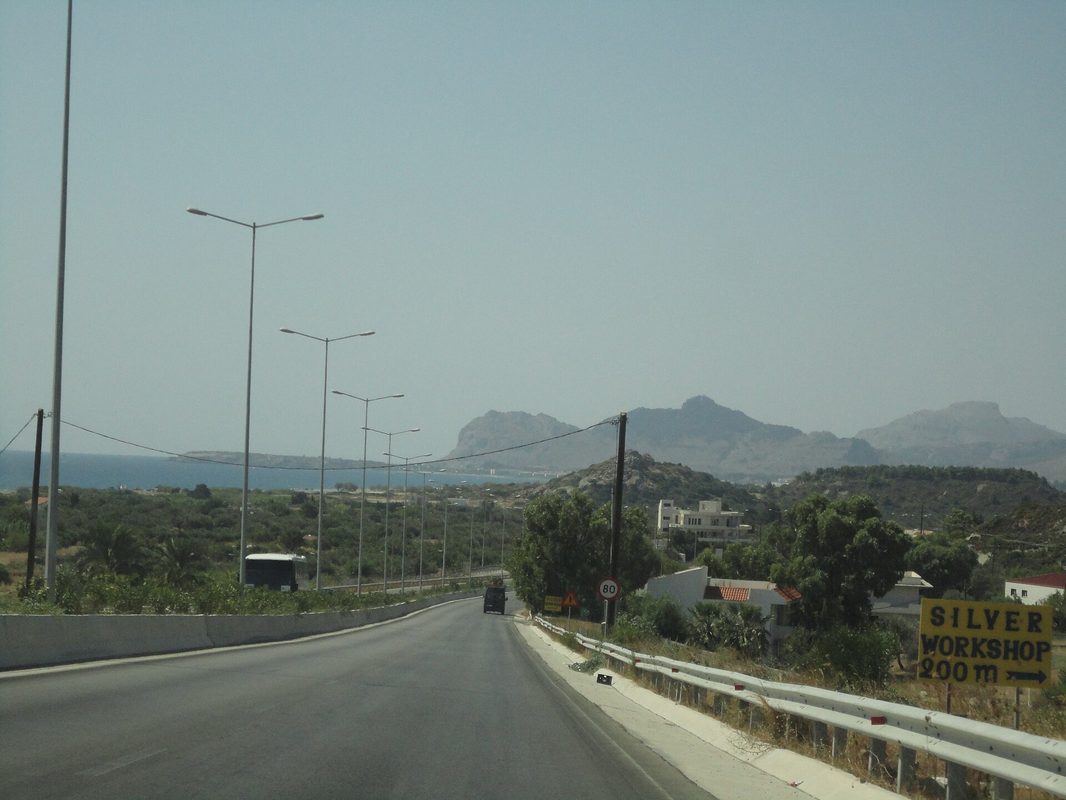
Rhodes car rental is the hire of a vehicle for the duration of your stay on the island, giving you the freedom to travel beyond the resorts and the reach of the local bus network. Because Rhodes is large, a hire car is the most flexible way to see its west coast, mountain interior, far south and the remote beaches that public transport rarely serves. You can collect a car at the airport, in Rhodes town or in the main resorts, return it at the end of your trip, and in between go wherever and whenever you choose. Plan tickets and tours through My Greece Tours.
This article sits alongside our wider Rhodes travel guide and focuses on getting behind the wheel. The sections below cover whether you actually need a car in Rhodes, where you can rent one, what driving on the island is like, what a hire car lets you reach, and the practical tips that make booking and collecting a car straightforward.
Do you need a car in Rhodes?
You do not strictly need a car in Rhodes if you stay in a resort served by buses, but you greatly expand what you can see by hiring one. A car reaches the west coast, the mountain interior, the far south and remote beaches that public transport seldom covers.
Rhodes is one of the larger Greek islands, and its size is exactly why a car changes the trip. The main resorts and Rhodes town are linked by reasonable bus services, so visitors who plan to stay close to their hotel, the beach and the Old Town can manage perfectly well without driving at all. The buses, however, run on fixed routes and timetables, they concentrate on the busy north-eastern coast where most of the resorts sit, and they leave large parts of the island awkward or slow to reach. For a relaxed week built around one base, that coverage is often enough, and many visitors are happy to leave the driving to others.
Once you want to roam, the calculation shifts. The quieter west coast, the green mountain villages inland, the long drive to the far south and the many coves that sit off the main roads are all far easier with your own transport. A hire car turns scattered highlights into a single flexible day rather than a series of timetabled compromises, and it removes the need to plan everything around the last bus back. Our guide to things to do in Rhodes covers the spread of sights across the island, and the next section covers where you can rent a car.
Where can you rent a car in Rhodes?
You can rent a car in Rhodes at Rhodes International Airport, in Rhodes town and in the main coastal resorts. Collecting at the airport suits arrivals who want to drive straight off, while town and resort pick-ups suit visitors who settle in first and hire a car later.
Rhodes International Airport is the most convenient collection point for many travellers, because you can pick up a vehicle as soon as you land and avoid an extra transfer to your accommodation. Desks and pick-up arrangements are geared to arriving flights, which makes the airport a natural choice if you intend to drive throughout your stay rather than only for a day or two of exploring. Collecting on arrival also means you can drive straight to your hotel and start using the car immediately, which is especially handy if your accommodation lies away from the main resort centres or you land at an awkward hour.
Rhodes town and the larger resorts are the other main options. Hiring locally is useful if you arrive by ferry, if your hotel offers easy access to rental providers, or if you only want a car for part of your trip and prefer to spend the rest on foot or by bus. Wherever you collect, a valid driving licence is required. Our guide to how to get to Rhodes covers arriving by air and sea, and the next section covers what driving on the island is like.
What is driving in Rhodes like?
Driving in Rhodes means driving on the right, as throughout Greece. The main coastal roads are generally good and easy to follow, but mountain and village roads are narrow, winding and sometimes steep, so they call for slower, more careful driving than the open coastal stretches.
For most visitors the adjustment is small. Traffic on the principal routes flows reasonably, distances between the main centres are manageable, and signage on the busier roads is clear enough to navigate with a map or a phone. The contrast appears once you leave those arteries, where roads climbing into the interior or threading through old villages can be tight, bendy and occasionally steep, and they reward patience over pace. Driving these stretches early or late in the day, when there is less oncoming traffic, makes them more relaxing, and it pays to keep your speed down on blind bends that are common in the hills.
Parking is the other thing to plan for. In Rhodes town spaces are tight, and the medieval Old Town is car-free, so you should leave the vehicle in a car park outside the walls and continue on foot. Fuel deserves a thought too: stations are common across the populous north but sparser in the south and interior, so it is wise to fill up before long trips. Our guide to a Rhodes itinerary covers how to pace your days, and the next section covers what a hire car lets you reach.
What can you reach with a hire car in Rhodes?
With a hire car in Rhodes you can reach the west coast, the mountain interior, the far south and the remote beaches that buses rarely serve. A car links these scattered areas into flexible day trips and lets you explore at your own pace rather than around a timetable.
The most obvious gain is the coastline. Beyond the well-served north-eastern resorts, Rhodes has a quieter west coast and a string of coves and beaches that sit off the main roads, many of them far simpler to visit when you can park nearby and arrive on your own schedule. A car makes early starts and late returns possible, which matters both for relaxed beach days and for avoiding the busiest hours of the afternoon. It also lets you string several spots together in one outing, pausing wherever the view tempts you rather than committing to a single destination for the whole day.
Inland and to the south, a hire car opens up the rest of the island. The green mountain villages of the interior, the long drive down to the far south and the spread-out sights that public transport reaches only slowly all become realistic within a single trip rather than a major expedition. With your own vehicle you can set your own pace, linger where you like and reach corners of Rhodes that most resort-based visitors never see. Our guide to Rhodes beaches covers the coves a car helps you reach, and the next section covers the tips that make renting straightforward.
What tips help you rent a car in Rhodes?
The most useful tips are to book ahead in peak season, carry a valid driving licence and any required permit, fill up before long trips, and use car parks outside the walls in Rhodes town. Together these save time and avoid the common pitfalls of island driving.
Timing the booking matters first. In the busy summer months demand for hire cars rises sharply, so reserving in advance is wise to secure a vehicle and to avoid scrambling for whatever is left after you arrive. Bring a valid driving licence, and remember that visitors from some non-EU countries may also need an International Driving Permit, so it is worth checking the requirements that apply to your own licence before you travel rather than discovering a gap at the desk. Sorting the paperwork in advance keeps the collection quick and lets you start your trip without an unwelcome hitch on the first day.
On the road, a little planning prevents most problems. Fill up with fuel before heading into the south or the interior, where stations are sparser, and remember that mountain and village roads ask for slower driving. In Rhodes town, head for a car park outside the medieval walls, since the Old Town is car-free, and continue on foot. Plan your visit and tours through our Rhodes travel guide.
Frequently Asked Questions
Do I need a car to enjoy a holiday in Rhodes?
No, you do not strictly need a car to enjoy Rhodes, but it depends on how much of the island you want to see. If you plan to stay in or near a resort that is served by the local bus network, spend your days on the beach and visit Rhodes town and its Old Town, you can manage comfortably without driving. The buses concentrate on the busy north-eastern coast and run to fixed routes and timetables. The picture changes if you want to explore widely. Rhodes is a large island, and its quieter west coast, mountain interior, far south and the many remote beaches off the main roads are awkward or slow to reach by public transport. For that kind of trip a hire car is by far the most flexible option, turning scattered highlights into a single day out and letting you travel whenever you choose rather than around a bus schedule.
What licence do I need to rent and drive a car in Rhodes?
To rent and drive a car in Rhodes you need a valid driving licence. For many European visitors a national licence is generally sufficient, but the rules vary by where your licence was issued. Travellers from some non-EU countries may also need an International Driving Permit alongside their home licence, so the safest approach is to check the requirements that apply to your own licence well before you travel. It is far easier to arrange any necessary permit at home than to discover a gap when you arrive at the rental desk. Beyond the licence itself, remember the basics of driving in Greece: you drive on the right, the main coastal roads are good, and the mountain and village roads are narrower and call for more care. Having the correct documents ready helps the collection process go smoothly so you can get on the road without delay.
Is it difficult to drive and park in Rhodes town?
Driving into Rhodes town itself is manageable, but parking takes a little planning because spaces are tight. The most important point is that the medieval Old Town is car-free, so you cannot drive into it. Instead, leave your vehicle in a car park outside the walls and continue into the historic centre on foot, which is in any case the best way to experience its narrow streets. For the wider town, arriving outside the busiest hours and being ready to use a designated parking area makes the experience far less stressful. Away from the town, the main coastal roads are generally good and easy to follow, while mountain and village roads are narrow, winding and sometimes steep, so slower driving is sensible there. It is also worth filling up with fuel before longer trips, as stations are common in the populous north but sparser in the south and the island interior.