
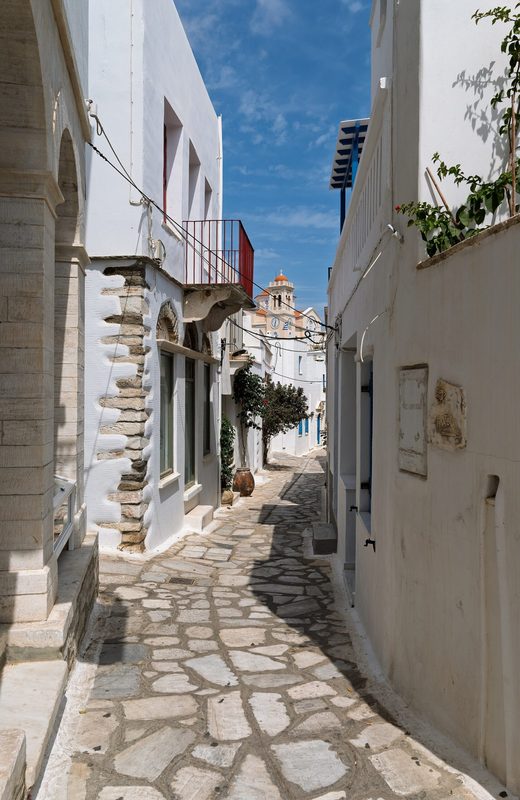
Pyrgos Tinos is the largest village in the north of the island and the heart of its marble-sculpting tradition. Home to the School of Fine Arts, the Museum of Marble Crafts and the house of the great sculptor Yannoulis Chalepas, its marble-paved square and carved cemetery make the whole village an open-air gallery. This guide covers what to see in Pyrgos Tinos, where to eat and how to visit. Plan the whole trip with Greece Tours.
Pyrgos sits about 30 kilometres and 40 minutes by road from Tinos Town, in the green hills above the harbour of Panormos. It is one of the most beautiful and culturally rich of the villages of Tinos, and the essential stop for anyone interested in the island’s craft. The sections below set out the sights, the food and the practicalities of a visit.
What is Pyrgos in Tinos?
Pyrgos is the marble village of northern Tinos, the largest and most celebrated of the island’s settlements. It trained generations of sculptors and houses the School of Fine Arts, the Museum of Marble Crafts and the home of Yannoulis Chalepas.
Pyrgos Tinos is a working village of art rather than a museum piece. Marble shapes everything here, from the carved fanlights above doorways and the fountains in the lanes to the sculpted tombstones in the cemetery. The central square, paved in marble and shaded by a plane tree, gathers café tables among the carvings. Sculptors still work in studios along the lanes, and students train at the village’s art school. This living craft makes Pyrgos the cultural showpiece of the island. Its fame rests on a long marble tradition.
Why is Pyrgos famous for marble?
Pyrgos is famous for marble because its quarries and its sculptors made it the centre of the craft on Tinos. From the 18th century, master carvers trained here and supplied churches and monuments across Greece, a tradition now recognised by UNESCO.
The village turned the island’s marble into a national art. Quality stone lay in the surrounding hills, and the families of Pyrgos Tinos organised its carving into a specialised trade, exporting works through the harbour of Panormos below. The greatest Greek sculptors of the modern era, led by Yannoulis Chalepas, learned the craft in these lanes before reaching national fame. The full story of the craft sits in the guide to the marble craft of Tinos. The village wears that heritage in plain sight.
What is there to see in Pyrgos?
In Pyrgos you can see the marble-paved central square, the Museum of Marble Crafts, the Chalepas House Museum, the sculpted cemetery and working sculptors’ studios. The whole village functions as an open-air gallery of marble art.
The sights of Pyrgos Tinos cluster within an easy walk. The central square, with its carved marble plane-tree surround and fountain, is the heart of village life and the best place for a coffee. The Museum of Marble Crafts, above the village, explains quarrying and technique. The Chalepas House Museum preserves the home and tools of the island’s most celebrated sculptor. The cemetery, unusually, is a gallery of carved funerary art, and studios along the lanes sell marble pieces. The covered passageways, the marble fountains and the painted details on the houses reward a slow wander beyond the main sights. The village empties of day-trippers by late afternoon, leaving the lanes quiet for those who linger. Allow a full morning to take it in. The museums deserve a closer look.
What is the Museum of Marble Crafts in Pyrgos?
The Museum of Marble Crafts in Pyrgos explains the quarrying, tools and techniques behind Tinian marble sculpture. Run by the Piraeus Bank Group Cultural Foundation, it shows the full process from extraction to finished fanlights and statues.
The museum is the best introduction to the craft that defines the village. Set on the hill above Pyrgos Tinos, it traces the marble’s journey from the quarry face to the carved object, with lifting gear, lathes, chisels and finished works on display. Films and reconstructions show techniques that words struggle to convey, and the building frames the marble villages through its windows. A visit here makes sense of everything seen in the lanes afterwards. The Chalepas house adds a personal dimension.
Who was Yannoulis Chalepas?
Yannoulis Chalepas was a sculptor born in Pyrgos, ranked among the greatest in modern Greek art. Celebrated for his expressive marble figures and a dramatic life marked by mental illness and late recognition, his home in the village survives as a museum.
Chalepas gives Pyrgos Tinos its artistic legend. Born into a family of marble carvers, he trained in the village and in Athens, creating works of rare emotional depth, including his famous Sleeping Female Figure. His long struggle with illness and his eventual rediscovery made him a tragic and celebrated figure. The Chalepas House Museum displays his tools, plaster models and belongings, offering an intimate view of his world. His story draws art lovers to the village. Food rewards a visit as much as art.
Where can you eat in Pyrgos?
You can eat in Pyrgos at tavernas and cafés around the marble square, and at the seafood tavernas of Panormos harbour a few minutes downhill. Local dishes include louza, kopanisti cheese, artichokes and fresh fish.
Dining completes a visit to the village. The cafés and tavernas around the square of Pyrgos Tinos serve coffee, sweets and meze in the shade of the plane tree, an ideal pause between the museums. For a full meal, the harbour of Panormos a short drive below grills the day’s catch at tables on the quay. The island’s signature louza, kopanisti and artichokes appear on every menu, detailed in the guide to the food and wine of Tinos. Pastry shops in the village sell the local almond sweets, amygdalota, ideal with a coffee in the square. Panormos, the old port of the sculptors, pairs its seafood with a relaxed harbour setting and two nearby beaches for a swim after lunch. Reaching the village is straightforward.
How do you get to Pyrgos in Tinos?
You get to Pyrgos by rental car or scooter in about 40 minutes from Tinos Town, or by KTEL bus on the northern route. The village sits 30 kilometres north of the capital, with Panormos harbour just below.
Access to Pyrgos Tinos is easy by island standards. A rental car or scooter covers the 30 kilometres from Tinos Town in around 40 minutes on a good road, with scenic views along the way. KTEL buses run to Pyrgos and Panormos on a limited summer timetable, which suits flexible travellers. Park at the edge of the village and explore the marble lanes on foot. Travellers arriving by ferry can rent at the port, as the guide to how to get to Tinos describes. Timing the visit improves it.
When is the best time to visit Pyrgos?
The best time to visit Pyrgos is spring and autumn, or a summer morning before the midday heat. May, June, September and October bring mild weather and soft light, ideal for walking the marble lanes and photographing the carvings.
Season shapes the experience of the village. The shoulder months deliver comfortable temperatures and golden light for the marble detail, while spring adds green hills to the drive north. In summer, the exposed village grows hot at noon, so a morning visit before the day-trip crowds and the heat is wiser. Winter leaves Pyrgos Tinos quiet, with the museum on reduced hours. The wider seasonal detail sits in the guide to the best time to visit Tinos. The questions below cover the points travellers ask most.
What does the village of Pyrgos look like?
The village of Pyrgos looks like an open-air sculpture gallery, with whitewashed houses, marble-paved lanes, carved fanlights over doorways and a shaded central square. Marble fountains, lintels and a sculpted cemetery display the carvers’ work at every turn.
Pyrgos Tinos rewards slow wandering more than any single monument. The lanes wind between stone houses trimmed with carved marble, each doorway and window framed by a pierced fanlight unique to the home. The central square, paved in marble and shaded by a great plane tree, holds cafés, a marble fountain and the bus stop. Sculptures appear in shop windows, on house fronts and along the cemetery rows, turning an ordinary walk into a gallery visit. The covered passages and quiet corners reward an unhurried hour. A working art school keeps the tradition alive.
What is the School of Fine Arts in Pyrgos?
The School of Fine Arts in Pyrgos is a state preparatory school that trains young sculptors and painters in marble carving and drawing. Founded in the late 19th century, it keeps the village a living centre of the craft.
The school explains why Pyrgos Tinos still produces marble art rather than only displaying it. Students from across Greece learn drawing, modelling and carving in its studios, many continuing to the national academy in Athens. Their presence fills the village with young artists and keeps the workshops busy. The school formalises a craft once passed only from master to apprentice, securing its future. Watching students and sculptors at work is part of the village’s appeal. Many visitors want to take a piece of that craft home.
What can you buy in Pyrgos?
In Pyrgos you can buy marble souvenirs from the village workshops and shops, from carved fanlight panels and mortars to small sculptures and religious carvings. Buying directly from a studio supports the sculptors who keep the craft alive.
Marble keepsakes make a meaningful souvenir of Pyrgos Tinos. The studios and shops along the lanes sell a range of pieces, from practical marble mortars and coasters to decorative panels and original carvings. Prices vary with size and artistry, and a handmade piece carries the marks of the chisel that mass-produced items lack. Buying from a working studio puts money directly into the village’s craft. Custom pieces can sometimes be commissioned with notice. These purchases sustain a living tradition. The questions below cover the points travellers ask most.
Frequently Asked Questions
Is Pyrgos worth visiting in Tinos?
Pyrgos is worth visiting as the marble capital of Tinos, home to the sculpture school, the Museum of Marble Crafts and the Chalepas house. Its marble-paved square, carved cemetery and working studios make it the island’s cultural highlight.
How far is Pyrgos from Tinos Town?
Pyrgos is about 30 kilometres and 40 minutes by road north of Tinos Town. A rental car or scooter is the easiest way to reach it, though KTEL buses also serve the village on a limited summer timetable.
What is Pyrgos in Tinos famous for?
Pyrgos in Tinos is famous for marble sculpture. It trained generations of master carvers, including Yannoulis Chalepas, and houses the School of Fine Arts and the Museum of Marble Crafts, with carved marble visible throughout the village.
Can you see sculptors working in Pyrgos?
You can see sculptors working in studios along the lanes of Pyrgos, where the marble tradition remains active. Some workshops welcome visitors to watch the carving and buy pieces, and short classes are available through guided tours.