
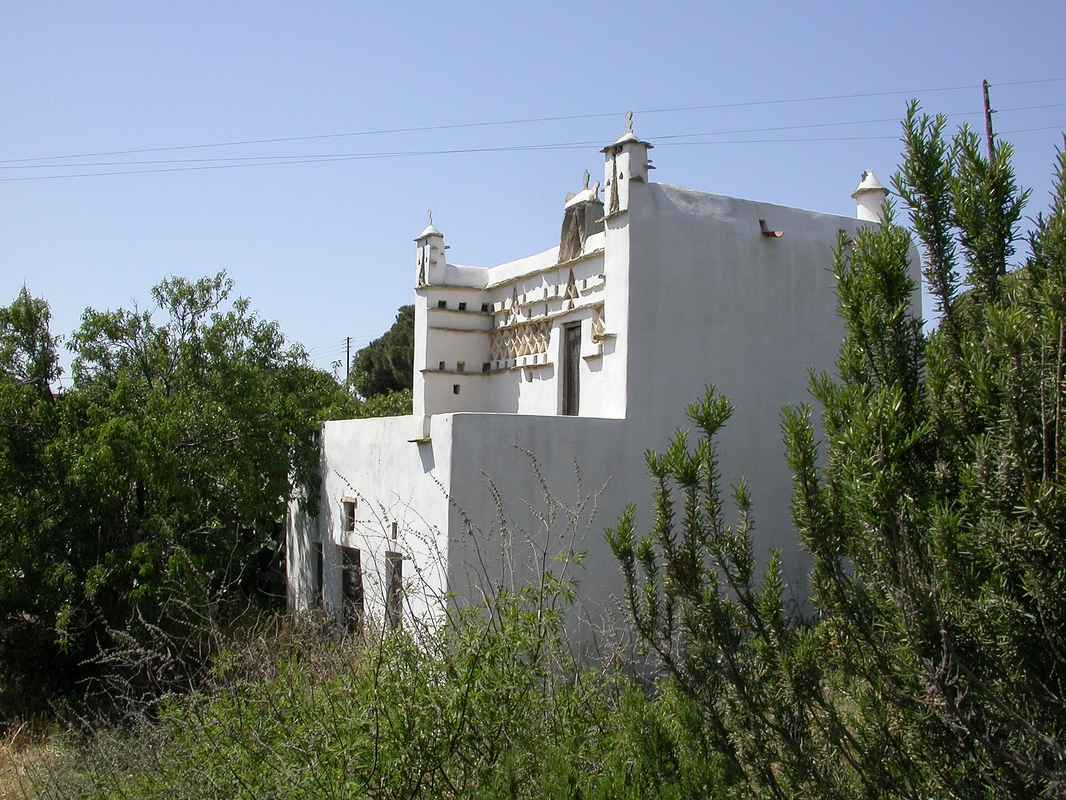
The villages of Tinos number more than 40, scattered across green mountains and decorated with marble fanlights, ornate dovecotes and whitewashed lanes. Pyrgos centres the island’s marble tradition, Volax sits among giant granite boulders, and Kardiani and Isternia hang over the Aegean with the finest sunsets. This guide maps the Tinos villages worth visiting and explains how to tour them. Plan the whole trip with Greece Tours.
Tinos wears its history in its villages rather than its resorts. Each settlement carries a distinct trade, from the sculptors of Pyrgos to the basket weavers of Volax and the raki distillers of Falatados. The Tinos villages below are sorted by character and fame, with a village-by-village guide and the practical detail for a day of village-hopping by car or tour.
What are the best villages to visit in Tinos?
The best villages to visit in Tinos are Pyrgos for marble craft, Volax for its boulder landscape, Kardiani and Isternia for sea views, Panormos for its fishing harbour, and Falatados and Steni for raki and cheese on the central plateau.
Each village rewards a visit for a different reason. Pyrgos draws travellers for its sculpture heritage and marble museum. Volax surprises with a moonscape of rounded rocks and a surviving weaving trade. Kardiani and Isternia deliver the island’s most dramatic settings above the west coast. Panormos pairs a working harbour with seafood tavernas. Falatados and Steni anchor the food and drink of the interior. A village-hopping drive links four or five of these in a single day, a route that features among the wider things to do in Tinos. The northern villages cluster around Pyrgos and Panormos, the western ones around Kardiani and Isternia, and the central plateau holds Volax, Falatados and Steni, which makes it easy to group them by area. Travellers short on time pick one cluster, while a longer stay covers them all. Each village stays small and walkable, so a stop rarely takes more than an hour beyond lunch. The villages share a common heritage worth understanding first.
Why are the villages of Tinos special?
The villages of Tinos are special for their marble craft, ornate dovecotes and Venetian-influenced architecture. Whitewashed lanes, carved marble fanlights and fountains, and a living tradition of sculpture and weaving set them apart from other Cycladic islands.
The villages combine three distinctive elements found nowhere else in the Cyclades in such concentration. Marble shapes every settlement, from doorway fanlights and fountains to church altar screens, a legacy of the island’s sculpture school. Dovecotes, the ornate stone pigeon houses introduced under Venetian rule, dot the valleys with geometric latticework. Catholic and Orthodox communities sit side by side, a result of long Venetian control, giving the island twin bell towers and shared festivals. Together these features make the Tinos villages a living museum of Cycladic craft and faith. Unlike the islands that emptied as tourism centred on the coast, many Tinos villages stay inhabited year-round, with working tavernas, churches and craftspeople. This continuity keeps the traditions alive rather than staged, so a visitor sees real village life rather than a restored set. The green, watered interior, fed by springs, also sets Tinos apart from the bare rock of its neighbours, cloaking the villages in gardens and terraced fields. Their sheer number invites exploration.
How many villages does Tinos have?
Tinos has more than 40 villages, spread across the mountainous interior and the coast. The settlements range from the marble town of Pyrgos to tiny hamlets of a few houses, linked by a network of roads and old marble footpaths.
The island’s village count reflects its long, settled history. More than 40 villages occupy the green slopes and valleys, each historically self-sufficient with its own church, square and trade. The largest, Pyrgos, functioned as a cultural capital of the north, while many smaller hamlets held a few dozen families farming terraced fields. A web of roads and restored footpaths connects them, which makes a multi-village day both easy by car and rewarding on foot. This density of settlement gives Tinos far more village character than its beach-led neighbours. The villages cluster into rough groups: the marble north around Pyrgos and Panormos, the scenic west around Kardiani and Isternia, the plateau of Volax, Falatados and Steni, and the southern ring of villages near Tinos Town and Exomvourgo. Many were built inland and hidden from the sea as protection against pirate raids, which explains their high, tucked-away positions. This defensive past shaped the maze-like lanes and covered passages that still characterise them. The most celebrated village leads any tour.
Which is the most famous village in Tinos?
The most famous village in Tinos is Pyrgos, the marble village in the north. Home to the island’s sculpture school and the Museum of Marble Crafts, Pyrgos turned generations of carvers into masters whose work fills Greek churches and squares.
Pyrgos stands as the island’s cultural showpiece. The largest northern village, it trained the sculptors who carried Tinian marble across Greece, and its marble-paved square, carved cemetery and café tables double as an open-air gallery. The Museum of Marble Crafts explains quarrying and technique, while the house museum of Yannoulis Chalepas honours the island’s most celebrated artist. Working studios still shape the stone, and shops sell carved keepsakes. The village’s craft is explored fully in the guide to the marble craft of Tinos. Pyrgos also charms with its everyday life: the central plane tree shades café tables where carvers and locals gather, and the bakery and shops line marble-paved lanes. The Fine Arts School, a branch of the national academy, still trains young sculptors here, which keeps the tradition active rather than nostalgic. Allow a full morning to absorb the museums, the studios and the slow village rhythm before moving on. A very different village sits inland to the east.
What makes Volax unique?
Volax is unique for its setting among giant round granite boulders that create a moonscape unlike anywhere else in the Cyclades. The village also keeps a basket-weaving tradition, with craftsmen still working local reeds by hand.
Volax surprises every first-time visitor. The village sits inside a natural amphitheatre of massive, almost perfectly rounded boulders, the result of millions of years of erosion, which lends it a surreal, lunar character. Its narrow lanes hide workshops where weavers turn local reeds into baskets, one of the island’s oldest surviving crafts. An open-air theatre built among the rocks hosts summer performances, and poetry painted on doors adds a bohemian touch. A short marked path leads to the dovecotes and chapels of the surrounding valley. Volax rewards travellers who want the island’s strangest landscape. Geologists explain the boulders as ancient granite weathered over millions of years into smooth spheres, though local legend calls them the petrified missiles of warring giants. The contrast between the dark rounded rocks and the whitewashed houses makes the village intensely photogenic, especially at sunset. Walking among the boulders, some the size of houses, gives a sense of scale that photographs rarely capture. A small folklore collection and the reed workshops round out a visit. The west-coast villages offer the opposite drama of height and sea.
Which Tinos villages have the best views?
The Tinos villages with the best views are Kardiani and Isternia, both clinging to the mountainside above the west coast. Their stacked stone houses and marble fountains frame sweeping Aegean panoramas that turn golden at sunset.
Kardiani and Isternia deliver the island’s most dramatic settings. Kardiani drapes over a steep, spring-fed slope amid greenery, its terraces opening onto wide sea views toward Syros. Isternia, a little to the north, mirrors the scene with a marble-paved square and a path down to the fishing cove of Ormos Giannaki. A shaded marble footpath links the two villages for a gentle, scenic walk. Both rank among the most beautiful villages in the Cyclades, and their west-facing terraces make them prime sunset spots. Travellers seeking views and romance base themselves here, a choice the guide to where to stay in Tinos covers. Beyond these two, Arnados and Dyo Choria offer high, panoramic outlooks over the south coast, while Ktikados and Triantaros provide terrace views close to the capital. The west-coast road that links Kardiani and Isternia ranks among the most scenic drives on the island, hugging the mountainside above the sea. Time a visit for late afternoon to catch the light at its best. The valleys below hold the island’s signature structures.
What are the dovecotes of the Tinos villages?
The dovecotes of the Tinos villages are ornate two-storey stone pigeon houses decorated with geometric marble latticework. The island holds more than 600, with the finest cluster in the Tarambados valley below the central villages.
Dovecotes are the most distinctive structures in the Tinos countryside. Built by Venetian landowners and local masons, these two-storey towers housed pigeons for meat and fertiliser, and their facades carry intricate patterns of slate and marble shaped into suns, cypresses and triangles. The Tarambados valley holds the best-preserved row, viewable from a short marked path. Agapi and Komi valleys hold more. The dovecotes link the island’s farming past to its marble craft, recurring across the village drives and hiking routes detailed in the guide to hiking trails of Tinos. Each dovecote was a status symbol as much as a working farm building, so wealthier families competed to commission the most elaborate latticework. The lower windows let light and air through the patterns, while the upper floor sheltered the birds. Many still stand in working order across the Tarambados, Agapi and Komi valleys, and a few have been restored as small museums or rentals. They photograph best in the low, warm light of late afternoon. A village-by-village guide brings the rest into focus.
Which villages should you not miss in Tinos?
The Tinos villages you should not miss are Pyrgos, Volax, Kardiani, Isternia, Panormos, Falatados, Steni, Tarambados, Arnados, Dyo Choria, Triantaros, Loutra, Komi and Ktikados, each marked by a distinct trade, view or landscape.
The shortlist below gathers the villages worth a stop. Read them as a menu, then string four or five into a single day’s drive across the island.
Pyrgos
Pyrgos, the marble capital of the north, surrounds visitors with carved fanlights, fountains and a sculpted cemetery. The Museum of Marble Crafts, the Chalepas house and working studios make it the island’s cultural highlight. Its marble-paved square and café tables form an open-air gallery worth a slow morning.
Volax
Volax sits inside a moonscape of giant round boulders, the strangest setting on the island. Basket weavers still work local reeds in its lanes, and an open-air theatre stages summer shows. A short path leads to the surrounding dovecotes and chapels.
Kardiani
Kardiani drapes over a green, spring-fed mountainside with sweeping sea views toward Syros. Its stacked stone houses, marble fountains and shaded lanes make it one of the most beautiful villages in the Cyclades, and its west-facing terraces deliver spectacular sunsets.
Isternia
Isternia mirrors Kardiani a little to the north, with a marble-paved square, painted ceilings and wide Aegean views. A footpath drops to the fishing cove and seafood tavernas of Ormos Giannaki below. The village makes a quiet, scenic base.
Panormos
Panormos, the old port of the marble sculptors, lines its harbour with seafood tavernas and cafés. Two sandy beaches sit nearby, and the village square fills with diners on summer evenings. It pairs a working fishing port with an easy lunch stop.
Falatados
Falatados sits on the central plateau amid vineyards and dry-stone walls, known for its raki distillers and tavernas. The T-Oinos vineyard lies close by, and the village makes a natural lunch stop on a food and wine day across the interior.
Steni
Steni, a green plateau village, anchors the island’s cheese and dairy trade. Its tavernas serve hearty local fare, and the surrounding fields supply the markets of Tinos Town. The village offers an authentic, working-island atmosphere away from the coast.
Tarambados
Tarambados is the dovecote village, its valley holding the island’s finest cluster of ornate stone pigeon houses. A short marked path leads past the best-preserved examples, decorated with intricate marble latticework. It is the essential stop for understanding the dovecote tradition.
Arnados
Arnados, among the highest villages on Tinos, perches near the Kechrovouni Monastery with panoramic views over the south coast. Its vaulted, covered alleys shelter from the wind, and a small ecclesiastical museum displays religious relics. The village rewards a detour for its setting.
Dyo Choria
Dyo Choria, near Arnados, spreads across a hillside with springs, a shaded square and broad views toward Tinos Town and the sea. Its quiet lanes and traditional houses make it a peaceful stop on a drive through the central villages.
Triantaros
Triantaros, close to Tinos Town, offers a balcony view over the south coast from its taverna terraces. The village stays green and quiet, an easy first stop on a village drive for travellers based in the capital.
Loutra
Loutra holds a former Jesuit monastery and a folklore museum, a reminder of the island’s Catholic heritage under Venetian rule. The village preserves old workshops and a school, offering a window into Tinos beyond marble and beaches.
Komi
Komi, set among fertile fields in the centre of the island, is known for its artichokes, celebrated at a summer festival. The village lies on the road to Kolimbithra beach, which makes it a natural pause between the interior and the north coast.
Ktikados
Ktikados, a small village near Tinos Town, is prized for its taverna with sweeping views and its marble-trimmed houses. It makes an easy, scenic stop close to the capital, popular for a long lunch over the south coast.
Agapi
Agapi, whose name means love, sits in a green valley rich with dovecotes, one of the best places to see the ornate pigeon houses up close. Streams, gardens and stone bridges line the approach, and a short walk links the village to neighbouring hamlets. The lush, watered setting makes it a peaceful stop on a drive through the central interior, especially in spring when the valley turns vivid green.
Xinara
Xinara serves as the seat of the island’s Catholic archbishop, a reminder of the strong Catholic community Tinos retains from Venetian rule. The village holds a grand cathedral and a seminary among its lanes, set against the slopes of Exomvourgo. Its religious architecture and quiet, devout atmosphere distinguish it from the marble and fishing villages, offering a different window into the island’s layered history.
Tripotamos
Tripotamos, close to Tinos Town, is one of the island’s prettiest small villages, with whitewashed lanes, a fine marble-fronted church and a shaded square. Its name refers to three streams that once met nearby. The village stays quiet and authentic despite its closeness to the capital, which makes it an easy and rewarding first stop on a village drive.
Kampos
Kampos, set among fertile farmland in the island’s interior, keeps an unhurried, working-village feel with stone houses and small chapels. The surrounding fields supply produce to the markets of Tinos Town, and the village square offers a glimpse of everyday island life away from the tourist trail. It pairs well with nearby Komi on a drive through the central plain.
How do you visit the villages of Tinos?
You visit the villages of Tinos by rental car or scooter for full freedom, by KTEL bus to the larger villages, or by guided jeep tour for the remote hamlets. A car links four or five villages in a single day’s drive.
Transport shapes how many villages a day can cover. A rental car or ATV reaches every settlement, from Pyrgos in the north to the plateau villages, with no drive exceeding 40 minutes. KTEL buses serve the larger villages such as Pyrgos, Panormos and Falatados on a limited timetable. A guided jeep tour handles the unpaved tracks to the remotest hamlets and dovecote valleys, with a driver sharing the history along the way. These guided options appear in the guide to Tinos tours and guided experiences. Plan the route to group villages by area, since backtracking across the mountains wastes time on the narrow roads. Park at the edge of each village, as the lanes are too tight and stepped for cars, and explore on foot. Carry water and sun protection, because shade is scarce in the exposed northern settlements. An early start beats both the heat and the day-trip crowds at Pyrgos. Stopping to eat is part of the pleasure.
Where can you eat in the Tinos villages?
You can eat in the Tinos villages at tavernas in Panormos, Falatados, Steni, Volax and Ktikados, serving louza, kopanisti cheese, artichokes and fresh fish. Village tavernas pair local produce with mountain or harbour views.
Village tavernas serve the heart of the island’s food culture. Panormos grills the day’s catch on its harbour, while Falatados and Steni cook hearty plateau fare with local cheese, raki and vegetables. Volax serves meze among its boulders, and Ktikados pairs marble-trimmed terraces with sweeping south-coast views. The dishes draw on the island’s own produce, from artichokes and capers to louza and honey, explored in the guide to the food and wine of Tinos. A long village lunch anchors any day of exploring. Many tavernas open only for lunch and early evening in the smaller villages, so plan meal stops around the village rather than the clock. Booking ahead helps at the popular Panormos harbour spots in peak summer, where the best waterside tables fill fast. Several villages also keep a single traditional kafeneio serving raki, coffee and simple meze, a relaxed alternative to a full meal. Timing the visit to the season improves it.
When is the best time to visit the Tinos villages?
The best time to visit the Tinos villages is May, June, September and early October, when the weather is mild, the hills are green and the light is soft. Summer works too, though midday heat pushes village walks to the cooler hours.
Season shapes the village experience. Spring covers the slopes in wildflowers and fills the streams, the ideal time for walking between settlements. Autumn keeps the air warm and the light golden for photography, with the grape and artichoke harvests adding life to the plateau villages. Summer brings festivals and long evenings, but the midday heat in the exposed northern villages favours morning or late-afternoon visits. Winter leaves the villages quiet and many tavernas closed. The seasonal detail sits in the guide to the best time to visit Tinos. The questions below cover the points travellers ask most.
What is the architecture of the Tinos villages like?
The architecture of the Tinos villages combines whitewashed Cycladic houses with carved marble details, vaulted covered alleys and ornate dovecotes. Marble fanlights, fountains and church facades set the villages apart from the plain white cubism of other islands.
Marble defines the look of every Tinos village. Carvers framed doorways and windows with sculpted fanlights, built fountains and well-heads from local stone, and decorated church facades with intricate reliefs. Many villages feature vaulted, covered passageways, called stegadia, that shelter the lanes from the wind and link houses into a defensive maze, a legacy of pirate-era building. Bell towers of both Catholic and Orthodox churches rise above the rooftops. The result blends classic Cycladic whitewash with a richness of carved detail found nowhere else in the islands. This craft heritage shaped the religious split of the villages too.
Which Tinos villages are Catholic and which are Orthodox?
The Tinos villages divide between Catholic and Orthodox communities, a legacy of Venetian rule. Catholic villages cluster around Xinara and the Exomvourgo area in the centre, while Orthodox villages dominate the rest of the island.
Tinos holds one of the largest Catholic communities in Greece, a result of nearly five centuries of Venetian control that ended later here than on any other Aegean island. The Catholic villages, including Xinara, Loutra and the hamlets around Exomvourgo, keep grand churches, a seminary and the seat of the Catholic archbishop. Orthodox villages, the majority, surround the great pilgrimage church of Panagia Evangelistria in the south. The two communities coexist closely, sometimes sharing festivals and family ties, which gives Tinos a distinctive twin-faith character. This religious heritage feeds the island’s calendar of festivals. The villages come alive at these times.
What festivals happen in the Tinos villages?
Festivals in the Tinos villages include saint’s-day panigyria with food, wine and music, plus harvest celebrations for artichokes in Komi, raki in Falatados, and honey across the plateau. The villages also host summer cultural events among their squares.
Village festivals reveal the living culture of Tinos. Each settlement honours its patron saint with a panigyri, an open-air feast of grilled meat, local wine, raki and live music that runs late into the night and welcomes any visitor. Harvest festivals celebrate the island’s produce, from the artichokes of Komi to the raki of Falatados and the honey of the plateau. Volax stages summer theatre among its boulders, and music festivals fill the village squares. These gatherings show the villages at their most alive, a side of the island the wider things to do in Tinos guide also explores. The questions below cover the points travellers ask most.
Frequently Asked Questions
What is the most beautiful village in Tinos?
The most beautiful village in Tinos is often Kardiani, draped over a green mountainside with sweeping sea views and golden sunsets. Pyrgos rivals it for its marble craft and architecture, while Volax wins for its surreal boulder landscape, so the answer often comes down to whether you prefer views, craft or a one-of-a-kind setting.
How many villages does Tinos have?
Tinos has more than 40 villages, from the marble town of Pyrgos to tiny hamlets of a few houses. Each historically held its own church, square and trade, linked by roads and old marble footpaths across the mountainous interior.
Which Tinos village is famous for marble?
Pyrgos is the Tinos village famous for marble, home to the island’s sculpture school and the Museum of Marble Crafts. Generations of master carvers trained here, and working studios still shape the stone among its marble-paved lanes.
Can you visit Tinos villages without a car?
You can visit the larger Tinos villages such as Pyrgos, Panormos and Falatados by KTEL bus, but a car or guided tour reaches the smaller hamlets and dovecote valleys. Buses run a limited timetable, so a rental adds flexibility.
What is special about Volax village?
Volax is special for its setting among giant round granite boulders, a moonscape unique in the Cyclades. The village also keeps a basket-weaving tradition and hosts summer theatre among the rocks, with painted poetry on its doors.
How long do you need to tour the Tinos villages?
You need a full day to tour four or five Tinos villages by car, or two days to cover the north and the central plateau at a relaxed pace. A guided jeep tour can link the highlights and remote hamlets in one day, while travellers with a week can explore the villages slowly, one cluster at a time.