
The Potamia villages sit in one of the greenest corners of Naxos, a watered valley just a short drive inland from Naxos Town. Three linked settlements, Ano, Mesi and Kato Potamia, follow a running stream through dense gardens, orchards and old watermills, giving the area a lushness that feels unusual in the dry Cyclades. Shaded footpaths, a ruined castle and quiet tavernas by the water make it a favourite for slow walks and relaxed lunches. Its calm, unhurried mood rewards travellers who want the real, cultivated interior of the island rather than the beaches alone. A host of visitors reach this leafy valley on a wider island day out arranged with My Greece Tours.
This page is part of our wider Naxos travel guide and focuses on one of the island’s most rewarding inland walks. The sections below cover what the Potamia villages are, why the valley is so green and watered, what you can walk and see there, what village life and food are like, and how you visit the Potamia villages on a short trip from Naxos Town.
What are the Potamia villages?
Potamia is a cluster of three linked hamlets, Ano, Mesi and Kato Potamia, strung along a stream-fed valley a handful of kilometres inland from Naxos Town. Together they form one of the greenest and most cultivated corners of the whole island.
The name Potamia comes from the Greek word for river, and the three villages share a single narrow valley watered by a small but reliable stream. Ano Potamia sits highest, closest to the mountains, with stone houses stepping up the slope among vegetable plots and fruit trees. Mesi Potamia, the middle village, gathers around a shaded square where old plane trees keep the air cool even in high summer. Kato Potamia lies lowest, nearest the sea and Naxos Town, its houses half-hidden by thick greenery and garden walls. The three settlements were never grand, but their setting is remarkable, and together they read as a single living community rather than separate stops on a map.
The Potamia villages developed as a food-producing heartland for the island, supplying Naxos Town with fruit, vegetables and citrus because the valley is so sheltered and fed by year-round water. Farmers here worked terraced plots and tended orchards where lemon, orange, fig, pomegranate and walnut trees still grow in tangled abundance. That agricultural past shaped the look of the place, with irrigation channels, dry-stone walls and small chapels scattered between the houses and gardens. It is one of a handful of green interior communities that feel distinct from the coastal resorts, and it belongs firmly among the traditional inland villages of Naxos.
To understand why this pocket stays so green while the rest of the Cyclades bakes, it helps to look at the water that feeds it.
Why is the valley so green and watered?
A combination of hillside springs, a permanent stream and centuries of careful irrigation keeps the Potamia valley green when most Cycladic land is parched. Water from the surrounding mountains gathers here and is channelled through gardens, orchards and old mills.
Naxos is the largest and highest of the Cyclades, and its interior mountains catch far more rain than the low, arid islands nearby. Rain and snowmelt soak into the slopes above Potamia and re-emerge as springs that feed the valley stream all year. Generations of farmers dug channels, built small dams and lined watercourses with stone to guide this flow across their terraces. The result is a working irrigation system that turns a narrow gorge into a ribbon of green. Reeds, plane trees, oleander and ferns crowd the banks, and the soft sound of moving water follows you along the paths.
This dependable moisture is the single reason Potamia looks and feels so different from the sun-bleached rest of the island.
The same running water once powered a string of watermills that ground the valley’s grain, and their weathered ruins are among the most atmospheric sights here. Millers channelled the stream into narrow stone chutes that dropped the water onto wooden or metal wheels, driving the grinding stones inside. A handful of these mills, now roofless and wrapped in ivy, still stand along the streambed between the villages, marking how central the water was to daily life. Around them, kitchen gardens and orchards spread out in a patchwork of green, heavy with fruit through the warmer months. The mix of springs, streams, mills, gardens and orchards forms a complete watered landscape.
The best way to appreciate it is on foot, following the paths that link the three villages.
What can you walk and see there?
A gentle network of footpaths links Ano, Mesi and Kato Potamia, passing ruined watermills, a Venetian-era tower and castle site, small chapels and thick riverside gardens. The walk is shaded, mostly downhill and easy to follow.
The classic outing is a walking loop that threads the three villages along the stream, usually started high at Ano Potamia and finished lower down towards Kato Potamia. The path runs through cool tunnels of plane trees and past garden walls, crossing and recrossing the water on small stone bridges. Along the way you pass the roofless watermills, their stone chutes still visible, and a scatter of whitewashed chapels tucked among the greenery. The route is well used by locals and marked in places, though sturdy shoes help where the ground is damp or uneven near the stream. It is one of the most rewarding short hikes on the island, quiet, green and full of small discoveries.
It pairs naturally with the marble-quarry trails around nearby Melanes for walkers who want more.
The valley’s most striking historic sight is the ruined Venetian-era castle and tower above Kato Potamia, a defensive stronghold that once guarded the fertile interior. Its weathered walls sit on a rise overlooking the gardens, and a short climb rewards you with wide views back over the green ribbon of the valley to the sea. The wider area is also watched over by the remains of the great Byzantine fortress of Apalirou on a peak not far away, a reminder that this well-watered land was always worth defending.
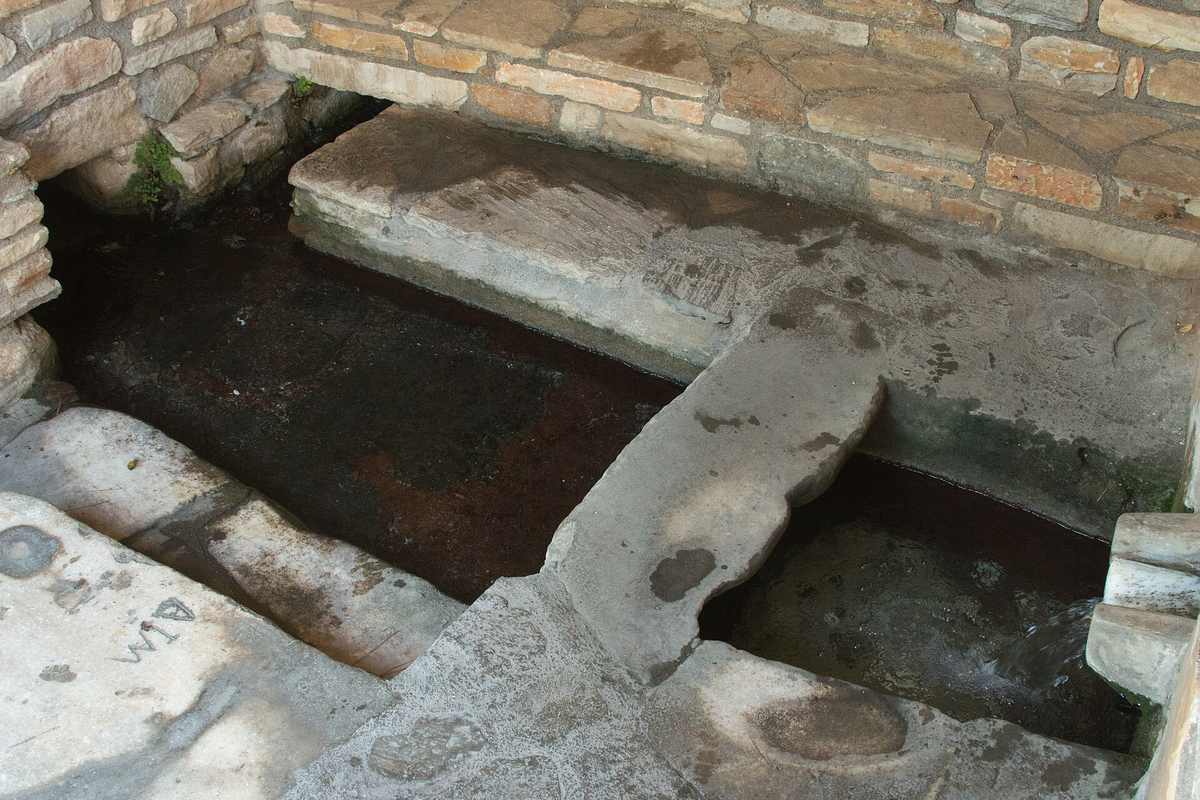
Along the paths you will also find old threshing floors, spring-fed washing basins and tiny family chapels, each a small window into how the community lived off the land and water here for centuries.
What is village life and food like?
Life in the Potamia villages is quiet, rural and genuinely lived-in, centred on gardens, small tavernas and shaded squares. The food is simple and local, built around home-grown vegetables, fruit, meat and cheese from the valley and hills.
These are working villages rather than resort settlements, so the atmosphere stays calm and authentic even in high summer. Families still tend the terraces and orchards, and daily life turns around the church squares, the kafeneio and the gardens rather than any tourist strip. A handful of tavernas make the most of the setting, with tables set beside the stream or under old trees where the running water keeps the air cool. Meals here lean on what the valley produces, seasonal vegetables, salads with local cheese, slow-cooked goat or rabbit, fresh bread and fruit straight from the orchards.
Prices are modest and portions generous, and the pace is slow, so a lunch stop easily stretches into a lazy afternoon by the water.
Naxos is one of the most self-sufficient islands in Greece for food, and Potamia sits at the heart of that tradition. The valley’s citrus, potatoes, greens and herbs feed the island’s kitchens, while the hills above supply cheese and meat from grazing flocks. Small producers still make preserves, spoon sweets and the local citron liqueur from fruit grown nearby, and you may be offered a taste at a taverna table. Eating here is less about elaborate cooking and more about freshness and place, the sense that almost everything on the plate came from within a short walk.
That grounded, produce-led experience is one of the best reasons to visit, and it is easy to fit into a short outing from Naxos Town.
How do you visit the Potamia villages?
The Potamia villages lie a short drive inland from Naxos Town, easily reached by car, taxi or bus, then explored on foot along the valley loop. A morning or afternoon is enough for the walk and a leisurely taverna lunch.
From Naxos Town the villages are only a handful of kilometres away, roughly a ten to fifteen minute drive on the road towards the interior. This makes them an ideal half-day trip. Drivers can park at Ano or Mesi Potamia and follow the path down through the valley, while local buses and taxis also serve the route for those without a car. The most rewarding approach is to walk the loop between the three villages, allowing an hour or two for the mills, chapels and castle viewpoint, then settle into a stream-side taverna for lunch.
Bring water and comfortable shoes, and aim for morning or late afternoon in summer when the shaded paths are at their coolest, avoiding the harsh midday heat.
Potamia combines well with other inland highlights, so a host of travellers pair it with the marble-quarry walks and Kouros statues of Melanes or the artisan workshops and old streets of Halki in the same outing. Together these make a classic tour of the green, cultivated side of the island that the beaches never reveal. Whether you drive yourself, take a bus or join a guided day out, the valley is an easy, memorable addition to any Naxos itinerary and works in almost any season. Plan your visit and tours through our Naxos travel guide.
Frequently Asked Questions
Are the Potamia villages worth visiting on Naxos?
Yes, the Potamia villages are one of the most rewarding inland stops on Naxos, especially for travellers who want more than beaches. The valley offers a rare kind of Cycladic scenery, green, shaded and watered, with running streams, dense orchards and old stone watermills that you will not find on the drier islands nearby. A gentle walking loop links Ano, Mesi and Kato Potamia, passing chapels, a ruined Venetian tower and castle site, and gardens heavy with fruit. At the end you can stop at a taverna set beside the stream for a simple, local lunch under the trees.
It is easy to fit into an itinerary without a great deal of planning because it lies only a short drive from Naxos Town. It suits walkers, families, photographers and anyone curious about how the island feeds itself. The cool, green valley is a memorable contrast to the coast and well worth the short trip inland if you have even half a day free.
How do you get to Potamia from Naxos Town?
The Potamia villages sit only a couple of kilometres inland from Naxos Town, so the trip is short and simple. By car or taxi it takes roughly ten to fifteen minutes on the road heading into the island’s interior. There is space to park near Ano or Mesi Potamia where the walking paths begin. Local buses also run towards the inland villages, giving a low-cost option for travellers without their own transport, though it is worth checking current timetables locally before you set out. Once you arrive, the villages are best explored on foot along the shaded valley loop that links the three settlements beside the stream.
A wide range of visitors combine the trip with nearby inland highlights such as Melanes or Halki, turning it into a fuller day of exploring the green interior. Joining a guided island tour is another easy way to reach the valley, since drivers know the quiet inland roads and the best places to stop for a walk and lunch.
What is the best time of year to visit the Potamia valley?
The Potamia valley is appealing across a great deal of the year, but spring and autumn are especially fine, when the weather is mild and the greenery is at its most vivid. In spring the orchards blossom, the stream runs full and the paths are lush and cool, making walking a real pleasure. Autumn brings ripening fruit, softer light and comfortable temperatures once the summer heat has eased. Summer is still very considerable worth it, thanks to the shade of the plane trees and the cooling effect of the running water. It is best to walk in the morning or late afternoon and avoid the harshest midday sun.
Winter is quiet and green after rain, though certain tavernas keep shorter hours. Whenever you come, bring water and comfortable shoes for the streamside paths, and allow enough time for a relaxed lunch beside the water. The valley’s dependable moisture means it stays greener and more inviting than most of Naxos in every season.