
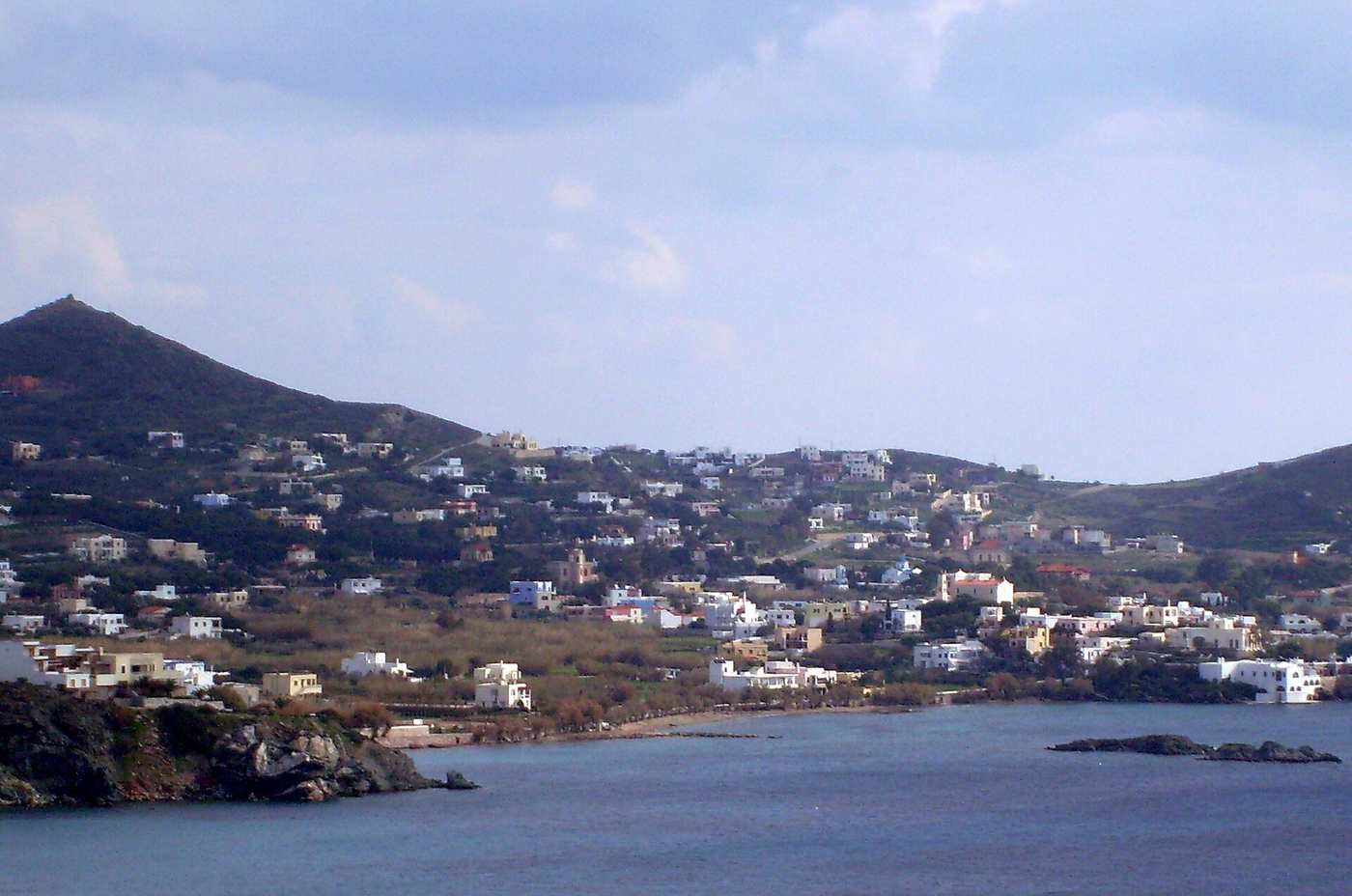
Poseidonia, also called Delagrazia, is the aristocratic villa village on the southwest coast of Syros, roughly 12 kilometres from the port capital Ermoupoli. Wealthy Ermoupoli merchants built eclectic and neoclassical mansions here in the late nineteenth century, giving the village a character unlike any other Cycladic settlement. Plan the whole trip with Greece Tours.
The village faces a sandy beach backed by a short waterfront of tavernas, on the quieter, greener southern side of the island. A KTEL bus or hire car reaches it in about 20 minutes from the port. This guide covers the two names, the villa heritage, the beach and promenade, the neighbouring bays of Agathopes, Komito and Ambela, where to stay and eat, and how Poseidonia compares with the rest of southern Syros.
Where is Poseidonia (Delagrazia) on Syros and how do you reach it?
Poseidonia lies on the southwest coast of Syros, roughly 12 kilometres from the port capital Ermoupoli. Drivers reach the village in about 20 minutes on a signed inland road, and KTEL buses serve the same route each summer.
Poseidonia sits on the southwest shore of Syros, the administrative centre of the Cyclades. The main road from the port town of Ermoupoli runs south across the low interior before dropping to the coast. The drive covers roughly 12 kilometres and takes about 20 minutes by car. The village faces southwest, so it holds the afternoon and evening sun. A grid of mansion streets climbs the slope behind the seafront. The sheltered southern coast keeps the water calmer than the exposed north side. A short promenade of tavernas edges the sandy beach below the village. Signposts for Poseidonia and Della Grazia mark the turning off the central island road.
KTEL buses leave from the central terminal beside the Ermoupoli waterfront, close to the ferry quay. Boats from Piraeus and the other Cyclades dock a short walk from the stop. The service runs to Poseidonia and the southern beaches through the summer timetable. A single fare costs about two euros, so visitors skip a hire car for beach days. The ride takes roughly 20 to 25 minutes on the inland road south. The route climbs over the island’s central saddle before the descent to the coast. The last return bus leaves in the early evening, so day visitors plan the trip back. Checking the printed KTEL timetable at the terminal keeps the return straightforward.
Drivers follow signs for Poseidonia and Della Grazia from the main island road. The lane drops to the seafront, where a small square and roadside bays hold the parked cars. Spaces near the sand fill by late morning in July and August. Arriving before 11am secures a place in the peak weeks. Scooters and quad bikes, rented across Syros, slot into gaps the cars cannot use. The village is compact, so the walk from any parking spot to the water takes under five minutes. A single loop road threads through Poseidonia, linking the villas, the church and the beach. The green fields inland give way to the mansion streets near the shore.
Poseidonia works as a base rather than only a day trip, since the village holds hotels and rooms for an overnight stay. Guests who book here reach the sand on foot and avoid the parking pressure. The coastal road links the village to Agathopes and Komito to the southwest. Ambela lies a short drive along the same southern shore. A twenty-minute drive north returns visitors to Ermoupoli for evening dining and the neoclassical port town. Cyclists use the quiet inland roads, though the final descent to the coast is steep. Most travellers treat Poseidonia as a calm anchor on a wider tour of the greener southern coast. The inland route stays quiet outside the peak summer weeks.
Why is Poseidonia on Syros also called Delagrazia?
Poseidonia carries the older name Delagrazia after the Catholic church of Della Grazia that stands in the village. Locals and bus timetables still use Delagrazia, while Poseidonia is the formal name adopted from the ancient sea god.
The name Delagrazia comes from the Catholic church of Della Grazia in the heart of the village. Syros holds the largest Catholic community in Greece, centred on the medieval hilltown of Ano Syros. The church gave the settlement its everyday name long before the formal title arrived. Della Grazia, meaning of grace, honours a Marian dedication common in the Catholic Cyclades. The name shortened in local speech to Delagrazia over the generations. Bus signs, tavernas and residents still use this form today. The church itself remains a working parish at the centre of the village. Its feast day draws the community together each year on the southern countryside. The parish still serves the Catholic villagers who summer along this quiet shore.
Poseidonia is the formal name, adopted from Poseidon, the ancient Greek god of the sea. The change followed a wider revival of classical place names across nineteenth-century Greece. Official maps and road signs carry Poseidonia, while daily speech keeps Delagrazia. Both names point to the same seaside village on the southwest coast. Visitors meet the two forms on timetables, hotel listings and beach guides. The dual naming reflects the island’s mixed Catholic and Orthodox heritage. Syros blends Venetian, Catholic and Greek strands through its towns and villages. Poseidonia sits within that layered history on the quieter southern side of the island. Ferry timetables and hotel sites list both forms side by side. The classical name honours the sea beside the village on this shore.
The Catholic identity of Syros shapes the character of Poseidonia. The island came under Venetian and later French Catholic protection during the medieval and early modern eras. Ano Syros grew as a Catholic hilltown, while Ermoupoli rose as an Orthodox port later on. Poseidonia developed as a Catholic-linked summer village on the southern coast. The Della Grazia church anchored that community beside the sea. Family names in the village trace back to the island’s Catholic lineages. The religious calendar still marks the rhythm of the year here. This heritage sets Poseidonia apart from the Orthodox villages elsewhere in the Cyclades. Catholic feast days and Orthodox saints’ days both mark the island calendar. The southern villages kept close ties to Ano Syros through the centuries.
Understanding the two names helps travellers navigate Syros without confusion. A bus marked Delagrazia and a map marked Poseidonia lead to the same place. Locals answer to both, and asking for either reaches the village. The older name lingers on the taverna and bus signs, the newer name on official listings. Poseidonia stands roughly 12 kilometres from the port at Ermoupoli. The village keeps its Catholic parish church at the centre of daily life. The name Della Grazia binds the settlement to the wider Catholic story of the island. That story runs from Ano Syros down to this quiet southern shore of the island. The two names cause little trouble once travellers learn the link. Delagrazia stays the name most residents speak day to day.
How did Poseidonia grow into an aristocratic villa resort on Syros?
Poseidonia grew as a summer resort in the late nineteenth century, when wealthy Ermoupoli merchants built eclectic and neoclassical villas along its shore. Their mansions gave the village an aristocratic character unlike the whitewashed houses of other Cycladic settlements.
Ermoupoli became the leading port and industrial city of Greece in the nineteenth century. Its merchants, shipowners and bankers grew wealthy on Aegean trade and shipbuilding. These families sought a summer retreat away from the busy harbour town. Poseidonia, on the green southern coast, offered calm water and open country. The wealthy built grand villas along the shore from the late nineteenth century. The style drew on the eclectic and neoclassical fashions of the era. Ordered facades, tall windows and garden grounds replaced the plain Cycladic cube. The village grew into a resort of mansions rather than a fishing hamlet on the coast. Steamer and trading wealth from the port funded the grand seaside houses. The village filled with villas through the closing decades of the century.
The villas of Poseidonia stand apart from typical Cycladic architecture. Neoclassical symmetry, pediments and painted plaster mark the older houses. Eclectic details borrow from Italian, French and Ottoman-era motifs. Gardens with palms and bougainvillea surround the larger mansions. Two-storey facades rise where island villages keep to single cubes. The result reads closer to an Ermoupoli townscape than a whitewashed hamlet. Wrought-iron balconies and tall shuttered windows face the sea along the front. This built heritage gives Poseidonia its aristocratic, almost genteel, character today. The mansions line both the seafront and the lanes behind the beach. Marble steps and carved doorframes finish the grander entrances. Painted ceilings and high rooms kept the interiors cool in summer. The scale recalls the townhouses of the port capital nearby.
The resort took shape as families summered here through the warm months. Households moved from Ermoupoli for the season, bringing staff and social life. Garden parties, seaside promenades and church feasts filled the summer calendar. The Della Grazia church served the Catholic families among them. The village kept a refined, unhurried pace distinct from the working port. The grand villas passed down through the same families over generations. Certain houses remain private homes, while others became small hotels and guesthouses. The seasonal rhythm of a summer resort still shapes Poseidonia today. The gardens and facades record that history along every street. Old photographs show families gathered on the shaded villa terraces. The church bells still mark the hours across the quiet village.
Walking Poseidonia today reveals the layered history in its streets. The mansions line the seafront and the lanes climbing the slope behind. Plaques and dates on the facades record the building era. The Della Grazia church stands at the centre, giving the village its older name. Restored villas sit beside a handful of faded, shuttered houses. The gardens soften the streets with palms, pines and flowering shrubs. A short walk links the church, the mansions and the sandy beach below. The architecture makes Poseidonia the most distinctive village on the southern coast of Syros. Its refined streets reward a slow wander before a swim. Guided walks trace the villa facades and their building dates. The seafront mansions face the calm water of the bay.
What does the Poseidonia beach and waterfront offer on Syros?
Poseidonia has a sandy beach backed by a short waterfront of tavernas and cafes. The calm southern water suits swimming, while the promenade serves fresh fish and Cycladic meze steps from the sand through the summer season.
The beach at Poseidonia runs in a band of sand below the village. The water stays shallow near the shore and deepens gently offshore. Sunbeds and parasols fill the central stretch for a modest daily fee. Free sand lies at either end for visitors with their own mats. The southwest aspect gives the beach sun into the late afternoon. Tamarisk and low trees shade the back of the sand. The sheltered southern coast keeps the sea calmer than the north on windy days. Families and older visitors favour the easy entry and the quiet, shallow water here. Children paddle safely in the shallow water near the shore. The sand shelves gently for several metres before it drops. Umbrellas and a canteen serve the central beach in summer.
A short promenade of tavernas and cafes edges the seafront at Poseidonia. Menus cover grilled fish, meze plates, salads and the loukoumi sweets of Syros. Tables sit steps from the sand, so lunch follows a swim within minutes. Cafes open early for breakfast and stay busy into the evening. Prices sit below the smart waterfront restaurants of Ermoupoli. The village square behind the beach holds a shop and a bakery. Showers and taps near the sand rinse off salt after a swim. The compact layout keeps food, shade and sea within a two-minute walk of each other. A grill and a fish taverna anchor the seafront row. Iced coffee and cold beer flow through the hot afternoons. The square parks a handful of cars beside the shops.
The waterfront reflects the resort character of Poseidonia. Villas and small hotels rise behind the tavernas, their gardens facing the sea. The promenade fills in the evening as guests move from the beach to dinner. Sunset over the southwest sea draws diners to the terraces along the front. The pace stays calm, without the nightlife of the port town. The Della Grazia church stands a short walk back from the water. Families settle here for a week rather than a passing swim. The green countryside inland frames the seafront on the southern coast of the island. Lamplit terraces line the front once the sun drops. The villas glow behind the tavernas in the evening light. A slow after-dinner walk closes the day along the sand.
Watersports and boat trips add to a day at Poseidonia in high summer. Kayaks and paddleboards launch from the calm water off the sand. The sheltered bay suits beginners finding their balance on flat water. A coastal path links the beach to the neighbouring coves southwest. Boats run to Agathopes and the islet of Strongylo on settled days. The beach stays quieter than the busy resort sands elsewhere on Syros. Its refined setting under the mansions sets the mood along the front. Poseidonia rewards visitors who slow to the pace of the southern shore of the island. Snorkellers explore the rocks that edge each end of the bay. The clear water suits a long, unhurried swim offshore. A pedalo or kayak reaches the quiet coves nearby.
Which beaches lie near Poseidonia (Delagrazia) on Syros?
Poseidonia sits within a short drive of Agathopes, Komito and Ambela on the southwest coast of Syros. The islet of Strongylo lies off Agathopes, and all these sheltered southern beaches link to the village by coastal road.
Agathopes lies just southwest of Poseidonia, a short walk or drive along the shore. The bay holds shallow, warm and calm water over a sandy floor. The green islet of Strongylo sits offshore, sheltering the bay from open swell. A row of tavernas backs the sand, so lunch stays close to the water. The beach draws families for its safe, gentle entry. Agathopes and Poseidonia share the same sheltered southern aspect on the coast. A coastal path links the two beaches in under fifteen minutes on foot. The islet and calm shallows make Agathopes a favourite neighbour of the village. The sandy floor and low waves suit first swimming lessons. A snack bar serves cold drinks behind the beach in summer.
Komito beach lies further southwest near the island airport. The shore mixes sand and rock beneath low, bare hills with few buildings. The setting stays wild and open, without the villas and tavernas of Poseidonia. Travellers reach Komito by a rougher road in about ten minutes by car. The beach rewards those chasing open space over organised sunbeds. Its sunsets over the open Aegean draw evening visitors to the shore. Facilities are limited, so most bring their own shade and supplies. Komito balances the refined village with a taste of undeveloped coast. The two make a natural pair on a southern beach day. Photographers gather for the sunset over the water each evening. The rough track keeps the crowds thinner than the northern sands.
Ambela lies along the southern shore within a short drive of Poseidonia. The bay is quieter and less developed than the village itself. A short sandy beach backs onto low farmland and a scatter of rooms. The water stays shallow and calm, sheltered by the surrounding headlands. Reaching Ambela takes about ten minutes on the coastal road east. Facilities are limited, so visitors bring their own shade and supplies. The quiet draws travellers seeking space away from the busier sands. Ambela pairs well with a base at Poseidonia on the greener south side of the island. A single taverna may open near the sand in high summer. The low farmland behind gives the bay an open, rural feel. Goats and stone walls line the quiet road in.
The southern beaches of Syros sit within a short drive of each other. A hire car or scooter links Poseidonia, Agathopes, Komito and Ambela in minutes. The coastal roads run quiet, away from the busier route to the port. Buses serve the main southern stops through the summer timetable. Vari beach lies east along the same sheltered coast, a longer family bay. Vari beach pairs a resort settlement with shallow, calm water for families. All these bays share the southern shelter from the strong north wind. A week at Poseidonia puts the whole southern coast within easy reach on foot or by car. The airport road passes close to the southwestern coves. A short loop takes in three or four beaches in a day.
Where do you stay and eat in Poseidonia on Syros?
Poseidonia offers upscale hotels, restored villa guesthouses and rooms across the village. Waterfront tavernas serve fresh fish and Cycladic meze, while the promenade and village square hold cafes and a bakery a short walk from the sandy beach.
Accommodation in Poseidonia ranges from upscale hotels to restored villa guesthouses. The mansion heritage gives the village smarter lodging than most Cycladic beaches. Small hotels occupy converted nineteenth-century villas with gardens and sea views. Studios and domatia rooms fill the streets behind the seafront. Rates sit above the simplest island rooms, matching the refined setting. Booking ahead for July and August is wise, since the stock fills early. Staying in the village puts the beach, tavernas and bus stop within a short walk. Hosts often arrange port transfers from the ferry quay at Ermoupoli for arriving guests. Villa suites with sea views command the higher rates. Simple studios behind the front stay closer to the island average. Breakfast on a shaded terrace opens the day for guests.
Dining in Poseidonia centres on the tavernas along the seafront promenade. Fresh fish, grilled meats and Cycladic meze fill the menus through the season. Terraces over the water give a cool place to eat as the sun drops. The loukoumi and halvadopita sweets of Syros appear on the dessert menus. Cafes serve frappe and iced coffee through the afternoon heat. A bakery in the village supplies bread, pies and pastries for breakfast. Prices stay below the smart restaurants of the port at Ermoupoli. The compact front keeps every table within a two-minute walk of the sand. Octopus, sardines and local cheese fill the meze plates. House wine from the barrel accompanies the grilled fish. A short menu of daily specials changes with the catch.
The village suits travellers who want a calm, refined base on Syros. Couples and families favour the quiet water and the mansion streets. Guests without a car reach the beach, tavernas and bus stop on foot. The village lacks the nightlife of the port, drawing a settled crowd. Travellers chasing bars and late clubs base themselves in Ermoupoli instead. A stay here pairs a calm beach with day trips across the island. The green southern countryside invites walks between the beaches and villages. Poseidonia works as a restful anchor for a slower island holiday on the coast. The parish church and the seafront frame the quiet evenings. Cyclists and walkers set out on the inland roads at dawn. The pace slows to match the greener southern shore.
Practical services support a longer stay in Poseidonia. A shop and bakery in the square cover daily basics. Car and scooter rental points let guests reach the rest of Syros. The bus stop on the loop road connects the village with the port and southern beaches. A cash point sits back in Ermoupoli rather than the village, so visitors carry euros. The season runs from late spring into early autumn, when hotels and tavernas open. Shoulder-season weeks bring quieter sand and lower rates along the front. The sheltered southern water stays warm for swimming into the early autumn here. A pharmacy and clinic sit back in the port town. Fuel stations line the main road toward Ermoupoli.
How does Poseidonia compare with the rest of southern Syros?
Poseidonia is the aristocratic villa village of the southern coast, quieter and greener than the port. Vari offers a sheltered family resort, Agathopes adds an offshore islet, and Komito keeps a wild shore, while Ermoupoli holds the island’s dining and nightlife.
The southern coast of Syros holds the island’s greenest and calmest country. Poseidonia stands out for its mansion streets and refined resort history. The village trades the bustle of the port for quiet water and garden villas. Its architecture sets it apart from the whitewashed Cycladic norm. The sheltered southern beaches stay calmer than the exposed north on windy days. A base here suits travellers after a slower, greener holiday. The green fields and low hills frame the villages and coves. Poseidonia anchors this quiet corner of the island in refined style along the shore. Garden walls and tall pines shade the mansion streets. The bay stays flat when the northern beaches turn choppy. A slower rhythm marks the days on this side.
Vari beach lies east of Poseidonia along the same sheltered shore. The bay offers a resort settlement with hotels, tavernas and shallow water. Vari beach suits families for its safe, calm shallows and gentle sandy floor. Poseidonia leans more toward its villa heritage and refined seafront setting. The two villages share the southern shelter from the strong north wind. A short drive links them along the quiet coastal road. Travellers often split a stay between the two southern bases. Each offers a calm alternative to the busy port at Ermoupoli through the summer. The coastal lane between them runs level and quiet. Both villages face the calm southern sea through the season. The short hop suits a two-base week on the island.
Agathopes and Komito round out the southwest coast near Poseidonia. Agathopes pairs shallow, warm water with the green islet of Strongylo offshore. Komito keeps a wild, open shore of sand and rock near the airport. Both trade the villas and promenade of Poseidonia for a quieter setting. A hire car reaches them from the village in about ten minutes. These beaches suit day trips from a base in the mansion village. Poseidonia holds the fuller amenities, with hotels, tavernas and a parish church. The neighbours fill a varied week along the southern shore of the island. The narrow track to Komito suits a scooter or jeep. Agathopes stays busier for its safe, shallow family water. Both beaches lie under ten minutes from the mansion village.
Ermoupoli, the port capital, contrasts sharply with Poseidonia. The town holds the island’s museums, shops, restaurants and nightlife. Its neoclassical squares and marble streets draw sightseers year-round. Poseidonia offers the opposite pace, quiet and green on the southern coast. A twenty-minute drive links the village to the port for an evening out. Travellers often base at Ermoupoli for culture and at Poseidonia for the beach. Choosing between them depends on the holiday you want. Poseidonia rewards those who value calm, mansions and the greener south of Syros. The port fills with cafe tables along its grand marble square. Ferries and museums keep the town busy through the day. Diners return to the village late after an evening in the port.
Frequently Asked Questions
Why is Poseidonia on Syros also called Delagrazia?
Poseidonia carries the older name Delagrazia after the Catholic church of Della Grazia at the centre of the village. Syros holds the largest Catholic community in Greece, and the church gave the settlement its everyday name. Poseidonia is the formal title, adopted from the ancient sea god Poseidon during a revival of classical place names. Locals, bus signs and tavernas still use Delagrazia, while maps and official listings carry Poseidonia. Both names point to the same seaside village on the southwest coast.
How far is Poseidonia from Ermoupoli?
Poseidonia lies roughly 12 kilometres from Ermoupoli, the port capital of Syros. The drive takes about 20 minutes on the inland road that crosses the island’s central saddle. KTEL buses cover the same route from the central terminal on the Ermoupoli waterfront in around 20 to 25 minutes. A single fare costs about two euros, so visitors can reach the village without a hire car. The last return bus leaves in the early evening, so day visitors plan the trip back.
Is there a beach at Poseidonia on Syros?
Poseidonia has a sandy beach below the village, backed by a short promenade of tavernas and cafes. The water stays shallow near the shore and calm on the sheltered southern coast. Sunbeds and parasols fill the central stretch, while free sand lies at either end. Tamarisk trees shade the back of the beach, and showers rinse off salt near the sand. The nearby bays of Agathopes and Ambela add more sheltered swimming within a short drive.
What makes Poseidonia different from other Cycladic villages?
Poseidonia stands apart for its eclectic and neoclassical villas, built by wealthy Ermoupoli merchants in the late nineteenth century. The mansions gave the village an aristocratic character, with two-storey facades, gardens and tall windows in place of the plain whitewashed cube. It grew as a summer resort rather than a fishing hamlet, and its Catholic Della Grazia church anchors that heritage. The result is the most distinctive village on the southern coast of Syros.
Which beaches are near Poseidonia on Syros?
Poseidonia sits within a short drive of Agathopes, Komito and Ambela on the southwest coast of Syros. Agathopes holds shallow water and the green islet of Strongylo offshore, while Komito keeps a wild shore near the airport. Ambela offers a quiet, undeveloped bay along the same shore. Vari beach lies east, a larger sheltered family resort. A hire car or scooter links the southern bays in minutes.
Is Poseidonia a good place to stay on Syros?
Poseidonia suits travellers who want a calm, refined base on the southern coast of Syros. The village offers upscale hotels, restored villa guesthouses and rooms within a short walk of the beach. Waterfront tavernas, cafes and a bakery cover meals, and the bus links the village to Ermoupoli. It lacks the nightlife of the port, so it draws couples and families after quiet water and mansion streets. Booking ahead for July and August is wise.