
One day in Athens is enough to see the highlights: the Acropolis and its museum, the Ancient Agora, the old lanes of Plaka and Monastiraki, Syntagma Square and a sunset, all walkable in 24 hours. Make every minute count with skip-the-line Acropolis tickets and tours from My Greece Tours so you waste no time in queues.
A tight, well-planned day captures the best of the Athens travel guide. The sections below cover whether one day is enough, the morning, midday, afternoon and evening plan, where to eat and practical tips.
Is one day enough for Athens?
One day is enough to see the essential highlights of Athens, thanks to its compact, walkable historic centre. In 24 hours you cover the Acropolis, the Acropolis Museum, the Ancient Agora, Plaka, Monastiraki, Syntagma Square and a sunset, all on foot.
One day in Athens genuinely delivers the city’s essential highlights and a real sense of its ancient grandeur. The major sights are concentrated in a compact, walkable historic centre linked by pedestrian streets. A single well-organised day allows you to climb the Acropolis and stand before the Parthenon, explore the Acropolis Museum, wander the Ancient Agora where democracy was born, lose yourself in the old neighbourhoods of Plaka and Monastiraki, see the modern heart of the city at Syntagma Square, and finish with a sunset and a Greek dinner.
This makes Athens an ideal stop on a longer trip, whether you are en route to the islands, on a stopover, or have just one free day in the capital. The key is to start early, focus on the essential sights rather than trying to see everything, and travel mostly on foot. The itinerary that follows sets out a perfect, achievable one-day plan, from morning to night. With good planning, 24 hours delivers a deeply satisfying taste of Athens. It builds on the longer plan in the Athens 2 day itinerary guide. The day begins at the Acropolis.
What should you do in the morning?
Start early at the Acropolis, ideally at opening time around 8am, to beat the heat and crowds. Climb the sacred rock to see the Parthenon, the Erechtheion, the Temple of Athena Nike and the Propylaea, with wide views over the city.
The single most important rule for one day in Athens is to begin at the Acropolis early, arriving for the opening time of around 8am. You then climb the sacred rock before the midday heat and the largest tour groups arrive, which transforms the experience. The Acropolis is the highlight of any visit and the reason most travellers come, so it deserves the freshest part of your day.
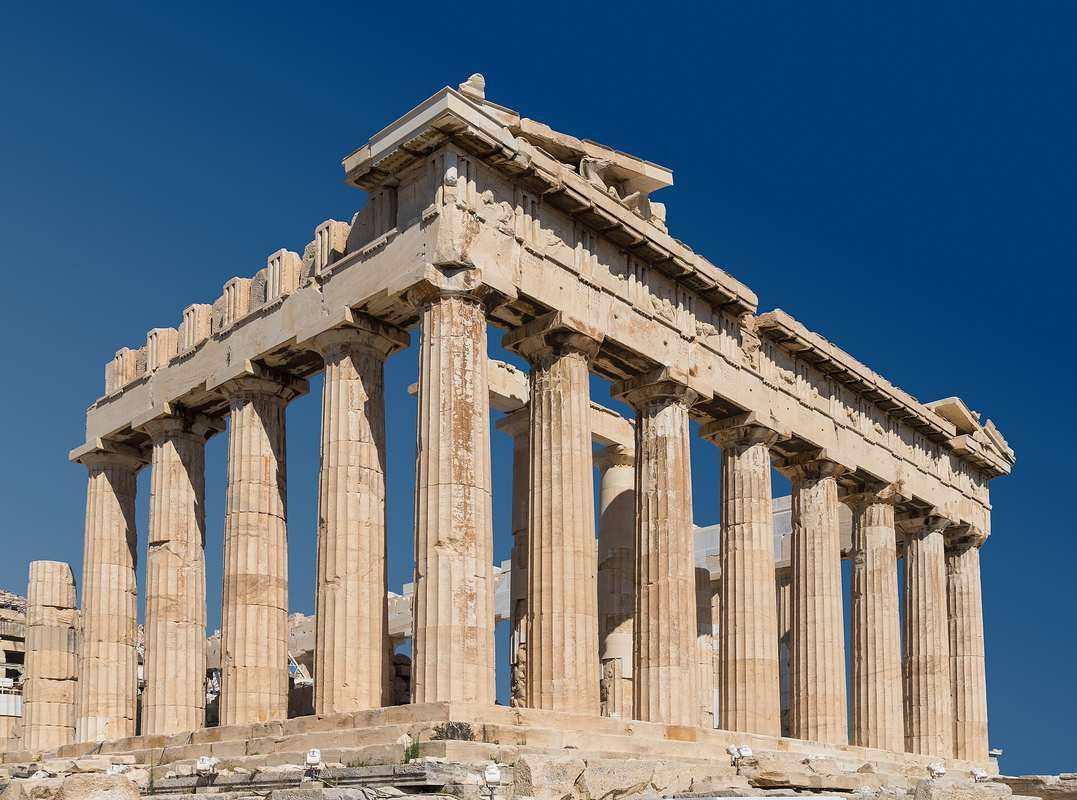
Ascending the hill, you reach the monuments of the golden age of Athens: the Parthenon, the temple of the goddess Athena and one of the most recognisable buildings on earth; the Erechtheion with its porch of Caryatid maiden-columns; the small Temple of Athena Nike perched on its bastion; and the grand Propylaea gateway through which you enter.
From the summit, superb views open out over the whole city to the surrounding mountains and the sea. Booking a skip-the-line ticket in advance saves precious time at the entrance. Allow around an hour and a half to two hours to explore the citadel at a comfortable pace before descending. Starting here sets the tone for the whole day. The citadel is the heart of Athens. The morning continues just downhill.
What should you do at midday?
Walk downhill from the Acropolis to the Acropolis Museum to see the original sculptures and the Parthenon frieze in its light-filled galleries. Then enjoy a Greek lunch in Plaka or Koukaki, and explore the lanes of Plaka.
Your natural next stop is the modern Acropolis Museum, a short walk downhill at the foot of the sacred rock. This museum is the perfect complement to the citadel, displaying the original sculptures, statues and friezes that once adorned the ancient buildings. The top floor recreates the Parthenon frieze in full, and the temple itself is framed through the floor-to-ceiling windows. Allow around an hour to see its highlights.
By now you will be ready for lunch, and the surrounding area offers excellent choices. The old quarter of Plaka, right beneath the Acropolis, and the neighbourhood of Koukaki nearby are both full of tavernas serving classic Greek dishes, from souvlaki to meze, ideal for a relaxed midday meal before you continue.
Once you have eaten, begin to explore Plaka itself, the oldest and most picturesque neighbourhood in Athens, wandering its narrow, cobbled lanes lined with neoclassical houses, bougainvillea, small churches and craft shops, and seeking out the hidden Cycladic-style village of Anafiotika tucked against the hillside. This blend of culture, food and atmosphere fills the middle of the day perfectly. The old town enchants every visitor. The afternoon brings more ancient wonders.
What should you do in the afternoon?
Spend the afternoon at the Ancient Agora, home to the preserved Temple of Hephaestus and the rebuilt Stoa of Attalos, then wander into Monastiraki for its flea market and Hadrian’s Library. Continue to Syntagma Square for the changing of the guard.
The afternoon is the time to explore more of ancient and modern Athens on foot, continuing from Plaka through the heart of the historic centre. Your next stop is the Ancient Agora, the civic and commercial heart of classical Athens where citizens once gathered, debated and shaped the world’s first democracy. Here you wander among olive trees and ruins to admire the preserved Temple of Hephaestus, the most complete ancient Greek temple anywhere, and visit the on-site museum set within the rebuilt Stoa of Attalos.
From the Agora, stroll into the lively Monastiraki district, with its famous flea market and souvenir shops perfect for picking up gifts. Its central square offers a remarkable view that takes in a Byzantine church, an Ottoman mosque, the Roman-era Hadrian’s Library and the Parthenon above, a single frame that layers the whole history of Athens.
Continue from Monastiraki to Syntagma Square, the political and geographic heart of modern Athens, where, on the hour, you can watch the ceremonial changing of the guard, the Evzones in their distinctive uniforms performing their slow, precise march outside the Greek Parliament. This afternoon route weaves together the ancient and the modern city. It captures the layers of Athens. The evening rewards you with a sunset and a feast.
What should you do in the evening?
End your day with a sunset and dinner. Climb the Areopagus rock or Filopappos Hill for a free sunset view of the Acropolis, or ride the funicular up Lycabettus Hill. Then have a Greek dinner in Plaka, Psiri or on a rooftop.
The evening is the time to relax after a busy day of sightseeing, beginning with one of the city’s sunsets. For a free view, climb the rocky Areopagus hill right beside the Acropolis, or the wooded paths of Filopappos Hill, to watch the sun sink and the marble of the Parthenon glow golden then pink. Alternatively, ride the funicular up Lycabettus Hill, the highest point in the city, for a panorama over all of Athens to the sea as the city lights come on.
Afterwards, treat yourself to a leisurely Greek dinner to round off the day. The tavernas of Plaka and the lively district of Psiri serve classic dishes such as moussaka, grilled meats and shared meze with local wine, often accompanied by live music. Booking a rooftop restaurant in Monastiraki or Thissio lets you dine with the floodlit Acropolis glowing nearby, a fitting close to the day.
Whether you choose a cosy taverna or a glamorous rooftop, ending your one day in Athens over good food, wine and the illuminated ancient citadel is the perfect, memorable finale. The viewpoint is covered in the Areopagus hill guide. Good food runs through the whole day.
Where should you eat, and what tips help?
Eat traditional Greek food in Plaka and Psiri tavernas, grab a cheap souvlaki near Monastiraki, and book a rooftop dinner with Acropolis views. Start early, buy a skip-the-line ticket, wear comfortable shoes, and travel on foot.
Eating well is part of a great day in Athens, and the compact centre makes it easy. For meals, the old quarters of Plaka and the lively Psiri district are full of traditional tavernas serving classic Greek dishes ideal for lunch or dinner, while for a quick, cheap and delicious bite the souvlaki and gyros shops around Monastiraki are an Athens institution; for a special evening, book a rooftop restaurant in Monastiraki or Thissio to dine with the floodlit Acropolis in view. A handful of practical tips will make your single day run smoothly: above all, start early at the Acropolis to beat the heat and crowds, and buy a skip-the-line or Acropolis combined ticket in advance to save time at the entrances.
Wear comfortable, sturdy shoes, as the ancient sites, marble promenades and old-town lanes are uneven and slippery, and travel on foot, since the centre is highly walkable and almost all the sights are close together. In the warmer months carry water, a hat and sunscreen. Finally, with only 24 hours, focus on enjoying the key highlights at a relaxed pace rather than rushing to cram everything in, as quality beats quantity. With these tips, one day in Athens is a delight. The combined ticket appears in the getting around Athens guide. The questions below cover the points visitors ask most.
What are the top things to do in Athens in one day?
The top things to do in one day are the Acropolis and Parthenon, the Acropolis Museum, the Ancient Agora with its Temple of Hephaestus, Plaka and Monastiraki, the changing of the guard at Syntagma, and a sunset over the city.
Concentrating on a short list of standout sights is the secret to a satisfying single day, because it lets you go deep rather than rush. The Acropolis and its Parthenon head every list, followed closely by the Acropolis Museum that explains what you have just seen. The Ancient Agora adds the birthplace of democracy and the near-perfect Temple of Hephaestus, while Plaka and Monastiraki give you the living city of lanes, markets and cafes between the monuments.
Syntagma Square supplies the ceremonial changing of the guard, a distinctly Athenian ritual outside Parliament, and a sunset from the Areopagus, Filopappos or Lycabettus rounds off the essentials. If you want a wider sweep, the National Archaeological Museum holds the country’s greatest ancient treasures, and the Temple of Olympian Zeus stands near the centre. For one day, though, the core six deliver the fullest experience without leaving you exhausted.
What can you do in Athens at night?
At night, watch the sunset light the Parthenon, dine in the tavernas of Plaka or Psiri, drink at a Monastiraki rooftop bar with an Acropolis view, and stroll the illuminated pedestrian promenade beneath the sacred rock as the city comes alive.
Athens after dark rewards anyone with energy left at the end of a long day, and the historic centre stays lively well into the evening. The pedestrian Dionysiou Areopagitou promenade below the Acropolis fills with a relaxed crowd, street musicians and the glow of the floodlit monuments overhead, making a simple after-dinner walk one of the finest free experiences in the city. Plaka and Psiri hum with tavernas, wine bars and the sound of live rebetiko music spilling from doorways.
For a drink with a view, the rooftop bars of Monastiraki and Thissio look straight across to the illuminated Parthenon, a scene that captures the whole appeal of Athens in a single glance. Psiri, once gritty and now full of street art and small bars, draws a younger night-time crowd. Even on a one-day visit, an hour or two of this evening buzz leaves you with the sense of a city that never quite switches off.
How do you get to Athens and into the city from the airport?
Athens International Airport connects to the centre by metro Line 3, the X95 express bus to Syntagma, or a fixed-fare taxi. The metro is the fastest reliable option, reaching Syntagma or Monastiraki in about 40 minutes and dropping you beside the main sights.
Athens International Airport (Eleftherios Venizelos) sits east of the city and links to the centre in three straightforward ways. Metro Line 3, the blue line, runs directly from the airport station to Syntagma and Monastiraki, placing you a short walk from the Acropolis. The ride takes roughly 40 minutes, and the station sits above the terminal, so you avoid traffic entirely. For a one-day visit this is usually the smartest choice.
The X95 express bus is the round-the-clock alternative, running day and night from the airport forecourt to Syntagma Square and taking about an hour depending on traffic. A taxi charges a fixed daytime fare into central Athens, with a higher rate at night, and delivers you door to door. If you arrive by cruise ship at Piraeus instead, metro Line 1 or the tram connects the port to the centre, so your one-day plan starts the moment you step ashore.
Where should you stay for a one-day base in Athens?
For a single day, stay in Plaka, Monastiraki, Koukaki or around Syntagma so the Acropolis and the main sights are on your doorstep. A central base lets you start at dawn on foot and return easily after a late dinner, without depending on transport.
Where you sleep matters most when your time is tight, because a central room turns the whole itinerary into a walking day. Plaka puts you inside the old town, steps from the Acropolis entrance, with tavernas and quiet lanes at your door. Monastiraki sits at the crossroads of the markets and the metro, handy for both arriving and leaving. Koukaki, just south of the Acropolis Museum, has become a favourite for its calm streets and quick access to the sacred rock.
Around Syntagma you trade a little atmosphere for excellent transport links and rooftop hotels with Acropolis views. Any of these areas keeps your morning start easy and your evening return simple, which is exactly what a 24-hour visit needs. Wherever you choose, ask for a room facing the citadel if you want the floodlit Parthenon as your final and first sight of the day.
What does a self-guided walking route through Athens look like?
Follow a simple loop on foot: Acropolis, then the Acropolis Museum, lunch in Plaka, the Ancient Agora, Monastiraki, Syntagma for the guard, and a sunset from the Areopagus or Lycabettus. The whole route stays within the compact centre and needs no transport.
A one-day Athens route works best as a continuous walking loop, because the sights sit within a small, mostly pedestrian core. Begin at the Acropolis at opening time, then descend the south slope to the Acropolis Museum. From there the pedestrian Dionysiou Areopagitou promenade leads west into Plaka for lunch, curling past neoclassical houses and the hidden Anafiotika quarter beneath the rock.
The afternoon leg carries you from Plaka to the Ancient Agora, then north into Monastiraki and its markets, and east along Ermou to Syntagma for the changing of the guard. To close the loop, walk back toward the Areopagus rock beside the Acropolis for sunset, or take the funicular up Lycabettus. Dinner in Plaka, Psiri or on a Monastiraki rooftop completes the circle, ending your day within a short stroll of where it began.
What bonus tips make a one-day Athens visit smoother?
Book Acropolis tickets online, arrive at opening, carry water and a hat in summer, wear grippy shoes for the slippery marble, keep valuables secure on the metro, and check that sites are open, since the Acropolis keeps shorter winter hours.
A few practical habits protect your single precious day from the small setbacks that cost time. Buying a skip-the-line or combined ticket online lets you walk straight past the queue at the Acropolis entrance, the one place where crowds really bite. Arriving at opening time gives you the monuments in soft light and cooler air, and it frees the rest of the day. In the warmer months a refillable water bottle, a hat and sunscreen matter, because the sites offer little shade and the marble radiates heat.
Footwear deserves thought: the ancient stone and the polished promenade turn slippery, so grippy, closed shoes beat sandals. On the metro and in busy Monastiraki, keep your phone and wallet secure against pickpockets, as in any major capital. Finally, confirm opening hours before you set out, since the archaeological sites and museums run reduced winter timetables and close on certain public holidays, and a quick check spares you a wasted walk to a locked gate.
Frequently Asked Questions
Is one day enough to see Athens?
Yes, one day is enough to see the essential highlights of Athens, as the major sights cluster in a compact, walkable centre. In 24 hours you can visit the Acropolis and its museum, the Ancient Agora, Plaka and Monastiraki, Syntagma Square and a sunset viewpoint, all on foot, for a full and rewarding taste of the city.
What should you do with one day in Athens?
With a single day in the city, begin first thing at the Acropolis, then the Acropolis Museum, lunch and Plaka in the middle of the day, the Ancient Agora, Monastiraki and Syntagma in the afternoon, and a sunset from the Areopagus or Lycabettus followed by a Greek dinner in the evening, all walkable in the compact centre.
What is the best order for a one-day Athens itinerary?
The best order is to visit the Acropolis first thing to beat crowds and heat, then the Acropolis Museum, lunch and Plaka, followed by the Ancient Agora, Monastiraki and Syntagma in the afternoon, finishing with a sunset from the Areopagus, Filopappos or Lycabettus and dinner in Plaka or on a rooftop.
How do you get from Athens airport to the city centre?
You reach central Athens from the airport by metro Line 3, which runs directly to Syntagma and Monastiraki in about 40 minutes, by the X95 express bus to Syntagma that operates day and night, or by a fixed-fare taxi. For a one-day visit the metro is the fastest reliable choice and drops you beside the main sights.
Is Athens walkable for a one-day visit?
Yes, Athens is highly walkable for a one-day visit, since the Acropolis, Acropolis Museum, Ancient Agora, Plaka, Monastiraki and Syntagma all sit within the compact historic centre and are linked by pedestrian streets. A central base in Plaka, Koukaki or Monastiraki lets you cover the entire itinerary on foot without needing public transport.
Where should you eat during one day in Athens?
Eat in the traditional tavernas of Plaka and Psiri for classic dishes such as moussaka and grilled meats, grab a quick souvlaki near Monastiraki for a cheap lunch, and book a rooftop restaurant in Monastiraki or Thissio for dinner with a floodlit Acropolis view, so your meals track the same walkable centre as the sights.
Where should you stay for one day in Athens?
Stay in Plaka, Monastiraki, Koukaki or around Syntagma so the Acropolis and the main sights are within a short walk. A central base lets you start at opening time on foot and return easily after a late dinner, without depending on transport, which is exactly what a tight 24-hour itinerary needs to run smoothly from dawn to night.
What is the best spot for a sunset in Athens?
The Areopagus rock and Filopappos Hill both give free sunset views of the Acropolis and the city beyond, while the funicular up Lycabettus Hill delivers the widest panorama over Athens to the sea. Any of the three, or a rooftop bar in Monastiraki, makes a memorable close to a one-day visit as the Parthenon glows in the evening light.