
The Naxos to Folegandros ferry links the largest Cycladic island with one of the archipelago’s most dramatic clifftop escapes. This crossing runs mostly by high-speed catamaran through the central Cyclades, often routing via Ios or Sikinos before reaching the small harbour of Karavostasi. The connection concentrates in the warm season, so timing matters for anyone building a two-island itinerary. Naxos sits at the heart of the ferry network, giving travellers frequent departures south toward the smaller islands. This guide covers routes, journey time, seasonal frequency, ticketing, car transport and the two ports involved. Understand the schedule before you commit, then lock the whole trip in one plan with My Greece Tours.
Naxos rewards a longer stay, and pairing it with Folegandros makes a balanced Cyclades route. Our Naxos travel guide maps the beaches, villages and tours that fill the days before you sail south. Folegandros adds sheer cliffs, a fortified Chora and a quieter rhythm. The sections below cover the ferry routes and operators, the crossing time, summer frequency, ticket booking, taking a car aboard, and the character of both harbours. Read them in order to build a crossing that fits your dates.
What ferry routes connect Naxos to Folegandros?
High-speed catamarans handle the Naxos to Folegandros crossing, most routing via Ios or Sikinos. Fast vessels dominate the schedule, with occasional conventional ferries adding capacity during the peak summer weeks across the central Cyclades corridor.
The route sits on the busy central Cyclades corridor that funnels traffic south from Naxos toward Ios, Folegandros and Santorini. Fast catamarans operated by the main Greek ferry companies carry most passengers on this leg. These vessels depart Naxos Town and call at intermediate ports before docking at Karavostasi on Folegandros. Sikinos appears on several rotations as a brief stop, adding minutes without changing the overall shape of the trip. Naxos anchors this network as a major hub, which keeps the southbound schedule dense through the warm months. Travellers heading further should study the Naxos to Santorini ferry, since the same vessels often continue past Folegandros toward Thira on the identical rotation.
Conventional car ferries supplement the catamarans on selected days, offering slower but steadier crossings and reliable vehicle space. These larger ships trade speed for capacity and a smoother ride in choppy conditions. The catamaran remains the default choice for foot passengers who value a short crossing. Route patterns shift across the season, so the exact chain of ports varies week to week. Naxos keeps its central position throughout, feeding departures toward the smaller southern islands. Anyone comparing island-hopping legs can weigh the Naxos to Ios ferry alongside this route, because Ios frequently serves as the first stop on the very same southbound sailing to Folegandros.
How long is the ferry from Naxos to Folegandros?
The high-speed catamaran covers Naxos to Folegandros in roughly 1 hour 30 minutes to 2 hours 15 minutes, depending on intermediate stops. Direct fast sailings sit near the shorter end; routes calling at Ios and Sikinos run longer.
Crossing time hinges on the number of ports the vessel serves before Karavostasi. A fast catamaran taking a near-direct line reaches Folegandros in about 1 hour 30 minutes. Sailings that pause at Ios add fifteen to twenty-five minutes for docking and boarding. A stop at Sikinos extends the leg further, pushing the total toward 2 hours 15 minutes on the longer rotations. Naxos Town lies at the northern end of this southbound arc, so the clock starts the moment the catamaran clears the harbour. Sea conditions influence the real duration, since fast vessels reduce speed in strong meltemi winds.
Reading the printed schedule carefully reveals which sailings run leanest, letting you pick the quickest option available on your travel date.
Conventional ferries cover the same distance more slowly, typically taking two and a half hours or longer with their intermediate calls. These ships hold speed steadily and handle rough water with less disruption. The trade is time against comfort and vehicle capacity. Planning the crossing alongside your arrival matters, so review how to get to Naxos to align your flight or mainland ferry with a same-day southbound departure. Naxos serves both an airport and a large port, which widens the connection options into the island. Tight transfers reward travellers who check the catamaran timetable in advance and build a modest buffer between arriving on Naxos and sailing onward toward Folegandros.
How often do ferries run and when is the season?
Ferries run mainly from late spring through early autumn, with one to three daily catamaran departures at the summer peak. Frequency thins sharply outside the warm months, dropping to a few weekly sailings or none in deep winter.
The Naxos to Folegandros schedule follows demand across the Cyclades. Peak summer delivers the densest service, often one to three catamaran departures each day linking the two islands through Ios. Shoulder-season weeks scale back to daily or near-daily crossings, still comfortable for planning a two-island route. Naxos maintains strong southbound frequency during this window because its hub status keeps vessels rotating through the central islands. The warm months also bring the smoothest seas, raising the chance that fast catamarans run on time. Booking early in high summer protects your preferred sailing, since popular departures fill quickly with island-hoppers heading toward Folegandros and Santorini on the same chain of ports.
Off-season travel demands closer attention to the timetable. Late autumn and winter reduce the connection to a handful of weekly sailings, and some weeks carry no direct catamaran at all. Conventional ferries may become the only option during these quiet stretches. Naxos still holds better winter connectivity than most Cycladic islands, keeping a lifeline schedule active year-round. Travellers weighing alternative legs can compare the Naxos to Sifnos ferry, which serves the western Cyclades on a separate rotation. Confirming the current season’s frequency before booking flights prevents a stranded gap between islands, and a flexible return date adds valuable insurance against a cancelled winter crossing.
How do I book tickets and can I take a car?
Book Naxos to Folegandros tickets online through ferry operators or agencies, ideally weeks ahead in high summer. Catamarans carry limited or no vehicles; conventional ferries take cars, so choose a car-capable sailing to bring a vehicle across.
Ticketing runs through the standard Greek ferry booking channels, covering operator websites and licensed travel agencies. Reserving in advance secures your seat on the busiest summer catamarans, which sell out on popular dates. Print the ticket or collect it at the port machine before boarding, since fast vessels board quickly and close the gate promptly. Naxos Town’s port office handles same-day purchases when space remains, though high-season walk-up availability is unreliable. Fares vary by vessel class, with catamaran seats costing more than conventional deck tickets. Travellers pairing this leg with a broader island-hop should read Naxos vs Folegandros to decide how many nights each island earns before finalising the ferry dates.
Vehicles need a car-capable sailing, and this is the crucial detail. High-speed catamarans often carry no cars or only a handful, so a conventional ferry becomes essential for drivers. Reserve the vehicle slot together with passenger tickets, because car space fills faster than seats in summer. Measure your rental agreement too, since some Naxos hire companies restrict taking cars off the island. Many travellers instead leave the vehicle on Naxos and rent again on Folegandros, avoiding the fare and the schedule constraint. Base your exploration on the island first through Naxos Town, then sail south as a foot passenger for a leaner, cheaper and more flexible crossing to Karavostasi.
What are the two ports and how do I combine the islands?
You depart Naxos Town’s central harbour and arrive at Karavostasi, Folegandros’s small port below the Chora. Combining the islands works best with Naxos as the longer base, then a short catamaran hop south to the quieter clifftop island.
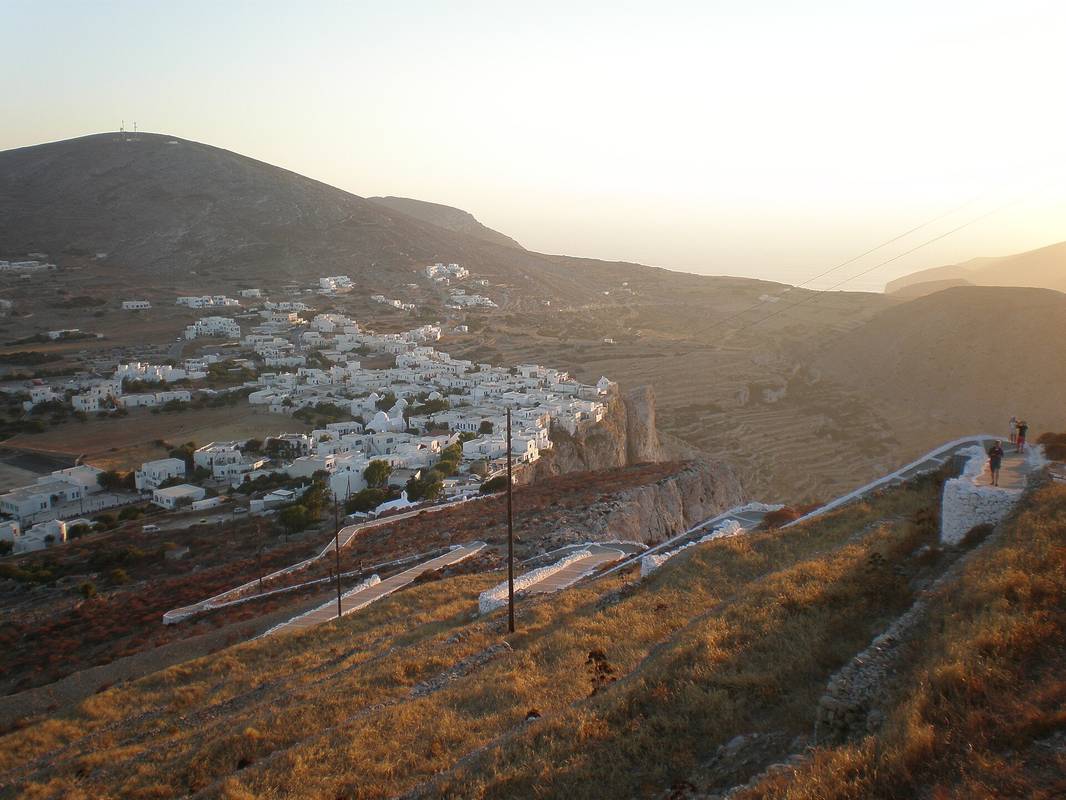
Naxos Town harbour sits in the heart of the island’s capital, steps from the Portara landmark and the waterfront. Catamarans and conventional ferries share this busy port, so arrive early and confirm your gate. Karavostasi, on Folegandros, is a compact harbour with a handful of tavernas below the dramatic Chora perched on the cliff. A short bus or taxi ride climbs from the port to the fortified town centre. The contrast between the two islands defines the trip: Naxos offers scale, beaches and mountain villages, while Folegandros delivers concentrated drama and quiet. This pairing rewards travellers who want variety inside one Cyclades route without long crossings between distant island groups.
Sequencing the islands matters for a smooth trip. Naxos deserves the longer stay, since its size, beaches and inland villages fill several days easily. Folegandros suits a shorter, focused visit centred on the Chora, the sunset cliffs and a couple of coves. Sailing south late in a Naxos stay lets you unwind on the smaller island before the journey home. Return catamarans run on the same summer-dense schedule, so a two-way plan stays flexible. Confirm both legs when you book to avoid a gap on the quieter Folegandros side. Plan your visit and tours through our Naxos travel guide.
Frequently Asked Questions
Is there a direct ferry from Naxos to Folegandros?
Direct sailings exist during the summer peak, though most catamarans call at Ios or Sikinos on the way to Karavostasi. A near-direct fast vessel reaches Folegandros in about 1 hour 30 minutes, while routed sailings run closer to two hours or slightly more. The exact pattern shifts week to week across the season, so the printed timetable is the reliable source for any given date. Naxos anchors this southbound corridor as a major hub, which keeps the connection frequent through the warm months. Travellers wanting the shortest crossing should scan the schedule for sailings with the fewest intermediate stops, since each extra port adds docking and boarding time.
Booking ahead in high summer secures a place on the leanest departures, which fill quickly with island-hoppers heading further south toward Santorini on the same chain of ports through the central Cyclades.
Can I bring a rental car from Naxos to Folegandros?
Bringing a car depends on the vessel class, and this detail catches many travellers out. High-speed catamarans frequently carry no vehicles or only a small number, so a conventional car ferry becomes the practical choice for drivers. Reserve the vehicle slot alongside passenger tickets, because car space sells out faster than seats during summer. Check your rental agreement too, since some Naxos hire companies prohibit taking their cars off the island. A common workaround leaves the vehicle on Naxos and rents again on Folegandros, sidestepping both the ferry fare and the schedule limits. Folegandros is compact enough that a scooter or the local bus covers most of the island comfortably.
Weigh the cost of transporting a car against renting fresh, and factor the reduced catamaran frequency for vehicles into your dates. For most two-island trips, travelling as a foot passenger keeps the crossing cheaper and far more flexible.
How many days should I spend on each island?
Naxos deserves the longer allocation, since its size supports several days of beaches, mountain villages, ancient sites and tours. Three to four nights on Naxos gives a rounded stay without rushing. Folegandros suits a shorter, focused visit of two to three nights centred on the Chora, the clifftop paths and a couple of quiet coves. This split reflects the character of each island: Naxos offers variety and scale, while Folegandros rewards slow days and dramatic views. Sequencing Naxos first works well, letting you settle into the Cyclades before the short southbound hop. The catamaran crossing takes under two hours in most cases, so the transition costs little time.
Book both ferry legs together to protect the return, because Folegandros carries thinner service than the larger hub. A balanced route treats Naxos as the base and Folegandros as the memorable, concentrated finale before heading home through the central Cyclades.