
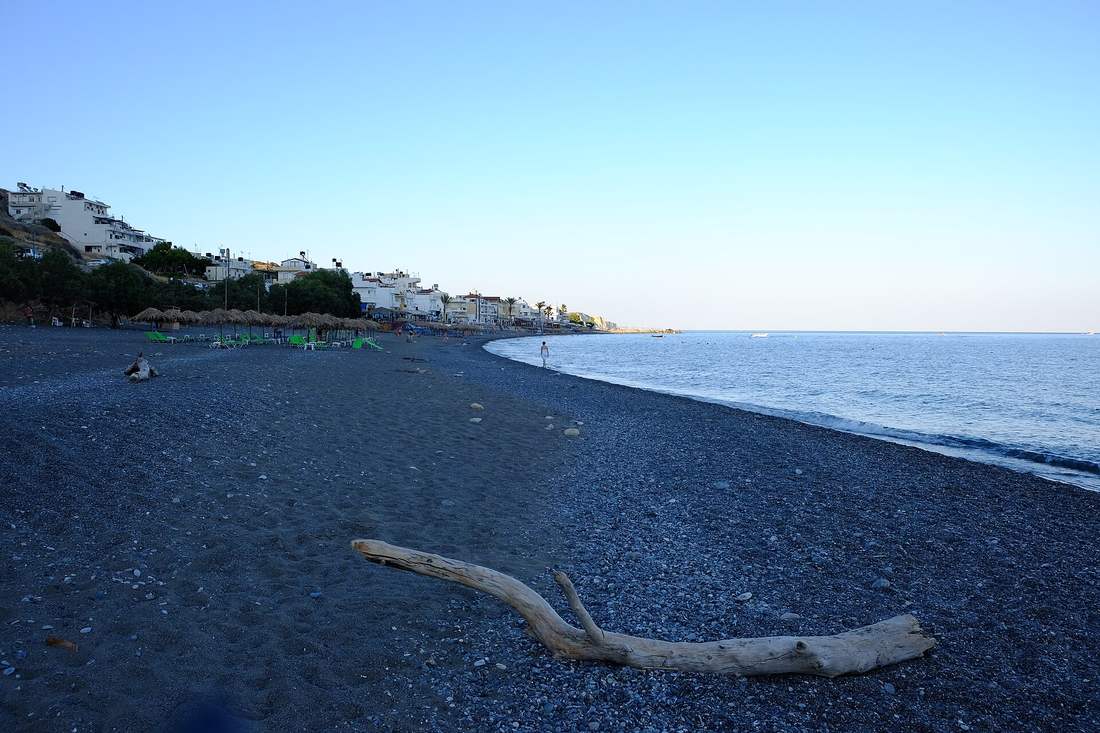
Myrtos is a small whitewashed seaside village on the south coast of Crete, set in the Lasithi region west of Ierapetra. A long grey-sand and pebble beach fronts the village, and narrow flower-filled lanes climb the slope behind the shore. Low-key tavernas, cafes and rooms line the seafront, and the village keeps a relaxed, alternative feel that draws returning independent travellers, walkers and families rather than package crowds. Two Minoan-era settlements and a small folklore museum record its long history. The village enjoys some of the warmest, driest weather on the island. Plan a calm southern base at Myrtos with My Greece Tours.
Myrtos rewards travellers who want an authentic seaside base away from the busy north-coast resorts. The sections below cover the beach and the village lanes, the Minoan hills of Fournou Korifi and Pyrgos, the Sarakina gorge, the local weather, and the drive east to Ierapetra and the mountains. Each answer draws only on the durable facts of the village, so the picture stays accurate and free of guesswork. Read this page alongside the wider Crete travel guide to place Myrtos within the whole island and to build a route that links the southern coast with the eastern highlands.
Where is Myrtos on the south coast of Crete?
Myrtos sits on the south coast of Crete, in the Lasithi region west of Ierapetra. A long grey-sand and pebble beach fronts the whitewashed village, and narrow flower-filled lanes climb the slope behind the shore toward the low hills inland.
Myrtos occupies a sheltered stretch of the southern Cretan coast, tucked into the Lasithi region and lying west of Ierapetra, the largest town on this side of the island. A long grey-sand and pebble beach runs the length of the village front, backed by low-key tavernas, cafes and rooms that face the sea. Narrow, flower-filled lanes climb the slope behind the shore, linking whitewashed houses in a compact grid that a visitor crosses on foot in minutes. The tight setting keeps the whole village small and walkable throughout. Travellers reach Myrtos by the coastal road from Ierapetra to the east.
The eastern mountains rise directly behind the settlement, framing the grey-sand beach and giving the place its enclosed, protected character on the map of southern Crete.
The village stands apart from the crowded resort strips of the north coast, and its position on the quieter south shore shapes the kind of holiday it offers. Ierapetra, a short drive east, supplies larger shops, services and transport links, while the mountains inland hold gorges, terraces and stone villages within reach of a day trip from the coast. Myrtos itself keeps a relaxed, alternative feel that draws returning independent travellers, walkers and families rather than package crowds. The compact seafront concentrates the tavernas and cafes into one easy strip, so evenings stay social without turning loud or crowded.
For a full sense of how the southern coast fits the island and what fills a stay, the things to do in Crete pages set the wider scene.
What is Myrtos beach and the village like?
Myrtos beach is a long grey-sand and pebble strand fronting the whitewashed village. Low-key tavernas, cafes and rooms back the shore, and flower-filled lanes climb behind it, giving a relaxed feel that suits independent travellers, walkers and families over package crowds.
The beach at Myrtos stretches along the whole village front, a long band of grey sand mixed with pebble that shelves into the southern sea. Tavernas, cafes and rooms line the shore road directly behind it, so swimmers step from the water to a table without walking far along the front. The whitewashed houses of the village climb the slope in narrow, flower-filled lanes that open onto small squares and quiet corners above the sea. This tight layout keeps everything close together, and a visitor moves between beach, room and dinner entirely on foot.
The relaxed, alternative feel of the place draws returning independent travellers, walkers and families who come back year after year, giving Myrtos a settled community atmosphere rather than the churn of a large package resort.
Life in the village centres on the seafront and the flower-filled lanes above it. The tavernas serve the day’s catch and local dishes, the cafes fill in the evening, and the pace stays slow through the length of the summer. Quieter beaches spread along the coast nearby for travellers who want a change of sand, and walkers use the village as a base for routes into the hills behind. The atmosphere favours long stays over quick stops. The returning crowd of independent visitors sets the steady tone across the season.
For families weighing a southern base against a livelier resort, and for a look at the wider range of sand on the island, the Crete beaches guide compares the coasts in close and careful detail.
What Minoan and museum history surrounds Myrtos?
Two Minoan-era settlements, Fournou Korifi and Pyrgos, sit on low hills just outside Myrtos, and a small folklore museum in the village tells its story. The pairing of prehistoric ruins with a village record gives Myrtos real historical depth beyond the beach.
History reaches back a long way at Myrtos. Two Minoan-era settlements stand on low hills just outside the village: Fournou Korifi and Pyrgos. These excavated sites record early Bronze Age life on the southern coast, and their hilltop positions above the shore show how prehistoric communities settled this part of the island. A visitor walks or drives the short distance from the seafront to reach the ground where these settlements once stood. The presence of two such sites so close to a single small village marks Myrtos as a place of unusual archaeological interest for its size. The ruins pair the modern whitewashed village with a deep prehistoric past.
They give walkers and history-minded travellers a concrete goal within easy reach of the beach and the tavernas below. In the hills behind the village, the Sarakina Gorge cuts a cool, marble-walled ravine.
A small folklore museum in the village complements the ancient hills by recording the more recent story of Myrtos itself. The collection tells how the community lived, worked and grew on this stretch of coast, adding a human thread to the prehistoric ruins outside town. Together the two Minoan sites and the museum let a traveller trace the settlement from the Bronze Age through village memory in a single short stay. This blend of quiet beach, working village and layered history is exactly what draws returning independent travellers, and it sits well beyond the well-worn resort circuit.
Travellers hunting for places that reward slow, unhurried exploration will find Myrtos listed among the island’s hidden gems in Crete, a small village that pairs its sand with genuine historical substance.
What is the weather like in this part of Crete?
Myrtos enjoys among the warmest, driest weather on the island, a trait of the sheltered south coast in the Lasithi region. The dry southern climate extends the swimming season and makes the village a reliable base for beach days and inland walks.
The south coast around Myrtos records among the warmest and driest weather anywhere on the island. The mountains behind the village shelter the coast, and the southern exposure holds the heat. The swimming season here runs long, and the skies stay clear for much of the season. This dry climate shapes the way travellers use the village: beach days extend well beyond the peak weeks, and walkers plan gorge and hill routes with a strong chance of settled conditions. The warm, protected setting is one clear reason returning independent travellers tend to favour Myrtos over the cooler, wetter corners of Crete.
The weather works with the compact seafront to make long, low-key stays comfortable, and it underpins the village’s steady, back-year-after-year following of families and walkers.
The reliable southern climate rewards careful timing across the whole span of seasons. The warm shoulder months on this coast let travellers swim and walk in comfort when the northern resorts have already cooled, and the dry air keeps the inland routes firm underfoot for walking. Anyone matching a trip to swimming, hiking or quiet-village weather will want to weigh the seasonal calendar closely before booking a southern base like Myrtos. The village suits travellers who value settled conditions over crowds. Its warm, dry climate forms a large part of the year-round draw here.
For a season-by-season breakdown that helps set the right dates for the south coast, the guide to the best time to visit Crete lays out temperatures and rainfall across the year.
How does Myrtos connect to Ierapetra and the eastern mountains?
Myrtos lies within easy reach of Ierapetra to the east and the eastern mountains inland. The Sarakina gorge cuts into the hills behind the village, and quieter beaches spread along the coast nearby, making Myrtos a calm base for the wider south-east.
Myrtos works as a calm southern base with the wider south-east all within easy reach. Ierapetra lies a short drive east along the coast, giving travellers a larger town for shops, services and onward transport while keeping the quiet village as the place to sleep at night. Inland, the eastern mountains rise directly behind Myrtos, and the Sarakina gorge cuts into them, offering walkers a dramatic route from close to the village. Quieter beaches spread along the coast nearby for days when a change of sand appeals more. This spread of options, town, gorge and empty coast, all reachable from one small seafront, makes the village a practical base rather than a single-purpose beach stop.
The mix suits the walkers and independent travellers who return.
The link to Ierapetra shapes how a stay at Myrtos runs from day to day. The town covers the practical needs a small village cannot, and it opens the road east toward the far corners of the Lasithi region and the mountains beyond it. From the village a traveller can spend a morning on the Sarakina gorge, an afternoon on a quiet nearby beach and an evening back at a seafront taverna, all without a long drive. Choosing where to sleep against where to explore is the key planning question for the south coast, and the balance Myrtos strikes clearly favours calm.
The Ierapetra guide fills in the neighbouring town, so travellers can pair the two and cover the south-east from a single relaxed seaside base.
Frequently Asked Questions
Is Myrtos a good base for a quiet holiday in Crete?
Myrtos suits travellers who want a calm, friendly southern base set well away from the busy north-coast resorts. The village is small enough to cross on foot, with a long grey-sand and pebble beach, low-key tavernas, cafes and rooms, and narrow flower-filled lanes climbing the slope behind the shore. Its relaxed, alternative feel draws returning independent travellers, walkers and families rather than package crowds, so the pace stays slow and social without turning loud or crowded. Ierapetra lies a short drive east for larger shops and services, and the eastern mountains and the Sarakina gorge both sit within reach for day walks. The warm, dry southern weather extends the swimming season and keeps the inland routes firm underfoot.
Travellers deciding between a lively resort and a quiet village will find the trade-offs set out clearly in the guide to where to stay in Crete, which places Myrtos among the island’s calmer, slower options.
What can you do around Myrtos besides the beach?
Beyond the beach, Myrtos gives walkers and history-minded travellers real ground to cover. Two Minoan-era settlements, Fournou Korifi and Pyrgos, stand on low hills just outside the village. A small folklore museum in the village records its story. A visitor can trace the coast from the Bronze Age through recent memory in one short stay. The Sarakina gorge cuts into the mountains inland and offers a dramatic walking route from close to the village. Quieter beaches spread along the coast nearby for a change of sand and a slower swim. Ierapetra sits a short drive east for a larger town, and the eastern mountains rise directly behind Myrtos.
This full mix of ruins, gorge, museum and empty coast rewards slow exploration and makes the village far more than a simple beach stop. The wider Crete pages set these options against the rest of the island for a fuller, longer route.
What is the best time of year to visit Myrtos?
Myrtos enjoys among the warmest, driest weather on the island, a trait of the sheltered south coast in the Lasithi region, so its usable season runs long. The mountains behind the village shelter the coast and the southern exposure holds the heat, extending the swimming season well beyond the peak weeks and keeping skies clear for gorge and hill walks. The warm shoulder months reward travellers who want the beach and the inland routes without the fullest crowds. The dry air keeps the paths firm underfoot for the Sarakina gorge and the walk to the Minoan hills.
Peak summer brings the warmest sea and the liveliest seafront, while the quieter edges of the season suit walkers and families after calm. Matching dates to swimming, hiking or quiet-village weather is the key call, and travellers do well to plan the trip in advance to secure a room in this small, popular village.