
Mykonos history spans ancient Ionian settlers beside sacred Delos, Venetian and Ottoman rule, the Venetian-built windmills and Little Venice, a seafaring and trading past, to its 20th-century rise as a glamorous international tourist island. This guide covers the timeline, the key historical sites and how the rich past shapes Mykonos today.
Mykonos has a deep history beneath the glamour, as set out in the Mykonos travel guide, complementing the mythology guide. The sections below cover it in full.
What is the history of Mykonos in brief?
Mykonos history begins with ancient Carian and Ionian settlers, thriving beside the sacred island of Delos, the birthplace of Apollo. It passed through Roman, Byzantine, Venetian and Ottoman rule, prospered as a seafaring and trading island, joined the Greek state in the 19th century, and rose to fame as a glamorous tourist destination from the mid-20th century.
Mykonos has a long and layered history that belies its modern party-island image. According to the historian Herodotus, it was first settled by the Carians from Anatolia, then mainly by Ionians from Athens by the 11th century BC. In antiquity Mykonos lived in the shadow and benefit of neighbouring Delos, the sacred island and birthplace of the god Apollo, which was the spiritual centre of the ancient Aegean, drawing pilgrims and trade. Over the centuries the island passed through Roman and Byzantine hands, then came under Venetian rule from 1390, when noble families controlled it and built fortifications. In 1537 it was attacked by the Ottoman admiral Barbarossa, and an Ottoman administration followed, though the island kept much autonomy and prospered as a seafaring and trading hub into the 18th century. After playing a part in the Greek War of Independence, Mykonos joined the modern Greek state in the 19th century, and from the mid-20th century blossomed into the glamorous international destination it is today. This rich past still shapes the island, set out alongside the guide to a Delos tour. Ancient Mykonos and Delos came first.
What was ancient Mykonos and Delos like?
Ancient Mykonos was a modest Ionian island living beside sacred Delos, the spiritual heart of the Cyclades and the mythical birthplace of Apollo and Artemis. Delos was a major religious and trading centre drawing pilgrims from across the Mediterranean, while Mykonos served as a base and supply point. Today Delos is a UNESCO World Heritage archaeological site.
In antiquity, the story of Mykonos is inseparable from that of its tiny neighbour Delos, which dominated the region. Mykonos itself was a relatively modest Ionian island, settled by Ionians from Athens, with two main ancient towns and a role as a supply base, stopover and supporting island for the pilgrims and traffic drawn to Delos. Delos, by contrast, was one of the most important sacred sites in the ancient Greek world: in myth the birthplace of the twin gods Apollo and Artemis, it became the spiritual and religious centre of the Cyclades, which were said to circle around it, with grand temples, sanctuaries and even shrines to Egyptian gods, drawing pilgrims and festivals throughout the year. Delos also flourished as a major commercial port and trading centre in Hellenistic and Roman times, growing wealthy and cosmopolitan. The French began excavating Delos in the late 19th century, uncovering the extensive ruins, and today it is a UNESCO World Heritage Site and a remarkable open-air museum, easily visited by boat from Mykonos. This ancient sacred legacy underpins the island, set out alongside the guide to the mythology. The Venetian and Ottoman eras left their mark.
How did Venetian and Ottoman rule shape Mykonos?
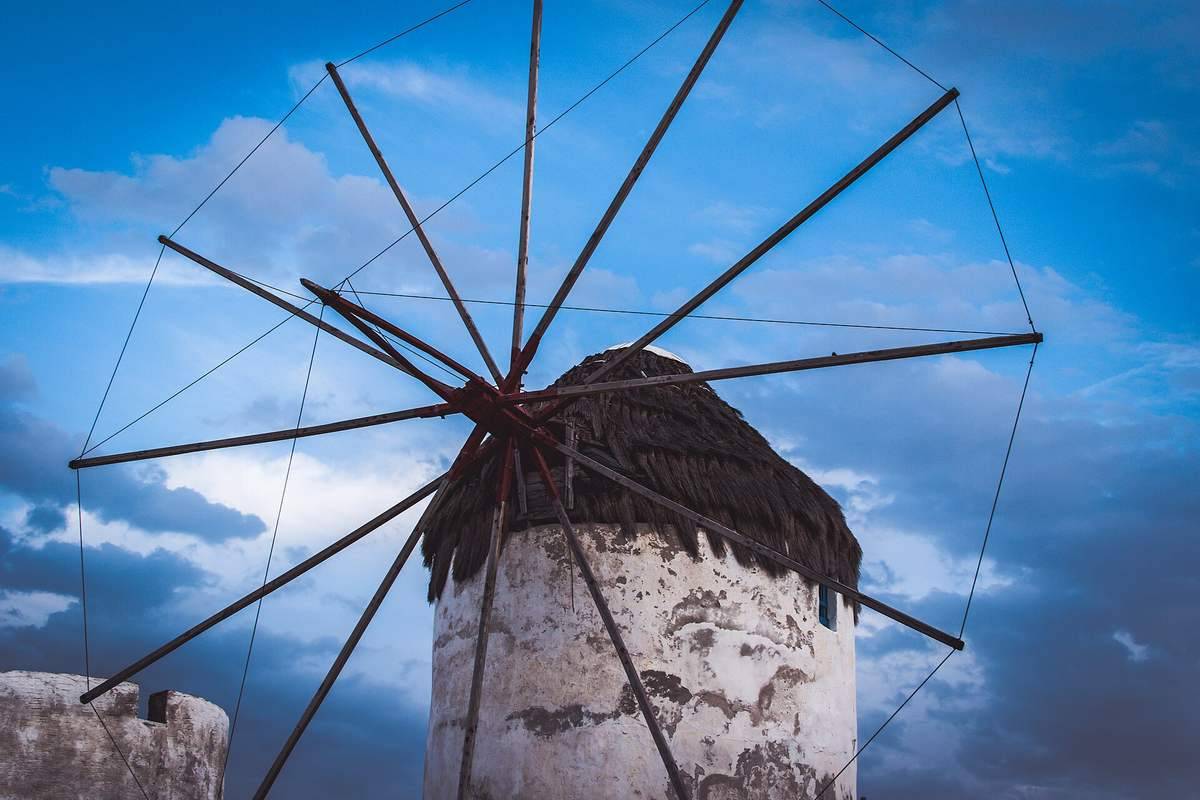
Venetian rule from 1390 brought noble families, the Kastro fortress and the architecture echoed in Little Venice, with the famous windmills raised by the Venetians during the 16th century. After Barbarossa’s 1537 attack, Ottoman rule followed, yet Mykonos kept autonomy and prospered as a seafaring and trading island, shaping its merchant and maritime character.
The medieval and early modern centuries under Venetian and then Ottoman rule profoundly shaped the Mykonos we see today. The island came under direct Venetian rule in 1390, when Venetian noble families governed it and built defensive structures, including the Kastro, the fortified castle quarter of Mykonos Town beside which the famous Panagia Paraportiani church stands. The Venetian influence is most vividly seen in the Alefkandra district, better known as Little Venice, where houses are built right on the water’s edge with colourful wooden balconies and loggias, an Italian-style feature rare in the Cyclades. The Venetians also built the island’s iconic windmills in the 16th century to mill grain, and they worked for centuries. In 1537 the Ottoman admiral Barbarossa attacked, and Ottoman administration followed, but Mykonos retained considerable self-government and, crucially, thrived as a seafaring, merchant and trading island through the 17th and 18th centuries, its sailors and ships ranging across the seas. This long maritime and mercantile history forged the island’s resilient, outward-looking character, set out alongside the guides to Panagia Paraportiani and Little Venice. Modern Mykonos rose from this past.
How did modern Mykonos become a famous destination?
Modern Mykonos joined the Greek state in 1830 after the War of Independence, where the heroine Manto Mavrogenous aided the cause. The French excavations of Delos from the late 19th century drew early travellers, and from the 1950s and 1960s artists, celebrities and the jet set discovered the island, launching its rise into a glamorous, cosmopolitan tourist icon.
The transformation of Mykonos from a quiet seafaring island into a world-famous destination is a 19th and 20th-century story. Mykonos played a notable role in the Greek War of Independence in the 1820s, with the local heroine Manto Mavrogenous, a wealthy and educated woman, contributing money and leadership to the cause and becoming a celebrated figure, commemorated by a statue in the town square. The island joined the newly independent Greek state around 1830. In the late 19th century, the major French archaeological excavations of nearby Delos began drawing curious travellers and scholars to the area, an early seed of tourism. The real transformation came in the mid-20th century: from the 1950s and especially the 1960s, the island’s beauty, light and relaxed atmosphere attracted artists, bohemians, then celebrities, the jet set and international high society, who put Mykonos on the map as a chic, cosmopolitan playground. From there it grew steadily into the glamorous, globally renowned tourist island of today, famed for its beaches, nightlife and style. This modern history layers onto the ancient, set out alongside the guide to Mykonos Town. The historical sites bring the past alive.
What historical sites can you visit in Mykonos?
Historical sites in Mykonos include the ancient sacred island of Delos, the Panagia Paraportiani church and Kastro quarter, the Venetian windmills, Little Venice, the Aegean Maritime and Folklore museums, the Archaeological Museum, and the Manto Mavrogenous statue. Together they tell the island’s story from antiquity through Venetian and Ottoman times to the modern era.
Mykonos offers plenty of places to connect with its rich history, beyond the beaches and nightlife. The unmissable site is Delos, the UNESCO World Heritage archaeological island a short boat ride away, where you can explore the extensive ancient ruins, temples, the Terrace of the Lions and the museum of the sacred city. In Mykonos Town itself, the iconic 16th-century Venetian windmills and the romantic Little Venice waterfront embody the Venetian legacy, while the sculptural Panagia Paraportiani church and the surrounding Kastro quarter mark the medieval castle district. The island’s museums illuminate the past: the Aegean Maritime Museum celebrates its seafaring heritage, the Folklore Museum displays island life in a captain’s mansion, and the Archaeological Museum of Mykonos houses finds from Delos and Rhenia, including ancient pottery and sculpture. The statue of the independence heroine Manto Mavrogenous stands in the main town square. Together these sites span antiquity, the Venetian and Ottoman eras and the modern age, letting visitors trace the island’s full story, set out alongside the guides to the Folklore Museum and the windmills. The questions below cover the points travellers ask most.
How does the history shape Mykonos today?
Mykonos’s history shapes it today through the Venetian windmills and Little Venice, the medieval Kastro and Panagia Paraportiani, the seafaring and trading spirit behind its hospitality, the proximity to ancient Delos as a top attraction, and the whitewashed Cycladic architecture. The past lives on in the island’s landmarks, layout, culture and welcoming, cosmopolitan character.
The rich history of Mykonos is not just in the past, it visibly and deeply shapes the island visitors experience today. The Venetian legacy is everywhere: the iconic 16th-century windmills that crown the town and the romantic Little Venice waterfront, with its balconied houses over the sea, are direct survivals of Venetian rule and now the island’s most photographed sights. The medieval Kastro quarter and the sculptural Panagia Paraportiani church mark the old fortified town. The island’s centuries as a seafaring, merchant and trading community forged an outward-looking, resilient and hospitable character that underpins its modern role as a welcoming, cosmopolitan destination. Its ancient bond with sacred Delos endures as one of the island’s greatest cultural assets, with the UNESCO archaeological site a top day trip. The classic whitewashed, cubic Cycladic architecture and the maze-like town layout, originally designed to confuse pirates, give Mykonos its timeless beauty. Even the modern story, the mid-20th-century arrival of artists and the jet set, set the template for today’s glamorous scene. So exploring Mykonos is to walk through its layered history, from antiquity to the present, set out alongside the guides to the windmills and Mykonos Town. The questions below cover the points travellers ask most.
Frequently Asked Questions
What role did Mykonos play in the Greek War of Independence?
Mykonos played a notable role in the Greek War of Independence in the 1820s, largely through the local heroine Manto Mavrogenous, a wealthy, educated woman who contributed her fortune and leadership to the struggle for freedom. She is celebrated as a national heroine, commemorated by a statue in the main square of Mykonos Town.
What is Mykonos famous for in history?
Mykonos is historically famous for its close link to the sacred ancient island of Delos, the birthplace of Apollo and spiritual centre of the Cyclades, and for its Venetian-built windmills and Little Venice. It also has a proud seafaring and trading past and a role in the Greek War of Independence through Manto Mavrogenous.
How old is Mykonos?
Mykonos has been inhabited since antiquity, first by Carian settlers and then mainly by Ionians from Athens by around the 11th century BC, so it has a history stretching back roughly 3,000 years. It thrived beside sacred Delos in ancient times before passing through Roman, Byzantine, Venetian and Ottoman rule to the modern era.
Who was Manto Mavrogenous?
Manto Mavrogenous was a wealthy, educated Mykonian heroine of the Greek War of Independence in the 1820s, who contributed her fortune and leadership to the struggle for freedom. She is celebrated as a national heroine and commemorated by a statue in the main square of Mykonos Town, reflecting the island’s role in modern Greek history.