
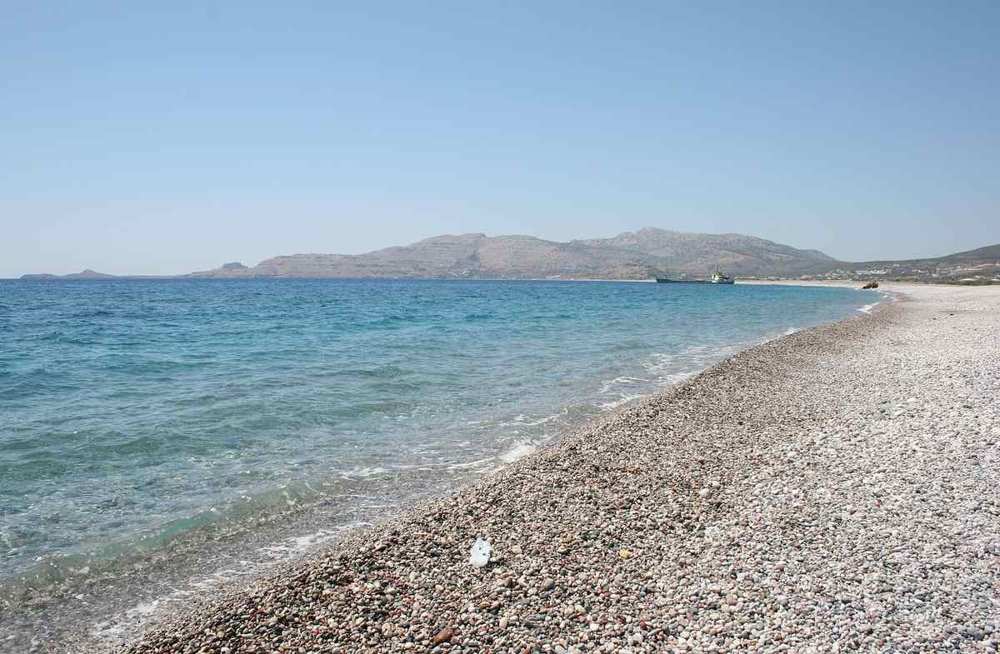
Massari, sometimes written Masari, is a small, quiet coastal village on the east coast of Rhodes, sitting between the fishing harbour of Haraki and the longer resort strip of Kalathos. It lies directly below Malona, the orange-grove village whose citrus farmland spreads inland behind the shore, and only a short drive north of Lindos. The settlement itself is modest, with a handful of tavernas and rooms rather than hotels, and its main draw is a long, mostly undeveloped sand-and-shingle beach backed by farmland and low hills. To the north, the ruined medieval Feraklos castle stands on a rocky headland above the water, marking the end of the bay. For travellers who want an unhurried, off-the-beaten-track corner of the island near the big sights, this stretch rewards a slow visit, and you can plan the trip with My Greece Tours.
This page is part of our wider Rhodes travel guide and focuses on what makes Massari worth a detour: a calm, family-friendly beach, citrus farmland from the Malona valley, and the brooding shape of Feraklos castle on the headland to the north. The sections below cover where Massari sits on the coast, what the beach is like, the village and its food, how to reach it, and the day trips that fan out from this quiet base.
Where is Massari on the east coast of Rhodes?
Massari sits on the east coast of Rhodes between Haraki to the north and Kalathos to the south, directly below the inland village of Malona. It lies roughly midway down the island’s eastern shore, a short drive north of Lindos and well placed for the calm beaches of this coast.
The village occupies a gentle coastal plain where the orange groves of the Malona valley meet the sea. Behind the beach the land is flat and agricultural, planted with citrus and olives, while low hills rise inland towards Malona and the older hill villages. To the north the coastline turns rocky and climbs to the headland crowned by Feraklos castle, which separates Massari bay from the small harbour of Haraki just beyond. To the south the shore runs on into Kalathos, a longer and slightly busier beach strip, before the road climbs again towards the great rock of Lindos. This position, halfway between Rhodes Town and the island’s southern reaches, makes Massari an easy base.
Massari is genuinely a place to slow down rather than a resort, and its quiet, agricultural setting is exactly what draws people away from the crowds further south. The orange and lemon groves give the air a faint citrus scent in spring, and the lack of high-rise building keeps the horizon low and open. Because the village is small, most visitors treat it as a peaceful coastal stop within easy reach of livelier neighbours. Our guide to Malona covers the inland orange-grove village and its valley, and the next section covers what the beach itself is like.
What is Massari beach like?
Massari beach is a long, mostly undeveloped strip of sand and shingle with calm, shallow water that shelves gently into the sea. It is wide, open and rarely crowded, backed by farmland rather than hotels, which makes it a relaxed, family-friendly spot for swimming and quiet days by the water.
The shoreline mixes fine sand near the water with coarser shingle and pebbles in places, so many visitors bring water shoes to cross the stonier sections comfortably. The sea is typically clear and the bottom slopes away slowly, giving a broad area of shallow water that suits children and less confident swimmers. Because the beach is long and only lightly developed, it never feels packed even in high summer; you can usually find an empty stretch by walking a short way from the few organised points. A handful of sunbeds and umbrellas appear near the village end, but much of the bay stays natural, with tamarisk trees and farmland fringing the back of the sand.
Conditions are generally calm, though this is an east-facing coast, so on windy days you may notice more chop and a little seaweed along the tideline. The open aspect means good light through the day and clear views north to the Feraklos headland. There are no big beach clubs or watersports operations here, which is precisely the appeal for those seeking somewhere unhurried. Bring shade, water and supplies if you plan a long day, as services are limited. Our guide to nearby Agathi Beach covers the sandy cove just below Feraklos castle, and the next section covers the village, its tavernas and where to stay.
What is there to do in Massari village?
Massari village is small and low-key, with a few family-run tavernas, some rooms and studios, and little in the way of nightlife or large hotels. The main activities are swimming, eating well, exploring the citrus farmland, and using the village as a quiet base for trips to Lindos and the wider east coast.
Dining is the heart of village life here. A small number of tavernas serve simple Greek and seafood dishes, often using local produce from the surrounding groves and farms, and meals tend to be unhurried and good value. Accommodation is limited to modest rooms, studios and small guesthouses rather than resort hotels, which keeps the atmosphere personal and quiet. Evenings are calm, with little organised entertainment beyond a relaxed taverna dinner, so this is a place for travellers who want rest rather than a buzzing resort scene. The pace, the farmland setting and the friendly local welcome are the real attractions of staying in Massari itself.
Beyond eating and the beach, the area suits gentle exploring: short drives inland to the orange-grove villages, walks along the shore towards the Feraklos headland, and easy outings to the busier centres nearby. The ruined castle above the bay is a rewarding scramble for views over the coast, while the lanes behind the beach lead into productive citrus and olive country. Many visitors split their time between Massari’s calm and the sights a few minutes away. Our guide to Kalathos covers the longer beach strip just to the south, and the next section covers how to reach Massari and get around.
How do you get to Massari and get around?
Massari lies just off the main east-coast road that links Rhodes Town with Lindos, roughly an hour’s drive from the airport and the capital. A hire car is the most practical way to reach it and to explore the surrounding beaches and villages, though public buses on the Rhodes to Lindos route also pass nearby.
Driving is by far the easiest option. From Rhodes Town you follow the east-coast road south past Faliraki and Kolymbia, then turn off towards the coast at the Massari and Malona junction. The village and beach are signposted, and parking near the shore is generally informal and free. A car lets you reach the quieter corners of the bay, drive up towards Malona’s groves, and combine Massari with stops at neighbouring beaches in a single day. Given how spread out this coast is, having your own transport turns a quiet beach stop into a flexible touring base for the whole eastern side of the island.
If you prefer not to drive, the regular buses between Rhodes Town and Lindos run along the main road close to Massari, and from the stop it is a short walk or transfer down to the village and beach. Taxis are available but should be agreed in advance for longer trips. Once you are in the village everything is within easy walking distance, though reaching the more distant beaches and the Feraklos headland is far simpler with a car. Our guide to Haraki covers the small harbour village just north below Feraklos castle, and the next section covers the day trips you can make from Massari.
What day trips can you make from Massari?
Massari is well placed for day trips along the east coast, with Lindos and its acropolis only a short drive south and a string of beaches, harbours and hill villages within easy reach. The ruined Feraklos castle, the harbour of Haraki and the orange-grove valley behind make natural half-day outings.
Lindos is the headline excursion: its whitewashed village, hilltop acropolis and twin bays are reached in well under half an hour by car, and many people combine a morning there with an afternoon back on Massari’s quiet sand. Closer to base, the climb to Feraklos castle rewards you with sweeping coastal views, while the little harbour of Haraki below offers waterfront tavernas and the sandy cove of Agathi just beyond. Inland, the citrus villages of the Malona valley make a gentle drive through productive farmland, a contrast to the coast and a window into everyday rural Rhodes away from the resorts.
Further afield, the east-coast road opens up Kalathos and the longer beaches to the south, the springs and bays around Kolymbia to the north, and the route on towards Rhodes Town with its medieval old quarter. Boat trips and organised excursions to Lindos and beyond can usually be arranged from the larger nearby resorts, so a quiet base like Massari need not limit what you see. With a hire car and an early start, much of the island’s eastern half is comfortably within range for a day. Browse our wider list of Rhodes beaches to plan further coastal stops. Plan your visit and tours through our Rhodes travel guide.
Frequently Asked Questions
Is Massari beach good for families with children?
Yes, Massari is a good choice for families looking for a calm, uncrowded beach. The water shelves gently and stays shallow over a wide area, which suits young children and less confident swimmers, and the long, open stretch of sand and shingle gives plenty of room to spread out without the crush of a busy resort beach. Because the bay is only lightly developed, it tends to stay peaceful even in high summer. The main thing to prepare for is the shingle in places, so bringing water shoes makes getting in and out of the sea more comfortable. Services are limited, so it is wise to pack shade, water and snacks for a full day. The quiet, family-friendly atmosphere and the easy access to gentler activities nearby are exactly why many parents prefer this part of the east coast to the livelier strips further south.
What is the ruined castle near Massari?
The ruined castle on the headland to the north of Massari is Feraklos, one of the medieval fortifications built on Rhodes during the era of the Knights of St John. It stands on a rocky promontory above the sea, separating Massari bay from the harbour village of Haraki just beyond, and once guarded this stretch of the east coast. Today it survives as atmospheric ruins rather than a restored monument, reached by a walk or scramble up the hillside, and the reward is a broad panorama over the surrounding beaches and farmland. The climb is best attempted in cooler parts of the day and with sturdy footwear, since the path is rough and exposed. From the top the views take in Massari beach to the south, the cove of Agathi and the little harbour of Haraki below, making it one of the most rewarding short outings in the area for anyone interested in history or coastal scenery.
When is the best time to visit Massari?
The most comfortable months to visit Massari are late spring and early autumn, when the weather is warm and settled but the coast is far quieter than at the height of summer. In May and June the orange and lemon groves behind the beach are at their freshest and the sea has begun to warm, while September and early October bring still-warm water and softer light with fewer visitors. High summer is hot and sunny and the calm, shallow water is at its most inviting, though even then this quiet stretch rarely feels crowded compared with the bigger resorts. As an east-facing beach it can pick up wind and a little seaweed along the tideline on breezy days, so checking conditions helps if calm swimming is your priority. Out of season many tavernas and rooms wind down, so the shoulder months strike the best balance of good weather, open services and the unhurried atmosphere that defines the village.