
Kythnos Kayak Tour
A Kythnos kayak tour is a guided sea kayak day on the coast of Kythnos in the western Cyclades, paddling from a sheltered beach to coves, sea caves and sandy bays that no road reaches, with swims, snorkeling and a lunch of local food. Greece Tours lists the Kythnos kayak tour on sale, from the Kolona trip with hot springs to the island’s other paddling routes.
Kythnos is close to Athens and quiet by Cycladic standards, and a Kythnos kayak tour shows its best side: a coast of 92 recorded coves, clear water over sand and rock, and warm springs that give the island its old name, Thermia. The routes are easy, the pace is slow, and a certified guide sets each day around the wind.
What is a Kythnos kayak tour?
A Kythnos kayak tour is a half-day or day trip in sea kayaks along a sheltered stretch of the Kythnos coast, led by a certified guide, with two landings for swimming, snorkeling and a meal on beaches that can only be reached from the sea.
The idea is simple: use the kayak to reach the parts of Kythnos that stay empty in summer. The island’s coastline is cut into dozens of small bays, and 92 separate coves have been recorded, of which at least 60 are easy to land on. Roads reach only a handful of them. A Kythnos kayak tour links a string of these coves in one relaxed loop, with the guide choosing the side of the island that is calm that day.
Most of the time is spent off the water. The paddling legs are short, the breaks are long, and the day ends back at the launch beach in the afternoon. Our Kythnos travel guide covers the villages, beaches and ferries, and a Kythnos kayak tour adds the view that the guide cannot give: the island from sea level, close to the rocks and the caves.
Which Kythnos kayak tour can you book?
The Kythnos kayak tour on sale here is the guided kayak trip from Kolona, which adds natural hot springs and a tasting of local delicacies to the paddle. Other routes on the island start from Agios Stefanos, Loutra and Apokrousi.
The Kolona trip is the one to book online through the widgets on this page. It combines the island’s best-known beach, a paddle along the coast to springs that run into the sea, and food from Kythnos farms at a break on the shore. Local guides who have paddled around the island since childhood run kayak trips on Kythnos for all ages and group types.
The other routes are sold as separate days and suit visitors who want a second Kythnos kayak tour or a route closer to their base. Each starts at a different beach and explores a different stretch of coast, and the guide confirms the meeting point and time once the group size and the wind are known. Check the tour listing for the start point, the length and what the food stop includes.
- Kolona – sandbar beach, hot springs, local delicacies.
- Agios Stefanos – north-east coast, a wreck and two sandy beaches.
- Loutra – the wildest part of the island’s coast.
- Apokrousi – the largest beach on Kythnos as the start.
What does the Kolona kayak tour with hot springs include?
The Kolona kayak tour includes the kayaks and paddling gear, a safety briefing on the beach, a guided paddle along the coast from Kolona, a stop at natural hot springs reached from the water, time to swim and snorkel, and a tasting of local delicacies.
The springs are the feature that sets this Kythnos kayak tour apart. Warm, mineral-rich water rises along parts of the Kythnos shore, which is why the island was called Thermia, the island of thermal baths. On the kayak day, the group lands where the warm water meets the sea and bathes in it, a contrast with the cooler open water around it.
The food stop draws on the island’s small farms. Kythnos produces its own cheeses, honey, olive oil and cured meats, and the tasting sets out a selection of them on the beach. One of the island’s kayak guides is also a beekeeper and small-scale farmer, and a Kythnos kayak tour with a tasting ties the sea and the land together in one day. The listing confirms the exact items served.
What is Kolona beach like from a kayak?
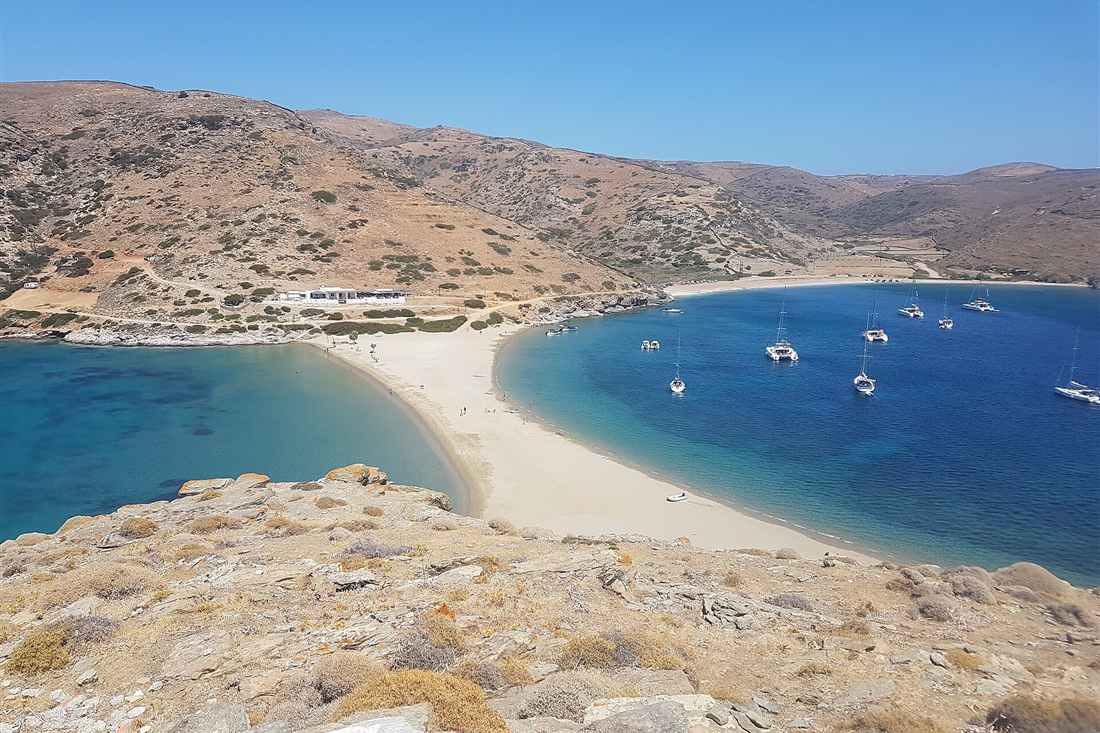
Kolona is a thin sandbar on the north-west coast of Kythnos that links the main island to the islet of Agios Loukas, forming two beaches back to back with clear, shallow water on both sides.
From land, Kolona is a busy beach in August, reached by road or by water taxi from Merichas. From a kayak, the shape of the place makes sense: the sand strip runs between two bays, and the paddler can land on one side, walk a few steps and swim on the other. A Kythnos kayak tour that starts here gives the group the sandbar in the morning light.
The islet of Agios Loukas rises at the end of the bar, with rocky shores that are good for snorkeling. The water in both bays is sheltered from different wind directions, so the guide can pick the calmer side for the launch. Kolona is a common first stop for anyone on a Kythnos kayak tour and a strong reason to choose this trip.
What does the north-east route from Agios Stefanos cover?
The north-east route starts from Agios Stefanos, the most sheltered harbour and beach on the island, passes a shipwreck visible with a mask and snorkel near the shore, and heads north to the sandy beaches of Agios Ioannis and Vasiliko, both reached only by sea.
This Kythnos kayak tour is a circular route of about 4 nautical miles, graded easy and suited to everyone. The first highlight comes within minutes of the launch: the wreck lies close to the coast in clear water, and the guide stops the group so swimmers can look down at it. The route then follows the shore north past rock formations and small caves.
Vasiliko is the lunch stop, with a longer break in the shade of large trees behind the beach. The sand is fine, the water is very clear and colourful fish gather around the rocks at each end. After lunch, the group paddles back to Agios Stefanos. With breaks and snorkeling, this Kythnos kayak tour takes about four to five hours, and the start time is arranged on request.
What does the wild coast route from Loutra show?
The route from Loutra explores the wildest part of the Kythnos coast beyond the spa village, where cliffs, caves and remote coves line the shore and no road runs close to the sea. It suits paddlers who want a more rugged day.
Loutra is the seaside village of the hot springs, with a small harbour, tavernas and a beach, and it is a common base for visitors who come to Kythnos to bathe in the thermal water. A Kythnos kayak tour from here leaves the village behind within a few strokes and follows a coast that sees few visitors, even in high season.
The appeal of this route is the scenery at close range: steep rock walls, openings of sea caves and small pebble coves where the group lands for a swim. The guide times the paddle around the wind. Details such as the turning point and the food stop depend on the day, so check the tour listing before booking this Kythnos kayak tour.
What does the route from Apokrousi reach?
The Apokrousi route starts from the largest beach on Kythnos, on the west coast north of Merichas, and paddles along the shore to the site of the ancient town of Kythnos at Vryokastro, with swim stops in coves along the way.
Apokrousi is a long, sandy bay, and a sand launch is the easiest start for beginners and children. It is also served by the water taxi from Merichas. A Kythnos kayak tour from here follows a coast that mixes low cliffs and small beaches, with the islets of the west coast in view.
The remains of the ancient town sit on a headland by the sea, and the paddle passes below them, with the guide telling the story of the island in antiquity. Paddlers get the history and the swim stops in one outing. Families staying in Merichas find this Kythnos kayak tour the easiest to reach from their accommodation.
Why are hot springs part of a Kythnos kayak tour?
Hot springs are part of a Kythnos kayak tour because the island is one of the few in the Cyclades with natural thermal water, and some springs run straight into the sea at spots that are easiest to reach by kayak.
The springs gave Kythnos its second name, Thermia. The main spa is at Loutra, where warm, mineral-rich water has been used for bathing and treatment for generations, and visitors come for its therapeutic reputation. Along the coast, smaller outflows warm patches of the shallows, and bathing in them after a paddle is one of the unusual pleasures of a Kythnos kayak tour.
The combination works well in practice. Paddling uses the shoulders and back, and a soak in warm water at the halfway point eases the muscles before the return leg. Swimmers notice the change in temperature as they move from the spring into the open sea. The Kolona trip builds its route around this feature, which is why it is the Kythnos kayak tour with the strongest sense of place.
Which sea caves and wildlife line the Kythnos coast?
The Kythnos coast holds sea caves, small grottoes and rock formations shaped by waves, and some caves serve as refuges for the Mediterranean monk seal. In the water, paddlers see colourful reef fish, sea urchins and seagrass over sand.
The caves are a main reason guests book a Kythnos kayak tour. Kayaks slip into openings that boats cannot enter, and the light inside turns the water bright blue. The guide checks the swell before any entry and keeps the group outside when the sea is moving. On calm days, the group paddles in one boat at a time and floats inside for a few minutes.
The Mediterranean monk seal, Monachus monachus, is one of the rarest marine mammals in Europe, and the quiet caves of the western Cyclades are part of its range. Sightings are rare and never guaranteed, and guides keep distance from any cave where a seal rests. Snorkelers on a Kythnos kayak tour see more common life: bream, wrasse and damselfish around the rocks, and the dark shapes of sea urchins on the ledges.
How long does a Kythnos kayak tour last?
A Kythnos kayak tour lasts about four to five hours including breaks, for a circular route of around 4 nautical miles. The paddling takes up less than half of that; the rest of the time goes on swimming, snorkeling, exploring and the food stop.
The rhythm of the day follows the same pattern on every route. The group meets at the launch beach, takes the gear and the briefing, and paddles the first leg to a snack and swim stop with fruit. The second leg reaches the main stop, where lunch or the tasting is served and the group has time to swim, sunbathe or walk to a chapel or a viewpoint above the cove.
After the main stop, the group paddles back to the start. Guests with an afternoon ferry leave time for the drive to Merichas, since the exact finish depends on the sea. The Kolona trip includes the extra stop at the hot springs, so its day can run longer. The listing for each Kythnos kayak tour gives its own duration and start time.
Who can join a Kythnos kayak tour?
A Kythnos kayak tour is graded easy and suits beginners, families, couples and groups of all ages. Guests need to swim and feel at ease in the sea, and the guide teaches the basic stroke on the beach before the launch.
No experience is needed. The routes stay close to the shore, the legs are short and the kayaks are stable, so first-time paddlers settle in within minutes. Double kayaks, where offered, let a parent paddle with a child, or a stronger paddler pair with a less confident one. The guide adapts the pace to the slowest member of the group.
Experienced paddlers enjoy a Kythnos kayak tour for the scenery rather than the challenge, and they can ask about longer routes or a private trip. Guests with back, shoulder or heart conditions talk to the operator before booking. Children’s minimum ages vary between routes, so check the listing, and tell the guide about any medical needs at the briefing.
How do wind and weather shape a Kythnos kayak tour?
Wind decides the route of every Kythnos kayak tour. The guide checks the strength and direction of the wind before the trip, chooses a sheltered stretch of coast and uses the breeze to the group’s advantage on the way back, since safety comes first.
The Cyclades are known for the meltemi, the strong northerly wind of July and August, and a north-east breeze builds through the day in late summer and autumn. On exposed coasts it raises choppy seas and reflected waves off the headlands. That is why trips are planned in advance around the forecast, the group size and the group’s experience, and why the start point can change.
The best season for a Kythnos kayak tour runs from June to mid-September, when the weather is dry and warm, with temperatures between about 25 and 33 degrees. Mid-July to late August is the busiest period, especially around 15 August, when the island fills with visitors from Athens. June and September bring calmer beaches and warm water.
- June – warm, quiet, long days.
- July and August – hottest and busiest, with meltemi days.
- September – warm sea and fewer crowds.
What equipment and food does a Kythnos kayak tour provide?
A Kythnos kayak tour provides the sea kayaks, paddles, life vests and a safety briefing on the launch beach, plus masks and snorkels for the swim stops, a fruit snack at the first break and a lunch or tasting of fresh local products at the main stop.
At the launch beach, the guide hands out the paddling equipment and explains how to sit, steer and hold the paddle. Life vests are worn on the water. The guide carries the food and the safety kit in the kayaks and holds a sea kayak guiding certification, which covers group control, rescues and reading the weather.
The food changes with the route. On the Kolona trip, the tasting of local delicacies is part of the experience; on other routes, lunch includes fresh products from the island, served in the shade at the main stop. Guests who follow a special diet tell the operator in advance. Ask the guide on your Kythnos kayak tour which cheeses and honey come from which village.
What do you bring on a Kythnos kayak tour?
Bring swimwear under light clothes, a hat that stays on in the wind, sunscreen, sunglasses on a cord, a water bottle, a small towel, water shoes or sandals that stay on, and a phone in a waterproof pouch. Leave valuables at your accommodation.
The Cycladic sun is strong on the water, and there is little shade during the paddling legs. A light long-sleeved top protects the shoulders, and sunscreen goes on before the launch and again at lunch. Water shoes help at the landings, where some coves have pebbles or rock rather than sand. A dry bag, when the operator supplies one, keeps a spare layer and a phone safe inside the kayak.
Bring more water than you expect to drink, since the heat of July and August makes paddling thirsty work. If you plan to bathe at the hot springs, a second swimsuit is useful for the ride home. With these basics, a Kythnos kayak tour needs nothing more than a willingness to get wet.
What makes the Kythnos coastline good for kayaking?
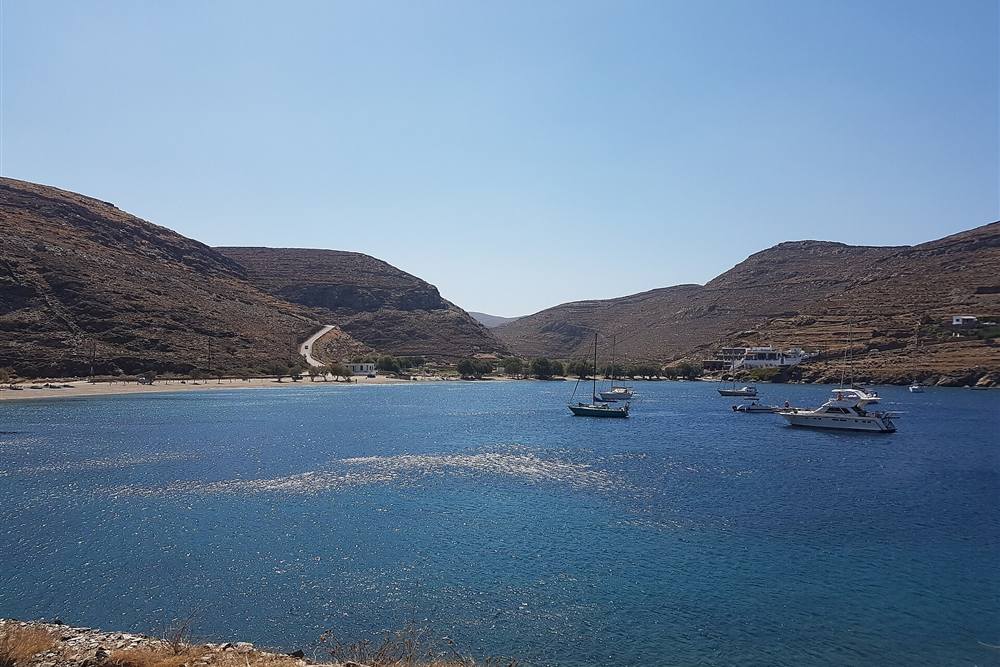
The Kythnos coastline suits kayaking because it is long, indented and quiet: 92 coves line the shore, at least 60 of them easy to land on, sandy beaches sit in sheltered bays, and a large share of the coast has no road access at all.
Few Cycladic islands pack this number of small bays into such a short distance. A kayak can move from one cove to the next in minutes, which keeps each leg of a Kythnos kayak tour short and gives the group plenty of chances to land. The bays face different directions, so the guide can always find a stretch of coast in the lee of the wind.
The water is the other reason. Sand and pale rock make the sea bright turquoise over the shallows and deep blue further out, and visibility for snorkeling is high on calm days. Boat traffic is light compared with the busier islands, so a Kythnos kayak tour shares the coves with fishermen and the odd yacht rather than with day-cruise crowds.
What do you see ashore at the stops of a Kythnos kayak tour?
At the stops, guests find small Cycladic chapels above the beaches, cliff-top viewpoints over the coast, short paths through the scrub and, on the north-east route, the shade of large trees at Vasiliko, where lunch is served.
Each landing is a chance to stretch the legs. The guide points out a path to a chapel or a viewpoint, and guests who prefer to rest stay on the sand. The chapels are simple whitewashed buildings with blue or white domes, some of them still used for feast-day services by families from the nearby villages.
The land behind the coves shows the dry side of the Cyclades: stone terraces, low shrubs of thyme and sage, and dry-stone walls running down to the sea. A Kythnos kayak tour mixes this landscape with the water, and the walk to a viewpoint gives the best photo of the route just paddled, with the kayaks drawn up on the beach below.
What else can you do on Kythnos after a kayak tour?
After a Kythnos kayak tour, visitors bathe in the hot springs at Loutra, walk the lanes of Chora and Dryopida, swim at Kanala and the beaches of the west coast, and eat fresh seafood at the tavernas of Loutra and Merichas.
Chora, the main village, has narrow whitewashed lanes, small squares and churches, and it comes alive in the evening. Dryopida, in the centre of the island, has a different character with its tiled roofs and quiet streets. Both make a calm evening after a day on the water, and both are a short drive from the launch beaches of any Kythnos kayak tour.
Loutra combines the spa with seafood tavernas on the waterfront, and Merichas, the port, has the widest choice of cafes and tavernas by the sea. Beach lovers find a long stretch of sand at Megali Ammos in Kanala. Visitors who stay three days or more fit a Kythnos kayak tour, a spa visit and a village evening into one short trip without rushing.
How do you reach Kythnos and the kayak launch beaches?
Ferries reach Kythnos from Piraeus in about two to three hours and from Lavrio, docking at the port of Merichas. From Merichas, the launch beaches are a short drive, and a water taxi runs from the port to Apokrousi and Kolona in summer.
Kythnos is one of the closest Cycladic islands to Athens, which makes a Kythnos kayak tour realistic even on a short island break. The island also has ferry links to Kea, Serifos and Sifnos, so paddlers can add it to a western Cyclades hop. Our Milos to Kythnos page covers the ferry link from further south.
Car and scooter rental is available in Merichas and Chora, and most visitors find a car the easiest way to reach Agios Stefanos or Loutra. The island has a small number of taxis and a limited bus service linking Chora, Merichas, Dryopida, Loutra and Kanala, with timetables at the kiosk in the port. For Kolona, the water taxi saves the drive to the beach.
How does a Kythnos kayak tour compare with kayaking elsewhere in the Cyclades?
A Kythnos kayak tour is quieter than kayaking on the busier islands, with more empty coves, warm springs and a coast that sees few boats. Milos and Paros offer more famous rock scenery; Kythnos offers solitude and an easy trip from Athens.
Milos is the best-known sea kayak island in Greece, with white volcanic cliffs and the caves of Kleftiko, set out on our Milos kayak tour page. Paros has sheltered bays and islets off Naoussa, covered on our Paros kayak tour page, and Naxos has its own coastal routes on our Naxos sea kayaking page. A Kythnos kayak tour trades fame for space.
Experienced sea kayakers also cross between the islands. Expeditions that paddle from Attica across the Cyclades link Kea, Kythnos, Serifos and Sifnos with open-water crossings of 16 to 20 kilometres, into choppy crosswind seas when the north-east wind rises. That is a different sport from a day trip. For a first look at the island, a guided Kythnos kayak tour and the wider Cyclades tours on our site make the easier start.
Frequently Asked Questions
Do you need experience for a Kythnos kayak tour?
No. Every Kythnos kayak tour on the island is graded easy, the guide teaches the stroke and steering on the beach, and the routes stay close to the shore with short legs and long breaks, so beginners keep up from the first hour.
Can you bathe in hot springs on a Kythnos kayak tour?
Yes, on the Kolona trip. That Kythnos kayak tour stops where natural hot springs meet the sea, so the group bathes in warm mineral water between paddling legs. The spa village of Loutra has the island’s main thermal baths on land.
How long is a Kythnos kayak tour?
A Kythnos kayak tour takes about four to five hours with breaks, over a circular route of around 4 nautical miles. Less than half of the time is paddling; the rest is swimming, snorkeling, exploring and the food stop on a beach.
Is food part of a Kythnos kayak tour?
Yes. A Kythnos kayak tour includes a fruit snack at the first break and a lunch or tasting of fresh local products at the main stop, such as island cheeses and honey. The listing for each route confirms the exact food served.
How do you get to Kythnos for a kayak tour?
Take a ferry from Piraeus, about two to three hours, or from Lavrio to the port of Merichas. From Merichas, a short drive or a summer water taxi reaches the launch beaches of every Kythnos kayak tour on the island.