
A Kos Greek night is an evening out with a set menu of island dishes, live bouzouki and clarinet, and a troupe dancing sirtaki, hasapiko and zeibekiko between courses, run at a mountain taverna or a coastal music hall from about eight until midnight with the coach included. Plan the rest of the island with Greece Tours.
This guide covers the whole evening: which villages and halls run it, what arrives at the table, the music and the dances you see, what it costs for adults and children, the timings and the transport, what to wear, whether children enjoy it, how staged it is against a village feast, and when to book.
What is a Greek night on Kos?
An evening out with a set menu of Greek dishes, live bouzouki and clarinet, and a troupe dancing sirtaki, hasapiko and zeibekiko between courses, run at a taverna or music hall from about eight until midnight with transport included.
A Kos Greek night runs from about eight until midnight. The format is fixed and the venues run it nightly through the season. Guests are seated at long tables, the food arrives in waves, the band plays through the meal, and the dancers work the floor between courses in traditional dress before pulling the room up to join them. Zia sits high on the northern slope of Dikeos above the sea. The Asfendiou villages run the quieter Kos Greek night. The coastal music halls seat three hundred at a Kos Greek night.
Coach pickup for a Kos Greek night covers Tigaki and Marmari. It is a staged evening rather than a village feast, and the good venues are open about that. What they deliver is the music played live by people who play it for a living, food cooked in quantity but cooked properly, and a room that gets up and dances by the third hour. The drive up to Zia takes twenty-five to forty minutes. Sunset seating on a Kos Greek night at Zia is limited.
Where do the Greek nights take place?
In the mountain villages above Kos Town — Zia and the Asfendiou belt — and at the purpose-built music halls on the plain near Kos Town, Kardamena and Mastichari. The village versions add the sunset before dinner.
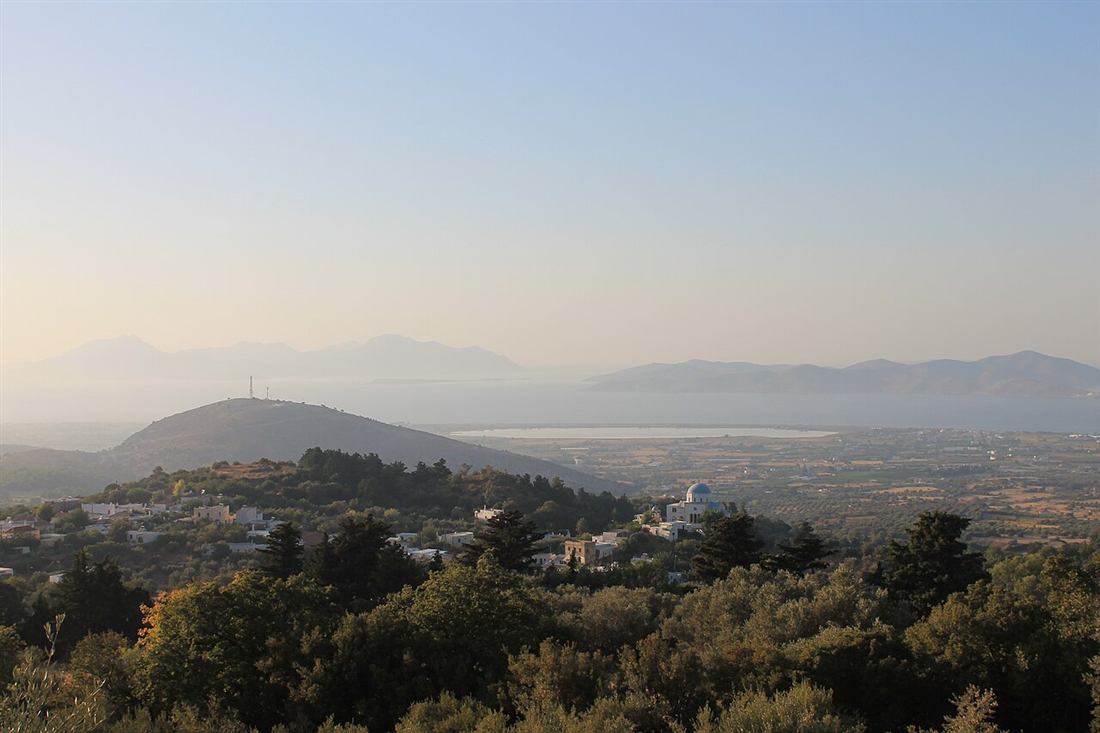
Zia sits high on the northern slope of Dikeos above the sea. Zia is the setting most tours use. The village sits high on the northern slope of Dikeos, the terraces face west over the sea to Kalymnos, and the coaches time arrival for the sunset before the tables are called. Detail on the village sits at Zia. The Asfendiou villages run the quieter Kos Greek night. The coastal music halls seat three hundred at a Kos Greek night. Bouzouki, guitar and clarinet play live through the meal.
The drive up to Zia takes twenty-five to forty minutes. The music halls near the coast are larger, louder and cheaper, with three hundred covers and a full stage show. They suit groups and families who want the spectacle. The Asfendiou villages run the quieter end of the same trade in tavernas of forty covers. Sunset seating on a Kos Greek night at Zia is limited. Plate-breaking uses plaster plates and is swept at once.
What is on the menu?
Mezze to start — tzatziki, taramasalata, dolmades, feta and olives — then a hot course of souvlaki, kleftiko or grilled fish with potatoes and salad, then fruit or a semolina sweet, with wine, water and soft drinks on the table.
The Asfendiou villages run the quieter Kos Greek night. The mezze course carries the local dishes worth trying: krasotyri, the island’s wine-matured sheep cheese, alongside the standard spreads. Village venues put out their own oil, bread and tomatoes and the difference shows against the coastal halls. The coastal music halls seat three hundred at a Kos Greek night. Bouzouki, guitar and clarinet play live through the meal. Sirtaki and hasapiko are danced between the courses.
Sunset seating on a Kos Greek night at Zia is limited. The main course varies by venue. Kleftiko, lamb slow-cooked in paper, is the one worth choosing where it is offered. Vegetarian and gluten-free plates are prepared when the booking states it, and the venues handle that without fuss. Plate-breaking uses plaster plates and is swept at once. Children pay roughly half the adult price on a Kos Greek night.
What music and dancing do you see?
Bouzouki, guitar, clarinet and vocals live, with a troupe dancing sirtaki, hasapiko, kalamatianos and zeibekiko in regional costume, plus the plate-breaking and fire-dance set pieces at the larger halls.
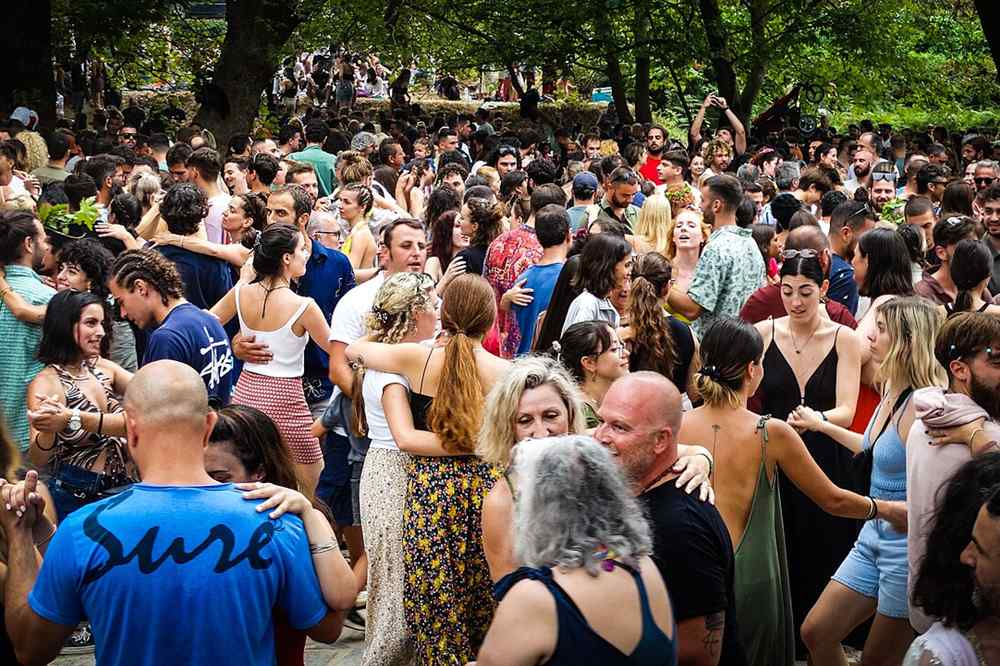
The coastal music halls seat three hundred at a Kos Greek night. The dances are real and regional rather than invented for the room. Kalamatianos is the circle dance everyone joins, hasapiko is the butcher’s dance the film made famous, and zeibekiko is the solo improvisation danced by one man at a time while the rest of the room claps. Bouzouki, guitar and clarinet play live through the meal. Sirtaki and hasapiko are danced between the courses. Zeibekiko is the solo dance the room claps through.
Plate-breaking uses plaster plates and is swept at once. The audience section comes after the show. Dancers pull guests up for the circle, which is easy and forgiving, and the band plays it long enough for a room of two hundred to learn the step. The plate-breaking is done with plaster plates for safety and swept immediately. Children pay roughly half the adult price on a Kos Greek night. Flat shoes beat heels on the cobbled village lanes.
What does a Greek night on Kos cost?
From about 35 to 55 euros per adult with the set menu, drinks and the show included, and from about 18 to 28 euros per child. Hotel transfer is bundled into most tickets and charged at five to ten euros on the rest.
Bouzouki, guitar and clarinet play live through the meal. The price difference tracks the venue rather than the food. A village taverna with one band and four dancers sits at the lower end; a music hall with a full stage show, a fire dance and three hundred covers sits at the upper. Both include unlimited house wine, water and soft drinks. Sirtaki and hasapiko are danced between the courses. Zeibekiko is the solo dance the room claps through. Krasotyri is the wine-matured cheese on the mezze plate.
Children pay roughly half the adult price on a Kos Greek night. Spirits and bottled beer are charged separately at most venues. A private table for a party or a birthday adds a supplement and is arranged at booking rather than on arrival. Flat shoes beat heels on the cobbled village lanes. Zia cools sharply after sunset even in August.
What time does the evening run?
Pickup from the resorts between seven and half past seven, arrival for the sunset at the village venues, dinner from eight, the show from nine, dancing until eleven, and hotel drop-off by midnight.
Sirtaki and hasapiko are danced between the courses. The village versions front-load the evening with the view. Coaches reach Zia by half past seven in midsummer, which gives thirty to forty minutes in the lanes and on a terrace before the tables are called. That hour is the reason to choose the village over the plain. Zeibekiko is the solo dance the room claps through. Krasotyri is the wine-matured cheese on the mezze plate. Kleftiko is the lamb dish worth choosing where it appears.
Flat shoes beat heels on the cobbled village lanes. The music halls start and finish earlier because there is no drive up the mountain. Families with small children take those and are back at the hotel by eleven, which matters more in practice than any difference in the show. Zia cools sharply after sunset even in August. The village panigyri is the unstaged form of a Kos Greek night.
Is transport included?
Yes on most tickets, with coach pickup from Kos Town, Tigaki, Marmari, Mastichari, Kardamena and Psalidi. The drive to Zia takes twenty-five to forty minutes depending on the resort.
Zeibekiko is the solo dance the room claps through. The transport is the practical reason to book rather than drive. The wine is on the table and unlimited, the mountain road back down from Zia has hairpins and no lighting, and Greek drink-driving limits are enforced with roadside checks in summer. Krasotyri is the wine-matured cheese on the mezze plate. Kleftiko is the lamb dish worth choosing where it appears. House wine, water and soft drinks sit on the table all evening.
Zia cools sharply after sunset even in August. Confirmations carry the pickup point rather than the hotel name where a coach cannot reach the door, which happens in the old parts of Kos Town. Reading that line the evening before saves twenty minutes of confusion on the night. The village panigyri is the unstaged form of a Kos Greek night. Saint’s-day feasts fall through July and August on the island.
What do you wear and bring?
Smart casual and a light layer. Zia sits at 300 metres and the terraces cool sharply after sunset even in August, while the coastal halls stay warm all evening.
Krasotyri is the wine-matured cheese on the mezze plate. Footwear matters more than clothing. The village lanes are cobbled and uneven and the dancing is on a wooden or stone floor, so flat shoes beat heels by a distance. Cash is worth carrying for spirits, for the village shops before dinner and for the band. Kleftiko is the lamb dish worth choosing where it appears. House wine, water and soft drinks sit on the table all evening. A Kos Greek night costs less in a village than in a music hall.
The village panigyri is the unstaged form of a Kos Greek night. Cameras are welcome and the venues expect them. The fire and plate sets are staged with the room’s phones in mind, and the troupes pose afterwards without being asked. Saint’s-day feasts fall through July and August on the island. The Kos Greek night season runs from May to October.
Do children enjoy it?
Yes. The show is loud, visual and short-scened, the food is plain enough for young palates, and the circle dance takes anyone who can walk. Venues price children at roughly half and seat families together.
Kleftiko is the lamb dish worth choosing where it appears. The limiting factor is the hour rather than the content. A midnight return suits a child of eight better than a child of three, and the coastal halls that finish by eleven are the version for younger families. House wine, water and soft drinks sit on the table all evening. A Kos Greek night costs less in a village than in a music hall. Coach pickup for a Kos Greek night covers Tigaki and Marmari.
Saint’s-day feasts fall through July and August on the island. High chairs and children’s plates are standard at the larger venues and available on request at the village tavernas. Stating ages at booking is what gets the table placed near the floor, where the dancing is worth watching from. The Kos Greek night season runs from May to October. Cancellation on a Kos Greek night is free to twenty-four hours.
How authentic is a Greek night?
The music and the dances are genuine and played by professionals; the setting is arranged for visitors. The unstaged equivalent is the village panigyri, a saint’s-day feast held on fixed dates through summer with no ticket and no menu.
House wine, water and soft drinks sit on the table all evening. Judging one by the other misses the point. The organised evening delivers the music, the food and the dancing on a night you choose, in a room built for it, with a coach home. The panigyri delivers a village at three in the morning and no way back. A Kos Greek night costs less in a village than in a music hall. Coach pickup for a Kos Greek night covers Tigaki and Marmari. The drive up to Zia takes twenty-five to forty minutes.
The Kos Greek night season runs from May to October. Travellers who want both check the saint’s days against their dates. Kos village feasts fall through July and August, and the tavernas and the island’s nightlife carry the rest of the calendar. Cancellation on a Kos Greek night is free to twenty-four hours. A Kos Greek night runs from about eight until midnight.
How far ahead do you book, and when does the season run?
Two to four days ahead in July and August and a day ahead outside them. The season runs from May to October, with nightly programmes in high summer and two or three nights a week in the shoulder months.
A Kos Greek night costs less in a village than in a music hall. August fills the Zia venues first because the sunset seating is limited. Booking online holds the table and the pickup, and it fixes the price against the resort desk rate on the night. Coach pickup for a Kos Greek night covers Tigaki and Marmari. The drive up to Zia takes twenty-five to forty minutes. Sunset seating on a Kos Greek night at Zia is limited.
Cancellation on a Kos Greek night is free to twenty-four hours. Cancellation runs free to twenty-four hours with most operators. Dietary needs, group size and any birthday arrangement go on the booking rather than arriving with the party. The island as a whole is covered at Kos, and the wider dining picture in Kos restaurants. A Kos Greek night runs from about eight until midnight. Zia sits high on the northern slope of Dikeos above the sea.
Frequently Asked Questions
What does a Kos Greek night cost?
From about 35 to 55 euros per adult with the set menu, house wine, water, soft drinks and the show, and from about 18 to 28 euros per child. Hotel transfer is bundled into most tickets.
Where is the best Kos Greek night held?
At Zia and the Asfendiou villages on the mountain, where the coaches arrive for the sunset before dinner, and at the larger music halls near Kos Town, Kardamena and Mastichari for the full stage show.
What time does a Kos Greek night finish?
Pickup runs from seven, dinner starts at eight, the show runs from nine, and the coaches drop back at the hotels by midnight. The coastal halls finish about an hour earlier than the village venues.