
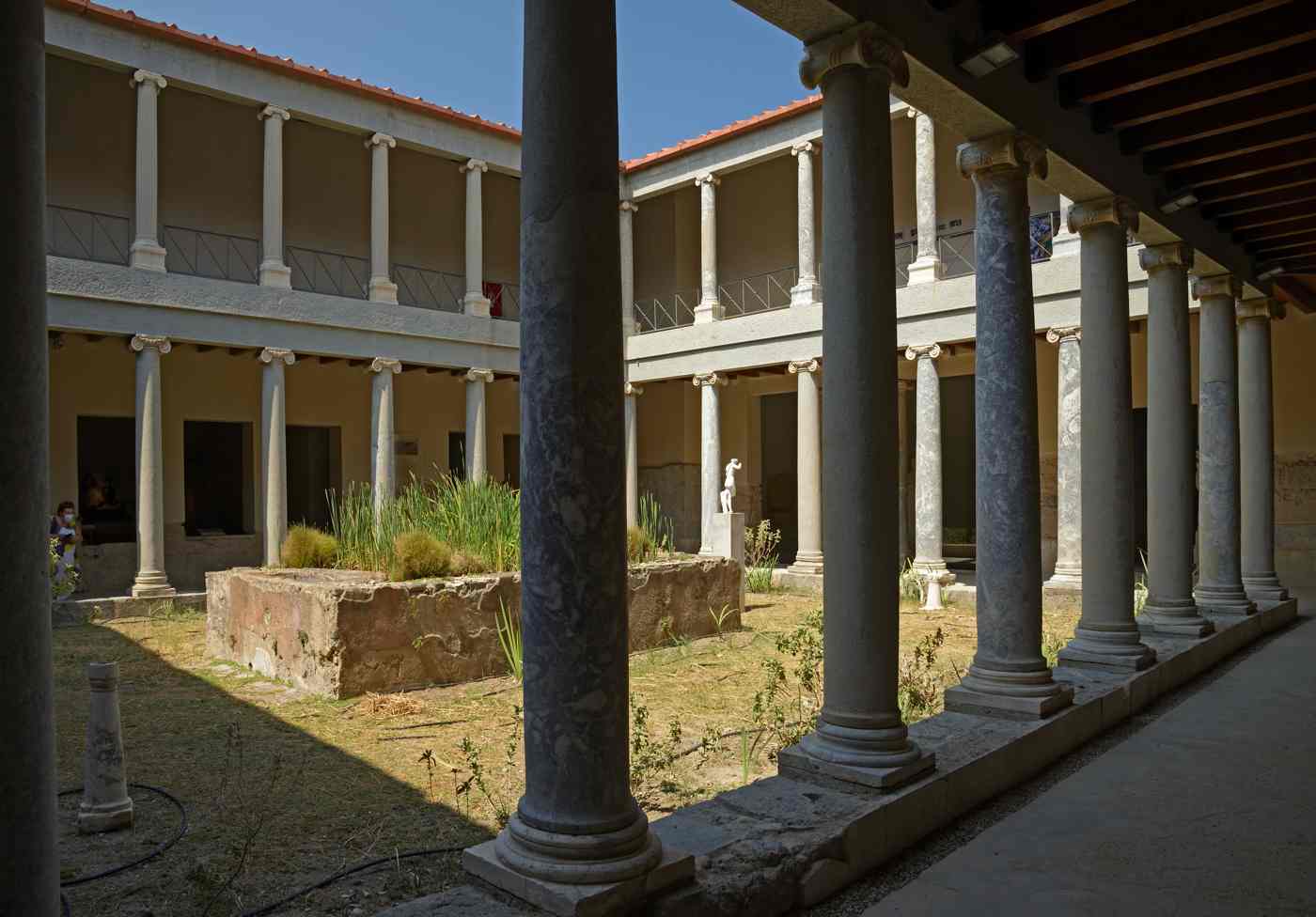
The Asfendiou villages sit on the green western slopes of Mount Dikeos in central Kos, about 12 to 15 kilometres from Kos Town. The cluster gathers five mountain hamlets \u2014 Zia, Evangelistria, Asomatos, Lagoudi and the higher, part-abandoned Haihoutes \u2014 among pine woods, springs and terraced fields. Islanders built these settlements well above the coast, where they once retreated from pirate raids. This guide covers what the villages are, how they connect, and what each one offers today. Plan the whole trip with Greece Tours.
Zia draws the crowds for its sunsets, craft shops and tavernas, while Evangelistria, Asomatos and Lagoudi keep a quieter farming character. Haihoutes stands highest of all, half-abandoned in the forest, with a restored coffee-house that now works as a small folk museum. The mountain setting of pine woods, freshwater springs and stone terraces shapes the cooler, greener climate that sets the district apart from the beaches of Kos. Together the hamlets show the inland face of the island, away from the coastal resorts.
What are the Asfendiou villages on Kos and where do they sit?
Asfendiou names a cluster of traditional mountain villages on the green western slopes of Mount Dikeos in central Kos, about 12 to 15 kilometres from Kos Town, where islanders once retreated from pirate raids.
The Asfendiou villages sit on the central spine of Kos, spread across the western slopes of Mount Dikeos between about 300 and 500 metres above sea level. The cluster lies roughly 12 to 15 kilometres southwest of Kos Town, a drive of about 25 minutes on the road that climbs from the coastal plain. Five main hamlets make up the group: Zia, Evangelistria, Asomatos, Lagoudi and the higher, part-abandoned Haihoutes. Each stands among pine woods and terraced fields rather than beside the sea. The name Asfendiou covers the whole community rather than one single settlement. Signposts on the ring road point drivers uphill toward the villages from the northern beaches near Tigaki and Zipari.
Local buses from Kos Town also reach the lower hamlets, though most visitors arrive by car or scooter.
Islanders built the Asfendiou villages inland during centuries of pirate raids, when living on the open coast of Kos carried constant danger. Settlements on the slopes of Mount Dikeos stayed hidden from ships and gave farmers quick escape routes into the forest. The higher ground also held reliable springs and cooler summer air, which suited both people and livestock. For anyone exploring Kos beyond its beaches, these hamlets show how the island survived away from the exposed shoreline. Stone houses, narrow lanes and small chapels still follow the defensive logic of that period. The pattern repeats across the Aegean, where mountain villages such as those on the Dikeos range outlasted the raids that emptied the coast.
The villages remain small farming communities rather than resorts, and their inland position still shapes daily life.
The road to Asfendiou branches off the main north-coast route near Zipari, then winds uphill through olive groves toward the tree line. Drivers reach Zia first along most approaches, since it sits highest among the accessible hamlets at roughly 350 metres. Parking near Zia fills quickly before sunset, so drivers often leave cars at the village edge and continue on foot. The lanes inside the hamlets stay narrow and steep, paved with stone and closed to through traffic. Distances between the villages are short: Zia, Asomatos and Evangelistria lie within about 2 to 3 kilometres of one another. Walkers can link three of them on marked paths that cross the slopes of Mount Dikeos in under an hour.
Signposts at each junction mark the distance to the next hamlet in kilometres.
Asfendiou draws day visitors mainly for its views, its cooler climate and its craft workshops, which contrast with the beach resorts on the coast below. The villages look north and west across the plain toward Kos Town, the salt-pan lagoon at Tigaki and, on clear days, the Turkish coast near Bodrum. Temperatures on the slopes run about four degrees below the shore in high summer, drawing families uphill in the afternoon. Water flows from mountain springs into public taps and small fountains, a rarity on a mostly dry island. The community keeps a working character, with vegetable plots, beehives and grazing goats between the houses.
Visitors combine a stop here with the Asklepion, about 8 kilometres downhill, for a half-day trip inland from the coast.
What makes Zia the best-known of the Asfendiou villages on Kos?
Zia stands as the best-known Asfendiou village on Kos, a settlement at about 350 metres on Mount Dikeos where crowds gather each evening for sunset, browsing craft shops and eating at tavernas along its stepped main lane.
Zia earns its reputation mainly for sunset, when the sun drops behind the ridgeline and the sky opens over the western plain of Kos. Crowds climb to the upper edge of the village in the last hour before dusk, filling terraces that face Kefalos bay and the open Aegean. The viewpoint looks across pine slopes toward the small islands off the southwest coast, with the sea turning copper as the light fades. Coaches and rental cars arrive from the resorts in the late afternoon, so the single approach road grows busy around that time. Walkers often reach Zia on foot from lower parking areas to avoid the queue.
The crowds thin quickly and the tavernas fill for dinner after sunset. The evening view remains the main reason tour buses include Zia on island circuits.
Craft shops line the stepped main lane of Zia, selling local honey, herbs, olive-oil soap, leather sandals and woven textiles. Stalls display bunches of mountain oregano, sage and thyme gathered on the slopes of Mount Dikeos, alongside jars of thyme honey from village hives. The lane climbs for roughly 300 metres between the lower car park and the sunset terraces, so the shops form an almost continuous run. Prices sit higher than in Kos Town because of the setting, though much of the produce comes from the surrounding farms. Workshops for ceramics and jewellery open onto the path, and owners often work at the counter while customers browse.
The commercial strip stays compact, and beyond it the village returns to quiet stone houses and gardens.
Tavernas cluster at the top of Zia around the sunset terraces, arranging tables on stepped platforms that face west. Menus centre on grilled meat, local cheese, mountain greens and honey-based desserts, cooked in the standard style of the Dodecanese. Reservations for a table with a clear view grow important in the hour before sunset, when demand peaks. Prices run higher than at coastal tavernas, reflecting the location rather than larger portions. Smaller kitchens sit lower in the village, away from the viewpoint, where locals and returning visitors eat for less. Water for the tavernas comes partly from the village springs, and the cooler mountain air makes outdoor dining comfortable after dark.
Diners often stay after the crowds leave, when the lanes quieten and the lights of Kos Town appear below.
Zia keeps a compact core of stone and whitewashed houses below the commercial lane, where residents still live year-round. The village church stands near the centre, its courtyard offering a quieter viewpoint than the crowded upper terraces. Footpaths lead out from the top of the village toward the summit ridge of Mount Dikeos, a climb of about two hours to the highest point at 846 metres. Donkey and mule trails once linked Zia with the fields and with neighbouring Asomatos, and parts of these survive as walking routes. Public toilets, a small car park and a bus stop sit at the village entrance for day visitors.
Outside the summer evenings Zia stays calm, and morning visits avoid both the heat and the sunset crowds entirely.
What do the smaller Asfendiou hamlets of Evangelistria, Asomatos and Lagoudi offer?
Evangelistria, Asomatos and Lagoudi form the quieter core of the Asfendiou villages, three small hamlets on the slopes of Mount Dikeos below Zia, where farming families, stone chapels and shaded squares outnumber the shops and tour buses.
Evangelistria holds the main mountain church of the Asfendiou district, which gives the hamlet its name and its role as a local centre. The church sits among plane trees near a spring, and the surrounding square serves as a gathering point for village festivals. Evangelistria lies about 1 kilometre from Zia along the connecting road, at a slightly lower elevation on the western slope. The settlement keeps a working farming character, with terraced plots, olive trees and grazing animals around the houses. A small taverna and a coffee-house serve residents and passing walkers, without the crowds that reach Zia at sunset.
The parish still draws people from the neighbouring hamlets on feast days, when the church square fills for services and shared meals under the trees.
Asomatos sits between Zia and Evangelistria at roughly 300 metres, a hamlet of stone houses spread along a single winding lane. The settlement lost most of its permanent residents over the past decades, and houses along the lane have been restored as holiday homes and small guest lodgings. Asomatos keeps a small church and a shaded square with a spring, typical of the Asfendiou pattern. The village looks west across the plain toward the coast, giving quieter sunset views than the crowded terraces of Zia nearby. Walking paths connect Asomatos with both its neighbours in about 20 minutes on foot, crossing terraced fields and pine woods.
The slow return of restored houses has revived part of the hamlet, though it stays far quieter than Zia through the year.
Lagoudi lies on the lower western edge of the Asfendiou cluster, the hamlet closest to the plain and the least visited of the group. Farmland surrounds the village, and the settlement keeps a strong agricultural character with olive groves, vines and vegetable plots on the terraces. Lagoudi sits about 2 kilometres from Zia and roughly 13 kilometres from Kos Town, reached by a quiet branch road. The hamlet has a small square, a church and springs, without the shops and sunset traffic of the higher villages. Its lower elevation makes it warmer than Zia, and its position near the fields keeps daily life tied to farming.
Visitors who reach Lagoudi find an ordinary working village, useful for seeing the Asfendiou district away from the tour route.
A single loop road links Evangelistria, Asomatos and Lagoudi with Zia, so drivers can tour the four in under an hour. The road stays narrow and winding, with sharp bends and short straight sections, so speeds remain low across the whole circuit. Marked footpaths shortcut between the hamlets for walkers, crossing springs and terraced fields on old mule trails. Each village follows the same layout: a church, a shaded square, a spring and stone houses among gardens and olive trees. The smaller hamlets show the older, working face of the Asfendiou district, in contrast to the shops and crowds of Zia.
Visitors with half a day often start at Lagoudi, climb through Asomatos and Evangelistria, and finish at Zia for the evening view over Kos.
What is Haihoutes (Agios Dimitrios) and its restored coffee-house on Kos?
Haihoutes, also called Agios Dimitrios, stands as the highest and most abandoned of the Asfendiou villages, a former forest hamlet on Mount Dikeos where a restored village coffee-house now works as a small folk museum of mountain life.
Haihoutes sits high on the forested slopes of Mount Dikeos, above the other Asfendiou villages and deep among the pines. Residents left the hamlet through the last century as families moved down to Zia, the coast and the towns for work. The empty stone houses stand among the trees, roofless and overgrown, marking the largest abandoned settlement on the mountain. The name Haihoutes belongs to the old village, while Agios Dimitrios refers to the parish and its church at the same site. The hamlet lies about 4 kilometres uphill from Zia along a rough forest road, reached by car with care or on foot.
Its height and isolation kept it safe from raids in the past, the same logic that placed all the Asfendiou villages inland.
A restored village coffee-house forms the centre of Haihoutes today, kept as a small folk museum of mountain life. The old kafeneio has been repaired and filled with tools, photographs and household objects from the years when the hamlet was inhabited. Visitors sit at the coffee-house for a drink under the plane trees, and the building doubles as a display of village history. The museum shows how residents once farmed the terraces, gathered water from springs and lived through winters on the mountain. It stands as the main reason day walkers and drivers climb the forest road to Haihoutes rather than stopping at Zia.
The restoration keeps one corner of the abandoned hamlet alive, giving the site a purpose beyond its empty stone houses and lanes.
Reaching Haihoutes takes effort, since the forest road above Zia turns rough and steep for the final stretch. Drivers use the track with care, and walkers follow marked trails that climb through the pines from the lower villages in about one hour. The hamlet sits among dense woodland, so the air stays cool and shaded even in high summer. Signs of the old settlement surround the coffee-house: dry-stone walls, terraces, a threshing floor and the shell of the church of Agios Dimitrios. The site links to walking routes toward the summit of Mount Dikeos, making it a stop for hikers crossing the range.
Its quiet contrasts sharply with Zia, and visitors climb this far, which keeps Haihoutes among the least crowded points in the Asfendiou district.
Haihoutes completes the picture of the Asfendiou villages, showing the end point of a movement that emptied the mountain for the coast. Zia grew on tourism, the middle hamlets kept farming, and Haihoutes was left to the forest until the coffee-house restoration. The contrast within about 4 kilometres tells the recent history of inland Kos in a single visit. Photographs in the folk museum record the families who lived here, their work on the terraces and the animals they kept. The restored kafeneio now hosts walkers, cyclists and day trippers who combine it with the climb up Mount Dikeos.
Haihoutes stays the quietest and highest stop in the district, a counterweight to the busy sunset terraces of Zia lower down the slope toward Kos Town.
What is the mountain setting of the Asfendiou villages on Mount Dikeos?
Pine woods, freshwater springs and terraced fields define the setting of the Asfendiou villages, spreading across the western slopes of Mount Dikeos, the 846-metre peak that rises above the villages and shapes their cooler, greener climate on Kos.
Pine forest covers the upper slopes above the Asfendiou villages, one of the largest wooded areas on an otherwise dry Kos. The trees climb from about 300 metres toward the summit ridge of Mount Dikeos, shading the walking trails between the hamlets. Aleppo and calabrian pines dominate the woodland, mixed with cypress, oak and wild shrubs on the higher ground. The forest keeps the villages cooler in summer and holds moisture in the soil, feeding the springs that supply the settlements. Walkers and cyclists use the shaded tracks through the pines, which link Zia and Haihoutes with the summit paths.
The woodland also marks the district as a green contrast to the beaches and salt pans of the northern coast below. Forest roads cross the slopes for walkers outside the summer heat.
Freshwater springs give the Asfendiou villages their unusual green setting, feeding taps, fountains and irrigation channels through the year. Water rises from the pine-covered slopes of Mount Dikeos, where rainfall soaks into the ground and emerges lower down at the villages. Evangelistria, Asomatos and Zia each grew around a spring, which explains their positions on the slope and their shaded squares. The flowing water supports the plane trees that shade the village centres, unusual on an island where most streams dry in summer. Farmers channel the springs to the terraces below, watering vegetables, fruit trees and small plots through the dry months.
The reliable water is the main reason the mountain villages survived here, while the coastal plain depended on shallow wells and stored cisterns instead.
Terraced fields step down the slopes below the Asfendiou villages, built with dry-stone walls to hold soil and water on the incline. Generations of farmers cut the terraces into the hillside for olives, vines, figs, almonds and vegetable plots. The walls slow rainfall and stop erosion, turning steep ground into workable land across the western face of the mountain. Terraces near the abandoned hamlets have grown wild, while those around Zia, Evangelistria and Lagoudi stay in use. Olive groves cover the widest area, and village presses once turned the harvest into oil for the whole district.
The terraced landscape gives the Asfendiou slopes their stepped, green appearance, a made pattern that has shaped the mountain for centuries around Kos. Stone paths and old irrigation ditches still run between the terraces on the lower slopes.
The combination of forest, springs and terraces makes the Asfendiou slopes cooler, wetter and greener than the rest of Kos. Summer temperatures on the mountain run below the coast, drawing families and walkers uphill through the hottest months. The green setting also supports birds, herbs and wild flowers that struggle on the dry lowland, adding to the walking appeal of the district. Views from the slopes reach across the plain to Kos Town, the Tigaki salt lake and the sea toward the Turkish coast. The landscape ties the villages together, since forest, water and terraces shaped where people settled and how they farmed.
A visit to the Asfendiou villages works best as a half-day that combines the setting with the hamlets and the climb up the mountain.
Why did the people of Kos build the Asfendiou villages high on Mount Dikeos?
Islanders retreated to the western slopes of Mount Dikeos to escape pirate raids that struck the coast near Kos Town. Stone hamlets like Zia, Asomatos and Haihoutes grew about 12 to 15 kilometres inland, hidden above the plain.
The Asfendiou villages sit about 12 to 15 kilometres from Kos Town, on the western slopes of Mount Dikeos. Coastal Kos attracted raiders for centuries, and they crossed the narrow strait from the eastern Aegean. Families abandoned exposed shorelines and moved uphill to Zia, Evangelistria, Asomatos, Lagoudi and Haihoutes. The height gave them warning time, because a lookout on the slope watched the plain and the sea below. Stone houses pressed close together, and narrow paths linked one hamlet to the next. This defensive pattern shaped daily life across the mountain, and it explains why the oldest settlements stand roughly 300 to 500 metres above the shore.
Raiders landed on open beaches at night, and the 3 to 5 kilometre climb slowed any pursuit far inland from the bay.
Asfendiou is the old collective name for this cluster of hamlets on Mount Dikeos, and it appears in island records long before mass tourism. Under the medieval lords and later rulers of the Dodecanese, mountain settlement offered safety that the harbour never matched. Villagers farmed terraces of vines, figs and olives, kept goats, and carried water from mountain springs. Zia grew into the largest of the group, while Haihoutes, the highest, sat almost hidden in a fold of the slope. The people of Kos traded with these upland families for honey, cheese and timber. Each hamlet kept its own chapel and threshing floor.
The paths between them doubled as escape routes when danger appeared on the coast far below the ridge, roughly 12 kilometres away.
Haihoutes stands as the clearest reminder of this defensive past, because the village emptied almost completely as families moved down to the coast for work. The village kept only its last residents for years among stone ruins and overgrown lanes. A small folklore museum and a cafe later brought visitors back along the mountain track from Zia, about 2 kilometres away. Walkers now pass roofless houses, an old cistern and the village chapel on the way through. The site shows how quickly a mountain hamlet declined once pirate raids ended and the harbour grew safe. Restoration has kept part of the village standing.
The quiet lanes give a direct sense of how the Asfendiou villages once looked before roads reached this high on Mount Dikeos.
The Asfendiou villages carry this history in their layout, and a short drive from the capital reaches them in about 20 minutes. The stone houses still cluster tightly, the lanes still twist, and the chapels still crown small rises across the slope. Visitors who explore Kos Town often pair the harbour and the Asklepion with an afternoon in the mountains for contrast. The plain below spreads out toward Tigaki and the salt lagoon, and on clear days the coast of Turkey stands across the water. This long view, once used to spot approaching ships, now draws travellers to the terraces of Zia for sunset.
The defensive past has become the reason the villages feel calm, old and rooted in the mountain, about 12 kilometres above the harbour.
What food and crafts do the tavernas and shops of the Asfendiou villages offer?
Tavernas across the Asfendiou villages serve mountain dishes, grilled meat, pies and local honey, while small shops sell herbs, textiles and ceramics. Zia holds the largest cluster of eating places and craft stalls on the slope of Mount Dikeos.
Zia sits about 12 kilometres from the coast, and its lanes hold the greatest number of tavernas in the Asfendiou villages. Kitchens here work with mountain produce rather than the fish of the harbour towns. Plates arrive with grilled goat and lamb, slow-cooked chickpeas, stuffed vine leaves and village pies filled with greens or cheese. Bread comes from wood ovens, and the tables look west across the plain toward the sunset. Prices sit around the mid range for Kos, and portions match the farming appetite of the hills. Diners often climb from the coast for an evening meal, then linger as the light drops behind the sea.
The food stays close to what the terraces and goats of Mount Dikeos have always produced across the seasons.
Honey ranks among the best-known products of the Asfendiou villages, and roadside shops in Zia and Asomatos sell it straight from local hives. Bees work the thyme, sage and wild herbs that cover the slopes of Mount Dikeos between about 300 and 800 metres. Thyme honey carries a strong, dry taste, while pine and flower honeys run darker and softer. Jars sit beside baskets of dried oregano, mountain tea and sage gathered on the hillsides. Beekeepers here follow the same seasons their families used before roads climbed the mountain. Shoppers looking for things to do in Kos often fold a honey-tasting stop into a drive through the hamlets.
The herbs and honey give the villages a scent that hangs in the warm air along the lanes.
Craft shops line the main lane of Zia, and their shelves hold textiles, ceramics and carved wood made in the Dodecanese tradition. Woven cloths, table runners and embroidered pieces recall the looms that once stood in most mountain homes. Potters sell bowls, plates and small jars glazed in blues and earth tones drawn from the island. Bundles of dried herbs hang beside soaps and oils scented with sage, thyme and lavender from the slopes. The shops stay busy through the warm months, when day visitors arrive from Kardamena, Tigaki and the resorts of the north coast. Buyers carry off honey, herbs and cloth as portable pieces of the mountain.
This trade keeps old skills alive, and it gives the Asfendiou villages a working role beyond their tavernas and views across the plain.
Local crafts tie the Asfendiou villages to a longer history of self-reliant mountain life on Kos. Families once wove their own cloth, fired their own pots and pressed oil from terraced olive groves below the houses. Much of that skill survives in the workshops of Zia, Asomatos and Lagoudi, where makers still work by hand. Small studios sell leather, silver and painted tiles alongside the honey and herbs of the slopes. The craft trade spreads income across the hamlets rather than one resort strip on the coast. Visitors who buy here support households that stayed in the mountains when others moved down to the sea.
The result is a set of villages where food, honey and handmade goods share the same stone lanes about 12 kilometres from the capital.
Which churches and chapels stand in the Asfendiou villages of Kos?
Small stone chapels crown the Asfendiou villages, and the church of the Archangels in Asomatos and the Evangelistria church give two hamlets their names. Zia, Lagoudi and Haihoutes each keep their own village churches on the slope of Mount Dikeos.
Chapels shape the skyline of every hamlet in the Asfendiou group, and most stand on small rises above the houses. Evangelistria takes its name from its church, dedicated to the Annunciation of the Virgin, at the heart of the settlement. Asomatos carries the name of the Archangels, honoured in the village church among the stone lanes. Whitewashed walls, blue domes and stone bell towers mark these buildings out from the grey houses around them. The chapels date from the era of mountain retreat, when each hamlet needed its own place of worship. Feast days still fill the yards with tables, music and food drawn from the village kitchens.
The churches sit within a short walk of one another, roughly 1 to 2 kilometres apart across the slope of Mount Dikeos.
Panagia churches, dedicated to the Virgin Mary, appear across the Asfendiou villages in more than one hamlet. Asomatos keeps a much-loved church whose feast draws families from across the mountain each year. The buildings hold carved wooden screens, old icons and oil lamps kept burning by village caretakers. Stone floors and thick walls hold the cool air, giving shelter from the summer heat of the slope. Bell towers rise beside the churches, and their sound once carried warnings as well as calls to prayer. The chapels of the mountain served both faith and defence in the centuries of pirate raids.
Visitors who reach the villages from the coast, about 14 kilometres away, find the churches open around feast days and quiet mornings through the season.
Haihoutes holds a small church among its ruined houses, and the building still stands while roofs around it have fallen. The chapel gives the deserted hamlet a fixed point, and walkers pause there on the track from Zia. Restored in part, it shows how village faith outlasted the population that once filled the lanes. Icons and candles inside mark that people still return for services and memorial days. The churchyard looks out over the plain toward Tigaki and the salt lagoon far below. This view links the chapel to the old watch the coast for approaching ships.
The building sits about 2 kilometres above Zia, near the highest houses of the Asfendiou villages on Mount Dikeos, and marks the top of the walking route.
Church feast days give the clearest window into village life across the Asfendiou hamlets. On the day of each patron saint, the yard fills with long tables, roasted meat, wine and music from the mountain. Families who moved down to the coast return to the chapels where their grandparents married and were baptised. The Evangelistria feast, the Panagia days and the Archangels celebration draw the largest crowds through the warm season. Priests carry icons in short processions along the stone lanes between houses and churches. These gatherings keep the bond between the coast and the mountain alive across the generations.
The chapels, each barely larger than a single room, remain the true centre of each hamlet on the slope of Mount Dikeos, about 12 kilometres inland.


How can walkers explore the paths between the Asfendiou villages and up Mount Dikeos?
Old stone paths link the Asfendiou villages, and marked trails climb from Zia toward the summit of Mount Dikeos at about 846 metres.
Footpaths connect every hamlet in the Asfendiou group, and most follow routes older than the paved roads. Walkers link Zia, Evangelistria, Asomatos, Lagoudi and Haihoutes on foot across distances of roughly 1 to 3 kilometres. The paths run through olive terraces, pine stands and open slopes scented with thyme and sage. Stone steps, low walls and the odd chapel mark the way between one village and the next. Morning starts suit the walk best, before the sun climbs high over the eastern Aegean. The routes give a slower view of the mountain than any drive from Kos Town allows.
Sturdy shoes and water matter here, because shade thins out on the higher and more open sections of Mount Dikeos. Where the pines give way to bare rock above the villages.
The climb toward the summit of Mount Dikeos, at about 846 metres, starts above Zia and Asomatos. A marked trail rises past the chapel of Christos, the Metamorfosi, near the top of the ridge. The full ascent takes around two to three hours from the villages, with a steady gain in height. From the highest points the view spreads over Kos, the salt lagoon at Tigaki and the sea toward Turkey. Loose stone and steep sections call for care, and the path narrows as it nears the peak. The reward is the widest view on the island, reaching across the plain and the northern beaches.
Walkers who plan a full day in the mountains often set aside a morning for this summit route from the Asfendiou villages.
Circular walks let visitors join the hamlets in one route without returning by the same path. A common loop links Zia and Haihoutes, climbing about 2 kilometres up the track and dropping back through the terraces. Another route ties Asomatos, Lagoudi and Evangelistria across gentle slopes below the higher peaks. Signposts and painted waymarks guide walkers, though older paths fade where scrub has grown over the stones. Springs and small chapels break the route and give natural points to rest and refill water. The loops suit half-day outings from the resorts of the north coast or from Kos Town.
Distances stay short, but the climbs are real, so the walks reward a steady pace rather than a rush up the steep and stony slope of Mount Dikeos toward the peak.
Spring and autumn give the best conditions for walking the Asfendiou paths and the climb up Mount Dikeos. Summer heat on the open slope pushes walkers to early mornings or the last hours before sunset. Water, a hat and firm shoes handle the loose stone and the 800-metre gain toward the peak. The trails carry little shade above the villages, so timing matters more than raw distance. Maps at the village edges and painted marks along the route keep walkers on the right line. A slow pace lets visitors take in the chapels, springs and views that the paths string together.
Most routes return to Zia, the natural base for walking in the Asfendiou villages, about 12 kilometres from the coast at Kos harbour.
How do visitors reach the Asfendiou villages by car from Kos Town?
A short drive from Kos Town reaches the Asfendiou villages in about 20 to 30 minutes, covering roughly 12 to 15 kilometres uphill. The road climbs west toward Zia through Zipari, with clear signs for each hamlet on Mount Dikeos.
The drive from Kos Town to the Asfendiou villages runs about 12 to 15 kilometres and climbs steadily inland. Drivers head west out of the capital, then turn uphill at Zipari toward the slopes of Mount Dikeos. The road narrows and twists as it gains height, passing olive groves and open views over the plain. Signs point to Zia, Asomatos, Lagoudi and Evangelistria as the route splits between the hamlets. The last stretch into Zia grows steep and tight, and cars park at the village edge in marked areas. The whole trip takes about 20 to 30 minutes, depending on traffic through Zipari.
Hire cars, taxis and organised tours all cover the route, which counts among the easiest mountain drives on the island of Kos.
Parking sits at the entrance to Zia, because the inner lanes stay too narrow and steep for cars. Visitors leave vehicles in the marked areas, then explore the village on foot up the stepped main street. The smaller hamlets of Asomatos, Lagoudi and Haihoutes offer roadside space closer to their centres. Buses also run from Kos Town toward the mountain villages, though the timetable thins outside the summer season. Taxis cover the trip in around 20 minutes and suit visitors who skip a hire car. Many people fold the villages into a wider island loop that takes in Tigaki, Pyli and the north coast.
The mountain roads stay in fair condition, but the gradient and bends reward slow, careful driving up the slope of Mount Dikeos.
A half-day visit fits the Asfendiou villages well, and a late-afternoon start catches the sunset from Zia. Drivers can leave Kos Town around mid-afternoon, reach the mountain in about 30 minutes, and park at the village edge. An hour on foot covers the main lane of Zia, its craft shops and the viewpoint over the plain. A meal in a taverna then times neatly with the sun dropping behind the sea toward Kefalos. Visitors with more time add Asomatos, Lagoudi and the ruins of Haihoutes on the same trip. The drive back down to the coast takes about 20 to 30 minutes on the lit main road.
This plan pairs the mountain with a day at the Asklepion or the beaches without a rushed schedule.
The Asfendiou villages work as a natural counterpoint to the beaches and ruins near the coast of Kos. A car gives the most freedom, but taxis, buses and small-group tours all reach Zia through the season. Morning trips avoid the heat and the crowds, while evening trips reward drivers with the long western sunset. Fuel up in Kos Town or Zipari, because the mountain hamlets hold services beyond tavernas and shops. Roads stay open year-round, though winter rain can leave the higher lanes wet and slick. The villages sit about 12 to 15 kilometres from the capital, close enough for a short outing yet high enough to feel apart.
This balance keeps the Asfendiou villages among the steadiest half-day trips on the whole island.
Frequently Asked Questions
How far are the Asfendiou villages from Kos Town?
The Asfendiou villages sit about 12 to 15 kilometres from Kos Town, on the western slopes of Mount Dikeos. Drivers cover the distance in around 20 to 30 minutes, heading west out of the capital and turning uphill at Zipari. Zia, the largest of the hamlets, stands highest on the main road and takes the longest to reach. The smaller villages of Asomatos, Lagoudi and Evangelistria lie a little lower and closer together. Taxis run the route in around 20 minutes, and buses climb from Kos Town through the warmer months. The road gains around 300 to 500 metres in height, so the drive feels longer than the short distance suggests.
Most visitors treat the villages as a half-day trip from the coast, easy to fit around a beach day or a visit to the Asklepion. The short distance and steady climb make the Asfendiou villages one of the simplest mountain outings on Kos.
What is the best time of day to visit Zia and the Asfendiou villages?
Late afternoon and early evening give the best experience of Zia and the Asfendiou villages, because the western slopes face the sunset. Drivers who arrive around two hours before dusk have time to walk the main lane, browse the craft shops and choose a taverna. The light softens over the plain, and the sea toward Kefalos turns gold as the sun drops. Morning visits work well for walkers, who beat the heat on the paths toward Mount Dikeos. Midday in high summer grows hot on the open slope, so shade and water matter between about noon and three. Spring and autumn bring cooler air and green hillsides, with herbs in flower along the lanes.
Zia draws its largest crowds at sunset, so an earlier table secures a spot with a clear western view. The villages stay quiet in the morning, which suits visitors who prefer the empty lanes and the churches to the evening bustle.
Can you walk between the Asfendiou villages?
Yes, old stone paths connect the Asfendiou villages, and walkers move between them on foot in two to three hours. Marked trails link Zia, Evangelistria, Asomatos, Lagoudi and Haihoutes across distances of roughly 1 to 3 kilometres. The routes follow olive terraces, pine stands and open slopes, passing chapels and springs along the way. A popular loop climbs about 2 kilometres from Zia to the deserted hamlet of Haihoutes and back through the terraces. From the higher paths the view opens over Kos Town, the salt lagoon at Tigaki and the sea toward Turkey. Sturdy shoes and water help on the loose stone, and shade thins out above the villages.
Spring and autumn suit the walks best, with cooler air and firmer ground underfoot. The full climb toward the summit of Mount Dikeos, at about 846 metres, adds a steeper morning route above the villages. Walking gives the slowest and closest view of mountain Kos.
What you buy in the Asfendiou villages?
Honey, herbs, textiles and ceramics rank among the main things to buy in the Asfendiou villages. Roadside shops in Zia and Asomatos sell thyme, pine and flower honey straight from local hives on the slopes of Mount Dikeos. Bundles of dried oregano, sage and mountain tea sit beside soaps and oils scented with the same herbs. Craft stalls offer woven cloths, embroidered runners and glazed pottery made in the Dodecanese tradition. Carved wood, leather and painted tiles fill the smaller studios of Zia and Lagoudi. Prices stay moderate, and the goods travel well, so visitors carry off honey and cloth as gifts.
Buying here supports households that stayed in the mountains rather than moving down to the resorts. The products tie directly to the land, from the bees on the thyme slopes to the looms once found in most homes. A jar of thyme honey remains the classic reminder of a visit to the mountain villages.
Why are the Asfendiou villages built so high on Mount Dikeos?
Islanders built the Asfendiou villages high on Mount Dikeos to escape the pirate raids that struck the coast of Kos. The harbour and open beaches near Kos Town lay exposed to raiders who crossed the narrow strait from the eastern Aegean. Height gave the mountain hamlets warning time, because lookouts watched the plain and the sea from about 300 to 500 metres up. Zia, Asomatos, Lagoudi, Evangelistria and Haihoutes grew as tight clusters of stone houses linked by narrow paths. The distance and the climb slowed any pursuit inland, giving families time to hide or defend the slopes. Villagers farmed terraces of vines, figs and olives, kept goats and drew water from mountain springs.
Each hamlet held its own chapel, threshing floor and network of escape paths across the ridge. Haihoutes, the highest, sat almost hidden in a fold of the mountain. This defensive pattern shaped the layout that visitors still walk through in the Asfendiou villages today.
Is Zia the only village worth visiting in the Asfendiou group?
No, Zia is the largest and best-known village, but the wider Asfendiou group rewards a closer look. Asomatos, about 1 kilometre away, keeps a quieter square, a much-loved church of the Archangels and fewer shops than Zia. Lagoudi sits lower on the slope, with stone houses, small chapels and views over the plain toward the coast. Evangelistria takes its name from its central church and marks another old core of the mountain settlement. Haihoutes, the highest and once nearly deserted, draws walkers to its ruined houses, restored chapel and folklore museum. Zia holds the most tavernas, craft shops and sunset viewpoints, so it carries the heaviest crowds.
The smaller hamlets give a calmer sense of mountain life, with empty lanes and working households. A short drive or walk links all of them within about 3 kilometres on the slopes of Mount Dikeos. Visitors who explore beyond Zia see the full spread of the Asfendiou villages rather than one busy street.
How long you spend in the Asfendiou villages?
A half-day suits the Asfendiou villages, and a late-afternoon visit into the evening covers the main sights well. An hour on foot in Zia takes in the main lane, the craft shops and the viewpoint over the plain toward the sea. A taverna meal timed with the sunset adds another hour or two on the terraces above the coast. Visitors with more time add Asomatos, Lagoudi and the ruins of Haihoutes on the same trip, within about 3 kilometres. Walkers who climb toward the summit of Mount Dikeos need a further two to three hours for the ascent and return.
The drive from Kos Town runs about 20 to 30 minutes each way, which fits neatly around a beach day. A full day lets visitors combine the mountain with the Asklepion or the north-coast beaches at Tigaki and Marmari. Most travellers find that three to four hours captures the food, views and churches of the Asfendiou villages.