
Knossos with kids works well when you bring the Minotaur myth to life, go early and come prepared for the sun. Plan family tickets and tours through My Greece Tours.
Children can enjoy the Palace of Knossos with a little planning. The sections below cover whether it suits kids, making it fun, practical family tips, the heat and crowds, and family-friendly tours.
Is Knossos good for kids?
Yes, Knossos can be good for kids, especially with the right approach and a little preparation for the heat and the size of the site.
Knossos rewards children who arrive with the right story in their heads. Its greatest advantage with kids is the famous legend of the Minotaur and the labyrinth. A monster, a hero, a maze and a ball of thread make a thrilling tale that captures young imaginations. The maze-like palace itself then becomes an adventure to explore, framed as the labyrinth where the Minotaur once roamed. Corridors twist, rooms branch, and children who expected old stones find a real-life setting for the myth they have just heard.
Knossos remains a large archaeological site of ruins and reconstructions, though, and not a playground. Young children can grow tired or bored on the hot, busy site if it is presented simply as ancient rubble. The key to success is engagement through the myths and stories, together with good preparation for the conditions. With those in place, a visit can spark a lasting fascination with the ancient world.
Age shapes the experience more than anything else. Children from around school age, roughly six upward, usually follow the Minotaur tale and enjoy hunting for its clues in the ruins. Toddlers gain less, since the heat and the walking outweigh the story for them. The palace covers a broad hillside above the Kairatos river, so the ground alone tests small legs. Match the visit to the child, lead with the legend, and Knossos rewards the effort. Our guide to the Minotaur and the labyrinth covers the legend, and the next section covers making the visit fun.
How do you make Knossos fun for children?
Make Knossos fun for children by telling the Minotaur and labyrinth story before and during the visit, treating the maze-like palace as an adventure, and pointing out the bull frescoes and throne room.
The secret to a fun visit with children is storytelling and a sense of adventure. Tell them the legend of the Minotaur and the labyrinth before you arrive, introducing the monster, the hero Theseus, Princess Ariadne and the ball of thread. As you explore, frame the maze-like palace as the very labyrinth from the story, turning the visit into a quest. Challenge them to spot the bull in the frescoes and decorations, find the throne room, and imagine the people who once lived here. A game of hunting for details holds attention far better than a march past information panels.
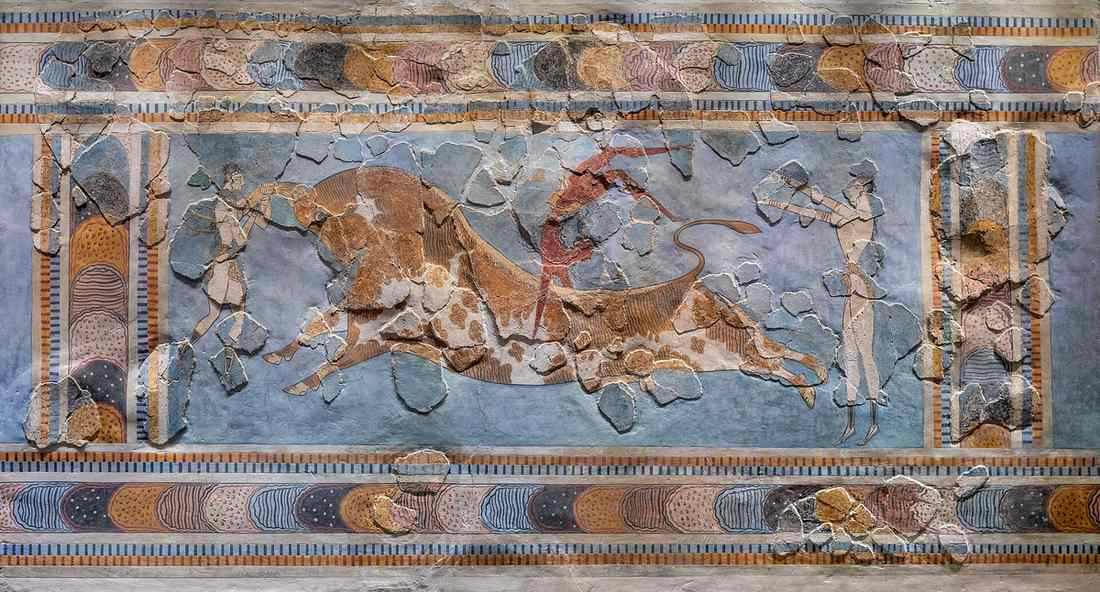
Keep the visit relatively short and focused on the highlights that capture young attention, rather than trying to see every stone. The colourful frescoes, especially the bull-leaping scene, the throne room, the great staircase and the maze-like corridors do most of the work. A family-friendly guide or a private tour can be invaluable, telling the myths and history in a way that engages children. Pairing the visit with the kid-friendly treasures of the Heraklion museum, home to the original frescoes, can extend the adventure into a second act.
Small props sharpen the game. A printed map lets children lead the way and tick off the throne room, the staircase and the storage jars as they go. A ball of string in a pocket makes the Ariadne part of the myth real, unspooled as you thread the corridors. Ask them to guess which room the king used, or where the Minotaur might have hidden, and the ruins turn into a puzzle. Reward a finished map with an ice cream in Heraklion afterwards, and the visit ends as a win rather than a chore. The next section covers practical family tips.
What can kids see at Knossos?
Kids can see the throne room, the grand staircase, the giant storage jars, and the colourful dolphin and bull-leaping frescoes, all tied to the Minotaur and labyrinth legend that gives the palace its story.
Knossos gives children four or five striking things to point at and remember. The throne room, with its alabaster seat and painted griffins, feels like the heart of a real palace. The grand staircase drops through four floors and shows how tall and clever the Minoan builders were. Enormous clay storage jars, taller than a nine-year-old, once held oil, wine and grain, and their sheer size tends to impress young visitors. The reconstructed sections, painted in deep reds, give a vivid sense of how the palace might have looked when it was alive with people. Children rarely picture a ruin as a home; the colour and the columns help them see one.
The frescoes are the part most children remember, and they connect neatly to the myth. The leaping dolphins and the dramatic bull-leaping scene bring colour and movement to the ruins, and the bull links directly to the Minotaur that supposedly lurked in the labyrinth below. Set the maze-like corridors against that legend and the whole site reads as a giant story rather than a field of stone. Point out these highlights in turn and the visit becomes a treasure hunt through the palace at the centre of one of the oldest tales in Europe.
What are the practical tips for visiting Knossos with kids?
For Knossos with kids, go early to beat the heat and crowds, bring water, hats and sunscreen, dress them in comfortable shoes, and keep the visit short.
Six practical steps make a family visit to Knossos far smoother. Go early in the morning, soon after opening, to enjoy cooler temperatures and thinner crowds before the heat and tour groups build up. Children cope poorly with the strong midday sun on the largely unshaded site. Dress them in comfortable, sturdy shoes for the uneven ground, and pack two litres of water per person, hats, sunscreen and light snacks to keep energy and spirits up. Strollers are awkward here, since the paths cross uneven stone and low steps, so a carrier suits a toddler far better.
Keep the visit reasonably short and focused, as little legs tire quickly, and buy a skip-the-line ticket in advance so you are not stuck queuing in the sun with restless children. Safety is worth noting too. Parts of the site have drops, steps and uneven, sometimes slippery stone, so keep a close eye on younger children as they explore the open ruins. A quick head-count at each stop stops anyone wandering off into a side corridor. With these basics covered, the family can concentrate on enjoying the adventure. Our tips for visiting Knossos guide has more advice, and the next section covers the heat and crowds.
How long should you spend at Knossos with Kids?
About an hour and a half to two hours suits most families at Knossos, enough to enjoy the highlights and the myth without tiring young children on the hot, open site.
Most families get the balance right at around an hour and a half to two hours on site. That gives you time to walk the main circuit, tell the Minotaur story, pause at the throne room, the frescoes and the great staircase, and let children take it all in without wilting in the heat. Stretch the visit much longer and small legs tire, attention drifts, and the sun starts to win. A focused loop through the highlights beats a slow trudge past every wall.
Timing the visit matters as much as its length. Arrive soon after opening or in the cooler part of the day, when the site is quieter and the light is kind. That way an hour and a half feels like an adventure rather than an endurance test. Cut the visit shorter still on a very hot day, and lean on a guide to keep the pace lively. A short, story-led circuit almost always leaves children wanting more, which is exactly how you want them to remember Knossos.
Build the two hours around a simple loop rather than doubling back. Start at the west court and the storage magazines, climb to the throne room, then work through the residential quarters, the grand staircase and the corridors that stand in for the labyrinth. Finish near the frescoes so the brightest images land last, when attention is fading. Leave a fifteen-minute buffer for a water break and a sit-down in shade, and the visit ends on a high rather than a meltdown. A guide who knows the site can compress or stretch that loop to match how the children are holding up.
How do you handle the heat and crowds at Knossos with children?
Handle the heat and crowds at Knossos with children by visiting early in the morning or in the shoulder seasons, bringing water, hats and sun protection, and using a skip-the-line ticket.
The biggest challenges for families at Knossos are the heat and the crowds, both hardest on young children, so managing them is central to a happy visit. The most effective step is timing. Visiting early in the morning, soon after opening, or in the cooler, quieter spring and autumn shoulder seasons, avoids the fierce midday summer sun and the peak of the tour-group crowds. Those groups converge in the middle of the day on the largely unshaded ruins, so a dawn start or a shoulder-season trip changes the whole experience.
Come prepared with two litres of water each, hats, high-factor sunscreen and sunglasses for everyone, and take breaks in any available shade. A skip-the-line ticket bought in advance means you avoid queuing in the sun with impatient children. Keep the visit short and focused on the highlights on a very hot day, and refill water bottles whenever you can. Summer afternoons on Crete regularly climb past thirty-five degrees, which is why a start soon after the eight o’clock opening changes everything. With good timing and preparation, the heat and crowds become manageable rather than overwhelming. Our guide to the best time to visit Knossos covers the timing, and the next section covers family-friendly tours.
Are there family-friendly tours of Knossos?
Yes, there are family-friendly guided tours of Knossos, including private tours, where the guide tells the Minotaur myth and the history in a way that engages children.
Family-friendly tours of Knossos are widely available, and a good guide can make a huge difference to a visit with children. The best guides know how to engage young visitors, telling the dramatic legend of the Minotaur and the labyrinth, pointing out the bull-leaping fresco and the throne room, and weaving the history of the Minoans into a story rather than a lecture. That approach keeps children entertained as well as informed, and it turns a walk among ruins into a proper adventure. A guide also answers the endless questions that children ask, from where the king slept to what the Minotaur ate, and that back-and-forth keeps young minds engaged far longer than a silent walk ever could.
A private tour is often ideal for families, as the guide can tailor the pace and content entirely to your children, adapt to their energy and interests, and keep the visit fun and flexible, pausing for questions or moving on as needed. Certain tours are designed specifically for families, with shorter routes and story-led commentary aimed at children. Booking a guide who is used to working with children turns Knossos from a potentially tiring walk among ruins into an exciting journey into the world of myth and the ancient Minoans.
Many family tours pair Knossos with the Heraklion Archaeological Museum, where the original frescoes hang, so children see the real dolphins and bull-leapers after walking the palace. A guided half-day usually runs to around three hours across both sites, with a driver handling the short transfer between the palace and the museum in the city centre. That format keeps the walking manageable and the story flowing, and it works well for a first trip to Crete with children in tow. Plan your family visit and tours through our Palace of Knossos guide.
Visited the right way, Knossos can be one of the highlights of a family holiday on Crete. No site on the island makes ancient history come alive for children like the palace at the heart of the Minotaur legend, where a real maze-like building meets one of the greatest stories ever told. Lead with the myth, keep the visit short, cool and well-timed, point out the bulls and the throne room, and consider a guide who knows how to enthral young minds. With a little preparation for the heat and the crowds, a visit can spark a lasting fascination with myth, archaeology and the lost world of the Minoans.
Frequently Asked Questions
Is Knossos with Kids worth it?
Yes, Knossos with kids is well worth it with the right approach. Its great advantage is the legend of the Minotaur and the labyrinth, which captures young imaginations and turns the maze-like palace into an adventure to explore. It remains a large, hot archaeological site of ruins, so young children can tire or lose interest if it is presented simply as old stones. The keys to success are engagement through the myths, the bull frescoes and the throne room, together with preparation for the conditions: go early, bring water and sun protection, keep the visit short, and consider a family-friendly or private guide to bring the story alive.
How do you make Knossos interesting for kids?
You make Knossos interesting for kids through storytelling and a sense of adventure. Tell them the legend of the Minotaur and the labyrinth before you arrive, introducing the monster, the hero Theseus, Ariadne and the ball of thread, then frame the maze-like palace as the labyrinth from the story, turning the visit into a quest. Challenge them to find the bull in the frescoes, spot the throne room and imagine the people who lived there. Keep the visit short and focused on the colourful highlights like the bull-leaping fresco, and consider a family-friendly or private guide who can tell the myths and history in a way that engages children.
What is the best age to take kids to Knossos?
There is no single best age for Knossos, but children old enough to enjoy the story of the Minotaur and the labyrinth, often from around school age, tend to get the most out of it, as the legend and the maze-like palace spark their imagination. Younger toddlers can find the large, hot site of ruins tiring and less engaging. Whatever the age, success comes from keeping the visit short and story-led, going early to avoid the heat and crowds, bringing water and sun protection, and watching young children near the drops and uneven ground. A family-friendly or private guide who tells the myths well helps children of all ages enjoy it.
Is there shade at Knossos?
There is very little shade at Knossos, which is one of the main things to plan for when you visit with children. The site is a large, open expanse of ruins with hardly any trees or covered areas, so families are exposed to the sun for most of the walk. Come prepared with hats, high-factor sunscreen, sunglasses and two litres of water each, and take breaks in whatever shade you can find. The strong midday summer sun is the hardest part, so go early in the morning or in the cooler shoulder seasons, and keep the visit short and focused on a very hot day.
Do children pay to enter Knossos?
Entry rules at Knossos favour families, so children often pay little or nothing. Under-eighteens generally enter free, and European Union students under twenty-five also qualify for free entry, while other adult visitors pay the standard ticket. Rules and reduced rates can change, so check the current details before you travel and bring proof of age or student status where relevant. Buying a skip-the-line ticket in advance is worthwhile whatever the price, since it spares you and the children a queue in the sun and lets the family head straight into the palace and its myth.