
Knossos vs Phaistos pits the grand, reconstructed Minoan palace against a quieter, unreconstructed site in a magnificent setting. Plan tickets and tours through My Greece Tours.
This comparison helps travellers planning a Minoan trip around the Palace of Knossos. The sections below cover the differences, the reconstruction, the settings, whether to visit both and which to choose.
What is the difference between Knossos and Phaistos?
Knossos is the largest and most famous Minoan palace, heavily reconstructed and rich in frescoes, near Heraklion. Phaistos is the second largest, largely unreconstructed and set in the south.
Knossos and Phaistos are the two greatest palaces of the Minoan civilisation on Crete, yet they offer very different experiences. Knossos, near Heraklion, is the largest and most famous, and Sir Arthur Evans reconstructed it extensively, with rebuilt walls, columns and rooms. Its vivid replica frescoes help visitors picture the palace as a living building, and it remains the busiest and most visually striking Minoan site on the island. For most travellers, Knossos is the palace they picture first when they think of Minoan Crete.
Phaistos sits in the south of the island, on the edge of the fertile Messara plain, and ranks as the second-largest Minoan palace. Excavators left it almost entirely unreconstructed, so visitors see genuine excavated foundations and walls rather than modern rebuilding. The site is quieter, more authentic and framed by a magnificent landscape, though it asks more of the imagination.
Fame separates the two palaces as sharply as their appearance. Knossos is tied to the legends of King Minos, the Labyrinth and the Minotaur, and it has been famous since the early excavations first captured the public imagination. Phaistos carries less legend but great archaeological weight, above all through the Phaistos Disc found there. The choice between them is really a choice between spectacle and authenticity. Our guide to the reconstruction of Knossos covers the rebuilding, and the next section examines it in detail.
How does the reconstruction differ between Knossos and Phaistos?
Knossos was heavily reconstructed by Arthur Evans in concrete, with rebuilt walls, columns and replica frescoes, which is vivid but controversial. Phaistos was left almost entirely unreconstructed.
The biggest difference between the two sites lies in how they were treated after excavation. Sir Arthur Evans carried out extensive reconstruction at Knossos in reinforced concrete, rebuilding walls, recreating the distinctive Minoan columns, restoring upper storeys and installing replica frescoes. This makes Knossos vivid and easy to imagine as a living palace. The reconstructions go beyond the surviving evidence, however, and remain controversial among archaeologists, who still debate how accurate they really are.
Phaistos took the opposite path, staying almost entirely as excavated, with the genuine foundations, walls and grand staircase preserved but not rebuilt. This gives Phaistos a more authentic, untouched character, where what you see is real Minoan stone rather than modern interpretation. The site is harder to read and less immediately impressive as a result, and picturing the original palace takes more imagination.
The contrast between the two approaches shapes how each visit feels. At Knossos, the coloured columns and restored throne room give you a ready-made picture, so even first-time visitors grasp the layout quickly. At Phaistos, the bare terraces and open courts leave the reconstruction to your own mind, which rewards patient visitors and those who have read a little Minoan history beforehand. The two represent opposite philosophies of presenting an ancient site. The next section covers the settings.
How do the settings of Knossos and Phaistos compare?
Knossos sits in a valley just outside Heraklion, close to the city and easy to reach but with an ordinary setting. Phaistos crowns a hill above the Messara plain with sweeping views.
The settings of the two palaces could hardly be more different. Knossos lies in the valley of the Kairatos river, just five kilometres from Heraklion, on the edge of the modern city. This makes it extremely easy to reach, yet its immediate surroundings are fairly ordinary and built-up. The focus at Knossos falls firmly on the ruins themselves rather than on the landscape around them.
Phaistos, by contrast, occupies a commanding position on a low hill at the edge of the vast, fertile Messara plain in the south of Crete. Magnificent panoramic views stretch across the plain to the Psiloritis mountains and, in the distance, the sea. The setting is dramatic, peaceful and beautiful, and it counts as one of the great rewards of visiting Phaistos, lending the site an atmosphere that the more urban Knossos lacks.
The surrounding landscape adds much to a day at Phaistos. The fertile Messara plain below the hill has been farmed since Minoan times, and its olive groves and fields explain why a great palace grew here. Nearby stands the smaller Minoan villa of Agia Triada, which many visitors add to the same trip. For lovers of landscape, Phaistos has a clear edge. Our guide to the Minoan palaces of Crete covers the wider sites, and the next section covers visiting both.
How do you get to Knossos and Phaistos?
Knossos lies about five kilometres from Heraklion and is easy to reach by city bus or car. Phaistos sits farther south, about an hour’s drive across the island, and is best reached by car.
Knossos is the simpler of the two to reach, sitting only about five kilometres from the centre of Heraklion. Regular city buses run out to the site from the main bus station, and the short drive by car or taxi takes only a few minutes. This easy access is one reason Knossos draws such large crowds, since day-trippers and cruise passengers can slot it into a morning without difficulty. Parking and facilities near the entrance make the visit straightforward for independent travellers.
Many people reach Knossos as part of a wider day out from Heraklion, combining it with the archaeological museum in the city centre. The two sit close enough that a single day covers both comfortably, with the ruins in the morning and the museum in the afternoon. This pairing works well because the finds displayed in the museum come largely from the site you have just walked, so the visit gains depth without a long journey.
Phaistos takes more planning, as it lies deeper into the island on the southern Messara plain, roughly an hour’s drive from Heraklion. A car gives the most flexibility, letting you combine the palace with nearby sites such as Agia Triada and the beaches of the south coast. Public buses do serve the Messara region, but they run less frequently and take longer, so many visitors join an organised tour or hire a car.
Timing rewards those who plan around the crowds and the heat. Knossos fills up in the middle of the day, especially when cruise ships are in port, so an early start makes the visit far more pleasant. Phaistos stays quiet for most of the day, and its open hilltop is best enjoyed in the softer light of the morning or late afternoon. The extra effort of reaching Phaistos keeps its crowds thin and rewards you with a calmer, more atmospheric visit.
Which is bigger, Knossos or Phaistos?
Knossos is the largest Minoan palace and the grandest in scale. Phaistos is the second largest, smaller than Knossos but still a major palace complex with an impressive footprint.
Knossos is comfortably the largest of the Minoan palaces on Crete, a sprawling complex of courtyards, storerooms, workshops and residential quarters arranged around a great central court. Its scale, combined with Evans’s reconstruction of upper storeys and grand stairways, makes it feel enormous and labyrinthine, and it was the political and ceremonial heart of Minoan civilisation. The sheer size of the site is part of what makes it so impressive and, at busy times, so crowded.
Phaistos ranks as the second-largest Minoan palace, smaller than Knossos but still a substantial and important complex. It too was built around a large central court, with a monumental staircase, storerooms and residential areas spread across its hillside terraces. Careful visitors can trace the outline of a genuinely major palace, even though its unreconstructed footprint reads more subtly on the ground. In scale it sits clearly behind Knossos but well ahead of the smaller Minoan sites on the island.
Both palaces followed the same broad Minoan plan, which helps explain their standing. Each centred on a rectangular court used for gatherings and ceremonies, with wings of rooms, storage magazines and workshops around it. Knossos elaborated this plan on the grandest scale, adding storeys and a maze of corridors that gave rise to the Labyrinth legend. Phaistos kept the same essential design in a cleaner, more open form, which many visitors find easier to read once they know what to look for.
Can you visit both Knossos and Phaistos?
Yes, you can visit both Knossos and Phaistos, and the two complement each other well, though they lie in different parts of Crete and are usually seen on separate days.
Visiting both Knossos and Phaistos rewards anyone interested in the Minoan civilisation, since the two palaces complement each other. Knossos offers the grand, reconstructed spectacle and the richest history, while Phaistos offers authenticity and a stunning setting. Seeing both gives a fuller, more balanced understanding of Minoan palace architecture than either site can provide alone, and the contrast between them becomes part of the interest.
The two sites lie in different parts of Crete, with Knossos just outside Heraklion in the north and Phaistos to the south on the Messara plain, a drive away, so most travellers see them on separate days rather than together. Many pair each palace with other sights in its area, and both connect to the Heraklion Archaeological Museum, where the finest finds from both palaces, including the famous Phaistos Disc, are displayed.
The Heraklion Archaeological Museum ties the two palaces together and deserves its own half day. Its galleries hold the frescoes, pottery, seals and jewellery lifted from Knossos and Phaistos, so the originals sit indoors while the sites themselves show the architecture. Seeing the museum alongside both palaces gives the fullest picture, letting you match the famous finds to the rooms they came from. A combined Minoan itinerary of palaces and museum is a highlight of any Crete trip. The next section covers which to choose if you can only see one.
Which should you visit, Knossos or Phaistos?
Visit Knossos if you can see only one, as it is the largest, most famous and most vivid Minoan palace, easy to reach near Heraklion. Choose Phaistos, or add it, for authenticity and fewer crowds.
Travellers who can visit only one Minoan palace will find Knossos the natural choice. It is the largest, most famous and most significant of the palaces, and its reconstructions make it the most vivid and easy to appreciate. It is rich in history and the legends of King Minos, and its location just outside Heraklion makes it very easy to reach. For a first or only encounter with the Minoans, Knossos delivers the most.
Phaistos rewards those who want something more authentic and atmospheric. Its genuine, unreconstructed ruins, its magnificent setting on the Messara plain, and its far thinner crowds make it a favourite of history enthusiasts and lovers of landscape, though it asks more of the imagination. The ideal, for anyone with a real interest in the Minoan world, is to visit both, gaining the spectacle of Knossos and the authenticity of Phaistos.
Your travel style should guide the decision as much as your interests. First-time visitors, families and those on a short cruise stop tend to get the most from Knossos, where the reconstructions and easy access suit a single, vivid encounter. Return visitors, keen historians and travellers with a hire car often gravitate to Phaistos and the quieter south, where the reward lies in atmosphere rather than spectacle. Plan your Minoan itinerary and tours through our Palace of Knossos guide.
Knossos and Phaistos are not really rivals but two complementary windows onto the Minoan world. Knossos overwhelms with scale, fame and the vivid, if controversial, reconstructions that let you picture a living palace, all within easy reach of Heraklion. Phaistos rewards a quieter, more thoughtful visit, with genuine, untouched ruins and a sweeping setting above the Messara plain that stirs the imagination in a different way. For a first or only taste of the Minoans, Knossos is the obvious choice, yet those who go on to Phaistos gain a richer, more balanced understanding of this remarkable civilisation.
The comparison of Knossos vs Phaistos ultimately favours no single answer, because each palace answers a different kind of curiosity. Travellers who want scale, legend and a clear, colourful picture of Minoan life lean towards Knossos. Those who value authenticity, calm and a beautiful setting lean towards Phaistos. Seeing both, ideally over two unhurried days with the Heraklion museum between them, dissolves the rivalry and turns it into a richer story.
Paired with the Heraklion museum, the two palaces make an unforgettable Minoan journey across the island, tracing the civilisation from its grandest centre to its most beautifully sited.
Frequently Asked Questions
Knossos vs Phaistos: which is more worth visiting?
Whether Knossos or Phaistos is more worth visiting depends on what you want. Knossos, near Heraklion, is the largest, most famous and most vivid Minoan palace, heavily reconstructed so it is easy to picture as a living building, rich in frescoes and history, and very easy to reach, making it the best choice if you can see only one. Phaistos, on the Messara plain in the south, is quieter and left largely unreconstructed, offering genuine, authentic ruins in a magnificent, dramatic setting, though it requires more imagination. For most first-time visitors Knossos is the stronger choice, while history enthusiasts ideally visit both for the complete picture of Minoan palace architecture.
Is Phaistos worth visiting after Knossos?
Yes, Phaistos is well worth visiting after Knossos, as the two palaces complement each other. Where Knossos offers grand, reconstructed spectacle and the richest history, Phaistos offers authenticity, with genuine unreconstructed Minoan ruins, and a magnificent, peaceful setting on a hill above the fertile Messara plain with sweeping views to the mountains and sea. Visiting both gives a fuller, more balanced understanding of Minoan palace architecture and the choices made in presenting ancient sites. The two lie in different parts of Crete, so they are usually visited on separate days. Both connect to the Heraklion Archaeological Museum, where the finest finds from each are displayed, including the Phaistos Disc.
How far apart are Knossos and Phaistos?
Knossos and Phaistos lie in different parts of Crete, roughly an hour’s drive apart. Knossos sits just five kilometres from Heraklion in the north of the island, while Phaistos stands to the south on the Messara plain, reached by a longer drive across the interior. Because of this distance, and because each palace pairs naturally with other sights in its own region, most travellers visit the two on separate days rather than trying to see both in a single outing. A car makes combining them over two days straightforward.
Which is older, Knossos or Phaistos?
Knossos and Phaistos both date to the Minoan Bronze Age and were built and rebuilt over broadly the same long period, so neither is dramatically older than the other. Both grew from earlier settlements into their first palaces, suffered destruction, and were rebuilt into the grander complexes whose remains visitors see today. Knossos was the larger and more powerful centre throughout, and it outlasted many other sites, remaining important after some palaces had declined. For visitors, the two are best understood as contemporaries of one civilisation rather than as an older and a younger site, each showing the same Minoan world from a different corner of Crete.
What is the Phaistos Disc?
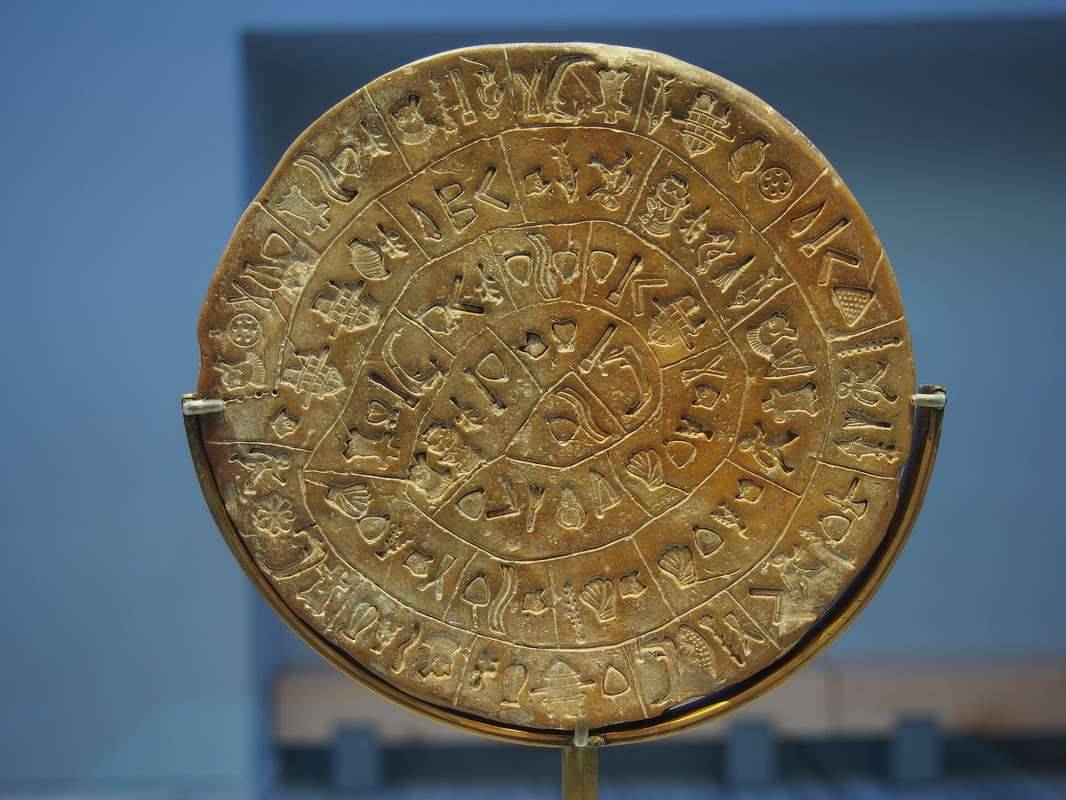
The Phaistos Disc is a famous clay disc discovered at the palace of Phaistos, stamped on both sides with a spiral of mysterious symbols. It is one of the most celebrated and enigmatic objects of the Minoan world, as its symbols, impressed with individual stamps, have never been convincingly deciphered, and its purpose and meaning remain unknown. The disc is displayed in the Heraklion Archaeological Museum, where the finest finds from both Phaistos and Knossos are kept. It is a highlight of any visit to the museum and a reminder that, despite all that has been uncovered, much about the Minoan civilisation remains a mystery.