
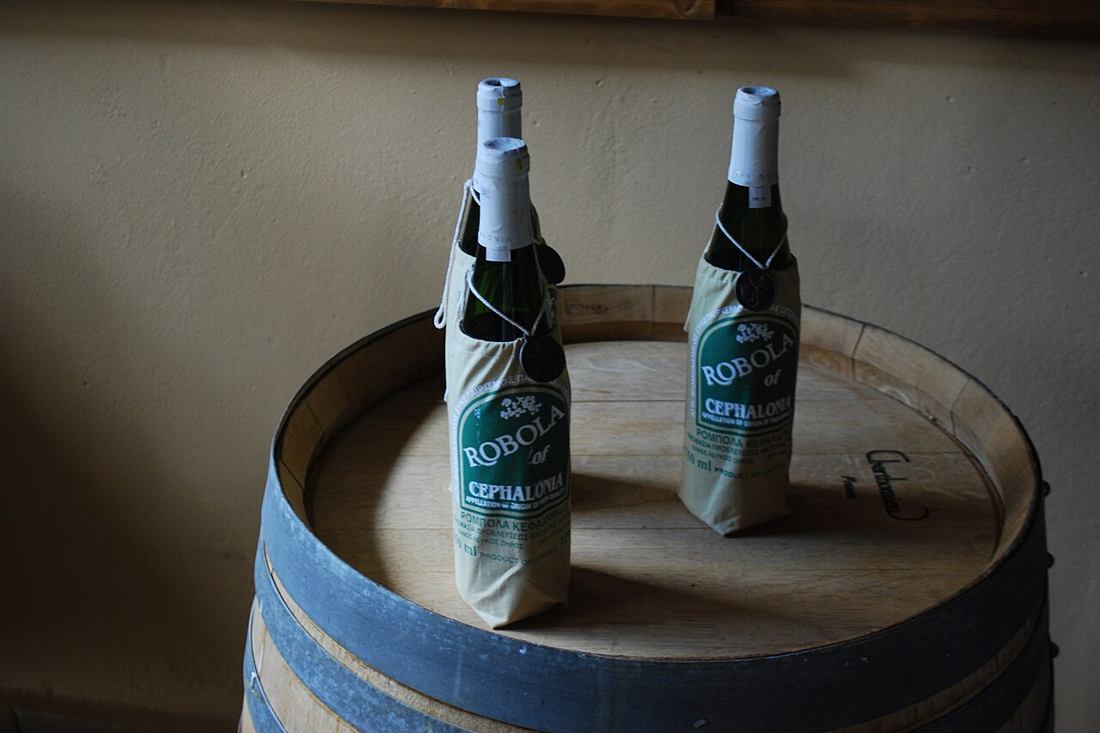
A Kefalonia wine tasting takes you inland to the Omala plain below Mount Ainos or to the estates around Argostoli, through the vineyard and the cellar, and on to a seated tasting of Robola and the island’s reds with cheese, cured meat and olive oil. Plan the rest of the island with Greece Tours.
This guide covers the visit: which wineries receive guests, what Robola is and why it carries its own appellation, the other grapes grown here, what a tasting and a three-winery day cost, the food, how to reach the estates, the harvest, the sights that pair with it, and how to book.
What does a Kefalonia wine tasting involve?
A visit to one to three estates on the Omala plain below Mount Ainos, a walk through the vineyard and cellar, and a seated tasting of four to eighteen wines with local cheese, cured meat and olive oil, over three to six hours with transport.
A Kefalonia wine tasting runs on the Omala plain below Ainos. Kefalonia is a serious wine island rather than a place that happens to grow grapes. Robola holds a protected appellation here, the vines sit on limestone scree at 500 to 800 metres, and the estates receiving visitors range from a cooperative pressing most of the island’s crop to single-family cellars of a few hectares. The tasting fee is credited against a case purchase. Melissani and Drogarati sit twenty-five minutes north-east. The Robola festival at Frangata runs in August. Argostoli port puts cruise passengers thirty minutes from the cellars. Kreatopita is the island’s meat pie with rice and herbs. Kefalonian sheep’s cheese anchors the tasting plate. Vostilidi is the island’s fuller second white. The Venetians called Robola vino di sasso, the wine of stone. Sclavos farms biodynamically over on the Paliki peninsula. The Robola Cooperative at Omala presses most of the island’s crop.
A Kefalonia wine tasting pours four to eighteen wines. The visit follows the same order everywhere: the vines, the press hall, the barrel room, then the table. What changes is the depth. A cooperative visit runs thirty minutes and four wines; a three-winery day runs six hours and eighteen. Mavrodaphne is made dry by the good estates here. Sarris, Vitoratos and Petrakopoulos fill out the circuit. Gentilini works organically on the flat ground near the airport. The vines sit on limestone scree at five to eight hundred metres. Robola holds its own appellation on this island. Booking a Kefalonia wine tasting ahead matters in August. Bottles cost from nine to twenty-five euros at the cellar. A Kefalonia wine tasting pairs with the monastery of Saint Gerasimos. Harvest for Robola falls in late August and September. Minibus pickup covers Argostoli, Lassi, Skala and Lourdas.
Which wineries receive visitors?
The Robola Cooperative at Omala, Gentilini above Minies near the airport, Sclavos at Lixouri on the Paliki peninsula, Sarris near Argostoli and Vitoratos and Petrakopoulos in the same belt.
Robola holds its own appellation on this island. The Robola Cooperative is the volume producer and the easiest visit: a modern tasting room at Omala beside the monastery of Saint Gerasimos, open through the day without an appointment in season. It presses the great majority of the island’s Robola crop. Vostilidi is the island’s fuller second white. A Kefalonia wine tasting pairs with the monastery of Saint Gerasimos. The Robola Cooperative at Omala presses most of the island’s crop. Kreatopita is the island’s meat pie with rice and herbs. The tasting fee is credited against a case purchase. Sarris, Vitoratos and Petrakopoulos fill out the circuit. Argostoli port puts cruise passengers thirty minutes from the cellars.
Booking a Kefalonia wine tasting ahead matters in August. Gentilini is the estate that made Kefalonian wine known outside Greece. It sits on the flat ground near the airport, works organically and pours a Robola that most visitors judge the island’s best. Sclavos on Paliki farms biodynamically and makes the most distinctive reds. Bottles cost from nine to twenty-five euros at the cellar. Sclavos farms biodynamically over on the Paliki peninsula. Minibus pickup covers Argostoli, Lassi, Skala and Lourdas. A Kefalonia wine tasting runs on the Omala plain below Ainos. Mavrodaphne is made dry by the good estates here. The Robola festival at Frangata runs in August.
Kefalonian sheep’s cheese anchors the tasting plate. Sarris, Vitoratos, Petrakopoulos and Haritatos fill out the circuit. A three-winery day pairs the cooperative with two family estates, which is the contrast worth paying for. The Venetians called Robola vino di sasso, the wine of stone. Harvest for Robola falls in late August and September. The vines sit on limestone scree at five to eight hundred metres. A Kefalonia wine tasting pours four to eighteen wines. Melissani and Drogarati sit twenty-five minutes north-east. Gentilini works organically on the flat ground near the airport.
What is Robola and why does it matter here?
Robola is the island’s white grape, grown on limestone at altitude and protected by its own appellation, Robola of Cephalonia. It gives a dry, high-acid wine with citrus, stone fruit and a mineral edge the Venetians called vino di sasso, the wine of stone.
The vines sit on limestone scree at five to eight hundred metres. The vines grow on the scree slopes of the Omala valley and the flanks of Ainos, where the soil is thin, white and free-draining. Yields are low and the fruit ripens slowly, which is where the acid and the length come from. A Kefalonia wine tasting pours four to eighteen wines. Melissani and Drogarati sit twenty-five minutes north-east. Gentilini works organically on the flat ground near the airport. Minibus pickup covers Argostoli, Lassi, Skala and Lourdas. Booking a Kefalonia wine tasting ahead matters in August. The Venetians called Robola vino di sasso, the wine of stone. Harvest for Robola falls in late August and September.
A Kefalonia wine tasting runs on the Omala plain below Ainos. The appellation covers Robola grown within a defined zone on Kefalonia and nowhere else in Greece. That is why the label matters and why a tasting here is different from a generic Greek white flight. The tasting fee is credited against a case purchase. Sarris, Vitoratos and Petrakopoulos fill out the circuit. Argostoli port puts cruise passengers thirty minutes from the cellars. Robola holds its own appellation on this island. Vostilidi is the island’s fuller second white. A Kefalonia wine tasting pairs with the monastery of Saint Gerasimos.
Kreatopita is the island’s meat pie with rice and herbs. The mountain that shapes it is covered at Mount Ainos, whose black fir forest sits above the highest vineyards. Mavrodaphne is made dry by the good estates here. The Robola festival at Frangata runs in August. The Robola Cooperative at Omala presses most of the island’s crop. Kefalonian sheep’s cheese anchors the tasting plate. Bottles cost from nine to twenty-five euros at the cellar. Sclavos farms biodynamically over on the Paliki peninsula.
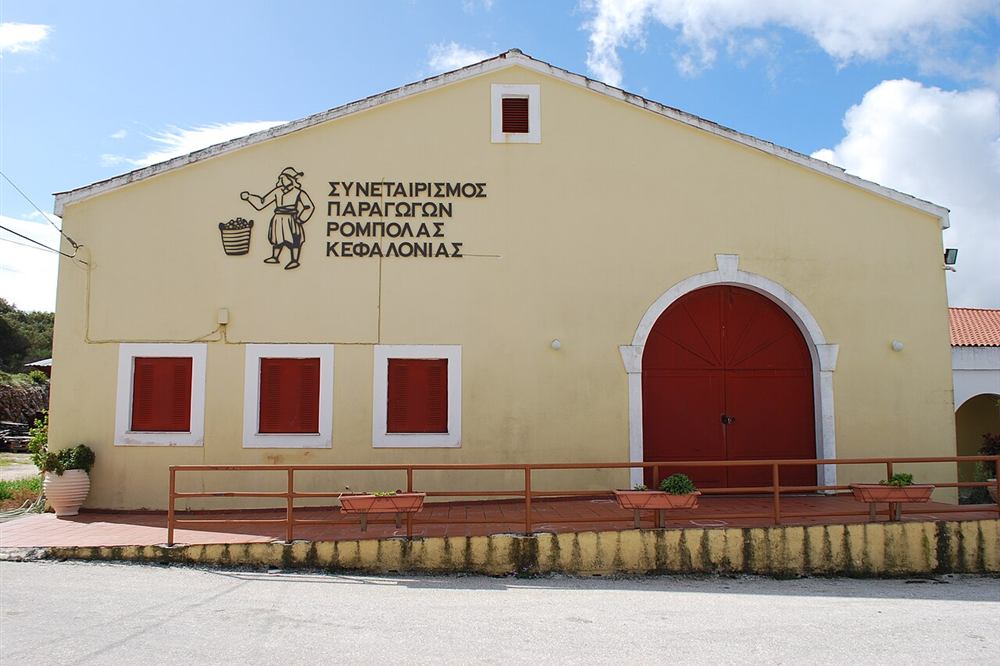
Which other grapes are grown?
Mavrodaphne and Vostilidi alongside Robola, with Tsaousi and Zakynthino in smaller plantings, and international varieties on the lower ground.
The Robola Cooperative at Omala presses most of the island’s crop. Mavrodaphne is the red most visitors know from the sweet fortified wines of the Peloponnese. On Kefalonia the good estates make it dry, and the result is deeper and firmer than its reputation suggests. Robola holds its own appellation on this island. Booking a Kefalonia wine tasting ahead matters in August. Bottles cost from nine to twenty-five euros at the cellar. A Kefalonia wine tasting pairs with the monastery of Saint Gerasimos. Harvest for Robola falls in late August and September. Argostoli port puts cruise passengers thirty minutes from the cellars. Kreatopita is the island’s meat pie with rice and herbs. A Kefalonia wine tasting pours four to eighteen wines. Mavrodaphne is made dry by the good estates here. Sarris, Vitoratos and Petrakopoulos fill out the circuit.
Minibus pickup covers Argostoli, Lassi, Skala and Lourdas. Vostilidi is the island’s other white, fuller and lower in acid than Robola, and it appears in blends rather than on its own label. Tsaousi is rarer again and worth asking for at the family estates. Kefalonian sheep’s cheese anchors the tasting plate. Vostilidi is the island’s fuller second white. The Venetians called Robola vino di sasso, the wine of stone. Sclavos farms biodynamically over on the Paliki peninsula. Gentilini works organically on the flat ground near the airport. The vines sit on limestone scree at five to eight hundred metres. A Kefalonia wine tasting runs on the Omala plain below Ainos. The tasting fee is credited against a case purchase. Melissani and Drogarati sit twenty-five minutes north-east. The Robola festival at Frangata runs in August.
What does a Kefalonia wine tasting cost?
From about 12 to 20 euros for a tasting at the cooperative, 25 to 45 euros at a family estate, 60 to 110 euros for a guided tour with transport and food, and 120 to 180 euros for a three-winery day with lunch.
Gentilini works organically on the flat ground near the airport. The guided fare covers the driver, the guide, the winery fees and the plate. The estate-door version is cheaper and needs a car, which raises the same question every wine island raises: one driver stays sober or the taxi eats the saving. The vines sit on limestone scree at five to eight hundred metres. A Kefalonia wine tasting runs on the Omala plain below Ainos. The tasting fee is credited against a case purchase. Melissani and Drogarati sit twenty-five minutes north-east. The Robola festival at Frangata runs in August. Harvest for Robola falls in late August and September. Minibus pickup covers Argostoli, Lassi, Skala and Lourdas. Kefalonian sheep’s cheese anchors the tasting plate. Vostilidi is the island’s fuller second white. The Venetians called Robola vino di sasso, the wine of stone.
Argostoli port puts cruise passengers thirty minutes from the cellars. Bottles run from about 9 to 25 euros at the cellar and higher for the aged reds and the single-vineyard Robola. Estates credit the tasting fee against a case and pack for hold luggage. Kreatopita is the island’s meat pie with rice and herbs. A Kefalonia wine tasting pours four to eighteen wines. Mavrodaphne is made dry by the good estates here. Sarris, Vitoratos and Petrakopoulos fill out the circuit. Sclavos farms biodynamically over on the Paliki peninsula. The Robola Cooperative at Omala presses most of the island’s crop. Robola holds its own appellation on this island. Booking a Kefalonia wine tasting ahead matters in August. Bottles cost from nine to twenty-five euros at the cellar. A Kefalonia wine tasting pairs with the monastery of Saint Gerasimos.
What food comes with the wine?
Kefalonian cheese, cured meat, olives, bread with the estate’s oil, and on the longer visits a table of local dishes: kreatopita, meat pie with rice and herbs, and the island’s garlic-heavy skordalia.
Sclavos farms biodynamically over on the Paliki peninsula. The cheeses are the anchor. Kefalonia makes a hard sheep’s cheese and a soft fresh one, and both are poured against Robola rather than the reds. The honey and the thyme come from the same slopes as the vines. The Robola Cooperative at Omala presses most of the island’s crop. Robola holds its own appellation on this island. Booking a Kefalonia wine tasting ahead matters in August. Bottles cost from nine to twenty-five euros at the cellar. A Kefalonia wine tasting pairs with the monastery of Saint Gerasimos. The Robola festival at Frangata runs in August. Argostoli port puts cruise passengers thirty minutes from the cellars. Kreatopita is the island’s meat pie with rice and herbs. A Kefalonia wine tasting pours four to eighteen wines. Mavrodaphne is made dry by the good estates here.
Harvest for Robola falls in late August and September. The gourmet-lunch tours put a full meal at the end rather than a plate. That is the version to book when the tasting is the day rather than an afternoon, and the wider table sits at Kefalonia restaurants. Minibus pickup covers Argostoli, Lassi, Skala and Lourdas. Kefalonian sheep’s cheese anchors the tasting plate. Vostilidi is the island’s fuller second white. The Venetians called Robola vino di sasso, the wine of stone. Sarris, Vitoratos and Petrakopoulos fill out the circuit. Gentilini works organically on the flat ground near the airport. The vines sit on limestone scree at five to eight hundred metres. A Kefalonia wine tasting runs on the Omala plain below Ainos. The tasting fee is credited against a case purchase. Melissani and Drogarati sit twenty-five minutes north-east.
How do you reach the wineries?
By tour minibus with hotel pickup from Argostoli, Lassi, Skala, Lourdas and Sami, by hire car on the island’s main roads, or on a cruise-ship shore excursion from Argostoli port.
Sarris, Vitoratos and Petrakopoulos fill out the circuit. The Omala plain sits twenty minutes east of Argostoli on a good road that climbs gently through Frangata. Gentilini is ten minutes south of the capital near the airport. Sclavos needs the ferry or the long road round to Lixouri. Gentilini works organically on the flat ground near the airport. The vines sit on limestone scree at five to eight hundred metres. A Kefalonia wine tasting runs on the Omala plain below Ainos. The tasting fee is credited against a case purchase. Melissani and Drogarati sit twenty-five minutes north-east. A Kefalonia wine tasting pairs with the monastery of Saint Gerasimos. Harvest for Robola falls in late August and September. Minibus pickup covers Argostoli, Lassi, Skala and Lourdas. Kefalonian sheep’s cheese anchors the tasting plate. Vostilidi is the island’s fuller second white.
The Robola festival at Frangata runs in August. Cruise passengers are well served here: the port is in Argostoli itself and the cooperative is a thirty-minute drive, which fits comfortably inside a six-hour call. The capital sits at Argostoli. Argostoli port puts cruise passengers thirty minutes from the cellars. Kreatopita is the island’s meat pie with rice and herbs. A Kefalonia wine tasting pours four to eighteen wines. Mavrodaphne is made dry by the good estates here. The Venetians called Robola vino di sasso, the wine of stone. Sclavos farms biodynamically over on the Paliki peninsula. The Robola Cooperative at Omala presses most of the island’s crop. Robola holds its own appellation on this island. Booking a Kefalonia wine tasting ahead matters in August. Bottles cost from nine to twenty-five euros at the cellar.
When is the harvest and does the season matter?
Late August into September for Robola, with visits running from April to October. The Robola festival at Frangata falls in August and turns the whole valley into a tasting.
The Venetians called Robola vino di sasso, the wine of stone. Spring shows the vines in leaf against the white scree and the cellar quiet. Harvest week puts the crush and the press in front of visitors and is the busiest and most interesting time to come. Sclavos farms biodynamically over on the Paliki peninsula. The Robola Cooperative at Omala presses most of the island’s crop. Robola holds its own appellation on this island. Booking a Kefalonia wine tasting ahead matters in August. Bottles cost from nine to twenty-five euros at the cellar. Melissani and Drogarati sit twenty-five minutes north-east. The Robola festival at Frangata runs in August. Argostoli port puts cruise passengers thirty minutes from the cellars. Kreatopita is the island’s meat pie with rice and herbs. A Kefalonia wine tasting pours four to eighteen wines.
A Kefalonia wine tasting pairs with the monastery of Saint Gerasimos. Winter visits run by appointment at the family estates. The cooperative keeps longer hours than the small cellars through the shoulder months, which is worth checking rather than assuming. Harvest for Robola falls in late August and September. Minibus pickup covers Argostoli, Lassi, Skala and Lourdas. Kefalonian sheep’s cheese anchors the tasting plate. Vostilidi is the island’s fuller second white. Mavrodaphne is made dry by the good estates here. Sarris, Vitoratos and Petrakopoulos fill out the circuit. Gentilini works organically on the flat ground near the airport. The vines sit on limestone scree at five to eight hundred metres. A Kefalonia wine tasting runs on the Omala plain below Ainos. The tasting fee is credited against a case purchase.
Can you combine a tasting with the rest of the island?
Yes. The standard day pairs the Omala wineries with the monastery of Saint Gerasimos next door, the caves at Melissani and Drogarati, and a beach stop at Myrtos or Antisamos.
Mavrodaphne is made dry by the good estates here. The monastery sits a few hundred metres from the cooperative and holds the tomb of the island’s patron saint. It costs nothing and takes twenty minutes, and every guided wine day includes it. Sarris, Vitoratos and Petrakopoulos fill out the circuit. Gentilini works organically on the flat ground near the airport. The vines sit on limestone scree at five to eight hundred metres. A Kefalonia wine tasting runs on the Omala plain below Ainos. The tasting fee is credited against a case purchase. Bottles cost from nine to twenty-five euros at the cellar. A Kefalonia wine tasting pairs with the monastery of Saint Gerasimos. Harvest for Robola falls in late August and September. Minibus pickup covers Argostoli, Lassi, Skala and Lourdas. Kefalonian sheep’s cheese anchors the tasting plate.
Melissani and Drogarati sit twenty-five minutes north-east. The caves are the other natural pairing, twenty-five minutes north-east at Sami. Their tours run mornings, which puts the wine in the afternoon where it belongs. The rest of the island’s sights sit at things to do in Kefalonia. The Robola festival at Frangata runs in August. Argostoli port puts cruise passengers thirty minutes from the cellars. Kreatopita is the island’s meat pie with rice and herbs. A Kefalonia wine tasting pours four to eighteen wines. Vostilidi is the island’s fuller second white. The Venetians called Robola vino di sasso, the wine of stone. Sclavos farms biodynamically over on the Paliki peninsula. The Robola Cooperative at Omala presses most of the island’s crop. Robola holds its own appellation on this island. Booking a Kefalonia wine tasting ahead matters in August.
Who does it suit, and how do you book?
Couples, small groups and anyone who has done the beaches. Book two to four days ahead in July and August; the family estates run small tasting rooms and turn away walk-ins on a busy afternoon.
Vostilidi is the island’s fuller second white. Group sizes run from four to sixteen on the shared tours. Private visits take up to eight and set their own pace, which is the version for a party that wants three estates rather than one. The Venetians called Robola vino di sasso, the wine of stone. Sclavos farms biodynamically over on the Paliki peninsula. The Robola Cooperative at Omala presses most of the island’s crop. Robola holds its own appellation on this island. Booking a Kefalonia wine tasting ahead matters in August. The tasting fee is credited against a case purchase. Melissani and Drogarati sit twenty-five minutes north-east. The Robola festival at Frangata runs in August. Argostoli port puts cruise passengers thirty minutes from the cellars. Kreatopita is the island’s meat pie with rice and herbs.
Bottles cost from nine to twenty-five euros at the cellar. Cancellation runs free to twenty-four hours with most operators. Dietary needs and the tasting language go on the booking rather than being raised at the table, and the island as a whole sits at Kefalonia. A Kefalonia wine tasting pairs with the monastery of Saint Gerasimos. Harvest for Robola falls in late August and September. Minibus pickup covers Argostoli, Lassi, Skala and Lourdas. Kefalonian sheep’s cheese anchors the tasting plate. A Kefalonia wine tasting pours four to eighteen wines. Mavrodaphne is made dry by the good estates here. Sarris, Vitoratos and Petrakopoulos fill out the circuit. Gentilini works organically on the flat ground near the airport. The vines sit on limestone scree at five to eight hundred metres. A Kefalonia wine tasting runs on the Omala plain below Ainos.
Frequently Asked Questions
What does a Kefalonia wine tasting cost?
From about 12 to 20 euros at the Robola cooperative, 25 to 45 euros at a family estate, 60 to 110 euros for a guided tour with transport and food, and 120 to 180 euros for a three-winery day with lunch.
Which wineries can you visit on Kefalonia?
The Robola Cooperative at Omala, Gentilini near the airport, Sclavos at Lixouri, and the Sarris, Vitoratos, Petrakopoulos and Haritatos estates in the same belt around Argostoli.
What is Robola wine?
The island’s white grape, grown on limestone scree at 500 to 800 metres and protected by the Robola of Cephalonia appellation. It is dry and high in acid, with citrus, stone fruit and a mineral edge.