
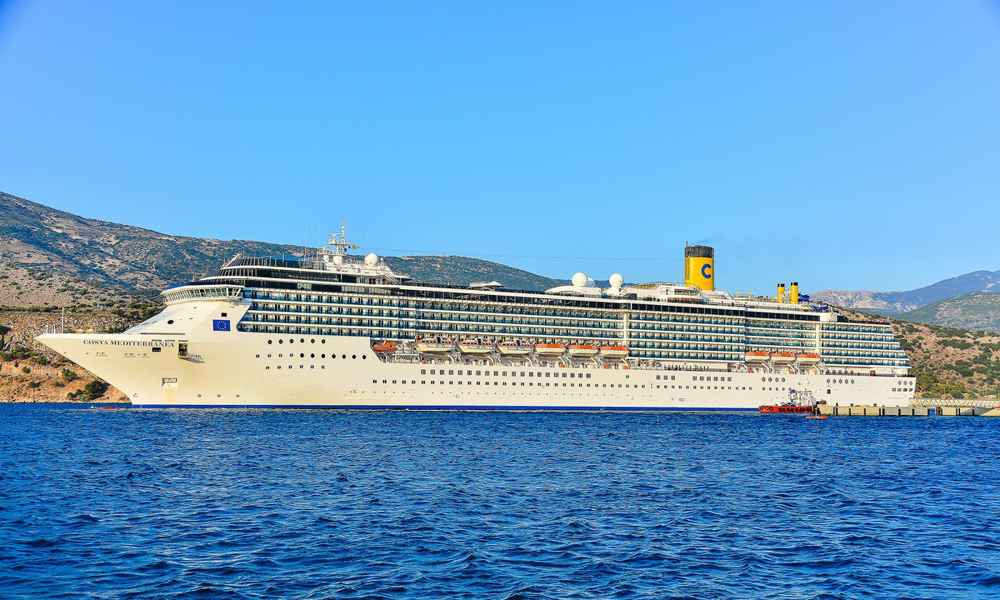
Kefalonia turns a different face to the sea than it does to the road. The island’s western and northern shores drop as limestone walls straight into deep water, and the coast road above them touches the shoreline at only a handful of points. Boats reach what cars cannot: pocket beaches under 200-metre cliffs, inlets floored with white pebbles, and caves cut into the rock at sea level. Day cruises and small self-drive boats leave from harbours spread right around the island, from Argostoli in the southwest to Fiskardo at the northern tip. A morning on the water covers more coastline than a full day of driving the mountain roads. Plan the whole trip with Greece Tours.
It puts the scale of the island in plain view for the first time.
Choice on the water comes down to two decisions: which harbour to leave from, and whether to hire a skipper or take the wheel. Argostoli, Lassi, Sami, Agia Efimia, Fiskardo, Skala and Lixouri each open onto a different stretch of coast, and no single one of them serves the whole island. Crewed day boats run fixed routes with three or four swimming stops across about seven hours, while small self-drive craft carry engines weak enough that no licence is required and let a group of 6 pick its own coves. Wind sets the rest of the plan.
The exposed west roughens from early afternoon, so calm sea and clean light on the cliffs below Myrtos belong to the morning departures.
Why do boat trips suit the Kefalonia coastline?
Cliffs back much of Kefalonia’s west and north coast, leaving beaches and caves that no road reaches. Boats close that gap, carrying swimmers to coves below Myrtos, the inlets around Assos and the sea caves past Fiskardo.
Limestone dominates Kefalonia, and the sea has cut into it along a long stretch of the west and north. The cliffs above Myrtos rise more than 200 metres from the water, and the pebble bays beneath them shelve into water that turns navy within 40 metres of the shore. Boats running this coast pass headland after headland with no road in sight, then swing into inlets barely 30 metres wide. The island covers about 773 square kilometres, and its coastline folds far more than that figure suggests. Anyone circling even a quarter of it by boat sees more rock face in three hours than the whole road network reveals in a full day of driving.
Water access changes what the island looks like and how big it feels.
Road access on Kefalonia follows the ridges rather than the shore, so beaches sit at the bottom of long switchback descents or have no descent at all. Boat trips reverse that logic. A skipper drops anchor 20 metres off a pebble bank, swimmers step down the ladder, and the stop lasts about 30 minutes before the boat moves on. Three or four halts of that kind fit inside a half-day trip. The coves north of Agia Efimia and the notches along the Paliki cliffs west of Lixouri exist only as boat destinations, because no path drops to them from the ridge above.
Deep clear water, no road and an empty pebble bank at midday explain why the trade keeps growing here.
Afternoon wind governs the timetable on the exposed western side. The northwesterly builds through the middle of the day. The swell it pushes against the cliffs between Myrtos and Assos turns a calm morning crossing into a rolling one by about three o’clock. West-coast trips therefore leave between 9 and 10 in the morning and return by mid-afternoon. The eastern harbours of Sami and Agia Efimia sit in the lee of the island and of Ithaca beyond it, so the channel there stays flatter for longer. Anyone prone to seasickness books an east-coast route or takes the earliest western departure.
Skippers cancel outright when the wind reaches a strength that makes swimming stops unsafe, and they reschedule the booking rather than run a rough trip along the cliffs.
Two formats cover almost every boat trip on the island. Crewed day boats carry between 12 and 60 passengers, run a fixed route with three or four swimming stops. Provide shade, a ladder, a toilet and often a light lunch. Self-drive boats seat 4 to 8 people, come with a fuel tank, a cool box and a chart of the coast, and let the group choose its own coves. The small self-drive craft carry engines weak enough that no boating licence is required. The hire desk gives a briefing of about 15 minutes on handling. Anchoring and the water to avoid. Families and mixed-ability groups take the crewed boats.
Confident swimmers take the tiller themselves and stay out for roughly seven hours.
Where do boat trips leave from in Kefalonia?
Boats leave from seven points around Kefalonia: Argostoli and the Lassi coast in the southwest, Sami and Agia Efimia on the east, Fiskardo in the north, Skala in the south, and Lixouri on Paliki opposite the capital.
Argostoli sends boats out of the inner harbour beside the De Bosset bridge. The Lassi coast adds departures from the beach jetties at Makris Gialos and Platis Gialos. About 4 kilometres from the town centre. Trips from this side head south around the Lassi headland and the lighthouse of Agios Theodoros, or west across the bay toward the Paliki shore. The harbour itself holds loggerhead turtles that feed around the fishing boats, and the first ten minutes of an Argostoli departure include a slow pass to look for them. The passenger ferry to Lixouri crosses the same bay in about 20 minutes, which doubles as the easiest reference point for distance.
Argostoli suits travellers based in the capital who want half a day afloat without a transfer.
Sami works as the island’s second port and the busiest east-coast base for excursion boats. Its quay sits about 25 kilometres from Argostoli by road, roughly 35 minutes of driving, and the water in front of it forms the channel separating Kefalonia from Ithaca. Departures head north along the Antisamos cliffs or straight east on the 4-kilometre crossing. Agia Efimia lies about 10 kilometres further north, a smaller marina used by sailing yachts, and its boats work the coves between the village and the northern tip. Both harbours shelter behind the bulk of Mount Ainos from the prevailing northwesterly, which keeps the sea flatter into the afternoon than on the western side.
East-coast bases therefore run later departures, with afternoon boats leaving at about two o’clock.
Fiskardo occupies the northern tip of the island and gives the shortest run to the north-coast sea caves and to Ithaca’s northeastern harbours. Its pastel waterfront survived the mid-century Ionian earthquake that flattened the rest of the island, and the quay now mixes fishing boats, yachts and hire craft along one curving front. Departures reach Emblisi and Foki beaches in under 10 minutes, Kioni on Ithaca in about 30, and the caves along the Erisos coast in about 20. The village sits roughly 50 kilometres north of Argostoli. A drive of about an hour and a quarter on winding road.
Travellers staying in the south book a boat closer to base rather than drive up for a morning departure.
Skala anchors the southern end of the island and launches boats along a low, open coast rather than a cliff wall. Its trips run east toward Poros and the shoreline below the Roman villa mosaics, or south to the sandbanks off Mounda, where loggerhead turtles nest through the warm months. Lixouri, across the bay on the Paliki peninsula. Gives the fastest access to the western cliffs at Petani and to the red-orange sand of Xi beach, both within about 20 minutes of the quay. The Paliki shoreline south of Petani carries a wall of pale rock cut by narrow inlets with no road above them.
Travellers on that side skip the drive around the bay, since the ferry lands them beside the hire boats.
Which day-cruise routes run from Kefalonia’s harbours?
Four routes dominate the schedule: the northwest cliffs below Myrtos and Assos, the sea caves of the Erisos coast, the eastern crossing to Ithaca with Kioni and Frikes, and the Paliki run past Petani and Xi.
A full-day crewed cruise follows a fixed shape from boarding to return. Passengers board about 30 minutes before a 9.30 departure. The boat clears the harbour and runs 40 to 60 minutes to the first anchorage. Swimmers get 40 minutes in the water. Two further stops follow, each of 30 to 45 minutes. With a lunch break taken either on board at anchor or ashore in a harbour village such as Assos, Agia Efimia or Kioni. The return leg keeps closer to the coast so passengers see the same cliffs in different light. Total time on the water runs to about seven hours.
Crews brief passengers on ladder use and depth at every stop, and they keep the engine off while people swim.
Half-day trips compress the same idea into three or four hours and cost far less of a holiday day. Morning versions leave about 9.30 and return by 13.00; afternoon versions leave about 15.00, though on the exposed west coast the rising wind makes that slot rougher. A half-day out of Sami covers Antisamos, the cliffs north of it and one run along the Ithaca shore. A half-day out of Fiskardo takes in Emblisi, Foki and two of the northern caves. These boats carry fewer passengers, skip the lunch stop and hold their swimming halts to about 25 minutes each. The shorter format leaves the afternoon free for Melissani cave near Sami or the drive up Mount Ainos.
Self-drive hire hands route choice to the group, and the workable plan runs with the wind rather than against it. Boats leaving Agia Efimia or Fiskardo head north and east in the morning. Reach the caves and coves while the sea is flat. Turn for home before the breeze fills in after midday. Hire desks mark a boundary on the chart beyond which the boat must not go. Normally the open water west of the island. They take a phone number and a fixed return time. Fuel comes inside the price on short hires and by the tank on full-day ones.
Groups of 6 splitting one boat treat the whole day as a private charter, which is why the format keeps spreading around the island.
Shade decides comfort on a Kefalonia boat day more than anything else. Crewed boats carry a canopy over part of the deck. Self-drive craft rarely do. A hat, a long-sleeved shirt and high-factor sunscreen matter more than the rest of the bag. Water reflects light upward, and the pebble bays under the western cliffs hold heat into the evening. Reef shoes help on the coarse pebbles at the coves near Myrtos beach and at Foki, where the bottom drops away fast. A dry bag keeps phones safe on the tender ride ashore.
Boats leave from open quays with no changing rooms, so passengers arrive in swimwear under their clothes, and cash covers the taverna lunch in villages such as Assos and Kioni.
What do Myrtos, Assos and the north-coast caves look like from a boat?
Cliffs 200 metres high frame Myrtos from the water, and the Assos isthmus shows as a thin neck of land under its Venetian castle. North of Assos the rock wall opens into caves and inlets that only boats enter.
Myrtos reads differently from the water than from the viewpoint on the road above. The white pebble crescent sits at the foot of a limestone amphitheatre. The pale seabed throws the turquoise colour out to about 40 metres offshore before depth turns it navy. Boats anchor off the northern end where the shelf stays shallow, and swimmers cover the 30 metres to the pebbles in a dozen strokes. The road descent from Divarata takes about 10 minutes of hairpins and ends in a car park that fills by 11 in the morning. The boat arrives without any of that.
Trips from Fiskardo reach the bay in roughly 40 minutes, and trips from Agia Efimia round the northern headland in about an hour.
Assos appears from the sea as a village pinned to a narrow isthmus with a wooded peninsula behind it. The Venetian castle wall runs along the ridge of that peninsula, and from a boat the whole layout of harbour, neck of land and fortress hill sits inside one frame. Day cruises tie up at the small quay for a lunch stop of about an hour. Long enough for a plate at a waterfront taverna and a swim off the pebbles on the north side. The bay on the south side stays calm in the prevailing wind and serves as an anchorage when the west is rough.
Assos lies roughly 10 kilometres north of Myrtos by sea, a run of about 20 minutes at cruising speed.
North of Assos the Erisos coast turns into a wall of grey rock pierced at sea level. Boats nose into arches and low chambers where the water glows pale blue from light entering below the surface. Entry depends on swell, because the openings stand 3 to 5 metres high and even a small sea closes them. Skippers on the Fiskardo and Agia Efimia routes check the caves first and reorder the day when the north is working. Swimmers snorkel from the boat into the larger chambers rather than taking the hull inside.
Cave water runs two to three degrees colder than the open sea, because it sits in shade and mixes with fresh water seeping through the limestone, the same karst system that feeds Melissani near Sami.
Light decides how the northwest coast looks from a boat through the day. Morning sun strikes the cliffs between Divarata and Assos from behind. Leaving the rock face in shadow and the water pale. By mid-afternoon the sun swings west and lights the whole wall, which is also when the wind rises. Trips that run the coast outbound in the morning and inbound after 15.00 catch both states in one day. Turtles surface in the calm strip within 100 metres of the cliffs, and dolphins work the deeper water of the Ithaca channel more often than the western side.
The cliffs carry no phone signal for long stretches, so hire desks fix a return time instead of expecting a call from the water.
How do boat trips from Kefalonia reach Ithaca, Kioni and Frikes?
Boats cross the 4-kilometre channel from Sami, Agia Efimia or Fiskardo and land at Kioni or Frikes, two small harbours on Ithaca’s northeast coast. The crossing takes 20 to 45 minutes depending on the departure port.
The Ithaca channel narrows to about 4 kilometres between the east coast of Kefalonia and the western shore of Ithaca. Which keeps the crossing short and, in the lee of both islands, flat for most of the morning. Boats from Fiskardo take about 30 minutes to Kioni, and boats from Agia Efimia take about 45. The car ferry out of Sami runs to Pisaetos on Ithaca’s west side, while excursion boats from the same port head northeast to the two village harbours instead. The channel drops deep quickly, and dolphins work it in the early hours.
Sailing yachts use the same water through the summer, so skippers hold the middle of the channel and cross the yacht traffic at right angles.
Kioni sits at the head of a deep inlet on the northeast coast of Ithaca, a horseshoe of stone houses with three ruined windmills on the point above the entrance. Day boats moor stern-to on the quay or anchor in the bay and run passengers ashore, and the stop lasts about two hours. Tavernas line the waterfront, and the swimming happens off flat rock ledges a five-minute walk south of the village rather than off sand. The village escaped the worst of the mid-century earthquake, so its houses stand taller than the rebuilt villages across the channel. Kioni works mainly as a yacht harbour, which keeps the quay busy from late morning until the evening arrivals finish.
Frikes lies about 3 kilometres north of Kioni, a smaller harbour set in a narrow valley between two ridges, and boats cover the hop in under 10 minutes. Ferries to Lefkada and to Fiskardo use the same quay, so excursion skippers time their stop around the scheduled arrivals. The village runs to one street of tavernas along the water and a stone windmill on the northern headland. Swimming happens at the pebble coves just outside the harbour mouth rather than inside the port. Boats that combine both villages give about 90 minutes at Kioni and 45 at Frikes. Then turn back across the channel by mid-afternoon while the water in the lee of Ithaca stays smooth.
A full-day Ithaca cruise builds three stops around those two harbours. Boats leave the Kefalonia side about 9.30, swim first at a cove near Afales or in Polis bay on the northern shore. Take lunch at Kioni, then call at Frikes before the return leg. Passengers wanting Vathy, the capital on Ithaca’s southern side, take the scheduled ferry from Sami instead, because the excursion boats stay north. No passport check applies, since both islands sit in the same country and the same region. Anyone driving to the departure port allows about 35 minutes from Argostoli to Sami and about 75 minutes to Fiskardo. The boats leave on time whether or not the last car has parked.
How does hiring a self-drive boat in Kefalonia work?
Self-drive boat hire operates from harbours across Kefalonia, including Sami, Fiskardo, Argostoli and Skala. The smallest engine sizes carry no licence requirement, and every hire opens with a briefing covering routes, fuel and the day’s weather.
The hire desk starts with paperwork and a walk around the hull. Staff record the driver’s details, check the fuel gauge, and point out the anchor, the boarding ladder, the bilge pump and the kill cord. The briefing then covers the day’s route in plain terms, naming the coves within an hour of the harbour. The headlands that funnel wind. The bays that fill with moored yachts by midday. Boats leaving Agia Efimia work the coast north toward Fiskardo, about 15 kilometres away, or drop south toward Sami and Antisamos. Crews hand over a laminated chart, a phone number for the base, and a return time in the late afternoon.
Nobody leaves the pontoon before the driver has started the engine and reversed off the berth once.
Boat sizes at the smallest end carry two to six people and run on outboard engines rated below the licence threshold set by the Greek port authority. Stronger engines require a valid boat licence, and the base checks that document before releasing the keys. Families with young children take the wider hulls with a sun canopy, because shade matters between 11am and 4pm on an open deck. Couples take the compact boats and cover shorter distances along one stretch of coast. The base sets a range limit during the briefing, and that limit tightens when the forecast shows afternoon wind on the west side of the island.
Fuel is charged separately on self-drive hire, measured at the pump on return, so the day’s cost tracks the distance the boat actually travels.
Self-drive hire suits travellers who want to pick their own stops rather than follow a fixed route with 40 other passengers. A small outboard boat covers modest distances, so a cove 10 kilometres from the quay costs about an hour of running each way. That maths shapes the whole day. Boats out of Sami reach Antisamos in around 20 minutes and the coast below Agia Efimia within the hour. Boats out of Fiskardo reach Emblisi and Foki in minutes, then push toward the Ithaca channel. Skala and Poros face the open south-east, so the range there depends on the wind more than on the fuel.
Drivers who have never handled a boat start with the near bays, learn the throttle, and extend the route on the second outing.
Anchoring is the part of the day that catches out first-time drivers. The base explains where the sand lies, because an anchor drags on rock and holds in sand. The water off Kefalonia turns from turquoise sand-bottom to dark weed within metres. Crews advise dropping the anchor 20 to 30 metres from the shoreline, backing the boat down, and swimming in from there rather than driving onto pebbles. Swimmers must be back aboard before the engine turns. Boats return to the same berth they left, and the base logs the fuel level, checks the hull, and asks where the boat went.
The whole hire runs from morning to late afternoon, which gives about seven hours of daylight for two or three stops. Late returns cost the group extra fuel and a delayed handover.
Where do sunset cruises leave from in Kefalonia?
Sunset cruises depart in the late afternoon from harbours including Argostoli, Fiskardo, Sami and Lixouri. Boats follow the coast while the light drops, turn back after dark falls, and return to the same quay they left.
Sunset departures work the west-facing water, because Kefalonia’s sun goes down over the sea on that side. Boats out of Argostoli run down the bay past the Katavothres sea mills and the lighthouse of Agios Theodoros. Then out toward the open channel between the town and the Paliki peninsula. Boats out of Lixouri turn toward Petani and the cliffs on the north-west face of Paliki. The crossing time from either quay to open water runs about 20 minutes, which leaves the rest of the trip drifting with the engine idling. Passengers stay on deck for the last hour of light.
The temperature drops around 4 degrees once the sun sits on the horizon, which is why crews tell people to carry a layer even in high summer.
The east-coast harbours run their own late-afternoon trips with a different shape. Boats from Sami and Poros face the channel toward Ithaca, so the light lands on the mountains opposite rather than on open horizon. Crews there time the return for the moment the Ithaca ridge turns copper, about 30 minutes before the sun clears the Kefalonian skyline behind them. Fiskardo boats push north past Emblisi and Foki toward the Lefkada channel, where the water stays flat because the headland blocks the north-west breeze. Trips run roughly two to three hours from the quay and back, which places these departures in the last stretch of the working day.
Passengers board about 15 minutes before the engine starts, and the crew counts heads at the quay. The berth number appears on the booking.
Deck conditions on a sunset trip differ from a midday cruise in ways worth planning for. The wind that builds through the afternoon drops away in the final hour of light, so the sea flattens as the trip goes on rather than roughening. Swimming stops earlier, because the water off Myrtos and Petani sits in cliff shadow from mid-afternoon and reads about 2 degrees colder than it did at noon. Crews on the larger boats serve drinks on deck and keep the engine slow so the wake does not throw spray across the seats. Photographers get about 40 minutes of usable low light.
Anyone prone to motion sickness benefits from the calmer evening water, which is the main reason families with small children pick the late slot.
Booking a sunset trip works differently from booking a self-drive boat. The late-afternoon slot on the popular harbour boats fills first in July and August, when the town quays at Argostoli and Fiskardo run at capacity. Crews cancel and reschedule when the forecast shows a strong north-westerly, because the exposed west-facing legs of the route turn rough. That cancellation is a weather call, not a preference, and it happens more often on the Paliki side than in the sheltered channel off Sami. Groups travelling with a hire car park above the quay and walk down, since the harbour fronts at Fiskardo and Assos have almost no parking after 6pm.
Trips end at the same berth, which keeps the return walk short. Crews confirm the slot by phone on the morning of the trip.
Why does the Ionian sailing scene call at Fiskardo and Sami?
The Ionian ranks among Greece’s major sailing areas, and Kefalonia sits in the middle of it. Yacht flotillas and bareboat charters call at Fiskardo, Sami and the east-coast bays, which hold the island’s main visiting-yacht berths.
Geography explains the traffic. Kefalonia, Ithaca, Lefkada and Zakynthos stand within short daily hops of each other, and the channels between them stay narrow enough to shelter a yacht from open-sea swell. A flotilla leaving Lefkada reaches Fiskardo in a morning, then works south to Agia Efimia and Sami over the following days. The distances suit crews sailing about 20 nautical miles a day and stopping for lunch. Fiskardo holds the deepest cultural draw of the three ports, because the village survived the Ionian earthquake of the mid-twentieth century and kept its Venetian-style waterfront of pastel houses.
Yachts moor stern-to along the quay, metres from the tavernas, and the harbour fills from late afternoon onward through the sailing season, which runs from spring into October. The quay holds about 20 visiting yachts at a time.
Charter boats fall into two categories that shape who uses them. Bareboat charter puts a qualified skipper from the group in charge of the yacht, and the charter company checks certificates and logged sea miles before handover. Skippered charter supplies a professional who handles navigation, mooring and the weather calls, which leaves the group to swim and eat. Flotillas sit between the two, sending eight to twelve yachts along a fixed route behind a lead boat carrying an engineer and a host. Kefalonia appears on almost every Ionian flotilla itinerary, usually as a two-night stop split between Fiskardo and Agia Efimia.
Crews without a licence still reach the same water on the Ithaca day trip, which crosses the channel a yacht take. Bookings for the summer weeks close early in spring.
Agia Efimia earns its place on the charter map through position and depth. The bay faces east into the Ithaca channel, which puts the village in the lee of the island’s mountain spine when the north-westerly blows. Yachts tie up along the harbour wall, take on water and fuel, and walk to the swimming platforms south of the village. The port sits about 10 kilometres north of Sami and about 30 kilometres from Argostoli by road. Crews use it as a provisioning stop as well as an overnight berth. Sami runs on a larger scale, handling the ferries to Ithaca and the mainland alongside visiting yachts.
Which means more wash in the harbour and a longer walk from the yacht berths to the shops.
Day sailing works for travellers who want the boat without the week-long commitment. Skippered day sails leave the northern harbours and cross to the Ithaca coast, anchoring off Polis bay or the beaches below Kioni for a swim and lunch. The round trip runs a full day, roughly 8 hours from quay to quay, and the yacht sails on the outbound leg when the afternoon breeze fills in. Passengers on these trips need no licence, no experience and no gear beyond swimwear and sun cover. The main difference from a motor cruise is pace: a sailing yacht moves at around 6 knots. The day covers fewer stops and spends longer at each one.
Which suits people who came to swim rather than to sightsee.
How do sea conditions differ between Kefalonia’s east and west coasts?
The sheltered east coast around Sami, Poros and Antisamos stays calmer through the day, while the exposed west coast at Myrtos and Petani picks up afternoon swell and wind. Morning departures run steadier on both sides.
The island’s mountain spine does the work. Mount Ainos and the ridges running north from it stand about 1,628 metres at the summit and block the prevailing north-westerly before it reaches the east coast. Water off Sami, Agia Efimia, Antisamos and Poros therefore stays glassy on mornings when Myrtos is already breaking. The west coast has no such shelter, because the wind arrives straight off open sea with 100 kilometres of fetch behind it. Myrtos sits below cliffs with a steep pebble shelf, and the swell there rebounds off the beach into confused chop by early afternoon. Petani, on the Paliki peninsula, behaves the same way.
Boat crews plan west-coast legs for the first half of the day and retreat east once the breeze fills in.
The daily wind cycle follows a pattern travellers can plan around. Mornings start light, often near flat, from first light until about 11am. The breeze builds through the middle of the day as the land heats, peaks in the middle of the afternoon, and eases in the final hour before sunset. Boats leaving at 9am reach Myrtos, Assos and the north-west coves in calm water and get their swim stop before the surface breaks up. Boats leaving at 2pm find the same coast rolling. That single fact governs almost every scheduling decision on the island, from self-drive hire limits to the direction a cruise runs its loop.
Crews at Fiskardo and Argostoli set out early and use the sheltered channels for the return leg. Local crews treat the 11am mark as the dividing line.
Sea state affects comfort more than it affects the schedule of the large boats. A 20-knot north-westerly turns the crossing to Myrtos into 45 minutes of pounding on a small hull, while a 40-passenger motor cruiser handles the same water without drama. Small self-drive boats therefore stay east or hug the coast when the forecast climbs, and the hire base enforces that with a stated range limit. Passengers who feel motion sickness gain the clearest benefit from a morning slot, because the water is smoothest before midday and the swell has not yet built. Anyone booking a full-day trip in July or August with young children benefits from an early departure and an east-coast route.
Which keeps the boat inside sheltered water from departure to return.
Reading the forecast the way local crews do takes two numbers: wind speed and direction. A north-westerly at 10 to 15 knots leaves the whole island workable, with only light chop off Myrtos. The same speed from the south turns the south-coast beaches at Skala, Lourdas and Katelios choppy while the north stays calm. Wind above 20 knots from any direction closes the exposed coast to small boats, and hire bases hold their fleets on the pontoon rather than send them out. Crews check the forecast twice, at the evening before and again on the morning of the trip, and they change the route rather than cancel.
That flexibility explains why a cruise advertised for Myrtos sometimes runs the Ithaca channel instead. Route changes are announced at the quay, not in advance.
What do you pack for a Kefalonia boat trip?
Water, sun cover, a hat, a dry bag and shoes for pebbles cover the essentials on any Kefalonia boat trip. Self-drive hire adds fuel, charged separately at the pump, plus a phone kept dry for the base.
Water tops the list because an open deck offers no shade and no tap. Two litres per person covers a full day for an adult, and boats reaching the north-west coves pass no beach bar between Assos and Myrtos. Sun exposure on the water runs harder than on land, since the surface reflects light back onto skin already facing the sky. A hat with a brim, a long-sleeved shirt for the middle of the day and high-factor sunscreen applied before boarding all matter more at sea than on a sunbed. Shoes for pebbles earn their place at Myrtos, Emblisi and Antisamos, where the stones are large, rounded and hot.
A dry bag keeps phones, keys and documents usable after a wet boarding from an anchored boat.
Choosing between trip formats comes down to control and cost. Self-drive hire gives a group the whole day, its own route and no other passengers, at the cost of running the boat and buying the fuel. A ticketed cruise supplies a skipper, a fixed route, shade, a toilet and a fuel price already inside the ticket. Skippered sailing sits between them, adding sails and a longer, slower day. Families with children under 6 lean toward the larger boats with rails and covered deck. Groups of four or more adults find self-drive covers ground the ticketed boats miss. Particularly the small coves south of Fiskardo and the sea caves along the Sami coast that no road reaches.
Deck space on the ticketed boats seats about 40 people, so quiet coves feel busier.
Timing the booking matters as much as choosing the boat. Morning departures sell out first in July and August because the sea is calmest then and every crew knows it. Booking two to three days ahead in high season secures a morning slot; booking the evening before leaves the afternoon options. Weather cancellations move bookings rather than refund them, so a trip planned for the first days of a stay leaves room to rebook if the wind blows. Travellers with one free day pick the sheltered east coast, since it works in conditions that close Myrtos and Petani.
Ferry days complicate the picture at Sami and Poros, where the harbour traffic peaks around the arrivals and departures for Ithaca and the mainland. Crews confirm the pickup point when the booking is made.
Practical details finish the plan. Boats leave from a numbered berth rather than a shop front, so arriving 20 minutes early to find the quay saves the departure. Parking near the water at Fiskardo, Assos and Agia Efimia fills by mid-morning, and the walk down from the upper road takes about 5 minutes. Cash covers fuel at small pontoon pumps where card terminals fail on weak signal. Motion-sickness tablets work when taken about an hour before boarding, not on deck. Waterproof phone cases beat pockets for anyone planning to swim off the boat.
A cover-up and a towel handle the drop in temperature on the return leg, which arrives with wind on wet skin even in the middle of summer. Rubbish returns to the quay with the group, since boats carry no bins.
Frequently Asked Questions
Do you need a licence to hire a self-drive boat in Kefalonia?
The smallest engine sizes offered by Kefalonia hire bases need no boat licence, which is exactly why those boats dominate the self-drive fleets at Sami, Agia Efimia, Fiskardo and Skala. The threshold is set by the Greek port authority, and the hire base states which of its boats fall under it before taking a booking. Anything above that engine rating requires a valid licence, and staff check the document against photo identification at handover. The driver must be an adult, and the base records the name on the hire agreement. Every hire, licensed or not, includes a briefing that covers the throttle, the anchor, the kill cord, the bilge pump and the day’s permitted range.
Nobody is handed keys without that walkthrough. Bases restrict the range further when the forecast shows afternoon wind on the west coast, and that limit is part of the agreement rather than a suggestion. Bases also record a return time, normally in the late afternoon, on the same agreement.
What time of day is best for a boat trip in Kefalonia?
Morning departures give the steadiest water on both coasts of Kefalonia. The prevailing north-westerly starts light at dawn, builds through the middle of the day as the land heats, and peaks in mid-afternoon before easing in the last hour of light. Boats leaving around 9am reach Myrtos, Assos and the north-west coves before the surface breaks up, and they get the swim stops in flat water. The same route at 2pm rolls. That pattern hits the exposed west coast hardest, where the swell arrives off open sea with nothing to block it. Crews at Fiskardo and Argostoli plan their west-coast legs for the first half of the day.
The sheltered east coast at Sami, Agia Efimia, Antisamos and Poros stays workable far later, because Mount Ainos and the northern ridges take the wind out of it. Late-afternoon sunset trips work well too, since the breeze drops away again as the sun goes down. Booking a morning slot two days ahead secures the calmest water in high season.
Which coves and sea caves can only be reached by boat in Kefalonia?
Boats reach a string of coves along the north and east coasts of Kefalonia that carry no road access at all. The coastline between Fiskardo and Assos folds into small pebble inlets below cliffs. The stretch south of Agia Efimia toward Sami holds swimming spots that only open from the water. Sea caves cut into the limestone along the same coast. With the larger openings taking a small boat inside and the narrow ones viewed from about 5 metres off the entrance. The rock here is soluble limestone, which is why the island also holds Melissani and Drogarati inland.
Access depends on the sea state, because a cave entrance workable in flat morning water turns unsafe once swell arrives. Trips toward the caves therefore leave in the morning, when the water off the north coast sits flat. Self-drive drivers get the entrances marked on their chart during the briefing, along with the ones to keep clear of. Swimmers enter straight from the boat, since these inlets hold no beach.
How long does a sunset cruise from Argostoli or Fiskardo last?
Sunset cruises run roughly two to three hours from the quay and back, leaving in the late afternoon and returning after the light has gone. Boats from Argostoli head down the bay past the Katavothres sea mills and the Agios Theodoros lighthouse. Taking about 20 minutes to reach open water, then slow to a drift for the last hour of light. Fiskardo departures run north past Emblisi and Foki toward the Lefkada channel, where the headland keeps the water flat. Sami boats face the Ithaca channel, so the light lands on the mountains opposite rather than on open horizon. Crews time the turn for that moment.
Deck temperature drops around 4 degrees once the sun sits on the horizon, so a light layer belongs in the bag even in high summer. Booking the late slot two days ahead secures a place in July and August, when the town quays run at capacity. Trips finish at the berth they left, and passengers board about 15 minutes before departure.
Is a self-drive boat or a ticketed cruise better for families in Kefalonia?
Families with children under 6 fit better on the larger ticketed boats, which carry rails. Covered deck space, a toilet and a skipper who handles the navigation and the weather calls. Those boats also ride the swell far more comfortably than a small hull, which matters on any leg toward Myrtos or Petani. Families with older children often prefer self-drive hire, because the day belongs to the group: the boat stops where the children want to swim. Moves on when they get bored. Carries no other passengers. Hire bases point families toward the wider, more stable hulls fitted with a sun canopy, since shade between 11am and 4pm is the single biggest comfort factor on an open deck.
Both formats work best in the morning slot. Fuel on self-drive hire is charged separately at the pump, so the total cost tracks the distance covered. Both boats leave from a numbered berth, so arriving about 20 minutes early saves the departure.
Can you take a boat from Kefalonia across to Ithaca?
Ithaca sits directly across a narrow channel from Kefalonia’s east coast, and the crossing counts as one of the standard boat outings on the island. Ferries run from Sami and Poros as a scheduled service. Day-trip boats cross from the northern harbours. Skippered sailing yachts anchor off Polis bay or the beaches below Kioni for a swim stop. The channel stays sheltered from the prevailing north-westerly by the mass of Kefalonia itself, which keeps the water calmer than the open west coast on the same day. A full-day sailing crossing runs roughly 8 hours from quay to quay, with the yacht under sail on the outbound leg once the afternoon breeze fills in.
Ferry crossings from Sami take under an hour, which leaves a full day on the far side before the return. Passengers on ticketed crossings need no licence and no experience. Self-drive hire boats stay well short of the channel, since the bases set a coastal range limit.
What happens to Kefalonia boat trips when the wind picks up?
Crews change the route before they cancel the trip. Wind above 20 knots from any direction closes the exposed coast at Myrtos and Petani to small boats. Hire bases hold their self-drive fleets on the pontoon rather than send them out. A cruise advertised toward Myrtos then runs the sheltered Ithaca channel or the coast between Sami and Agia Efimia instead. Which stays workable in conditions that shut the west side down. Direction matters as much as speed: a north-westerly at 10 to 15 knots leaves the whole island usable, while the same strength from the south chops up Skala, Lourdas and Katelios and leaves the north calm.
Crews check the forecast the evening before and again on the morning of departure. Travellers who lose a booking to wind rebook onto the sheltered east coast, which works in stronger conditions than the west. Cancelled bookings move to another day rather than disappear. Small self-drive boats face the tightest limits, since their range shrinks first.