
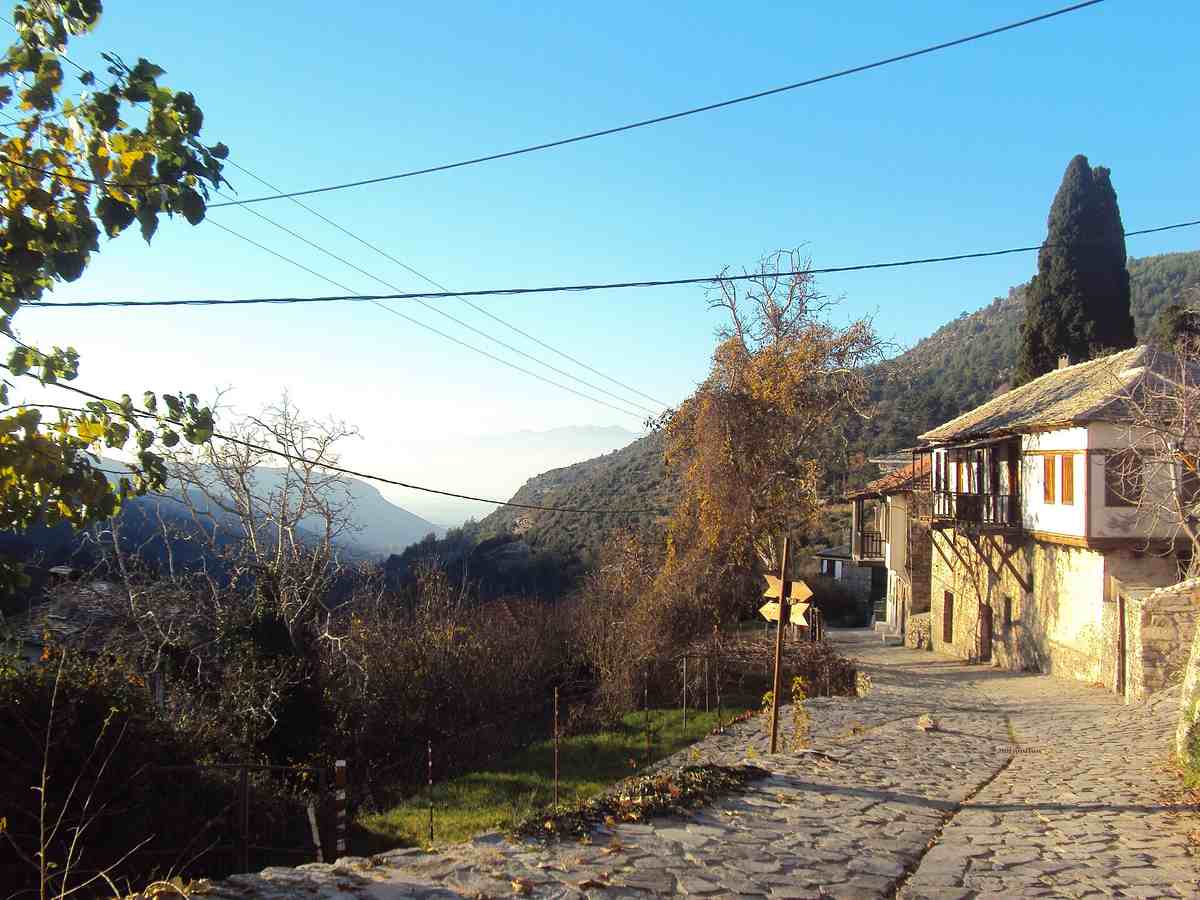
Kazaviti, a pair of traditional mountain villages, offers an authentic glimpse into the heart of Thassos. Nestled in dense plane and chestnut forests, Mikros and Megalos Kazaviti are known for their well-preserved Macedonian architecture. Visitors can explore cobbled lanes, admire tall mansions with carved wooden balconies, and relax in the shaded plane-tree square where refreshing spring water flows from stone fountains. The villages exude a strong traditional feel with old churches and tavernas serving hearty mountain food. Just a short drive from the bustling port of Skala Prinos, Kazaviti provides a cool, quiet retreat amidst olive groves and beehives. Experience the vibrant summer festivals that fill the village squares with My Greece Tours.
Kazaviti, located on the north-west slopes of Thassos, presents a serene contrast to the island’s coastal resorts. Known officially as Mikros and Megalos Prinos, these villages invite visitors to immerse themselves in their rich cultural heritage. The sections below cover the architecture, cultural experiences, and natural beauty that define Kazaviti. With its proximity to Skala Prinos, exploring the surrounding areas becomes convenient. Discover more about Thassos tours to plan your visit. Each section provides insights into different aspects of Kazaviti, from its historic ambiance to modern travel tips. Whether you’re drawn to the architecture or the local cuisine, Kazaviti promises a memorable experience.
What characterises the architecture in Kazaviti?
Kazaviti’s architecture features tall stone mansions, carved wooden balconies, and cobbled lanes, reflecting traditional Macedonian style.
Kazaviti stands out for its remarkable Macedonian architecture. The villages are home to tall stone mansions that have withstood the test of time. These structures, with their solid stone walls and intricate wooden balconies, offer a glimpse into the artistry of past eras. The cobbled lanes snake through the villages, guiding visitors through a living museum of architectural heritage. As you wander these paths, the craftsmanship of each building becomes apparent, telling stories of a bygone era. The architecture in Kazaviti is not just about aesthetics; it represents the resilience and creativity of the people who once inhabited these homes.
The use of local materials in Kazaviti’s architecture is significant. Stone and wood are prominent, reflecting the resources available in the surrounding forests. This choice of materials not only adds to the visual appeal but also ensures longevity. The stone walls provide insulation, keeping the interiors cool during summer and warm in winter. Wooden balconies, carved with intricate patterns, add a touch of elegance to the otherwise sturdy structures. Each element of the architecture serves a practical purpose while contributing to the village’s overall charm. This harmony between form and function is a hallmark of Macedonian architectural style.
In Kazaviti, architecture is intertwined with the natural landscape. The villages are nestled in dense forests, and the buildings seem to rise organically from the earth. This integration with nature enhances the beauty of both the structures and their surroundings. The cobbled lanes, shaded by towering plane trees, invite leisurely strolls. As you walk, the sound of spring water trickling from stone fountains accompanies you. This sensory experience is as much about the architecture as it is about the environment. The harmonious relationship between the built and natural environments defines the unique character of Kazaviti.
Preservation efforts in Kazaviti ensure the survival of its architectural heritage. Local authorities and communities work together to maintain the villages’ historical integrity. Restoration projects focus on preserving original features while adapting buildings for modern use. This balance between preservation and functionality is crucial in keeping the villages alive and relevant. Visitors are encouraged to explore these living history sites and appreciate the craftsmanship of past generations. By doing so, they contribute to the ongoing efforts to protect and celebrate Kazaviti’s architectural legacy. The commitment to preservation ensures that future generations can continue to enjoy and learn from these remarkable structures.
How can visitors experience local culture in Kazaviti?
Visitors experience local culture through festivals, traditional tavernas, and exploring old churches and cobbled lanes in Kazaviti.
Kazaviti offers a rich cultural experience for those who venture into its charming villages. Festivals are a vibrant expression of local culture, drawing visitors from near and far. These events, held in the village squares, showcase traditional music, dance, and crafts. The summer festivals, in particular, bring the community together and offer a window into the island’s cultural heritage. Visitors can join in the celebrations, enjoying performances and sampling local delicacies. These festivals are not just about entertainment; they are a celebration of Thassos’s identity and a chance for visitors to connect with the local community.
Traditional tavernas in Kazaviti are a testament to the island’s culinary heritage. Nestled under the shade of plane trees, these eateries serve hearty mountain food that reflects the region’s agricultural roots. Dishes often feature locally sourced ingredients, such as olives and honey, which are integral to the Thassian diet. Dining in a taverna is an experience in itself, with the rustic surroundings and warm hospitality creating a welcoming atmosphere. As you enjoy your meal, you can savour the flavours of Thassos and gain a deeper understanding of the island’s gastronomic traditions. For more on local cuisine, visit our section on Thassos food.
Exploring the old churches of Kazaviti provides insight into the village’s spiritual and architectural history. These sacred spaces, with their ancient frescoes and ornate iconostasis, offer a glimpse into the religious practices of past generations. The churches are often located in picturesque settings, providing a tranquil retreat for contemplation. As you step inside, the cool stone interiors and the scent of incense transport you to a different time. These religious sites are not just places of worship; they are cultural landmarks that highlight the village’s historical significance. Visitors are encouraged to explore these churches and appreciate their role in shaping the local community.
Cobbled lanes meander through Kazaviti, inviting visitors to explore the village’s hidden corners. As you wander these paths, you encounter a blend of old and new, with traditional homes juxtaposed against modern conveniences. The lanes are a testament to the village’s enduring charm, providing a tangible link to its past. Strolling through Kazaviti is an opportunity to discover its stories, told through the architecture and the people you meet along the way. Each step reveals a new facet of the village’s culture, from the sound of children playing to the scent of freshly baked bread wafting from a taverna. This immersive experience is a highlight for anyone visiting Kazaviti.
What natural features surround Kazaviti?
Kazaviti is surrounded by dense plane and chestnut forests, olive groves, and beehives, offering a lush and tranquil environment.
The natural landscape surrounding Kazaviti is a key component of its allure. Dense plane and chestnut forests envelop the villages, creating a lush green backdrop. These forests provide not only beauty but also a habitat for diverse wildlife. The shade offered by the towering trees creates a cool, refreshing environment, especially during the hot summer months. Walking through these forests, visitors can enjoy the tranquility and escape the hustle and bustle of the coastal areas. The sound of rustling leaves and birdsong accompanies you as you explore this verdant paradise, making Kazaviti a haven for nature lovers.
Olive groves are a prominent feature of the landscape around Kazaviti. These groves have been cultivated for centuries, contributing to the island’s agricultural heritage. The sight of silvery-green olive trees stretching across the hillsides is iconic in this region. Olive oil produced here is renowned for its quality, reflecting the care and dedication of local farmers. Visitors can learn about the olive cultivation process and even participate in olive picking during the harvest season. The presence of these groves adds a layer of cultural and economic significance to the natural beauty of Kazaviti, highlighting the interdependence of humans and nature.
Beehives dot the landscape around Kazaviti, supporting the production of Thassos’s famous honey. The island’s rich flora provides the perfect environment for bees to thrive. Honey from Kazaviti is prized for its flavour and purity, often infused with the scents of local wildflowers and herbs. Beekeeping is an important tradition in the area, passed down through generations. Visitors can explore beekeeping sites and learn about the honey-making process. Tasting local honey is a must-do experience, offering a sweet souvenir that captures the essence of Thassos’s natural bounty. The beehives are a testament to the region’s agricultural diversity.
The contrast between Kazaviti’s lush environment and the nearby coastal resorts is striking. While the coast offers sun, sand, and sea, Kazaviti provides a serene retreat into nature. This diversity makes Thassos an attractive destination for travellers seeking varied experiences. The proximity of the villages to Skala Prinos means that visitors can easily transition between the beach and the mountains. A short drive up a green mountain road reveals a world of natural beauty and tranquility. This accessibility enhances Kazaviti’s appeal, making it an ideal spot for those looking to explore the island’s diverse landscapes. Discover more about local transport options with Thassos car rental.
Why are Kazaviti’s festivals important?
Kazaviti’s festivals are important cultural events that celebrate local traditions, bring communities together, and attract visitors to experience authentic Thassian culture.
Festivals in Kazaviti play a vital role in preserving and celebrating local traditions. These events are deeply rooted in the village’s cultural heritage, offering a platform for showcasing traditional music, dance, and crafts. The summer festivals, in particular, are a highlight of the cultural calendar, drawing visitors from across the island and beyond. These celebrations are not just about entertainment; they are a way of keeping cultural practices alive and passing them on to future generations. By participating in these festivals, visitors gain insight into the island’s rich cultural tapestry and the values that underpin it.
Community spirit is at the heart of Kazaviti’s festivals. These events bring people together, fostering a sense of belonging and shared identity. Villagers work tirelessly to organise and host the festivals, ensuring that they are a success. The sense of camaraderie and pride is palpable, as locals and visitors alike come together to celebrate. This communal aspect is a defining feature of Kazaviti’s festivals, creating an inclusive atmosphere where everyone is welcome. The festivals are an opportunity for visitors to engage with the local community and experience the warmth and hospitality that Thassos is known for.
Kazaviti’s festivals also serve as a draw for tourism, attracting visitors eager to experience authentic Thassian culture. The festive atmosphere and unique cultural offerings make the villages a desirable destination during the festival season. Visitors can enjoy traditional performances, taste local delicacies, and purchase handmade crafts as souvenirs. The influx of tourists during these events provides an economic boost to the area, supporting local businesses and artisans. By attending the festivals, visitors contribute to the local economy and help sustain cultural traditions. This symbiotic relationship between tourism and culture is essential for the village’s prosperity.
Preservation of cultural heritage is a key objective of Kazaviti’s festivals. These events provide a platform for showcasing and safeguarding traditional practices that might otherwise fade into obscurity. The involvement of younger generations is particularly important, ensuring that cultural knowledge is passed down and adapted for modern times. Festivals offer an opportunity for learning and sharing, celebrating the diversity and richness of Thassos’s cultural heritage. The commitment to preserving these traditions is evident in the enthusiasm and dedication of the organisers and participants. Visitors are encouraged to engage with the festivals, helping to keep Kazaviti’s cultural legacy alive for future generations.
What are the dining options in Kazaviti?
Kazaviti offers traditional tavernas serving mountain cuisine, with dishes featuring local ingredients like olives and honey.
Dining in Kazaviti is an experience that reflects the village’s culinary heritage. Traditional tavernas, set under the shade of plane trees, offer a warm and inviting atmosphere. These eateries serve hearty mountain cuisine, showcasing the flavours of Thassos. Local ingredients, such as olives and honey, feature prominently in the dishes, adding a touch of authenticity to the menu. The focus is on simple, rustic fare that highlights the quality of the produce. Dining in Kazaviti is not just about the food; it’s about the experience of enjoying a meal in a picturesque setting, surrounded by nature and history.
The tavernas in Kazaviti are known for their warm hospitality. Owners and staff are often locals who take pride in sharing their culinary traditions with visitors. They are eager to offer recommendations and explain the stories behind each dish. This personal touch enhances the dining experience, creating a connection between the diners and the people who prepare the food. As you enjoy your meal, you are likely to hear tales of the village’s history and culture, adding depth to your visit. This sense of community and generosity is a hallmark of dining in Kazaviti.
Local specialities are a highlight of Kazaviti’s culinary scene. Dishes often feature ingredients sourced from the surrounding landscape, such as wild herbs, fresh vegetables, and local cheeses. Olive oil, produced from the nearby groves, is a staple in Thassian cooking, adding richness and depth to the flavours. Honey, harvested from local beehives, is used in both savoury and sweet dishes, providing a unique taste that captures the essence of the region. Visitors are encouraged to sample these specialities, gaining a deeper appreciation for the island’s gastronomic diversity. For more dining recommendations, explore where to stay in Thassos.
Dining in Kazaviti is about more than just the food; it’s about the experience of being part of the village’s daily life. Taverns often serve as social hubs, where locals gather to share stories and enjoy each other’s company. Visitors are welcomed into this convivial atmosphere, becoming part of the community for the duration of their meal. The relaxed pace of dining encourages conversation and connection, allowing guests to savour the moment. This sense of belonging is a key aspect of Kazaviti’s dining culture, making every meal a memorable occasion. The combination of delicious food and genuine hospitality ensures that dining in Kazaviti is a highlight of any visit.
What are the best ways to travel to Kazaviti?
Travelling to Kazaviti is best done by car, with a scenic drive up a mountain road from Skala Prinos.
Travelling to Kazaviti is a journey that enhances the overall experience of visiting Thassos. The villages are located in the north-west of the island, a short drive from the port of Skala Prinos. The road leading up to Kazaviti winds through lush green landscapes, offering stunning views of the surrounding countryside. Driving is the most convenient way to reach the villages, allowing for flexibility and the opportunity to explore at your own pace. The scenic route is part of the adventure, providing a preview of the natural beauty that awaits in Kazaviti. For those without a car, local transport options are available, but having your own vehicle is recommended for ease of access.
Car rental is a popular choice for visitors looking to explore Kazaviti and the wider region of Thassos. Renting a car provides the freedom to travel on your own schedule, making it easier to visit multiple destinations in one day. The roads are well-maintained and signposted, ensuring a smooth journey to the villages. Car rental services are available at various locations across the island, including the main ports and towns. This option is particularly beneficial for those wishing to explore the less accessible parts of Thassos, such as remote beaches and mountain villages. Learn more about local transport options with Thassos car rental.
Public transport is available for those who prefer not to drive, although options are limited. Buses connect major towns and ports, but services to Kazaviti may be infrequent. Checking the timetable in advance is advisable to ensure a smooth journey. Taxis are another option, providing door-to-door service for those without a car. While more expensive than public transport, taxis offer convenience and comfort, especially for those travelling with heavy luggage or in larger groups. For visitors staying in nearby areas, walking or cycling to Kazaviti can also be an enjoyable way to experience the landscape.
Exploring Kazaviti on foot is a rewarding experience once you arrive. The village’s narrow cobbled lanes and pedestrian-friendly areas make walking the best way to discover its hidden corners. Visitors can take their time, stopping to admire the architecture, visit local shops, and enjoy the natural surroundings. Walking also allows for spontaneous encounters with locals, adding to the cultural experience. For those interested in hiking, the surrounding forests offer trails with varying levels of difficulty, providing opportunities to explore the natural beauty of Thassos. Whether arriving by car, bus, or on foot, Kazaviti promises a memorable journey for all travellers.
How do Kazaviti’s surroundings enhance its appeal?
Kazaviti’s surroundings, including lush forests, olive groves, and scenic mountain roads, enhance its appeal by offering a tranquil escape from coastal areas.
The surroundings of Kazaviti play a crucial role in enhancing its appeal as a destination. Nestled in dense plane and chestnut forests, the villages offer a tranquil escape from the bustling coastal resorts. The natural beauty of the area is a draw for visitors seeking peace and relaxation. The cool, shaded environment provides a refreshing contrast to the sunny beaches, making Kazaviti an ideal retreat during the hot summer months. The lush greenery and abundant wildlife create a serene atmosphere, inviting visitors to unwind and reconnect with nature. This harmonious relationship between the villages and their surroundings is a key factor in Kazaviti’s charm.
Olive groves surrounding Kazaviti add to its picturesque landscape and cultural significance. These groves have been an integral part of the local economy and way of life for generations. The sight of olive trees stretching across the hillsides is iconic, symbolising the island’s agricultural heritage. Visitors can learn about the cultivation and production of olive oil, gaining insight into the traditional practices that sustain the community. The presence of these groves enhances the village’s appeal, offering a tangible connection to the island’s past. The combination of natural beauty and cultural heritage makes Kazaviti a compelling destination for those interested in both.
The scenic mountain roads leading to Kazaviti contribute to the village’s allure. The journey itself is an experience, with winding roads offering breathtaking views of the surrounding landscape. Travelling these routes allows visitors to appreciate the island’s diverse topography, from coastal plains to forested hills. The drive provides a preview of the natural beauty that awaits in Kazaviti, enhancing the anticipation of arrival. For those who enjoy road trips, the journey to Kazaviti is a highlight, combining adventure with the promise of discovery. This accessibility, combined with the scenic beauty, makes Kazaviti an attractive option for travellers exploring Thassos.
Kazaviti’s surroundings also offer opportunities for outdoor activities, further enhancing its appeal. The forests and hills provide a natural playground for hiking, birdwatching, and photography. Visitors can explore the trails that wind through the landscape, discovering hidden viewpoints and experiencing the tranquillity of nature. The diverse flora and fauna add an element of discovery to these activities, making each excursion unique. For those seeking a more leisurely experience, the village itself offers plenty of spots for relaxation and contemplation. Whether looking for adventure or a peaceful retreat, Kazaviti’s surroundings cater to a variety of interests, ensuring a fulfilling visit for all.
Frequently Asked Questions
What is the best time to visit Kazaviti?
The best time to visit Kazaviti is during the spring and summer months. The weather is pleasant, and the villages come alive with festivals and activities. The natural surroundings are lush and vibrant, offering a beautiful backdrop for exploration.
How do I get to Kazaviti from Skala Prinos?
Kazaviti is accessible by a short drive from Skala Prinos. The route takes you up a scenic mountain road, offering stunning views of the island’s landscape. Car rental is recommended for convenience, although local taxis and buses are also available.
What type of accommodation is available in Kazaviti?
Accommodation options in Kazaviti include traditional guesthouses and small hotels. These establishments offer a cosy and authentic experience, often featuring local architecture and decor. Visitors can enjoy the charm of village life while staying in comfortable surroundings.
Are there guided tours available in Kazaviti?
Guided tours are available for those interested in exploring Kazaviti’s cultural and natural attractions. These tours provide insights into the village’s history, architecture, and local traditions. Booking in advance is recommended, especially during peak tourist seasons.
What local dishes should I try in Kazaviti?
Visitors should try local specialities such as grilled meats, fresh salads with local olives, and honey-infused desserts. Tavernas in Kazaviti often feature dishes made with ingredients sourced from the surrounding area, offering an authentic taste of Thassian cuisine.
What activities are popular in Kazaviti?
Popular activities in Kazaviti include hiking in the surrounding forests, attending local festivals, and exploring the village’s architecture and old churches. Visitors can also enjoy dining in traditional tavernas and participating in cultural events that showcase local traditions.