
A Kavala food tour walks the lanes of the Panagia old town and the market streets below it, stopping at bakeries, fishmongers and family tavernas for the anchovy, the mussels, the pastries and the tsipouro that the city eats and drinks. Plan the rest of the trip with Greece Tours.
This guide covers the street food walk and the hidden-gems tour, the dishes the gulf and the refugee kitchens gave the city, the fish market and the harbour tavernas, the wineries of Drama and Pangaion behind the ridge, what each tour includes, the lengths and group sizes, the dietary options, the season and the prices.
What does a Kavala food tour cover, and where does the walk begin?
A Kavala food tour covers the tables of the port city: street food in the market lanes, meze with tsipouro, fish landed in the gulf, and the wineries of Drama and Pangaion inland. Walks begin on the waterfront under the Kamares aqueduct.
Booking a Kavala food tour ahead secures the evening slot in summer. Kavala stacks up a headland above the Thracian Sea, and the eating map follows that shape. The lower town holds the fish market, the covered stalls and the ouzeri terraces; the Panagia quarter above holds family kitchens inside Ottoman houses.
Dietary needs are handled when a Kavala food tour is booked ahead. Guides gather the group on the harbour front within sight of the Imaret, then climb. The route trades altitude for flavour: fried anchovy at sea level, kourabiedes on the slope, tsipouro beside the fishing boats.
Tsipouro and the meze that comes with it close a Kavala food tour. Food holds the centre of the day, and the monuments pass as scenery between stops. The castle, Philippi and the beaches belong to a separate itinerary, set out in the guide to things to do in Kavala.
What happens on the street food walk through Panagia and the market lanes?
The Kavala Street Food and Local Flavors Walking Tour threads the market lanes and the Panagia quarter across eight tasting stops, pairing bakery pies, grilled sardine, mezedes and a tsipouro pour with two hours of storytelling about the port and its trade.
Local delis stock what a Kavala food tour tastes along the way. The first stop is a bakery counter, where the guide buys bougatsa filled with semolina cream and a sesame koulouri off the tray. Both sell for under two euros and set the register for the walk: everyday food, bought where residents buy it.
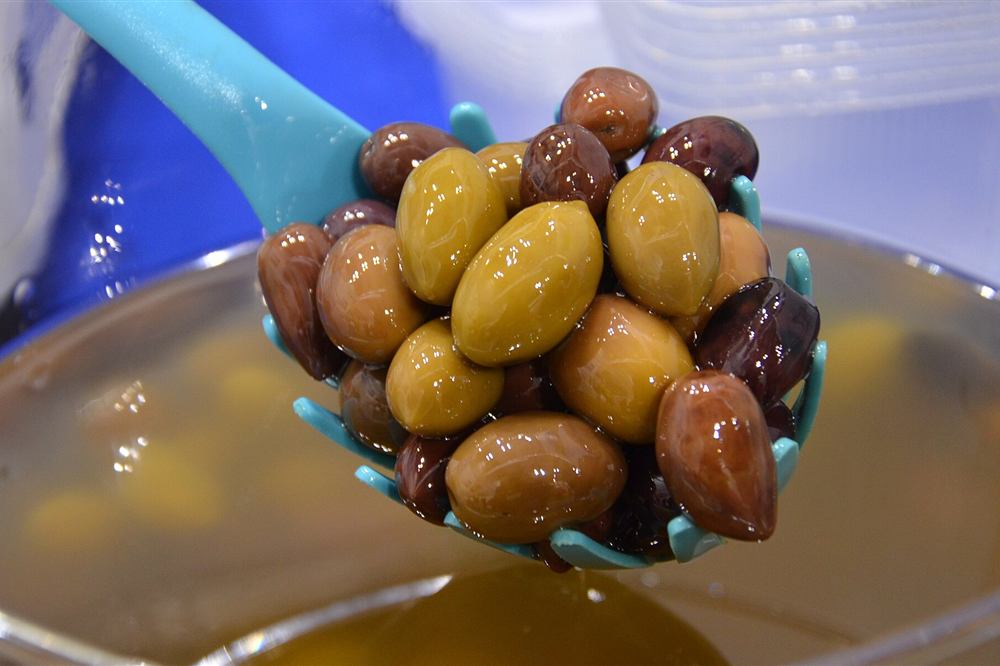
Evening is when a Kavala food tour catches the town at its busiest. The group then enters the lanes behind the harbour, where stalls sell Florina peppers, dried figs, barrel olives, cured pork, sheep cheeses and hand-measured spice blends. The guide names the village standing behind each producer.
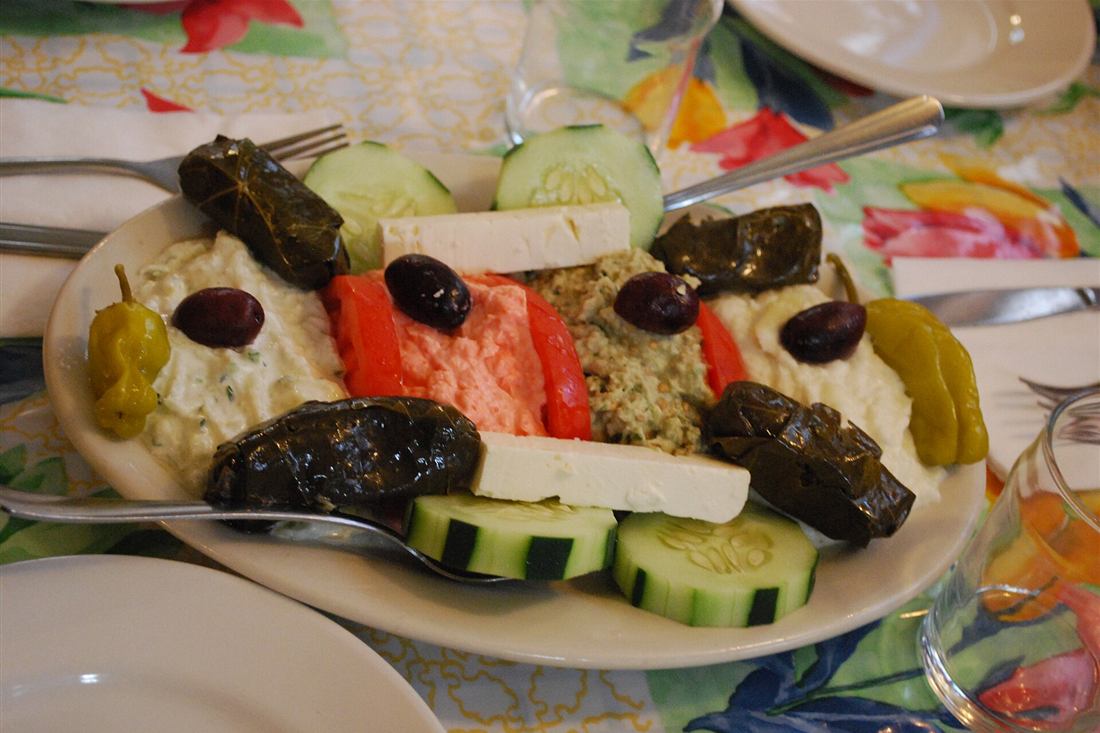
The fish market is the stop that fixes a Kavala food tour in the harbour. The climb into Panagia ends the route. Narrow streets pass the Imaret and the lighthouse, and a family taverna sets down grilled sardines, smoked aubergine dip and warm bread.
Which dishes carry the name of Kavala?
Kavala is known for gavros, the anchovy of the Thracian Sea, served marinated or fried; for mussels cooked saganaki with feta and pepper; for sardines out of the gulf; and for kourabiedes, the almond shortbread the city sends across Greece.
A Kavala food tour starts in the market lanes below the old town. Anchovy reaches the table two ways. Marinated gavros sits in vinegar, oil and garlic and eats cold beside tsipouro. Fried gavros arrives hot in a paper cone, dusted in flour and eaten whole with lemon.
The price of a Kavala food tour is set by the stops and the transfers. Mussels come from the beds of the Strymonian Gulf west of the city. Kitchens cook them saganaki with tomato, chilli and feta, fold them through rice as mydopilafo, or fry them in light batter.
Family tavernas are what the hidden-gems Kavala food tour opens. Kourabiedes close the eating. Kavala bakers press almond into butter shortbread, bake it pale and bury it under icing sugar, and the sweet travels home in flat boxes.
How did refugees from Asia Minor change what the city eats?
The population exchange brought Greek families from Anatolia, Pontus and Eastern Thrace into Kavala’s tobacco warehouses and neighbourhoods, and their kitchens added cumin, pepper paste, bulgur, yoghurt, fine filo work and syrup sweets to a table that had been plainly maritime.
The street food walk on a Kavala food tour takes in six to eight stops. The arrivals settled around the harbour warehouses where tobacco leaf was sorted and pressed. Cooking travelled with them intact: soutzoukakia scented with cumin, spiced sausage, bulgur pilaf, stuffed vegetables, and yoghurt poured as a sauce rather than as dessert.
Transfers are included on the two-winery Kavala food tour. Filo work deepened at that moment. Anatolian and Pontic bakers rolled thinner sheets and built both savoury pies and syrup sweets, and the lower-town bakeries still sell cheese pie and walnut baklava from a single window.
The wineries of Drama sit behind the ridge on the long Kavala food tour. Guides tell this history at the table rather than at a plaque. A plate of soutzoukakia beside a glass of tsipouro carries the exchange more directly than a museum case, and it explains the city’s spice cupboard.
What does tsipouro and ouzo culture look like at a Kavala table?
Tsipouro and ouzo arrive by the small carafe, with ice and water beside them, and a run of meze follows each round: marinated anchovy, olives, cheese, tomato, fried courgette. The drinking sets the pace of an evening and stretches across two or three hours.
Anchovy from the gulf is what a Kavala food tour puts on the table first. Ouzeri and tsipouradika line the waterfront and fill the lanes behind it. Tables are small, the paper cover doubles as the bill, and the kitchen sends plates out in sequence.
The old town lanes give a Kavala food tour its route between stops. Tsipouro is distilled from grape pomace and reaches the glass clear and dry, with anise or without. Ouzo clouds to white the instant water hits it. Both stand near 40 percent alcohol, so food accompanies every pour.
Pangaion vineyards pour their reds on the winery day. Both walking tours build a tsipouro stop into the route. The guide orders for the table and matches spirit to plate: anchovy with tsipouro, grilled octopus with ouzo, hard cheese with either of them.
What do the fish market and the harbour taverna row offer?
The fish market sells the morning catch of the Thracian Sea beside the harbour: anchovy, sardine, red mullet, sea bream, squid, octopus and mussels. The taverna row behind it grills that catch to order, with tables set within metres of the boats.
Mussels and small fish run through the tastings of a Kavala food tour. Trading starts early. Crates come off the boats onto marble slabs, prices go up in chalk, and buying finishes before midday. Guides show the marks of a fresh fish: clear eye, red gill, firm flesh.
Kourabiedes and syrup pastries end the sweet leg of a Kavala food tour. The tavernas behind the quay work from that same supply. A whole fish is priced by the kilo, filleted at the table and served with lemon, oil and boiled greens.
Olive oil and honey travel home from a Kavala food tour. The gulf feeding those kitchens rewards a look from the water, and a Kavala yacht charter puts the harbour, the fishing grounds and Thasos into one afternoon. The food tour stays at the tables.
What does the Authentic Kavala Food Tour and Hidden Gems open up?
The Authentic Kavala Food Tour and Hidden Gems moves past the harbour front into family-run kitchens, back-lane bakeries, a cheese counter and a courtyard taverna, with the guide acting as the introduction that gets a group through doors closed to walk-in visitors.
Tsipouro and the meze that comes with it close a Kavala food tour. The itinerary favours addresses without English menus. One kitchen serves stuffed vine leaves and a pie made that morning; a butcher slices cured pork to order; a bakery opens the back room where the filo is rolled.
Booking a Kavala food tour ahead secures the evening slot in summer. Conversation forms the second half of the product. Owners talk about supply, about the tobacco years and about the boats, and the guide translates. The group sits down for two stops, which turns the tour into a shared meal.
The tastings on a Kavala food tour add up to a full meal. The route covers ground the street food walk skips: the residential slope above Panagia, a neighbourhood square, a courtyard under vines. Anyone wanting technique as well as tasting adds a Thessaloniki cooking class to the trip.
Which wineries sit behind the city, and which grapes grow there?
The vineyards of Drama and the slopes of Mount Pangaion rise inland from Kavala, planted with Assyrtiko, Malagousia, Sauvignon Blanc, Agiorgitiko, Limnio, Merlot, Syrah and Cabernet Sauvignon. Altitude and a northern climate give these wines acidity and structure.
The fish market is the stop that fixes a Kavala food tour in the harbour. Drama sits an hour north of the harbour on a plateau ringed by mountains. Estates there planted French varieties beside Greek ones and built cellars for barrel ageing, and the reds carry firm tannin and dark fruit.
Local delis stock what a Kavala food tour tastes along the way. Pangaion faces the sea from the west of the city. Vines climb its lower slopes on limestone, and the whites made there hold citrus and stone fruit with a saline edge.
Group sizes on a Kavala food tour stay small enough for the counters. Both zones bottle under Protected Geographical Indication rules. Tasting rooms face the vines, the pours run through white, rosé and red, and the winemaker walks the barrel hall with the group outside the harvest weeks.
How does the two-winery day with premium transfers run?
Kavala: 2 Wine Tours, Tastings and Premium Transfers collects guests from the hotel or the port in a private vehicle, drives to two estates in Drama or on Pangaion, pours a guided flight at each, and returns to the city in the late afternoon.
Family tavernas are what the hidden-gems Kavala food tour opens. The day runs six to seven hours door to door. The first estate is reached inside an hour, and the visit takes in the vineyard rows, the fermentation hall and the cellar before a bench pour of four to six labels.
A Kavala food tour starts in the market lanes below the old town. A food board sits between the two stops, with cheese, cured meat, bread and olive oil from the same district. The second estate leans to a different style, so a white-led house pairs with a red-focused cellar.
Dietary needs are handled when a Kavala food tour is booked ahead. The transfer is the point of the format. Nobody drives after a tasting, the driver handles the mountain roads, and cases bought at the cellar door ride back in the vehicle.
What sets the olive oil and the honey of this region apart?
The groves under Pangaion press extra virgin oil with a green, peppery finish, and the mountain’s chestnut, pine and thyme flowers feed hives producing dark, resinous honey. Both appear as tasting stops on the food tours and as goods on the market stalls.
The wineries of Drama sit behind the ridge on the long Kavala food tour. Harvest runs from late autumn into winter, and mills inside the district press within hours of picking. The oil stays low in acidity and grassy on the palate, poured neat onto bread at the tasting.
The street food walk on a Kavala food tour takes in six to eight stops. Honey follows the flowering calendar up the mountain. Pine honey is dark and barely sweet, thyme honey is amber and aromatic, chestnut honey turns almost bitter, and each jar names the flower behind it.
Evening is when a Kavala food tour catches the town at its busiest. Both products travel well and cost less at source than in an airport shop. Half a litre of estate oil runs eight to fifteen euros, and a jar of mountain honey runs six to twelve.
What is included on each tour, and does the food replace a meal?
Each tour includes a licensed guide and every tasting along the route. The street food walk runs eight stops, the hidden-gems tour runs six to seven with seated courses, and both deliver food enough to stand in for lunch or for dinner.
Pangaion vineyards pour their reds on the winery day. Drinks are counted in as well: a tsipouro or ouzo pour on the walking tours, and the full flight at each estate on the wine day. Extra rounds ordered at a taverna table get settled by the guest.
Anchovy from the gulf is what a Kavala food tour puts on the table first. Portions are built for a route rather than for a plate. Three bites at eight stops adds up to a full meal, which is why guides ask guests to keep breakfast light before an evening walk.
The price of a Kavala food tour is set by the stops and the transfers. Hotel pickup is bundled into the wine day and excluded from the walking tours, which start at a fixed meeting point on the waterfront. Entrance fees fall outside every price.
What are the tour lengths, the group sizes and the dietary options?
The street food walk lasts two to three hours in groups capped near twelve. The hidden-gems tour runs three to four hours for eight to ten guests. The wine day fills six to seven hours in a private vehicle for two to eight travellers.
Olive oil and honey travel home from a Kavala food tour. Small numbers are structural rather than a marketing line. A bakery back room and a family kitchen hold a dozen people at most, and a tasting stop loses its character once a group fills the room.
Mussels and small fish run through the tastings of a Kavala food tour. Vegetarian routes get arranged on request at booking. Pies, cheeses, olives, dips, stuffed vegetables, bread and pastries carry the walk without meat or fish. Vegan and gluten-free adjustments need notice.
Transfers are included on the two-winery Kavala food tour. Walking is moderate. Panagia is a hill of cobbles and steps, so flat shoes matter more than fitness. The wine day involves no climbing beyond cellar stairs, which suits guests who prefer to be driven.
What do the three tours cost in euros?
The street food walk sits in the 45 to 70 euro range per person, the hidden-gems food tour in the 60 to 95 euro range, and the two-winery day with premium transfers in the 120 to 190 euro range, with tastings included.
The tastings on a Kavala food tour add up to a full meal. Price moves with group size and season. A shared departure at the height of summer sells at the lower end of each range, while a private walk for two prices at the upper end.
Bakeries and their pastries break up the route of a Kavala food tour. The wine day carries the vehicle and the driver inside its price, which explains the gap to the walking tours. Split across four guests, the transfer cost per head drops sharply.
The old town lanes give a Kavala food tour its route between stops. Value reads better against a restaurant bill than against a sightseeing ticket. A full meal on the harbour with fish and drink runs 25 to 40 euros a head, and the walk delivers that volume plus the guiding.
When does the season run, and how is a Kavala food tour booked?
Departures run from spring through late autumn, with evening starts around six or seven for the walking tours and morning starts for the wine day. Booking online in advance secures the small-group slot, and confirmation arrives instantly by email.
Group sizes on a Kavala food tour stay small enough for the counters. Evening suits the street food walk. Heat drops, the bakeries have finished the second bake, the ouzeri fill, and the harbour lights come on as the group climbs into Panagia.
Refugee kitchens from Asia Minor shaped what a Kavala food tour tastes. The wine estates receive visitors by appointment, so the two-winery day gets fixed at booking rather than on the morning itself. Harvest in late summer adds the sight of fruit coming into the press house.
Kourabiedes and syrup pastries end the sweet leg of a Kavala food tour. Travellers based in the second city fold the tasting into a Kavala day trip from Thessaloniki, two hours along the coast road. Reserve the walk for a first evening.
Frequently Asked Questions
What does a Kavala food tour include?
A guided walk through the old town and the market with six to eight tasting stops, covering bakeries, a fishmonger, a deli and a taverna table, with the tastings adding up to a full meal.
How long is a Kavala food tour?
Three to four hours on the street food walk and the hidden-gems tour. The winery day with transfers to Drama and Pangaion runs six to eight hours from pickup to drop-off.
What does a Kavala food tour cost?
The street food walk runs from about 55 to 85 euros per person and the hidden-gems tour from about 70 to 110 euros. The two-winery day with transfers runs from about 120 to 180 euros.