
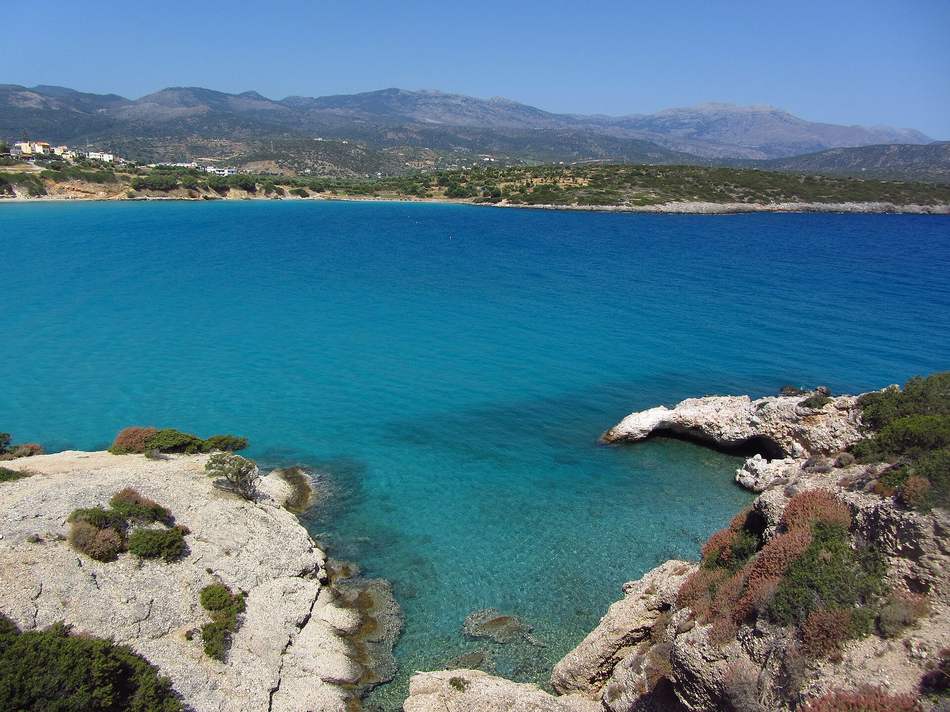
Istron stretches along the Gulf of Mirabello in eastern Crete, a scatter of small resorts and golden-sand coves between Agios Nikolaos and the inland village of Kalo Chorio. Voulisma beach, known locally as Golden Beach, curves beneath tamarisk trees with soft sand and shallow turquoise water that ranks among the finest on the island’s eastern shore. Low hills of olive groves rise behind the coast, dotted with hotels and villas commanding wide views across the gulf. The area suits families and travellers seeking calm, easy swimming and a quiet base within reach of Elounda and the fortress island of Spinalonga. Plan your visit with My Greece Tours.
The coast around Istron combines natural beauty with practical convenience: golden sand, gentle water and a choice of tavernas all lie within a short drive of the region’s main towns and historic sites. Smaller coves such as Karavostasi and Istron beach offer alternative swimming spots when Voulisma draws crowds in high summer. The sections below cover the beaches, the surrounding landscape, accommodation options and day-trip destinations that make this stretch of Mirabello a relaxed introduction to the Lasithi region. For broader context consult our Crete travel guide.
What makes Voulisma beach the highlight of Istron in Crete?
Voulisma, often called Golden Beach, offers a sweeping curve of soft golden sand backed by tamarisk trees and tavernas. Shallow turquoise water and gentle entry make it ideal for families, while the setting ranks among eastern Crete’s most photogenic coves.
Voulisma beach unfolds as a wide crescent of fine golden sand sheltered by low headlands on either side. Tamarisk trees fringe the back of the beach, casting dappled shade over sunbeds and providing a natural screen between the sand and the handful of tavernas that serve grilled fish and cold drinks through the summer months. The water deepens gradually, staying knee-high for fifteen metres or more from the shore, and the seabed remains sandy and free of rocks. Families appreciate the calm conditions and the ease of wading with small children. Lifeguard cover operates during peak season, and a small car park sits just behind the tree line.
The beach faces east across the Gulf of Mirabello, so morning light paints the water in shades of turquoise and aquamarine that deepen as the sun climbs higher.
Local opinion holds Voulisma among the top Crete beaches for sheer beauty and convenience. The combination of soft sand, shallow entry and natural shade distinguishes it from rockier coves elsewhere on the Mirabello coast. Sunbeds and umbrellas are available for hire, but space remains for those who prefer to spread a towel beneath the tamarisks. A beach bar supplies snacks and coffee, and the tavernas behind the trees offer full meals with tables set on terraces overlooking the sand. Voulisma can fill on summer weekends when day-trippers arrive from Agios Nikolaos, but early mornings and late afternoons see the crowds thin.
The beach remains open year-round, and spring or autumn visits often reward swimmers with near-empty sands and water temperatures that stay comfortable into October.
Which smaller coves and beaches sit near Voulisma?
Karavostasi and Istron beach lie within walking distance of Voulisma, offering quieter alternatives with coarse sand and pebble. Both coves provide clear water, limited facilities and a more secluded feel, appealing to visitors who prefer solitude over amenities and organized sunbeds.
Karavostasi occupies a narrow inlet a short walk west of Voulisma, reached by a footpath that skirts the low headland separating the two beaches. The cove is smaller and less developed, with a mix of coarse sand and smooth pebbles underfoot and no permanent taverna or sunbed concession. A handful of tamarisk bushes provide patchy shade, and the water remains as clear as at Voulisma but drops off more quickly. The setting feels wilder, with rockier edges and fewer visitors even in high summer. Snorkellers explore the rocky margins where small fish gather in the shallows.
Karavostasi suits those willing to trade convenience for quiet, and the lack of facilities means bringing your own shade, water and snacks is advisable.
Istron beach proper lies closer to the main road, a broader stretch of sand and pebble fronted by a scattering of hotels and apartment blocks. The beach is less picturesque than Voulisma but more accessible, with parking immediately adjacent and a couple of small tavernas within a few steps. The water is calm and clean, and the gentle slope makes entry easy. Families staying in the hotels above use Istron beach as their default swimming spot, leaving Voulisma for half-day excursions. The proximity to accommodation and the main coast road means the beach sees steady use but rarely feels crowded.
Together, these three beaches give visitors a choice of atmosphere and amenity level, all within a kilometre of coastline and all sharing the same turquoise Mirabello water.
What accommodation and facilities does Istron offer in Crete?
Hotels and villas dot the olive-clad slopes above the coast, offering sea views across the Gulf of Mirabello. Tavernas near Voulisma serve fresh fish and Cretan staples. The area stays low-rise and quiet, without large resorts.
Accommodation in Istron ranges from small family-run hotels to self-catering studios and villas perched on the hillside. Most properties occupy terraced plots with gardens of bougainvillea and olive trees, and balconies or terraces command wide views over the gulf toward the mountains of eastern Crete. Room counts stay modest—ten to thirty units is typical—and the atmosphere remains personal and unhurried. Breakfast is often served on a shaded terrace overlooking the sea, and hosts provide advice on beaches, walking routes and day trips. The lack of large-scale development preserves a village feel, even though Istron is more a string of small settlements than a single centre.
For broader advice on the region consult our guide to where to stay in Crete.
Tavernas concentrate near Voulisma beach and along the main Agios Nikolaos–Sitia road that runs parallel to the coast. Menus emphasize grilled fish, octopus, lamb and the usual mezze repertoire, with vegetables and olive oil sourced from the surrounding hills. Prices remain reasonable, and the pace is relaxed. A couple of minimarkets supply basics, but for wider shopping the drive to Agios Nikolaos takes fifteen minutes. Istron lacks bars, clubs or organized entertainment, making it a poor choice for those seeking nightlife but ideal for families and couples after quiet evenings and early nights.
The coast road carries traffic during the day, but side lanes climbing into the olive groves stay peaceful, and the sound of the sea drifts up the slopes after dark.
How does Istron connect to Agios Nikolaos, Elounda and Spinalonga?
Istron sits a short drive north of Agios Nikolaos and south of Elounda, placing it within easy reach of both towns and the fortress island of Spinalonga. Day trips to all three destinations take less than thirty minutes by car or taxi.
The main coast road links Istron to Agios Nikolaos in around fifteen minutes, making the larger town a convenient base for shopping, waterfront dining and evening strolls around the lake and harbour. Agios Nikolaos also serves as the transport hub for the region, with bus connections to Heraklion, Sitia and the Lasithi plateau. Heading north from Istron, the road climbs over low hills before descending to Elounda, a journey of twenty minutes. Elounda offers a more upmarket resort atmosphere, with yacht moorings, seafood restaurants and boat departures to the island of Spinalonga. The fortress island, a former leper colony and Venetian stronghold, sits just offshore and ranks among the most visited historical sites in eastern Crete.
Boat trips run throughout the day in summer, and the crossing takes ten minutes.
Istron’s position between the two towns makes it a practical base for exploring the Mirabello coast without committing to the busier centres. Visitors can enjoy quiet mornings on Voulisma beach, then drive to Agios Nikolaos for lunch or to Elounda for an afternoon boat trip. The roads are well surfaced and lightly trafficked outside peak season, and parking is straightforward in all three locations. Car hire is the most flexible option, though taxis are available and local buses connect Istron to Agios Nikolaos twice daily. The combination of easy access and peaceful accommodation appeals to travellers who want proximity to things to do in Crete without staying in the heart of a busy resort.
Who will enjoy Istron most and when should they visit?
Families, couples and older travellers seeking calm golden-sand swimming and a quiet base appreciate Istron. The sheltered gulf and shallow beaches suit young children. Late spring and early autumn offer warm water, fewer crowds and comfortable temperatures for exploring the surrounding hills and coast.
Istron appeals to visitors who prioritize beach quality and tranquillity over nightlife and organized activities. The shallow, sandy entry at Voulisma makes supervision of young children straightforward, and the tamarisk shade and nearby tavernas add convenience without overwhelming the natural setting. Older travellers value the unhurried pace, the sea views from hillside terraces and the short drives to cultural sites and larger towns. The area lacks the animation of purpose-built resorts, so those seeking evening entertainment, water sports or a buzzing social scene will find better options elsewhere on the island. Istron works best as a base for beach days punctuated by excursions to Spinalonga, the Lasithi plateau or the mountain villages inland from Agios Nikolaos.
The shoulder months of May, June, September and early October deliver the most comfortable conditions. Sea temperatures climb into the low twenties Celsius by late May and remain swimmable through October, while air temperatures stay pleasant for walking and sightseeing without the intense heat of July and August. Voulisma beach sees its heaviest use in midsummer, particularly on weekends, but even then the smaller coves offer escape. Winter brings cooler weather and reduced services, with some tavernas and hotels closing from November through March. Spring wildflowers colour the olive groves in April, and the hills turn green after winter rains.
Autumn light enhances the turquoise water and the views across the gulf, making late September a favourite time for photographers and those who prefer quieter beaches and lower prices.
Frequently Asked Questions
How do I reach Istron from Heraklion airport?
Heraklion airport lies roughly seventy kilometres west of Istron, a drive of just over an hour along the northern coast highway. The route follows the E75 motorway east past Hersonissos and Malia, then continues on the coast road through Neapolis before descending to Agios Nikolaos. From Agios Nikolaos, continue north on the main Sitia road for another ten kilometres, watching for signs to Istron and Kalo Chorio. Car hire desks operate at the airport, and advance booking ensures availability and competitive rates. Taxis are available but expensive for the full journey; agree on a fare before departure.
Public buses run from Heraklion to Agios Nikolaos, where you can connect to a local service or taxi for the final leg. The journey by bus takes longer and requires a change, so hiring a car offers the most flexibility for exploring the Mirabello coast and the wider Lasithi region during your stay.
Can I walk between the beaches around Istron?
Voulisma and Karavostasi lie close enough for an easy walk along a coastal footpath that rounds the low headland separating the two coves. The path is informal but clear, taking ten minutes at a steady pace over rocky ground with some scrambling near the headland. Sturdy sandals or walking shoes are advisable, and the route offers fine views across the gulf. Istron beach sits further along the coast road, reachable on foot in twenty minutes by following the roadside verge, though the route lacks a dedicated pavement and traffic can be brisk during the day. Walking between beaches is most pleasant in the early morning or late afternoon when the sun is lower and the road quieter.
The compact geography means you can explore all three beaches in a single morning, returning to your favourite for the rest of the day. Carrying water, sun protection and a towel allows flexibility, and the tavernas near Voulisma provide a natural midpoint for refreshment and a meal before heading back.
What else can I do around Istron besides beach time?
The inland village of Kalo Chorio sits just a few kilometres from the coast, a traditional settlement with stone houses, a central square and a handful of kafeneia where locals gather for coffee and conversation. The village offers a glimpse of everyday Cretan life away from the tourist beaches. Olive groves and low hills surround Istron, and walking trails climb into the countryside, passing old stone walls, chapels and viewpoints over the gulf. The Lasithi plateau lies an hour’s drive inland, a high plain ringed by mountains and dotted with windmills, caves and rural villages. Agios Nikolaos provides shopping, waterfront dining and a small archaeological museum, while Elounda and Spinalonga add historical interest and boat excursions.
The combination of beach, hill walking, village exploration and day trips to nearby sites gives Istron enough variety for a week-long stay without repeating activities. The quiet setting and central location make it a restful base for discovering the eastern corner of the island at a gentle pace.