
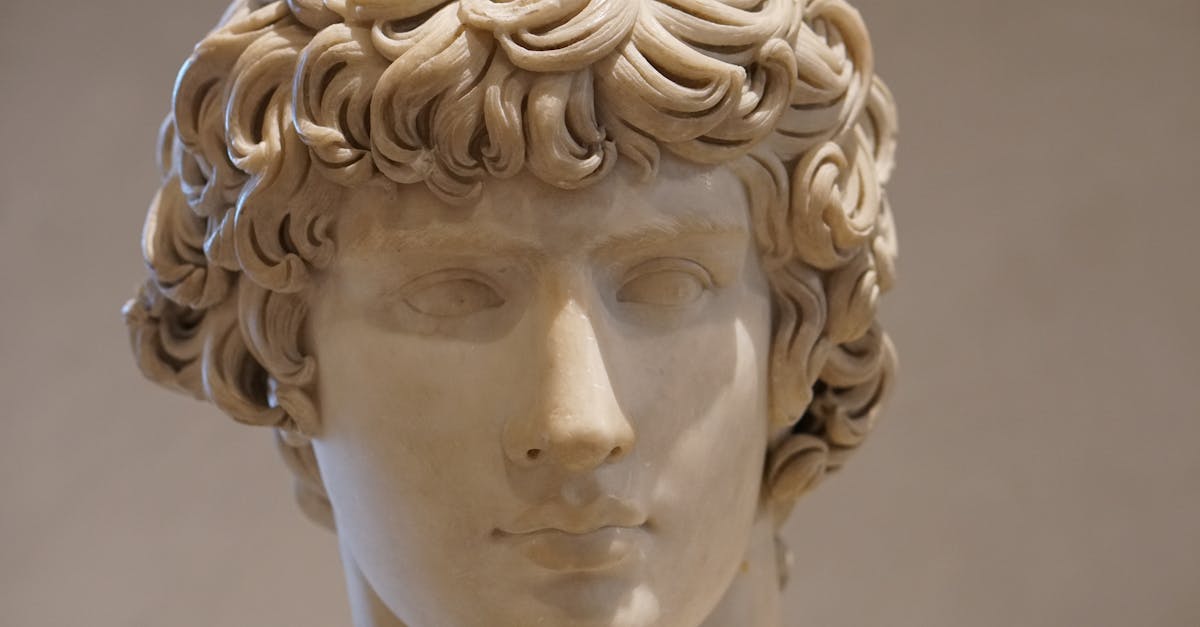
Greek art and museums guide: learn to read the timeline, see top Athens museums (Acropolis & NAM), plus Crete, Delphi, Olympia, and Thessaloniki stops.
Most people land in Greece with a mental highlight reel already playing: the Parthenon at sunset, a few marble statues, maybe a blue-domed church if we’re mixing our buckets. But Greek art is bigger (and weirder, and more human) than the postcard version. It’s a long conversation, about gods and power, athletes and grief, trade and technology, and you can literally watch it change room by room as you move through museums.
We’re writing this Greek art and museums guide as locals and repeat visitors who still get that little jolt when we turn a corner and meet a kouros face-to-face, or when a Minoan fresco suddenly makes Bronze Age life feel… modern. (I’m Yannis Divramis, born and raised between Milos and Santorini, in Athens almost every month, and in the habit of “just one more” site museum detour.)
Below in My Greece Tours, we’ll make Greek art easier to “read,” point you to the best museums in Athens and beyond, show what to look for at archaeological sites, and help you plan an itinerary that’s museum-forward without feeling like assignments.
Key Takeaways
- Use this Greek art and museums guide to read galleries as a timeline—track how bodies become more naturalistic, and scenes grow more emotional from Geometric to Hellenistic art.
- Spot the big four periods fast: Geometric pattern-heavy funerary vases, Archaic kouroi/kore with the “Archaic smile,” Classical contrapposto balance, and Hellenistic drama like the Nike of Samothrace.
- Decode displays by learning repeat symbols (Athena’s owl, Apollo’s lyre, Dionysus’ ivy) and by noticing materials—marble dominates, bronze is rare, and terracotta tells daily-life stories.
- Anchor Athens with the Acropolis Museum (Archaic Gallery, Caryatids, Parthenon Gallery) and the National Archaeological Museum for the widest “Greek world” context beyond the Acropolis.
- Go beyond Athens for standout chapters: Heraklion Archaeological Museum for Minoan fresco color and movement, Thessaloniki for Archaeological plus Byzantine layers, and site museums at Delphi or Olympia for art in ritual context.
- Plan a museum-forward itinerary with pace rules that work: aim for one major museum per day, pair sites with their nearby museums, and build in breaks so you actually remember what you saw.
How To Read Greek Art: A Quick Timeline And What Changes Over Time
Greek art clicks when we stop seeing it as a single “classical” style and start seeing it as a timeline of experiments. Artists are constantly solving problems: how to show movement, how to render anatomy, how to tell a myth in one frozen moment, how to make a god feel present without making them look like your neighbor.
A fast way to orient ourselves in any museum is to ask two questions:
- How naturalistic is the body? (stick-figure geometry → ideal harmony → dramatic realism)
- How emotional is the scene? (formal and symbolic → poised and controlled → expressive and theatrical)
Once we track those two shifts, the rooms make sense.
Key Periods And Signature Works To Look For
Here’s the museum-friendly version of the main periods, what to expect visually, and the “signature” objects that often show up in labels, posters, and gallery highlights.
Geometric (c. 900–700 BC)
Think: patterns first, people second. This period loves meanders (Greek key patterns), triangles, concentric circles, and stylized human figures that look like smart pictograms.
- Look for: large funerary vases (often called Dipylon vases) covered in dense decoration.
- Museum moment: scenes of mourning or processions rendered as crisp, repeating shapes.
Archaic (c. 700–500 BC)
The human figure takes center stage, and artists start chasing realism, without fully getting there yet. This is the era of the kouros (standing nude male youth) and kore (clothed female figure). Faces often wear the famous “Archaic smile.”
- Look for: kouroi with one foot forward, braided hair, and that symmetrical, “front-facing” stiffness.
- Pottery shift: black-figure and then red-figure techniques allow more detail and more natural poses.
- Name to notice: Euphronios (often credited with pushing red-figure realism forward).
Classical (c. 480–323 BC)
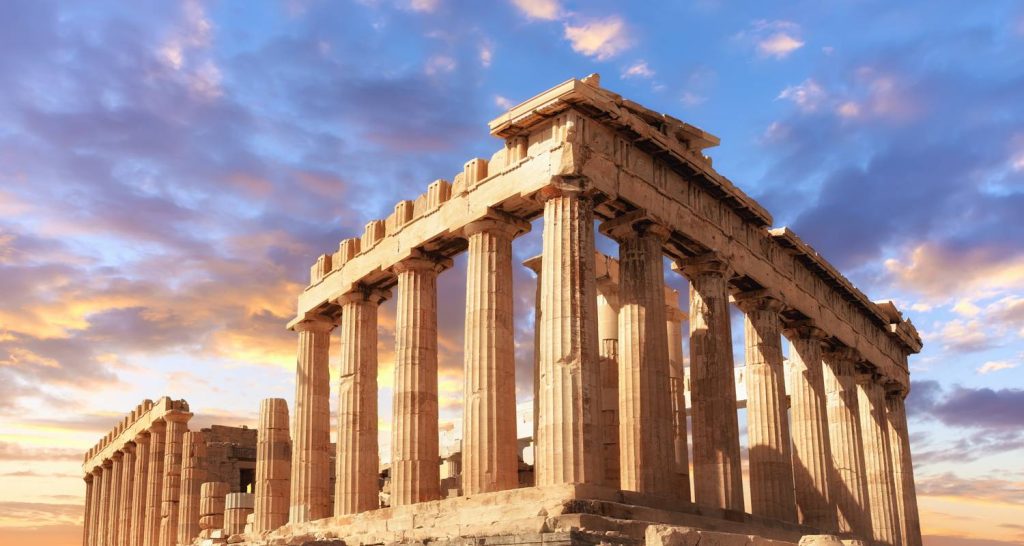
This is the “we think we already know Greek art” period, balance, proportion, controlled power. Bodies look convincingly alive, but also idealized. Sculptors master weight shift (contrapposto) and create figures that feel calm even when the story isn’t.
- Look for: architectural sculpture from temples, athletes, and gods who look athletic but unbothered.
- Signature reference: the sculptural program associated with Phidias and the Parthenon (even when displayed as fragments).
- Lost-but-famous: the Statue of Zeus at Olympia (a wonder of the ancient world, known through descriptions and later echoes).
Hellenistic (c. 323–31 BC)
After Alexander the Great, Greek art gets bigger, bigger emotions, bigger drama, and a broader range of people and subjects. We see age, exhaustion, ecstasy, and struggle. The world is wider, and the art admits it.
- Look for: twisting bodies, deep carving, theatrical poses, expressive faces.
- Signature work: the Nike of Samothrace (Winged Victory), a masterclass in motion.
If we keep these four “moods” in mind, we can walk into almost any museum in Greece and immediately understand why the galleries are arranged the way they are.
Common Subjects, Symbols, And Materials In Museum Displays
Even when we don’t know the myth, Greek art gives us clues. Museums in Greece tend to repeat certain subjects and materials because they survived well, and because they mattered.
Common subjects we’ll see again and again
- Gods and myths: Zeus, Athena, Apollo, Dionysus: labors of Heracles: Trojan War scenes.
- Nude male bodies: not (usually) erotic in the modern sense, more about heroism, virtue, athletics, and the ideal citizen.
- Ritual and daily life: weddings, symposia (drinking parties), athletes, musicians, funerals.
Symbols and “spot it fast” details
- Athena: helmet, shield (often with a Gorgon), owl.
- Apollo: lyre, youthful face, laurel.
- Dionysus: ivy, wine, satyrs, maenads.
- Orientalizing influence: creatures like griffins and other hybrid beasts, signs of contact with the Near East and wider trade networks.
Materials that dominate Greek museum displays
- Marble: the star of many galleries, especially for sculpture and architectural fragments.
- Bronze: rarer in original form (it was often melted down), but unforgettable when it appears.
- Terracotta (clay): vases, figurines, lamps, and everyday objects that carry epic stories.
One more thing we always tell friends: don’t rush past “broken” pieces. A fragment of a frieze or a hand holding a spear can teach us more about technique, color, and scale than a complete statue in a perfect pose.
Essential Museums In Athens For Greek Art
Athens is the best place in Greece to build our foundation. Not because it has “everything,” but because the city lets us connect museum objects to the actual landscape, temples on the hill, workshops in the city, and ports that pulled in ideas.
If we only have time for two museums in Athens for Greek art, we would choose these. And yes, we’ve done them in a single weekend more times than we can count.
The Acropolis Museum: Highlights And How To Visit
The Acropolis Museum is the museum that makes the Acropolis make sense. It’s modern, airy, and designed so we can move from the slopes of the hill up toward the Parthenon, almost like walking the site again, but with the original sculpture in front of us.
Don’t miss these highlights
- The Archaic Gallery (kore and kouroi): this is where we meet that early confidence, front-facing figures, vivid traces of paint, and expressions that feel oddly present.
- The Caryatids: the famous maidens from the Erechtheion. Seeing them at eye level (and in good light) changes the way we imagine them holding up a porch roof.
- The Parthenon Gallery: arranged to echo the Parthenon’s dimensions. Even if parts are missing, it’s still the clearest way to “read” the narrative of the temple’s sculpture.
How to visit without stress
- Use timed entry when available. It smooths the experience, especially in high season.
- Pair it with the Acropolis site (ideally same day). We like: Acropolis early → lunch → museum in the afternoon when our eyes want details instead of heat.
- Give it 2–3 hours if we want to actually look, not just walk.
A local tip: the museum café is a solid reset point. We can sit, stare back at the Acropolis, and let the sculptures “settle” before we move on.
National Archaeological Museum: Must-See Galleries
If the Acropolis Museum is a focused lens, the National Archaeological Museum (often abbreviated as NAM) is the wide-angle view. It’s one of the great museums of Europe, dense, old-school, and packed with the kinds of objects that explain Greek art as a long, interconnected story.
Must-see areas if we’re short on time
- Archaic sculpture galleries: perfect for comparing kouroi/kore across regions and workshops.
- Vase collections: this is where red-figure pottery stops being “decorative” and becomes a graphic storytelling medium. We’ll start recognizing painters’ styles the way we recognize film directors.
- Pre-Classical foundations: don’t skip the earlier material (Cycladic and Mycenaean in particular). Even though our focus is “Greek,” these rooms show what the Greek world inherited, and what it reacted against.
How we like to approach NAM
- Pick a theme for the day: sculpture technique, funerary art, myth scenes on pottery, or daily life objects.
- Slow down at one object per room. NAM can overwhelm. Choosing one “anchor object” per gallery keeps it enjoyable.
If we want a simple strategy: Acropolis Museum teaches us about Athens: NAM teaches us about the Greek world.
Museum-Hopping Beyond Athens: Best Stops Across Greece
Athens is essential, but Greece’s best museum experiences often happen when we leave the capital. Smaller cities and site museums can feel more intimate, less checklist, more discovery. And because many collections stay close to where they were found, the geography starts telling part of the story.
Crete: Heraklion Archaeological Museum And Minoan Art
Crete is the detour that doesn’t feel like a detour. The Heraklion Archaeological Museum is one of the strongest museums in Greece, full stop, because the Minoan world is distinctive and visually unforgettable.
What makes Minoan art feel different
- Movement and color: fresco fragments with athletes, bull-leaping scenes, and swirling nature motifs.
- A different set of symbols: double axes, horns of consecration, sea life.
- A different mood: often less “heroic marble perfection,” more living, breathing palace culture.
How to pair it
- If we’re going to Knossos, the museum is the key that helps us interpret what we’re seeing on-site (and what’s modern reconstruction versus ancient remains).
- Give the museum 2–3 hours, plus time for Knossos if we’re doing both.
And yes, this is where many travelers suddenly realize that a “Greek art and museums guide” has to include the Bronze Age. Crete makes the timeline wider.
Thessaloniki: Archaeological And Byzantine Collections
Thessaloniki is a gift for museum lovers because it stacks eras in one place: Classical and Roman material, and then a deep Byzantine layer that changes how we think about “Greek” identity through time.
Two stops we prioritize
- Archaeological Museum of Thessaloniki: excellent for Macedonian-era material and regional archaeology. If we’ve been reading about Philip II and Alexander, this is where the history becomes objects.
- Museum of Byzantine Culture: for mosaics, icons, architectural fragments, and the shift from classical naturalism to spiritual symbolism.
A practical reason we like Thessaloniki: it’s a city where we can visit serious museums in the morning, then actually enjoy an urban evening, food, waterfront walks, and neighborhoods, without feeling like we’re living out of a suitcase.
Delphi, Olympia, And Other Site Museums Worth The Detour
Site museums are where Greek art stops being isolated “masterpieces” and becomes evidence: offerings left by real people, inscriptions, fragments of buildings that once framed rituals.
Delphi Archaeological Museum
Delphi’s power is its setting, mountains, terraces, that sense of a place chosen for prophecy. The museum holds key finds from the sanctuary, and it helps us picture how crowded and politically charged Delphi once was.
Olympia Archaeological Museum
Olympia isn’t just sports history: it’s a major religious sanctuary with rich sculpture. If we’re interested in how art served worship and civic pride, Olympia is a must.
Other site museums that often surprise us
- Ancient Corinth Museum: great for everyday life and the layers of a city that mattered for centuries.
- Mycenae Museum (near the site): to connect fortress architecture with grave goods and power.
- Delos Museum (seasonal): for Cycladic island culture and sacred landscape, if we’re already island-hopping.
Our rule: if a site has a museum right next to it, we try hard not to skip it. The museum usually holds the “why this mattered” objects the ruins can’t show anymore.
Greek Art In Context: What To Look For At Major Archaeological Sites
Museums are controlled environments: good lighting, labels, clean floors, and objects placed at eye level. Archaeological sites are the opposite, sun, wind, missing pieces, and a lot of imagination is required.
But once we know what to look for, sites become one of the best ways to understand Greek art, because we’re seeing it where it worked: on temples, along processional routes, inside sanctuaries, and in the messy zones of daily life.
Temple Sculpture, Friezes, And Architectural Fragments
Temple decoration isn’t just “pretty.” It’s messaging. It told locals and visitors who was powerful, what myths mattered here, and what values the city wanted to project.
What we’re usually looking at
- Pediments: the triangular ends of temples, often filled with dramatic myth scenes.
- Metopes: square panels (famously on Doric temples) that can show individual myth episodes.
- Friezes: continuous sculpted bands, like visual narratives wrapping a building.
How to look (even when it’s fragmentary)
- Check scale clues: a single carved head can imply a figure several meters tall.
- Look for tool marks and join lines: sites sometimes display fragments in ways that reveal construction and restoration.
- Remember color: many temple sculptures were painted. If we spot faint pigment traces or read about it on signage, that’s not trivia; it changes everything.
A tip we use on the Acropolis and at places like Olympia and Delphi: photograph the fragment labels, not just the fragments. Later, when we’re in the museum, we can match what we saw outdoors to the curated context indoors.
Sanctuary Offerings, Inscriptions, And Everyday Objects
The most “human” Greek art often isn’t the big marble statue. It’s the small objects: what someone dedicated after a prayer, what a city displayed to show off, what an athlete offered after a win.
Votive offerings (and why they matter)
- Small figurines, miniature vessels, weapons, jewelry, and plaques.
- They reveal who had access to the sanctuary (not only elites) and what people worried about: health, fertility, safe travel, and victory.
Inscriptions: the underrated museum object
Inscriptions can look like assignments until we realize they’re the ancient equivalent of a public record and a social feed combined.
- Decrees and dedications: “X dedicated this to Y.” Suddenly, an anonymous object has a person.
- Rules of sanctuaries: what you could bring, how rituals worked.
- Grave markers: often the most direct emotional voice we hear from the ancient world.
Everyday objects that sharpen our understanding
- Pottery shards: not glamorous, but they’re how archaeologists date layers and reconstruct trade.
- Lamps: show domestic life, worship habits, and sometimes mass production.
- Coins: portable propaganda, faces, symbols, city pride.
When we connect these small finds to the big monuments, Greek art stops being a parade of “masterpieces” and becomes what it really is: a record of how people tried to explain their world.
How To Plan A Museum-Focused Greece Itinerary
Planning a museum-focused trip in Greece is a bit like building a playlist. If we try to include every “top track,” we end up skipping our favorites. But if we choose a theme and pace it well, the trip feels designed, not crammed.
A practical truth: museums are cognitively tiring. Even if we love art, our attention has limits. We can absolutely do Greece for the beaches and still fit meaningful museum time in. Or we can go full museum-forward and still have long lunches and sunset walks. The trick is pacing.
Choosing Regions By Your Interests And Travel Pace
We plan best when we decide what kind of Greek art story we want.
If we’re most into Classical Athens
- Based in Athens and do day trips (Delphi, Corinth, Sounion). We’ll get deep context and minimal hotel changes.
If we love Bronze Age worlds (Minoan/Mycenaean)
- Add Crete (Heraklion + Knossos) and/or the Argolid (Mycenae, Tiryns, Nafplio area museums).
If we want late antique / Byzantine layers
- Prioritize Thessaloniki and its museums, plus churches and mosaics.
If we want “objects where they were found.”
- Choose an itinerary heavy on site museums: Delphi, Olympia, Mycenae, Corinth.
Pace rules we actually follow
- One major museum per day is plenty.
- If we do two museums, make one small (or do a site + museum combo where the museum explains the site).
- Build in non-museum time on purpose: a neighborhood walk, a long coffee, a swim, an afternoon with zero tickets.
Suggested 3-Day, 7-Day, And 10-Day Museum-Forward Routes
These routes are designed to keep our eyes fresh and our travel time realistic.
Suggested 3-Day Route (Athens core, high impact)
- Day 1: Acropolis site (early) + Acropolis Museum (afternoon)
- Day 2: National Archaeological Museum + easy evening walk (Plaka/Anafiotika or central Athens)
- Day 3: Pick one: Ancient Agora (great for civic life) or Cape Sounion (temple setting and sunset)
This is the ideal “first Greece” museum plan. We get the essentials without overreaching.
Suggested 7-Day Route (Athens + Delphi + one extra region)
- Days 1–3: Athens as above (plus one smaller museum if we’re keen)
- Day 4: Delphi day trip (site + museum)
- Days 5–7: Choose one direction:
- Argolid/Nafplio base: Mycenae + Epidaurus + local museums (great for Bronze Age + Classical)
- Crete (Heraklion): Heraklion Museum + Knossos (great for Minoan art)
This route works because Delphi is a clean, powerful mid-trip pivot, different landscape, different feel.
Suggested 10-Day Route (Athens + two museum-heavy regions)
- Days 1–3: Athens (Acropolis Museum + NAM + site time)
- Day 4: Delphi (site + museum), sleep nearby or return to Athens depending on logistics
- Days 5–7: Crete (Heraklion + Knossos) for Minoan art, plus one day to breathe (beach or old town wandering)
- Days 8–10: Choose based on interests:
- Thessaloniki: Archaeological + Byzantine museums for a different “Greek art” chapter
- Olympia (and western Peloponnese): sanctuary + museum, then continue through the Peloponnese
If we’re traveling with kids or first-time museum-goers, we can still use these routes, just shorten the museum time and add more breaks. Greek museums reward even a 60-minute visit if we know what we’re looking for.
Practical Museum Tips In Greece
A great museum day in Greece isn’t only about the collection, it’s also about timing, tickets, and not getting derailed by small logistics. Here’s what consistently helps us (and the travelers we guide) enjoy museums more.
Tickets, Passes, Hours, And Free-Entry Days
Tickets and passes
- Many major sites and museums offer combination tickets or bundled options. These can be excellent value if we’re truly going to use them.
- For top museums (especially in Athens), booking ahead is smart in peak season.
Hours and closures
- Hours can change seasonally, and some museums have shorter winter schedules.
- It’s common to see weekly closure patterns (often Mondays for some museums, though it varies). We always verify opening times close to the visit date.
Free/reduced entry
Greece has specific free-entry days and reduced categories. The details shift, so we check official listings before the trip, but the takeaway is simple: if we’re traveling on a budget, it’s worth aligning one big museum day with a free/reduced day, especially in Athens.
Etiquette, Accessibility, Photography Rules, And Cloakrooms
Museum etiquette that matters
- Don’t touch surfaces (even “just the base”). Oils and wear add up.
- Keep voices low, many Greek museums echo.
Accessibility
- Major museums in Athens are generally accessible, but archaeological sites can be uneven (stone paths, slopes, heat exposure).
- If mobility is a concern, we plan for elevators/ramps where available, choose the most accessible site segments, and build in extra time.
Photography rules
- Often allowed without flash. Flash and tripods are commonly restricted.
- Some special exhibitions limit photos entirely. We look for signage and respect it; rules can be object-specific.
Cloakrooms and bags
- Many museums have cloakrooms or lockers, and some restrict large backpacks. We travel light on museum days: water, phone, small notebook, maybe a light layer.
How To Make The Most Of Labels, Audio Guides, And Guided Tours
If we do one thing differently from the average rushed visit, it’s this: we use interpretation tools on purpose, not as an afterthought.
Labels: a simple system
- Read the date and findspot first (where it was discovered).
- Then read the material (marble, bronze, terracotta). It changes how we interpret what survived.
- Finally, read the function (grave marker, sanctuary dedication, domestic object). Function is meaning.
Audio guides
A good audio guide can turn a room of “nice objects” into a story with characters and tension.
- We like audio guides most in large museums where we’d otherwise skim.
- If we’re short on time, we choose 5–8 stops and commit to them.
Guided tours (and when they’re worth it)
- Tours pay off when we want to connect art to place: Acropolis + museum, Delphi + museum, Olympia + museum.
- A strong guide helps us notice small things: paint traces, tool marks, odd proportions that reveal workshop habits.
And a personal note from us as locals who do this often: it’s okay to have favorites. Greek museums are not exams. If one vase painter grabs us, or one sculpture room slows us down, we follow that instinct. That’s usually where the trip becomes memorable.
Conclusion
Greek art rewards attention, but it doesn’t demand expertise. If we can place an object roughly on the timeline, recognize a few recurring subjects (gods, athletes, rituals), and connect museums to the sites where the art once lived, we’re already “reading” it the way it was meant to be read: as part of life.
If we’re planning our own Greek art and museums guide–style trip, we’ll keep it simple: anchor Athens with the Acropolis Museum and the National Archaeological Museum, add one region that matches our curiosity (Crete for Minoan color, Thessaloniki for Byzantine depth, Delphi/Olympia for sanctuary context), and leave breathing room so the best objects have a chance to land.
And when we’re standing in front of a chipped frieze or a vase with a myth we can’t quite name, we can remember the nicest part of museum travel in Greece: we don’t have to see everything. We just have to see a few things well.
Greek Art & Museums Guide: FAQs
What is a good Greek art and museums guide timeline for beginners?
A simple Greek art and museums guide uses four periods: Geometric (900–700 BC) with bold patterns on vases, Archaic (700–500 BC) with kouroi/kore and black-to-red-figure pottery, Classical (480–323 BC) with idealized harmony, and Hellenistic (323–31 BC) with drama and emotion.
Which museums in Athens are essential for a Greek art and museums guide itinerary?
If you pick only two, prioritize the Acropolis Museum and the National Archaeological Museum. The Acropolis Museum connects sculptures directly to the Acropolis and Parthenon, while the National Archaeological Museum gives a wide-angle view across regions and eras, including Archaic sculpture, red-figure vases, and Cycladic/Mycenaean foundations.
What are the must-see highlights inside the Acropolis Museum?
Don’t miss the Archaic Gallery (kore and kouroi with traces of paint), the Caryatids from the Erechtheion at eye level, and the Parthenon Gallery, arranged to match the temple’s dimensions. Timed entry helps in peak season, and 2–3 hours is ideal to actually look, not just pass through.
How do I “read” Greek art in museums without knowing every myth?
Use two quick checks: how naturalistic the body looks (geometric → ideal → dramatic realism) and how emotional the scene feels (formal → controlled → theatrical). Then scan for repeat symbols—Athena’s owl/helmet, Apollo’s lyre, Dionysus’ wine and satyrs—and note materials like marble, rare bronze, and terracotta vases.
Is it worth visiting site museums like Delphi or Olympia, or should I stick to big city museums?
Site museums are absolutely worth it because they turn “masterpieces” into evidence—offerings, inscriptions, and architectural fragments that explain why a sanctuary mattered. Delphi pairs dramatic landscape with key finds from the oracle’s sanctuary, and Olympia links sculpture to religion and civic pride, not just ancient sports.
What’s the best way to plan a museum-forward Greece trip without getting overwhelmed?
Pace it like a playlist: plan one major museum per day, or pair a site with its nearby museum. A strong Greek art and museums guide approach is 3 days in Athens (Acropolis + Acropolis Museum, then the National Archaeological Museum), then add one region—Crete for Minoan art, Thessaloniki for Byzantine layers, or Delphi/Olympia for sanctuary context.
See more about Greece Tours:
- Food Markets To Visit In Greece: A City-By-City Guide For Hungry Travelers
- Famous Greek Architecture Explained: Styles, Structures, And Lasting Influence
- What Is The Best Greek Island For Over 50s? A Practical, Evidence-Based Review
- Exploring Greece By Public Transport: A Practical Guide For Independent Travelers
- Eco Friendly Accommodations In Greece: Where To Stay Sustainably On The Mainland And Islands
- Cycling Routes In Greece: The Best Rides By Region, Season, And Skill Level
- Cultural Etiquette For Greece Visitors: A Practical Guide To Polite Travel
- Best Scenic Train Rides In Greece: Routes, Highlights, And Planning Tips
- Greece Escorted Tours: How To Choose The Right Itinerary For Your Trip
- Must-See Places In Athens: The Ultimate 2,000-Word Guide