
Exarcheia is Athens’s bohemian, radical neighbourhood of street art, bookshops, cafés and counter-culture, set north of the centre beside the National Archaeological Museum. Explore it alongside the city’s headline sights with skip-the-line tickets and guided tours from My Greece Tours for a fuller picture of the living city. Plan the whole trip with Greece Tours.
This alternative quarter is one of the most authentic districts in the Athens travel guide. The sections below cover what it is, its history, what to do, the street art, food and nightlife, safety and how to visit.
What is Exarcheia in Athens?
Exarcheia is a bohemian, alternative neighbourhood just north of central Athens, between Kolonaki and Omonia, long known as the heart of the city’s radical politics, counter-culture and intellectual life. It is full of street art, bookshops, publishing houses, cafés, rembetiko tavernas, record shops and a lively farmers’ market, with a strong community spirit and a punk, anti-establishment edge.
For travellers who want to understand Athens as a living, breathing city rather than only an archaeological backdrop, Exarcheia is essential. The neighbourhood lies just north of the city centre, wedged between the elegant district of Kolonaki and the rougher blocks around Omonia Square, and it has a character entirely its own. This is the bohemian and radical heart of Athens, a jumble of pre-war townhouses and ageing apartment buildings that has long been home to students, intellectuals, artists, activists and long-standing local families, all giving it a fiercely independent, anti-establishment spirit. Despite the constant flow of newcomers, it keeps a strong communal spirit and local tradition alive, with publishing houses and bookbinders, the city’s liveliest farmers’ market, punk boutiques, old-fashioned coffee houses, atmospheric rembetiko tavernas, record shops, bars and a self-managed park all packed within its streets.
Major landmarks sit on its doorstep, including the great National Archaeological Museum and the university campuses that ring the area. Gritty, creative and genuine, Exarcheia offers a raw, authentic slice of Athenian life that contrasts sharply with the polished tourist centre. Its world-class museum is detailed in the National Archaeological Museum guide. Its history explains its rebellious soul.
What is the history of Exarcheia?
Exarcheia has been the centre of Athenian radical and student politics for decades. Its defining moment was the Athens Polytechnic uprising of November, when students protesting the military junta were crushed by tanks, becoming a symbol of resistance. Since then the neighbourhood has remained a hub of activism, anarchism and counter-culture, shaping its murals, politics and atmosphere.
To understand Exarcheia, it helps to know the history that forged its rebellious identity. For much of the twentieth century the neighbourhood, with its concentration of students, universities and intellectuals, became the focal point of left-wing, anarchist and student politics in Greece. Its most defining event was the Athens Polytechnic uprising of November, when students occupying the National Technical University rose in protest against the ruling military dictatorship, the junta; the regime crushed the uprising brutally, sending a tank crashing through the Polytechnic gates and killing demonstrators, an event that became a powerful symbol of resistance and is commemorated in Greece every year. The fall of the junta soon afterward cemented the neighbourhood’s status as the spiritual home of protest and dissent.
In the decades since, Exarcheia has remained a centre of activism, anarchism, self-organisation and counter-culture, with occupied social spaces, political graffiti and occasional clashes between protesters and police. This deep tradition of resistance permeates everything about the area, from its politically charged street art to the slogans on its walls and the debates in its cafés. It is a place where history and politics are visibly alive. The era of resistance contrasts with the ancient story of the city’s monuments. Today the neighbourhood rewards curious exploration.
What can you do in Exarcheia?
In Exarcheia you can browse its many bookshops and record stores, admire striking street art, relax in cheap cafés on Exarcheia Square, visit the Saturday farmers’ market on Kallidromiou Street, climb Strefi Hill for views, hear live rembetiko music, and explore the nearby National Archaeological Museum. It is a neighbourhood best enjoyed slowly, on foot and by curiosity.
Exarcheia rewards those who explore it with an open mind, offering a rich mix of culture, food and atmosphere rather than conventional sights. It is the heart of literary Athens, with as many bookshops and publishing houses as cafés, alongside dozens of record shops full of new and second-hand vinyl, making it a paradise for browsers and bargain-hunters. The social centre is Exarcheia Square, one of the most genuinely democratic public spaces in the city, where coffees cost barely a couple of euros, among the cheapest in central Athens, and people of all kinds gather to talk and debate. On Saturday mornings, hilly Kallidromiou Street transforms into one of the best farmers’ markets, or laiki, in Athens, its stalls heaped with seasonal fruit and vegetables from Greek producers under bright tarpaulins.
For a green escape and a view, you can climb the self-managed Strefi Hill on the edge of the neighbourhood. In the evenings, atmospheric rembetiko tavernas offer live traditional music, and the great National Archaeological Museum sits just a few blocks away. Wandering its streets, soaking up the atmosphere, is the real way to experience it. Its character continues into the nearby Kolonaki guide. Its street art is world-famous.
What is the street art in Exarcheia like?
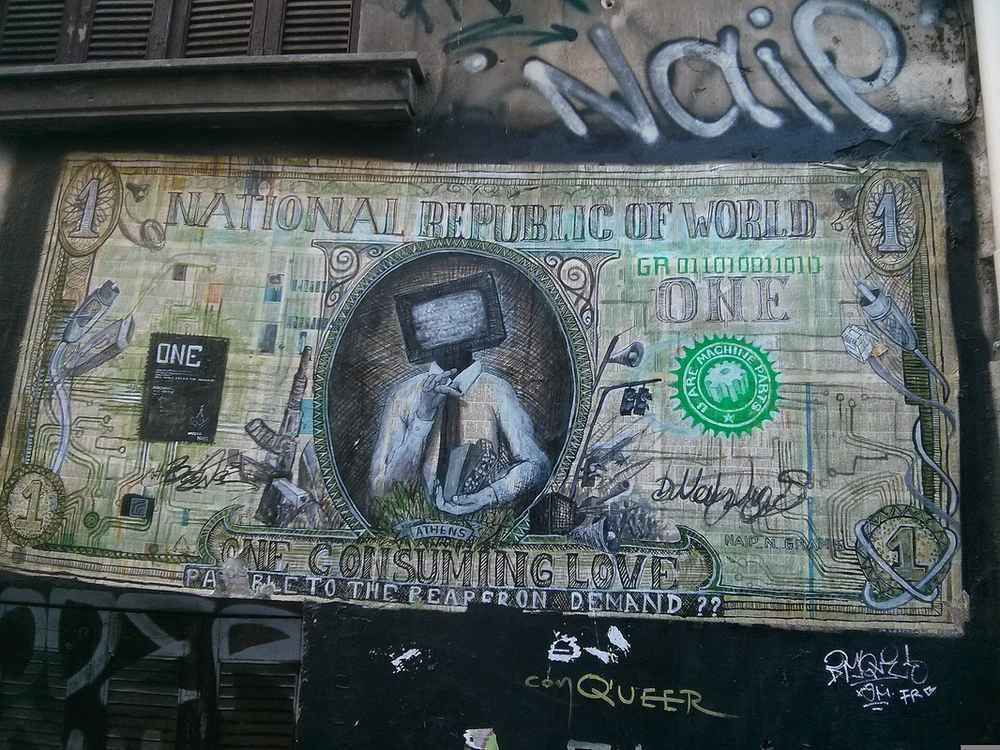
Exarcheia is the epicentre of Athens street art, covered in striking, often politically charged murals, graffiti and stencils. Its walls carry powerful visual statements on politics, society and resistance, ranging from large artistic murals to raw protest slogans. The neighbourhood is effectively an open-air gallery, and walking its streets to discover the art is one of the highlights of any visit.
One of the most compelling reasons to visit Exarcheia is its extraordinary street art, which has made the neighbourhood famous well beyond Greece. The walls here form a constantly changing open-air gallery, covered in some of the most impressive and politically charged murals, graffiti and stencils in all of Athens. Reflecting the area’s radical spirit, much of the art is overtly political, tackling themes of resistance, social justice, austerity, migration, anarchism and protest, ranging from huge, accomplished artistic murals by renowned street artists to raw, hand-scrawled slogans that capture the mood of the moment. Hidden down side streets and splashed across building facades, these works turn an ordinary walk into a thought-provoking journey through the concerns and passions of contemporary Athens.
The art is ephemeral and ever-evolving, painted over and renewed, so no two visits are quite the same, and dedicated street-art walking tours help visitors decode the meanings and find the best pieces. For lovers of urban art and anyone curious about the social currents shaping modern Greece, Exarcheia’s walls are unmissable. It is a vivid, living form of expression. The creative energy echoes the nightlife districts nearby. The food and nightlife are equally authentic.
Where do you eat and drink in Exarcheia?
Exarcheia offers authentic, affordable food and drink, from traditional tavernas and mezedopoleia to cheap student-friendly cafés, ouzeri with live rembetiko music, vegan and ethnic eateries, and lively bars. Exarcheia Square and the surrounding streets are full of inexpensive cafés and bars, making it one of the best-value and most genuine places to eat and go out in central Athens.
Eating and drinking in Exarcheia is authentic, affordable and full of character, reflecting the neighbourhood’s unpretentious, student-and-artist crowd. The area is dotted with traditional tavernas and mezedopoleia serving honest Greek cooking at fair prices, alongside atmospheric old ouzeri where you can sip ouzo over plates of meze, sometimes accompanied by live rembetiko, the soulful Greek urban blues that has deep roots in this quarter. Reflecting its diverse, progressive population, the neighbourhood also has a strong showing of vegan and vegetarian restaurants, ethnic eateries and creative casual spots, as well as classic, old-fashioned coffee houses and cheap, lively cafés clustered around Exarcheia Square and along the surrounding streets, where a coffee or a drink costs a fraction of what you would pay in the tourist centre.
After dark, the bars fill with a young, mixed crowd, and the atmosphere is sociable, intellectual and genuine rather than slick. For travellers seeking real, good-value Athenian food and nightlife away from the polished hotspots, Exarcheia is hard to beat. The broader scene appears in the Athens nightlife guide. A word on safety reassures first-time visitors.
Is Exarcheia safe, and how do you get there?
Exarcheia is generally safe for visitors by day and evening, busy with locals, students and diners, though it has a gritty edge and occasional protests can flare into clashes with police. Use normal city caution, avoid demonstrations, and keep valuables secure. To get there, walk from the centre or use Omonia or Panepistimio metro stations, each a short walk from the neighbourhood.
First-time visitors sometimes worry about Exarcheia’s radical reputation, but for ordinary travellers the neighbourhood is generally safe and rewarding, especially by day and in the lively evening hours when its squares, cafés and tavernas are full of locals, students and diners. That said, it has a deliberately gritty, un-touristy edge, with confrontational murals and a strong political atmosphere, and it is known that protests and demonstrations can occasionally flare into spontaneous clashes with police, particularly around anniversaries such as the Polytechnic uprising in November. Sensible precautions are all that is needed: apply normal big-city caution, keep your valuables secure, steer clear of any demonstration or tense gathering you come across, and trust your instincts.
Treated with respect and curiosity, the area is welcoming and fascinating. Getting there is easy, as Exarcheia sits just north of the centre within walking distance of many sights; the nearest metro stations are Omonia and Panepistimio on line 2, both a short walk from the neighbourhood, and the National Archaeological Museum is right beside it. Exploring on foot is the best way to take in its atmosphere. With a little awareness, a visit is safe and memorable. The wider network is explained in the getting around Athens guide. The questions below cover the points visitors ask most.
Frequently Asked Questions
What is Exarcheia known for in Athens?
Exarcheia is known as the bohemian, radical and counter-cultural neighbourhood of Athens, famous for its political street art, bookshops, cheap cafés, record shops and rembetiko tavernas, and for its history of student protest and activism, including the Polytechnic uprising. It sits beside the National Archaeological Museum.
Is Exarcheia safe to visit?
Exarcheia is generally safe for visitors, especially by day and in the busy evening, when its squares and tavernas are full of locals and students. It has a gritty edge and occasional protests can flare into clashes with police, so use normal city caution, avoid demonstrations, and keep valuables secure.
How do you get to Exarcheia in Athens?
Exarcheia sits just north of central Athens and is easily reached on foot from the centre. The nearest metro stations are Omonia and Panepistimio on line 2, each a short walk from the neighbourhood, and the National Archaeological Museum is right beside it, making the area simple to combine with central sightseeing.