
Edessa tours start in the capital of the Pella regional unit in Central Macedonia, a town on the northern slopes of Mount Vermio where the Edessaios river forms a chain of waterfalls. The routes cover the waterfalls and the Varosi quarter, the water museum, ancient Edessa, the Pozar hot springs, Lake Vegoritida and Mount Voras. Greece Tours lists the day trips that reach Edessa and Pozar from Thessaloniki.
This page covers what Edessa tours see in the town and around it, the history of Edessa, the trips to Pella, Vergina, Naoussa and Veria, the local food, how visitors reach Edessa, which season suits each route and the events of the town. The tours below are checked on GetYourGuide and leave from Thessaloniki and Edessa.
What do Edessa tours cover?
Edessa tours cover the capital of the Pella regional unit in Central Macedonia, a town of 17,848 residents at the 2021 census. Edessa stands on the northern slopes of Mount Vermio, at 318 m, where the Edessaios river forms twelve waterfalls.
Edessa tours start in the seat of the Municipality of Edessa, formed in 2011 from the former municipalities of Edessa and Vegoritida, with 26,407 residents at the 2021 census. Giannitsa is the largest town of the regional unit, but Edessa hosts the larger part of its administrative services and the seat of the Metropolis of Edessa, Pella and Almopia.
The Greek name Edessa means “tower in the water”, a word thought to be Phrygian. The twelve falls of the Edessaios form the largest such system in the Balkans, so Edessa is known as the “City of Waters”. Edessa tours move between the falls, the old quarter and the edge of the town rock.
- Old name: the town was known as Vodena until 1923, a Slavic name tied to the word for water.
- Visitors: the Waterfalls Information Centre estimates 200,000 visitors a year to Varosi and the falls, split about evenly between Greeks and foreigners.
- Economy: since the 1970s Edessa no longer relies on industry, and services and tourism now carry the town.
What do Edessa tours see at the waterfalls?
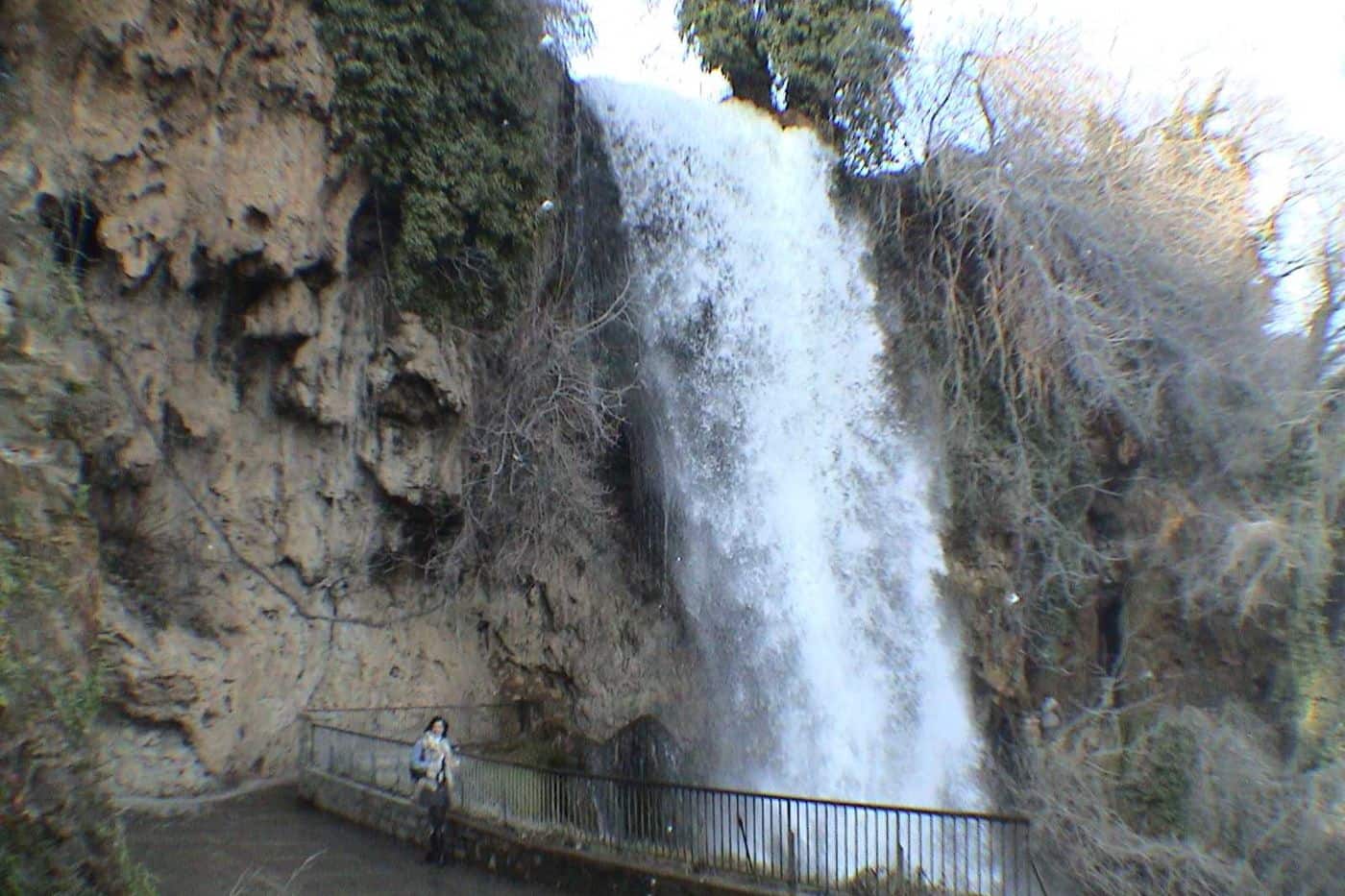
Edessa tours see the Waterfalls Park, where Karanos, the great waterfall, drops 70 m from the town rock, and the forked Lamda waterfall comes next. Steps and paths lead behind the falling water, and a cave with stalactites lies at the foot of Karanos.
The park covers 100,000 square metres at the edge of the old acropolis, and locals call it the “brow of the town”. Thick plant cover makes all but four of the twelve falls hard to see. Edessa tours follow a path of about 1.1 km along the rock, from Varosi to the Water Museum and Ano Estia.
The cave entrance lies on the second platform of the falls. Its route runs 21 m under a high vaulted roof, past stalactite columns 3 m tall, to a pit 5 m deep. It is the only developed “primary” cave in Greece, made of travertine, as dissolved limestone coats the moss under the falls. Unlike Niagara, which erodes and moves back, the Edessa falls move forward and slowly form new caves.
- Karanos: the great fall is named after Caranus, the first Macedonian king, whom tradition credits with founding the town in 813 BC.
- Double waterfall: it is twice the length of Karanos, as it splits into two falls that feed a power plant below the rock.
- Origin: the falls formed in the 14th century, after a strong earthquake struck the area.
Since 2003 the falls glow in rainbow colours at night. Visitors based in Thessaloniki reach the park on an Edessa waterfalls day trip from Thessaloniki, and Edessa tours in the centre add the Small Waterfalls in the Angelis Gatsos park, where the water once turned mills.
What do Edessa tours see in the Varosi quarter?
Edessa tours see Varosi, the old quarter built on the site of the ancient acropolis, south of the Waterfalls Park. Stone mansions, Byzantine churches and parts of the citadel walls stand along a cliff top above the site of the ancient city.
Varosi was the first Christian quarter of Edessa. Its name comes from the Turkish word varoş, a suburb outside the walls. The whole quarter is listed. Today it covers 18 stremmata, and only its eastern part survives, with 88 buildings, 78 of them houses.
Edessa tours walk past 19th-century houses in the Macedonian style. A stone base carries upper storeys that jut out on wooden beams. Inside, rooms open onto a small courtyard through galleries called hagiati, and channels carried drinking water into the homes. Large rooms served silkworm rearing, the main work of Varosi in the late 19th century and the first half of the 20th century.
- Old Metropolis: the Dormition of the Theotokos is a 14th-century timber-roofed basilica with three aisles, frescoes dated 1375–1385 or 1389 and reused 5th-century columns.
- Saints Peter and Paul: this small three-aisled basilica by the brow of the rock keeps frescoes of 1370–1385 and an early 11th-century capital carved with eagles.
- Valasa mansion: built in 1841, it keeps its interior decoration unchanged and a private chapel in its walled yard.
- Varosi Square: since 2008 the square shows walls from about 2,000 years of building; the oldest wall runs about 17 m and stands 5–6 m high.
Edessa tours also pass the Parthenagogeio, a girls’ school built in 1877 in the yard of the Dormition church.
What history do Edessa tours tell?
Edessa tours tell the story of a town that tradition links to Caranus and the first Macedonian kings, that guarded the Via Egnatia as Byzantine Vodena, passed to the Ottomans in the late 14th century and joined Greece on 18 October 1912.
From the 10th century the name Vodena replaced Edessa. The chronicler John Skylitzes describes Vodena as a strong fort on a steep rock, with water brought through an underground channel from Lake Ostrovo, today Vegoritida. Emperor Basil II besieged and took the town in 1002 and again in 1015. The Serbs of Stephen Dushan secured Vodena in 1351.
Gazi Evrenos Bey took Vodena for the Ottomans. Edessa tours follow the Ottoman town through Evliya Çelebi, who visited in 1668. He counted twelve quarters, about 1,060 houses built mainly of stone and seventy windmills, and he called the town a home of waters. In the 17th century the Hagia Sophia church in Varosi took the name of the Dormition, to keep it from becoming a mosque.
The ancient name returned in 1923, and about 2,500 refugees from Asia Minor and Eastern Thrace settled in the town in 1923–1924. Water-powered textile mills earned Edessa the name “Manchester of the East”. Edessa tours also recall 13 September 1944: after British planes and ELAS fighters struck the German camp, German troops set Varosi on fire, and about 400 houses burned.
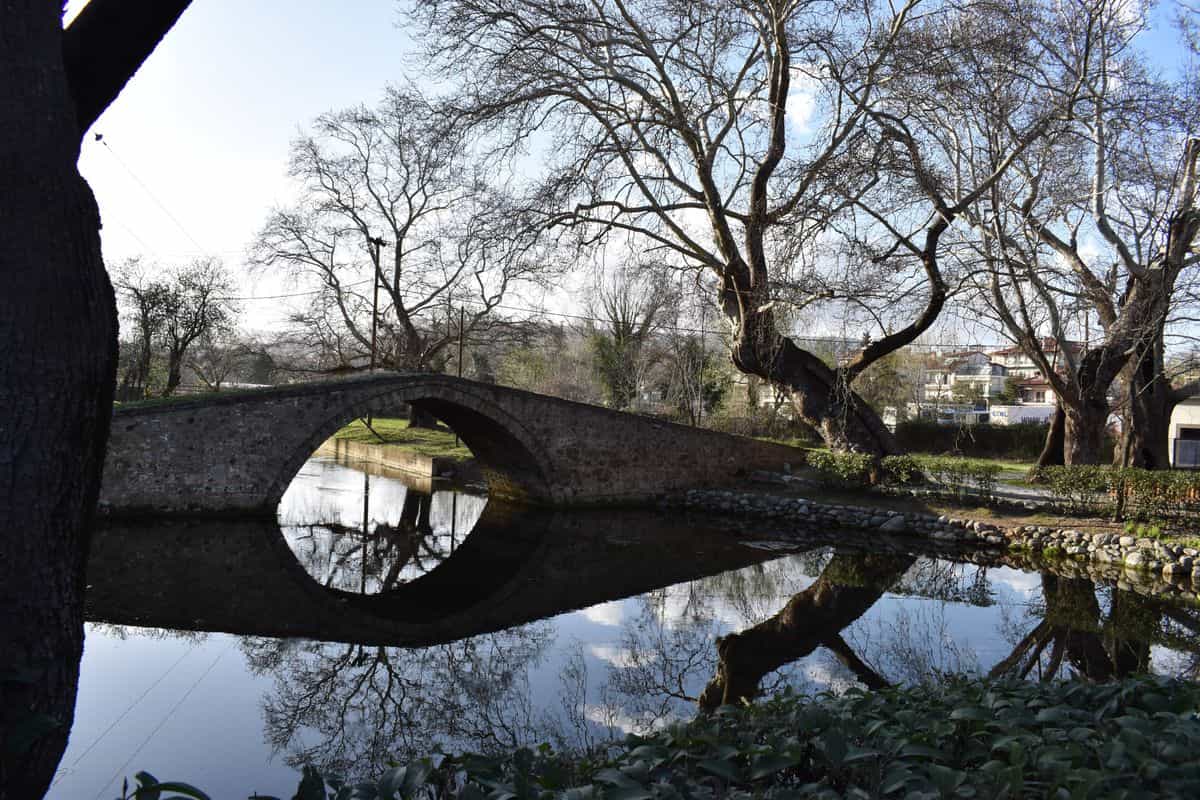
- Kioupri bridge: Edessa tours reach Kioupri, Turkish for bridge, at the western entrance of the town, where a stone arched bridge of the Ottoman period stands; it existed from Roman times, and the Via Egnatia is thought to have crossed there.
- Saved falls: in the early 1960s, a local protest and the Council of State stopped a government plan to turn the falls area into a lake for hydropower.
- End of the mills: by 1972 the four large factories had closed, and thousands of workers left for West Germany, Belgium and Australia.
What do Edessa tours see at the open-air water museum and the old mills?
Edessa tours see the Open-Air Water Museum, opened in 2000 in the Mills area beside the waterfalls. Two flour mills, a water mill and a sesame mill keep machinery used until the mid-1960s, and the Hemp Factory forms the second part.
Edessa was one of the industrial centres of Greece until the middle of the 20th century. Its textile factories drew power from the falling water, and each factory used one waterfall. The Tsitsis spinning mill opened first, in 1895, followed by the Upper and Lower Estia, the Hemp Factory and SEFEKO. The town became known as the “Manchester of the Balkans”.
Edessa tours reach the museum on a paved road through the waterfall park. Water channels run between the restored buildings, and the mills show how flour and sesame were processed. The municipality chose the Mills area, the Hemp Factory and the Estia works for a museum of water power in 1991.
- Hemp Factory: founded in 1908 at Megalos Kremnos, the largest of the four hemp factories in Greece; from 1928 to 1940, its 150 workers made ropes and twine from Indian hemp.
- Sesame mill: a restored building where Edessa tours see daily life in interwar Edessa through virtual reality.
- Aquarium and reptile house: open since 2001 in the restored Giannakis watermill, with native lake fish and the largest reptile collection in Greece.
- Batani: a restored works that has housed a children’s activity centre on the theme of water since 2005.
The Hemp Factory stopped work in 1967 and reopened in 1997 as a leisure centre, served by a double lift on the cliff. It closed again in 2014. Restoration began in 2023 to house an industrial museum, and the complex now hosts conferences and exhibitions.
What do Edessa tours see at ancient Edessa in the Longos area?
Edessa tours see the lower town of ancient Edessa at Longos, at the foot of the rock below the modern city. The site shows fortified gates, high towers, a paved main street, a warehouse, houses, workshops and shops at a point on the Via Egnatia.
The ancient city stood on two levels: the acropolis on the rock, today the Varosi quarter, and the lower town in the plain of Longos. The two were organised as one city around the end of the 4th century BC, and a fortification wall with defensive towers joined them.
Edessa tours walk the paved main street past public buildings, among them the warehouse known as “Orion”, and religious and educational buildings. Abundant water gave the city a secure supply and irrigation for its crops, and its water supply and sewage system were well organised. A colonnade with a Greek inscription dates from Roman times.
The city had its own mint from 27 BC to 268 AD, one of nine in Roman Macedonia. Its people left the lower town at the beginning of the 7th century AD and moved to the citadel for protection against raids.
- Walls: a circuit with towers and fortified gates that linked the acropolis and the lower town.
- Main street: the paved road of the lower town, lined with houses, workshops and shops.
- Roman colonnade: a row of columns with a Greek inscription.
- Finds: ceramics and coins that trace life in the city from the Hellenistic to the Roman period.
Walking trails from the Chilia Pefka forest, 1,500 metres north-east of the centre, lead to ancient Edessa, so Edessa tours on foot reach the site from the town.
Which Edessa tours go to the Loutra Pozar hot springs?
Edessa tours that head north into Almopia reach Loutra Pozar, 32 km from the town and 13 km west of Aridaia. Thermal water rises there at 37 °C in the valley of the Agios Nikolaos stream, and natural waterfalls carry it along the river.
The name Pozar comes from a Slavic word for fire or heat, and the old name of the stream, Toplitsa, means “hot river”. The springs were declared healing waters in the 1920s. The water measures 37.2 °C at the hydrotherapy centre and 36.4 °C at the spring in the square, where a cold spring runs at 15 °C.
Edessa tours stop at the indoor pools and hammams, the large outdoor pool built in the 1990s and the six pools of the Alexandreio hydrotherapy centre. The hot water is drinkable and serves bath therapy, toning and relaxation. The baths draw visitors above all in the cooler months.
- Loutraki: the village 3 km from the baths, at 300 metres, known as Kato Pozar until 1922.
- Almopia Cave Park: the first cave park in Greece, a cave complex with prehistoric finds, which Edessa tours see in the small museum of Loutra.
- Certified spa: licensed by the Ministry of Tourism and, since 2019, a certified healing therapy unit.
- Pozar Festival: a three-day music festival every July, one of the largest in Greece.
A separate page covers the Loutra Pozar day trip from Thessaloniki.
What do Edessa tours see at Lake Vegoritida and Arnissa?
Edessa tours see Lake Vegoritida 18 km west of the town, the third largest lake in Greece by area at 54.31 square kilometres. Arnissa sits on its north-eastern shore at 560 metres, with a sandy beach, old stone mansions and churches.
The lake lies at 540 metres between the Vernon, Voras and Vermio mountains and reaches a depth of 70 metres. It is the lowest point of a system of lakes with Zazari, Chimaditida and Petres, whose water reaches it through channels and a tunnel. The lake belongs to the Natura 2000 network.
Edessa tours watch for wild birds on its steep banks, among them the long-legged buzzard and the lesser kestrel, a globally threatened species, and pelicans frequent the lake at Arnissa. The lake is a fishing ground for carp, whitefish, pike and wels catfish.
Arnissa, known as Ostrovo until 1926, took back the name of an ancient Macedonian town mentioned by Thucydides. Ruins with architectural members and inscriptions lie on a small peninsula of the lake, and a prehistoric cemetery came to light in 1953, when the water level fell. Edessa tours walk the sandy shore, a popular stroll for locals and visitors.
- Churches: the old church of the Holy Trinity, built in 1865, and the post-Byzantine church of the Dormition, with frescoes and a painted templon.
- Ottoman minaret: the minaret of a ruined mosque near the lake.
- Drenovo: ruins of Roman and Byzantine buildings outside the town.
- Local produce: apples, and pasta, spoon sweets, pickles, paprika and compotes from a women’s cooperative.
Arnissa has 1,370 residents and lies 112 km from Thessaloniki, on the railway line to Florina.
Which Edessa tours reach Kaimaktsalan and Mount Voras?
Edessa tours to Kaimaktsalan pair the ski centre with Agios Athanasios, a village 30 km from Edessa and 17 km from the slopes. The summit stands at 2,524 metres on the Greek border, and the ski area spreads between 2,050 and 2,480 metres.
Kaimaktsalan is the highest peak of the Voras range and the third-highest in Greece, after Mytikas and Smolikas. The border with North Macedonia runs across the summit. The Ottoman Turkish name means ‘kaymak-like’, after a clotted cream as white as the snowy peak. Oak, beech and pine forests cover the range, and its peaks form the Natura 2000 habitat GR1240001.
The chapel of Profitis Ilias stands on the summit, on the border line, as a memorial of the First World War. Serbian and Bulgarian troops fought the Battle of Kaymakchalan here in September 1916, and the Serbian side won. On clear days, Edessa tours at the top look out over the Thermaic Gulf and the summit of Olympus.
- Ski centre: trial operation began in 1994 with two lifts and one lodge, and the official opening came in 1995.
- Pistes: 16 runs, four of them race runs with electronic timing, plus a snowboard fun park and a snowmobile run.
- Downhill run: 3,528 metres long with a drop of 503 metres, meeting Olympic downhill standards as the only run of its kind in Greece.
- Old Agios Athanasios: a village at 1,200 metres, a traditional settlement since 1992, with tile-roofed houses and an Analipsi church from the late 1700s.
Edessa tours that stay overnight use the guesthouses of Agios Athanasios, and the area offers organised trekking, horse riding and archery.
Which Edessa tours combine Pella and Vergina?
Edessa tours combine Pella and Vergina to see two royal capitals of ancient Macedon. Pella was the birthplace of Alexander the Great and keeps its pebble floor mosaics. Vergina holds ancient Aigai, a UNESCO World Heritage Site, and the tombs of the Macedonian kings.
Edessa tours reach Pella on the main road toward Thessaloniki, as the modern town lies about 1 km off it and 7 km east of Giannitsa. Edessa itself lies 37 km from Giannitsa. The ancient city served as the capital of Macedon from the 4th century BC until the Roman conquest in 168 BC.
The archaeological site covers about 70,000 square metres. Its houses had mosaic floors with scenes such as a lion hunt and Dionysus riding a panther. The Archaeological Museum of Pella shows the mosaics of Dionysus and the Abduction of Helen, plus a head seen as a portrait of Alexander.
At Vergina, Manolis Andronikos dug into the Great Tumulus in 1977 and found four buried tombs, two of them never disturbed. A museum built over the tombs opened in 1993; it keeps them in place and shows the mound as it stood before the dig. Philip II was murdered in the theatre of Aigai in 336 BC, and Alexander was proclaimed king there.
- Golden larnax: a chest of 24-carat gold weighing 11 kilograms, embossed with the Vergina Sun.
- Golden wreath: 313 oak leaves and 68 acorns with a weight of 717 grams.
- Palace of Aigai: the largest building of classical Greece, with nearly 30 rebuilt columns around its main courtyard.
- World Heritage: the site of Aigai joined the UNESCO list in 1996.
- Distances: Vergina lies 12 km south-east of Veria, and Edessa lies 49 km north of Veria.
Visitors on Edessa tours who need more time at Aigai book dedicated Vergina tours.
Which Edessa tours combine Naoussa and Veria?
Edessa tours combine Naoussa and Veria along the eastern foot of Mount Vermio. Naoussa lies 32 km south of Edessa, with its red wine and the Agios Nikolaos park. Veria, 22 km further south, keeps about 48 Byzantine and post-Byzantine churches.
Naoussa, the first stop on Edessa tours heading south, sits 90 km west of Thessaloniki. The Arapitsa river rises at Agios Nikolaos, 3 km from the centre, among plane trees, boxwood, linden and oak. The area holds the status of a Landscape of Special Natural Beauty, and the park climbs to nearly 550 metres.
Edessa tours continue to Veria, a town known as Little Jerusalem for its churches, which once numbered 72. The Church of the Resurrection of Christ holds frescoes from around 1315 by Georgios Kalliergis. In an inscription he called himself the greatest painter in all of Thessaly. The Apostle Paul preached in Veria, and the Bema of Apostle Paul still stands in the town.
- Wine museum: the Wine and Vine Museum of Naoussa sits in a neoclassical building from 1908 owned by the Boutari family.
- Ski slopes: 3-5 Pigadia, 17 km from Naoussa at 1,430 to 2,005 metres, was the first Greek ski centre to install an artificial snow system.
- Byzantine Museum: mosaics, manuscripts, pottery, wood carvings and coins fill the old Markos mill near the walls of Veria.
- Old churches: Saints Peter and Paul dates from the 11th century, Saint John the Theologian from the 13th and Saints Kirykos and Ioulitta from the 16th.
- Road link: Imathia Provincial Road 1 runs north from Veria to Naoussa and Edessa.
Edessa tours with a wine focus spend more time in Naoussa, the same town that anchors the Naoussa wine day trip from Thessaloniki.
What do Edessa tours taste?
Edessa tours taste the fruit of the Pella orchards and the wine of nearby Naoussa. Edessa is known for the Tragana cherry, which ripens in early June, while Skydra grows peaches and Naoussa makes red wine from the xinomavro grape.
Cherry growing marks the Edessa area. Tragana Edessis is one of the oldest local varieties, valued for the taste, crunch and keeping quality of its fruit. Its cultivation started in the mountain areas of Edessa, and it once led Greek cherry growing. Edessa tours in June meet the cherry harvest.
Further south, the Veria plain grows peaches for the table and for canning, and the area exports compote and fruit salad, mainly to Eastern Europe. In spring, Edessa tours that pause at Elia square, the Balcony of Veria, look over a plain of pink peach blossom.
Edessa tours that stop in Naoussa taste xinomavro, a grape with a protected designation of origin. The Naoussa red was one of the first Greek wines sold in bottles and has won awards in Greece and abroad.
- Kerasies: a village at 705 metres, 14 km north-west of Edessa, named after the cherry trees its farmers grow.
- Skydra: a farm town 15 km from Edessa that grows fruit, mainly peaches, and cans and processes it.
- Piperies: a village 3 km from Aridaia named after its pepper crops, now growing vines, peaches, plums, cherries and asparagus.
- Agios Athanasios: tavernas and traditional eateries that serve local food on the slopes of Voras.
How do visitors reach Edessa for Edessa tours?
Edessa tours reach the town by road, rail or coach. Edessa lies 95 km from Thessaloniki on the EO2 national road, Line T2 trains of the Thessaloniki Regional Railway call at its station, and KTEL Pellas coaches, based in the town, run direct routes.
Road distances from Edessa run 541 km to Athens, 37 km to Giannitsa, 49 km south to Veria and 58 km west to Florina. The western section of the EO2 passes through Florina, Edessa, Giannitsa and Chalkidona before it reaches the city centre of Thessaloniki. Cars enter the town from the south, on the hospital side, from the north, on the Ekklisiochori side, or by the newer western bypass towards Mount Voras.
The ancient Via Egnatia ran through Edessa, but the modern Egnatia Odos, the tolled A2 motorway, keeps to a more southern line and passes Veria. Edessa tours from the south leave the motorway there and take the old Veria–Edessa national road, which runs through a chain of villages. Its planned successor, the Egnatia–Naousa–Edessa road axis, stays unfinished, with only the Monospita–Patrida section built.
Edessa station stands north of the town on the Thessaloniki–Bitola railway and opened in June 1894. Line T2, run by Hellenic Train, leaves Thessaloniki station, passes Sindos, Adendro and Platy, then runs south-west to Veria, north to Naousa and Skydra, and west to Edessa. Beyond the town, the line follows Lake Vegoritida to Amyntaio and ends at Florina, with certain trains starting at Edessa. Full rail traffic now covers the whole line, after a spell of replacement coaches between Florina and Edessa.
- Coaches: KTEL Pellas runs direct routes from Edessa to Thessaloniki, Athens, Larisa, Lamia, Volos, Katerini, Kozani, Ptolemaida, Florina and Ioannina, plus special summer routes to seaside places.
- Tickets: KTEL Pellas sells tickets at its ticket offices, and boarding starts 5 minutes before departure.
- Trains: two-car MAN-2000 diesel units work the unelectrified Thessaloniki–Edessa–Florina line.
- Airport: Thessaloniki Airport Makedonia (SKG), 13 km south-east of Thessaloniki in Thermi, serves Edessa.
- Airfield: the Edessa Aero Club runs a light-aircraft airfield with a 1,400-metre paved runway, 27 km west of the town, between Panagitsa and Zervi.
Edessa tours that start in Thessaloniki can mix the two modes, with the train one way and the coach the other.
When do Edessa tours run best?
Edessa tours run in all four seasons, since the town draws visitors all year. Snow from Kaimaktsalan feeds the springs of the waterfalls, and winter sports draw skiers to the Voras–Kaimaktsalan ski centre, which opened officially in 1995 after trial operation in 1994.
Edessa stands at 318 metres on the northern slopes of Mount Vermio. Its tourism rests on the waterfalls, the ancient sights nearby and winter sports, and the mix of sights and activities gives Edessa tours a reason to run in spring, summer, autumn and winter alike.
The Edessaios river rises on Voras, north of Lake Vegoritida, and runs 29 km in all. It crosses the town and forms the falls as it leaves it. Their water comes from the springs of the Agra–Vryta–Nisi wetland, which the snows of Kaimaktsalan feed, and hydroelectric stations of the Public Power Corporation at Agras and on the Edessaios control the flow.
Kaimaktsalan, the highest peak of Voras at 2,524 metres, ranks third in Greece after Mytikas and Smolikas. Its name comes from Ottoman Turkish and means kaymak-like, after the white, snowy peak, since kaymak is a dairy product close to clotted cream. The peak has a subarctic climate, with short, cool summers and long, cold winters.
- Mountain weather: a station of the National Observatory of Athens at the ski centre records a cold climate with a mean annual temperature of 4 °C.
- Clear-day view: the slopes look out over the Thermaic Gulf and the summit of Olympus when the weather allows.
- Winter stays: traditional and modern hotels operate in Edessa and in the area of Old Agios Athanasios, close to the ski centre.
Which events do Edessa tours find?
Edessa tours find a fixed yearly calendar: the carnival week of Apokries, the Alexandreia athletics meeting in early June, the Cultural Summer at the Gavaliotissa Amphitheatre, the summer Flower Show, and the 5 km Night Water Run around the liberation day of 18 October.
The Edessa Carnival dates from 2004, when the municipal authority tried out an official parade for Apokries, the carnival season. The trial succeeded, and each year the municipality and local sponsors stage a week of events that draws visitors from across Greece, with parades of drummers from all over the country, music events and revived customs of the past.
The Alexandreia, a yearly athletics contest held since 1953 with the Municipality of Edessa as sponsor, became a track-and-field Grand Prix in 2002, co-organised with SEGAS. Edessa tours in early June find it at the National Stadium of Edessa, where its events have included sprints, middle- and long-distance races, relays, the discus, javelin, hammer and shot put, and the long and high jumps.
Each summer, the Cultural Summer programme fills the Gavaliotissa Amphitheatre with concerts, theatre, dance and themed tributes. In the same season, the annual Flower Show of the municipality spreads through Varosi and the waterfalls park, with rare flowers and shrubs that visitors from all over Greece come to see and buy.
- Night Water Run: a 5 km night race held each year since 2014 around the liberation day of 18 October, with runners from across Greece.
- Cherry Races: the March and April cycling races of the PAS Aeropos club, which takes part in the Greek national race calendar.
- Water Races: the October cycling races of the same club, run as official international events.
- Kaimaktsalan Climb: the September hill race of the club, also known as the Battle of Kaimaktsalan.
- World Tourism Day: each 27 September, the town invites pupils and groups from the wider area to learn how visitors are welcomed.
The Night Water Run grew out of an international congress on the history of sport that the European Committee of Sports History held in the town. The date it marks, 18 October 1912, is the day Greece annexed Edessa during the First Balkan War.
Frequently Asked Questions
Is Edessa station step-free for Edessa tours by train?
Edessa station is not step-free for Edessa tours by train. Passengers reach the platforms by crossing the lines on foot, and the station is not wheelchair accessible. The station has three platforms, two of them in use, with waiting rooms on platform one, shelters on platform two and parking in the forecourt.
Can Edessa tours add skiing on Kaimaktsalan?
Edessa tours can add skiing on Kaimaktsalan in the snow season. New Agios Athanasios, 29 km west-north-west of Edessa, lies 19 km south of the ski centre.
Where do Edessa tours find visitor information?
Edessa tours find visitor information at the Tourist Information Centre in the Waterfalls Park, which the municipal public-benefit company runs all year. A second centre, for environmental and tourist information, stands at the Agra–Vryta–Nisi wetland, 10 km from the town. Visitors obtain the Edessa City Card, in use since 2017 to ease access to the sights, at the municipal centres.
Do Edessa tours continue to Bitola by train?
Edessa tours do not continue to Bitola by train. The 219 km Thessaloniki–Bitola railway opened in 1894, but the international link from Mesonisi to Neos Kafkasos is disused, so passenger trains stop at Florina. Bitola, in North Macedonia, is a twin city of Edessa, together with Pleven in Bulgaria and Gornji Milanovac in Serbia.