
A Cyprus food tour tastes the island through meze, halloumi, souvla, koupepia and sweets. It runs as old-town walks, village lunch days and cooking classes. Find more trip ideas on Greece Tours.
Below we compare the tour formats, the dishes, the market stops and the booking details.
What is a Cyprus food tour?
A Cyprus food tour is a guided tasting of Cypriot dishes. It runs as a 3-hour old-town walk, a village lunch day, a cheesemaking workshop or a cooking class. A local host explains each dish, from halloumi to the meze table.
Wikipedia says Turkey and Greece shaped Cypriot cuisine, with Levantine and Mediterranean touches. It calls halloumi a staple. A Cyprus food tour turns that mix into a set of tastings.
The byFood listing of Cyprus food experiences shows 74 activities. They include cooking classes, halloumi-making workshops and food and wine days in the Troodos Mountains.
Food days sit inside the wider range of Cyprus tours, which also cover boats, jeep safaris and ancient sites. This page covers the dishes, the meze table, the tour formats and the market stops.
Which Cyprus food tour formats can you book?
Five formats cover a Cyprus food tour: tasting walks, village lunch days, cheesemaking trips, cooking classes and taverna meals. Listed durations run from 2.5 hours for a pastry class to 8 hours for a village lunch day.
A tasting walk keeps to one town. GetYourGuide lists a 3-hour small-group walk through Paphos Old Town with 10+ traditional dishes. Withlocals offers a private 3-hour walk, The 10 Tastings of Nicosia.
A village lunch day covers more ground. The GetYourGuide day trips from Paphos run 6 to 8 hours and include a brunch or a barbecue lunch.
A cheesemaking trip puts the work in the guests’ hands. One 7.5-hour trip into the mountain villages teaches halloumi and anari making with a Cypriot family. It ends with a brunch.
Cooking classes run from 2.5 to 3.5 hours, and guests eat what they cook. A class fits into one morning or afternoon.
Pick the Cyprus food tour format by the hours free. A short stay fits a walk or a class, and a full day fits a mountain lunch trip.


What does a Cyprus food tour taste in Paphos Old Town?
The GetYourGuide Paphos Old Town food tour serves 10+ traditional dishes on a 3-hour small-group walk. It also teaches the stories behind Cypriot food culture, and it carries free cancellation and wheelchair access.
Bookings for that walk close 3 hours before the start. The listing says the walk leaves the harbour behind to show what Cypriots actually eat.
Nomadplans reviews another Cyprus food tour in Paphos, run by Cyprus Taste Tours. It runs all year, starts outside the Paphos Municipal Market and lasted 2 hours 30 minutes.
That walk tasted tahini pie, legumes, fasolakia, sheftalia, carob and orange cake. Nomadplans advises comfortable shoes and skipping breakfast.
A longer Paphos day lasts 7 hours. GetYourGuide lists a local culture and food traditions tour that shows how halloumi and village bread are made. It adds a homemade brunch, the Church of Ayia Paraskevi and the Old Town.
Our Paphos tours page compares the other walks, sites and day trips that start in the city.
Which village lunch days count as a Cyprus food tour?
Village lunch days take a Cyprus food tour into the hills. GetYourGuide lists a Paphos and Limassol day with halloumi tastings and a barbecue lunch at a donkey farm. Another Paphos day serves brunch at a traditional house.
The donkey farm day lasts 8 hours. Guests taste local products such as wine and halloumi, ride a donkey and eat the barbecue lunch.
A 6-hour Paphos day swaps the farm for a monastery. It visits Ayios Neophytos Monastery, serves brunch at Sophia’s Traditional House and tours two wineries with Cypriot wine tastings.
In Ayia Napa, the Cypriot Traditions and Donkey Adventures day lasts 4 to 7 hours. The listing promises hands-on activities, traditional food and entertainment. It is a Cyprus food tour that suits children and adults.
Troodos day trips add wineries and mountain villages to the lunch. Our Troodos wine tour page covers the grapes, wineries and villages behind these lunch stops.
What is on the Cypriot meze table of a Cyprus food tour?
A Cypriot meze opens with olives and dips. It moves on to grilled halloumi, cured pork loin and hot meat or fish. The Cyprus Tourism Organisation names tahini, skordalia, taramosalata and tzatziki as the dips.
Skordalia is a potato and garlic dip, and taramosalata is a fish roe dip. Wikipedia adds humus. It notes that Cypriots call tzatziki ttalattouri.
On a Cyprus food tour, a guide spreads the meze across tasting stops. Cyprus Things To Do says a guided tour covers six to nine locations, not one restaurant table.
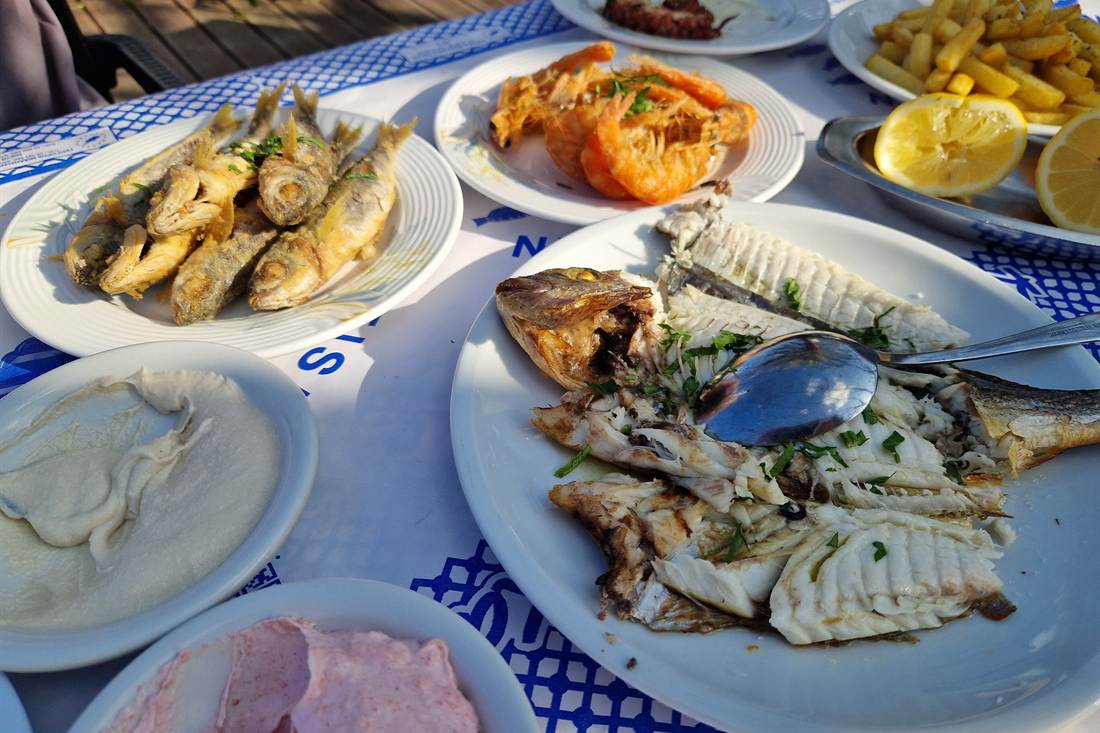
A meat meze adds grilled pork chops, barbecued chicken and pork, loukanika sausages, kleftiko, stifado and tavas. A fish meze serves small fry, sea bream, cuttlefish, calamari and octopus.
Less common dishes appear too. The Cyprus Tourism Organisation lists wild asparagus and other greens cooked with eggs. Wikipedia adds octopus in red wine, snails in tomato sauce and pickled quail eggs.
Traditional tavernas end the meze with watermelon, sweet pastries or glyko. Glyko means fruit and nuts preserved in sugar.
How long does the meze last on a Cyprus food tour?
The Cyprus Mail describes a taverna meze as a leisurely meal of two to three hours. Depending on the taverna, it serves 15 to more than 30 dishes. Allow at least two hours for a Cyprus food tour meze.
The Cyprus Mail warns against ordering extra food before the meze arrives. The meze is the whole meal, and the food keeps coming.
Meze is ordered per person, with a minimum of two, and the table shares everything. Staff need to hear about allergies before ordering.
Menus follow the region. Coastal tavernas serve seafood, and mountain villages show cheeses, seasonal vegetables and slow-cooked meat. The Cyprus Mail names Latchi and Zygi for a fish meze.
A Cyprus food tour from Ayia Napa turns this meal into a half day. GetYourGuide lists a 5-hour Ayia Napa tour that starts with craft beers at a microbrewery. It ends with a meal at a family-run village taverna in Sotira.
Why does a Cyprus food tour feature halloumi?
Halloumi is the national cheese of Cyprus, a semi-hard white cheese kept in brine. Makers follow a fixed order: curdling, pressing, scalding in whey, then salting with mint and folding.
The earliest known description of halloumi in Cyprus dates to the 16th century. A Venetian official named Florios Voustroniou called the cheese “calumi”, says Wikipedia.
A halloumi workshop on a Cyprus food tour teaches that order. Makers curdle the milk with rennet and press the curd. They boil the pieces in hot whey for at least 30 minutes.
Next comes salt and mint. Makers fold the pieces and store them in salted whey for 1 to 3 days before packing.
Fresh halloumi tastes milder and less salty. Mature halloumi stays in brine whey for at least 40 days, so it turns harder, drier and saltier.
Traditional halloumi forms a hemisphere that weighs 220 to 270 grams. Cypriot Turkish speakers call the cheese hellim.
Folklore places the first halloumi between AD 395 and 867. A herder in Cyprus mixed sheep and goat milk and heated it over a fire. The herder shaped the curds into blobs to cool.
What are anari and flaouna?
Anari is a fresh, mild whey cheese from Cyprus, similar to ricotta. Flaouna is the cheese-filled pastry that families bake for Easter. Both rely on sheep and goat dairy.
Cheesemakers produce anari from the whey left after halloumi. They heat the whey to 65 degrees Celsius and can stir in 5 to 10 percent goat or sheep milk. Small curds form at 80 to 85 degrees and are skimmed off.
Locals eat fresh anari at breakfast with carob syrup or honey. Fresh anari spoils quickly, so cooks salt and dry part of it into a hard cheese for grating.
For a Cyprus food tour at Easter, the flaouna is the pastry to know. Families bake large batches, and the pastry uses eggs and cheese that the Lenten fast excludes. People eat flaounes in place of bread on Easter Sunday and for weeks afterwards.
The dough takes mastic, mahleb and spearmint. Paphos produces the sheep and goat cheese called flaouna cheese, and cooks add halloumi, graviera, fresh anari or kefalotyri.
Cheese days show the sources. This Cyprus food tour on GetYourGuide lasts 8 hours from Larnaca and teaches halloumi making. It tastes local wines, visits Lefkara and Fikardou and ends with a traditional meze lunch.
Which grilled and baked meats does a Cyprus food tour serve?
A Cyprus food tour serves souvla, sheftalia and kleftiko. Souvla is large pieces of meat on a long skewer over charcoal. Sheftalia is a sausage wrapped in caul fat. Kleftiko is marinated meat baked in parchment.
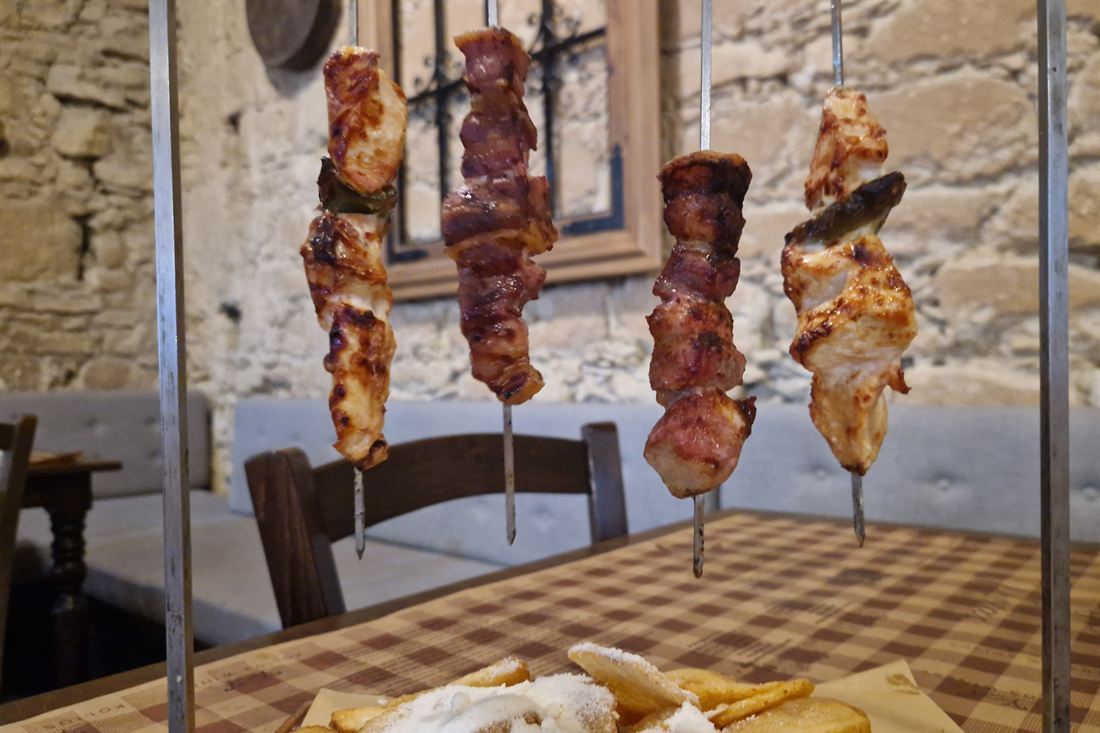
Souvla cooks for 90 minutes to 3 hours, depending on the meat. Cooks use the neck and shoulder of lamb, pork or chicken. Wikipedia says souvla cuts are much larger than souvlaki cuts.
Sheftalia began in Cyprus. Cooks wrap minced lamb or pork with parsley and onions in caul fat, then grill the parcels. Wikipedia gives two origins for the name: the Turkish word for peach, or a street vendor nicknamed Chef Ali.
Kleftiko uses lamb, goat or pork. Cooks slow-roast the marinated meat in parchment and serve it with potatoes. Recipes add bell peppers, onions and kefalotyri cheese.
Cured pork joins the plate. Lountza is pork tenderloin that cooks brine, marinate in wine and smoke. Chiromeri is the smoked, air-dried leg. Cooks grill lountza over coals or fry it with eggs.
Fresh meat was a weekend food before Cyprus urbanised. Families boiled a chicken and cooked pasta or bulgur in its juices, so one bird fed the whole table.
What are koupepia, gemista and koupes?
Koupepia are vine leaves stuffed with minced pork, rice, tomato and herbs, then simmered in a pan. Gemista use the same filling in other vegetables. Koupes are bulgur shells filled with spiced minced meat and deep-fried.
The Cyprus Tourism Organisation recipe uses 25 vine leaves and 250 grams of minced lean pork. It adds a third of a cup of short-grain rice, grated tomato, parsley, mint and lemon juice.
Cooks dip the leaves in boiling water, roll tight parcels and pack them in a pan. The parcels simmer for 15 to 20 minutes under an inverted plate.
A Pano Kivides class gives a Cyprus food tour a hands-on stop. GetYourGuide lists a 3-hour gemista class in a village home. Guests prepare fresh vegetables, bake them in the old stone oven and taste the result.
Koupes are the Cypriot form of kibbeh. Cooks mix bulgur with flour and water into a cigar-shaped dough and hollow it. They pack in minced meat, onions, parsley and cinnamon, then seal and fry the cigars.
Cooks serve koupes with lemon juice. One travel writer ate them at a small seaside restaurant in Larnaca. The kitchen served them as meze, with lemon on the side.
Which food markets can you add to a Cyprus food tour?
Four city markets sell the foods behind a Cyprus food tour. They are the Nicosia municipal market, Limassol Municipal Market, the Paphos market in Ktima and the Larnaca Saturday market. Each sells produce, bread, cheese or sweets.
The Nicosia municipal market is also called the Market of the old Town Hall. The Town Hall offices once stood there. It opens daily and gets busiest on Saturdays.
Stalls sell fresh fruit and vegetables, homemade bread, olives, herbal teas, halloumi, other cheeses and salami. Our Nicosia tour page covers the walled city around it.
Limassol Municipal Market stands on Agios Andreou Street and opens Monday to Saturday, from 6.00 to 15.00. Stalls sell traditional sweets, herbs and spices, olive products and home-made halloumi.
World Travel Guide names black walnuts in syrup and soujouko at the Limassol market. Our Limassol tour page covers the city’s old town, castle and port.
The Paphos Municipal Market sits in the Old Town (Ktima) and opens Monday to Saturday. It sells local food and handmade crafts. Plan a Cyprus food tour stop there from Monday to Saturday.
The Larnaca Municipal Market stands at 24 Nicolau Rossou Street and runs on Saturdays from 7.00 to 14.00. It sells seasonal produce, preserves, fresh bread and baked goods. Add it to a Cyprus food tour on a Saturday.
Withlocals says its private hosts shape each tour to your wishes. Ask the host to add a food stop to your Cyprus food tour.
Which cooking class suits a Cyprus food tour?
Three GetYourGuide cooking classes teach Cypriot dishes. They run in Paphos, at Fournisto Tavern in the Larnaca district and at a Troodos bee sanctuary. Lengths run from 3.5 to 8 hours, and guests eat what they cook at the first two.
The Paphos class lasts 3.5 hours and cooks makaronia fournou, tzatziki and a Greek salad from local ingredients. Guests share the meal, then finish with a traditional dessert and coffee.
Makaronia tou fournou is oven pasta. Cooks bake bucatini with a meat sauce flavoured with mint, parsley or cinnamon. They add a white sauce and top the dish with grated halloumi or anari.
The Fournisto Tavern class lasts 3.5 hours. A local chef guides guests through traditional Cypriot dishes, and lunch follows. It adds a Cyprus food tour stop in a taverna kitchen.
The Troodos class lasts 8 hours. Guests visit an organic bee sanctuary and harvest fresh ingredients on an organic farm. They cook a farm-to-table meal by a lakeside.
Magarina bulli is another pasta dish. Cooks boil a chicken and cook bucatini in the stock. They top the plate with lemon juice, grated halloumi and dried mint.
Which seasons and diets suit a Cyprus food tour?
Cypriot food follows the calendar, so a Cyprus food tour changes with the season. Artichokes arrive in early spring, summer brings salads of celery leaves and tomatoes, and snails come in late autumn. Vegetarians find plant-based dishes on a meze table.
Artichokes are in season in early spring. Cypriots detach the leaves and bite off the fleshy base. Cooks braise the stalks and hearts with garden peas.
The usual summer salad mixes celery leaves and stalks, parsley, coriander leaves, tomatoes and cucumbers. Cooks also serve summer purslane.
Snails come in late autumn, after the first good rains. Cooks barbecue them, or stew them with onions, garlic and tomatoes.
Cyprus Things To Do says July and August push daytime temperatures past 35 degrees Celsius. It links that heat to early-evening slots for a Cyprus food tour.
Vegans have to plan ahead. Halloumi and yoghurt dips fill a meze table. Cyprus Things To Do advises emailing the operator at least 48 hours before the tour.
Orthodox fasting days shape the menu. Wikipedia says observant Greek Cypriots then avoid animal products and eat pulses dressed with olive oil and lemon.
Which sweets and coffee end a Cyprus food tour?
Cyprus delights, loukoumades, baklava and spoon sweets end a meal, and Cypriot coffee follows. The EU protects Cyprus delights as a geographical indication. Pano Lefkara near Larnaca is a main production centre.
Cyprus delights are a starch and sugar gel flavoured with lemon, rose water, mastic or other fruit. Makers add chopped dates, pistachios, hazelnuts or walnuts, or leave the gel plain.
Loukoumades are fried dough balls. Cypriot Greek calls them loukoumades or lokmades. Cooks serve them with cinnamon in honey syrup and a light dusting of powdered sugar.
Spoon sweets use bergamot, figs, tiny aubergines, walnuts, watermelon or pumpkin. Cooks soak the fruit for two weeks, depending on the fruit. They then boil it with sugar.
A Cyprus food tour can end at the pastry bench. GetYourGuide lists a 2.5-hour Nicosia workshop where guests make baklava and traditional Cypriot orange cookies. The class serves a cup of Cypriot coffee or fresh lemonade with the sweets.
Cypriot coffee comes in three sweetness levels. Order it sketo for plain, metrio for one teaspoon of sugar or glyki for two.
Cooks brew it in a small long-handled pot called a mbriki and never add milk. A glass of water comes with the cup, and the froth on top is the kaimaki.
Brandy is the other table drink, and Wikipedia says Cypriots drink it with meze. The Cyprus Mail pairs a cold local beer or a red or rosé wine with a meat meze. A crisp white wine goes with fish.
How do you book and plan a Cyprus food tour?
Book a Cyprus food tour early in summer, and compare group size, inclusions and cancellation terms. Cyprus Things To Do says popular evening slots in Nicosia and Limassol can sell out ahead. It names three to five days in the peak months, June to September.
Cyprus Things To Do tells guests to check whether a listing includes alcohol, soft drinks or a dessert stop. It treats fewer than six distinct tastings over two hours or more as a thin itinerary.
The same site rates groups of six to eight guests as faster on questions. It says a group of more than fifteen starts to feel like a queue.
Withlocals lists a refund up to 7 days before the start of its private tours. Cancellation windows differ by operator, so read the listing before you book a Cyprus food tour.
Cyprus Things To Do compares three city formats. A Nicosia Old Town meze walk offers 6 to 9 tastings. A Limassol tour pairs street food with wine. A Paphos village taverna tasting uses a minibus transfer and limits walking.
It says Nicosia suits history-focused walkers and Limassol suits wine lovers. Paphos suits guests who prefer a slower, seated format.
What do travellers ask about a Cyprus food tour?
What does kopiaste ke kali orexi mean?
The Cyprus Tourism Organisation translates it as “welcome, and bon appetite”. It is the greeting of the Cypriot meze.
What is halitzia cheese?
Halitzia is a slightly sour, feta-like cheese made from goat or sheep milk. Villages in the Tylliria area produce it, and cooks add it to salads.
What is soumada?
Soumada is a sweet almond syrup with roots in the Roman period. King Peter I of Cyprus gave it to King Casimir the Great of Poland in the 14th century.
What is triantafyllo?
Triantafyllo is a thick, dark pink rose cordial made from the Damascus rose. Cooks add water or milk to make a summer drink.
What is mahalepi?
Mahalepi is a blancmange made from corn flour and flavoured with rose water or mahlep. Wikipedia lists it beside soumada among the sweet syrups and spreads.