
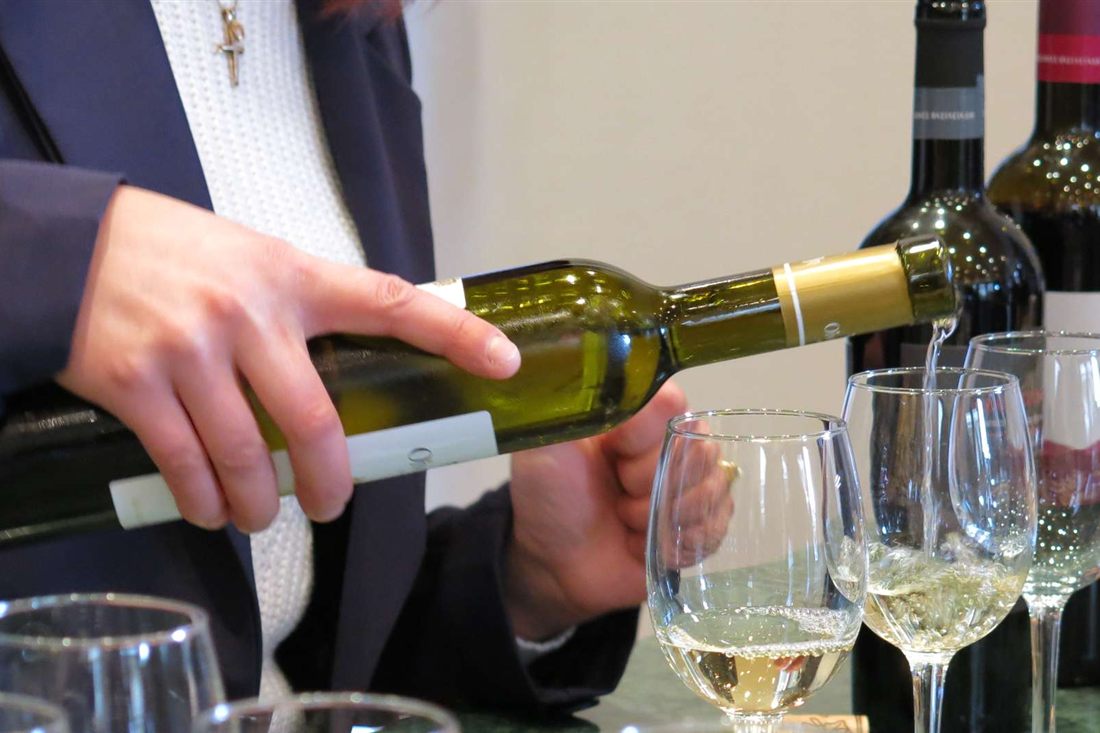
A Troodos wine tour takes you up from the coast of Cyprus into the Krasochoria, the wine-growing villages on the Troodos slopes, for tastings of native grapes, sweet Commandaria and village food. Find more trip ideas on Greece Tours.
Below you will find the bookable tours, the villages and wineries, the grapes, the spirits, the food, the harvest festivals and the practical plan.
What is a Troodos wine tour?
A Troodos wine tour is a guided day in the wine villages on the southern slopes of the Troodos Mountains in Cyprus. It visits family wineries, tastes local grapes and the sweet Commandaria, and stops for a village lunch, with pick-up from the coastal resorts.
The Troodos range rises in the middle of Cyprus, and its lower slopes face south towards Limassol and the sea. Here the vineyards climb from about 700 metres to 1,500 metres, and stone villages sit among the vines.
Locals call these places the Krasochoria, the wine villages. The tourism site My Troodos counts twenty of them and says they hold the greatest concentration of wineries on the island.
A Troodos wine tour links three or four of these stops in one day, and the route changes with the operator. The Vino Venture, for example, picks guests up in Protaras, Ayia Napa, Larnaca, Limassol or Paphos, visits three wineries in the hills and stops for a meze lunch in a village.
The tastings mix old and new. Guests try wines from native grapes such as Xynisteri, Mavro and Maratheftiko next to Shiraz and Cabernet Sauvignon, and the Vino Venture includes a tasting of Commandaria.
Our Cyprus tours page places this day next to the boat trips, ancient sites and mountain tours of the rest of the island.
Which Troodos wine tour options can you book?
GetYourGuide sells a food and wine tasting tour with lunch, a villages and wineries tour, a jeep tour and a 4×4 tour with wine tasting, and scenic Troodos tours with tastings. Viator adds a Kourion, Kolossi and wine traditions tour, a 10-wine tasting from Larnaca and a halloumi workshop.
The food and wine tasting tour with lunch leads the GetYourGuide list for the Troodos. It combines food and wine tastings in the Troodos with lunch, and GetYourGuide lists it under Limassol.
The villages and wineries tour focuses on the Troodos villages and their cellars. Cyprus Taste Tours also runs the Troodos Village Venture, a rural food and wine day in the mountains. Cyprus Taste Tours, a local firm founded in 2011, runs a similar day called the Vino Venture, with three award-winning wineries, more than 18 wines to taste and a full meze lunch.
Off-road fans pick a jeep. GetYourGuide sells a jeep tour from Paphos with wine tasting and a 4×4 tour with a free tasting, and both combine an off-road drive with a wine tasting.
Shorter formats exist too. A scenic Troodos tour listed under Omodos includes a tasting, a villages tour from Paphos adds a complimentary tasting, and a gourmet tour samples wine with local sweets, smoked meats and jams.
Viator lists a tour from Paphos to Kourion and Kolossi Castle with a focus on wine traditions, a tasting of ten Cypriot wines plus one with transfers from Larnaca, and a wine tasting at your villa. Its halloumi-making workshop in the Troodos completes the food side of any Troodos wine tour.


Which Krasochoria villages does a Troodos wine tour pass?
The Krasochoria are the wine villages on the southern Troodos slopes above Limassol and Paphos. Omodos, Koilani, Vasa, Vouni, Pachna, Lofou, Arsos, Potamiou, Agios Amvrosios and Malia are among them, each with vineyards, old wine presses and stone houses.
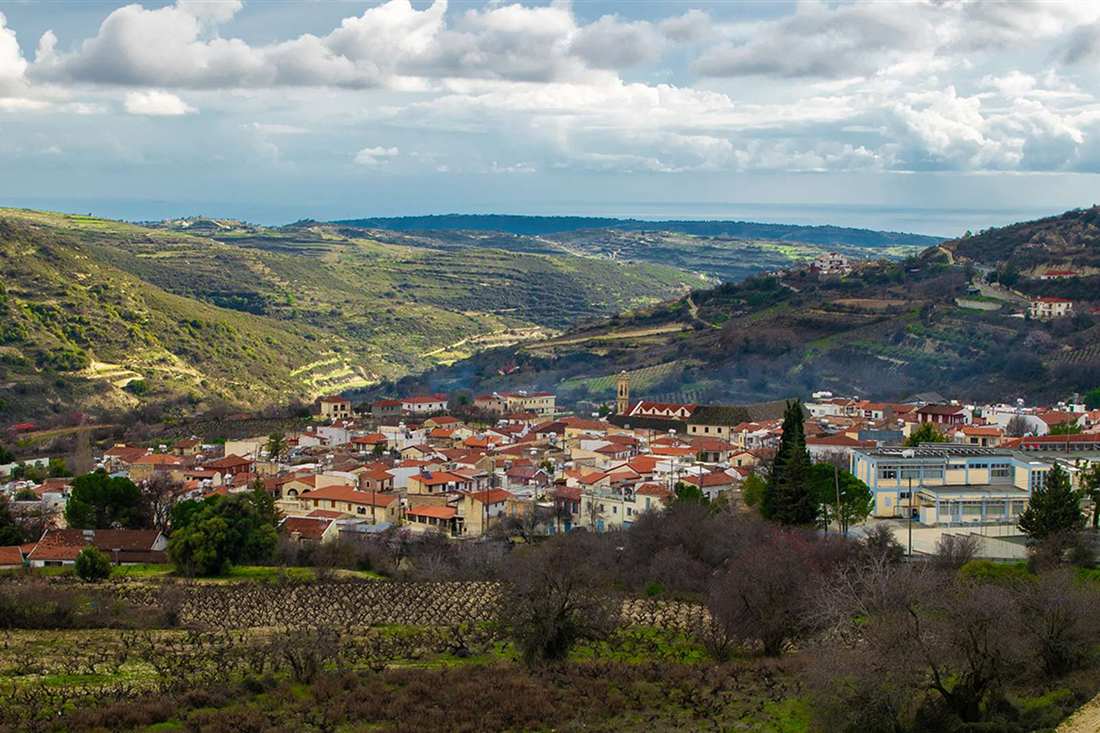
Lofou stands on a hilltop at 780 metres, a name kept from Byzantine times. Its cobbled lanes lead to a 19th-century church of the Annunciation, an agricultural museum in the old school and the Elitji fountain of 1842.
Vouni lies at 800 metres among stone houses with wooden doors. Its highest point, Moutti tou Afamii, reaches 1,153 metres, and the village keeps a wine museum, a Byzantine museum and an old olive press. Its land sits between two rivers, the Chapotami to the west and the Kryos Potamos to the east.
Arsos clings to the slopes of Mount Laona at 850 metres. My Troodos calls it one of the largest wine-producing villages, and a nature trail there passes six medieval fountains along the river.
Pachna, at 745 metres, sits among four hills, and My Troodos describes it as the largest wine village of the island, also known for dairy products. Koilani, at 820 metres on the Kryos river, keeps a viticulture museum, and Malia, 34 km north-west of Limassol, houses one of the island’s largest wineries, run by the KEO group.
A Troodos wine tour rarely covers all of them in a day. Operators pick two or three villages and the wineries between them, so each trip has its own map.
Which grapes will you taste on a Troodos wine tour?
Mavro, the dark grape planted across Cyprus, and the white Xynisteri lead the tastings. Native Maratheftiko, Lefkada, Promara, Spourtiko and Yiannoudi follow, next to international grapes such as Shiraz, Cabernet Sauvignon and Chardonnay.
Mavro leads the plantings on the island. Its name means “black” in Greek, after its dark skin, and it gives both red wines and the base for Commandaria.
Xynisteri is the white partner, and Kyperounda Winery grows it in its vineyard at 1,400 metres next to Chardonnay and Cabernet Sauvignon.
The native revival is the story of the last decades. Akis Zambartas, an oenologist at KEO and later the founder of Zambartas Wineries, re-discovered 12 native Cypriot grape varieties, recorded them, planted them and made wine from them. Among them, Maratheftiko, Lefkada, Promara, Spourtiko and Yiannoudi stand out.
Maratheftiko is a native red. Aes Ambelis Winery grows it with Shiraz and Chardonnay, and Zambartas names it first among the revived grapes, so a Troodos wine tour that visits either cellar pours it.
Altitude shapes the taste of the wines on a Troodos wine tour. Oenou Yi in Omodos describes vines on white, rocky soils between 800 and 1,060 metres, with fruit that develops a savoury flesh, a rich structure and bright acidity, and Vlassides grows its grapes on calcareous soil between 700 and 1,100 metres.
Why do grapes grow well on the Troodos slopes?
Altitude, poor soils and a dry climate give the Troodos grapes their character. Vines grow from 700 to 1,500 metres on calcareous, volcanic and rocky white soils, with cold winters and dry summers that keep yields low.
Height brings freshness. Choose Your Cyprus notes that the climate of the Troodos tops, at around 1,400 metres, supports a wider range of grape varieties.
The soils vary from cellar to cellar. Vlassides farms calcareous soil, Tsiakkas works poor volcanic soils in Pelendri, Santa Irene roots its oldest vines in the schist of the diabase dyke, and Oenou Yi in Omodos grows on white, rocky ground that gives the wines mineral notes.
Low yields matter to quality. Tsiakkas explains that the cold winters and dry summers, together with the poor soils, give fewer grapes per hectare, which it needs for quality wine.
History helped too. In the late 19th century the phylloxera epidemic destroyed the vines of mainland Europe, while Cyprus, an island with strict quarantine controls, remained unaffected. Demand for Cypriot grapes and wines rose, and the island enjoyed a small boom.
What is Commandaria?
Commandaria is the sweet amber wine of the Troodos foothills, made from sun-dried Mavro and Xynisteri grapes. It is the oldest named wine still made, won the first recorded wine competition in the 13th century, and features in the Vino Venture tasting.
The wine takes its sweetness from the sun. Growers lay the picked grapes out to dry, which concentrates the sugar, and the finished wine joins natural sweetness with high alcohol, close in style to a passito.
The fame of the Commandaria poured on a Troodos wine tour is old. Under the Lusignan kings, Commandaria won the Battle of the Wines, a tasting staged by the French king Philip Augustus in the 13th century and recorded in a poem by Henry d’Andeli in 1224.
The name points to the knights of the Crusades, who held a commandery in the Limassol hinterland, and the wine comes from a set group of villages in the foothills. On a Troodos wine tour, the Linos Winery tasting described by one Vino Venture guest served what the guest called the world’s oldest named wine.
Wineries in the high villages also make it. The Tsiakkas Winery in Pelendri produces wines, Commandaria and Zivania from its mountain vineyards.
Ask for a small glass at the end of the tasting, because Commandaria is rich and strong, and buy a bottle at the cellar door if you like it.
Which wineries does a Troodos wine tour visit?
A Troodos wine tour visits two or three family wineries. Vlassides in Koilani, Zambartas in Agios Amvrosios, Kyperounda, Ktima Gerolemo and Oenou Yi near Omodos, Tsiakkas in Pelendri, Aes Ambelis, Santa Irene and Vouni Panayia all receive guests.
Vlassides Winery is a classic first stop on a Troodos wine tour. Sophocles Vlassides founded it in 1998, and the building sits between Koilani and Vouni in a vineyard called Koloni, just south of the Troodos peaks.
Zambartas Wineries opened in 2006 in Agios Amvrosios, among the wine villages of Limassol. Marcos Zambartas, trained as a winemaker in Australia, now runs it with his wife Marleen, and it welcomes visitors on weekdays and weekends all year.
Around Omodos, Ktima Gerolemo sits about 1 km north of the village at 900 metres and shows guests its organic vineyard, while Oenou Yi, the Vassiliades estate, works the vineyards above the village.
Vouni Panayia Winery greets guests at the entrance of Panayia with a tasting room, a restaurant, a short film on winemaking and a small museum. The Vino Venture guest quoted above also tasted at Monolithos Winery and Constantinou Winery on the same day.
Each Troodos wine tour picks its own mix, so check which wineries your day includes and the number of wines the price covers.
Why does a Troodos wine tour stop in Omodos?
Omodos is a famous wine village of the Troodos foothills. It keeps a medieval wine press, the monastery of the Holy Cross, cellars that sell Zivania and wine, and two wineries just outside the village, so it suits a stop on a Troodos wine tour.
The village keeps its old character, with stone houses, cobbled streets and green surroundings. My Troodos calls it a popular stop for wine lovers and culture lovers alike, and it lies 80 km from Nicosia.
The monastery of Timios Stavros, the Holy Cross, stands in the centre. It holds woodcarvings and icons, a museum of the national liberation struggle and a centre that keeps alive the local narrow-knit lace.
Wine sits around every corner of the village. Guests on a Troodos wine tour find small local wineries and a medieval wine press in the lanes, and the shops sell wine, Zivania and arkatena, a local bread, next to handmade narrow-knit lace.
On 14 September, Omodos holds one of the biggest religious fairs of its year, a three-day feast of the Holy Cross, when vendors fill the square in front of the monastery.
Two estates sit just outside. Ktima Gerolemo works its organic vines at 900 metres a short drive north of the village, and Oenou Yi grows grapes between the summits of Laona and Afamis, so a Troodos wine tour can pair the village with a proper winery visit.
Which other wine villages can a Troodos wine tour include?
Beyond Omodos, a Troodos wine tour can pass Potamiou on the Ha Potami river, Pachna among its four hills, Agios Amvrosios with its ecological winery, and Malia, a village once shared by Greek and Turkish Cypriots, with a large KEO winery.
Potamiou rises at 670 metres on the west bank of the Ha Potami river, with vineyards and orchards of apple, pear, plum and peach. Its church of Agia Marina dates from the mid-16th century, and the ruins of the chapel of Agios Mnason, dated to about 300 AD, sit above catacombs that hold a relic of the saint. A Venetian bridge links the village to its neighbours.
Pachna takes its name from its setting among four hills. Its church of St George was built in the 18th century on the site of an older monastery, and its growers keep traditional grape varieties known locally as “black” and “sour”.
Agios Amvrosios lies north-west of Limassol among vineyards. Besides the Zambartas cellar, it has an ecological winery, a 14th-century church of Saint Ambrosios and an 11th-century chapel of Saint George. Nearby, the Paramali river captures water from the Kryos river and joins the Kouris, a natural process called river capture.
Malia sits among vineyards 34 km north-west of Limassol. Turkish Cypriots once lived in the large mansions of the upper quarter and Greek Cypriots in the small houses below, and a mosque and the basilica church of Panagia Eleousa still mark the two halves. The KEO group runs one of the largest wineries on the island here, a fitting last stop for a Troodos wine tour on the Limassol side.
Each of these villages adds a different chapter to a Troodos wine tour, from Byzantine churches to the history of a divided village.
Which Pitsilia wineries sit high in the Troodos?
The Pitsilia hills hold Kyperounda Winery at 1,400 metres, the Tsiakkas Winery in Pelendri with a vineyard at 1,500 metres, Santa Irene in Farmakas at about 1,300 metres and Aes Ambelis near Kalo Chorio Orinis.
For a Troodos wine tour at altitude, Kyperounda Winery is the landmark. It opened in 1998 in the village of the same name. Its four-hectare vineyard sits at 1,400 metres, and the winery calls it the highest in Europe, with a micro-climate it compares to Bordeaux.
The building works on three levels so that gravity moves the grape juice gently. Its underground cellar holds 250 oak barrels of 225 litres, and the winery can produce about 200,000 bottles a year.
The Tsiakkas Winery dates from 1988 in Pelendri. Cold winters, dry summers and poor volcanic soils keep yields low, and its Petralona vineyard climbs to 1,500 metres.
Santa Irene is a smaller story. Daniel Anastasis, who left Farmakas at 16 and made his fortune in South Africa, came home and built a winery among vines that reach about 1,300 metres, with the oldest planted 150 years ago. It can produce up to 50,000 bottles a year.
Aes Ambelis stands on the slopes of Kalo Chorio Orinis in the Nicosia district, 28 km south-west of the capital. Its tasting hall overlooks the barrel cellar on one side and the Pitsilia mountains on the other. Guests can follow a winery tour from grape to glass and pair the tasting with artisanal cheese and charcuterie from local producers, a rich close to a Troodos wine tour on the Nicosia side.
What is Zivania?
Zivania is the clear grape spirit of Cyprus, distilled from grape pomace and local dry wine made from Xynisteri and Mavro. It runs at about 45% alcohol, never more than 60% by law, and the EU has protected its name since 1989.
The name comes from zivana, the word for pomace in the Greek dialect of Cyprus. The spirit is colourless, with a light smell of raisins, and it has no sugar and no acidity.
Its origins are unclear. One view holds that monks from Mount Athos brought the method in the 15th century, while another links it to the Venetian rule of the island at the end of that century.
Certain villages shared a single still, called the lampikos, and the first spirit to run from the still was set aside for rubbing sore muscles rather than drinking. In the Troodos villages, people still use it as a folk remedy for colds and toothache.
Cypriots drink it ice cold in summer, with dried nuts, loukoumi, the grape-and-nut sweet soutzoukos or cured meats such as lountza. In certain villages, cinnamon goes into the spirit and turns it red, and aged Zivania is kept for special occasions and guests. Vasa Koilaniou keeps a Zivania museum and its distilleries, so a Troodos wine tour through Vasa can show the whole process.
What food comes with a Troodos wine tour?
A Troodos wine tour pairs the wine with a village meze lunch, halloumi and other cheeses, cured meats, arkatena bread, sweets made from grape must such as soutzoukos and palouzes, and loukoumi. Gourmet tours add rose products, jams and smokehouse meats.
Lunch is the centre of a Troodos wine tour day. The Vino Venture stops in a mountain village for a full traditional meze, and its operator adjusts the menu for vegetarian, vegan and gluten-free guests.
Grape must turns into sweets. The wine villages make soutzoukos and palouzes from grape juice, and Potamiou adds kiofterka to the list.
Baked goods follow. Koilani is known for arkatena, crunchy rusks made with yeast, and for the sweet pastries called glitzia.
The gourmet tour from Paphos builds a whole day on food. It visits Laneia, the rose factory at Agros, a traditional smokehouse, a jam house and Ourania Delights in Foini, with tastings of wine, homemade sweets, smoked meats, jams and loukoumi. Lunch on that tour is not included.
Cheese completes the Troodos wine tour table. Pachna is known for halloumi and other dairy products, and Viator sells a halloumi-making workshop in the Troodos for guests who want to make their own.
When are the grape festivals in the wine villages?
The grape festivals fall at harvest time. Vasa holds its Grape Fest in mid-September, Lofou and Arsos at the end of September, and Koilani on the first Sunday of October, each with grape-must sweets, local wine and folk music.
The festivals celebrate the end of the harvest. Villagers show how they turn grape juice into soutzoukos and palouzes, serve the sweets with local wine and fill the square with folk dancing and music.
Lofou holds its Grape Festival at the end of September, with wine tasting and a programme of folk entertainment. Arsos holds its Grape Feast at the same time, and it adds a religious fair on 14 November for Apostle Philippos.
Vasa Koilaniou celebrates in mid-September, and Koilani closes the season on the first Sunday of October.
Plan a Troodos wine tour in September or early October to catch one of these feasts. Ask your operator whether the route passes a festival village on your date, since the stops change with the day.
How old is winemaking in Cyprus?
Winemaking in Cyprus goes back about 5,500 years. Clay flasks from Erimi, dated to 3500 to 3000 BC, held wine, and a Bronze Age winery stood near Pyrgos. A shipwreck of about 2300 BC carried more than 2,500 amphorae.
The proof behind the history told on a Troodos wine tour came late. Archaeologist Porphyrios Dikaios dug at Erimi between 1932 and 1935, and the flask fragments sat unwashed in the Cyprus Museum stores for decades. In 2005, Italian researchers found traces of tartaric acid, a component of wine, in 12 of 18 samples.
Near Pyrgos, a Bronze Age perfumery of 2500 to 2000 BC stood next to an olive press, a winery and copper workshops, with wine containers and grape seeds in the ground.
The trade followed. A shipwreck of about 2300 BC, found in 1999, carried over 2,500 amphorae along the route between Greece and Egypt.
Later centuries were uneven. Wine production declined under Ottoman rule, which writers blamed on religious custom and heavy taxes, and it revived after the British took over in 1878. The “big four” producers, KEO, ETKO, SODAP and LOEL, led the industry through the 20th century and survive today. Early in that century, demand came from local drinkers and from the British and French forces in the Middle East, and Cyprus brandy became a major product.
Can you join a jeep or 4×4 wine tour in the Troodos?
Yes. GetYourGuide sells a Troodos jeep tour from Paphos with wine tasting and a 4×4 tour with a free tasting. Both pair an off-road day in the mountains with a wine tasting.
A jeep Troodos wine tour suits guests who want scenery as much as wine.
The jeep tour from Paphos ranks second among the Troodos wine products on GetYourGuide, behind the food and wine tour with lunch.
The 4×4 tour from Paphos includes its wine tasting in the price, and a separate guided safari heads for Kykkos Monastery for guests who prefer churches to cellars.
Wine and driving do not mix, so the jeep format has one clear benefit: the guide drives, and guests taste.
Which village museums show the history of wine?
Vouni has a wine museum, Koilani a viticulture and ecclesiastical museum, Vasa a Zivania museum, Lofou an agricultural museum in its old school, and Omodos a medieval wine press. Vouni Panayia Winery adds its own small museum.
The museums turn a Troodos wine tour into a history lesson. They show how the villages made wine and spirits before the modern wineries.
Vouni keeps its wine museum alongside a Byzantine museum, a folk art museum and an old olive press. Koilani adds a viticulture museum, an olive mill and the church of Monogenis, and its history reaches back to Roman times.
Vasa Koilaniou shows the stills and distilleries of Zivania, and its name comes from the ancient Greek word for a wooded place. Lofou houses its agricultural museum in a neoclassical school building, and the village also keeps an old oil press.
At Vouni Panayia Winery, a short film follows the process from planting the vines to bottling, and a traditional museum sits beside the tasting room.
What is included in a Troodos wine tour?
A full Troodos wine tour includes door-to-door transport, a local guide, tastings at two or three wineries and, on the Vino Venture, entrance and tasting fees, a full meze lunch and drinks. Shorter gourmet tours cover tastings but leave lunch to the guests.
The Vino Venture sets the benchmark. Its price covers any entrance fees, tasting fees, free door-to-door transport and a full meze lunch with drinks, and Cyprus Taste Tours promises no surprise tasting or entrance fees on any tour.
The guide is part of the value. The Vino Venture uses a bilingual local guide who explains the winemaking process and the native grape varieties, takes photos during the day and sends them to the guests by email afterwards.
Guests also leave with homework. The guide hands over lists of foods to try and places to visit, and the tour builds in the chance to buy wine at the cellars.
The gourmet Troodos wine tour from Paphos works differently. It includes hotel transfers, the vehicle and driver and the tastings of wine, sweets, smoked meats, jams and loukoumi, while lunch and extra drinks cost extra.
Read the inclusions line by line before you book, and compare the number of wineries, the lunch and the transfers rather than the headline alone.
How do you plan a Troodos wine tour?
Book a guided day with door-to-door pick-up from your resort, whether that is Protaras, Larnaca or Paphos. Pick a small group, tell the operator about dietary needs, and pack a light jacket, sun protection, water and comfortable shoes.
Transport is the key to a relaxed Troodos wine tour. The Vino Venture includes free pick-up and drop-off from a place of your choice, and the gourmet tour from Paphos runs in an insured, air-conditioned vehicle with a professional driver.
Small groups make the day personal. Cyprus Taste Tours caps its groups at 7 guests, and its tours offer free cancellation up to 24 hours before the start.
Know the rules of a Troodos wine tour. On the gourmet tour, wine is served only to guests aged 18 and over, and the operator advises motion-sickness tablets for guests who feel the winding mountain roads.
Dress for the hills on a Troodos wine tour. Temperatures drop in the mountains in spring and autumn, so pack a light jacket, plus sunglasses, a sun hat, sunscreen and water for the day. A Troodos wine tour also involves walking in villages, so wear comfortable shoes.
Leave room in the bag. The Vino Venture lets guests buy wine at the cellars, so plan how to bring the bottles home.
What do travellers ask about a Troodos wine tour?
How long is a Troodos wine tour?
A full day. The Vino Venture includes pick-up from your hotel, three winery stops and lunch.
What number of wines do you taste on a Troodos wine tour?
The Vino Venture pours more than 18 wines at three wineries, including Commandaria.
Is lunch included on a Troodos wine tour?
It depends on the tour. The Vino Venture includes a full meze lunch, while the gourmet tour from Paphos leaves lunch to the guests.
Can vegetarians join a Troodos wine tour?
Yes. Cyprus Taste Tours adapts its menus for vegetarian, vegan and gluten-free guests.
Can children join a Troodos wine tour?
Ask the operator. On the gourmet tour, wine goes only to guests aged 18 and over.
Do you have to buy wine on a Troodos wine tour?
No. Buying is optional, though the Vino Venture gives guests the chance to buy at the cellars.
Which villages does a Troodos wine tour visit?
The Krasochoria, such as Omodos, Koilani, Vouni, Vasa, Pachna, Lofou and Arsos.