
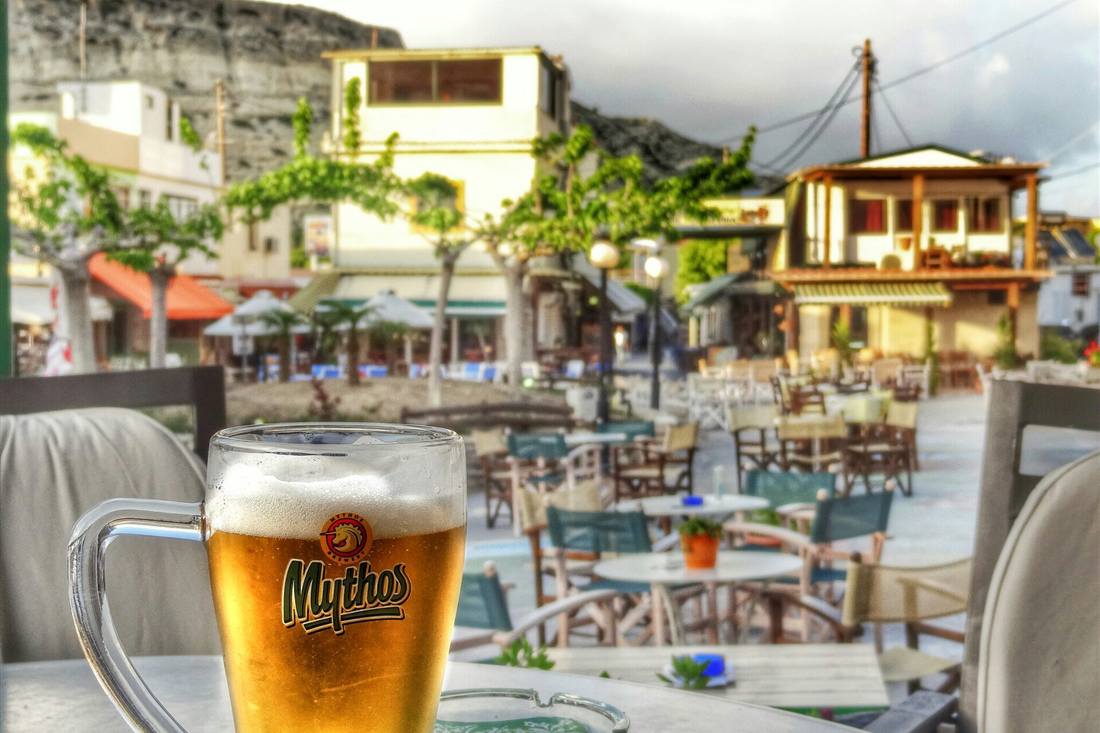
Crete Beer Tasting
A Crete beer tasting is a guided session of local craft beer, brewery visits and Cretan meze, and every tour on sale starts from Chania in the west of the island. It sits among the food and drink experiences listed by Greece Tours, next to wine and olive oil tastings.
Four tours are on sale: a brewery tour with a cave visit, a sunset craft beer and food walk, and two private tours that add lunch or an olive oil factory. The best-known local brewer makes Charma beer near Chania. Every Crete beer tasting pairs small pours with water and food, and a transfer or taxi replaces the car.
What is a Crete beer tasting?
A Crete beer tasting is a guided session where visitors sample local craft beers, learn how they are brewed and eat Cretan meze with them. All four tours on sale start from Chania, in west Crete.
The format sits between a brewery visit and a food tour. On a brewery-based Crete beer tasting, a guide shows the brewhouse, explains the ingredients and fermentation, and pours a flight of small glasses in a tasting room. On the walking version, the group moves through Chania old town and tastes craft beer with local food. Both versions pair the beer with food, so no glass arrives on an empty stomach.
Craft beer is a young trade on Crete. The island is better known for wine, olive oil and tsikoudia, and most tavernas still pour one of the big national lagers. A Crete beer tasting shows the other side of that picture: small batches brewed on the island rather than in a national plant. It fits a holiday base anywhere on Crete, and Chania is the easiest starting point for it.
Which Crete beer tasting tours are on sale?
Four Crete beer tasting tours start from Chania: a brewery tour with a cave visit, a sunset craft beer and food walk, a private brewery tour with lunch, and a private olive oil and brewery tour.
The tours form two groups. The first two carry no private label and run as group tours, so guests share the day with other travellers. The last two are private tours, booked for one party only, which suits couples, families and friends who want their own pace and their questions answered. Each Crete beer tasting listing names what it includes, so the tour title is the clearest summary of the day.
Pickup points, start times, the number of beers poured and the minimum age all vary by operator, and the listing is the source for them. Check the tour listing for each of these details before booking, and read the cancellation terms. Hotels in Chania town and along the coast to the west sit closest to the start points. The list below sets out the four tours by what their titles promise.
- Brewery and cave tour – a group tasting day.
- Sunset beer and food tour – an evening Chania walk.
- Private brewery tour – one party, with lunch.
- Private olive oil and brewery tour – two producers, with a meal.
Where is the Charma brewery near Chania?
The Cretan Brewery makes Charma beer, also written Harma, in Zounaki in the Platanias municipality, a short drive west of Chania. It is the best-known brewery near Chania, an easy stop for a Crete beer tasting.
Visitors see the brewhouse from a viewing area, so the tanks and brewing vessels stay in view while the staff work. After the walk-through, guests move to a tasting room where the beers are poured. The setting is rural, with olive groves around the village, which gives a Crete beer tasting here a different feel from a bar in town. For exact addresses and opening times, check the tour listing.
Charma is not the only brewer on the island. Small Cretan craft breweries operate in other parts of Crete, and the Greek craft scene has grown fast in recent years. Travellers who have tried a flight in the Athens craft beer bars will recognise the styles. A Crete beer tasting at a small island brewery shows the same styles on a smaller, rural scale, near the villages of the west.
How does a brewery tour run?
A brewery tour follows a clear order: pickup or meeting point, a walk-through of the brewhouse, an explanation of ingredients and fermentation, then a Crete beer tasting in the tasting room with food on the side.
The talk starts with the four raw ingredients: water, malted barley, hops and yeast. The guide explains how the malt is mashed in hot water to release sugars, how hops are boiled in for bitterness and aroma, and how yeast turns the sugar into alcohol and carbon dioxide. Seeing the vessels while hearing each step makes the process easy to follow on a Crete beer tasting, even for guests new to brewing.
The tasting follows the walk-through. Samples arrive in small glasses, lightest first, so each beer on a Crete beer tasting is judged on its own terms before a darker, stronger one arrives. On the brewery tour with a cave visit, the cave stop adds an outdoor break to the day, away from the tanks and the tasting room. The order of stops varies by tour, so check the tour listing.
Which beer styles appear on a Crete beer tasting?
A Crete beer tasting covers the core craft styles: crisp lagers and pilsners, fruitier ales, wheat beers, amber or red ales, hop-forward IPAs and dark stouts or porters. The line-up varies by day.
The main split in beer is the yeast. Lagers are bottom-fermented at cool temperatures, which gives a clean, crisp taste; pilsner is a pale, hoppy lager. Ales are top-fermented at warmer temperatures, which brings out fruitier aromas and a fuller body. Every style on a Crete beer tasting falls on one side of that line, and the guide names the side for each glass. That split shapes the whole flight.
The styles below form a short glossary for the tasting room. Colour moves from pale gold to near black down the list, which matches the order in which the glasses arrive. Not every brewery pours every style, so the list covers what a guest can meet rather than a fixed menu. Stronger beers sit toward the dark end, so the last glasses call for slower sips and a longer pause.
- Lager and pilsner – pale, crisp and clean.
- Wheat beer – cloudy, with banana or clove notes.
- Amber or red ale – copper, with caramel malt.
- IPA – hop-forward, with a bitter finish.
- Stout and porter – dark and roasted.
How is each beer tasted?
Each beer on a Crete beer tasting is tasted in four steps: look at the colour, clarity and head; smell the malt, hops and yeast; taste for sweetness, bitterness, body and carbonation; then note the finish.
The method is simple. Hold the glass against the light first and note whether the beer is clear or hazy, and how thick the foam sits. Swirl gently, then smell before drinking, because most of what the tongue reports later starts in the nose. Take a small sip and let it move across the whole mouth, since body and carbonation show up only when the beer touches the full palate.
The order of the flight matters too. A Crete beer tasting runs from light to dark, so a delicate lager is not tasted after a roasted stout. Pours stay small, which keeps the palate sharp and the alcohol low across the session. A glass of water and a piece of bread between samples reset the taste buds before the next beer, and brief notes help guests remember their favourite glass.
Which Cretan meze pairs with each beer style?
Lagers pair with dakos and olives, wheat beers with kalitsounia, amber ales with graviera and apaki, IPAs with snails and staka, and stouts with sfakiani pita. Each pairing on a Crete beer tasting matches rich food to strong beer.
Cretan food rests on olive oil, cheese, barley and herbs, and each of those meets beer well. Dakos, the barley rusk topped with tomato and mizithra cheese, has an acidity that a crisp lager cuts through. Graviera, the hard local cheese, and apaki, the smoked pork of the island, stand up to the caramel malt of an amber ale. The full range of dishes sits on the Cretan food page.
The richer dishes need stronger beer. Staka, a thick and buttery cream, and chochlioi boubouristi, snails fried face-down in olive oil with rosemary, meet the bitterness of an IPA, which cuts through the fat. Sfakiani pita, a thin cheese pie drizzled with honey, meets the roast of a stout. A Crete beer tasting with meze on the table turns these pairings into a full meal rather than a row of glasses.
- Lager or pilsner – dakos and green olives.
- Wheat beer – kalitsounia cheese pies.
- Amber or red ale – graviera cheese and apaki.
- IPA – staka and chochlioi boubouristi.
- Stout or porter – sfakiani pita with honey.
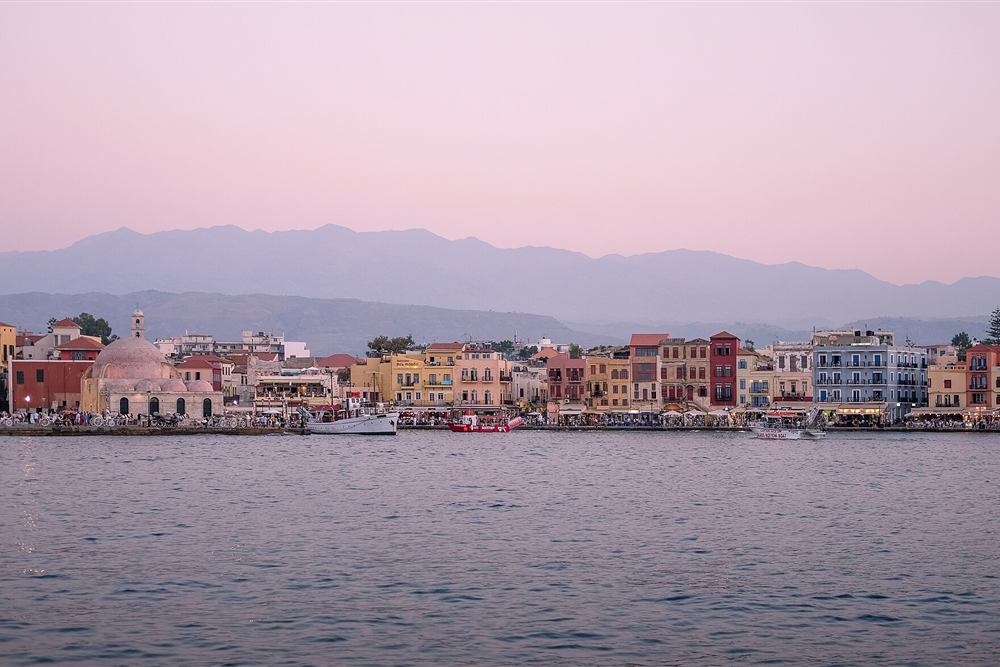
What happens on the Chania sunset beer walk?
The sunset craft beer and food tour walks through Chania old town and along the Venetian harbour at dusk, with craft beer and local food along the way. It is the only walking Crete beer tasting on sale.
The route covers the lanes of the old town, where Venetian and Ottoman buildings line narrow streets, and reaches the harbour as the light fades over the Venetian lighthouse. The history of those streets is set out on the Chania old town page. The pace is slow, with standing and walking between stops, so comfortable flat shoes matter more than fitness on this evening outing through the paved streets of the town.
The food side of this Crete beer tasting links it to the Chania food tour, which covers bakeries, markets and tavernas in the same streets. Here the focus is the pairing, with each beer served alongside local food. The evening timing suits travellers who spend the day on the beach and want dinner and a tasting in one outing. For the start time and meeting point, check the tour listing.
Why pair the Vouves olive tree with a brewery?
This private Crete beer tasting pairs olive oil, an ancient Cretan craft, with brewing, a newer craft. The route runs through Ano Vouves, home of the Olive Tree of Vouves, one of the oldest olive trees in the world.
The Olive Tree of Vouves is estimated at over 2,000 years old, and some estimates place it above 3,000. It is a protected natural monument, with a small olive museum beside it. Its trunk is thick, twisted and hollowed with age. Standing next to it gives the day a sense of scale that a factory tour does not provide, and it links the oil to the land it comes from.
The factory stop shows how olives become oil, from the harvest to the press. The brewery stop adds beer, and a meal ties the two crafts together. Travellers who want the olive side in more depth can book the Chania olive oil tour on another day. As a private tour, this Crete beer tasting runs for one party only, which keeps the questions and the pace in the hands of the group.
How does beer compare with raki and Cretan wine?
Beer is the newcomer among Cretan drinks. Tsikoudia, the grape-pomace spirit also called raki, is the traditional welcome, and Cretan wine has a long local history. A Crete beer tasting adds a third, younger tradition.
Tsikoudia arrives in small glasses at the end of most meals on the island, and it is strong. A spirit that strong dulls the palate, so it sits apart from any beer flight. Wine has a longer history still, with white Vidiano and Vilana and red Liatiko, Kotsifali and Mandilaria grown across the island. Travellers who want the grape side of the story book a Chania wine tasting on a separate day.
Beer sits apart from both because it is lighter in alcohol and suits food and long evenings. Greek tavernas pour big national lagers such as Mythos, Fix and Alfa, and a Crete beer tasting shows what small brewers do beyond them. Island-hopping travellers can compare the Cretan flight with a Santorini beer tasting, where another island scene pours its own styles. A single holiday leaves room for all three drinks.
Who is a Crete beer tasting for?
A Crete beer tasting suits adults, couples, groups of friends and travellers curious about brewing. The legal drinking age in Greece is 18, and each operator sets its own minimum age, so check the tour listing.
No beer knowledge is needed. The guide explains each style from the start, and the small pours suit light drinkers as well as keen beer fans. The private tours suit groups who want their own pace and guests with food needs that the kitchen has to plan for. Non-drinkers in a group can join the brewery walk-through and the food; check the tour listing for soft drink options.
A tasting fits a beach day in west Crete without strain. Mornings go to the sand at Platanias or the beaches toward Kissamos, and the afternoon or evening goes to the tour. Swim first, shower and eat, then join the Crete beer tasting, because drinking in strong sun dehydrates the body fast. Kissamos lies further west than Platanias, so guests staying there allow extra travel time for the drive to Chania.
Do transfers keep the day safe?
Yes. Never drive after drinking: take the tour transfer or a taxi back to the hotel. Drink a glass of water between beers, eat with every glass and keep the pours small throughout the Crete beer tasting.
Driving over the alcohol limit is illegal in Greece, and the roads of west Crete are narrow, winding and busy in summer, so driving after even a few samples puts lives at risk. Pickup and drop-off vary by Crete beer tasting, so check the tour listing to confirm transport before booking. After the sunset walk, a taxi from Chania old town back to the hotel is simple to arrange.
Heat adds to the effect of alcohol. Crete summers are hot, and a tasting after hours in the sun hits harder than the same beer on a cool evening. Wear a hat and drink water through the day. Pace the flight, finish each small pour slowly and skip a sample at any point. The point of a Crete beer tasting is flavour, not volume, and the small pours serve that aim.
- Transport – a tour transfer or taxi, never a hire car.
- Water – one glass between each beer.
- Food – meze with every sample.
- Pace – slow sips, skip at will.
Is a Crete beer tasting worth it?
Yes. A Crete beer tasting shows a young side of the island that most visitors miss, pairs local beer with Cretan meze and fits easily around beach days, wine visits and olive oil tours in west Crete.
The value lies in the combination. Travellers see a working brewhouse, learn to taste beer with a clear method and eat the food of the island in one outing. The choice between the four tours comes down to format: a group day with a cave, an evening walk in Chania, or a private tour with lunch or with olive oil added. Each version stands on its own, and none requires beer knowledge.
A Crete beer tasting works best as one piece of a longer stay in the west: a beach morning, a wine or olive oil visit on another day and an evening in Chania old town. Book ahead in summer, when groups fill up, and check the tour listing for pickup, age limits and what the tasting includes. Read the listing the day before the tour to confirm the meeting point.
Frequently Asked Questions
Where does a Crete beer tasting take place?
Every Crete beer tasting on sale starts from Chania. The brewery tours head into the countryside around the town, and the sunset craft beer tour walks through Chania old town and the Venetian harbour at dusk.
How old do guests have to be to join a Crete beer tasting?
The legal drinking age in Greece is 18. Each operator sets its own minimum age for a Crete beer tasting, and the rules for younger guests differ between tours, so check the tour listing before booking.
Is transport included on a Crete beer tasting?
Transport depends on the tour, so check the tour listing for pickup and drop-off details. Never drive after drinking: use the transfer where one is included, or take a taxi back to the hotel once the tasting ends.
Which beer styles are poured at a Crete beer tasting?
A flight runs from light to dark: lager or pilsner, wheat beer, amber or red ale, IPA and stout or porter. The beers depend on what the brewery has on tap, with water and bread between glasses.
Can non-drinkers join a beer tour in Chania?
Non-drinkers can join the brewery walk-through, the food and, on the combined tour, the olive oil factory and the Vouves olive tree. Soft drink options vary by operator, so check the tour listing before booking.