
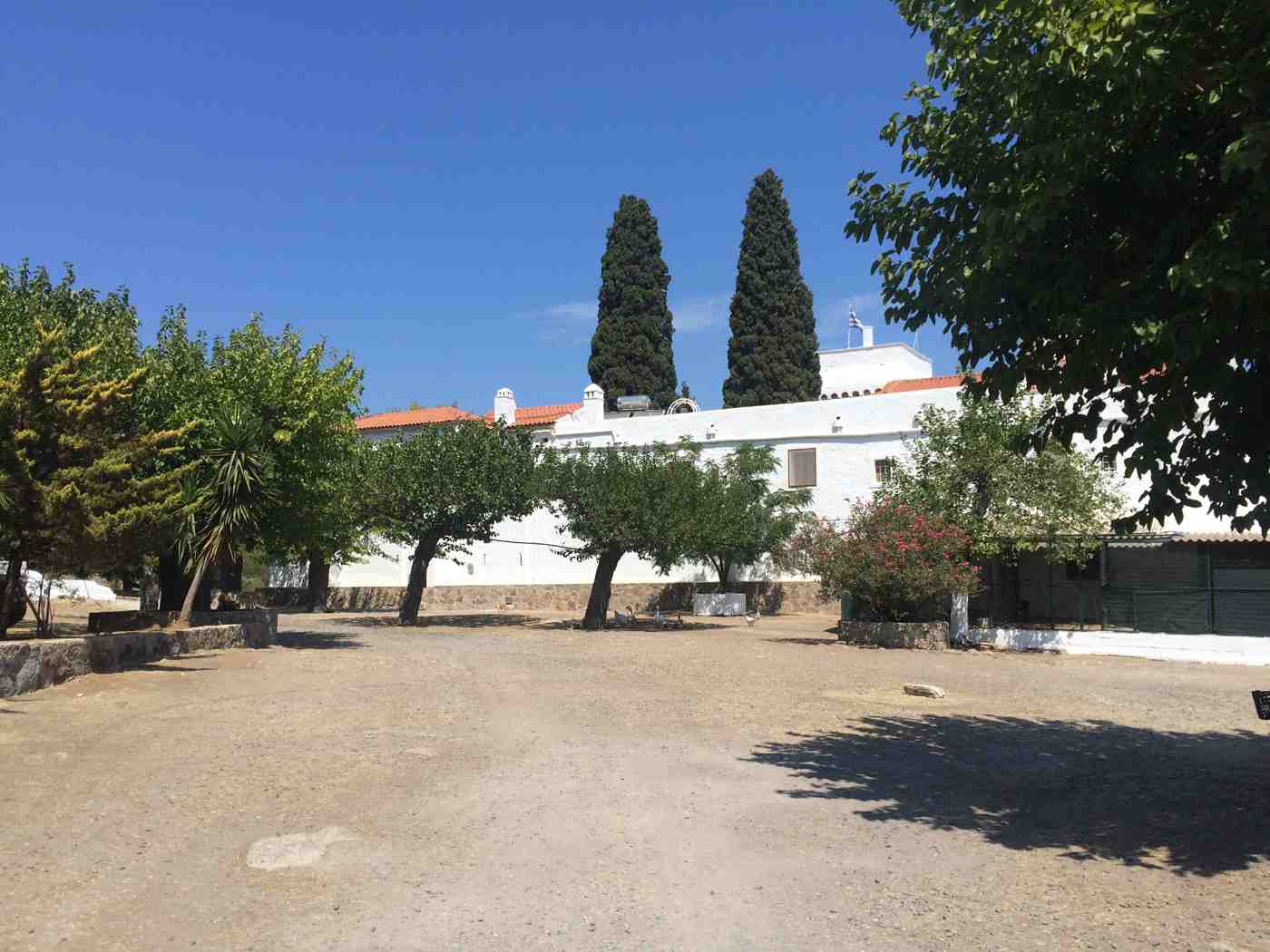
The Monastery of Panagia Chrysoleontissa is one of the most beautiful and historic monasteries on Aegina, standing high in the mountainous centre of the island. Fortified like a small castle, with a crenelated tower and a peaceful, flower-filled courtyard. It was built inland in the seventeenth century to escape the pirate raids that plagued the coast. Inside, its church treasures an exquisitely carved wooden altarpiece, old frescoes and a revered silver icon of the Virgin, while a community of nuns tends the gardens where cypresses, roses and even peacocks add to the sense of calm. Plan the whole trip with Greece Tours.
Set amid superb mountain scenery and just a couple of kilometres from the Monastery of Agios Nektarios, Chrysoleontissa is a rewarding and tranquil place to visit.
This guide covers the Monastery of Chrysoleontissa on Aegina: what it is, where it stands, its history and why it was built inland. The treasures inside its church, its fortified setting and gardens, its great annual festival. How to visit this peaceful hilltop convent.
What is the Monastery of Chrysoleontissa on Aegina?
Chrysoleontissa is a historic monastery on Aegina, dedicated to Panagia Chrysoleontissa, the Virgin Mary.
The Monastery of Panagia Chrysoleontissa is one of the principal religious sites of Aegina, dedicated to the Virgin Mary under the title Chrysoleontissa. It stands on a high, isolated point in the mountainous heart of the island, a fortified complex built to withstand the dangers of past centuries.
It is a working convent, home to a community of nuns who tend its church and gardens and welcome visitors. Famous for its ornately carved altarpiece, its frescoes and its revered silver-clad icon, as well as for the great peace and beauty of its hilltop setting, it is considered one of the island’s hidden gems.
Where is Chrysoleontissa Monastery?
Chrysoleontissa Monastery is in the centre of Aegina, on a high, isolated hill in the mountainous interior.
The monastery occupies a lofty, secluded position in the mountainous middle of the island, deliberately remote and hard to reach in the past. It stands only about two kilometres from the great Monastery of Agios Nektarios, so the two are easily combined on a visit to the island’s interior.
The approach is by a road that climbs up from opposite Agios Nektarios. A walk of around thirty to forty-five minutes uphill or a short drive. The monastery can also be reached on footpaths from the village of Pachia Rachi above the west coast. Its high setting rewards visitors with fine views over the surrounding mountains.
What is the history of Chrysoleontissa Monastery?
According to tradition, Chrysoleontissa was originally by the sea at Leonti but, after repeated pirate raids, was moved inland to its present secure hilltop in the early seventeenth century.
Local tradition holds that the monastery was first founded in the coastal village of Leonti, which lay dangerously exposed to the pirates that raided the Aegean. After being plundered and destroyed no fewer than three times, it was decided in the early seventeenth century to move the monastery to a safer location high in the island’s interior, away from the sea.
In its present form the complex is built like a small fortress. Its crenelated defensive tower dates from 1601, while the main church, or katholikon, was erected later, in 1808. Originally a monastery of monks, it passed to a community of nuns in the twentieth century, who have cared for it ever since, and its long history reflects the turbulent past of the island, told more fully in our guide to Aegina’s history.
What can you see inside Chrysoleontissa Monastery?
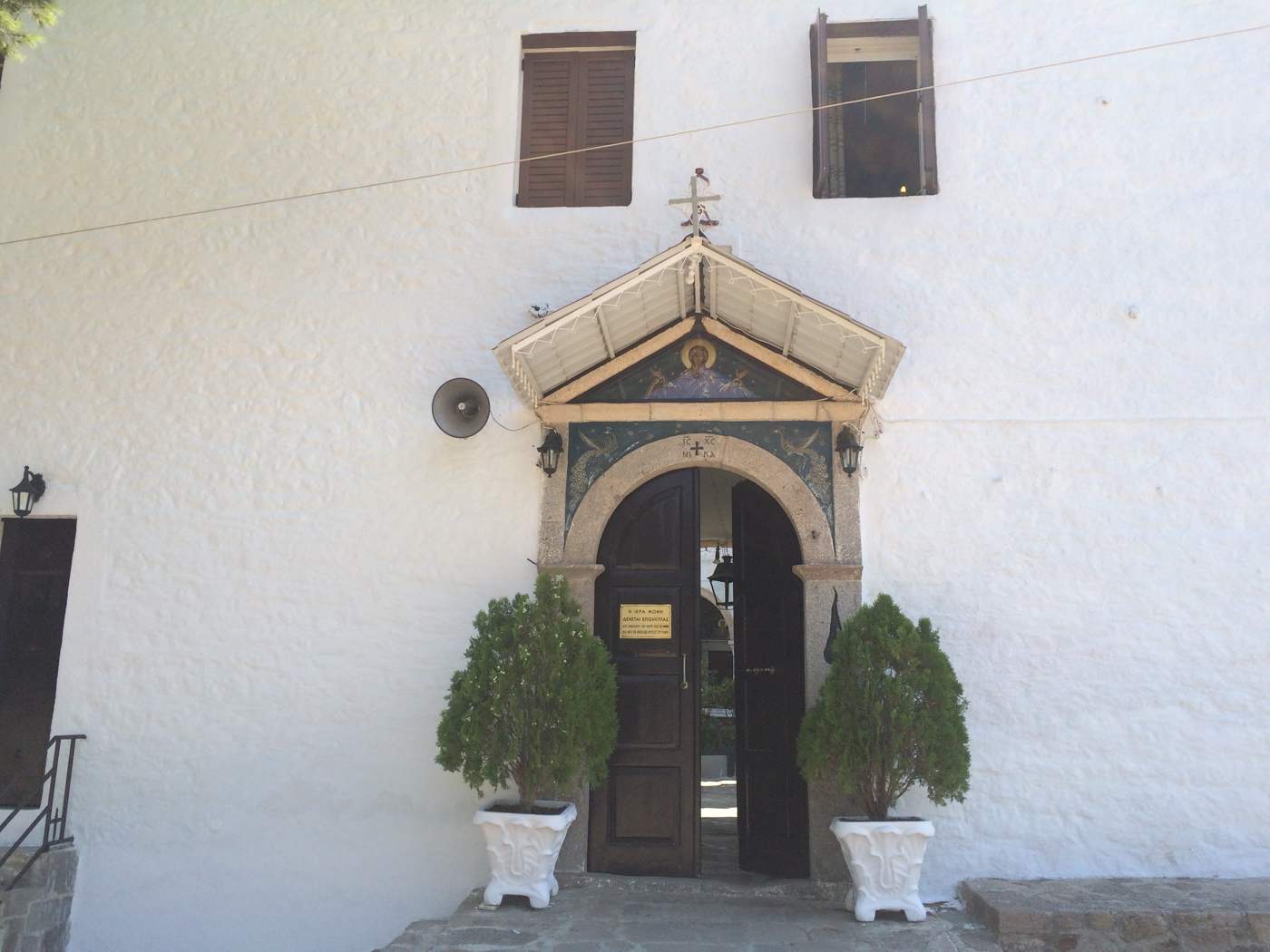
Inside Chrysoleontissa you can see its greatest treasures: an elaborately carved wooden altarpiece, or icon screen, that is a real work of art, old frescoes decorating the church, and the revered silver-plated icon of Panagia Chrysoleontissa, the pride of the.
The church at the heart of the monastery holds its finest treasures. Chief among them is the elaborately carved wooden altarpiece, or iconostasis. An intricate work of art that is one of the monastery’s great glories, along with beautiful old frescoes that decorate the interior.
The most venerated object is the silver-plated icon of Panagia Chrysoleontissa. The revered image of the Virgin from which the monastery takes its name and which is the pride of the community. Together, the carved altarpiece, the frescoes and the holy icon make the interior a place of real artistic and spiritual richness.
What is the setting and courtyard of Chrysoleontissa like?
Chrysoleontissa has a fortified, castle-like form, built square around a courtyard with a crenelated tower.
The monastery is built for defence, square in plan and enclosing a quiet inner courtyard. Crowned by its old crenelated tower. That it resembles a small castle set among the mountains. This fortified form is a reminder of the dangerous age in which it was built.
Within, the atmosphere is one of great serenity. The courtyard is fragrant with roses and shaded by tall cypresses, tended by the nuns, and peacocks and geese wander the grounds. A profound peace prevails, and it is this combination of history, sacred art and tranquil natural beauty that makes a visit so memorable.
When is the festival at Chrysoleontissa Monastery?
The great festival of Chrysoleontissa is held every year on the fifteenth of August, the feast of the Dormition of the Virgin.
The monastery celebrates its principal festival on the fifteenth of August, the feast of the Dormition of the Virgin Mary. One of the most important dates in the Orthodox calendar and especially fitting for a monastery dedicated to the Panagia.
This is the largest festival held anywhere on Aegina, drawing pilgrims and visitors to Chrysoleontissa to honour the Virgin, and it fills the usually tranquil hilltop with celebration. For those on the island in mid-August, it offers a memorable glimpse of living religious tradition, with the celebration spilling out around the monastery and a warm. Festive spirit that draws islanders and visitors alike up to this sacred and historic old monastery on its lofty mountain hilltop.
How do you visit Chrysoleontissa Monastery?
You can visit Chrysoleontissa by car or on foot, reaching it from near the Monastery of Agios Nektarios in the centre of the island.
The monastery is reached from the middle of the island, climbing the road that leads up from opposite Agios Nektarios. Either on foot in around thirty to forty-five minutes or by car. It can also be approached on footpaths from Pachia Rachi for those who enjoy walking. Its location makes it easy to combine with the other sights of the interior.
It welcomes visitors during daylight hours, usually apart from an early-afternoon break, and the nuns show people around. Modest dress covering shoulders and knees is required out of respect, and a quiet, respectful manner is expected. With these simple courtesies, a visit to this peaceful, historic monastery is one of the most rewarding on Aegina.
Frequently Asked Questions
Why was Chrysoleontissa Monastery built on a hill?
Chrysoleontissa Monastery was built high on a hill in the centre of Aegina in order to escape the pirate raids that plagued the coasts of the Aegean in past centuries. According to local tradition, the monastery originally stood by the sea in the village of Leonti. This coastal position left it dangerously exposed. And it was plundered and laid waste no fewer than three times. To protect it, the decision was taken in the early seventeenth century to move the monastery inland to a high. Isolated and easily defended spot far from the sea, out of reach of raiders. Its present form reflects this need for security: it is built like a small fortress.
Square in plan around a courtyard and crowned by a crenelated defensive tower dating from 1601. This story of retreat from the coast to a fortified hilltop mirrors that of the island’s medieval capital, Paleochora. Of other Aegean communities of the time. And it explains why one of Aegina’s most beautiful monasteries stands not by the sea but high among the mountains at the heart of the island. The remote, elevated position also gave the monastery seclusion and a measure of self-sufficiency suited to monastic life. Today that same isolation is precisely what lends it its extraordinary peace. Far from the bustle of the coast.
Is Chrysoleontissa Monastery worth visiting?
Yes, Chrysoleontissa Monastery is well worth visiting and is considered one of the hidden gems of Aegina. Rewarding both for its art and history and for the sheer beauty and peace of its setting. As a fortified seventeenth-century convent high in the mountainous centre of the island, it offers an evocative sense of the past, while its church holds real treasures, including an elaborately carved wooden altarpiece that is a genuine work of art, old frescoes and the revered silver-plated icon of the Virgin from which it takes its name. The atmosphere is deeply tranquil: the courtyard is fragrant with roses and shaded by cypresses. Tended by the resident nuns.
Peacocks and geese wander the grounds, with notable mountain views all around. It lies only about two kilometres from the Monastery of Agios Nektarios. The two are easily combined. And it is reached by a short drive or a pleasant walk up from the island’s interior. For anyone interested in history, religious art or simply a beautiful, peaceful place away from the beaches, a visit to Chrysoleontissa is one of the most rewarding experiences on Aegina. Allow time to sit quietly in the courtyard and take in the views and the fragrance of the gardens, as much of the monastery’s magic lies in its stillness.
Pair it with the nearby Monastery of Agios Nektarios for a fuller sense of the island’s rich religious heritage.
How do you get to Chrysoleontissa from Agios Nektarios?
Getting to Chrysoleontissa from the Monastery of Agios Nektarios is straightforward, as the two lie only about two kilometres apart in the centre of Aegina, which makes them easy to visit together. From near Agios Nektarios, a road climbs up towards Chrysoleontissa. You can either drive up in minutes or walk. The ascent on foot taking roughly thirty to forty-five minutes uphill. The route rises into the mountainous interior of the island, rewarding walkers with increasingly fine views as they climb. Alternatively, the monastery can be reached on footpaths from the village of Pachia Rachi, above Marathonas on the west coast, which is a good option for those who enjoy hiking.
A common plan is to visit the great Monastery of Agios Nektarios first, then continue up to the quieter, fortified Chrysoleontissa, combining the island’s most visited religious site with one of its most peaceful and historic. Remember that Chrysoleontissa is a working convent, so modest dress and a respectful manner are required, and visits are during daylight hours apart from an early-afternoon break. It is worth carrying water and wearing comfortable shoes if you plan to walk up. Setting out earlier in the day. Both to avoid the midday heat on the exposed climb and to enjoy the monastery at its most peaceful before any tour groups arrive.