
A Chania cooking class is a hands-on Cretan cooking experience in Chania, Crete, held in an old-town kitchen, a village farmhouse of the Apokoronas or a winery, where you cook traditional dishes from garden produce, olive oil and local recipes, then share the meal. Plan the whole trip with Greece Tours.
This guide covers the Chania cooking class in full: what it is and where it is held, the dishes you cook from dakos to kalitsounia and boureki, the farm-to-table format, what is included, the food and market tours, whether it suits families or couples, the Cretan ingredients and techniques you learn, the schedule, how to book, the best time, and whether a Chania cooking class is worth it, alongside where to eat and the wineries.
What is a Chania cooking class?
A Chania cooking class is a hands-on Cretan cooking experience in and around Chania, set in a village farmhouse, an old-town kitchen or a winery estate, where guests prepare traditional dishes from scratch with local produce and share the meal together.
The class puts an apron on every guest and a knife in every hand. A Cretan cook leads the session, breaking down each dish into clear steps, and the group works through a full menu from raw ingredients to a laid table. The setting shapes the mood: a stone farmhouse in the hills of Apokoronas frames the day around a garden and a wood oven, while an old-town kitchen inside a Venetian townhouse frames it around the harbour and the market lanes.
Chania sits at the western end of Crete, and its cooking rests on the produce of the surrounding valleys: olive oil pressed from the estate groves, wild greens gathered from the hillsides, cheeses from mountain flocks, and vegetables pulled from the kitchen garden that morning. The class treats these ingredients as the point, not the garnish. Guests leave with printed recipes, a memory of a shared table, and the confidence to cook Cretan food at home. The wider destination context sits on the Chania hub, which frames the food experiences alongside the beaches, the old town and the mountain villages.
What do you cook in a Chania cooking class?
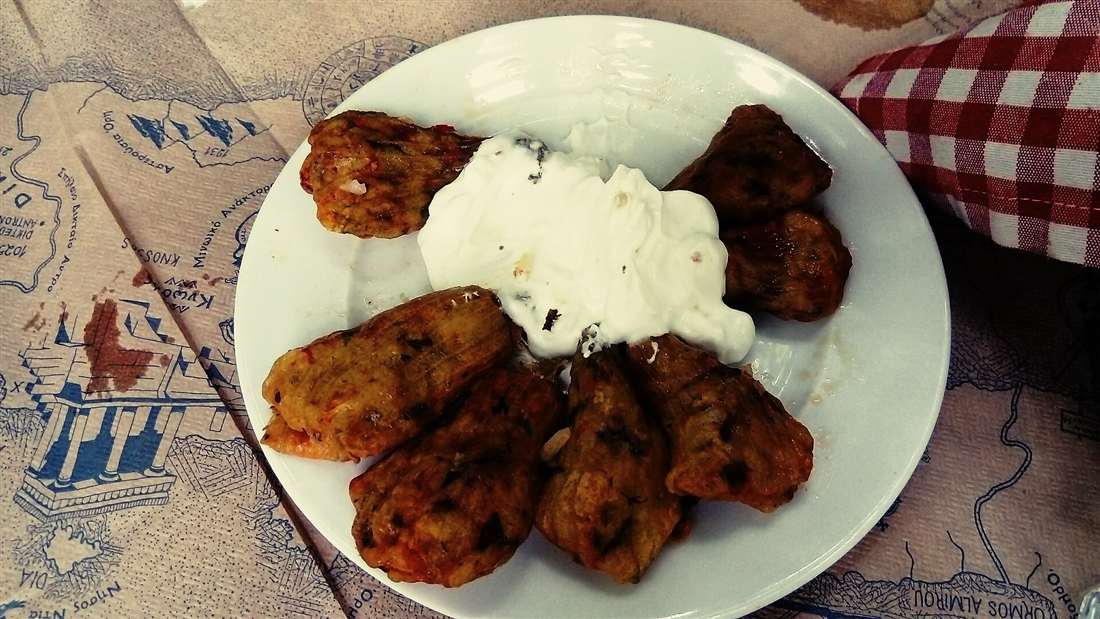
Guests cook the core dishes of the Cretan table: dakos rusk salad, dolmades, kalitsounia cheese pies, boureki courgette bake, stuffed vegetables, hand-rolled Cretan bread and a seasonal spread built from the produce that ripens that week.
Dakos opens most menus because it teaches the foundation of Cretan eating in one plate: a barley rusk soaked in olive oil, topped with grated ripe tomato, crumbled mizithra cheese, oregano and a thread of oil. From there the group moves to kalitsounia, the small cheese pies folded from thin pastry and filled with soft mizithra and mint, crimped by hand and baked until golden. Boureki layers sliced courgette and potato with cheese and mint in a shallow bake, a dish of the Chania kitchen above any other part of Crete.
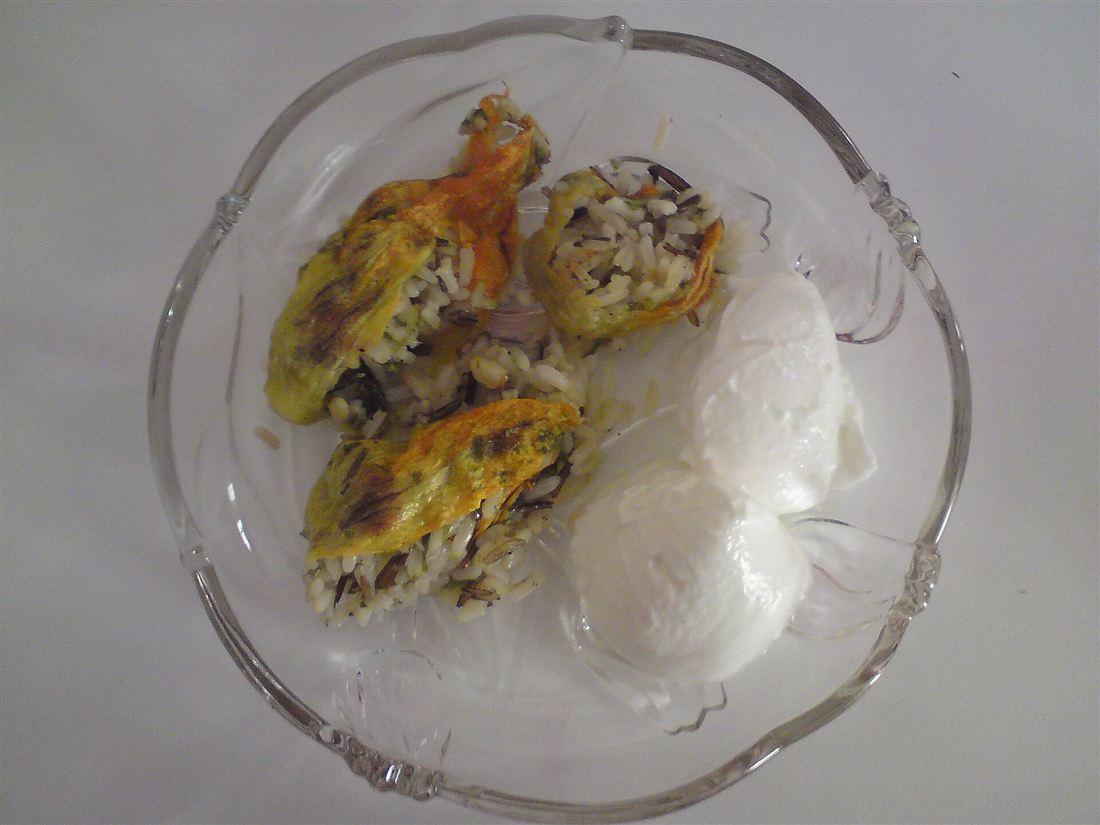
Dolmades take patience, and the class slows down for them: vine leaves rolled tight around rice, herbs and lemon, then simmered in stock. Stuffed vegetables, the gemista of the summer garden, pack tomatoes and peppers with the same aromatic rice. Cretan bread ties the table together, kneaded by hand and marked before it goes into the oven. The menu shifts with the calendar, and the wild greens, the artichokes or the pumpkin on the bench reflect the exact season of the visit rather than a fixed printed list.
Sweets close the menu. The class rolls loukoumades, the honey-soaked dough balls fried and dusted with cinnamon, or bakes the sweet version of kalitsounia stuffed with fresh mizithra and drizzled with thyme honey. Xerotigana, the twisted fried ribbons of the Cretan celebration table, appear on the festive menus. The dessert work rounds out the picture of Cretan cooking as a full arc from the savoury rusk to the honeyed pastry, and it hands guests the sweet recipes to match the savoury ones.
Where are the Chania cooking classes held?
Chania cooking classes run in three settings: the restored kitchens of the Venetian old town, the family farmhouses of the Apokoronas and Kissamos countryside, and the wineries and olive estates in the hills where the produce grows a few steps from the stove.
The old-town classes place guests inside the historic core, in a courtyard or a townhouse kitchen a short walk from the covered market and the harbour. This format suits guests staying in the centre who want the market as their larder and the lanes of the old town as their backdrop. The rhythm of the class matches the rhythm of the city, and a stroll through the market for ingredients starts the day.
The countryside classes sit deeper in the landscape. Farmhouses across Apokoronas and Kissamos open their kitchens and gardens, and the drive out through olive groves and mountain villages forms part of the experience. Winery and olive-estate classes anchor the cooking to the land: guests taste the estate oil and the estate wine, then cook a menu built to match. The Chania wineries pour the wines that finish these estate tables, and the pairing of a hands-on lunch with a cellar tasting turns the class into a full day in the hills.
What is a farm-to-table cooking class near Chania like?
A farm-to-table class near Chania starts in the garden, where guests harvest vegetables, herbs and greens for the menu, presses on to a wood-fired oven and open hearth, and ends at a long shared table under the vines with the estate olive oil, wine and raki.
The day opens with a basket and a walk through the rows. Guests pick tomatoes, courgettes, aubergines and herbs, cut wild greens from the field margins, and gather the eggs and the cheese the farm produces. This harvest sets the menu, so the food carries the taste of that specific soil and that specific morning. The olive oil comes from the estate press, and the host explains the grove, the harvest and the cold pressing that gives western Crete its reputation for oil.
Cooking happens across live fire. The wood-fired oven bakes the bread, the pies and the boureki, and the hearth handles the slow pots. The smoke, the crackle and the smell of baking pastry turn the kitchen into the centre of the day. The meal closes the circle: everyone sits at one table, the plates come out together, and the raki appears with the fruit and the honey. This shared close, unhurried and generous, defines the Cretan idea of the table and gives the farm-to-table class its lasting pull.
The host frames the food as part of the land. Between the harvest and the cooking, guests hear how the family works the grove through the year, how the goats and the beehives feed the cheese and the honey on the table, and how the recipes pass down the generations. This context turns a lunch into a lesson in the Cretan way of eating from the soil outward, and it grounds every dish in the specific farm that grew it.
What is included in a Chania cooking class?
A Chania cooking class includes a market or garden tour, the full hands-on cooking of a multi-course Cretan menu, a printed recipe pack to take home, and the sit-down meal at the end with local wine and raki poured freely.
The tour front-loads the learning. In town it runs through the covered market and the produce stalls, where the host names the cheeses, the greens and the cuts and explains how a Cretan cook shops. In the countryside it runs through the garden and the grove. Either way, guests understand where the ingredients start before they touch a knife.
The cooking itself is the core, and every guest works every dish rather than watching a demonstration. Aprons, boards, knives and all the ingredients come with the class. The recipe pack lets guests rebuild the menu at home, measured and written out. The meal seals the day: the group eats what it cooked, seated together, with estate or regional wine, the closing raki, and the bread still warm from the oven. For guests who want to compare the home kitchen against the tavernas, the guide to where to eat in Chania maps the harbour tavernas and old-town mezedopoleia that serve the same dishes.
Are there food tours as well as cooking classes in Chania?
Yes. Chania runs guided food and market tours alongside its cooking classes, walking guests through the covered market and the old-town lanes for tastings of cheese, olives, honey, charcuterie, bread and sweets, and finishing with a mezedopoleia crawl over raki.
The food tour trades the apron for a fork. A guide leads a small group through the nineteenth-century covered market, the cross-shaped hall at the heart of the city, stopping at the cheese counters, the herb stalls and the bakeries. Guests taste graviera and mizithra, dip bread in new-harvest oil, sample thyme honey, and learn the story behind each product straight from the sellers.
Beyond the market, the tour threads the old-town streets to the small tavernas and mezedopoleia, the meze houses where Cretans eat in stages over talk and raki. Plates arrive one after another: dakos, fried cheese, wild greens, seafood from the harbour. The crawl format samples the range of the local kitchen without committing to one full sit-down meal, and it reads the city through its food. Guests who want both a hands-on class and a tasting walk book them on separate days, the tour to map the ingredients and the class to master them.
Is a Chania cooking class good for families or couples?
A Chania cooking class suits families, couples and solo travellers alike: children fold pies and roll dolmades in a safe hands-on setting, couples share a romantic countryside table over estate wine, and the small-group format turns strangers into a table of friends.
For families, the class turns lunch into an activity. Children knead the bread dough, crimp the kalitsounia and roll the vine leaves, and the hosts pitch the tasks to small hands and short attention. The pay-off lands on the plate, and a child who folded a cheese pie eats it with pride. The farm settings add gardens, animals and open space that keep younger guests engaged between the cooking steps.
For couples, the countryside class delivers a slow, private-feeling day: a table under the vines, the estate wine, the raki and the long Cretan lunch make a romantic centrepiece for a trip. For solo travellers and groups of friends, the shared bench and the common task break the ice fast, and the meal at the end seats everyone together. The class flexes to the group in front of it, and that adaptability is why it works across ages and party sizes.
What Cretan ingredients and techniques do you learn?
Guests learn the pillars of Cretan cooking: the extra-virgin olive oil poured with a free hand, the wild greens or horta gathered from the hills, the sheep and goat cheeses, the hand-stretched phyllo pastry, and the slow simmering that draws flavour from the garden.
Olive oil is the first lesson and the constant one. Western Crete presses a celebrated oil, and the class teaches how a Cretan cook uses it as the main fat, not a finishing drizzle, cooking greens and pulses in it and dressing everything with it raw. Wild greens follow: horta, the mix of dandelion, fennel, chicory and hillside leaves that defines the Cretan plate, boiled and dressed with oil and lemon, or folded into pies.
Cheese-making knowledge threads through the class, from the fresh mizithra of the pies to the aged graviera of the grater. The pastry work teaches hand-stretched phyllo, thin enough to read through, for the kalitsounia and the savoury pies. The slow techniques close the set: the low, patient simmer of stuffed vegetables and pulses that turns humble produce into a full meal. Together these skills form a way of cooking rather than a set of recipes, and that is the durable thing guests carry home.
How long is a Chania cooking class and what is the schedule?
A Chania cooking class runs as a half-day experience of about four to five hours: a morning or afternoon start, a market or garden tour, roughly two hours of hands-on cooking, and the sit-down meal that closes the session with wine and raki.
The morning format starts with the market or the garden while the produce is fresh and the light is soft, moves into the kitchen through the late morning, and lands the group at the lunch table in the early afternoon. The afternoon format shifts everything later, with the cooking through the afternoon and the meal at dusk, a rhythm that suits the countryside estates and their golden-hour tables.
The pace stays unhurried by design. The tour sets the scene, the cooking blocks the middle, and the meal takes as long as a Cretan meal takes, with the raki and the fruit stretching the close. Guests plan the rest of the day around the class rather than squeezing it between other bookings, and the countryside sessions fold in transfer time through the villages at each end. The half-day length leaves the morning or the evening free for a beach, the old town or a winery visit, and it fits neatly into a wider itinerary without swallowing a whole day.
How do you book a Chania cooking class?
Guests book a Chania cooking class online in advance through a tour platform, selecting the date, the setting and the group size, with small groups the norm, dietary needs noted at booking, and hotel transfer from Chania town included on the countryside estates.
Advance booking secures a place, because the classes cap the group to keep every guest hands-on. The booking page lists the menu, the setting, the duration and the meeting point, and it flags whether transfer from town forms part of the price. Guests staying in the old town reach the in-town kitchens on foot; guests booking a farmhouse or estate ride the included transfer out through the countryside.
Dietary needs go into the booking notes so the host adapts the menu. Cretan cooking leans heavily on vegetables, greens, pulses and cheese, so vegetarian tables come naturally, and vegan or gluten-free versions follow with notice. The small-group cap means an early booking in the peak months, and confirming the date well ahead beats arriving to a full class. Once booked, guests receive the meeting point, the start time and the packing note, and turn up ready to cook.
When is the best time for a Chania cooking class?
Chania cooking classes run year-round, and each season sets a different table: spring brings the wild greens, the artichokes and the young cheeses; autumn brings the olive harvest, the grape must and the pumpkin; summer brings the ripe tomatoes and the garden vegetables at their peak.
Spring is the season of horta and the first tender vegetables, when the hills turn green and the wild greens reach their prime for pies and boiled plates. The young mizithra of the spring milking fills the kalitsounia, and the artichokes join the pot. This is the season that shows Cretan cooking at its most seasonal and its most green.
Autumn shifts the class toward the harvest. The olive picking starts across the Chania groves, the new oil arrives green and peppery, and the grape must from the vintage feeds the grape-must sweets. Pumpkin and root vegetables anchor the autumn boureki and pies. Summer, the peak travel season, floods the kitchen with sun-ripe tomatoes, courgettes, aubergines and peppers for dakos and stuffed vegetables. Winter runs quieter, warmer and heartier, built on pulses, greens and slow pots. Every month cooks well; the season simply chooses the menu.
Is a Chania cooking class worth it?
Yes. A Chania cooking class delivers a full day of hands-on Cretan food, a set of recipes to cook at home, an insider read of the market and the produce, and a real local meal at a shared table, which makes it one of the standout experiences in western Crete.
The value sits in what stays after the trip ends. A restaurant meal lasts an evening; a cooking class hands over the skills, the recipes and the understanding of Cretan ingredients that rebuild those dishes in any kitchen. Guests learn to shop a Greek market, to cook with olive oil as the main fat, and to treat vegetables and greens as the centre of the plate rather than the side.
The experience also reads the culture directly. The farmhouse kitchens, the estate tables and the covered market open a door into how western Crete eats and lives, hosted by the families who cook it every day. Set against the beaches and the old town, the class earns its place as the food memory of a Chania trip, and the shared table at the end, generous with wine and raki, is the moment guests describe long after they get home. For hands-on travellers who eat their way through a destination, it is worth the half-day and the booking.
The Cretan diet carries its own reputation for health, built on olive oil, greens, pulses, fresh vegetables and cheese, and the class teaches that diet from the inside rather than the guidebook. Guests walk away understanding why western Crete eats the way it does and how the ingredients fit together across a meal. That knowledge outlasts the trip, and it turns a holiday afternoon into a skill for the home kitchen.
Frequently Asked Questions
What is a Chania cooking class?
A Chania cooking class is a hands-on Cretan cooking experience, held in an old-town kitchen, a village farmhouse or a winery near Chania. You harvest or shop for produce, cook traditional dishes such as dakos, kalitsounia and boureki, and share the meal with wine and raki.
What do you cook in a Chania cooking class?
A Chania cooking class covers Cretan staples: dakos with rusk and tomato, dolmades, kalitsounia cheese pies, boureki, stuffed vegetables and courgette flowers, and Cretan bread, all built on olive oil, wild greens and the seasonal garden produce of the day.
Is a Chania cooking class worth it?
A Chania cooking class rewards food lovers with hands-on Cretan cooking, recipes to take home and a real local meal in a farmhouse or old-town kitchen. The garden produce, olive oil and raki make it a highlight of a Chania food trip.