
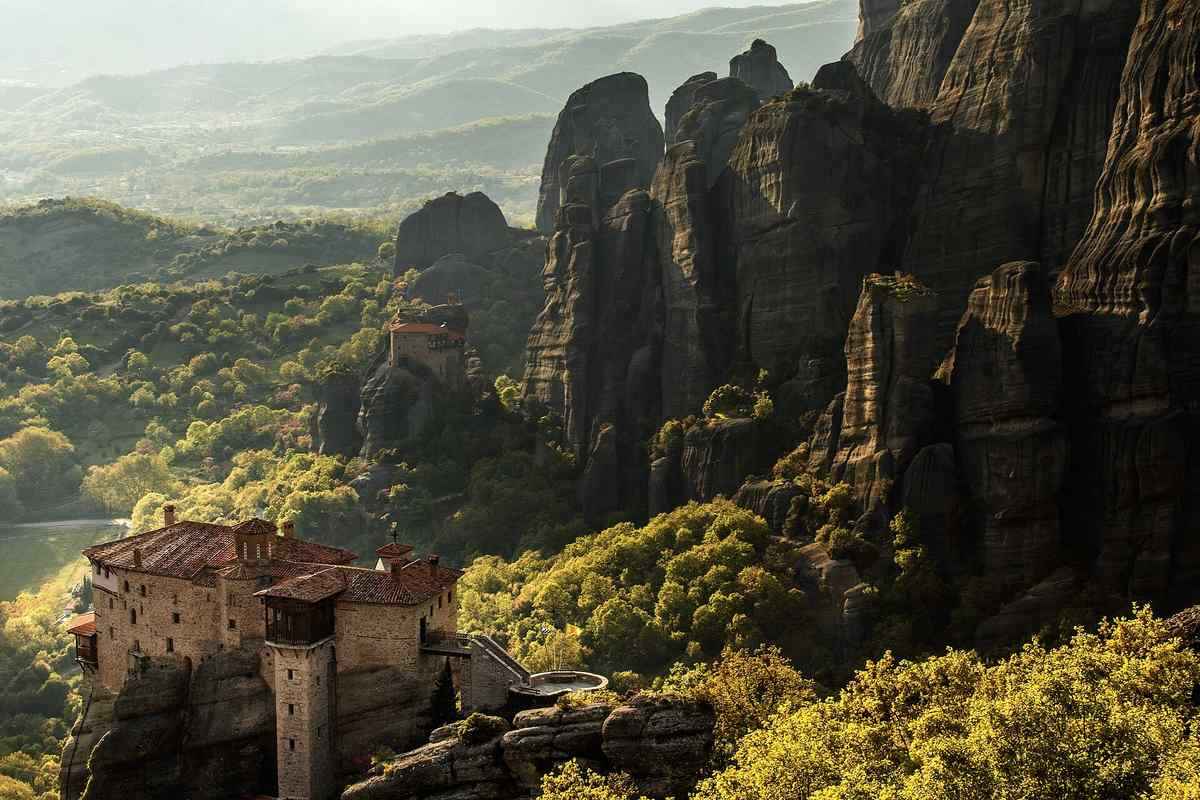
Getting from Athens to Meteora takes you to the spectacular monasteries perched atop towering rock pinnacles in central Greece, by train, organised tour, car or bus. Make it effortless with a guided trip or tickets from My Greece Tours and focus on the views rather than the logistics.
This unforgettable journey is among the greatest excursions in the Athens travel guide. The sections below cover what Meteora is, the train, organised tours, car and bus, day trip or overnight, what to see and tips.
What is Meteora and why visit from Athens?
Meteora is a UNESCO World Heritage Site in central Greece where six Eastern Orthodox monasteries perch atop giant rock pillars near Kalambaka. Famous for Byzantine history and dramatic scenery, they make one of the most rewarding trips from Athens.
Meteora is one of the most astonishing landscapes in Greece, and a trip there from Athens ranks among the country’s truly unmissable experiences. The name Meteora means “suspended in the air”. It describes the scene precisely. Colossal grey rock pinnacles soar hundreds of metres above the plains of Thessaly near the town of Kalambaka. Their summits are crowned by ancient monasteries that seem to grow out of the stone itself. Eastern Orthodox monks built them from the fourteenth century onward. These monks sought isolation and closeness to God on the inaccessible heights, and reached their eyries only by removable ladders and baskets hauled up by rope.
Six of the original two dozen monasteries remain active today. They preserve Byzantine frescoes, icons and treasures, and the whole site is protected as a UNESCO World Heritage Site for both its natural and cultural value. The combination of dramatic geology, centuries of monastic history and sweeping panoramic views makes Meteora endlessly photogenic and deeply moving. Meteora lies well north of Athens, yet it is firmly worth the journey. It rivals the great day trips like the Delphi day trip. Four main routes connect the capital to the rocks.
How do you get from Athens to Meteora by train?
The train from Athens runs from Larissa station to Kalambaka at the foot of Meteora, taking 4 to 5 hours. It often needs a transfer at Paleofarsalos. Timings stay tight, so check current Hellenic Train schedules.
Travelling to Meteora by train is a scenic option, though it needs planning around the current timetables. Trains depart from Athens Larissa station, the city’s main railway terminus. They head north toward Kalambaka, the gateway town directly beneath the Meteora rocks. The journey takes around four to four and a half hours. At present it usually involves a transfer. Passengers take a train as far as Paleofarsalos, then continue by connecting train or bus to Kalambaka, because track repairs on the final stretch have disrupted the direct service. The first train leaves Athens early, around 7am to 8am. The last return from Kalambaka departs in the late afternoon or early evening. A same-day return is therefore possible but tight, leaving only a short window at the site.
Overnight stays in Kalambaka suit train travellers who want a relaxed visit, returning the next day. Schedules and transfer arrangements change often, so check the current Hellenic Train timetables before booking and reserve ahead, especially in peak season. The train offers a comfortable, scenic approach to the rocks. The wider rail network is explained in the getting around Athens guide. Travellers who prefer zero logistics often opt for a guided tour instead.
What are the organised tour options to Meteora?
Organised tours from Athens to Meteora run as full-day bus or train trips, visiting 2 to 3 monasteries with a guide across one long day. Prices start near €59 for budget buses and reach €150-plus for small groups, with €3 entrance fees extra.
An organised tour is the easiest, most stress-free way to experience Meteora from Athens, since it handles all the logistics of the long journey. These tours come in two main forms. Full-day coach tours drive the whole way there and back. Combined train-and-tour packages let you take the train to Kalambaka and join a guided monastery tour on arrival, both returning the same day. A typical day-tour departs Athens around 7.30am to 8am and reaches the Meteora area by midday. The early afternoon covers a guided tour of two or three monasteries and the finest viewpoints. The coach then sets off back in the late afternoon, arriving in Athens late in the evening.
Prices range from around €59 for a budget large-group bus tour up to €150 or more for small-group and premium experiences. They generally include transport and an expert guide, and sometimes lunch, though the €3 monastery entrance fees are paid separately. The guides add valuable context on the history, geology and monastic life. A tour is ideal for a single packed day that needs no planning. Major booking platforms list a wide choice of departures. Independent travellers may prefer their own wheels, and driving offers the most freedom of all.
Can you drive or take the bus to Meteora?
Yes. You can drive from Athens to Meteora in 4 to 4.5 hours via the A1 and E65 motorways, free to explore at your own pace. Intercity KTEL buses also reach Kalambaka via Trikala in about 5 hours, a budget alternative to the train.
Beyond the train and organised tours, independent travellers have two further options for reaching Meteora, each with its own advantages. Driving gives you the greatest freedom. The route from Athens covers roughly 350 kilometres and takes around four to four and a half hours. It runs via the A1 national road north, then the E65 motorway toward Trikala and Kalambaka, on good, fast roads. A car lets you explore all six monasteries at your own pace and chase the finest light for photography at sunrise or sunset. It also reaches the viewpoints and walking trails between the rocks that tour groups often miss. Driving therefore suits anyone who wants to linger, preferably with an overnight stay in Kalambaka.
The budget option is the intercity KTEL bus. It runs from Athens to Kalambaka, usually with a change at Trikala, and takes around four and a half to five hours. The bus is inexpensive and reliable, though less scenic and flexible than the train or a car. Once in Kalambaka you will need a local bus, taxi or tour to reach the monasteries on their heights. Both options reward independent travellers. Choosing between them depends on your budget and appetite for driving. The final decision often comes down to time, which raises the day-trip question.
Should you do Meteora as a day trip or overnight?
Meteora works as a long day trip from Athens by tour or train, but the distance forces an early start, a late return and limited time on site. An overnight stay in Kalambaka is strongly recommended, adding sunrise and sunset plus extra monasteries and trails.
A key decision in planning a Meteora trip is whether to attempt it in a single day or to stay overnight, and the answer depends on your time and priorities. A day trip is certainly possible by organised tour, the train or a long drive. Travellers with limited time in Greece can reach this extraordinary place without changing hotels. The distance, however, forces an early start and a late return. Time among the monasteries is often limited to the early afternoon, and the day can feel rushed.
Spending at least one night in the pleasant town of Kalambaka at the foot of the rocks transforms the experience. You can explore at a relaxed pace, visit more of the six monasteries, and witness the light of sunrise and sunset over the pinnacles. You also walk the scenic trails between the rocks and avoid the midday tour crowds.
An overnight trip turns a tiring dash into a memorable mini-break. Weighing the time you have against the depth of experience you want will guide the choice. Either way, the rocks themselves are the reward, and knowing what to see helps you plan the visit well.
What can you see at Meteora, and what tips help?
At Meteora you can visit six active monasteries, each with Byzantine frescoes, icons and panoramic views, the largest being Great Meteoron and Varlaam. Dress modestly with covered shoulders and knees, wear sturdy shoes, and check each monastery’s opening days before you go.
Meteora rewards visitors with a combination of spiritual sites, art and unforgettable scenery, and knowing what to expect helps you make the most of it. Six monasteries remain active and open to visitors. Each perches on its own rock and is reached by steps carved into or built against the stone. The largest and most famous is the Holy Monastery of Great Meteoron, the oldest and highest, with a museum and a richly frescoed church. Neighbouring Varlaam ranks second in size. Rousanou, St Nicholas Anapausas, Holy Trinity and St Stephen each have their own character, frescoes, icons and viewpoints. Between visits, the roads and trails winding among the pinnacles open up countless spots to admire and photograph the rocks, especially at sunrise and sunset.
A short set of practical tips proves essential. These are working monasteries, so modest dress is required, with covered shoulders and knees. Women are asked to wear long skirts, usually provided as wraps at the entrance. Opening days vary by monastery, and each typically closes on a different day, so check in advance to plan your route. Wear sturdy shoes for the steps, carry water and sun protection, and behave quietly and respectfully inside. This preparation keeps a visit to Meteora smooth and deeply rewarding. The sections below add cost, timing, stops and history, then answer the questions visitors ask most.
How far is Meteora from Athens, and how long does the journey take?
Meteora sits about 350 kilometres north of Athens, near Kalambaka in Thessaly. The drive takes 4 to 4.5 hours, the train 4 to 5 hours with a transfer, the KTEL bus around 5 hours, and organised tours a full day.
The gap between Athens and Meteora shapes every travel decision, so a clear picture of distance and time helps. Kalambaka, the town at the base of the rocks, lies roughly 350 kilometres from the capital by road. A car covers that in four to four and a half hours on the A1 and E65 motorways. The train runs a comparable four to five hours, with the current transfer at Paleofarsalos adding a little to the total. The KTEL bus takes four and a half to five hours through Trikala.
Organised tours absorb the same distance but frame it as a full day. Departures leave Athens near 7.30am and reach the rocks around midday. Return coaches roll back into the city late in the evening, after 8pm on most itineraries. The one-way distance therefore fills three to four hours of each direction, whichever mode you pick. This is the core reason so many travellers weigh a day trip against an overnight stay. The distance is fixed, but the pace is yours to set.
Where should you stay in Kalambaka near Meteora?
Kalambaka is the main base for Meteora, a town of hotels and guesthouses directly beneath the rocks. The village of Kastraki sits even closer to the pinnacles and suits walkers. Both put you minutes from the monastery access road and the viewpoints.
An overnight visit needs a base, and two settlements serve travellers to Meteora. Kalambaka is the larger of the pair, a working town with a train station, tavernas, bakeries and a full range of hotels and guesthouses. It sits at the very foot of the rocks, so the pinnacles fill the skyline from most streets. From here the monastery access road climbs in a few minutes by car or taxi, making early starts for sunrise easy to arrange.
Kastraki is the smaller neighbour, a stone village pressed right against the base of the pillars. It appeals to walkers, since several trails to the monasteries and rock-climbing routes begin at its edge. Rooms tend to be quieter here, with terraces that face the rocks directly. Either choice keeps you within reach of the viewpoints at dawn and dusk, when tour coaches have gone and the stone glows gold. Booking ahead is wise in peak season, as both fill quickly.
When is the best time of year to visit Meteora?
Spring and autumn are the best times to visit Meteora, with mild weather, green or golden slopes and thinner crowds. Summer brings heat and peak numbers, while winter offers dramatic mist and snow but shorter monastery hours. Aim for late spring or early autumn.
Meteora rewards a visit in any season, yet the timing shapes both comfort and atmosphere. Late spring covers the slopes in wildflowers and green, with warm days and cool evenings ideal for walking the trails between the rocks. Early autumn brings the same mild weather and golden light, along with quieter monasteries once the peak crowds thin. Both shoulder seasons pair pleasant temperatures with clearer paths and easier photography.
Summer is the busiest stretch, when tour coaches fill the access road and midday heat on the exposed steps can tire visitors. An early start beats both the crowds and the sun. Winter turns Meteora into a stark, atmospheric scene, with mist wrapping the pinnacles and occasional snow crowning the monasteries. Fewer travellers make the journey then, though monastery opening hours shorten and some roads may ice over. For the finest balance of weather, light and calm, target late spring or early autumn.
What is the history behind the Meteora monasteries?
Meteora’s monasteries grew from eleventh-century hermit caves into organised communities from the fourteenth century, when monks built on the pinnacles for isolation and defence. Around two dozen monasteries once stood on the rocks. Six remain active today, guarding Byzantine frescoes and Orthodox tradition.
The story of Meteora begins long before the famous monasteries rose on the summits. Hermit monks first settled the caves and fissures of the rocks around the eleventh century, seeking solitude and prayer on the sheer cliffs. Formal monastic life took shape in the fourteenth century, when Saint Athanasios founded the Great Meteoron on the highest pillar. Building on the pinnacles offered both spiritual isolation and real protection during the unstable centuries that followed, when raiders swept through Thessaly.
The community flourished over the next two hundred years, and at its peak around twenty-four monasteries crowned the rocks. Monks and supplies once travelled up only by rope ladders, nets and hand-cranked windlasses, a defence against unwelcome visitors. Steps were carved into the stone far later, opening the sites to the pilgrims and travellers who arrive today. Six monasteries remain active, guarding Byzantine frescoes, illuminated manuscripts and relics. This deep history, layered onto the extraordinary geology, gives Meteora a resonance that few landscapes in Greece can match.
Frequently Asked Questions
How do you get from Athens to Meteora?
You can reach Meteora from Athens by train from Larissa station to Kalambaka in around 4 to 5 hours (often with a transfer), by organised full-day bus or train tour, by car in about 4 to 4.5 hours via the A1 and E65 motorways, or by KTEL intercity bus via Trikala. Tours are the easiest, hassle-free option.
Can you visit Meteora as a day trip from Athens?
Yes, you can visit Meteora as a day trip from Athens by organised tour or train, with an early start and a late return. However, the distance limits your time at the site, so an overnight stay in Kalambaka is highly recommended if possible, allowing a relaxed pace and the magical light of sunrise and sunset.
What should you wear to visit the Meteora monasteries?
To visit the Meteora monasteries you should dress modestly, with shoulders and knees covered; women are asked to wear long skirts, and wraps are usually provided at the entrance. Wear sturdy shoes for the many steps, bring water and sun protection, and check each monastery’s opening days, as they vary and each closes on a different day.
How much does the train from Athens to Meteora cost?
Standard train fares from Athens to Kalambaka are modest, typically in the region of €20 to €30 one way in second class, with reserved seats. First class and faster services cost a little more. The transfer at Paleofarsalos does not usually change the ticket price, as it is booked as a single through journey. Fares and schedules shift, so confirm on the Hellenic Train site before travelling.
How many days do you need for Meteora?
One full day covers the highlights of Meteora, taking in two or three monasteries and the main viewpoints. Two days give a far richer visit, with time for all six monasteries, the walking trails between the rocks, and both sunrise and sunset over the pinnacles. Travellers on a tight schedule manage a single long day trip from Athens, but an overnight stay in Kalambaka rewards the extra time.
Is there a direct train from Athens to Meteora?
At present there is no fully direct train, as track works on the final stretch require a transfer, usually at Paleofarsalos, where you change to a connecting train or bus for Kalambaka. The direct service has run in the past and may return once repairs finish. Check the current Hellenic Train timetable before booking, since the arrangement changes and affects both journey time and connections.
Can you visit Meteora from Athens without a tour?
Yes. Independent travel to Meteora is straightforward by train, KTEL bus or hire car. The train and bus both reach Kalambaka, from where a local taxi, bus or short drive climbs to the monasteries. A hire car gives the most freedom to explore all six sites and the viewpoints at your own pace. A guided tour simply removes the planning; it is convenient rather than essential.