
A week in Athens balances the ancient sights, the neighbourhoods, the museums, the coast and day trips to Delphi, Cape Sounion and the islands. Plan your week alongside skip-the-line sightseeing tickets and tours from My Greece Tours.
A 7-day plan is the most relaxed way to use the Athens travel guide. The sections below give a day-by-day itinerary covering the Acropolis and centre, the museums and neighbourhoods, the day trips, the coast, and practical tips for the week.
Is a week in Athens too long?
No, a week in Athens is not too long. The main ancient sights fit into two or three days, and the remaining four days go to museums, neighbourhoods, food, the coast, and two or three day trips to Nafplio, Delphi or the Saronic islands.
Some travellers worry that a whole week is too much for Athens, but with the right plan it is just right, especially if you use the city as a base for exploring the wider region. The headline monuments, the Acropolis, the Agora and the great museums, can indeed be covered in two or three busy days, which is why short visits feel rushed.
Seven days remove that pressure entirely. They give you time to see the ancient sights without hurrying, to linger in the city’s contrasting neighbourhoods, to eat your way through its markets and tavernas, to relax on the Riviera beaches, and crucially to take several day trips out of the city to the great sites and islands within reach. Athens sits at the heart of a region packed with day-trip destinations, from the oracle at Delphi to the temples of Cape Sounion and the Saronic islands, so a week based in the city combines urban depth with rewarding excursions. Used this way, a week is not too long but a luxury, turning a sightseeing sprint into a genuine, unhurried acquaintance with Athens and Attica.
What do you do on days 1 to 3?
Days 1 to 3 cover the ancient centre. Day 1 takes the Acropolis and its museum. Day 2 covers the Ancient Agora, Roman Agora and Kerameikos. Day 3 pairs the National Archaeological Museum with Syntagma and the Panathenaic Stadium.
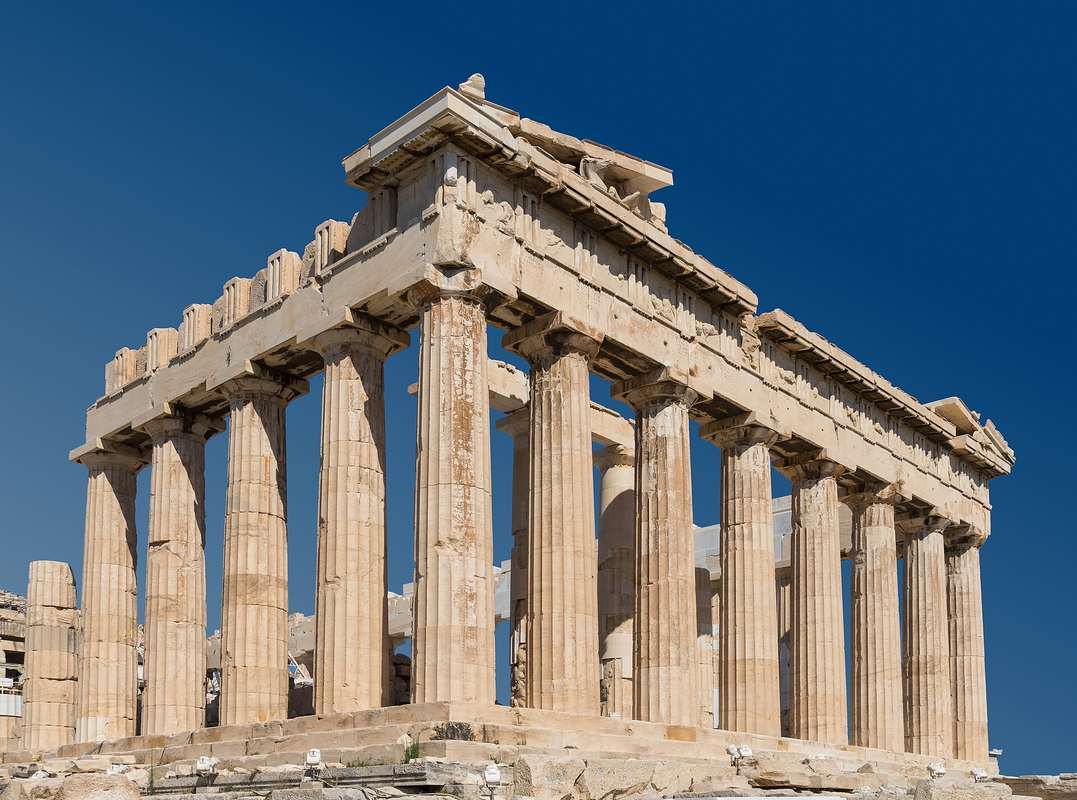
The first half of the week is devoted to the classic heart of Athens, the ancient sites and the central districts that surround them. Begin Day 1 with the highlight everyone comes for: climb the Acropolis early to see the Parthenon and its temples before the heat and crowds, explore the slopes with the theatres of Dionysus and Herodes Atticus, then descend to the superb Acropolis Museum, and spend the late afternoon wandering the charming old lanes of Plaka and the lively Monastiraki.
On Day 2 explore the other great ancient sites clustered nearby: the Ancient Agora with its temple and museum, the Roman Agora and the Tower of the Winds, Hadrian’s Library and the green ruins of Kerameikos, rounding off in the cafés and tavernas of Thissio and Psyrri. Reserve Day 3 for the National Archaeological Museum in the morning, allowing a few hours for its treasures, then head to Syntagma Square to watch the changing of the guard, stroll the shady National Garden, and finish at the marble Panathenaic Stadium of the first modern Olympics. By the end of three days you will have seen the essential Athens at a relaxed, walkable pace.
These three days work best in the order given, because they trace the city outward from its highest point. The Acropolis rewards an opening slot: arriving at the gate for opening beats both the heat and the tour groups, and starting on the rock frames everything that follows, since you look down on the Agora and the temples you will walk through next. The Acropolis Museum below completes the morning by setting the sculptures you have just seen in context, from the Parthenon frieze to the Caryatids of the Erechtheion.
The second day threads together the ruins that ring the Acropolis at ground level, and they sit close enough to link on foot in a loop. The Ancient Agora holds the well-preserved Temple of Hephaestus and the reconstructed Stoa of Attalos, the civic heart where Socrates once taught. A short walk east reaches the Roman Agora, the Tower of the Winds and Hadrian’s Library, and a turn northwest brings Kerameikos, the ancient cemetery beside a quiet stretch of the old city wall. The third day pairs the country’s richest museum with the ceremonial centre of modern Athens, so you cross from prehistoric gold to the marble of the first modern Olympic Games in a single afternoon.
What about days 4 and 5 for day trips?
Days 4 and 5 hold the day trips. Day 4 goes to Delphi, the ancient oracle 180 kilometres away. Day 5 chooses between Cape Sounion at sunset, Nafplio with Epidaurus, or a Saronic island by ferry.
With the city’s core explored, days four and five are the moment to venture beyond Athens to the extraordinary sites that lie within day-trip range, a key reason a week here is so rewarding. Devote Day 4 to Delphi, the most famous excursion of all, the ancient sanctuary and oracle dramatically set on the slopes of Mount Parnassus about two and a half hours from the city, where the Temple of Apollo, the theatre, the stadium and a fine museum reward a full day.
Day 5 offers a choice to suit your tastes. For a shorter outing, drive down the Riviera to Cape Sounion and its clifftop Temple of Poseidon, ideally timed for the celebrated sunset over the Aegean. For more history, take a full-day trip into the Peloponnese to the elegant seaside town of Nafplio, the ancient theatre of Epidaurus and the citadel of Mycenae. Or for sea and relaxation, hop on a ferry from Piraeus to a Saronic island such as Hydra, Poros or Aegina, swimming and lunching by the harbour. Whichever you choose, these excursions reveal the landscapes and ancient wonders that ring the Greek capital.
Delphi earns the fourth day outright, and the drive is part of the reward. The road climbs through the olive groves of Boeotia and up Mount Parnassus to a sanctuary the ancient Greeks called the navel of the world, where the Temple of Apollo, the Athenian Treasury and the theatre step up the hillside above a valley of silver-grey olives. Set aside the full day: the site and its museum, home to the bronze Charioteer, take three to four hours on foot, and the return leaves time for lunch in the mountain village of Arachova.
The fifth-day choices split cleanly by mood. Cape Sounion is the shortest and the most scenic at sunset, when the columns of the Temple of Poseidon glow above the sea at the tip of Attica, ninety minutes down the coastal road. The Peloponnese option packs the most history into a day, linking the acoustically perfect theatre of Epidaurus, the Bronze-Age citadel of Mycenae with its Lion Gate, and the Venetian old town of Nafplio beneath the Palamidi fortress. The Saronic islands offer the gentlest day, since the ferry from Piraeus reaches car-free Hydra, pine-clad Poros or the pistachio island of Aegina in one to two hours, leaving the afternoon for a swim and a harbourside lunch.
How do you spend days 6 and 7?
Days 6 and 7 slow the pace. Day 6 covers the Kolonaki museums and a climb up Lycabettus. Day 7 turns to the coast, a Riviera beach, souvenir shopping and a rooftop dinner facing the Acropolis.
The final two days are for savouring Athens beyond the headline monuments, exploring its culture, neighbourhoods and coast at an unhurried pace. Spend Day 6 on the elegant eastern side of the centre: visit the cluster of fine museums around Kolonaki, the Museum of Cycladic Art, the Benaki Museum and the Byzantine and Christian Museum, then climb or ride up Lycabettus Hill for the city’s grandest panorama, and give the evening over to the food and nightlife, exploring the markets, mezedopoleia and bars of districts like Exarcheia or Koukaki.
Reserve Day 7 for the sea and a gentle wind-down. Spend the morning at the Stavros Niarchos Foundation Cultural Centre with its park and views, or head down to a Riviera beach at Glyfada or Vouliagmeni for a final swim, then use the afternoon to shop for souvenirs in Monastiraki and Plaka and pick up edible gifts like olive oil, honey and Greek sweets. Round off the week, and the trip, with a farewell dinner at a rooftop restaurant gazing at the floodlit Acropolis, a fitting last image of the city. After a full week you will leave Athens not as a hurried tourist but as someone who has come to know it.
The sixth day rewards a slower rhythm after the long drives of the excursions. Kolonaki packs three of the city’s finest smaller museums within a few blocks: the Museum of Cycladic Art with its pale marble figurines, the Benaki Museum tracing Greek culture from antiquity to the present, and the Byzantine and Christian Museum in a garden villa. From there the funicular or the wooded path climbs Lycabettus, the limestone hill that rises above the rooftops for the widest view in Athens, with the Acropolis, the Saronic Gulf and the mountains laid out below.
The final day leans on the coast, where the tram and the coastal road reach the Riviera suburbs of Glyfada, Vouliagmeni and Varkiza. Lake Vouliagmeni, a warm brackish lagoon fed by underground springs, offers a swim beneath a cliff even outside high summer, and the sandy bays nearby suit a relaxed last morning. The Stavros Niarchos Foundation Cultural Centre, home to the national library and opera under a sweeping park, gives an alternative for those who prefer green space and architecture to sand. Either way, the week closes facing the water rather than the ruins, a deliberate change of pace before departure. The questions below cover what visitors ask most.
A week also gives you the freedom to follow your own interests beyond the standard sights. Food lovers can devote time to a cooking class, a market tour or the meze and seafood tavernas; art lovers to the contemporary galleries and street art; and families to the beaches, the parks and the more hands-on museums. Building a couple of these themed afternoons into the week turns a sightseeing trip into a richer, more personal experience of the city.
Where should you stay for a week in Athens?
Stay in one central base all week. Plaka and Monastiraki sit beside the ancient sites, Koukaki spreads below the Acropolis, Syntagma is the transport hub, and Kolonaki is the upmarket choice. Each keeps the centre walkable.
One base for the week beats hopping between hotels, because unpacking once frees your days for sightseeing and day trips. The best neighbourhoods cluster within a short walk or a single metro ride of the Acropolis, and each carries a distinct character that shapes the mood of your stay. Choosing among them is mostly about the atmosphere you want in the evenings, since all of them put the main monuments within reach.
Plaka wraps the northern slope of the Acropolis in neoclassical houses, bougainvillea and pedestrian lanes, and it feels like a village inside the city. Monastiraki, just north, mixes the flea market, rooftop bars and the Ancient Agora, and it stays lively into the night. Koukaki, on the southern side by the Acropolis Museum, is quieter and more residential, popular with travellers who want tavernas and cafés without the tourist crush. Syntagma puts you on top of the metro and the airport line, handy for early day-trip departures. Kolonaki, climbing towards Lycabettus, brings designer shops, galleries and smart restaurants. For the fine detail of each district, the guide on where to stay in Athens compares them side by side.
The choice of base also shapes how the day trips begin. Syntagma and Monastiraki sit directly on the metro lines that reach the airport and the port of Piraeus, so an early ferry to a Saronic island or a coach to Delphi starts with a short ride rather than a cross-town taxi. Koukaki and Plaka trade that transport edge for calm evenings among the ancient sites, which suits travellers who plan to walk the centre and take fewer excursions. Kolonaki works for a week weighted towards museums, shopping and dining rather than early starts. Weighing the balance of city days against trip days points clearly to one district, and settling it before booking sets the rhythm for the whole week.
Which day trips fill out a seven-day Athens itinerary?
Delphi, Cape Sounion, the Saronic islands, and the Peloponnese around Nafplio anchor most weeks. Meteora needs an overnight at 350 kilometres. Ancient Corinth and Nemea add half-day options. Two or three trips fit a seven-day plan.
Athens sits at the centre of Attica and the wider mainland, and the ring of ancient sites, mountains and islands within reach is the reason a week here rewards the extra days. The trips divide by distance and by theme, so you can pick the mix that matches your interests and the pace you want. Two full-day excursions and one shorter outing leave the rest of the week for the city itself.
Delphi, roughly 180 kilometres northwest on the slopes of Mount Parnassus, is the classic choice, pairing the Temple of Apollo and the oracle with a mountain drive. Cape Sounion, about 70 kilometres and ninety minutes south down the coast, delivers the Temple of Poseidon and a celebrated Aegean sunset in a half-day. The Saronic islands, Hydra, Poros and Aegina, lie a short ferry ride from Piraeus and turn a day into swimming and harbour lunches.
For deeper history, the Peloponnese around Nafplio bundles the theatre of Epidaurus and the citadel of Mycenae into one full day, while Ancient Corinth and the wine country of Nemea suit a lighter half-day. Meteora, with its monasteries on rock pillars, sits 350 kilometres north and works best as an overnight rather than a single day’s drive.
How do you get around Athens over a week?
Walking covers the historic centre, and the metro links the rest, the airport, Piraeus and the suburbs on three lines. Ferries leave from Piraeus for the Saronic islands. A rental car suits the Peloponnese and Cape Sounion, while organised coaches handle Delphi and Meteora.
The compact historic core rewards walking, since the Acropolis, the Agora, Plaka, Monastiraki and Syntagma link together on foot along pedestrianised streets. For longer hops the metro is fast, clean and cheap, running on three lines that reach the airport, the port of Piraeus and the northern and coastal suburbs, and a multi-day ticket covers the metro, buses and trams together.
Day trips call for different transport depending on the destination. Ferries and hydrofoils depart Piraeus, twenty-five minutes from Syntagma by metro, for the Saronic islands, with several sailings a day in the warmer months. A rental car gives the most freedom for Cape Sounion along the coast road and for touring the Peloponnese at your own pace, though driving into central Athens is best avoided. For Delphi and Meteora, where the drive is long and the parking scarce, an organised coach tour or a private transfer removes the effort and adds a guide. Taxis and ride-hailing apps fill the gaps late at night when the metro closes.
Timing the transport around the week saves both money and effort. Buy a multi-day travel pass on the first morning at any metro station, since it covers unlimited metro, bus and tram rides and removes the need to queue for single tickets each day. The airport connects to Syntagma and Monastiraki by the blue metro line and by the direct express bus, so the ride from the terminal to a central hotel is straightforward on arrival.
For the Piraeus ferries, the green metro line runs directly to the port, and matching your sailing to a morning departure leaves the whole day on the island. Keeping a rental car only for the two or three days of self-driven trips, rather than for the full week, avoids paying for parking you will not use in the walkable centre. Picking the car up on the morning of a Peloponnese or Sounion day and returning it that evening keeps the rental short and the centre car-free.
What is the ideal seven-day route to avoid backtracking?
Group the week by geography. Cover the ancient centre on foot in days 1 to 3, place the two day trips on days 4 and 5, then use days 6 and 7 for the outer neighbourhoods and the coast. This avoids crossing the city twice.
An efficient week keeps each day tight to one area rather than darting across Athens and back. The historic core, the day-trip departures and the coastal south each form a natural cluster, and ordering the week around those clusters cuts wasted travel time. The plan below front-loads the walking-heavy centre, slots the excursions in the middle, and finishes gently by the sea.
Open with the three central days, since the Acropolis, the Agora, the museums and Syntagma sit within a compact walkable zone that needs no transport beyond your feet. Place the day trips on days 4 and 5, when you are rested and can face an early start and a long drive; putting Delphi and a coastal or island trip back to back keeps the two big departures together.
Save days 6 and 7 for the eastern neighbourhoods, Lycabettus and the Riviera, which lie south and east of the centre, so your final days drift naturally towards the airport side of the city and the coast rather than doubling back to Plaka. Sequenced this way, the week flows outward from the ancient core to the sea without a single wasted crossing.
How much does a week in Athens cost?
Cost splits across accommodation, sightseeing, transport, food and day trips. The combined archaeological ticket beats single entries, the multi-day transport pass undercuts single fares, and tavernas keep food modest. Day trips are the largest single variable.
A week’s budget in Athens rests on a handful of choices rather than a fixed figure, and prices shift with the season and the standard you pick. The sensible approach is to control the parts you can plan in advance, tickets, transport and day trips, and stay flexible on food and shopping. Booking the money-saving passes early sets the baseline for the rest of the week.
Sightseeing is where planning pays off first. The combined archaeological ticket bundles the Acropolis with six other ancient sites, so it costs less than separate entries once you visit three or more, and it saves queuing on top. The multi-day public-transport pass works the same way against single metro and bus fares over seven days. Accommodation is usually the largest line, and picking a central base means you spend less on transport and taxis to reach the sights.
Food stretches a long way in Athens, where a bakery breakfast, a souvlaki lunch and a taverna dinner cost far less than hotel restaurants, and the central market lets self-caterers shop cheaply. Day trips are the biggest single swing: an organised Delphi or Meteora tour costs more than a metro-and-ferry hop to a Saronic island, so the mix you choose sets the tone of the week’s spending. Booking tours and the passes online before you arrive locks in the lower rates and spares you the queues on arrival.
When is the best time for a week in Athens?
Spring, from April to early June, and autumn, from September to October, are the best windows. Temperatures sit near twenty degrees Celsius, ideal for the sites and day trips. Summer brings heat above thirty-five degrees and peak crowds, while winter is mild and cheaper.
The season shapes a week in Athens more than any other single factor, because so much of the itinerary happens outdoors on exposed archaeological sites and open-air day trips. The shoulder seasons balance comfortable temperatures, long daylight and manageable crowds, which is why they suit a seven-day plan that mixes climbing the Acropolis with driving to Delphi and swimming off the Riviera. The extremes of the calendar each bring trade-offs worth weighing.
Spring rolls out mild days, wildflowers on the hills and sites that are busy but not overwhelmed, and the sea warms enough for a late-May swim. Autumn mirrors it, with warm water lingering from summer, grape harvest in the Peloponnese and thinner crowds as September moves into October. Summer delivers reliable sun and full ferry schedules, but midday heat above thirty-five degrees makes the sites punishing after mid-morning and the crowds peak, so an early start becomes essential. Winter is the quiet season, cool but rarely freezing, cheaper on flights and hotels, and fine for museums and the ancient centre, though the beaches and some island ferries wind down. For a week that leans on walking, day trips and the coast, the shoulder seasons win.
Each season also reshapes the day trips more than the city days. Ferry schedules to the Saronic islands thin out from November to March, so a week built around a Hydra or Aegina outing fits the warmer months better, while Delphi and the Peloponnese sites stay open and often quieter in winter. The exposed clifftop at Cape Sounion turns cold and windy off-season, which favours the spring and autumn sunsets over a January visit. Museums, by contrast, suit any month, so a winter week can simply weight itself towards the National Archaeological Museum, the Acropolis Museum and the Kolonaki galleries when the outdoor sites feel bleak. Matching the season to the balance of indoor and outdoor days is the quiet skill behind a well-planned week.
What practical tips help for a week in Athens?
Buy the combined archaeological ticket covering the Acropolis and six other sites, plus a multi-day transport pass. Book day trips ahead, stay central in Plaka, Koukaki or Syntagma, visit major sights early, and keep one day flexible. Spring and autumn suit a week best.
A week-long stay benefits from a few practical decisions made early. For sightseeing, buy the combined archaeological ticket that covers the Acropolis along with six other ancient sites, including the Agora, Kerameikos and the Temple of Olympian Zeus, which saves money and queuing across the week, and pick up a multi-day public transport ticket valid on the metro, buses and trams to move around cheaply.
Book your day trips and any popular restaurants ahead of time, especially in peak season, and choose a central base such as Plaka, Koukaki, Monastiraki or Syntagma so that most of the city is walkable and the metro is close. Read where to stay in Athens before you book to match a neighbourhood to your week.
Visit the major sights early in the day to escape both the worst heat and the largest crowds, and in summer carry water, a hat and sunscreen, since Athens reaches the mid-thirties Celsius in July and August. Keep one day loosely planned as a buffer for rest, bad weather or simply following your mood. Aim to visit in spring or autumn, when temperatures sit near twenty degrees and suit a full week of sightseeing, day trips and time by the sea. With these basics in place, a week in Athens runs smoothly.
Frequently Asked Questions
Is 7 days enough for Athens?
Yes, 7 days is more than enough for Athens itself and ideal for combining the city with day trips. Two or three days cover the main ancient sights and museums, leaving the rest of the week for the neighbourhoods, food, coast and excursions to Delphi, Cape Sounion, Nafplio or the Saronic islands. A week lets you experience Athens at a relaxed pace rather than rushing, making it a comfortable and rewarding length of stay.
What day trips can you take from Athens in a week?
In a week in Athens you can take several day trips. Popular options include Delphi, the ancient oracle in the mountains; Cape Sounion and the Temple of Poseidon on the coast; Nafplio with Epidaurus and Mycenae in the Peloponnese; and the Saronic islands such as Hydra, Poros and Aegina by ferry from Piraeus. Two or three day trips fit comfortably into a seven-day itinerary alongside exploring the city itself.
Do you need a car for a week in Athens?
No, you do not need a car for the city itself. Walking and the three-line metro cover the historic centre, the airport and Piraeus, and a multi-day pass keeps fares low. A rental car helps only for self-driven day trips to Cape Sounion or the Peloponnese, and driving in central Athens is best avoided. For Delphi and Meteora, an organised coach or private transfer removes the parking and navigation.
How many day trips can you fit into a week in Athens?
Two or three day trips fit comfortably into a seven-day Athens itinerary. Devoting days 4 and 5 to excursions leaves the other five days for the city, and a third shorter trip such as Cape Sounion slots into an afternoon. Popular pairings are Delphi with a Saronic island, or the Peloponnese around Nafplio with a coastal sunset at Cape Sounion. Keeping the city days and the trip days separate stops the week from feeling rushed.
Is a rented base or a hotel better for a week in Athens?
Either works, provided you keep one central base for the whole week. Plaka, Monastiraki, Koukaki, Syntagma and Kolonaki all sit within walking distance or one metro stop of the ancient sites, so unpacking once frees your days. Apartments suit families and self-caterers who want to use the central market, while hotels add breakfast and concierge help for day trips. The location matters more than the format across a longer stay.