
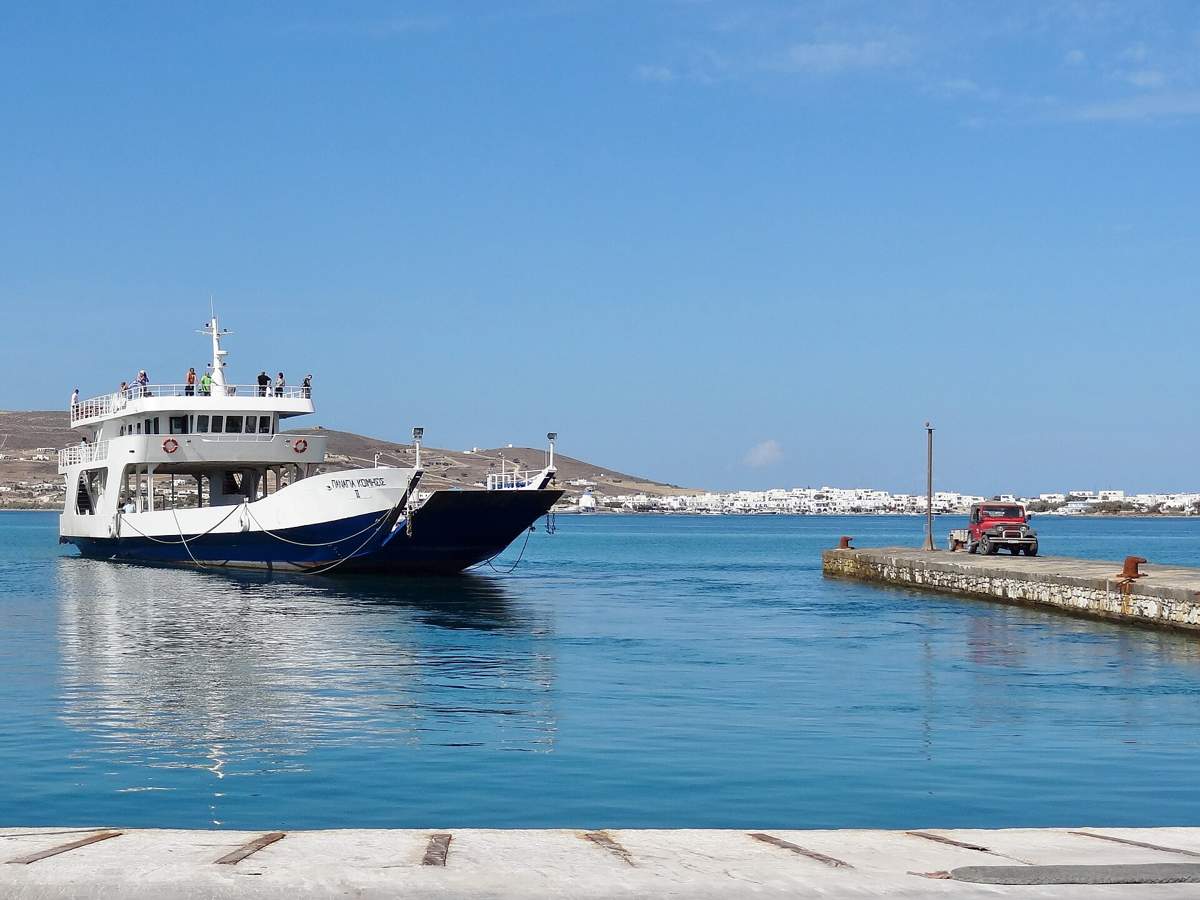
Antiparos and Paros are close Cycladic neighbours, split by a narrow channel and joined by a ferry that takes only about ten minutes. They share the same sea and light, yet they feel very different. Paros is large and lively, with multiple towns, an airport and a wide choice of hotels, restaurants and nightlife. Antiparos is small, quiet and intimate, with one main town and a slow, unspoilt pace. Choosing between them, or combining both, comes down to the holiday you want. Compare the two neighbours and plan your Cycladic trip with My Greece Tours.
The choice between the two islands turns on size and pace, on beaches, dining and nightlife, and on where you would rather base yourself. Their closeness also means you need not choose at all. The sections below cover the main differences, dining and nightlife, the beaches, where to stay, and how to enjoy both islands on one trip. Set the comparison in context with our Antiparos travel guide.
What is the difference between Antiparos and Paros?
Paros is far larger and livelier, with multiple towns, an airport, big ferry links and a wide range of hotels, restaurants and nightlife. Antiparos is small, quiet and intimate, with one main town, no airport, and a relaxed, unspoilt character.
The core difference between the two islands is scale, and it shapes everything else. Paros is a large, well-known island with multiple towns, including the capital Parikia and the stylish resort of Naoussa, plus villages inland and around the coast. It has its own airport, big ferry connections, and a wide range of hotels, restaurants, bars and shops. Antiparos, just across the channel, is small and low-key, built around a single main town. It has no airport, limited public transport, and a quiet, intimate feel. The larger island offers range and buzz; the smaller one offers peace and simplicity. This contrast in size sits at the heart of the choice between them.
The two islands also differ sharply in mood and pace. Paros moves fast in summer, its towns busy with visitors, its waterfronts lined with restaurants and cocktail bars, its beaches lively and well served. It suits those who want a great deal to do, a wide choice, and easy connections onward. Antiparos runs slow and calm, with one whitewashed town, quiet beaches and a relaxed, unhurried rhythm. It has long drawn a bohemian, cosmopolitan crowd who value its unspoilt character over any resort scene. The larger island buzzes; the smaller one soothes. A traveller’s taste in pace, above all, points toward one island or the other.
Practical differences follow from the size gap too. Paros, with its airport and major ferry port, is easy to reach directly and well suited to island-hopping across the Cyclades. Antiparos has no airport and a small port, so most visitors reach it through Paros, by the short ferry across the channel. Getting around differs as well: Paros has a fuller bus network and more taxis, while the smaller island relies on one bus line, scarce taxis, and hired cars or scooters. Sorting out getting to Antiparos almost always means passing through its larger neighbour first, which is part of why the two are so often paired.
Is Paros or Antiparos better for nightlife and dining?
Paros is better for nightlife and a wide dining choice, with abundant restaurants, bars and even nightclubs, especially in Naoussa. Antiparos has good tavernas and relaxed, stylish bars, but no nightclubs and a quieter, lower-key evening scene.
For sheer choice and buzz, Paros leads clearly. Its towns, above all the resort of Naoussa, hold a wide range of restaurants, from traditional tavernas to stylish, modern kitchens, along with lively cocktail bars and even nightclubs. The larger island has a genuine nightlife scene, busy and varied, that runs late through the summer. Parikia and the other towns add still more places to eat and drink. For visitors who want a broad choice of dining, a real bar scene and dancing into the small hours, the larger island delivers in a way its small neighbour does not. This range is one of the strongest reasons to base a trip on Paros.
Antiparos offers a smaller, gentler evening scene, in keeping with its character. Its whitewashed town has a good spread of tavernas and restaurants for its size, serving fresh fish and classic Greek dishes, along with relaxed, stylish cafe-bars along the car-free main street. What it does not have is nightclubs or a loud party scene, and this is by design. The evenings here are about long dinners, quiet drinks and easy company under the stars, not big venues. The mood is chic yet understated, drawing a crowd who prefer calm to clubbing. The buzz of the nightlife on the smaller island is real but gentle, a slow, sociable close to the day.
The choice here comes down to what an evening means to you. Those who want variety, energy and a late scene, with restaurants and bars to work through and clubs to finish in, will be happier on the larger island. Those who want a relaxed dinner, a stylish drink and a peaceful, characterful night will find the smaller island ideal. Neither is better in the abstract; they simply suit different tastes and different moods. Certain travellers enjoy both, taking the buzz of Paros one night and the calm of Antiparos the next. The short ferry makes even that easy across a single trip through the two islands.
Which island has better beaches, Antiparos or Paros?
Both islands have fine beaches, but visitors often rate the beaches of Antiparos as quieter and more beautiful, with long stretches of sand and calm, clear water. Paros has more beaches overall, certain ones busy and well organised, others good for water sports.
Antiparos is celebrated for its beaches, and for a small island it has a fine collection. Its shores are largely long, sandy stretches with calm, clear, shallow water, and they tend to be quieter and less developed than those of its larger neighbour. The family bays near the town, the broad sands of the south, and the wilder coves all draw praise, and the boat trip to nearby Despotiko adds a wild, uninhabited beach to the list. Visitors often feel the smaller island edges the beach contest on quality and calm. The clear water and soft sand of the Antiparos beaches are a large part of the island’s appeal.
Paros, being far larger, has a greater number and variety of beaches around its long coastline. Certain ones are big, busy and fully organised, with sunbeds, bars and water sports, while others are quieter or better known for windsurfing and kitesurfing, a sport for which the island is famous. This range means the larger island can suit varied tastes, from lively, well-served bays to spots aimed at active watersports. The trade-off is that the most popular Paros beaches can be busier and more commercial than those across the channel. For choice and facilities, the larger island scores well, even if its beaches feel less peaceful than the smaller island’s.
The beach verdict, then, depends on what you value. For sheer variety, organised facilities and watersports, the larger island offers more. For quiet, natural beauty and long, calm stretches of sand, the smaller island is hard to beat, and its beaches are a major reason people fall for it. Those staying on Paros often cross for the day precisely to enjoy the quieter sands opposite. Beach lovers weighing the two, and thinking about where to stay in Antiparos, tend to lean toward the smaller island for a calmer, more beautiful day by the sea, while keeping the larger island in reach for variety.
Should you stay on Antiparos or Paros?
Stay on Paros for lively towns, wide dining and nightlife, more hotels and easy connections. Stay on Antiparos for peace, quiet beaches and village charm. Many visitors base on Paros and day-trip across, or split their stay between the two.
Paros makes the natural base for a first Cycladic trip or a lively holiday. It has the airport and the major ferry links, so it is easy to reach and easy to leave for other islands. It offers a wide choice of hotels and rooms, from budget to boutique, and its towns put dining, nightlife and shops on the doorstep. Basing on the larger island suits those who want a full itinerary, easy travel, and the option of day trips around the region. It works especially well for first-time visitors, larger groups, and anyone who values range and convenience over deep quiet in their base.
Antiparos rewards those seeking a calmer, more intimate base. Staying on the smaller island means quiet beaches, a single charming town, and a slow, unspoilt pace, away from the bustle of the larger neighbour. It suits couples, families wanting peace, and travellers who prefer village life to resort energy. The accommodation is smaller in scale, mostly rooms, studios and small hotels rather than big resorts, in keeping with the island’s character. Deciding on where to stay in Antiparos tends to reward those who want to unwind rather than rush. For a restful, authentic Cycladic stay, the smaller island is the stronger choice.
A middle path suits most travellers well. Basing on Paros gives the range, the connections and the nightlife, while the short ferry allows easy day trips across to the quiet beaches, the town and the cave of the smaller island. Others split their stay, spending part of the trip on each island to enjoy both moods. The right base depends on the balance of buzz and calm you want, and on whether easy connections or deep peace matters more. There is no single right answer, only the fit between each island and the holiday you have in mind, which the closeness of the two makes easy to arrange.
Can you visit both Paros and Antiparos?
Yes, visiting both is easy and common. A car ferry crosses the narrow channel from Pounta on Paros to Antiparos in about ten minutes, running through the day. Visitors often base on Paros and see Antiparos as a day trip, or split their stay.
The great advantage of these two islands is that you need not choose between them. A short car ferry runs from Pounta, on the west coast of Paros, across the narrow channel to the town of Antiparos, a crossing of only about ten minutes. It sails back and forth throughout the day in season, carrying cars, scooters and foot passengers, with no need to book ahead. In summer, small passenger boats also run directly from Parikia, the Paros capital, to the smaller island’s town. This quick, frequent link makes moving between the two islands simple, so a trip to one can easily take in the other.
The most common approach is to base on Paros and cross to Antiparos for a day. A day trip across the channel easily takes in the whitewashed town, the great cave, a swim at one of the quiet beaches, or a boat trip to Despotiko, before the short ferry back in the evening. This lets visitors enjoy the range and connections of the larger island while sampling the peace of the smaller one. Planning such a visit is simple, and a day trip from Paros is one of the most popular things to do for those staying on the bigger island through their holiday.
Others give the smaller island more time, either by splitting their stay or by basing there and crossing to Paros as needed. A couple of nights on each island offer both the buzz of the larger neighbour and the calm of the smaller one. Basing on Antiparos, with occasional trips over to Paros for its shops, nightlife and connections, suits those who want peace as their default. The closeness of the two, and the frequent ferry, make any of these plans easy to arrange. Combining the islands also broadens the range of things to do in Antiparos and its larger neighbour into one rich Cycladic trip.
Frequently Asked Questions
Is Antiparos better than Paros?
Neither Antiparos nor Paros is simply better than the other; they are different islands that suit different travellers and different moods, which is why both are so often enjoyed together. Antiparos is small, quiet and intimate, with one whitewashed town, long and largely peaceful sandy beaches, a relaxed and unspoilt pace, and a low-key, stylish character that has long drawn a bohemian, cosmopolitan crowd. It is often considered the better choice for beaches, calm and authentic village charm.
Paros is far larger and livelier, with multiple towns including the fashionable resort of Naoussa, an airport, big ferry links, a wide range of hotels, and abundant restaurants, bars and nightclubs, making it better for dining choice, nightlife, accommodation and easy connections. In short, Antiparos wins on peace and natural beauty, while Paros wins on variety, buzz and convenience. The best choice depends entirely on what you want from your holiday: a restful, unspoilt escape points to the smaller island, while a lively, well-connected base with a great deal to do points to the larger one. Thanks to the ten-minute ferry, you can also simply enjoy the strengths of both.
How do you get from Paros to Antiparos?
Getting from Paros to Antiparos is quick, easy and frequent, which is one of the main reasons the two islands are so often visited together. The usual route is the small car ferry that runs from the port of Pounta, on the west coast of Paros, across the narrow channel to the town of Antiparos. The crossing takes only about ten minutes and operates back and forth throughout the day, and late into the night in high season, carrying cars, motorbikes, quads, bicycles and foot passengers, with no need to book in advance.
To reach Pounta from the main towns of Paros, such as Parikia or Naoussa, you can drive, take a taxi, or use the local bus, which is timed to connect with the ferries. In summer, there is also a direct passenger boat, carrying people but not vehicles, from Parikia, the capital of Paros, straight to the town of Antiparos, which is convenient for foot passengers. The crossing is so short and runs so often that moving between the two islands is simple, whether for a day trip or as part of a longer stay combining both.
Which island is better for families, Antiparos or Paros?
Both Antiparos and Paros are good family destinations, and the better choice depends on the kind of family holiday you want. Antiparos is small, safe, quiet and easy to manage, with calm, shallow, sandy beaches that are ideal for young children, a compact and largely car-free town, gentle attractions such as the cave and boat trips, and a relaxed, unhurried pace with no loud nightlife to disturb it. This makes it excellent for families seeking a peaceful, low-key beach holiday where everything is close and simple.
Paros, being larger, offers families more variety and facilities: a wider choice of family hotels and resorts, more restaurants and shops, more beaches including organised ones with amenities, water sports for older children and teenagers, and better connections for day trips. It suits families who want more to do, more choice, and the buzz of a livelier island. In general, younger families and those wanting calm often prefer the smaller island, while families with older children, or those wanting more amenities and variety, may lean toward the larger one. Families often combine both, using the short ferry, for the best of each.
Is Antiparos worth visiting if you are staying on Paros?
Antiparos is well worth visiting if you are staying on Paros, and doing so is one of the most popular and rewarding day trips from the larger island. The two islands sit just across a narrow channel, linked by a car ferry from Pounta that takes only about ten minutes and runs frequently throughout the day, so crossing over is quick, cheap and easy, with no need to book ahead.
A day trip to the smaller island lets you experience a different, quieter side of the Cyclades: you can wander the charming whitewashed town and its medieval Venetian castle, descend the famous stalactite cave in the south, relax on one of the calm, beautiful sandy beaches, or take a boat across to the uninhabited islet of Despotiko with its ancient sanctuary of Apollo. Visitors staying on the busier, livelier larger island often cross specifically to enjoy the peace and the quieter beaches opposite, before returning in the evening. Even a single day gives a good taste of the smaller island’s unspoilt charm, though its relaxed atmosphere tempts some to stay longer.
For anyone based on Paros, the short trip across is well worth making.