
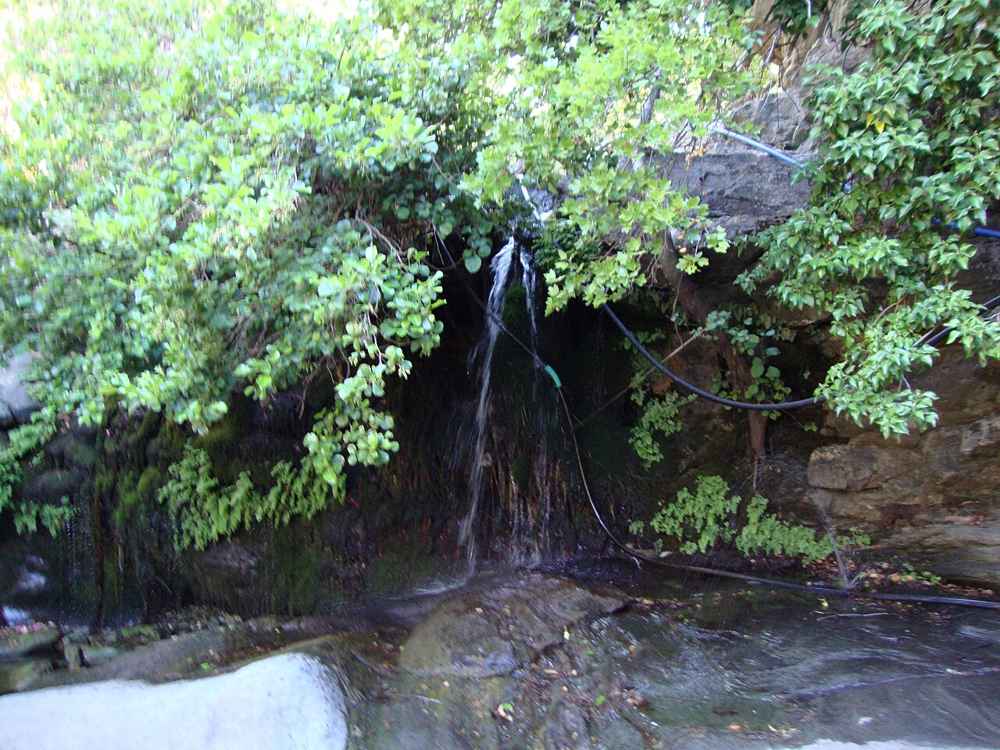
Andros is the greenest of the Cyclades, an island of springs and running water rare in the dry Aegean, and its waterfalls are among its most distinctive sights. The best known are the Pythara falls near the village of Apoikia, a shaded gorge of plane trees. Pools and cascades that comes alive after the spring rains and offers a cool, green retreat in the heat of summer. Plan the whole trip with Greece Tours.
This guide covers the waterfalls of Andros: where Pythara is and how to reach it, what you will find in the gorge. The famous springs of Menites nearby, hiking to the falls and the best time to see the water at its fullest. Read it alongside the guide to hiking in Andros.
What are the waterfalls of Andros?
The waterfalls of Andros are the Pythara falls, a series of small cascades and pools in a shaded ravine near the village of Apoikia, fed by the springs of Mount Petalo.
The green interior of Andros hides waterfalls that feel far from a typical Aegean island. The most celebrated are those of Pythara, a wooded ravine near the spring village of Apoikia. Where water descends in a series of small cascades and gathers in pools beneath a canopy of plane trees, a rare scene of running water in the Cyclades.
Fed by the springs high on Mount Petalo. The falls run strongest after the winter and spring rains and thin in high summer. The shaded gorge stays cool and green through the year. Local folklore calls the spot a fairytale place, and it has become one of the natural highlights of the island, sought out for its greenery and its water.
Where are the Pythara waterfalls and how do you reach them?
The Pythara waterfalls lie near the village of Apoikia, in the green interior a short drive north of Chora.
Pythara sits close to Apoikia, the spring village famous for its Sariza water, in the green hills a short drive above the capital of Chora. Cars are left at the roadside near the village, from where the way into the gorge begins, well within reach of anyone touring the interior or based in Chora.
From the road a marked path of around ten minutes descends through thick vegetation into the ravine, following the stream to the cascades and pools. The path is short but uneven and can be slippery near the water. Sturdy footwear helps. And the walk itself, shaded and green, is part of the pleasure of reaching the falls.
What will you see at the Pythara falls?
At Pythara you will find small waterfalls and clear pools set among tall plane trees, with frogs, dragonflies and birds thriving in the water.
The gorge of Pythara is a small, lush ecosystem. Water tumbles over rocks into clear pools shaded by tall plane trees. The damp, green ravine teems with life, frogs, dragonflies. Birds and rare plants and wildflowers that grow along its length, a striking contrast to the sunlit, barren slopes elsewhere in the Cyclades.
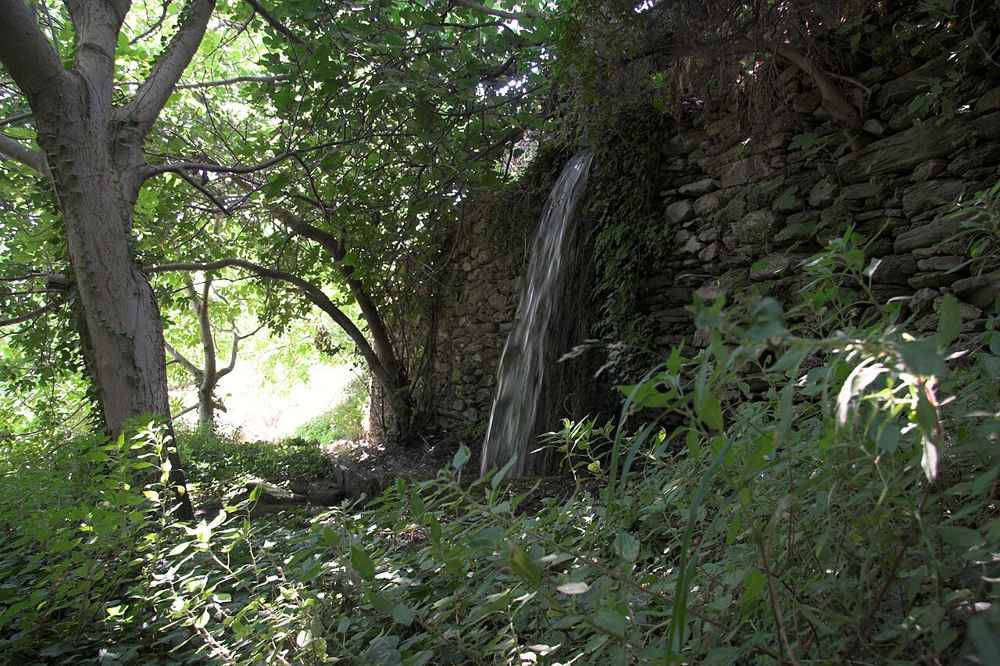
The stream that feeds the falls once did more than delight visitors: it powered watermills along the ravine. The old stone mills can still be seen. Relics of the time when running water drove the island’s grinding of grain. One of them was said to be among the largest watermills in the Balkans, a reminder of the working past of this green valley.
For visitors, Pythara is a place to walk, cool off and enjoy the rare greenery, whether pausing by the pools or following the path through the trees. Its combination of running water, shade and wildlife makes it one of the most refreshing spots on Andros, especially welcome in the heat of summer.
What springs are near the Andros waterfalls?
Close to Pythara lie the famous springs of Menites, where water flows year-round from carved marble lion heads beneath plane trees, and the Sariza spring at Apoikia, source of the bottled mineral water.
The waterfalls sit within the wider watered landscape of the interior. Nearby Menites is the island’s most famous spring village, where water pours year-round from a row of carved marble lion-head spouts beneath tall plane trees. Keeping the shaded square cool even in midsummer, one of the most photographed spots on Andros.
At Apoikia, beside the falls, the Sariza spring yields the prized mineral water bottled and drunk across Greece, and a public fountain lets visitors drink it at the source. These springs and the Pythara falls together make up the green, running-water heart of the island, easily combined on a single tour of the interior, as the guide to the villages of Andros describes.
Can you hike to the Andros waterfalls?
Yes. The Pythara falls sit on the island’s network of old stone paths, and a classic walk links Chora, the spring village of Apoikia and the falls. The certified Andros Route trails pass through the green interior around the waterfalls.
The waterfalls are a natural goal for walkers on Andros. The island’s celebrated network of waymarked old stone paths, the Andros Route. Threads the green interior. A well-loved route climbs from Chora up through Menites and Apoikia to the Pythara gorge, linking the springs, the villages and the falls in a single green walk.
Reaching Pythara on foot, rather than only from the roadside, adds the terraced landscape. The chapels and the running water of the valley to the visit. It is one of the rewarding shorter walks on the island. For the full network of trails, grades and highlights, see the dedicated guide to hiking in Andros.
When is the best time to see the Pythara waterfalls?
Spring, from March to May, is the best time to see the Pythara falls, when the winter rains have filled the stream and the gorge is at its greenest.
The falls are at their fullest in spring, after the winter and early-spring rains have swelled the stream running down from Mount Petalo. From March to May the water tumbles strongly, the wildflowers are out and the ravine is at its greenest and most alive. Making late spring the finest season to see Pythara.
Through the dry heat of high summer the flow falls away. By August the cascades can run thin, though the shaded, plane-tree gorge stays cool and green and remains a welcome refuge from the sun. Autumn revives the greenery as the rains return, so the shoulder seasons are the most rewarding times to visit, as the guide to the best time to visit Andros sets out.
What else is near the Pythara waterfalls?
Around the Pythara falls lie the spring villages of Apoikia and Menites, the capital Chora with its museums and lighthouse, and the trails of the green interior. The area makes a rewarding half-day combining waterfalls, springs and villages.
The waterfalls sit at the centre of the island’s greenest and most rewarding corner. The spring villages of Apoikia and Menites are a short distance away, the shipowners’ village of Stenies lies nearby. The elegant capital of Chora. With its marble street, museums and the Tourlitis lighthouse, is a short drive downhill, so the falls fit easily into a wider tour.
A classic half-day strings together the Pythara falls, the lion-head springs of Menites, a drink of Sariza water at Apoikia and a wander through Chora. Showing the green, watered character that sets Andros apart from the rest of the Cyclades. The combination of waterfalls, springs, villages and culture in a small area is among the highlights of the island, part of the wider things to do in Andros.
Frequently Asked Questions
Are there really waterfalls on Andros?
Yes. Andros is the greenest of the Cyclades. Its interior holds genuine waterfalls, the best known being the Pythara falls near the village of Apoikia. A shaded ravine where water descends in small cascades into clear pools among plane trees. Fed by the springs of Mount Petalo. They run strongest after the winter and spring rains and are one of the island’s most distinctive natural sights, rare in the dry Aegean.
How long is the walk to the Pythara waterfalls?
From the roadside near the village of Apoikia, a marked footpath of about ten minutes leads down through dense vegetation into the ravine to reach the Pythara falls and pools. The path is short but uneven and can be slippery near the water, so sturdy footwear is advised. Keen walkers can also reach the falls on a longer hike from Chora through the spring villages of Menites and Apoikia along the old stone paths.
Is it worth visiting the Andros waterfalls?
Yes. The Pythara falls are one of the most distinctive sights on Andros, a cool, green gorge of cascades. Pools, plane trees and old watermills that feels far from a typical Cycladic island. They are best in spring, when the water runs full and the ravine is at its greenest. They combine easily with the springs of Menites and Apoikia and the capital Chora for a rewarding half-day in the green interior.