
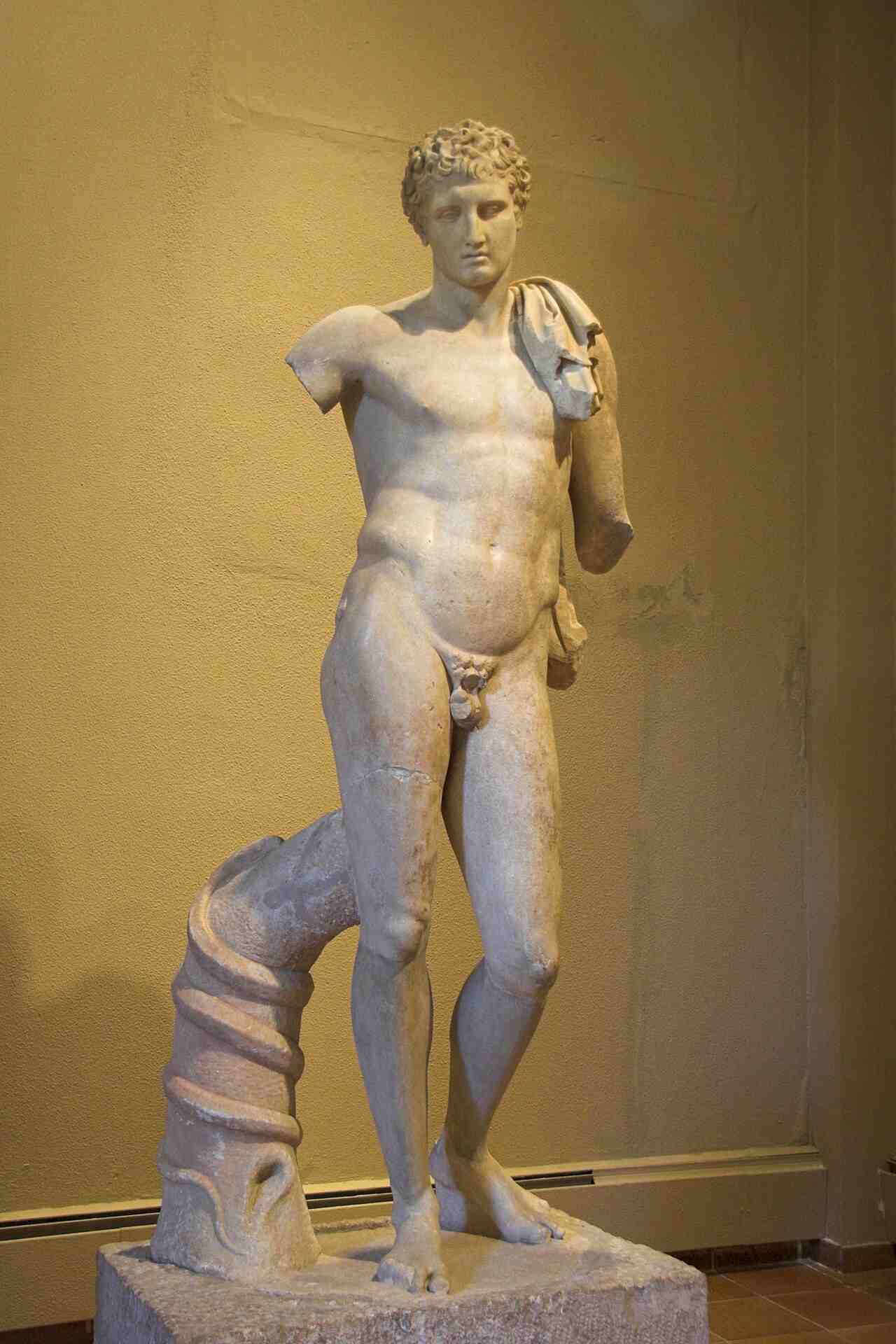
For a small Cycladic island, Andros has an exceptional cultural depth. Led by the Museum of Contemporary Art of the Goulandris Foundation, whose summer exhibitions have shown Picasso, Matisse and Kandinsky. Around it, the Archaeological Museum with its celebrated Hermes of Andros. The Maritime Museum and the Olive Museum make the island a cultural destination in its own right, most of them clustered in the elegant capital of Chora. Plan the whole trip with Greece Tours.
This guide covers the museums of Andros in turn: the Museum of Contemporary Art, the Archaeological Museum and its Hermes. The shipowning heritage of the Maritime Museum. The Olive Museum and library that complete the circuit. Read it beside the guide to Chora, the capital of Andros, where most of them stand.
What museums are there in Andros?
Andros has an unusually rich set of museums for its size, led by the Museum of Contemporary Art and the Archaeological Museum in Chora.
Andros carries a cultural weight rare among the Cyclades, the legacy of its shipowning wealth and the patronage of the Goulandris family. The heart of it lies in the capital, Chora, where the Museum of Contemporary Art and the Archaeological Museum face each other on Kairi Square. Giving the town a cultural pairing that draws visitors from Athens and beyond each summer.
Beyond these two, the island keeps a Maritime Museum celebrating its seafaring past, the historic Kairios Library, and, inland at the village of Pitrofos, the Olive Museum of the Cyclades. Together they range across modern art, archaeology, shipping and rural tradition, giving the island a rainy-day and rest-day appeal that the beach-only Cyclades lack, part of the wider things to do in Andros.
What is the Museum of Contemporary Art in Andros?
The Museum of Contemporary Art of the Basil and Elise Goulandris Foundation, founded in in Chora, is the island’s cultural landmark. Its summer exhibitions have shown Picasso, Matisse, Kandinsky, Klee and Balthus alongside a permanent collection of Greek art.
Founded in by the shipowner Basil Goulandris and his wife Elise, the Museum of Contemporary Art is the reason Andros ranks as a cultural destination. A new wing opened in expanded its space for the major summer exhibitions that have become its signature. Staged each year in the whitewashed galleries of Chora and drawing art lovers to the island.
Over the decades these exhibitions have brought works by Picasso, Matisse, Kandinsky, Paul Klee. Balthus and the photographer Henri Cartier-Bresson to the island, alongside a permanent collection of important Greek artists that is regularly renewed. Encountering world-class modern art on a green Cycladic island is an unexpected pleasure and reason enough for a day in the capital.
What can you see in the Archaeological Museum of Andros?
The Archaeological Museum of Andros, opened in on Kairi Square in Chora, traces the island from Neolithic to Byzantine times.
Built in with the support of the Goulandris Foundation and set on Kairi Square opposite the Museum of Contemporary Art. The Archaeological Museum guides the visitor through the island’s history from the Neolithic era to Byzantine times, using finds, photographs and models arranged in well-designed rooms.
Its most celebrated exhibit is the Hermes of Andros, a graceful Hellenistic marble copy of a work in the manner of Praxiteles, found in the nineteenth century at the ancient capital of Palaiopolis. The museum also holds the important collection from the Geometric settlement of Zagora. One of the key early Iron Age sites of the Aegean, making it a rich record of the island’s ancient past.
Who were the Goulandris family behind the museums?
The Goulandris family were Andriot shipowners whose patronage created the island’s cultural institutions. Basil and Elise Goulandris founded the Museum of Contemporary Art and funded the Archaeological Museum, and the family also paid for the rebuilding of the Tourlitis lighthouse.
The cultural richness of Andros rests largely on the Goulandris family, shipowners from the island whose wealth and love of art shaped its institutions. Basil and Elise Goulandris were noted international art collectors. Their foundation established the Museum of Contemporary Art and supported the building of the Archaeological Museum. Transforming a small island into a cultural destination.
The family’s mark is felt across the island beyond the galleries: the same foundation funded the reconstruction of the emblematic Tourlitis lighthouse below the castle of Chora. This tradition of patronage is why Andros, alone among the smaller Cyclades, offers museums of genuine national standing. A legacy of the shipping fortunes that also built the mansions of the capital.
What is the Maritime Museum of Andros?
The Maritime Museum of Andros, in Chora near the Riva and the Unknown Sailor statue, celebrates the island’s shipowning heritage.
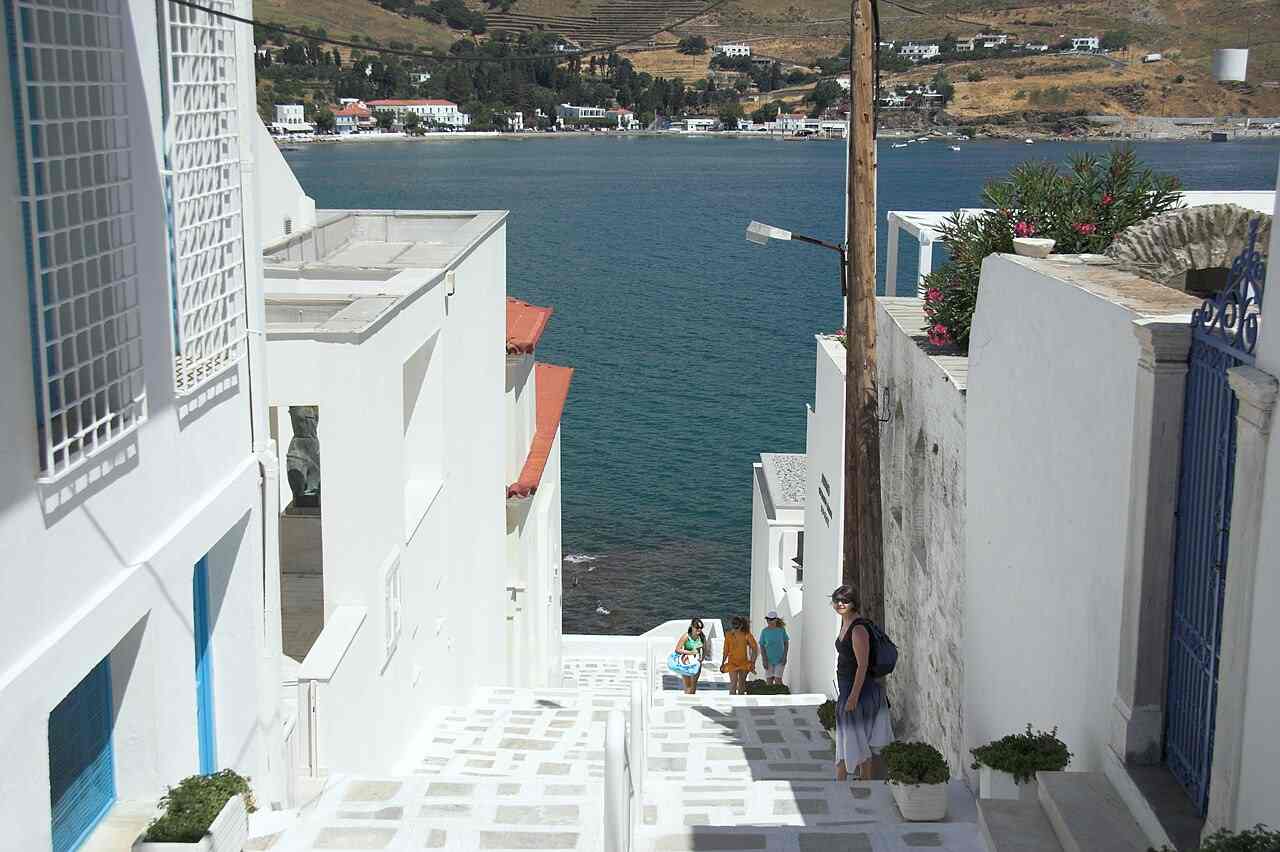
Andros was one of the great maritime islands of Greece, its shipowners’ fleets crossing the world, and the Maritime Museum in Chora records that heritage. Set near the open terrace of the Riva, with the bronze statue of the Unknown Sailor gazing out to sea nearby. It houses ship models, navigational instruments, flags and archives from the island’s seafaring golden age.
The museum tells the story of the captains and shipowners whose fortunes raised the neoclassical mansions of the marble main street and endowed the island’s other institutions. Small but evocative, it fits naturally into a walk through the capital, linking the elegant town to the sea that made it, as the guide to Chora describes.
What other museums and cultural spaces does Andros have?
Beyond Chora, the Olive Museum of the Cyclades at the village of Pitrofos explains the island’s traditional oil-making with old presses and tools. The historic Kairios Library in Chora holds rare books and manuscripts, adding to the island’s cultural depth.
Inland at the village of Pitrofos, the Olive Museum of the Cyclades occupies a restored olive press and explains the traditional oil-making that shaped the island’s terraced landscape. With old stone presses, tools and displays on a craft central to rural Andros. It makes a rewarding stop on a tour of the green interior and its villages.
In Chora, the Kairios Library preserves a valuable collection of old books, manuscripts and documents. A scholarly counterpart to the art and archaeology of the square, while smaller folklore and church collections add further texture. Together these spaces round out a cultural offering remarkable for an island of this size, complementing the beaches and the trails of the wider island and its villages.
When can you visit the Andros museums?
The Andros museums are busiest and fullest in summer, when the Museum of Contemporary Art stages its major exhibitions, roughly from late June to September.
The cultural season on Andros peaks in summer, above all at the Museum of Contemporary Art, whose landmark temporary exhibitions run through the warm months. Generally from late June into September. Are the highlight of the island’s cultural calendar. This is the time to catch the major shows that draw visitors from the mainland.
The Archaeological, Maritime and Olive museums keep their own opening days and hours. Which change with the season and can be limited outside summer. Checking current times before setting out avoids disappointment. Most of the museums cluster in Chora within a short walk of each other, on and around Kairi Square. Making it easy to see several in a single unhurried day in the capital. Combining a morning among the museums with an afternoon on the beaches or the trails is one of the ways Andros balances culture and nature that few Cycladic islands can match.
Frequently Asked Questions
What is the most famous museum in Andros?
The most famous museum in Andros is the Museum of Contemporary Art of the Basil and Elise Goulandris Foundation in Chora, founded in . Its major summer exhibitions have shown works by Picasso, Matisse, Kandinsky. Klee and Balthus alongside a permanent collection of Greek art. They have made the island a cultural destination in its own right, drawing art lovers from Athens and beyond each year. A new wing added in expanded the galleries. The permanent collection of Greek art is regularly renewed, so the museum rewards repeat visits across different summers on the island and never shows quite the same face twice.
Where is the Hermes of Andros?
The Hermes of Andros, a Hellenistic marble statue in the manner of Praxiteles found in the nineteenth century at the ancient capital of Palaiopolis. Is displayed in the Archaeological Museum of Andros in Chora, on Kairi Square. It is the museum’s star exhibit and one of the finest ancient sculptures on the island, shown alongside finds from the early Iron Age settlement of Zagora.
Are the museums of Andros worth visiting?
Yes. Andros has a cultural depth rare among the smaller Cyclades, thanks to the patronage of the Goulandris shipowning family. The Museum of Contemporary Art stages world-class summer exhibitions, the Archaeological Museum holds the celebrated Hermes of Andros. The Maritime and Olive museums add the island’s seafaring and rural heritage. Giving Andros a rest-day and rainy-day appeal that beach-only islands lack.