
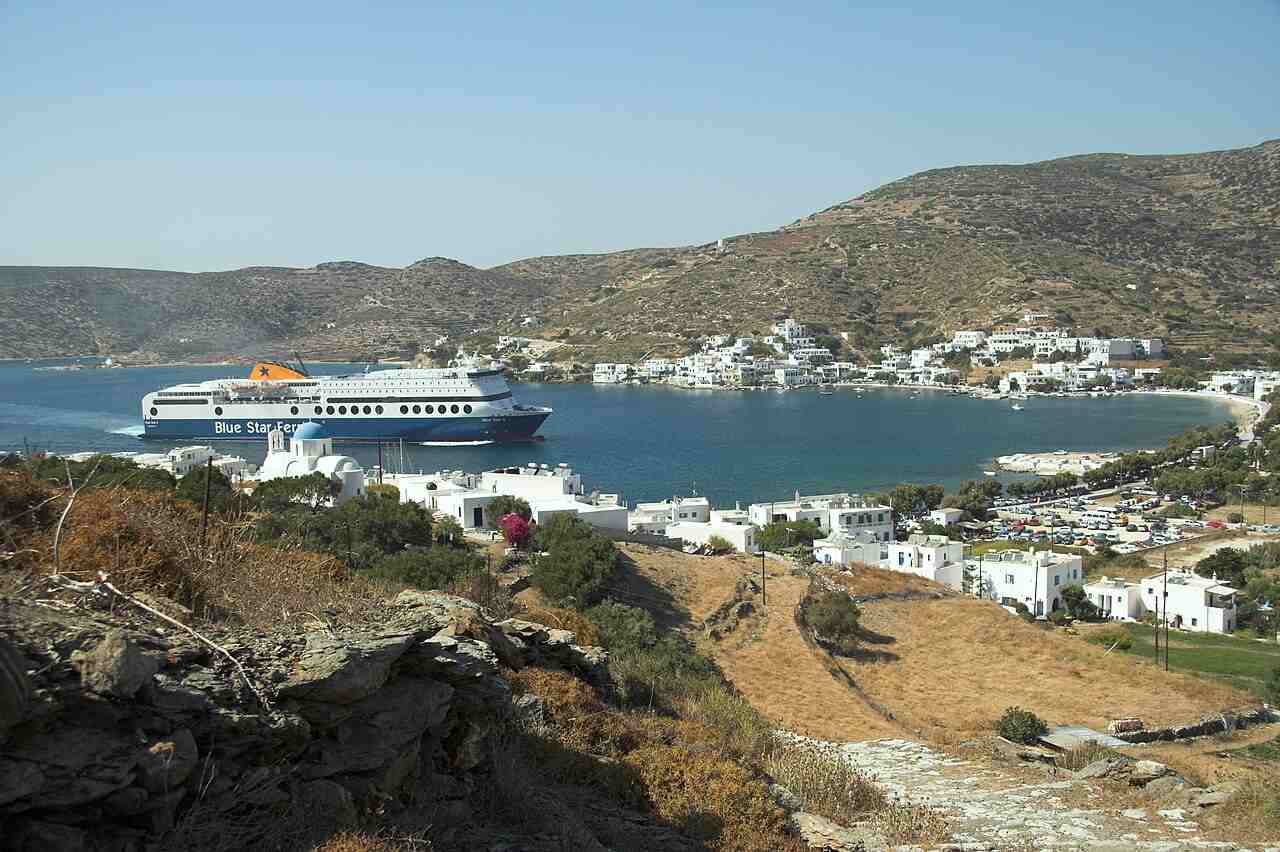
Amorgos lies far to the east of the Cyclades and has no airport. Reaching it means a ferry: direct from Piraeus near Athens. Or, more quickly, by flying to Naxos, Santorini or Mykonos and sailing on from there. The island has two ports, Katapola in the centre and Aegiali in the north, and the crossing is part of the adventure of visiting this remote, unspoilt island. Plan the whole trip with Greece Tours.
This guide covers how to get to Amorgos: the ferries from Athens, Naxos and Santorini, the flight-and-ferry options, the two ports. The little local ferry that links the island with its neighbours, ferry times and prices, when boats run. How to get around once you arrive. Read it beside the wider Amorgos travel guide.
How do you get to Amorgos?
Amorgos has no airport, so you reach it by ferry: direct from Piraeus near Athens, or by flying to Naxos, Santorini or Mykonos and taking a ferry on from there.
Every visitor arrives by sea. There are two broad ways to do it: sail the whole way on a direct ferry from the port of Piraeus near Athens, a long but simple crossing. Or fly to a nearer island with an airport, most often Naxos, Santorini or Mykonos. Take a shorter ferry on to Amorgos from there.
The choice is a trade-off between time and simplicity. The direct ferry from Athens involves no flight but a long sea journey, while the fly-and-sail route is faster overall but needs a connection and careful timing between the flight and the boat. Either way, the last leg is a ferry to one of the island’s two ports.
Ferries arrive at Katapola, the main port in the central bay, or at Aegiali in the north, depending on the route and the vessel. Choosing an arrival port near where you plan to stay saves a long transfer across this spread-out island. It is worth checking which port a ferry serves when you book.
Is there an airport on Amorgos?
No, Amorgos has no airport. To reach it by air you fly to the nearest islands with airports, Naxos, Santorini or Mykonos, and then take a ferry on to Amorgos, or you sail the whole way by ferry from Athens.
Amorgos is one of the Cyclades without an airport, part of what has kept it quiet and unspoilt. There are no direct flights to the island, so air travellers fly instead to a neighbouring island that does have an airport and continue by sea.
The most useful airports for reaching Amorgos are those of Naxos, Santorini and Mykonos, all with ferry links onward to the island. Naxos is the closest and often the most convenient connection, while Santorini and Mykonos have more international flights but a longer or less frequent onward ferry.
Planning a flight-and-ferry route means coordinating the flight arrival with the onward boat, allowing a comfortable margin for delays, since the ferry run only once or twice a day. For visitors, especially those already island-hopping, the ferry connection is straightforward, but it rewards careful timing. Booking the flight and the ferry as a linked plan avoids awkward waits.
How do you get to Amorgos from Athens?
From Athens, ferries sail to Amorgos from the port of Piraeus year-round, taking around eight hours on the standard ferry and about six on the faster vessels. Some services also leave from Rafina.
The classic way to reach Amorgos is the direct ferry from Athens, sailing from the great port of Piraeus. These crossings run year-round and take roughly eight hours on a standard car ferry, calling at other islands along the way. Or around six hours on the faster high-speed services, making it a long day at sea.
The direct ferry has the advantage of simplicity, no flight, no connection. Just one boat from the mainland to the island. It lets you bring a hire car from Athens or travel overnight on sailings. It is the natural choice for those who prefer not to fly or who are starting their trip in Athens.
The trade-off is time: the long crossing takes up the best part of a day. Many visitors in a hurry prefer to fly to a nearer island and sail on. For a relaxed start, though, or for reaching the island year-round, the direct ferry from Piraeus is dependable, with services also operating from the smaller port of Rafina. Overnight sailings let you save a night’s accommodation and wake near the island, a practical option for the long crossing.
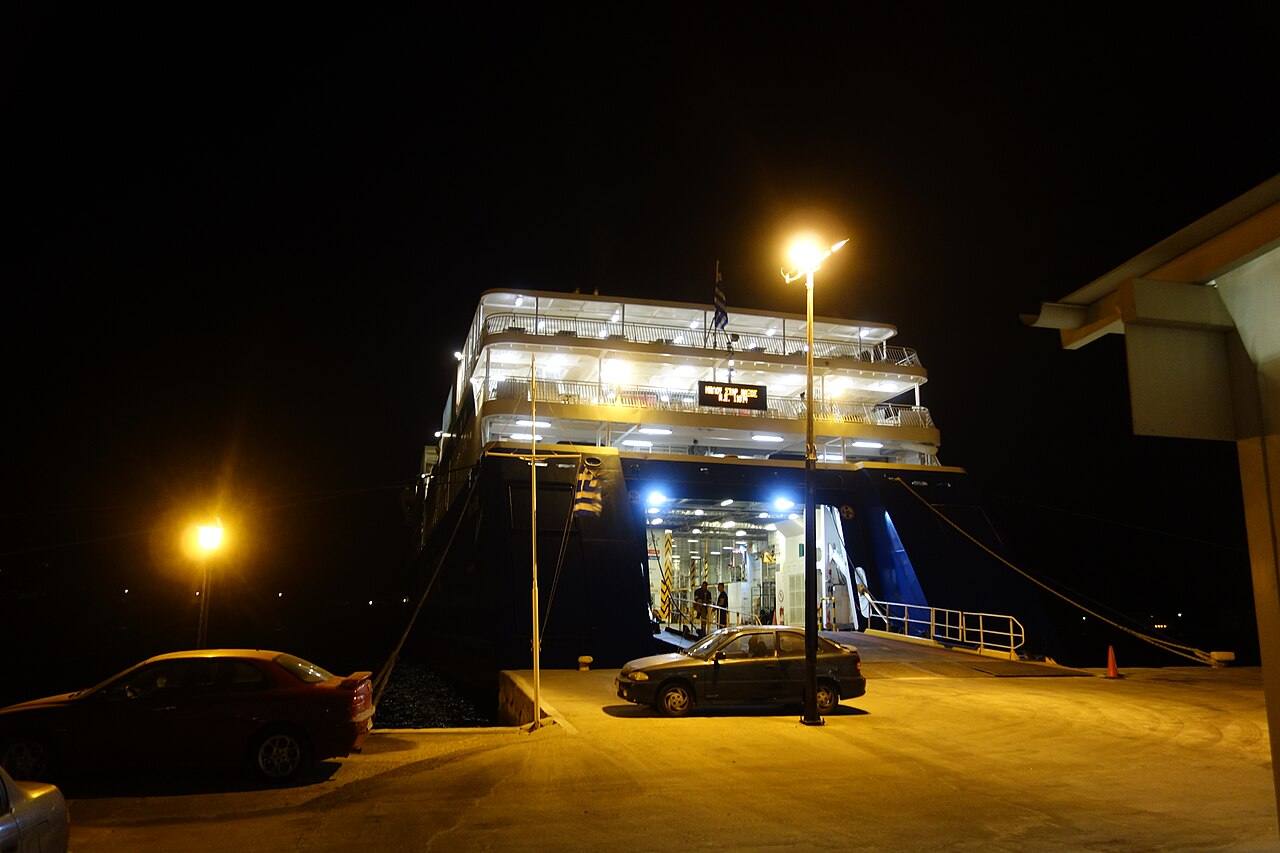
How do you get to Amorgos from Naxos?
Naxos is the closest airport and ferry hub to Amorgos, with daily ferries year-round taking from about 1.5 to 4 hours, depending on the vessel.
Naxos is the handiest stepping stone to Amorgos. It has an airport with flights from Athens, and daily ferries link it with both ports of Amorgos through the summer, running year-round on the main route. The crossing takes anywhere from about an hour and a half on a fast boat to around four hours on slower or multi-stop services.
The route is served by the large Blue Star ferries and by fast vessels, as well as by the small local ferry. The Express Scopelitis, which threads the Little Cyclades between Naxos and Amorgos. This frequency and choice make Naxos the most reliable and convenient connection for reaching Amorgos, whether you fly into Naxos or sail there first.
For visitors the ideal route is a short flight from Athens to Naxos followed by the ferry on to Amorgos, cutting the long direct crossing to a fraction. Timing the flight and the boat with a comfortable margin makes this the smoothest way to reach the island. Naxos itself is well worth a night or two at the start or end of a trip, breaking the journey and adding a second island.
How do you get to Amorgos from Santorini?
From Santorini, ferries reach Amorgos in about 1 hour 15 minutes on a fast boat, or up to around 5 hours on slower services, with fares from about twelve euros.
Santorini is another common gateway, thanks to its busy international airport. Ferries sail from the port of Athinios on Santorini to Katapola on Amorgos. Taking around an hour and a quarter on the fast catamarans or up to about five hours on slower vessels, with fares starting from roughly twelve euros.
The advantage of Santorini is the range of flights, including international ones, that reach its airport, making it a natural entry point for visitors coming from abroad. The onward ferry to Amorgos, however, runs less frequently than the Naxos connection and is more subject to the summer meltemi wind, so timing needs care.
For travellers wanting to combine the two islands, the Santorini to Amorgos ferry makes an easy leg of a wider Cyclades trip. Swapping the crowds of Santorini for the quiet of Amorgos. Booking the ferry in advance and allowing a margin after a flight are wise, given the less frequent sailings. Because Santorini’s port is busy and the sailings fewer, arriving a day early to be sure of the boat is a sensible precaution in peak season.
How do you get to Amorgos from Mykonos and Paros?
From Mykonos and Paros, seasonal fast ferries reach Amorgos in the summer, often via Naxos or the Little Cyclades, taking hours.
Mykonos and Paros, both with airports and major ferry ports, are further possible gateways to Amorgos, especially in the summer high season. Seasonal fast ferries link them with the island, often calling at Naxos or the Little Cyclades on the way. With journey times of hours depending on the route and the stops.
These connections are most useful for visitors already on Mykonos or Paros, or arriving through their airports, who want to continue to Amorgos. As with the other routes, the sailings run less frequently than the core Naxos service, so checking the seasonal schedule and booking ahead are important.
For those island-hopping through the central Cyclades, Amorgos sits at the eastern edge. Reachable from Mykonos and Paros as well as Naxos, making it a rewarding, quieter addition to a wider tour. The many possible routes give flexibility, though Naxos remains the most dependable connection.
What are the two ports of Amorgos?
Amorgos has two ports: Katapola, the main port in the central bay, where most ferries dock and buses and boats connect the island; and Aegiali in the north, served by fewer ferries but handy for the northern beaches and mountain.
Amorgos is unusual in having two ferry ports at opposite ends of its long coast. Katapola, in the deep central bay, is the main port, where most ferries call and where the buses to Chora and the beaches and the boats to the coves begin. It is the more central and better-connected of the two, and the usual arrival point.
Aegiali, in the north, is the second port, served by fewer ferries but valuable for visitors staying in the north. Close to the island’s best beach and the mountain villages of Langada and Tholaria. Some ferries call at both ports on the same sailing, others at only one, so the port matters when planning.
Arriving at the one nearest your base saves a long transfer. It is worth confirming which port a ferry serves, and choosing your accommodation to match, as the guide to where to stay in Amorgos explains. A bus and taxis link the two ports for those who arrive at one and stay near the other, though the transfer across the island takes time.
What is the Express Scopelitis ferry?
The Express Scopelitis is a small local ferry that links Amorgos with Naxos through the Little Cyclades, calling at Koufonisia, Iraklia, Schinoussa and Donousa.
The Express Scopelitis is a small, much-loved local ferry that has plied the waters between Naxos and Amorgos for decades, threading the chain of the Little Cyclades on the way. It calls at the tiny islands of Koufonisia, Iraklia, Schinoussa and Donousa, linking them and Amorgos with Naxos in a daily service that is a lifeline for the small islands.
For visitors, the Scopelitis is both a practical connection and an experience in itself, a slow. Characterful boat and a window on local island life, ideal for hopping between Amorgos and the Little Cyclades. It is small, however, and in the strong summer meltemi wind the crossing can be rough, so those prone to seasickness prefer the larger ferries in bad weather.
Riding the Scopelitis is part of the charm of the eastern Cyclades, and it makes day trips and island-hopping from Amorgos to its tiny neighbours easy. For the bigger crossings to and from the mainland, though, the larger Blue Star and fast ferries are the mainstay. Named after its long-serving operators, the little boat has become a symbol of the eastern Cyclades and a favourite of returning visitors.
How long does the ferry to Amorgos take?
The ferry to Amorgos takes around eight hours from Athens on a standard vessel, about six on a fast one, roughly 1.5 to 4 hours from Naxos, and around 1 hour 15 minutes to 5 hours from Santorini, depending on.
Journey times to Amorgos vary widely with the route and the vessel. From Athens, the direct ferry from Piraeus takes roughly eight hours on a standard car ferry and around six on the faster services. From Naxos, the nearest hub, the crossing runs from about an hour and a half on a fast boat to around four hours on slower, multi-stop sailings.
From Santorini, the fast catamaran reaches Amorgos in around an hour and a quarter, while slower vessels take up to about five hours. The stops that ferries make among the Cyclades add to the time. A direct fast service is quicker than one that calls at islands on the way.
In choosing a ferry, weigh speed against cost and schedule: the fast boats save hours but cost more and are more easily disrupted by wind, while the slower ferries are cheaper and steadier. The variety of routes and vessels means there is usually an option to suit, especially in the summer high season.
How much do ferries to Amorgos cost?
Ferry fares to Amorgos start from around twelve euros from nearby islands like Santorini and Naxos, rising for fast boats and for the long crossing from Athens, which typically costs more.
Ferry prices to Amorgos vary with the distance, the type of vessel and the seat. Short crossings from the nearer islands, such as Santorini and Naxos, start from around twelve euros for a basic seat, while the fast boats cost more than the slower ferries on the same route, reflecting the time they save.
The long direct crossing from Athens costs more, with the price depending on whether you travel deck class. In an assigned seat or, on overnight sailings, in a cabin. On whether you bring a vehicle. Fares rise in the July and August peak, when demand is highest and boats fill.
Booking ahead in high season not only secures a place but can lock in a fare before the busiest sailings sell out. Comparing the vessels and classes on a route helps balance cost against comfort and speed, especially on the longer crossings. Children, students and residents often qualify for reduced fares, so it is worth checking the fare categories when booking.
When do ferries to Amorgos run?
Ferries to Amorgos run year-round from Athens and Naxos, with the fullest schedules and the fast boats and seasonal routes operating from about May to October.
The core ferry links to Amorgos, the direct crossing from Piraeus and the connection through Naxos, operate year-round, so the island is reachable in every season. The frequency and choice are greatest in the summer, from roughly May to October, when the fast boats run and the seasonal routes from Santorini, Mykonos and Paros are added.
In winter the schedule thins to the essential year-round services, with fewer sailings and no fast boats, so reaching the island takes more planning out of season. The shoulder months of late spring and early autumn offer a good balance of decent schedules and quieter boats.
The main disruption is the weather: the strong summer meltemi wind can occasionally delay or cancel sailings. Especially the smaller and faster boats. Building some flexibility into travel plans is wise, particularly when connecting to or from a flight. Checking the forecast and the schedule near your travel date helps. Schedules for the coming season are usually published in spring, so plans can be firmed up months ahead for summer travel.
Should you fly and sail or take the direct ferry to Amorgos?
Flying to Naxos or Santorini and sailing on is fastest, cutting the journey to hours, but needs a connection. The direct ferry from Athens is simpler and needs no flight, but takes six to eight hours.
The two ways to reach Amorgos suit different travellers. Flying from Athens to a nearer island with an airport, Naxos, Santorini or Mykonos. Taking a ferry on is faster overall. Turning a long sea crossing into a short flight and a shorter boat, ideal for those short on time or coming from abroad.
The direct ferry from Piraeus, by contrast, needs no flight or connection. Just one boat from the mainland to the island. It runs year-round and lets you bring a hire car from Athens. Its drawback is time, the crossing taking the best part of a day, so it suits those who prefer not to fly or who value simplicity over speed.
For many, the sweet spot is a short flight to Naxos followed by the ferry, combining speed with a reliable connection. Whichever you choose, the last leg is a ferry, so timing it, especially after a flight, with a comfortable margin for delays is the key to a smooth journey. Weighing the cost of a flight against the time saved helps decide, as the fly-and-sail route is quicker but usually dearer than the direct ferry.
Can you reach Amorgos while island-hopping the Cyclades?
Yes.
Amorgos is a rewarding stop on a Cyclades island-hopping route, reached by ferry from several of the main islands. Its strongest links are with Naxos and, through the little Express Scopelitis ferry, with the Little Cyclades. The tiny islands of Koufonisia, Iraklia, Schinoussa and Donousa that string between them, making a natural cluster to explore together.
Seasonal fast ferries also connect Amorgos with Santorini, Mykonos and Paros in summer. It can be woven into a wider tour of the central and southern Cyclades. Offering a quiet, dramatic contrast to the busier islands. Pairing Amorgos with Naxos and the Little Cyclades makes an especially rewarding, unhurried itinerary.
It works best as a destination in its own right rather than a quick stop, given the distances and the ferry times. Building it into an island-hopping plan with days on the island, and checking the seasonal schedules, gives the best of this remote corner of the Aegean. Its position rewards those willing to travel a little further than the crowds.
What is the ferry journey to Amorgos like?
The ferry to Amorgos ranges from a long, relaxed crossing from Athens, sometimes overnight, to a short fast hop from Naxos. Larger ferries have seating, cafes and deck space; the small Express Scopelitis is basic and characterful.
The journey itself is part of visiting Amorgos. On the long crossing from Athens, the large ferries offer assigned seats, cafes, shops and open decks. Some overnight sailings have cabins. Making the hours pass in comfort, with the Cyclades sliding by and other islands called at along the way.
The shorter hops from Naxos and Santorini on fast catamarans are quicker and more businesslike, with airline-style seating, while the small local Express Scopelitis is a basic, characterful boat, a slow and sometimes lively ride that is an experience in itself among the Little Cyclades. Each has its own flavour.
You come, the approach to Amorgos is memorable, the long, mountainous island rising steeply from the sea, its white villages high on the ridge and, from angles, the Hozoviotissa Monastery a speck on the cliff. Arriving by sea, the only way, sets the tone for a visit to this dramatic, remote island. Many travellers come to enjoy the crossing itself, watching the Cyclades pass and the light change over the sea, as part of the holiday.
How do you get around Amorgos once you arrive?
On Amorgos, a local bus links the ports of Katapola and Aegiali with Chora and the main beaches times a day in summer.
Once on the island, the local bus is the backbone of public transport. Running times a day in summer between the ports of Katapola and Aegiali, the capital Chora, Agia Anna beach and Kalotaritissa in the south. It is enough to reach the main hubs and beaches, though the timetable thins outside high season.
For the freedom to reach the remoter beaches, the mountain villages and the ancient sites. A hire car, scooter or quad is the practical choice, collected at Katapola or Aegiali on arrival. The island is large and mountainous with its highlights spread far apart, so independent transport greatly widens what you can see.
Taxis are few, so most visitors rely on the bus for the main routes and a hire vehicle for the rest. Or base themselves centrally at Katapola and use the boats to the coves. Boat trips also connect the coast, as the guide to Amorgos boat trips describes. Booking a hire vehicle in advance for July and August is wise, as the island’s small fleet is quickly taken in the peak weeks.
What tips help for booking ferries to Amorgos?
Book ferries to Amorgos ahead in July and August, choose an arrival port near your base, allow a comfortable margin when connecting from a flight, and keep plans flexible for the summer meltemi wind, which can disrupt the faster and.
A few practical points smooth the journey. In the July and August peak the popular sailings fill. Booking ahead secures both a place and a fair fare, while in the shoulder and low seasons there is more flexibility. Checking whether a ferry serves Katapola or Aegiali, and choosing the port nearest your base, saves a long transfer on arrival.
Allow a generous margin between the plane and the boat, since ferries run only once or twice a day and a missed connection can mean a long wait. The same caution applies when leaving, to be sure of reaching your outbound flight.
Above all, keep some flexibility for the weather. The strong summer meltemi can delay or cancel sailings at short notice, especially the fast and smaller boats, so avoid planning a tight, no-margin itinerary in high summer. With a little planning, reaching this remote, rewarding island is straightforward, as the wider Amorgos guide sets out. Keeping digital and printed copies of your tickets, and arriving at the port in good time, round out a stress-free journey.
Frequently Asked Questions
Does Amorgos have an airport?
No, Amorgos has no airport, which is part of what has kept it quiet and unspoilt. To reach the island you either sail the whole way by ferry from the port of Piraeus near Athens. Or fly to a neighbouring island that does have an airport, most often Naxos, Santorini or Mykonos. Take a ferry on to Amorgos from there. Naxos is the closest and usually the most convenient connection.
What is the fastest way to get to Amorgos?
The fastest way to reach Amorgos is usually to fly from Athens to Naxos. A short hop. Take a fast ferry on to Amorgos, which can take as little as about an hour and a half. Flying to Santorini and catching the fast catamaran, around an hour and a quarter to Katapola, is another quick option. Both are far faster than the direct ferry from Athens, which takes roughly six to eight hours, though the fly-and-sail routes need careful timing between the flight and the boat.
Which port does the ferry to Amorgos arrive at?
Amorgos has two ports: Katapola, the main port in the central bay, where most ferries dock, and Aegiali in the north, served by fewer sailings. Some ferries call at both on the same route, others at only one. It is important to check which port your ferry uses and to choose accommodation nearby, since the two ports are far apart on this long island and a transfer between them takes time.
Can the ferry to Amorgos be cancelled by weather?
Yes. The strong summer meltemi wind that blows across the Cyclades can occasionally delay or cancel ferries to Amorgos. Especially the smaller and faster boats, which are more affected by rough seas than the large Blue Star vessels. It is wise to keep some flexibility in your plans, particularly when connecting to or from a flight. To check the forecast and schedule near your travel date. To avoid a tight, no-margin itinerary in high summer.