
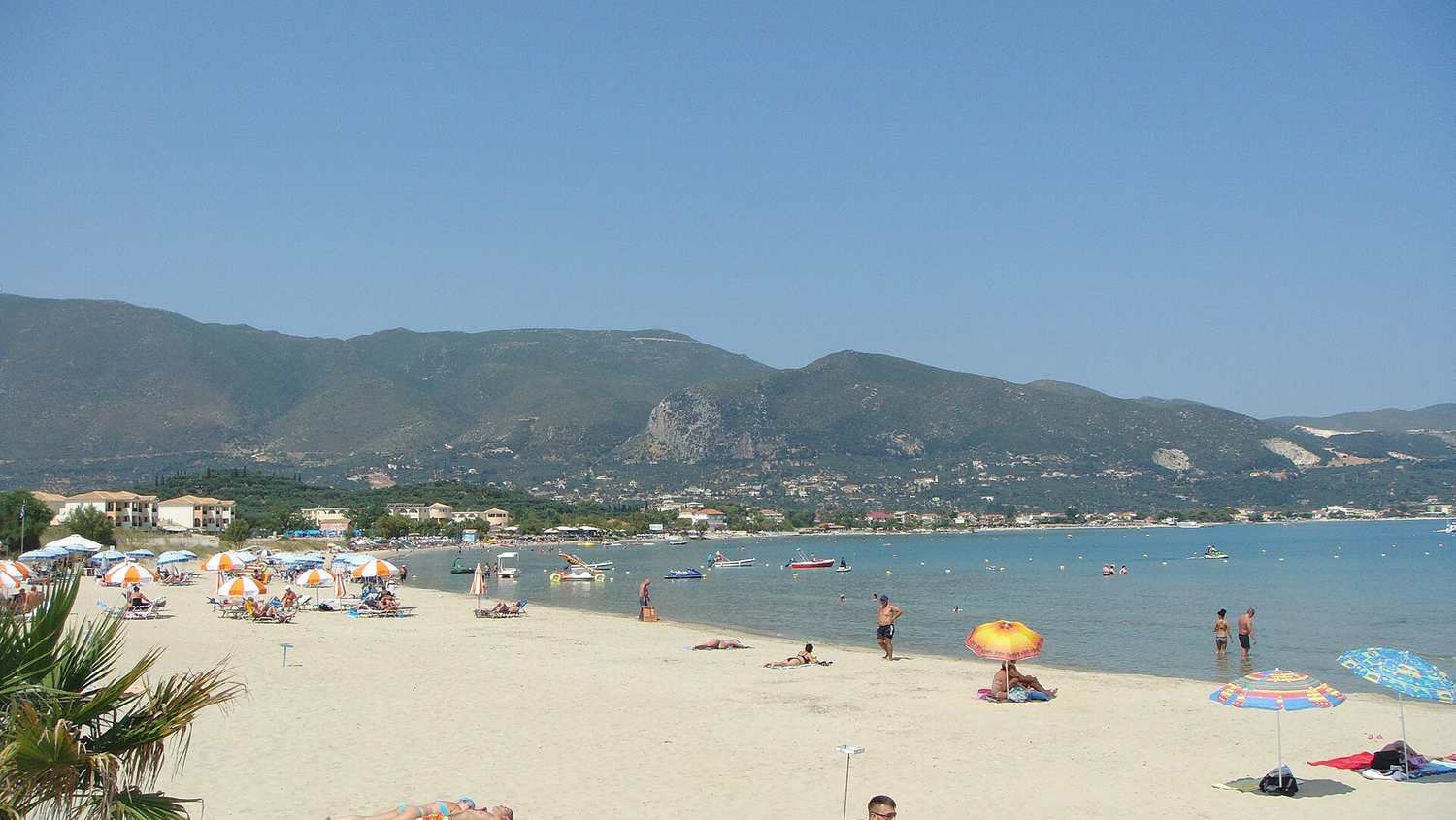
Alykes sits on the northeast coast of Zakynthos, named for the old salt pans behind it. A long sandy Blue Flag beach with shallow calm water suits families, backed by tavernas and small hotels. Behind the village, the former salt flats spread out as a quiet wetland where birds gather. A stone bridge and a windmill add character. The pace stays calm and traditional compared with the busier southern resorts. From the harbour, boats head along the north coast to the sea caves and the shipwreck cove. Alykes offers a quieter northern base with a long beach and a touch of the working past of Zakynthos. Plan your trip with My Greece Tours.
The sections below cover what makes Alykes distinct among Zakynthos resorts, from its Blue Flag beach and shallow water to the old salt flats and the north coast boat trips. This guide explains where the village sits on the northeast coast, what the beach offers families with children, why the wetland behind the village matters, and how the harbour connects visitors to the sea caves and the shipwreck cove. For a broader look at the island, the Zakynthos travel guide covers the main towns, beaches and natural landmarks.
Where is Alykes located on Zakynthos?
Alykes is a resort village on the northeast coast of Zakynthos, named for the old salt pans behind it. A stone bridge and a windmill add character. The pace stays calm and traditional compared with the busier southern resorts.
The northeast coast of Zakynthos offers a different character from the busy southern party towns, and Alykes captures that quieter mood. The village takes its name from the Greek word for salt pans, the alykes, which once produced salt for the island. Those flat salt beds still lie behind the village, drained and quiet, drawing birds to the damp ground. A stone bridge crosses the narrow channel, and a windmill stands as a landmark, giving the village a distinct sense of place. Visitors who prefer a slower rhythm find that Alykes delivers a relaxed base with tavernas, cafes and small hotels along the beach road.
Compared with Laganas and the other southern resorts, the northern coast feels traditional and unhurried. For more on the coastline, see the guide to Zakynthos beaches.
The salt pans gave Alykes its name and its former trade. Salt production shaped the village for generations, and the old beds remain visible behind the beach. They form a flat, open wetland that draws birds and gives the resort a backdrop unlike any other on Zakynthos. The village itself clusters around the beach road, where tavernas and cafes serve local food at a calm pace. A windmill near the bridge marks the old channel and adds a traditional touch to the streetscape. Families and couples tend to choose Alykes for the quiet nights and the shallow water rather than bars and clubs. The stone bridge offers a pleasant spot for a short evening walk.
To explore further along the coast, Xigia Beach lies a short drive south.
Alykes sits on the northeastern coast of Zakynthos, tucked into a wide bay that faces open sea. The village name means salt flats, a direct reference to the old salt pans drained behind the sand. Alykes lies beside its smaller neighbour Alykanas, and the Skourtis River separates the two settlements. Visitors reach the resort by driving north from Zakynthos Town along the coastal road that hugs the eastern shore. The beach road forms the heart of the village, lined with tavernas, mini-markets and small hotels. The setting places the salt flats, the harbour and a long sandy beach within one compact area.
Guests who base themselves here find the north coast landmarks close by and the crowds of the south comfortably distant from the daily routine.
What makes the beach at Alykes suitable for families?
The long, sandy Blue Flag beach at Alykes has shallow, calm water with a gentle slope into the sea. These conditions suit families with children, and the relaxed strip of tavernas, cafes and small hotels sits right behind the sand.
Families return to Alykes year after year for the dependable shallow water and the soft sand. The beach shelves gently into the Ionian Sea, so children can wade and play without deep water close to shore. The Blue Flag designation confirms the water quality and the standard of facilities along the sand. Sunbeds and umbrellas line the beach, and the tavernas just behind serve cold drinks, fresh fish and simple Greek plates throughout the day. The pace on the beach matches the pace in the village, unhurried and relaxed, with no pressure to move fast. Parents appreciate the lack of loud beach bars and late-night water sports noise.
The north coast location shelters the bay from the strongest winds, keeping the water flat and safe for younger swimmers throughout the peak months.
The beach road behind the sand gives Alykes its relaxed character. Tavernas, cafes and small hotels line the strip, offering evening meals and morning coffee within a short walk of the water. The accommodation tends toward family-run hotels and self-catering studios rather than large resorts, which keeps the atmosphere quiet. Children play on the sand in the early evening while parents sit at taverna tables overlooking the bay. The shallow water stays warm through the summer, and the gentle slope means toddlers can paddle safely near the shore. Beach equipment is available for hire, and the Blue Flag status means the sand is kept clean.
The whole stretch feels open and uncrowded, even in August, giving families space to spread out and relax without feeling packed together.
The gentle shelving seabed at Alykes gives parents peace of mind through the swimming season. Children wade out for a stretch of sand before the water reaches waist depth, and the calm bay holds the surface flat. The Blue Flag rating confirms clean water and a beach kept to a recognised standard each summer. Sunbeds, umbrellas and water sports operators sit along the golden sand, so equipment and shade stay within reach. Tavernas and mini-markets behind the beach supply cold drinks, snacks and full meals without a long walk. The village lacks the loud clubs of the south, keeping the evenings quiet for young families.
Space on the sand stays generous through the peak weeks, letting children build and play without crowding into a narrow strip near the water.
What role did the salt flats play for Zakynthos?
The old salt flats behind Alykes once served as an important source of salt for Zakynthos. They still spread out behind the village, now drained and quiet, forming a wetland where birds gather along the damp ground.
The salt pans gave Alykes both its name and its historical purpose. For generations, islanders harvested salt from the shallow pans behind the village, and the trade formed part of the local economy. The flat beds still lie behind the beach, though the salt is no longer gathered on a commercial scale. Rain and groundwater collect in the low ground, creating patches of marsh and damp earth that attract birds throughout the year. Herons, egrets and smaller waders stop here during migration, drawn by the insects and the sheltered water. The wetland sits quietly behind the tavernas and hotels, easy to miss for visitors who stay on the beach road.
A short walk along the stone bridge gives a clear view across the beds and the windmill beyond.
The windmill near the bridge stands as a reminder of the working past of the village. Salt production relied on wind power to pump water between the pans, and the stone bridge carried workers and carts across the channel. The buildings around the flats are simple and functional, built for the salt trade rather than for tourists. Visitors who walk past the bridge can see the flat beds stretching toward the hillside, brown and dry in summer, damp and green in the cooler months. The contrast between the wetland and the sandy beach gives Alykes a layered character that most Greek resorts lack.
Birdwatchers and photographers find the area rewarding in spring and autumn, when the water levels rise and the passing birds gather in greater numbers along the flats.
Salt from the pans behind Alykes supported the local economy across earlier generations of islanders. Workers channelled seawater into the shallow beds, let the sun evaporate it, then gathered the crystallised salt for trade. Production continued until the late twentieth century, when the pans fell out of commercial use and the beds were left to nature. The drained ground now forms a habitat where owls hunt at dusk and geckos bask on the warm earth. Water collects across the flats after rain, turning the beds into a shallow marsh that draws feeding birds. A road track runs beside the pans, letting summer visitors walk the edge without stepping onto the fragile salt crust.
The flats glow at golden hour, when low light warms the pale ground and the windmill stands out against the sky.
What boat trips run from the harbour at Alykes?
Boats set out from the harbour at Alykes along the north coast of Zakynthos, reaching the sea caves and the shipwreck cove. The trips pass cliffs and hidden beaches, giving visitors access to parts of the coast unreachable by road.
The small harbour at Alykes serves as the starting point for boat trips along the north coast of Zakynthos. Captains take their vessels west toward the cliffs, stopping at sea caves cut into the white rock. The water glows blue inside the caverns, where sunlight reflects off the submerged limestone. Boats anchor outside the entrances and passengers swim or climb down to explore. The most famous stop on the route is the shipwreck cove, where a rusted freighter sits on the sand between steep cliffs. Trips typically last half a day and include stops for swimming in the clear water. Visitors should bring sun protection and water, as the boats offer little shade.
The north coast holds the Blue Caves and other rock formations best seen from the sea.
The shipwreck cove draws the largest crowds on these boat routes, and trips from Alykes reach it within an hour. The beach, enclosed by sheer cliffs, holds the remains of a cargo ship that ran aground in the nineteen eighties. Passengers step off the boats onto the white pebbles and take photographs of the wreck against the cliff face. The water is deep and clear, turning bright turquoise in the afternoon sun. Boat operators time their visits to avoid the peak crowds from the southern departure points, giving Alykes passengers a calmer experience at the cove.
The return journey follows the north coast past Cape Skinari and its lighthouse, with views back toward the salt flats and the village beach. The wreck site is also known as Navagio Beach.
Glass-bottom boats leave the harbour at Alykes, letting passengers view the seabed and rock formations without diving. The vessels head north and west along the cliffs toward the Blue Caves near Cape Skinari. Sunlight passing through the sea turns the water inside the caverns a deep, clear blue. Some trips continue to the viewpoint area above the Shipwreck cove, where the beach lies enclosed by tall white cliffs. Fishing trips also set out from the harbour, taking small groups onto the water for the day. Operators supply life jackets and point out landmarks along the coast between stops. Passengers should carry sun protection and water, since the open decks give little shade.
The harbour keeps its schedule through the summer, with departures timed for the calmer morning sea.
How does Alykes differ from the southern Zakynthos resorts?
Alykes runs at a calmer, more traditional pace than the busy southern resorts like Laganas. The village has no large clubs or late bars, and the beach stays quiet. Families and couples tend to prefer this relaxed northern atmosphere.
The difference between north and south Zakynthos comes down to pace and scale. Laganas and Kalamaki draw younger crowds with bars, clubs and late nights, while Alykes keeps to a slower rhythm built around the beach, the tavernas and the salt flats. The accommodation in Alykes consists of small hotels and self-catering studios, not the large blocks found in the southern resorts. Evening entertainment means a meal at a family taverna rather than a night at a beach club. The north coast also benefits from a different landscape, with rocky headlands, sea caves and the lighthouse at Cape Skinari within easy reach. Walkers and swimmers find quiet coves and footpaths along the cliffs.
The overall feel is traditional Greek island life, not a purpose-built party zone.
Choosing Alykes as a base gives visitors access to the north coast without the need to drive from the south. The harbour sends boats out to the sea caves and the shipwreck cove each morning, and the return trips reach the village by late afternoon. Guests can spend their days on the beach, by the salt flats, or on the water, all within a short walk from their hotel. The tavernas serve fresh fish and local wine in the evening, and the streets stay quiet through the night. This combination of a long sandy beach, a working harbour and a natural wetland gives Alykes an identity distinct from every other resort on the island.
Organised Zakynthos boat tours also depart regularly through the long summer season.
Prices at Alykes tend to sit below those at Laganas, Tsilivi and Kalamaki, which draws budget-conscious families north. The southern resorts pack in large hotels, beach clubs and late bars, while Alykes keeps to tavernas, mini-markets and low-key nightlife. Accommodation here leans toward family-run studios and small hotels rather than the big blocks that dominate the south. Evenings mean a meal beside the bay and a quiet walk rather than a night in a club. The northern setting adds the salt flats, the harbour and easy access to the sea caves that the flat southern coast cannot match. Sound carries little across the village after dark, so sleep comes easily for guests with young children.
The result is a traditional resort that trades scale and noise for space, calm and a slower daily rhythm.
Frequently Asked Questions
Is Alykes a good base for exploring the north coast of Zakynthos?
Alykes works well as a base for exploring the north coast of Zakynthos. The village sits on the northeast shore, close to the main road that runs along the top of the island. From the harbour, boats depart for the sea caves and the shipwreck cove, cutting out the need to drive south to Zakynthos Town or Laganas for a tour. The beach at Alykes gives families a safe swimming spot to return to after a day on the water. Tavernas and small hotels line the beach road, so meals and accommodation stay close at hand. The old salt flats behind the village add a quiet walking route for the early morning or evening.
The north coast also holds rocky coves, a lighthouse at Cape Skinari and dramatic cliffs that drop into clear water. A hire car opens up the mountain villages inland. The beach, the harbour and the wetland all sit within walking distance of the village centre, making Alykes a practical and relaxed base.
Can you see birds at the salt flats in Alykes?
The salt flats behind Alykes attract birds throughout the year, especially during spring and autumn migration. The old salt pans lie at a low point behind the village, where rain and groundwater collect in patches. This damp ground draws herons, egrets, moorhens and smaller waders that feed on insects and small fish. The flats are no longer harvested for salt, so the ground has reverted to a natural wetland state, quieter and less disturbed than the beach. Birds rest and feed here away from the crowds on the sand. Visitors walking along the stone bridge can look across the beds and spot movement in the grass and the shallow pools.
The best time for birdwatching falls in the early morning, before the heat drives the birds into cover. Spring migration brings the greatest variety, as species travelling between Africa and Europe stop on the flat ground to rest. The wetland gives Alykes a natural feature beyond the beach.
How far is Alykes from Zakynthos Airport?
Alykes lies roughly twenty kilometres from Zakynthos Airport, a drive of about thirty minutes along the main coastal road. The route follows the east coast north, passing through Zakynthos Town before cutting inland and then reaching the northeast shore at Alykes. Car hire at the airport gives the most flexibility for visitors who plan to explore the sea caves, Cape Skinari and the mountain villages. Taxis are available at the airport rank, and the fare is fixed by the local municipality. A private transfer can be arranged in advance through hotels or booking sites. Public buses connect Zakynthos Town with Alykes during the summer season, though the service runs less often than routes to Laganas and Argassi.
The drive passes olive groves and vineyards, giving a first view of the rural interior. Arriving in Alykes, visitors find the village spread along the beach road, with the salt flats visible behind the tavernas and the windmill near the bridge.
What villages and rivers lie next to Alykes?
Alykes shares its wide bay with the neighbouring village of Alykanas, a smaller and quieter settlement just to the south. The Skourtis River marks the boundary between the two, running down from the hills and reaching the sea between the beaches. The river keeps the two villages distinct, even though their beaches join along the same stretch of sand. Alykanas offers a handful of tavernas and studios, giving guests a second base with the same calm character. Visitors often walk between the two along the beach road, crossing the small bridge over the river channel. Behind both villages lie the drained salt pans that gave Alykes its name, forming a shared wetland backdrop.
The road north from here leads toward Cape Skinari, the Blue Caves and the rocky coves of the top of the island. Guests can explore both villages, the river mouth and the salt flats within a short and easy stroll from either beach.