
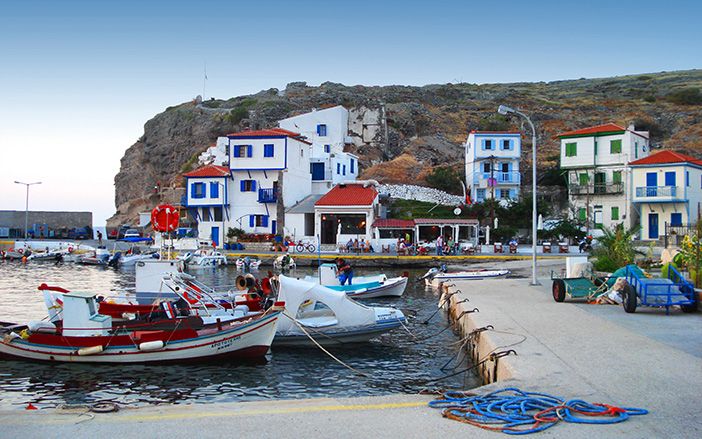
Discover Agios Efstratios Island, Greece: a quiet Aegean escape with authentic culture, pristine beaches, and scenic hikes for a unique travel experience.
Agios Efstratios Travel Guide: Discover Greece’s Untouched Island — How To Visit, What To See, and Where To Stay
We’re used to crowded ferry ports and itinerary-driven island hopping in Greece, but every once in a while, we find a place that feels like stepping back into a quieter version of the Aegean. Agios Efstratios is one of those places: small, slow, and startlingly authentic.
In this Agios Efstratios travel guide, we’ll walk you through how to get there, practicalities to plan for, the best beaches and walks, local food to seek out, and itineraries for one to three days. Whether you’re customizing a private Greece tour, adding an offbeat stop to a larger island-hopping route, or looking for a low-key escape from Santorini and Mykonos, this guide will help us make the most of our visit with confidence and respect for local rhythms.
No tour operator runs guided tours on Agios Efstratios itself, so the tours below cover the mainland ports of its ferry lines: Kavala, with ancient Philippi, and Lavrio, below Cape Sounion.
At-A-Glance: Quick Facts, Island Vibe, And Who Should Visit
Agios Efstratios at a glance
- Location: Small island in the northern Aegean, south of Limnos.
- Size & population: Tiny, only a few square kilometers and a population in the low hundreds, so services are intentionally limited.
- Character: Rustic, wind-swept landscapes, low whitewashed houses, few cars, strong sense of community.
- Best time to visit: Late spring (May–June) and early autumn (September) for warm sea temperatures without high-season crowds. July–August gets busier, but still far quieter than the popular Cyclades.
What the island feels like
We describe Agios Efstratios as “untouched” because life here follows older rhythms: fishermen hauling in lines, tavernas opening when villagers gather, and evenings that wind down early. It’s not a party island, nor a luxury-resort destination. Instead, it rewards travelers who enjoy slow walks, star-filled nights, and a chance to see traditional Greek island life with few tourists.
Who should visit
- Island-hoppers seeking an authentic stop between more famous islands.
- Small-group or private-tour travelers interested in cultural immersion and quiet nature.
- Hikers and beach-lovers who don’t need serviced beaches and beach bars.
- Travelers who want to support sustainable, community-based tourism.
Who might skip it
If you want bustling nightlife, luxury resorts, or high-frequency transport links, Agios Efstratios may feel too remote. It’s ideal for us when we want a restorative break rather than a party-packed island itinerary.
How does this fits into a Greece tour
For operators and travelers planning Greek island tours or custom itineraries, Agios Efstratios makes a compelling niche addition: a deliberate contrast to Santorini or Mykonos, and a great place to show clients the quieter side of the Aegean on small group tours or private guided tours in Greece.
Getting There And Practicalities
Ferry, Flight And Transfer Options
There’s no airport on Agios Efstratios, so we reach it by sea. The most reliable route is via Limnos: regular ferries connect Myrina (Limnos) with Agios Efstratios, and from there seasonal services may connect to Kavala or other northern ports. During high season, the island sees more frequent sailings: in shoulder months, ferries may run a few times per week.
If we’re coming from Athens, the fastest option is to take a ferry or flight to Limnos (Mytilene has fewer direct connections) and then transfer. Private charter boats or connecting island-hopping itineraries that include Lemnos make this straightforward for small groups or private tours. Always check the latest ferry timetables; operators sometimes adjust schedules seasonally, and weather can cause cancellations.
On arrival transfers
The harbor is small: expect to disembark on a simple quay. Taxis are rare, and many accommodations are within walking distance. If we’ve arranged accommodation, hosts often offer pickup; otherwise, we carry luggage and walk or arrange a local ride in advance.
Accommodation, Money, Connectivity, And Health Essentials
Accommodation
Options are intentionally limited: family-run guesthouses, simple rooms-to-let, and a handful of small studios. There are no large hotels or resorts. For our stay, we recommend booking in advance, especially in July and August, if we want a seaside room or a place close to the main square.
Money and payments
Cash is king. There’s limited ATM access, sometimes none, so we withdraw cash on nearby larger islands (Lemnos or Kavala) or bring sufficient Euros. Many tavernas and guesthouses accept cards, but don’t rely on them.
Connectivity
Mobile signal is available but patchy in places: 4G may be intermittent. A few cafes and accommodations offer Wi‑Fi, but bandwidth is limited. We advise downloading maps and travel documents in advance and keeping expectations low for streaming.
Health and safety
Medical facilities on Agios Efstratios are basic: a small clinic capable of treating minor conditions and providing first aid. For serious emergencies, we’d need to be transferred to a larger hospital on Limnos or the mainland. Bring prescription medicines, a basic first-aid kit, sunscreen, and any personal health essentials.
Practical local tips
- Respect quiet hours: island life is calm after 11 p.m.
- Bring sturdy shoes for rocky paths and low-traffic roads.
- Pack biodegradable sunscreen to protect marine life.
- If we’re adding the island to a larger Greece tour, build in flexibility for ferry delays and allow an extra day for travel.
What To Do: Best Beaches, Walks, Cultural Sites, And Local Food
Beaches that are worth our time
- Chrysi Akti (Golden Beach): A broad, sandy bay with shallow waters, great for swimming and relaxing. It’s one of the easiest-access beaches and a favorite for sunset swims.
- Achladi Beach: Rockier and quieter, ideal for snorkeling and appreciating the clear Aegean waters.
- Small coves and pebbled bays: Part of the island’s charm is discovering tucked-away spots; we recommend walking a coastal path and letting curiosity guide us.
Note: don’t expect sunbeds or organized beach clubs, bring your own shade if you need it.
Walks and short hikes
Agios Efstratios is perfect for walking. Trails connect the main village to remote churches, small chapels, and windswept hilltops with expansive Aegean views. We like a loop that climbs to the highest ridge for panoramic photos, then drops down to a secluded bay for a swim.
Cultural and historical sites
- Village square and chapel clusters: The clustered whitewashed houses and small churches show authentic island architecture.
- Exile history: The island was used as an exile site in the 20th century. We find local accounts and small memorials that respectfully mark that past; we always approach these sites with sensitivity.
- Traditional life: Visiting a taverna or a local festival is a cultural experience in itself. Spring and late summer panigiri (village festivals) are the best times to see traditional music, dance, and local hospitality.
Local food and dining
Tavernas here focus on fresh, simple ingredients: grilled fish and octopus, seasonal vegetables, fava, and island-style salads. Don’t miss:
- Fresh fish straight from the harbor grills.
- Local meze plates, small dishes that let us taste several specialties.
- Simple desserts and strong Greek coffee in the square.
For food-and-wine lovers and those booking food tours in Greece or private culinary experiences, Agios Efstratios offers small-batch, home-cooked flavors rather than curated tasting menus. If we want a guided food experience, consider arranging a private or small-group tour that includes a home-visit or family-run kitchen.
Activities and extras
- Snorkeling and casual boat excursions: Local skippers can take us to quiet coves. Expect a no-frills day on the water.
- Birdwatching and nature: The island’s low development makes it interesting for nature-focused travelers.
- Photography: The muted palette of wind-swept scrub, blue sea, and white houses is ideal for photographers seeking understated landscapes.
What not to expect
Luxury spas, high-end boutiques, or sophisticated nightlife scenes, these aren’t part of Agios Efstratios’s appeal. Instead, we come for authenticity, space, and the kind of small discoveries that reward curiosity.
Sample 1–3 Day Itineraries And Practical Travel Tips
1-day itinerary: A mindful day of local life (for island-hoppers)
Morning
- Arrive by early ferry and leave luggage at a guesthouse or in a locker if available.
- Walk the harbor and get coffee in the main square: chat with locals about the best beach for the day.
Midday
- Head to Chrysi Akti for swimming and a picnic lunch or a taverna meal with fresh fish.
- Short coastal walk to a nearby cove for snorkeling.
Afternoon
- Return to the village, visit a small chapel, and stroll the lanes.
- Early dinner at a seafront taverna to catch the sunset.
Evening
- Overnight or catch a late ferry, keeping in mind that services may be limited.
2-day itinerary: Slow immersion (our recommended minimum)
Day 1: Arrival and exploration
- Check in, have a relaxed lunch, and take a long afternoon walk to the hilltop for panoramic views.
- Dinner at a family-run taverna: ask about local produce and catch a sunset.
Day 2: Beach and culture
- Morning at a quieter beach like Achladi for snorkeling.
- Afternoon visit to local memorials and a talk with a resident or guide about the island’s exile history.
- Evening: Attend a small local event or enjoy a slow seaside meal.
3-day itinerary: Active and reflective
Day 1: Arrival, village walk, sunset.
Day 2: Full coastal hike, boat picnic to a hidden cove, evening stargazing.
Day 3: Local cooking experience or a morning with a fisherman (if available), then depart.
Practical travel tips and packing list
- Book accommodation early in July and August: in the shoulder seasons, we can often find last-minute rooms.
- Carry cash, a power bank, and a basic Spanish/Greek phrasebook; Greeks appreciate any attempt at the language.
- Bring swimming shoes for rocky bays, a hat, and re-usable water bottle: potable water is available, but stocking up on a few liters is wise.
- Respect local rhythms: ask before photographing people in personal or religious settings.
- If we’re on an island-hopping tour, plan ferry buffer time, weather can delay connections, and you don’t want to miss a scheduled private transfer or flight.
How does this fit into a larger Greece tour package?
For tour operators crafting Greece tour packages, Agios Efstratios is an excellent add-on for clients who want an off-the-beaten-track experience. It pairs well with Lemnos or a northern Aegean loop. Private tours in Greece and small group tours can arrange bespoke experiences here, cooking with a local family, gentle hikes, or a short boat trip, so long as they respect the island’s capacity constraints.
Where is Agios Efstratios, and what was its ancient name?
Agios Efstratios lies in the north Aegean, 18 nautical miles south-west of Lemnos, with an area of 43.3 square kilometres and 257 residents at the 2021 census; in antiquity it was called Alonnisos, from the Greek words for sea and island.
Agios Efstratios is the remotest island of the Aegean archipelago. It sits 38 nautical miles from Skyros, 42 from Lesbos and 48 from Halkidiki, and together with Lemnos it forms the Lemnos regional unit of the North Aegean Region. From 1912 until the Kallikratis reform of 2010 it belonged to the prefecture of Lesbos. See our Lesbos and Skyros pages for its neighbours.
Greek sources tie Agios Efstratios to the Halonnesus of the speech attributed to Demosthenes, an island disputed between Athens and Macedon, an identification the Sporades island of Alonissos also claims. Pausanias records the name Nea, the “new” island, said to have risen from the sea when the Homeric island of Chryse sank. The explorer Cristoforo Buondelmonti wrote it down as Sanstrati in 1420, and under Ottoman rule it was also called Bozbaba.
The modern name honours Saint Eustratius the Wonderworker, abbot of the Augarus monastery on Mount Olympus in Bithynia, who opposed the iconoclast policy of the Byzantine emperor Leo V the Armenian in the 9th century. Exiled, he left his ship at Agios Efstratios and lived in a cave at Alonitsi; islanders still honour him as their patron, and they shortened his name to Ai Stratis.
Why was Agios Efstratios a place of political exile?
Agios Efstratios served as a place of exile for left-wing opponents from 1929 to 1962 and again under the junta of 1967 to 1974; about 9,000 political exiles passed through its camp between 1947 and 1962, when it was the largest exile island after Makronisos.
The first communist exiles arrived in 1929 under the Idionymon law of the Venizelos government. Numbers peaked under the Metaxas dictatorship of 1936 to 1941, when hundreds of opponents of the regime were sent to Agios Efstratios. On 26 April 1941, as the Germans approached, the gendarmes of the island fired on the exiles, killing three and wounding two, and then handed the camp to the occupiers. During the occupation, 33 communist prisoners died of hunger. The camp closed in October 1944.
In the spring of 1947 Agios Efstratios reopened as an exile camp, officially named the Camp of Disciplined Living of Deportees. Among its exiles were the educator Dimitris Glinos, the poets Kostas Varnalis, Yiannis Ritsos and Tasos Leivaditis, the writers Menelaos Loudemis and Themos Kornaros, the actor Manos Katrakis, the composer Mikis Theodorakis and General Stefanos Sarafis. The camp closed for good in 1962.
What is the Museum of Democracy on Agios Efstratios?
The Museum of Democracy on Agios Efstratios occupies the first school building of the island, which served as the infirmary of the exile camp; restored between 2005 and 2007, it tells the story of the political exiles who lived on the island.
The museum stands in the village of Agios Efstratios, a short walk from the harbour. Visitors who want the full archive find a second collection in Athens: the Museum of Political Exiles of Ai Stratis in Kerameikos holds documents and objects from Agios Efstratios and the other exile islands. Other landmarks of the village include the church of Christ on the square, the churches of Agios Nikolaos and Agios Vasileios of 1727, one of the rare post-Byzantine monuments of the island, and the Maraslios School, built by the brotherhood of islanders in Egypt with a donation from the benefactor Grigorios Maraslis.
How did the 1968 earthquake change Agios Efstratios?
In February 1968 an earthquake of magnitude 7.1, lasting 22 seconds, struck Agios Efstratios, killing more than twenty people and destroying the old hilltop village with its windmills; a new village of prefabricated houses was built in the valley below.
The old village of Agios Efstratios had grown on a low hill in the Aegean way, with houses and windmills side by side. After the earthquake the state rebuilt the settlement in the valley in a regular grid, which gives the present village its planned look. The quake also damaged the cave of Saint Eustratius at Alonitsi.
The large church of the Five Martyrs, renovated inside the castle in 1540, was damaged and demolished. Funds exist to rebuild it, but it stood on the ruins of an ancient temple of Athena, so the archaeological service keeps the site as an excavation. Its ruins are one of the sights of Agios Efstratios today, together with the chapel of Agios Minas and the Ikaros Sialmas memorial.
What nature and beaches does Agios Efstratios protect?
Agios Efstratios and its coastal waters form a Natura 2000 site of 62.84 square kilometres, where Mediterranean monk seals breed in the sea caves and Eleonora’s falcons hunt migrating songbirds; its beaches include Alonitsi, a two-kilometre sweep of sand facing Lemnos.
The ground of Agios Efstratios is volcanic and hilly, with Simadi, at 298 metres, as its highest peak. The island has no rivers or lakes; water comes from underground, and the largest spring, at Megali Panagia east of the village, supplies the houses. Oak remnants, white willows and silver poplars grow near the village, and seagrass meadows of Posidonia line the seabed.
The beaches of Agios Efstratios spread along the west and north-east coasts:
- Alonitsi: two kilometres of sand in the north-east, with Lemnos on the horizon.
- Lidario: a remote bay, about an hour and a half on foot from the village.
- Agios Antonios and Agios Dimitrios: quiet bays south of the village.
- Trypiti: a beach named after the cave that pierces its rock.
- Ftelio and Gournia: small coves reached by dirt road or caique.
The dirt roads to the southern beaches of Agios Efstratios are rough, so drive a 4×4, drive slowly, or hire a caique from the harbour. For the ferry link and the larger island next door, see our Limnos page.
Conclusion
Agios Efstratios feels like a rare gift in the Greek islands: uncomplicated, authentic, and quietly captivating. For travelers and tour operators looking to diversify itineraries, whether as part of island-hopping Greece packages, small group cultural tours, or private tours in Greece, the island offers a restorative counterpoint to more touristic stops.
We leave Agios Efstratios with a sense of having encountered a place that rewards patience and curiosity: slow meals, clear swims, meaningful conversations, and landscapes that ask us to slow down. If you’re planning a Greece travel experience and want to include something genuinely different, give Agios Efstratios a place on your map.
Agios Efstratios Travel FAQs
What is the best time to visit Agios Efstratios Island?
The best time to visit Agios Efstratios is in late spring (May–June) and early autumn (September) when sea temperatures are warm, and crowds are minimal compared to peak summer months.
How can I reach Agios Efstratios Island from Athens?
Since Agios Efstratios has no airport, the most reliable way is to ferry or fly to Lemnos first, then take a ferry from Myrina (Lemnos) to Agios Efstratios. Check ferry schedules in advance due to seasonal changes and weather.
What types of accommodation can I find on Agios Efstratios?
Accommodation on Agios Efstratios is limited to family-run guesthouses, simple rooms, and small studios. There are no large hotels, so booking early is recommended, especially during July and August.
Are there any car rentals or taxis available on Agios Efstratios?
Taxis are rare on the island, and many accommodations are within walking distance. Visitors typically walk or arrange local rides in advance; bring sturdy shoes for walking rocky paths.
What should travelers expect about connectivity and payments on Agios Efstratios?
Cash is preferred as ATMs are limited or nonexistent. Mobile signal and Wi-Fi are patchy and low bandwidth, so download maps and documents beforehand. Many tavernas accept cards, but don’t rely solely on them.
What unique experiences does Agios Efstratios offer compared to more popular Greek islands?
Agios Efstratios provides an authentic, slow-paced Greek island experience with rustic landscapes, traditional village life, quiet beaches without sunbeds, cultural festivals, and opportunities for hiking and nature lovers seeking tranquility away from busy tourist hotspots.
Find more experiences in My Greece Tours:
- Paros Greece Travel Guide: Things to Do in Paros, Explore Paros Island
- Patmos
- Paxi Antipaxi Tours: Explore Paxos and Antipaxos – Experience Paxos Tours & Antipaxos Tours
- Pelion Greece: The Ultimate Pelion Travel Guide
- Poros
- Rhodes Private Tours: Explore Rhodes Destinations & Attractions | Rhodes Greece Excursions & Tours